Chef Juliette
Omelette à l’Écossaise
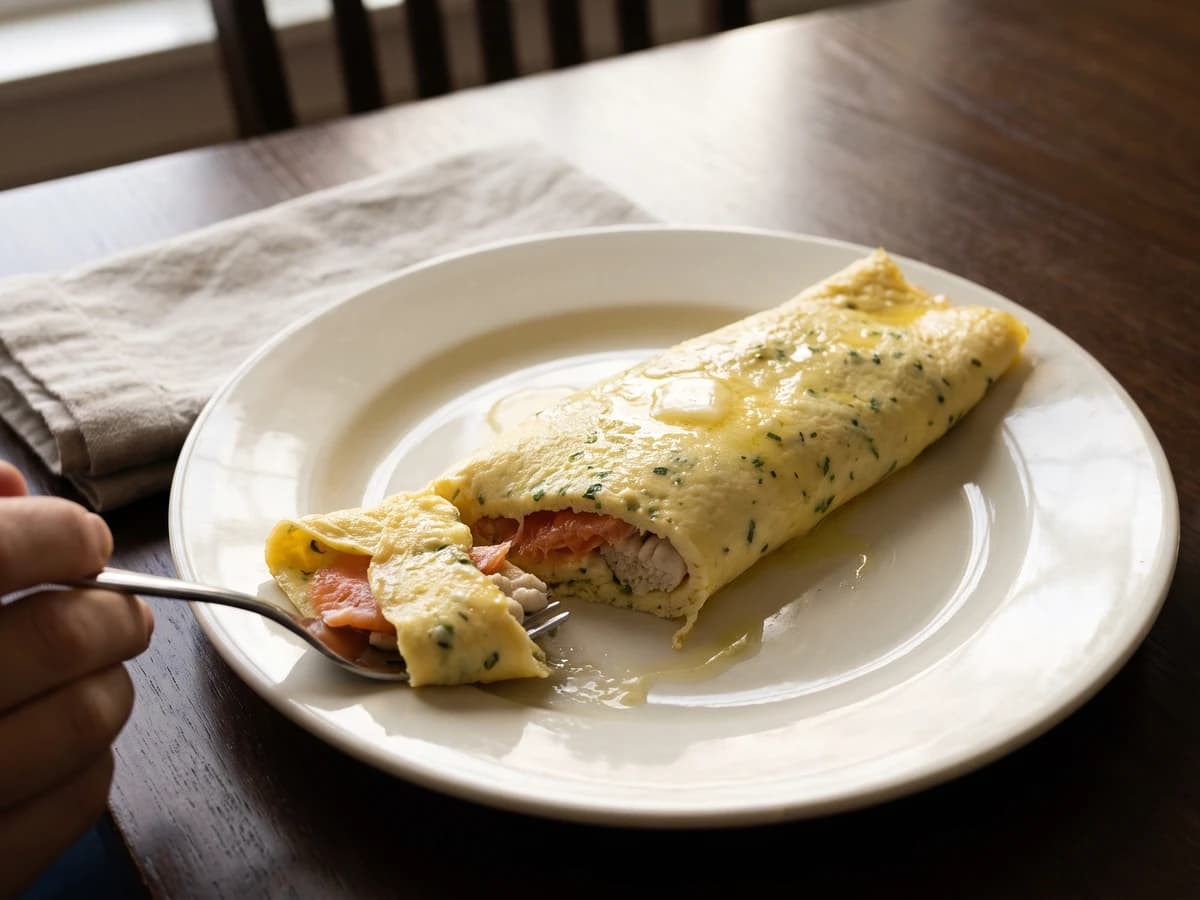
A creamy omelette aux fines herbes closes around smoked-salmon-wrapped herring milts, gently poached in butter. Have the filling ready, then roll the eggs while they still shine.
A cooking platform built around craft, culture, and the stories behind what we eat.
Created by Chef Juliette
Based on No. 496, Omelet with Mushrooms, from Le Guide Culinaire (1907) by Auguste Escoffier
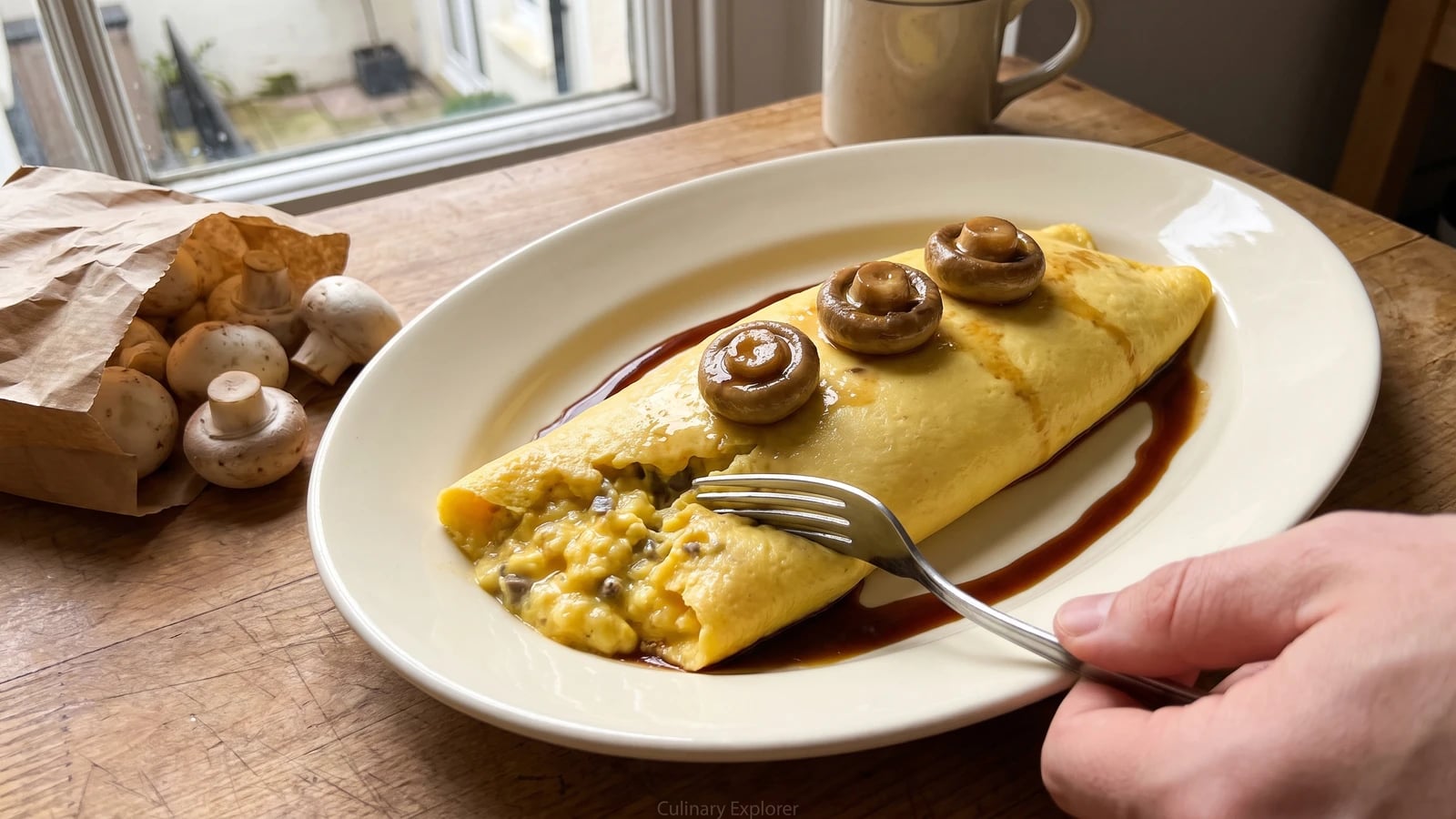
Omelette aux champignons teaches the quick courage of French egg cookery: tender curds folded around butter-tossed mushrooms, crowned with three grooved caps, and circled by demi-glace while everything is still supple.
Omelette aux champignons (French mushroom omelet) teaches one truth before you touch the pan: the minced mushrooms must surrender their raw water in butter before the eggs arrive. Add the eggs too soon and their curds turn wet and slack. Wait until the pan floor shines with butter rather than mushroom liquid, and the omelette stays tender while tasting deeply of champignons.
The source entry assumed a saucier and a stockpot never off the fire, so demi-glace (half-glaze) waited ready. A salamander played no part; this dish is finished by the pan and the spoon. At home, warm a properly prepared demi-glace in a small saucepan and make one generous eight-egg omelette for four. The brigade's extra hands and holding pans are scaffolding, so they go. The source's two ounces of minced raw mushrooms, its three cooked grooved caps, and its narrow ring of sauce are the dish, so every one stays. One cook, one stove, one evening.
Work quickly once the eggs meet the mushrooms, but don't confuse speed with panic. The step that decides everything is simple: cook the mince until its moisture is gone, then add the eggs at once and pull the omelette from the heat while its center is still glossy.
Omelette aux champignons belongs to cuisine bourgeoise and the Parisian dining room rather than to a single French province, pairing the everyday omelette with the cultivated white mushrooms called champignons de Paris. In grand-kitchen service, the raw mushroom mince cooked directly beneath the eggs while three grooved caps and a thread of demi-glace marked the named garnish. The sauce was never meant to smother the eggs; its narrow ring shows how a household dish entered the classical canon without losing its speed.
Quantity
8
Quantity
¾ cup loosely packed (180 ml / 57 g)
finely minced just before cooking
Quantity
3
stems trimmed and caps grooved
Quantity
¼ cup (60 ml / 57 g)
Quantity
3 tablespoons (45 ml / about 50 g)
Quantity
½ teaspoon (2.5 ml / 3 g)
| Ingredient | Quantity |
|---|---|
| large eggs | 8 |
| small white button mushroomsfinely minced just before cooking | ¾ cup loosely packed (180 ml / 57 g) |
| small white button mushroomsstems trimmed and caps grooved | 3 |
| unsalted butter | ¼ cup (60 ml / 57 g) |
| prepared veal demi-glace | 3 tablespoons (45 ml / about 50 g) |
| fine salt | ½ teaspoon (2.5 ml / 3 g) |
Crack the eggs into a bowl, add the salt, and beat with a fork only until the whites and yolks become one even yellow mixture. Don't whip in a cap of foam; air makes the surface blister instead of setting into a smooth, tender skin. Warm the demi-glace over the gentlest heat until it falls from a spoon in a narrow ribbon, then cover it and take it off the heat. If it is too thick to thread around the plate, loosen it with a teaspoon of hot water.
Make the champignons tournés (grooved mushroom caps) by cutting shallow curved channels from the crown toward the edge with a small paring knife, rotating each cap between cuts. Melt 1 tablespoon of the butter in the omelet pan over medium-low heat. Add the three caps, cover, and roll them through the butter for 4 to 5 minutes, until tender and glossy but still pale. Lift them out and keep them close to the stove.
Raise the heat to medium-high and add the remaining 3 tablespoons of butter to the same pan. When the foam subsides, add the minced raw mushrooms and toss continuously for about 2 minutes. They will release liquid, then take it back as the water evaporates. Do not add the eggs while liquid still puddles on the pan floor. If the mushrooms flood the pan, keep tossing over steady heat until only clear butter remains. Ça se rattrape. Stop before the mince browns hard; the flavor should be concentrated, not roasted.
Reduce the heat to medium and pour the eggs directly over the mushrooms. Shake the pan while drawing the setting egg from the edges toward the center with a flexible spatula, letting the uncooked egg run into the cleared spaces. Work briskly for 30 to 45 seconds, then spread the soft curds into an even layer. If an edge begins setting into a firm sheet before the center moves, lift the pan off the heat immediately, scrape that edge inward, and continue stirring in the pan's residual warmth. Ça se rattrape. Stop when the surface remains glossy but no loose egg runs across it.
Fold the far third of the omelette toward the center, then fold the near third over it to make a plump tapered roll. Tip it seam-side down onto a warm oval platter. Lay the three champignons tournés along the top and spoon the demi-glace in a fine thread around the omelette, never over it; the sauce should sharpen each bite without hiding the eggs. Carry it straight to the table while the center is still supple. À table!
1 serving (about 130g)
Culinary guides, cultural storytelling, and the editorial depth that makes cooking meaningful.
Discover Culinary ExplorerChef Juliette
A creamy omelette aux fines herbes closes around smoked-salmon-wrapped herring milts, gently poached in butter. Have the filling ready, then roll the eggs while they still shine.
Chef Juliette
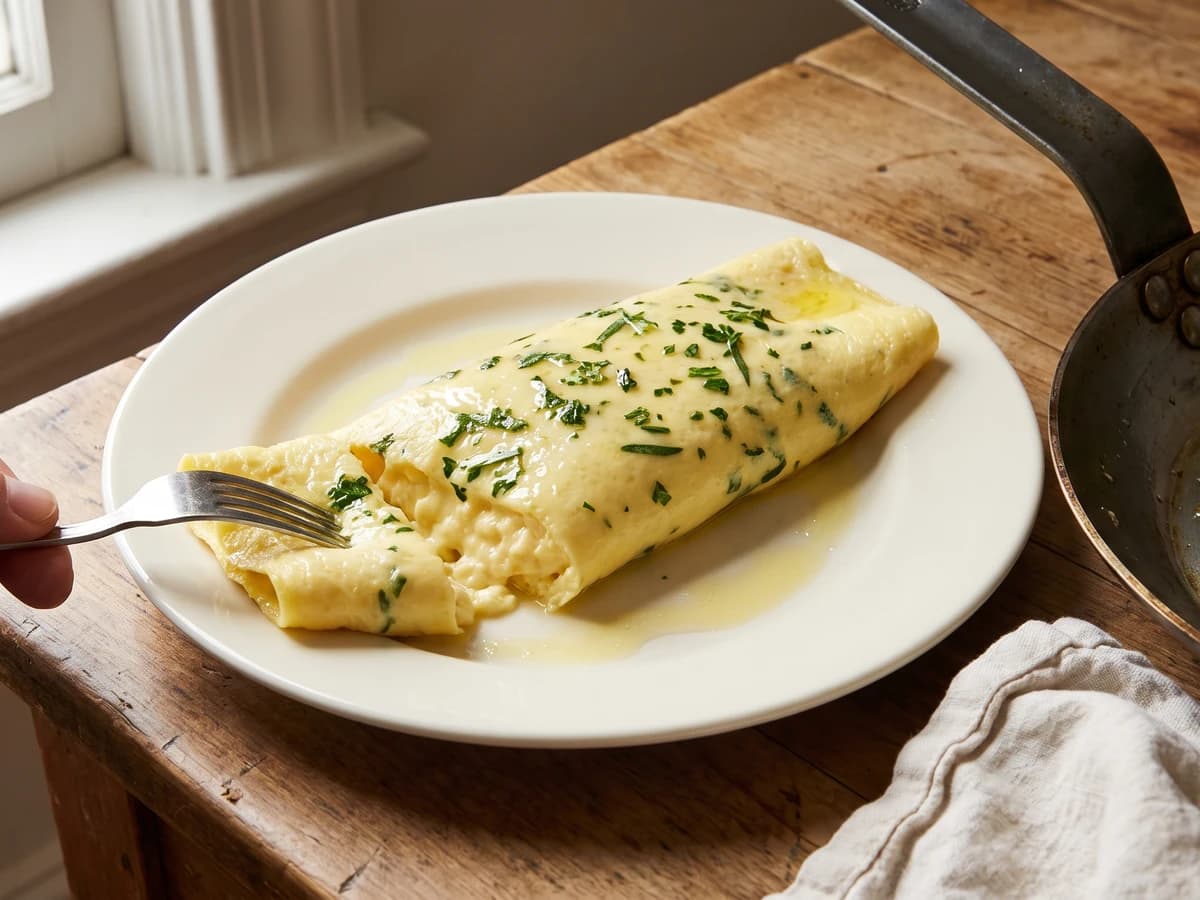
Four tender herbs, hot butter, and two eggs per pan: this rolled omelette teaches the quick hand and good judgment that keep the outside pale and the center creamy.
Chef Juliette
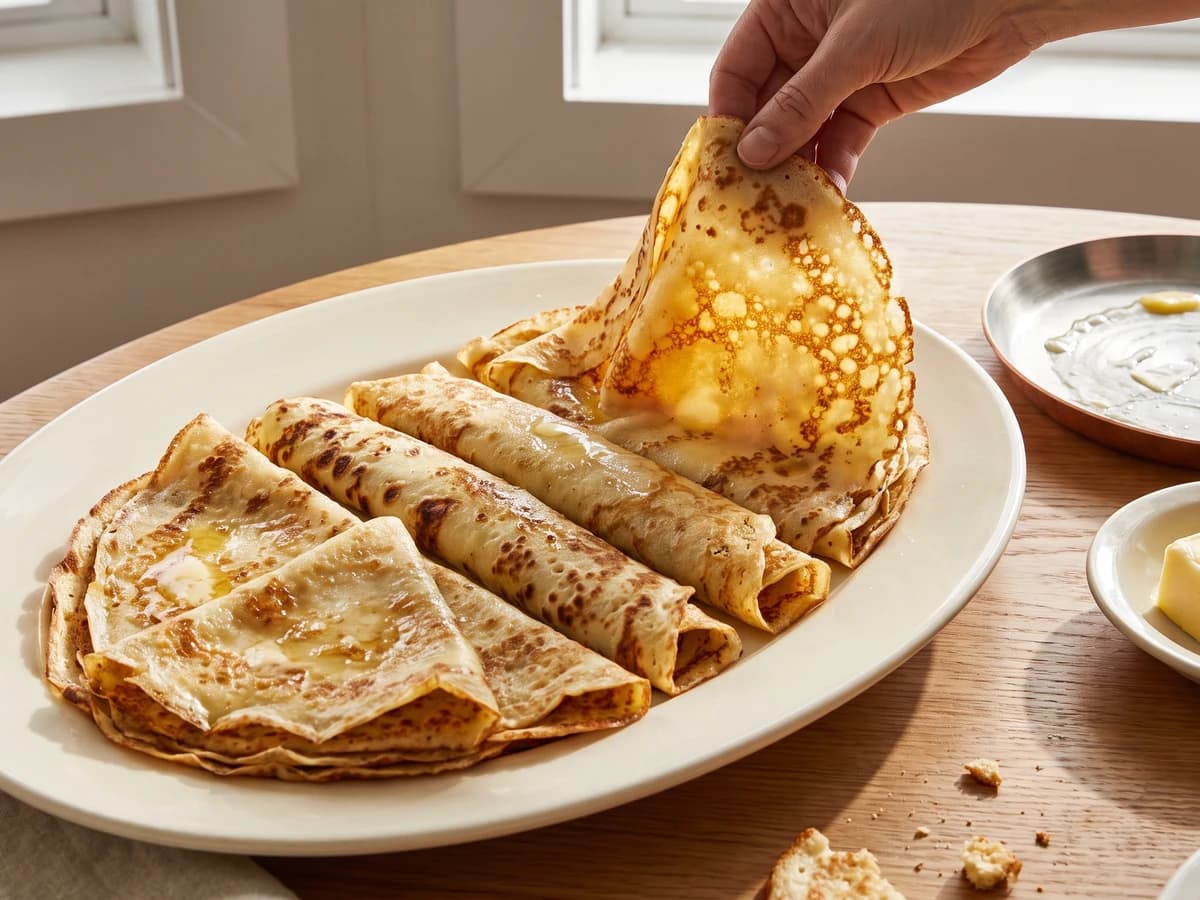
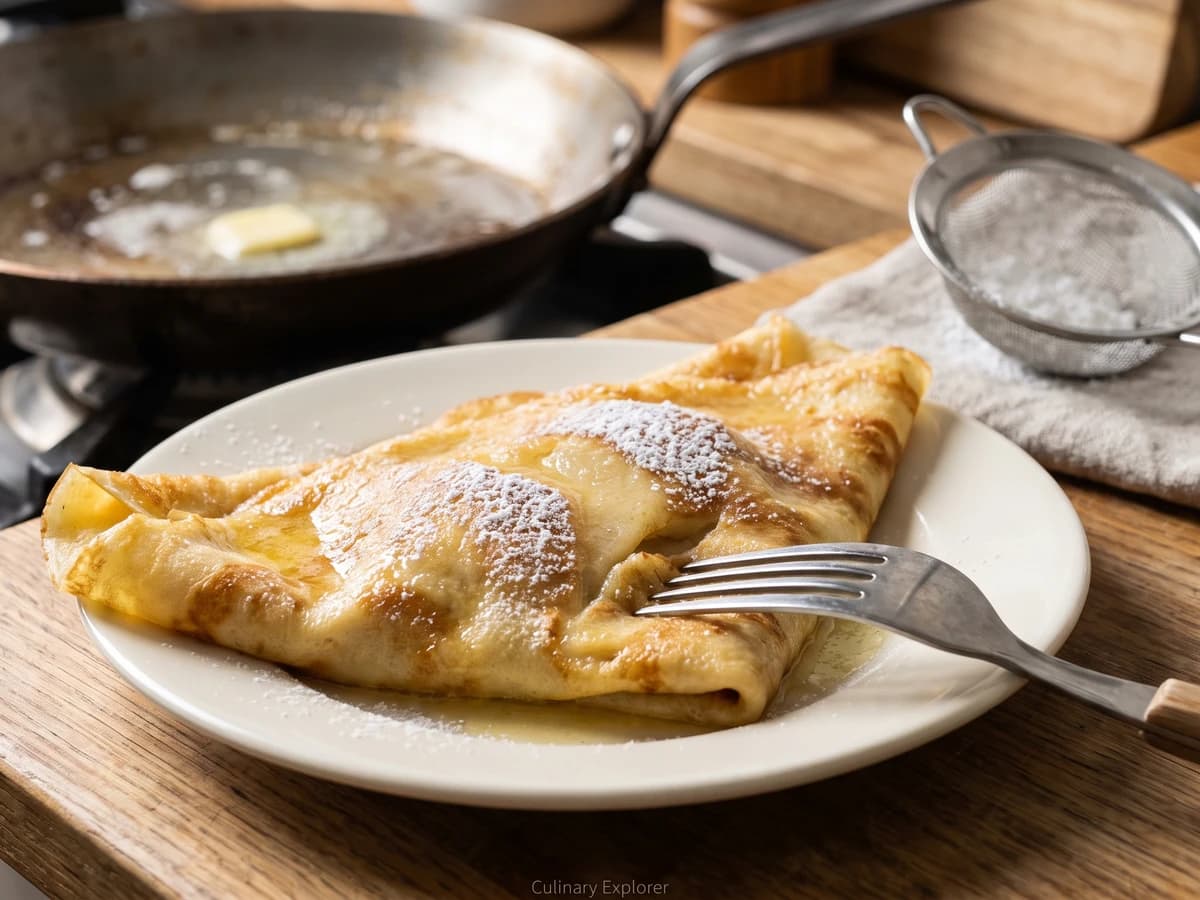
Four batters, one lesson: let the flour drink deeply before cooking, then spread the batter thinly in butter for crêpes and pannequets that bend without becoming tough.
Chef Juliette
Crêpes au Couvent trap ripe Williams pear dice between two thin pours of sweet batter, then turn in one clean toss and reach the table butter-gold, powdered, and burning hot.