
Chef Juliette
Omelette à l’Écossaise
A creamy omelette aux fines herbes closes around smoked-salmon-wrapped herring milts, gently poached in butter. Have the filling ready, then roll the eggs while they still shine.
A cooking platform built around craft, culture, and the stories behind what we eat.
Created by Chef Juliette
Based on No. 495, Omelet with Cèpes, from Le Guide Culinaire (1907) by Auguste Escoffier
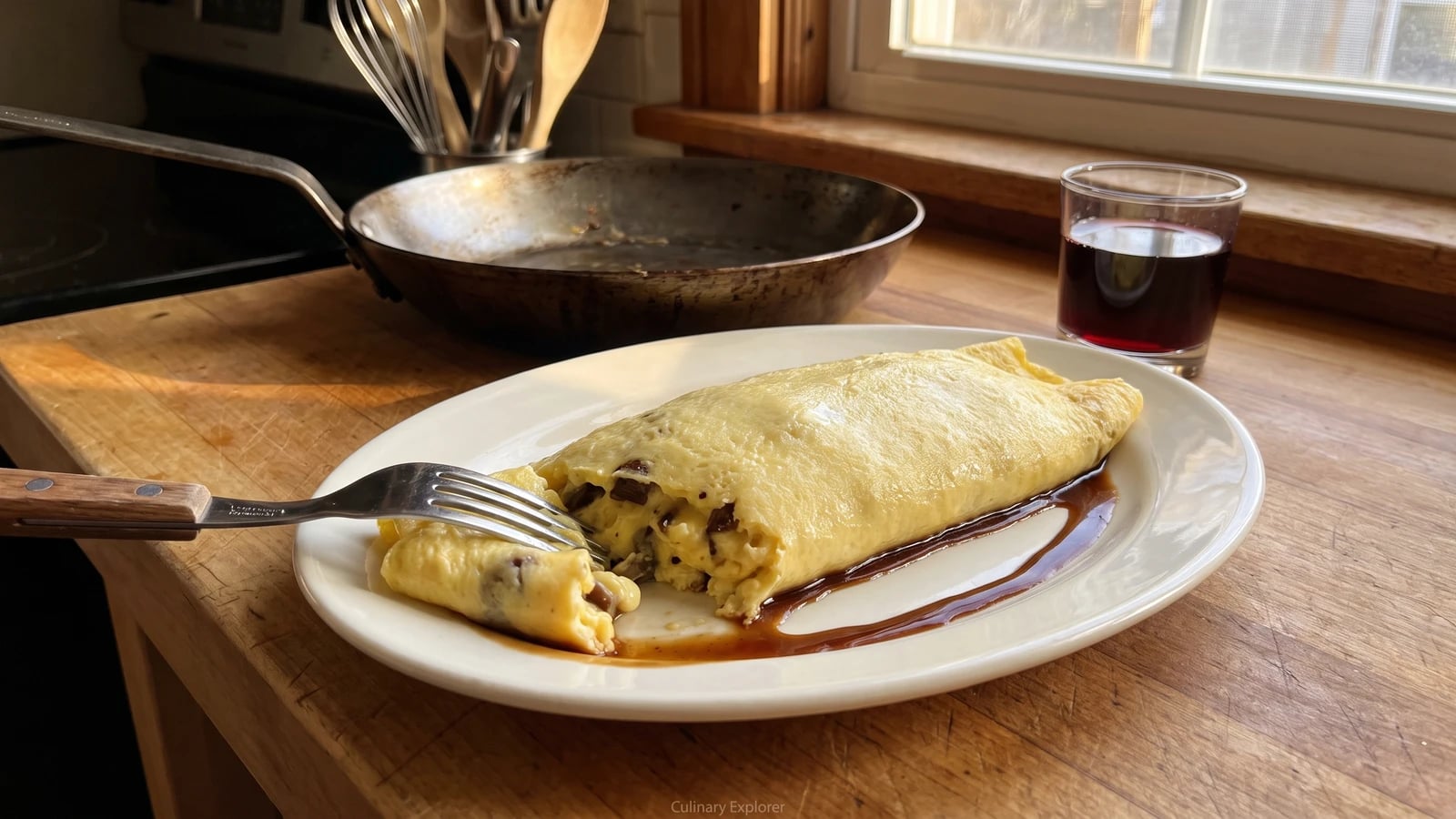
Omelette aux cèpes teaches the decisive art of colour: porcini browned deeply in butter, shallot added only at the end, then folded into tender eggs and ringed with glossy demi-glace.
Omelette aux cèpes teaches one true thing: the mushrooms must brown before the eggs enter the pan. Cèpes cooked pale release water into the eggs and disappear into them; cèpes coloured to deep chestnut keep their nutty perfume, their texture, and their authority. Colour is not decoration here. It is the dish.
The original entry assumed a dedicated omelet pan, a saucier on staff, and demi-glace drawn from a stockpot never off the fire. Your honest equivalents are a well-seasoned 20-centimetre carbon-steel or nonstick pan and a small measure of good finished demi-glace, the half-glaze named by the source, warmed while the pan heats. Keeping a saucier and a perpetual stockpot was brigade scaffolding; the glossy sauce ring is part of the omelette and stays. Only the sauce production and the pan have changed. The proportions and sequence have not.
This is one cook, one stove, one evening: four individual three-egg omelettes, each holding the original two ounces of cèpes, made and served in quick succession. The eggs should remain pale and tender around mushrooms browned almost to the colour of walnuts. Before you touch the eggs, colour the cèpes until their edges are chestnut and the pan is dry.
Omelette aux cèpes belongs most naturally to Périgord and the broader southwest of France, where autumn cèpes have long gone from woodland baskets straight into buttered pans. Country and auberge cooks paired them with eggs because the eggs carry the mushroom's nutty perfume, while the classical grand kitchen added a narrow cordon of demi-glace for formal service. The sauce is not gravy and should never cover the omelette; its fine ring records the dish's passage from the farmhouse pan into the classical sauce system.
Quantity
3¼ cups (770 ml / 225 g)
measured after trimming and finely minced
Quantity
¼ cup (60 ml / 57 g)
Quantity
2 teaspoons (10 ml / 8 g)
very finely minced
Quantity
12
Quantity
1 teaspoon (5 ml / 6 g)
Quantity
¼ teaspoon (1.25 ml / 0.6 g)
Quantity
¼ cup (60 ml / about 65 g)
warmed
| Ingredient | Quantity |
|---|---|
| fresh cèpes (Boletus edulis)measured after trimming and finely minced | 3¼ cups (770 ml / 225 g) |
| unsalted butter | ¼ cup (60 ml / 57 g) |
| shallotvery finely minced | 2 teaspoons (10 ml / 8 g) |
| large eggs | 12 |
| fine salt | 1 teaspoon (5 ml / 6 g) |
| freshly ground white or black pepper | ¼ teaspoon (1.25 ml / 0.6 g) |
| finished demi-glacewarmed | ¼ cup (60 ml / about 65 g) |
Have everyone seated before the first pan begins, because a tender omelette waits for nobody. Warm four plates, then heat the demi-glace gently in a small saucepan until it flows from a spoon in a fine, glossy thread. Do not boil it. If it is too thick to pour, loosen it with a teaspoon of hot water; if it runs like broth, reduce it briefly until it lightly coats the spoon.
Trim the earthy stem ends, wipe the caps and stems with a barely damp cloth, and inspect each mushroom after cutting it open. Remove any damaged portions and, if a mature cap has a wet, spongy layer of tubes underneath, scrape that layer away. Finely mince the sound flesh without reducing it to paste, then divide it into four equal 2-ounce portions.
Work one omelette at a time. Beat three eggs with ¼ teaspoon of the salt and a pinch of pepper just until the whites and yolks become one fluid yellow mixture. Do not whip in a cap of bubbles; an omelette wants tender curds, not a sponge. Measure 1 tablespoon butter, ½ teaspoon shallot, and 1 tablespoon demi-glace for this portion.
Heat the omelet pan over medium-high heat, add the tablespoon of butter, and let it foam. As soon as the foam begins to settle, add one portion of cèpes and spread them across the pan. Toss them in the butter, then leave them undisturbed for short intervals so their edges acquire a deep chestnut colour, about 3 to 4 minutes. If liquid pools and the mushrooms refuse to brown, do not add the eggs. Raise the heat slightly and let every drop cook away, then continue until the pan smells nutty and looks dry.
Add the measured shallot to the browned cèpes and toss for 15 to 20 seconds, only until fragrant. The shallot goes in late because minced shallot burns before a mushroom properly colours. Keep it pale, sweet, and brief.
Pour the beaten eggs directly over the cèpes. Shake the pan while stirring rapidly with a fork or heatproof spatula, drawing the soft curds toward the centre and letting liquid egg run underneath. When the base is set but the surface remains moist and creamy, stop stirring and smooth the eggs into an even layer. If the curds race ahead and begin setting before you can shape them, lift the pan completely from the burner and keep stirring in tight circles; the retained heat will finish them gently. Ça se rattrape. Fold the far third toward the centre, then tilt the pan and roll the omelette onto the plate, seam-side down.
Shape the omelette gently with the side of a clean towel if needed, keeping its centre plump rather than pressing it flat. Spoon 1 tablespoon of warm demi-glace in a narrow cordon around it, never across the top, and serve immediately. Wipe away any clinging egg from the pan, return it to the heat, and repeat the beating, browning, shallot, egg, and plating sequence for the remaining three portions. À table!
1 serving (about 210g)
Culinary guides, cultural storytelling, and the editorial depth that makes cooking meaningful.
Discover Culinary ExplorerChef Juliette
A creamy omelette aux fines herbes closes around smoked-salmon-wrapped herring milts, gently poached in butter. Have the filling ready, then roll the eggs while they still shine.

Chef Juliette
Four tender herbs, hot butter, and two eggs per pan: this rolled omelette teaches the quick hand and good judgment that keep the outside pale and the center creamy.
Chef Juliette
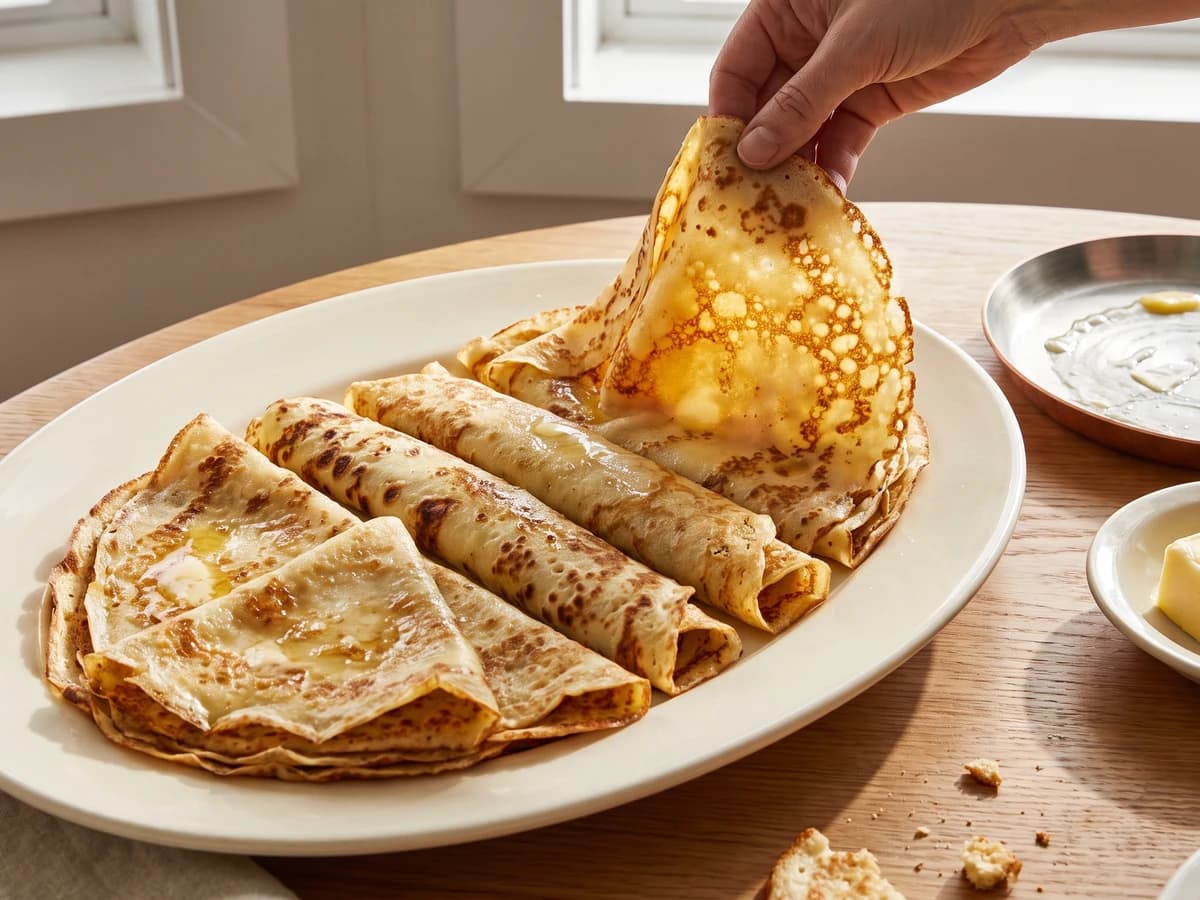
Four batters, one lesson: let the flour drink deeply before cooking, then spread the batter thinly in butter for crêpes and pannequets that bend without becoming tough.
Chef Juliette
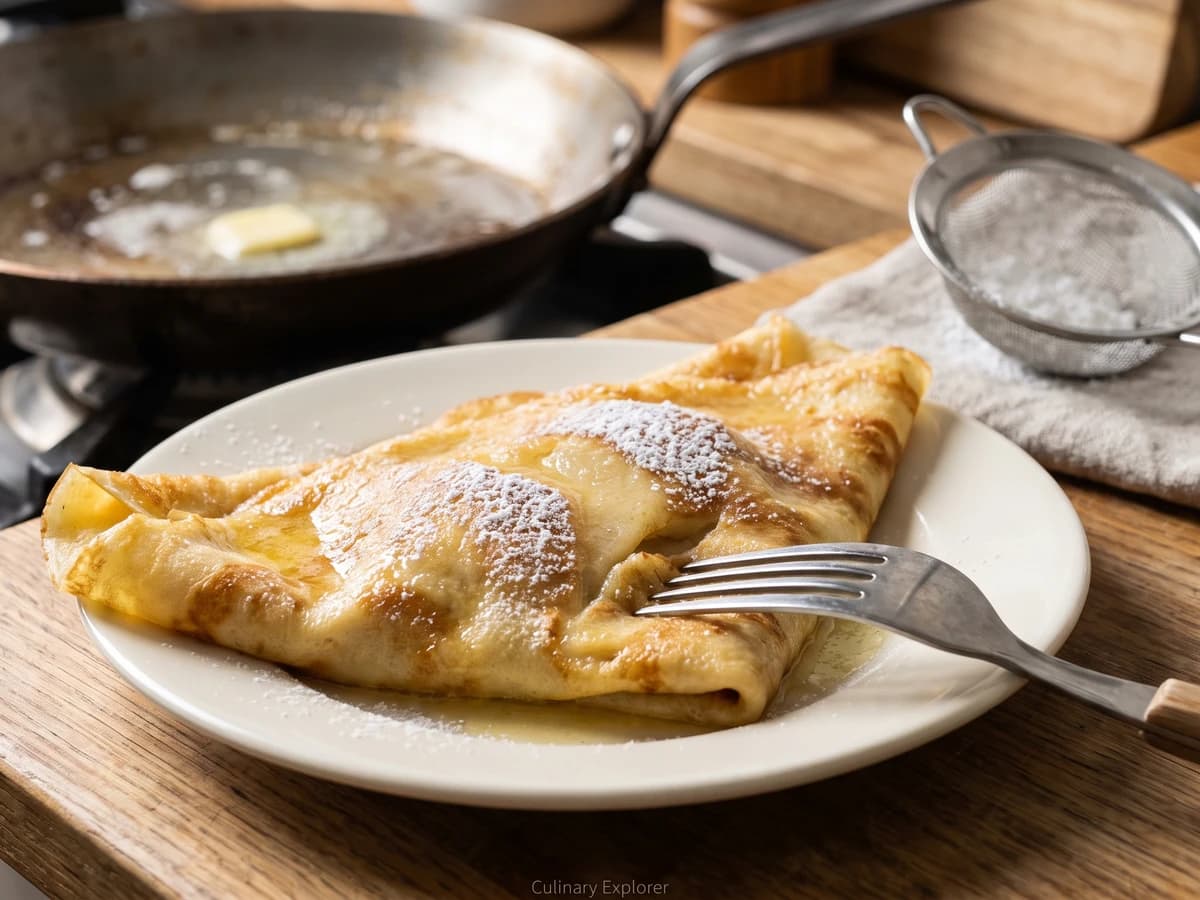
Crêpes au Couvent trap ripe Williams pear dice between two thin pours of sweet batter, then turn in one clean toss and reach the table butter-gold, powdered, and burning hot.