Chef Juliette
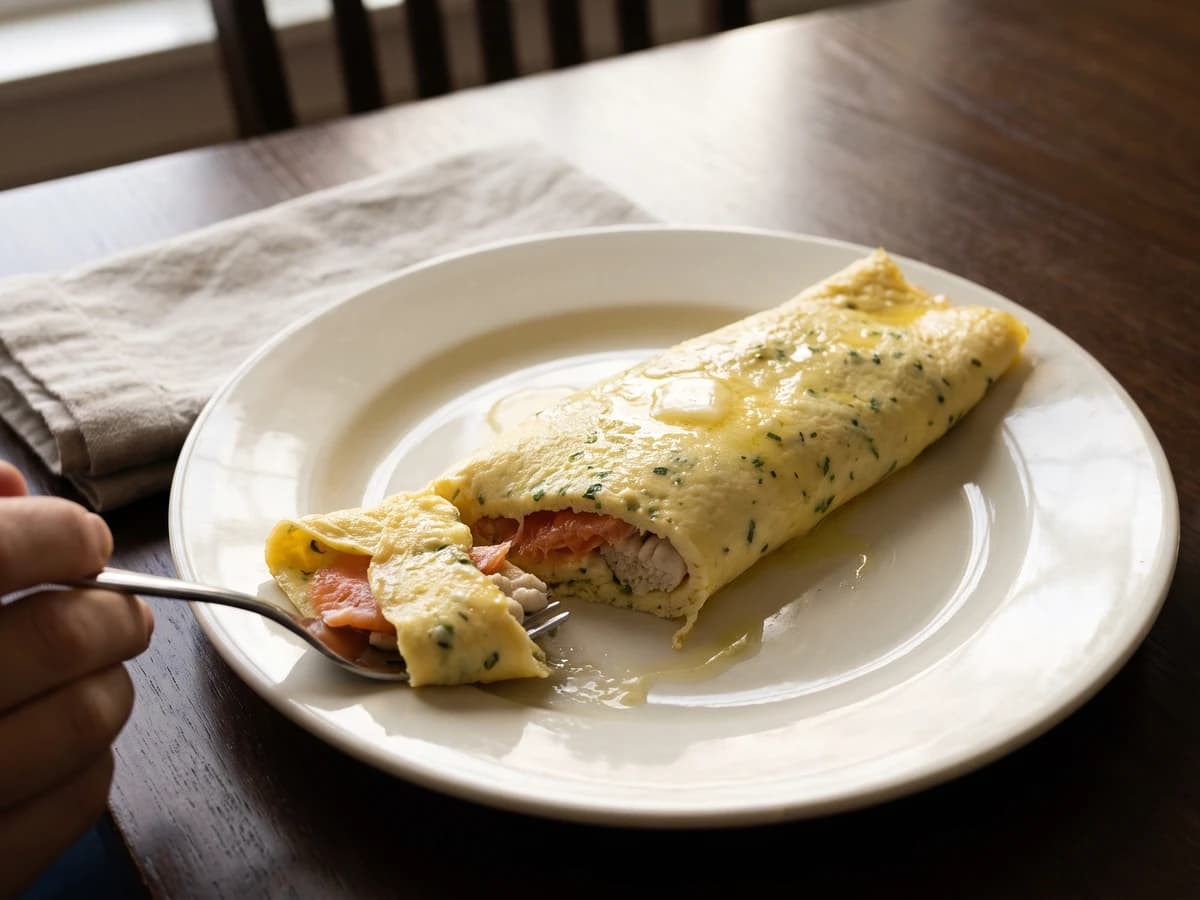
Omelette à l’Écossaise
A creamy omelette aux fines herbes closes around smoked-salmon-wrapped herring milts, gently poached in butter. Have the filling ready, then roll the eggs while they still shine.
A cooking platform built around craft, culture, and the stories behind what we eat.
Created by Chef Juliette
Based on No. 494, Omelet à la Bruxelloise, from Le Guide Culinaire (1907) by Auguste Escoffier
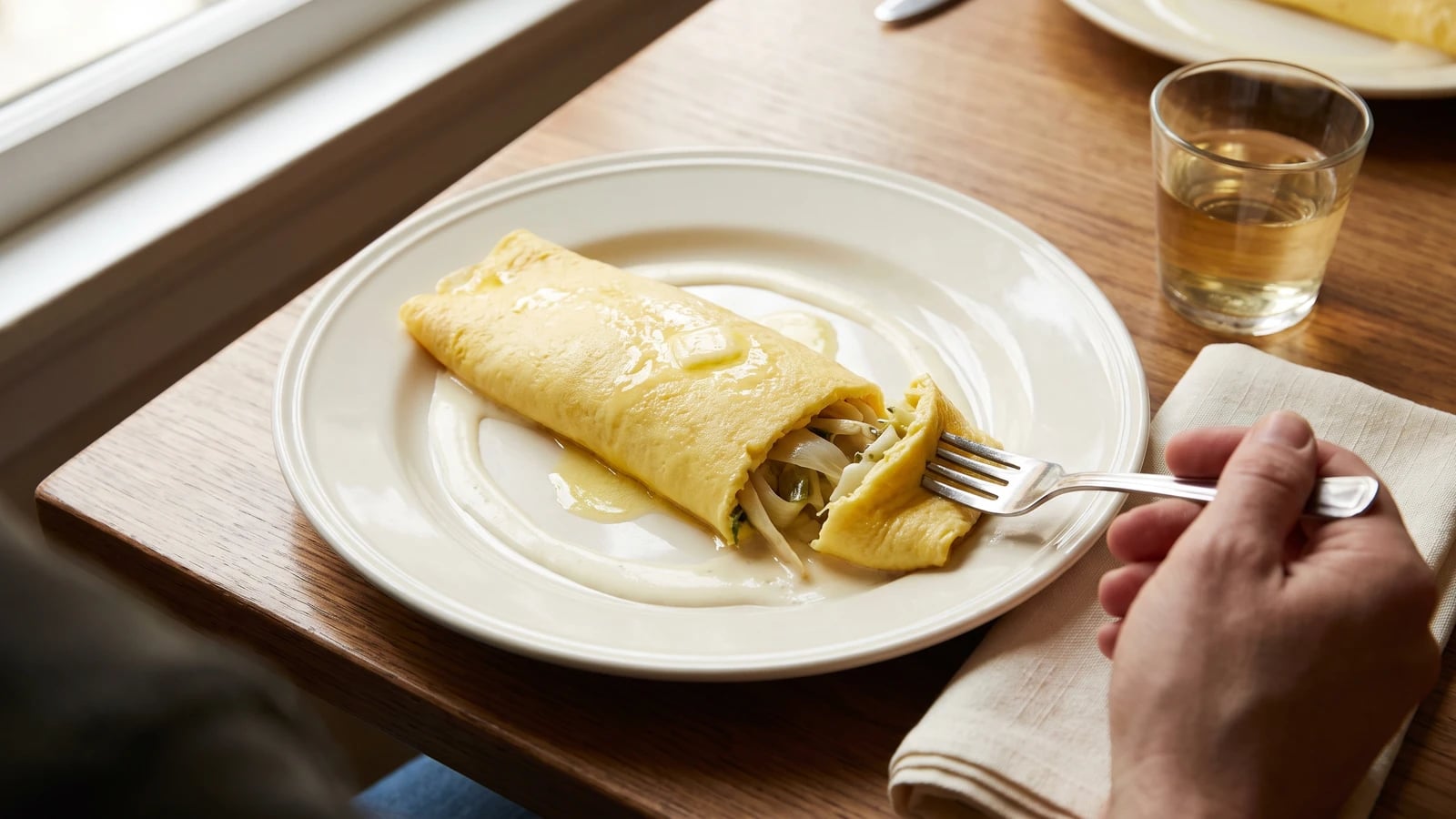
Omelet à la Bruxelloise folds a barely set French omelet around cream-bound braised endive, then traces it with ivory sauce: a compact lesson in dry filling, gentle heat, and decisive rolling.
Omelet à la Bruxelloise (soft omelet with cream-bound braised endive) teaches one true thing: an omelet waits for nothing. Its filling must be hot but dry, its sauce ready to flow, and its plate waiting before the eggs touch the pan. The center stays soft because you arrange everything else first.
The original entry assumed a vegetable station with braised endive ready and a saucier holding cream sauce beside the range. At home, one small pan prepares the endive, one saucepan builds just enough sauce for four, and an eight-inch skillet cooks four individual omelets in succession. Those holding pans were brigade scaffolding, so they go. The braise, the Cisel, a close crosswise cut that turns the leaves into short fine ribbons, the cream binding, and the soft rolled center are the dish, so they stay. One cook, one stove, one evening.
When it lands correctly, the omelet is pale butter-gold and plump, with tender bittersweet endive inside and a narrow ivory ring around it, never a blanket over it. Before you begin cooking the eggs, divide the filling into four portions and bring the sauce to spooning consistency. That preparation is the step that decides the dish.
Omelet à la Bruxelloise belongs to the French classical repertoire but points directly to Brussels, where Belgian endive is called chicon and is traditionally mellowed by gentle braising. Grand-kitchen cooks brought that Brussels vegetable into the omelet canon by cutting the cooked leaves Cisel, binding them with cream, and echoing the filling with a narrow ring of cream sauce. The name identifies the garnish and its Brussels ingredient, not a claim that every household in Brussels served this exact rolled omelet.
Quantity
1 large head (5 oz / 140 g)
base trimmed and halved lengthwise
Quantity
6 tablespoons (90 ml / 85 g)
divided
Quantity
¼ cup (60 ml / 60 g)
Quantity
½ cup (120 ml / 120 g)
divided
Quantity
1 tablespoon (15 ml / 8 g)
Quantity
½ cup (120 ml / 123 g)
Quantity
12
Quantity
1 teaspoon (5 ml / 6 g)
divided
Quantity
¼ teaspoon (1.25 ml / 0.5 g)
divided
| Ingredient | Quantity |
|---|---|
| Belgian endivebase trimmed and halved lengthwise | 1 large head (5 oz / 140 g) |
| unsalted butterdivided | 6 tablespoons (90 ml / 85 g) |
| water | ¼ cup (60 ml / 60 g) |
| heavy creamdivided | ½ cup (120 ml / 120 g) |
| all-purpose flour | 1 tablespoon (15 ml / 8 g) |
| whole milk | ½ cup (120 ml / 123 g) |
| large eggs | 12 |
| fine saltdivided | 1 teaspoon (5 ml / 6 g) |
| ground white pepperdivided | ¼ teaspoon (1.25 ml / 0.5 g) |
Melt 1 tablespoon of the butter in a small lidded sauté pan over medium-low heat. Lay in the endive halves cut-side down, add the water and ¼ teaspoon of the salt, then cover and lower the heat. Braise gently for 15 to 18 minutes, turning once, until a knife passes through the dense base without resistance. Uncover and let any remaining liquid evaporate, but don't scorch the leaves. The endive must finish tender and moist within, with no loose water left to leak into the eggs.
Lift the endive onto a board and let it cool just enough to handle. Cut it Cisel, straight across the leaves into fine ribbons about ⅛ inch (3 mm) wide. Return the endive to the pan with ¼ cup of the cream and a pinch of white pepper. Simmer gently, stirring, until the cream reduces around the ribbons and the filling holds together on a spoon, about 3 minutes. You need about ½ cup in all, exactly 2 tablespoons for each omelet. If liquid still gathers beneath it, keep reducing before you proceed; flour would dull the filling rather than rescue it.
Melt 1 tablespoon of the butter in a small saucepan over medium-low heat. Whisk in the flour and cook for 1 minute without letting the roux color. Add the milk a little at a time, whisking each addition smooth before the next, then whisk in the remaining ¼ cup cream. Simmer gently for 4 to 5 minutes, until the sauce coats a spoon but still pours in a narrow ribbon. Season with ¼ teaspoon salt and a pinch of white pepper. If it lumps, pass it through a fine sieve; if it tightens while waiting, whisk in milk one teaspoon at a time. Keep it covered over the lowest heat.
Divide the endive filling into four portions of 2 tablespoons each. Warm four plates with hot water, dry them well, and set them beside the stove. Keep the filling warm and the cream sauce fluid. Crack 3 eggs into a bowl for the first omelet, add ⅛ teaspoon salt and a small pinch of white pepper, then beat only until the whites and yolks are joined. Too much beating fills the eggs with bubbles and gives the omelet a pocked surface.
Heat an 8-inch (20 cm) nonstick or well-seasoned omelet pan over medium heat. Add 1 tablespoon butter and swirl it as soon as the foam becomes lively, before it browns. Pour in the beaten eggs, stir briskly with a heatproof spatula while shaking the pan, then stop when fine soft curds form and the surface remains glossy. Smooth the eggs into an even layer, lay one 2-tablespoon portion of endive just off center, and fold the near third over it. Tilt the pan and roll the omelet onto its plate seam-side down. If the eggs begin setting too quickly, lift the pan from the heat and finish the roll there; if the seam tears, turn it underneath and let the sauce conceal the edge. Ça se rattrape. Repeat with the remaining eggs, butter, seasoning, and filling.
Give the cream sauce a final whisk. It should fall from the spoon in a fine ribbon; loosen it with a teaspoon of milk if necessary. Spoon about 2 tablespoons around each omelet in a narrow ring, leaving the butter-gold top visible. Serve at once, while the outside holds its shape and the center remains soft. À table!
1 serving (about 255g)
Culinary guides, cultural storytelling, and the editorial depth that makes cooking meaningful.
Discover Culinary ExplorerChef Juliette
A creamy omelette aux fines herbes closes around smoked-salmon-wrapped herring milts, gently poached in butter. Have the filling ready, then roll the eggs while they still shine.
Chef Juliette
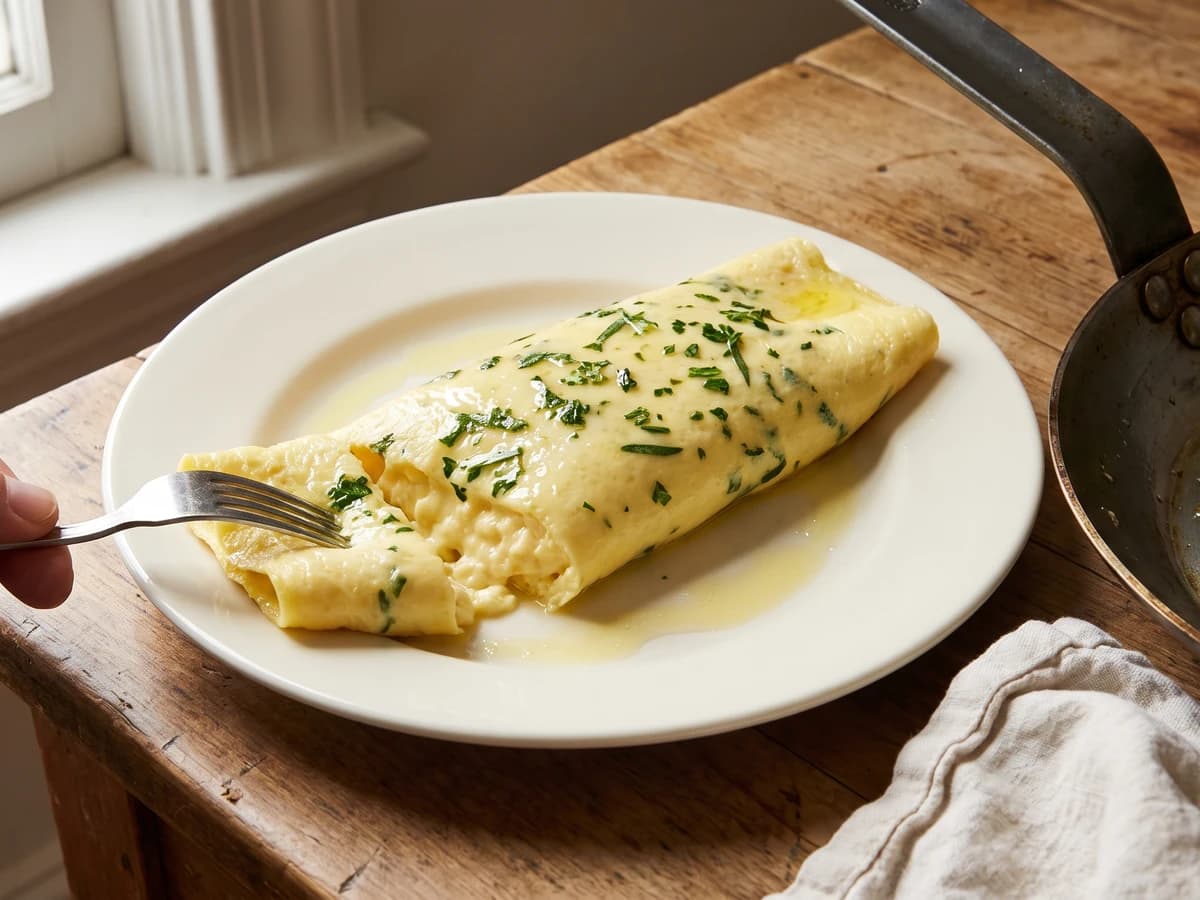
Four tender herbs, hot butter, and two eggs per pan: this rolled omelette teaches the quick hand and good judgment that keep the outside pale and the center creamy.
Chef Juliette
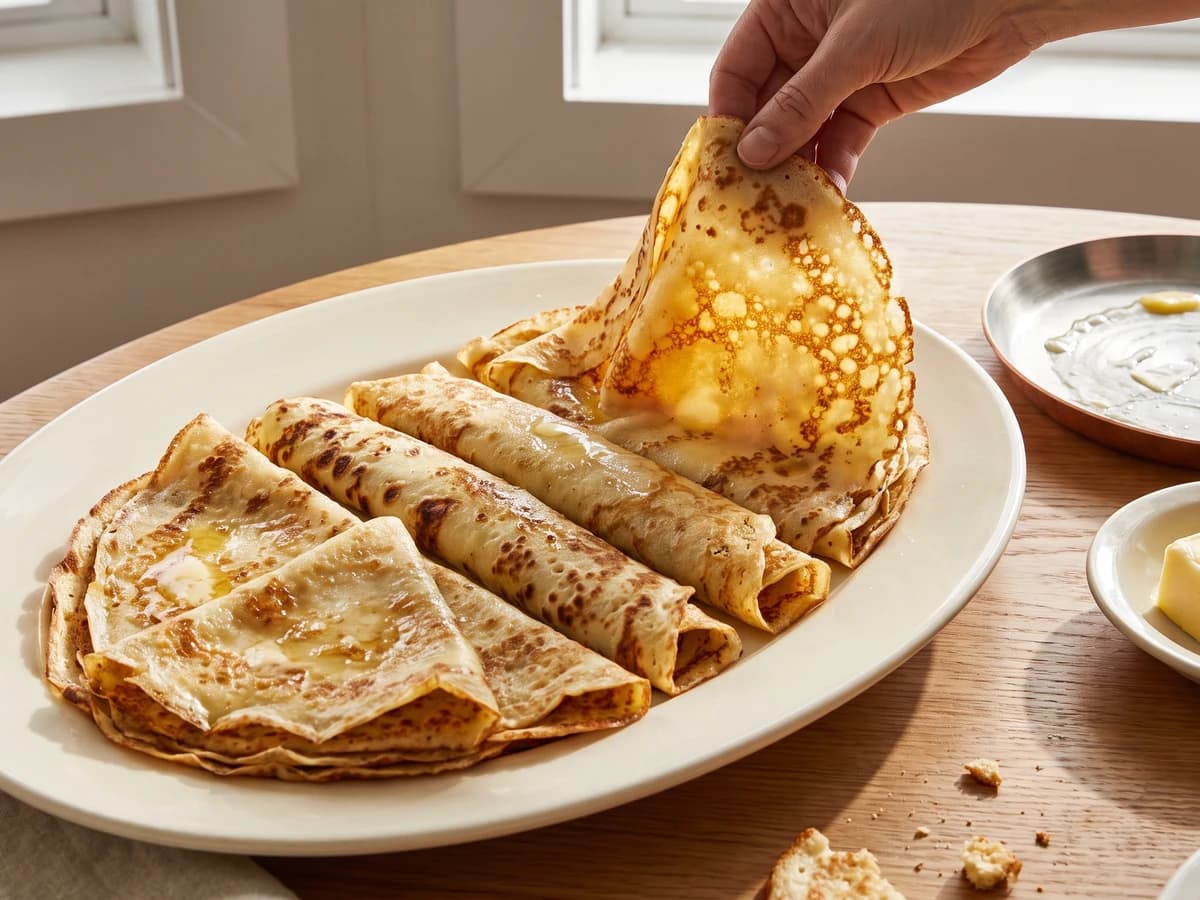
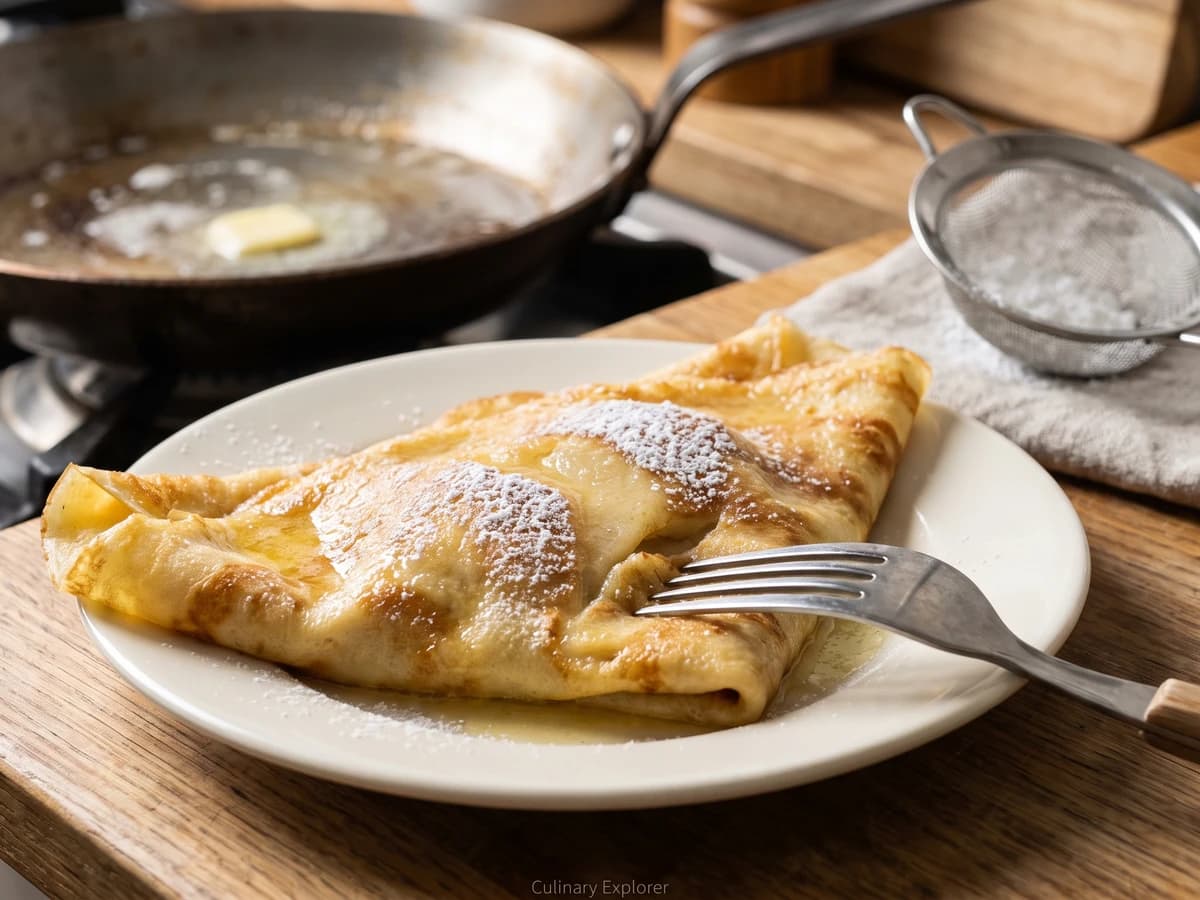
Four batters, one lesson: let the flour drink deeply before cooking, then spread the batter thinly in butter for crêpes and pannequets that bend without becoming tough.
Chef Juliette
Crêpes au Couvent trap ripe Williams pear dice between two thin pours of sweet batter, then turn in one clean toss and reach the table butter-gold, powdered, and burning hot.