Chef Juliette
Omelette à l’Écossaise
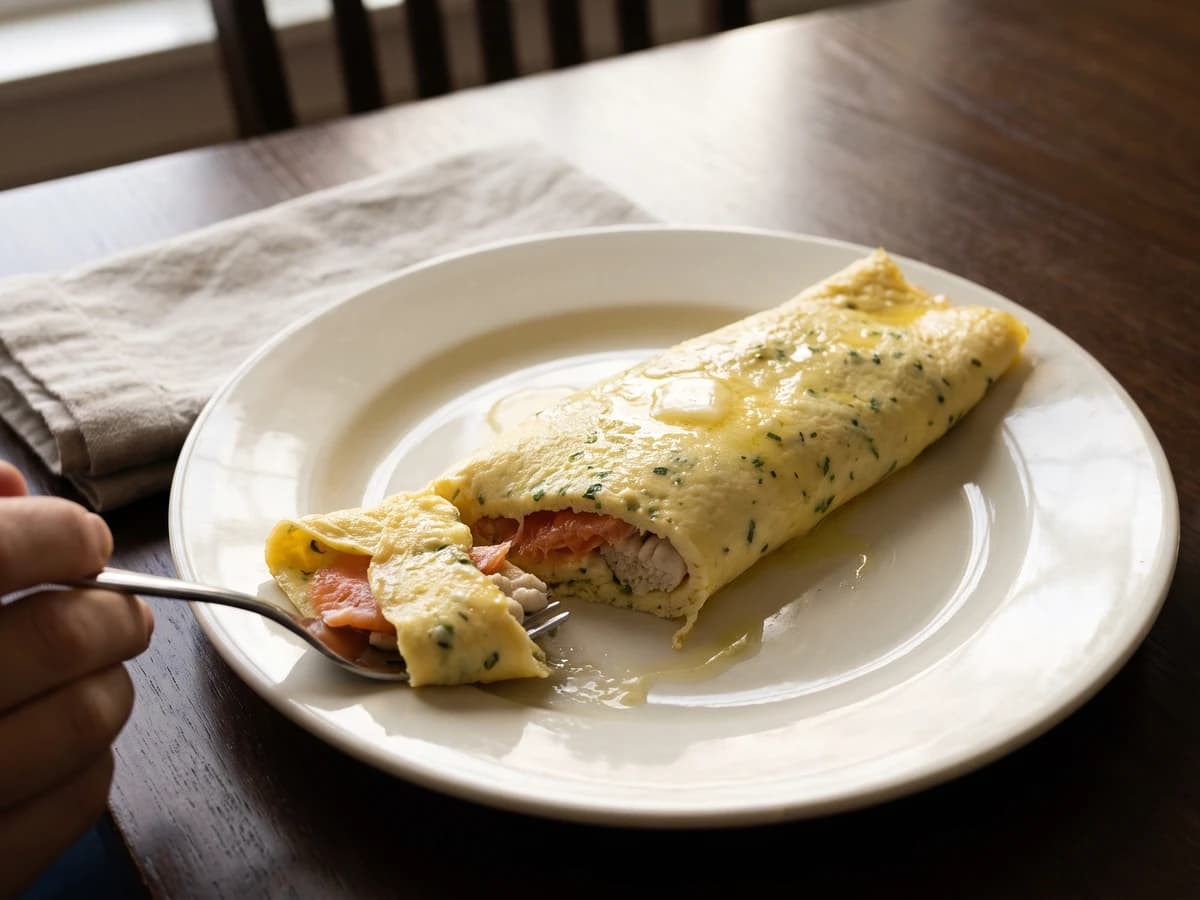
A creamy omelette aux fines herbes closes around smoked-salmon-wrapped herring milts, gently poached in butter. Have the filling ready, then roll the eggs while they still shine.
A cooking platform built around craft, culture, and the stories behind what we eat.
Created by Chef Juliette
Based on No. 493, Agnès Sorel Omelet, from Le Guide Culinaire (1907) by Auguste Escoffier
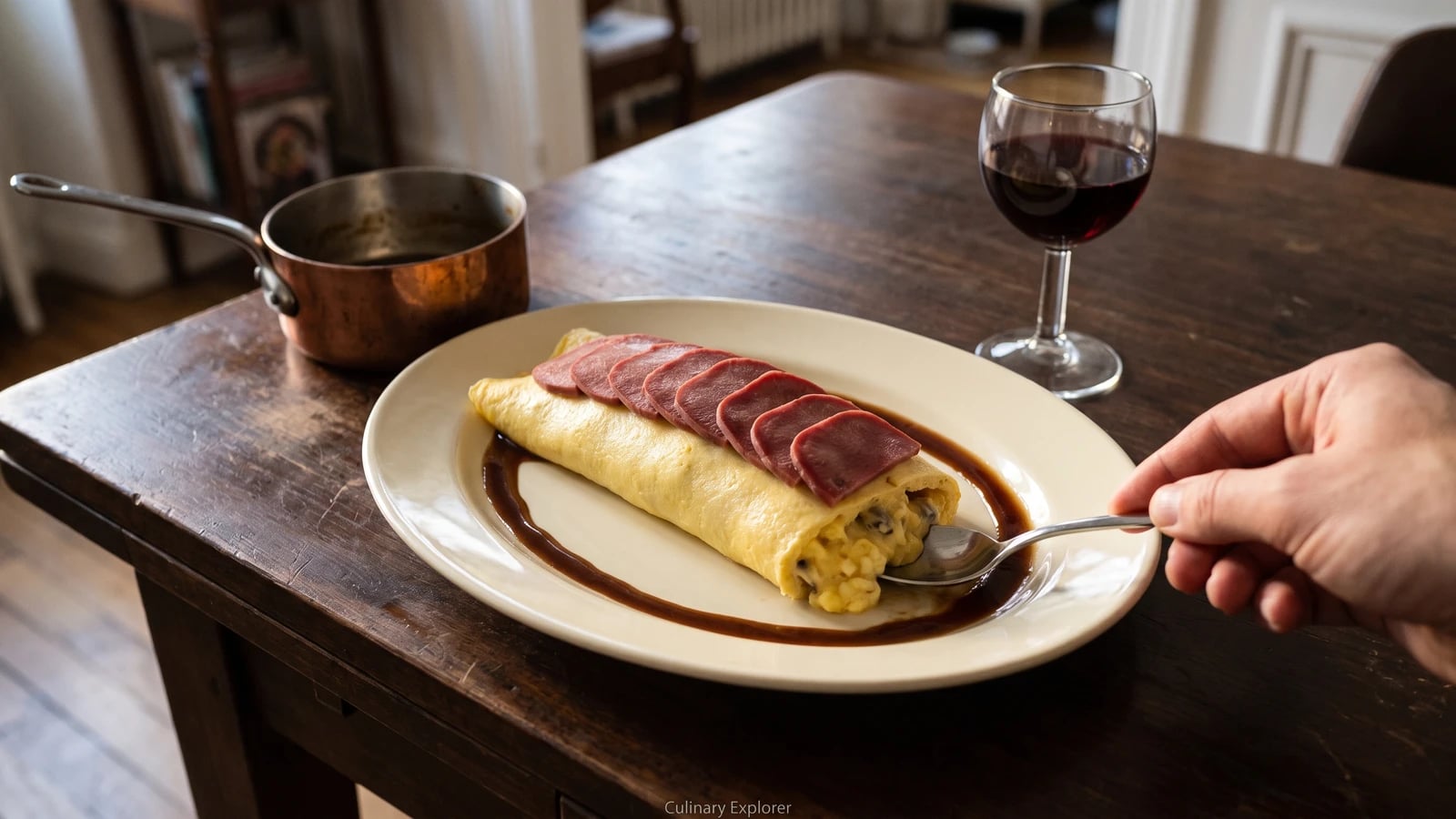
A pale rolled omelet, tender at the heart, filled with mushrooms sautéed in butter, crowned with red tongue, and circled by veal gravy: a lesson in timing, restraint, and exact classical arrangement.
Omelette Agnès Sorel (a rolled omelet with mushrooms cooked briskly in butter, red tongue, and veal gravy) teaches mise en place without mercy. The one true thing to know before touching the pan is this: everything that finishes the dish must be ready before the eggs meet butter. The omelet should arrive pale and tender, with warm mushrooms at its heart, eight jewel-red slices overlapping its crown, and only a fine thread of glossy gravy around it.
The original entry assumed one omelet leaving a professional line, mushrooms already sautéed, a saucier on staff holding veal gravy from stock never off the fire, and a warm dish appearing at once. It calls for no salamander, so no browning step belongs here. At home, reduce gelatin-rich veal stock in a small saucepan, portion the mushrooms and tongue before beginning, and cook the omelets one after another. The separate sauce station and spare hands are brigade scaffolding; the soft roll, buttered mushrooms, eight tongue slices, and surrounding gravy are the dish, so they stay.
For four people, repeat the entry rather than forcing twelve eggs into one heavy omelet: one tablespoon of mushrooms, eight tongue slices, and one fine thread of gravy for each three-egg roll. Only the service scale changes, because four individual omelets preserve both the original proportion and the tenderness. The moment that decides everything is the roll. Begin while the surface still glistens, and the eggs will fold around the filling without complaint. One cook, one stove, one evening.
Omelette Agnès Sorel belongs to the Parisian classical table, where named garnitures attached notable figures to precise arrangements rather than loose tributes. It was named for Agnès Sorel, the influential companion of Charles VII, and its very red tongue is cured, fully cooked meat, not tongue served rare. Because the foundation is an ordinary rolled omelet dressed with pantry luxuries, the dish traveled readily from grand kitchens to bourgeois dining rooms while retaining its exact order: mushrooms inside, tongue above, veal gravy around.
Quantity
1 cup (240 ml / 240 g)
reduced to about ⅓ cup
Quantity
4 tablespoons (60 ml / 40 g)
very finely minced
Quantity
5 tablespoons (75 ml / 70 g)
divided
Quantity
12
Quantity
¾ teaspoon (3.75 ml / 4 g)
divided
Quantity
¼ teaspoon (1.25 ml / 0.5 g)
divided
Quantity
32 small slices (about 4 ounces / 115 g)
cut paper-thin and brought to cool room temperature
| Ingredient | Quantity |
|---|---|
| gelatin-rich unsalted veal stockreduced to about ⅓ cup | 1 cup (240 ml / 240 g) |
| button mushroomsvery finely minced | 4 tablespoons (60 ml / 40 g) |
| unsalted butterdivided | 5 tablespoons (75 ml / 70 g) |
| large eggs | 12 |
| fine sea saltdivided | ¾ teaspoon (3.75 ml / 4 g) |
| finely ground white pepperdivided | ¼ teaspoon (1.25 ml / 0.5 g) |
| cured red beef tonguecut paper-thin and brought to cool room temperature | 32 small slices (about 4 ounces / 115 g) |
Pour the veal stock into your smallest heavy saucepan and bring it to a lively simmer. Reduce it to about ⅓ cup, 12 to 18 minutes, until it lightly coats a spoon yet still falls in a fine, continuous ribbon. Taste only after reducing, since salt concentrates with the stock. If the gravy becomes sticky or too forceful, whisk in hot water a teaspoon at a time. Ça se rattrape. Hold it barely warm.
Melt 1 tablespoon of the butter in a small frying pan over medium-high heat. Add the minced mushrooms and ¼ teaspoon of the salt, then sauté them, cooking briskly in the butter until their released moisture has evaporated and they smell full and nutty, 3 to 4 minutes. If liquid pools, raise the heat and keep cooking; a wet filling loosens the eggs and spoils the roll. Divide the mushrooms into four exact tablespoon portions and keep them warm.
Warm four plates with hot water, dry them thoroughly, and set them beside the stove. Arrange the tongue in four groups of eight slices, with the warm mushrooms and gravy within reach. This mise en place replaces the extra hands of a brigade. Once an omelet enters the pan, it should encounter no delay.
For the first omelet, crack 3 eggs into a bowl and add one quarter of the remaining salt and a small pinch of white pepper. Beat with a fork just until the yolks and whites are completely joined, without whipping in a cap of foam. Prepare each batch only when its pan is ready; eggs beaten far ahead lose their close, tender texture.
Heat an 8-inch omelet pan over medium-high heat for about 30 seconds. Add 1 tablespoon butter and swirl as it foams, before it takes colour. Pour in the eggs, then shake the pan while stirring rapidly with a fork or flexible spatula until small, moist curds form, 20 to 30 seconds. Stop stirring and smooth the eggs into an even layer while the surface still glistens. If the edges set too quickly, lift the pan from the heat and keep everything moving until the cooking slows. Ça se rattrape at the first sign of trouble; the omelet must leave the pan before its heart turns dry.
Take the pan off the heat and place 1 tablespoon of the warm mushrooms in a narrow line just off centre. Fold the nearer third of the omelet over the filling, tilt the pan away from you, and coax the roll toward the far rim. Invert it seam-side down onto a warm plate, using the spatula rather than attempting any dining-room acrobatics. If a small crack appears, nudge the omelet together while it is still supple; the overlapping tongue will cover the seam neatly.
Immediately lay eight small slices of red tongue along the omelet, overlapping their edges like roof tiles. Spoon a fine thread of warm veal gravy around the omelet, never over it, so the pale eggs and red crown remain distinct. Repeat with the remaining eggs, butter, mushrooms, tongue, and seasoning, serving the four omelets in a quick procession rather than holding them until they harden. À table!
1 serving (about 215g)
Culinary guides, cultural storytelling, and the editorial depth that makes cooking meaningful.
Discover Culinary ExplorerChef Juliette
A creamy omelette aux fines herbes closes around smoked-salmon-wrapped herring milts, gently poached in butter. Have the filling ready, then roll the eggs while they still shine.
Chef Juliette
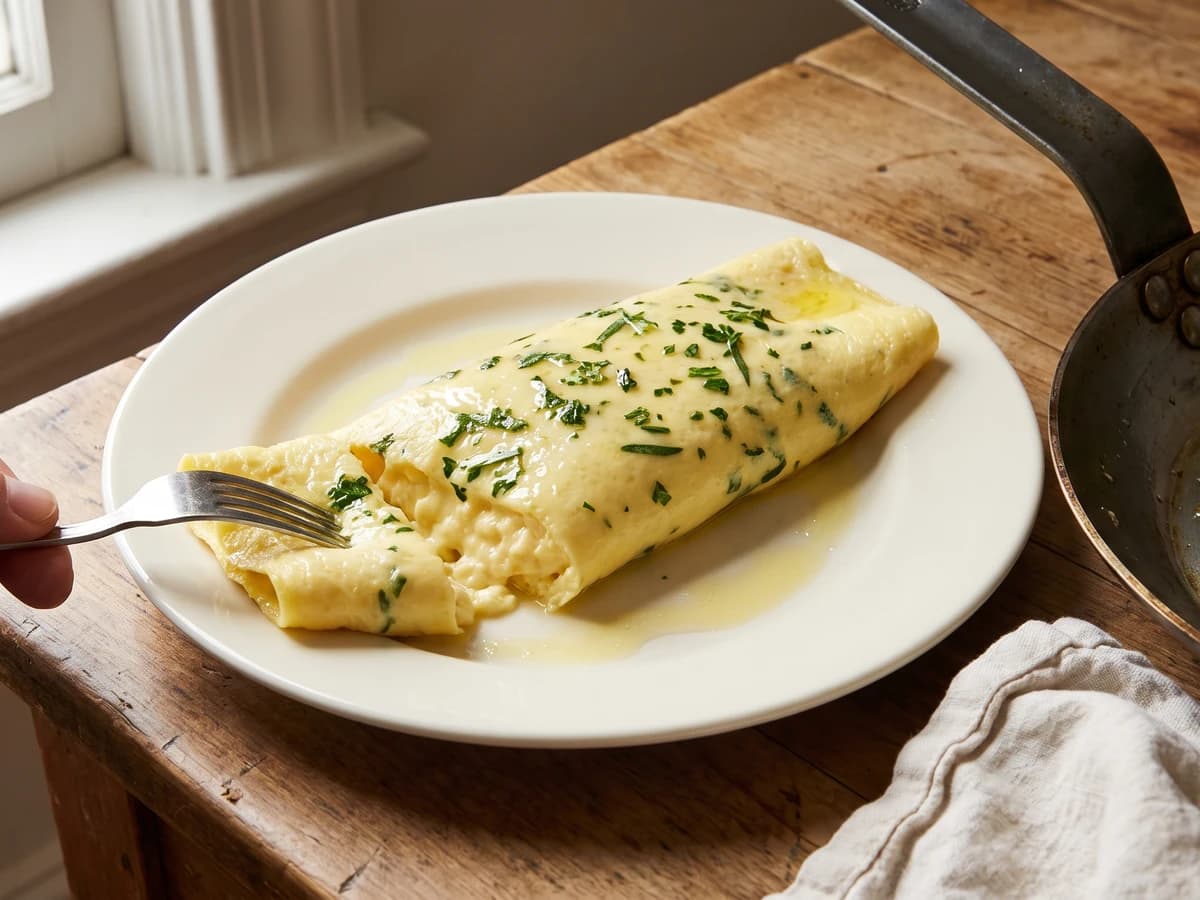
Four tender herbs, hot butter, and two eggs per pan: this rolled omelette teaches the quick hand and good judgment that keep the outside pale and the center creamy.
Chef Juliette
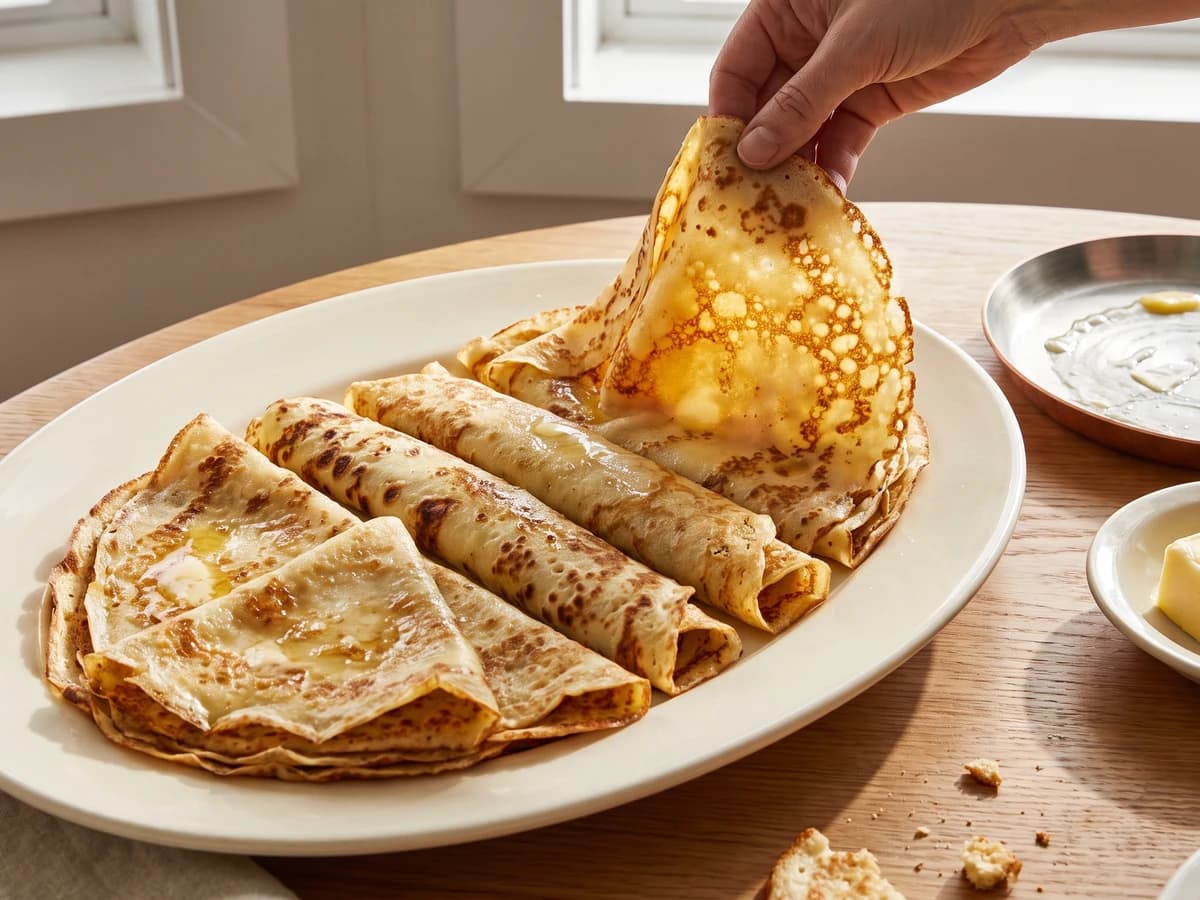
Four batters, one lesson: let the flour drink deeply before cooking, then spread the batter thinly in butter for crêpes and pannequets that bend without becoming tough.
Chef Juliette
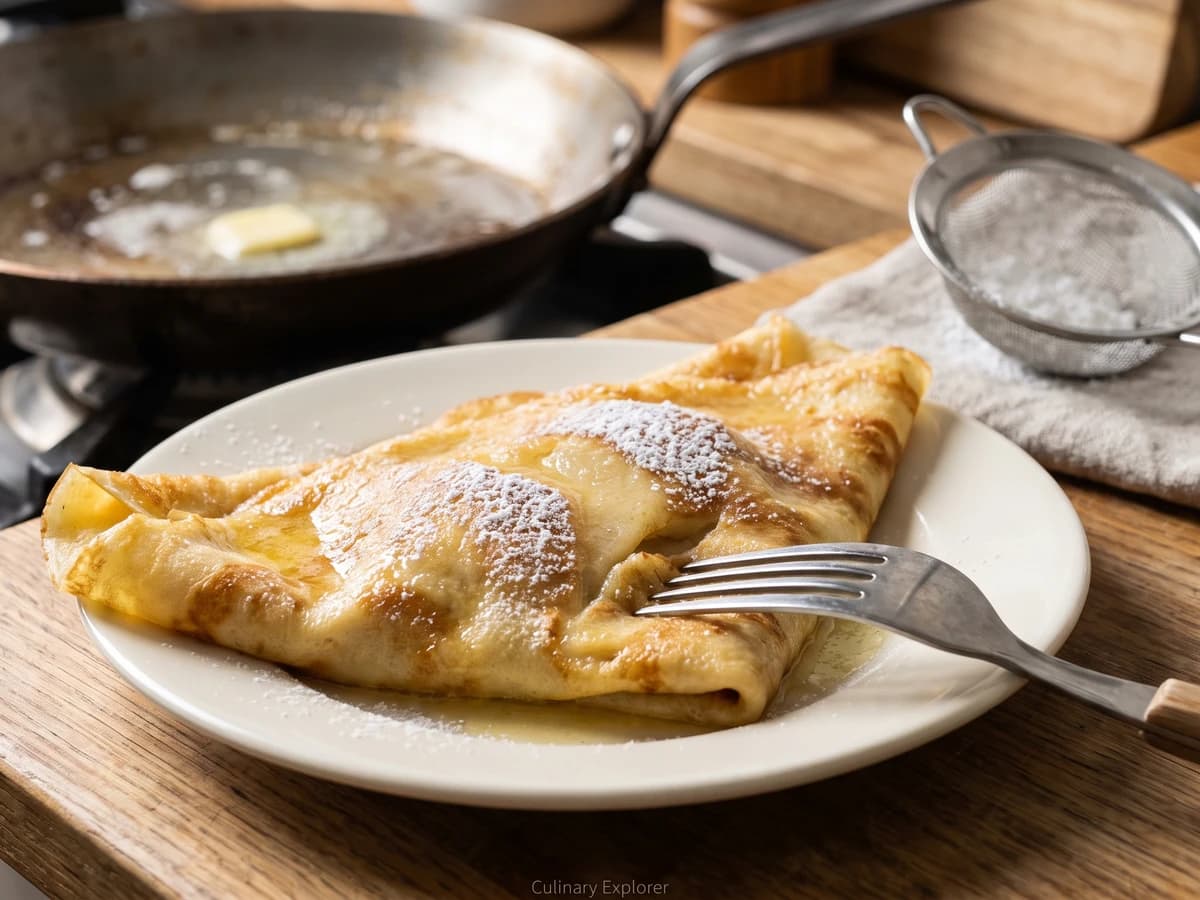
Crêpes au Couvent trap ripe Williams pear dice between two thin pours of sweet batter, then turn in one clean toss and reach the table butter-gold, powdered, and burning hot.