Chef Juliette
Omelette à l’Écossaise
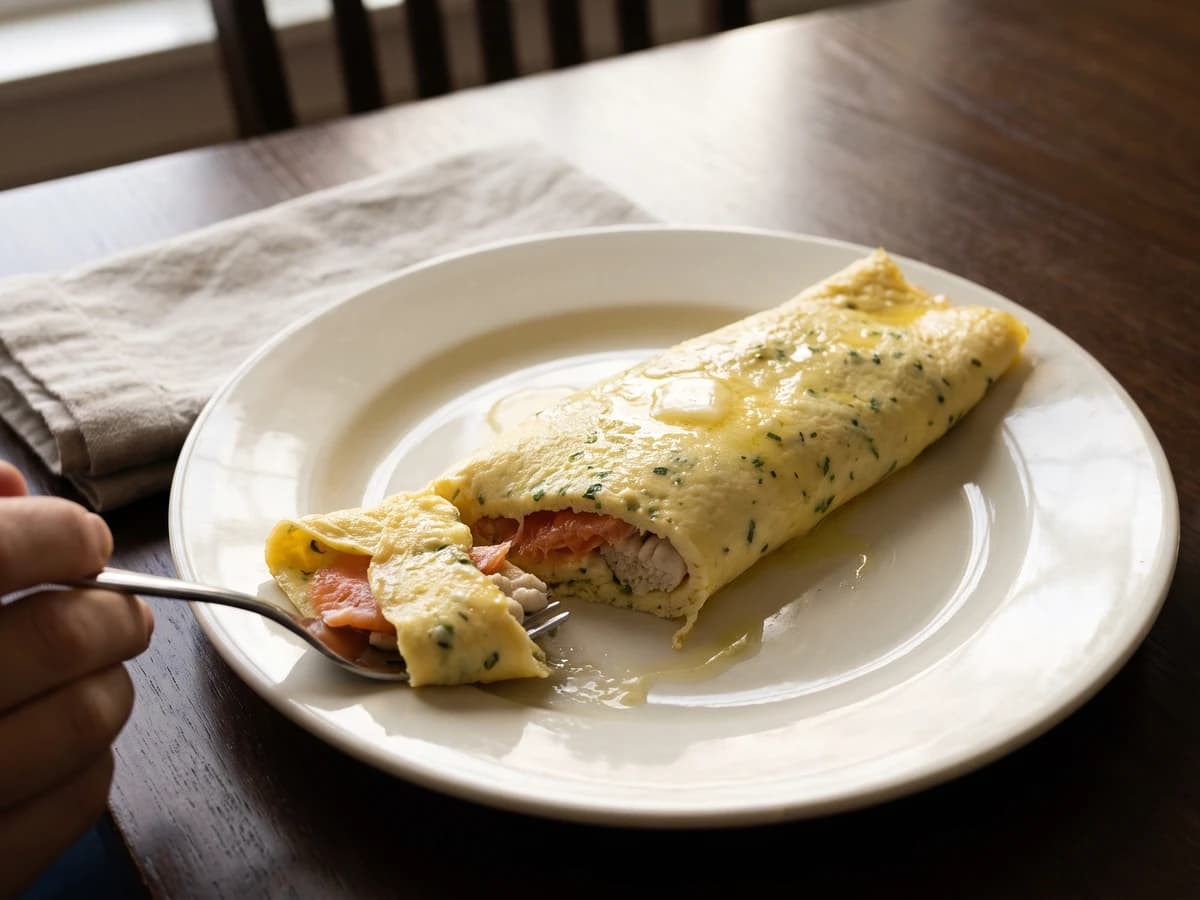
A creamy omelette aux fines herbes closes around smoked-salmon-wrapped herring milts, gently poached in butter. Have the filling ready, then roll the eggs while they still shine.
A cooking platform built around craft, culture, and the stories behind what we eat.
Created by Chef Juliette
Based on No. 492, The Preparation of Omelets, from Le Guide Culinaire (1907) by Auguste Escoffier
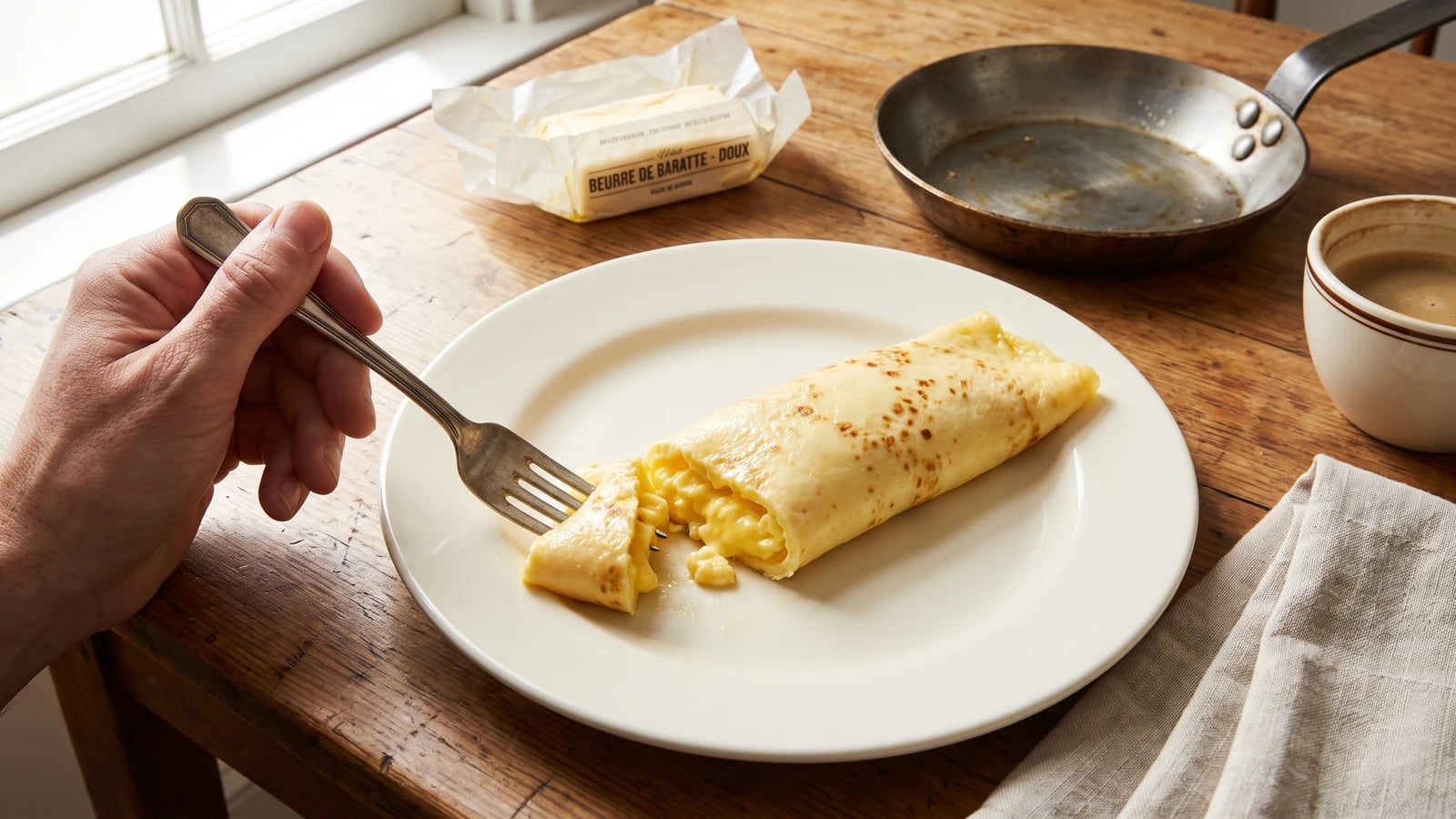
Beurre noisette, evenly warmed eggs, and a swift roll: l'omelette teaches heat control in minutes, with a tender center, a smooth golden skin, and not one unnecessary flourish.
L'omelette (French rolled omelet) teaches heat control with nowhere to hide. The one true thing to know before touching the pan is this: the butter's nutty aroma is your thermometer. Beurre noisette (butter cooked until it smells of hazelnuts) tells you the pan is hot enough to set the eggs evenly, but it is not permission to dawdle.
The original entry assumed an omelet pan held ready and a brigade making each portion to order. A home kitchen needs neither a saucier, a stockpot kept on the fire, nor a salamander for this dish. Its honest equivalent is one 20-centimeter pan and four individual three-egg omelettes, cooked in succession. The brigade's row of pans is scaffolding and can go. The brisk stirring, quick roll, and buttered gloss are the dish, and they stay. One cook, one stove, one evening.
When it is right, the skin is smooth and butter-gold, the center tender rather than wet, and the finished omelette reaches the plate before it has time to consider becoming scrambled eggs. Watch the butter. The moment its foam settles and the nutty scent rises, pour.
L'omelette's practical home is the French household and the Paris café, where eggs are cooked to order and sent directly from pan to plate. Grand kitchens organized it into a family of named preparations, each distinguished by its garnish or finish, while preserving the same brisk stirring and rapid shaping underneath. The canon is not unanimous about a snow-pale surface: this preparation deliberately carries the butter to a nutty aroma, proving that tenderness, not an absence of color, is the true test.
Quantity
12 (about 2 1/2 cups / 600 ml / 600 g out of shell)
Quantity
8 tablespoons (1/2 cup / 120 ml / 113 g)
divided, with 2 tablespoons softened for finishing
Quantity
3/4 teaspoon (3.75 ml / 4.5 g)
Quantity
1/4 teaspoon (1.25 ml / 0.6 g)
| Ingredient | Quantity |
|---|---|
| large eggs | 12 (about 2 1/2 cups / 600 ml / 600 g out of shell) |
| unsalted butterdivided, with 2 tablespoons softened for finishing | 8 tablespoons (1/2 cup / 120 ml / 113 g) |
| fine sea salt | 3/4 teaspoon (3.75 ml / 4.5 g) |
| finely ground white pepper | 1/4 teaspoon (1.25 ml / 0.6 g) |
Crack the eggs into a large bowl and beat them briskly with a fork just until the whites and yolks become one even yellow mixture. Do not beat in a crown of bubbles; the omelette wants an even, close texture rather than a puffed one. Mix in the salt and white pepper, then divide the eggs equally among four small bowls. Fill four serving plates with hot tap water so they warm while you cook, then dry each plate before its omelette arrives.
Set the 20-centimeter pan over medium-high heat for about 45 seconds. Add 1 1/2 tablespoons of the cooking butter and swirl it across the entire surface. It will melt, foam, then quiet slightly as its milk solids turn light chestnut and the aroma changes from creamy to distinctly nutty. That scent is the signal named by the original method, so have the eggs in your hand when it arrives. If the specks turn black or the butter smells acrid, discard it, wipe the pan carefully, and borrow from the finishing butter for a clean start. A matte omelette is better than a bitter one.
Pour one portion of egg into the beurre noisette at once. Stir briskly in small circles with a table fork while shaking the pan back and forth, using the fork in carbon steel or a silicone fork in nonstick. Draw the setting egg from the edges toward the center so the whole mass warms evenly. After 20 to 30 seconds, small tender curds should fill the pan while the surface remains glossy. If the base seizes while loose egg remains on top, lift the pan off the heat and keep stirring until the temperature evens out, then return it for only a few seconds. Ça se rattrape.
Stop stirring and spread the eggs into an even round with the back of the fork. Let the base knit together for 5 to 10 seconds, just until the omelette moves as one piece when the pan is shaken. The top should be moist and tender, but there must be no pool of liquid egg. If it still runs, hold the pan over gentle heat for a few more seconds rather than turning the heat up.
Tilt the pan away from you. Fold the near third of the omelette toward the center, then encourage the eggs toward the far rim, rolling them into a compact tapered parcel. Grip the pan from underneath, bring its rim close to a warm plate, and invert the omelette so it lands seam-side down. Work swiftly because the eggs continue setting with every second. If the skin tears, tuck the loose edge underneath and turn that side toward the plate. Never apologize at your own table.
Draw 1/2 tablespoon of softened butter quickly over the surface of the omelette. It should melt into a fine gloss rather than collect in a greasy puddle. Repeat the method with the remaining three portions, wiping away any scorched flecks before adding fresh butter. Pass each omelette to the table as it is ready when possible; if all four must arrive together, hold them on their warm plates under a loose cover for no longer than 8 minutes. À table!
1 serving (about 165g)
Culinary guides, cultural storytelling, and the editorial depth that makes cooking meaningful.
Discover Culinary ExplorerChef Juliette
A creamy omelette aux fines herbes closes around smoked-salmon-wrapped herring milts, gently poached in butter. Have the filling ready, then roll the eggs while they still shine.
Chef Juliette
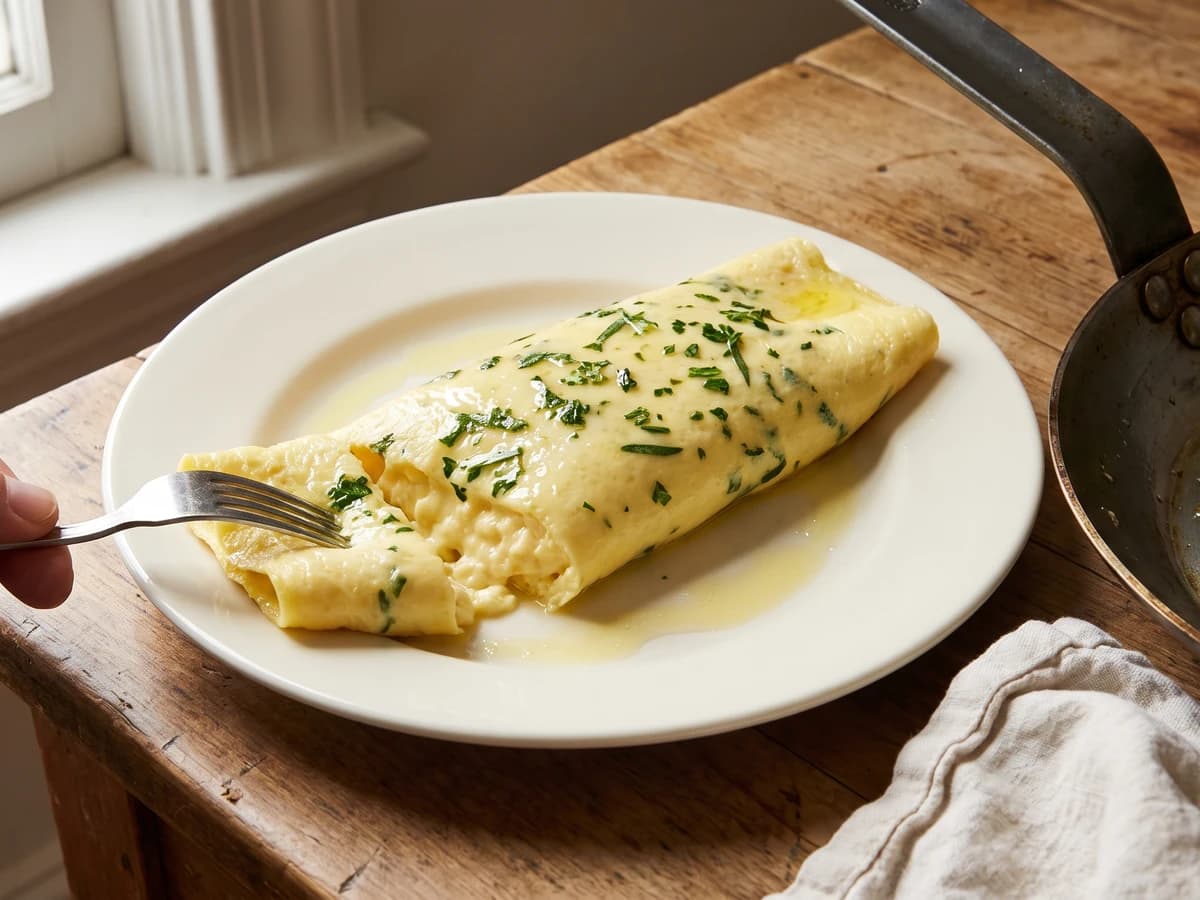
Four tender herbs, hot butter, and two eggs per pan: this rolled omelette teaches the quick hand and good judgment that keep the outside pale and the center creamy.
Chef Juliette
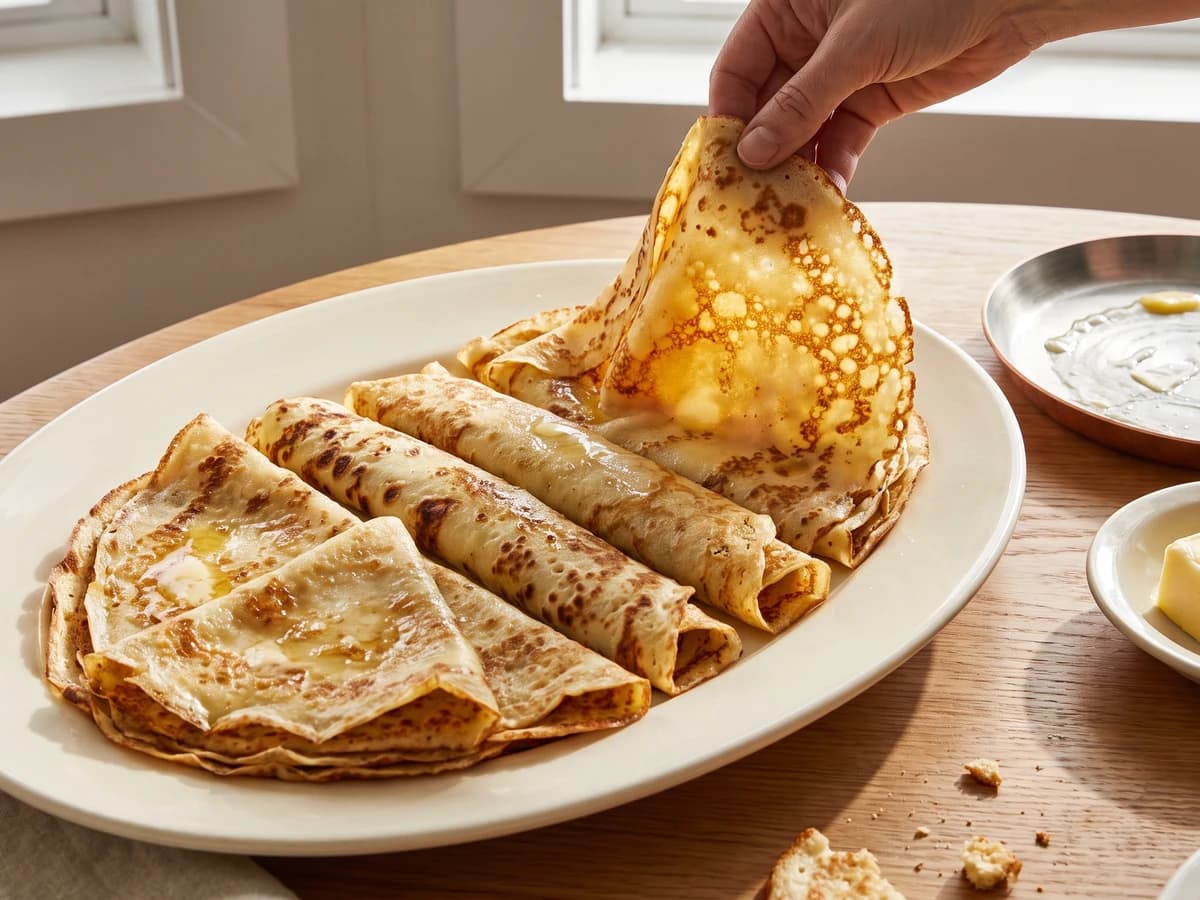
Four batters, one lesson: let the flour drink deeply before cooking, then spread the batter thinly in butter for crêpes and pannequets that bend without becoming tough.
Chef Juliette
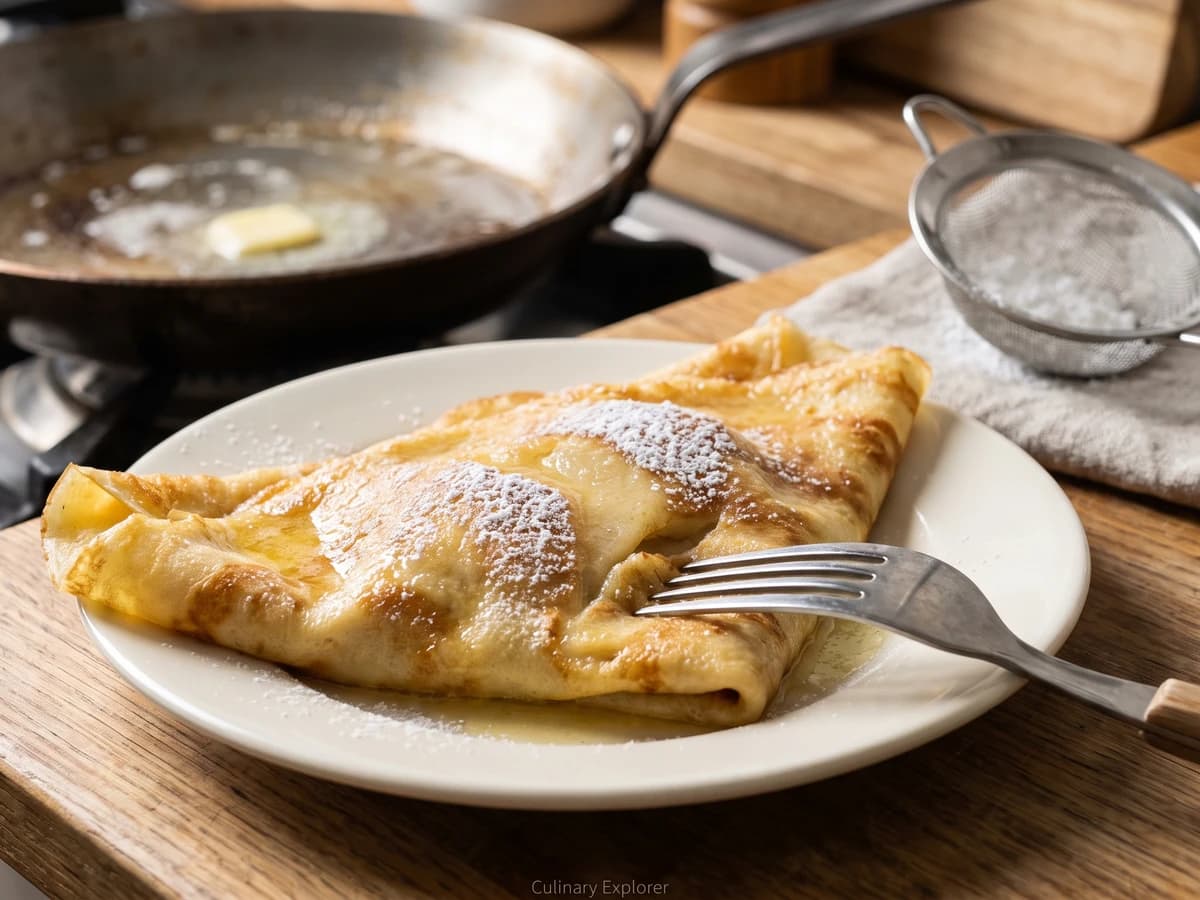
Crêpes au Couvent trap ripe Williams pear dice between two thin pours of sweet batter, then turn in one clean toss and reach the table butter-gold, powdered, and burning hot.