Chef Juliette
Omelette à l’Écossaise
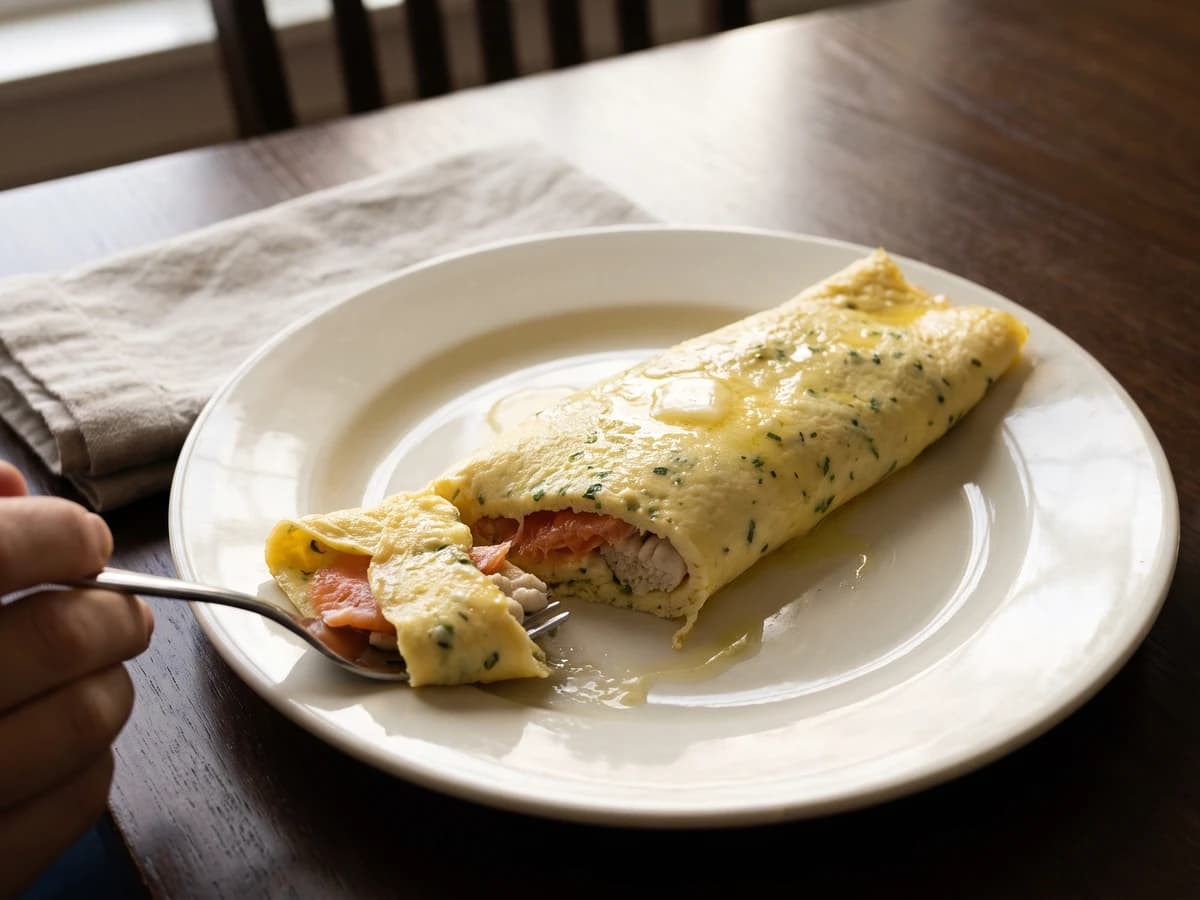
A creamy omelette aux fines herbes closes around smoked-salmon-wrapped herring milts, gently poached in butter. Have the filling ready, then roll the eggs while they still shine.
A cooking platform built around craft, culture, and the stories behind what we eat.
Created by Chef Juliette
Based on No. 490, Fried Eggs à la Verdi, from Le Guide Culinaire (1907) by Auguste Escoffier
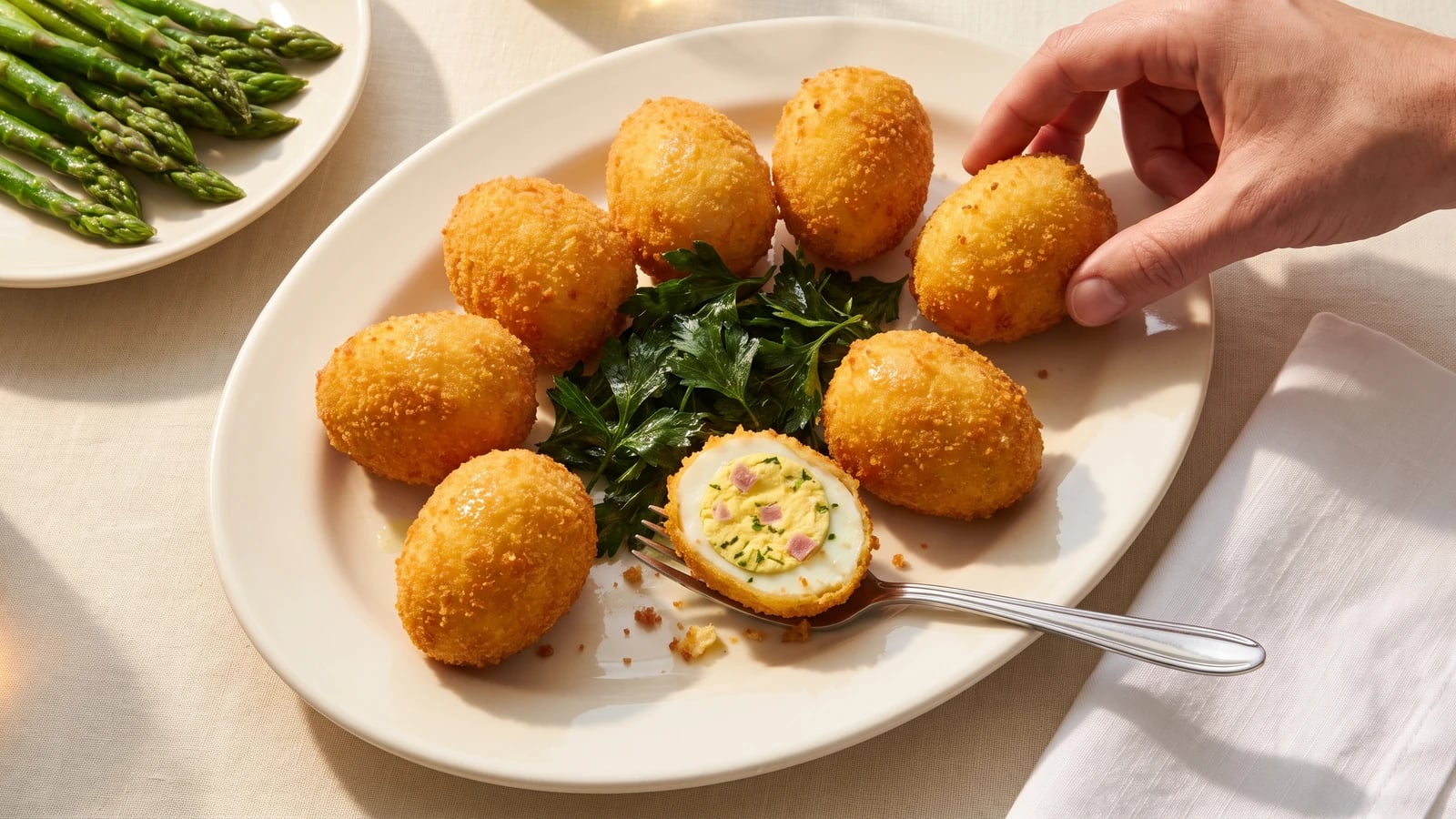
Hard-cooked eggs rebuilt with buttery yolk, cold Béchamel, herbs, and ham, then coated à l’anglaise and fried crisp: a precise little lesson in shaping, breading, and serving without delay.
Œufs Frits à la Verdi (fried stuffed eggs) teach one exact lesson: cold, firm shaping before hot fat. Hard-cooked egg whites are filled back to the silhouette of a whole egg with yolks pounded with butter, thick Béchamel, cooked herbs, and lean ham, then enclosed in Anglaise (beaten egg, oil, and seasoning) and fine fresh crumbs. If the filling is warm or loose, the coating cannot save it. Chill first, fry second.
The original entry assumes cold Béchamel ready from the saucier’s pot, cooked herbs at hand, a deep-fat range already hot, and another pair of hands to send the asparagus separately. At home, you need a spoonful of sauce made ahead, a narrow saucepan with a thermometer, and asparagus blanched before the frying begins. There is no stock or salamander in this dish, so neither belongs. The ready station is brigade scaffolding; the buttered-yolk ratio, reconstructed shape, Anglaise, and fine crumbs are the dish and stay exactly where they are. This version scales six eggs to four and changes only the vessel and batch size. One cook, one stove, one evening.
When it is right, each piece arrives deep gold and crisp at the edges, with a tender white and a rich, herb-flecked center. Fried parsley sits in the middle, while the asparagus keeps its own clean green dish alongside. The step that matters is the rest after shaping. Give the eggs their full chill, then the hot fat has time to set the crust before the filling can move.
Œufs Verdi belong to the Parisian grand-kitchen repertoire rather than to a regional farmhouse table, part of the classical habit of naming composed dishes for figures from music and the stage. The reference is to Giuseppe Verdi, while the method is thoroughly French: hard-cooked eggs are reconstructed, coated in Anglaise, and fried, with asparagus tips sent separately as a formal garnish. The common misunderstanding lies in the English title, since these are not pan-fried breakfast eggs but a carefully breaded entrée that traveled naturally from grand service to the bourgeois dinner table.
Quantity
4
Quantity
2 tablespoons plus 2 teaspoons (40 ml / 38 g)
softened and divided
Quantity
1 tablespoon plus 1 teaspoon (20 ml / 20 g)
well chilled
Quantity
¼ cup loosely packed (60 ml / 10 g), yielding about 1 tablespoon plus 1 teaspoon cooked
finely chopped
Quantity
2 teaspoons (10 ml / 10 g)
very finely chopped
Quantity
to taste
Quantity
to taste
Quantity
1
Quantity
1 tablespoon (15 ml / 14 g)
Quantity
1½ cups (355 ml / 90 g)
Quantity
4 cups (950 ml / 875 g)
Quantity
1 cup loosely packed (240 ml / 25 g)
washed and dried completely
Quantity
3 cups loosely packed (710 ml / 340 g), about 32 tips
trimmed to short lengths
| Ingredient | Quantity |
|---|---|
| large eggs, for hard-cooking | 4 |
| unsalted buttersoftened and divided | 2 tablespoons plus 2 teaspoons (40 ml / 38 g) |
| thick Béchamelwell chilled | 1 tablespoon plus 1 teaspoon (20 ml / 20 g) |
| mixed tender herbs, chiefly parsley with chervil, chives, and tarragonfinely chopped | ¼ cup loosely packed (60 ml / 10 g), yielding about 1 tablespoon plus 1 teaspoon cooked |
| lean cooked hamvery finely chopped | 2 teaspoons (10 ml / 10 g) |
| fine salt | to taste |
| ground white pepper | to taste |
| large egg, for the Anglaise | 1 |
| refined grapeseed or sunflower oil, for the Anglaise | 1 tablespoon (15 ml / 14 g) |
| fine fresh white breadcrumbs | 1½ cups (355 ml / 90 g) |
| refined grapeseed or sunflower oil, for deep-frying | 4 cups (950 ml / 875 g) |
| flat-leaf parsley sprigswashed and dried completely | 1 cup loosely packed (240 ml / 25 g) |
| asparagus tipstrimmed to short lengths | 3 cups loosely packed (710 ml / 340 g), about 32 tips |
Set the four eggs in a saucepan, cover them with cool water, and bring just to the boil. Cover, remove from the heat, and leave for 11 minutes, then transfer them immediately to ice water. Let them cool completely before peeling. Firm yolks are necessary for pounding, but the gentle finish keeps the whites tender enough to cut without turning rubbery.
Melt 1 teaspoon of the measured butter over low heat. Add the chopped herbs and stir for 30 to 45 seconds, just until they soften and smell vivid, then spread them on a plate to cool. Blanch the asparagus tips in well-salted boiling water until bright green and just tender, about 2 minutes. Chill them in ice water, drain, and dry them carefully before refrigerating. The herbs go into the eggs; the asparagus waits for its separate dish.
Cut the chilled eggs lengthwise and lift out the yolks without tearing the whites. Press the yolks through a fine sieve, then pound them with the remaining softened butter until smooth and close-textured. Work in the thick, cold Béchamel, the cooled cooked herbs with their butter, and the chopped ham. Season with salt and white pepper. The filling should hold a clean ridge from the spoon. If it looks crumbly, keep working it before adding anything; yolk and butter often look wrong just before they come together. If it turns soft, chill it for 10 minutes.
Divide the filling evenly among the eight half-whites, packing it into each cavity and mounding it generously above the rim. Smooth each mound with the dampened blade of a small knife so it resembles the missing half of the egg, convex and neat rather than geometric. Set the pieces on a lined tray and chill uncovered for at least 25 minutes. If a white tears, use a little filling as mortar, set the damaged side against the mound, and chill it firmly. Ça se rattrape.
Beat the Anglaise egg with its tablespoon of oil, a pinch of salt, and a little white pepper until no ropes of egg white remain. Spread the fine fresh breadcrumbs in a shallow dish. Turn each reconstructed egg carefully through the Anglaise, coat it completely in crumbs, and press very lightly so the crumbs follow the shape. Set the coated eggs back on the tray. If the coating slides away, blot that egg dry, coat it again, and chill it for 10 minutes before frying.
Pour the frying oil into a heavy 3-quart saucepan, leaving the vessel no more than one-third full, and heat it to 350°F (175°C). Lower the completely dry parsley into the oil with a spider and fry for 8 to 12 seconds, just until crisp and dark green, then drain it on a wire rack. Fry the eggs two or three at a time for 2 to 2½ minutes, turning once, until evenly deep gold. Let the oil return to temperature between batches. The book’s six minutes describes when service begins, not six minutes for each egg in the fat. If crumbs begin shedding, stop loading the pot, skim them out, and restore the temperature before continuing; cool oil loosens the crust.
Rewarm the asparagus tips for 30 seconds in gently simmering salted water, then drain them very thoroughly and arrange them in a warmed shallow serving dish. Set the fried eggs on a warm oval platter with the fried parsley gathered in the center. Bring the asparagus separately and serve without delay, while the crumbs remain crisp and the buttery filling is warm. À table!
1 serving (about 200g)
Culinary guides, cultural storytelling, and the editorial depth that makes cooking meaningful.
Discover Culinary ExplorerChef Juliette
A creamy omelette aux fines herbes closes around smoked-salmon-wrapped herring milts, gently poached in butter. Have the filling ready, then roll the eggs while they still shine.
Chef Juliette
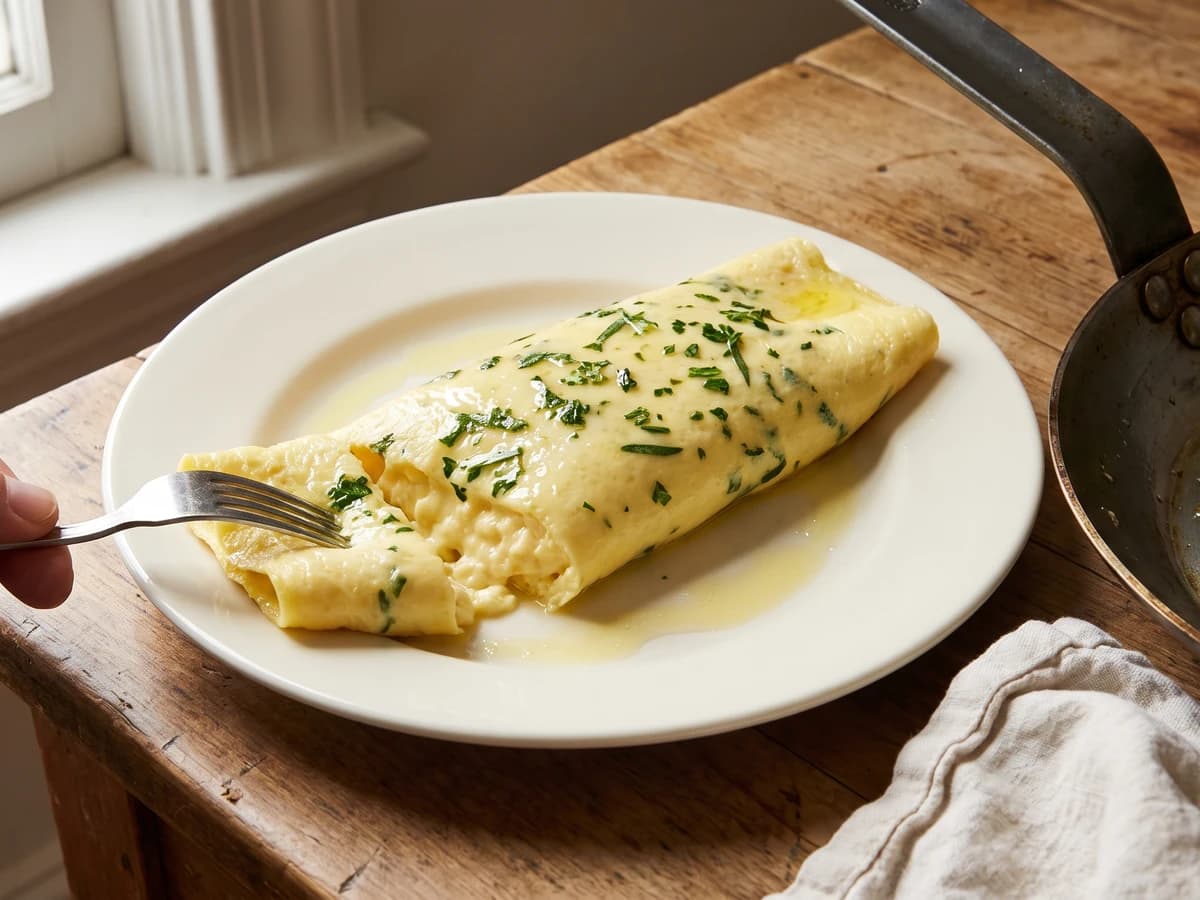
Four tender herbs, hot butter, and two eggs per pan: this rolled omelette teaches the quick hand and good judgment that keep the outside pale and the center creamy.
Chef Juliette
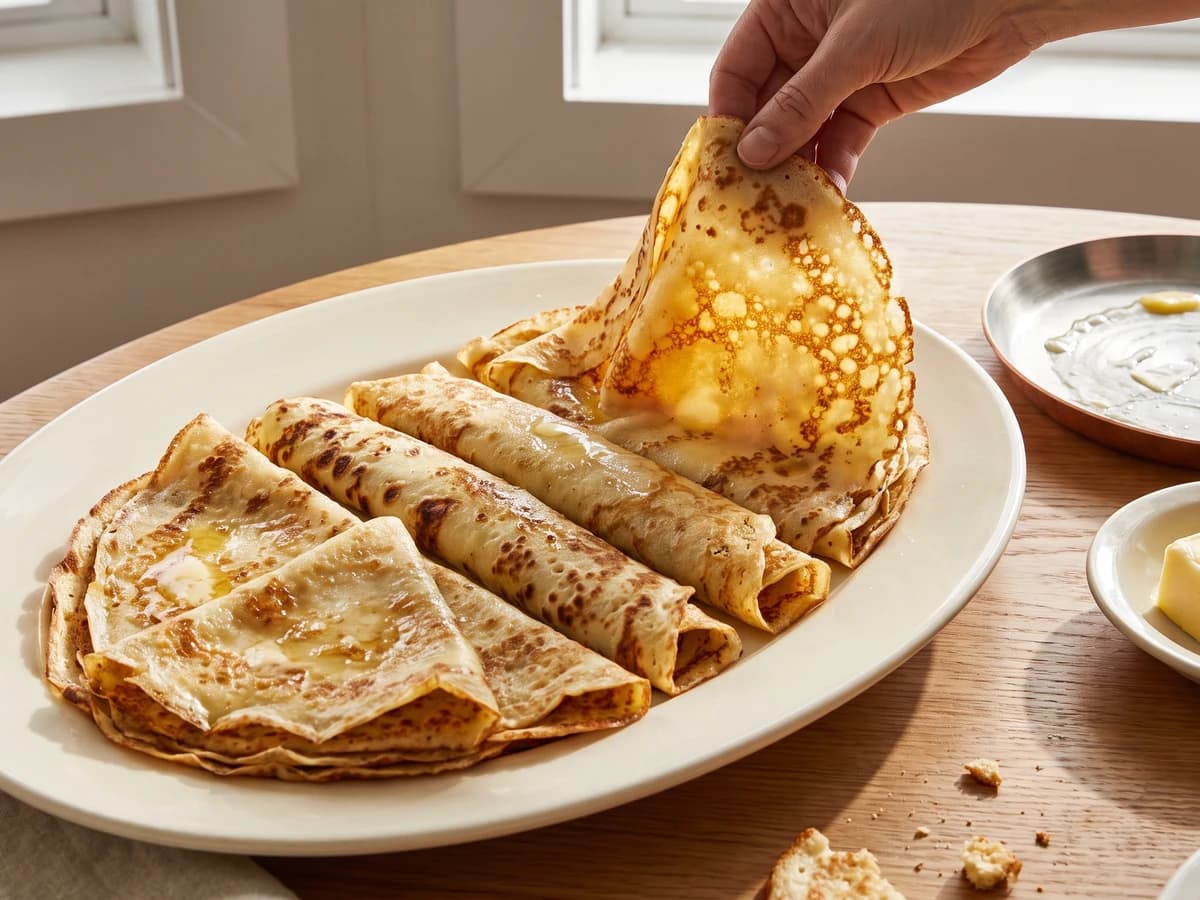
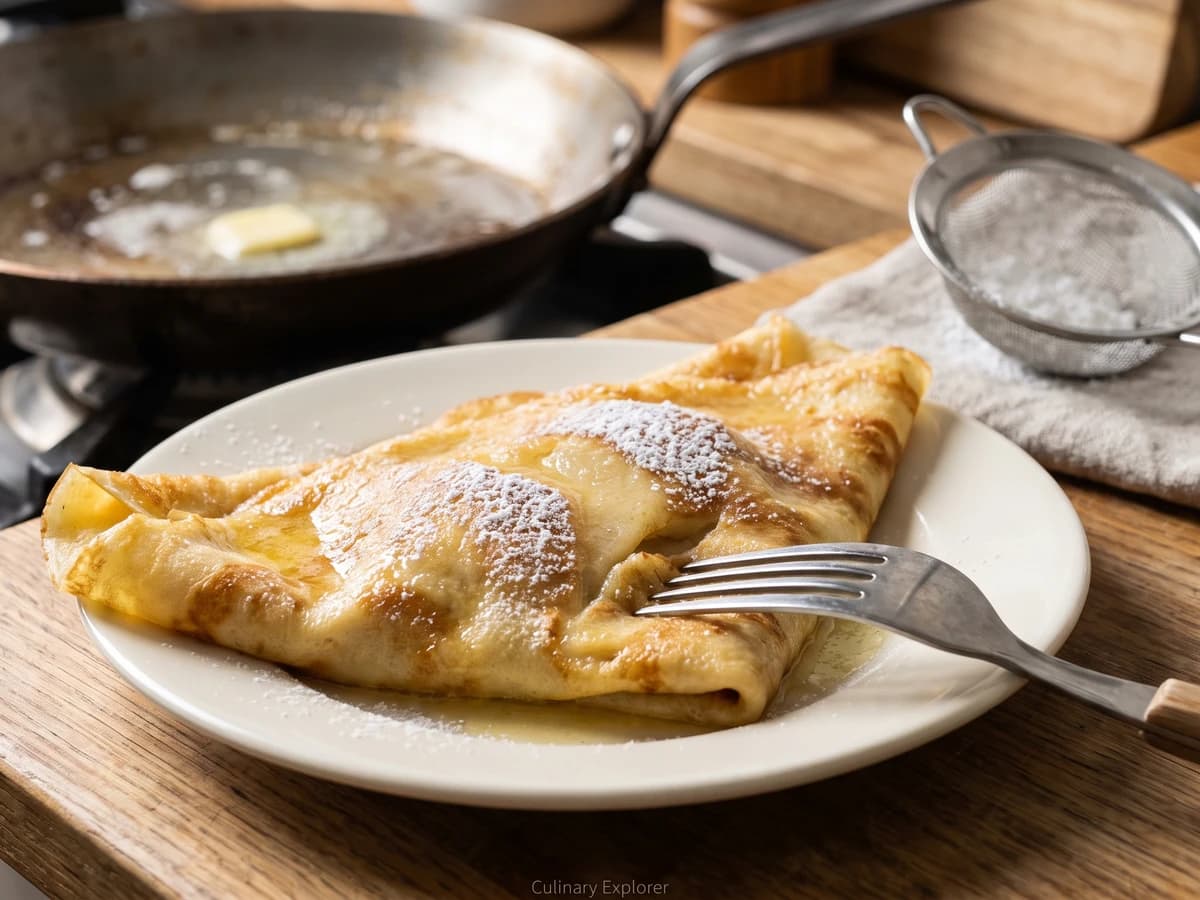
Four batters, one lesson: let the flour drink deeply before cooking, then spread the batter thinly in butter for crêpes and pannequets that bend without becoming tough.
Chef Juliette
Crêpes au Couvent trap ripe Williams pear dice between two thin pours of sweet batter, then turn in one clean toss and reach the table butter-gold, powdered, and burning hot.