Chef Juliette
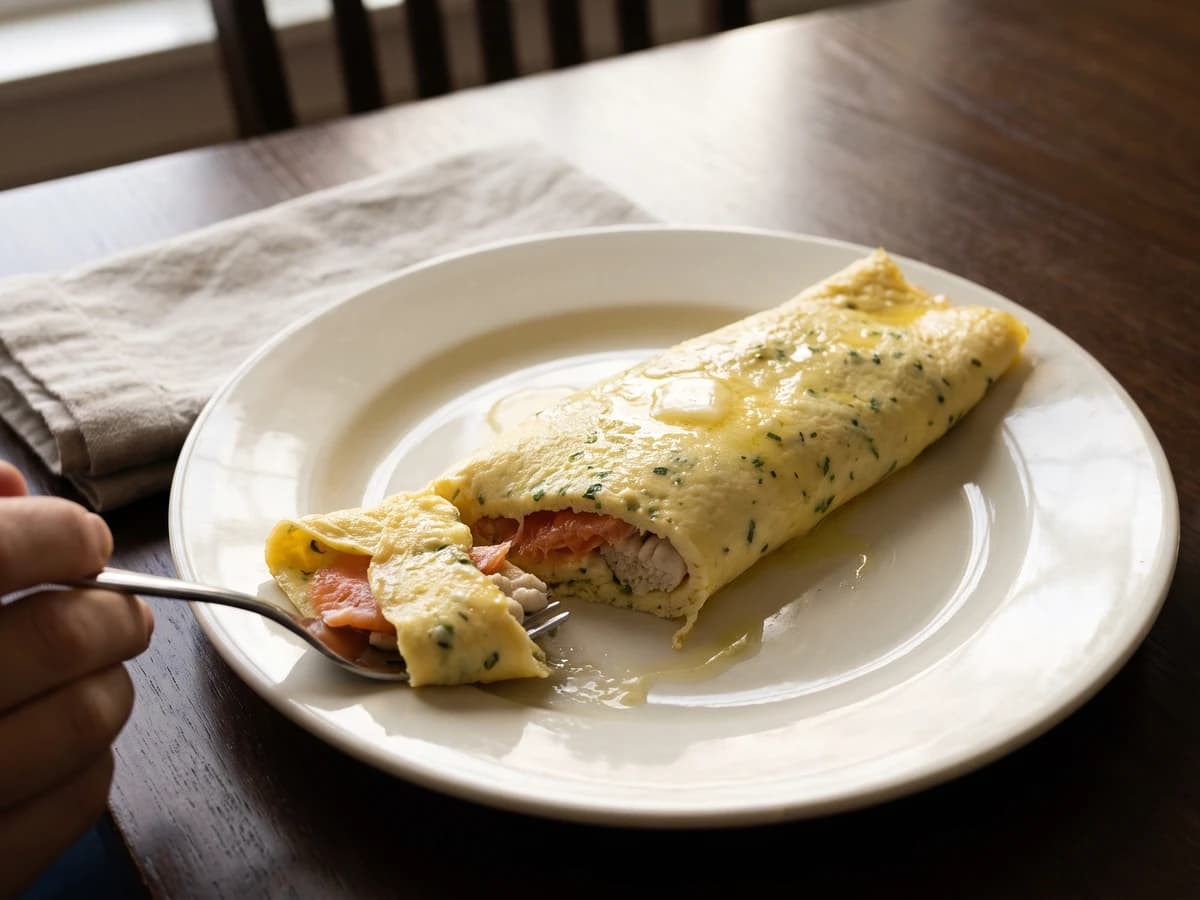
Omelette à l’Écossaise
A creamy omelette aux fines herbes closes around smoked-salmon-wrapped herring milts, gently poached in butter. Have the filling ready, then roll the eggs while they still shine.
A cooking platform built around craft, culture, and the stories behind what we eat.
Created by Chef Juliette
Based on No. 489, Fried Eggs à la Romaine, from Le Guide Culinaire (1907) by Auguste Escoffier
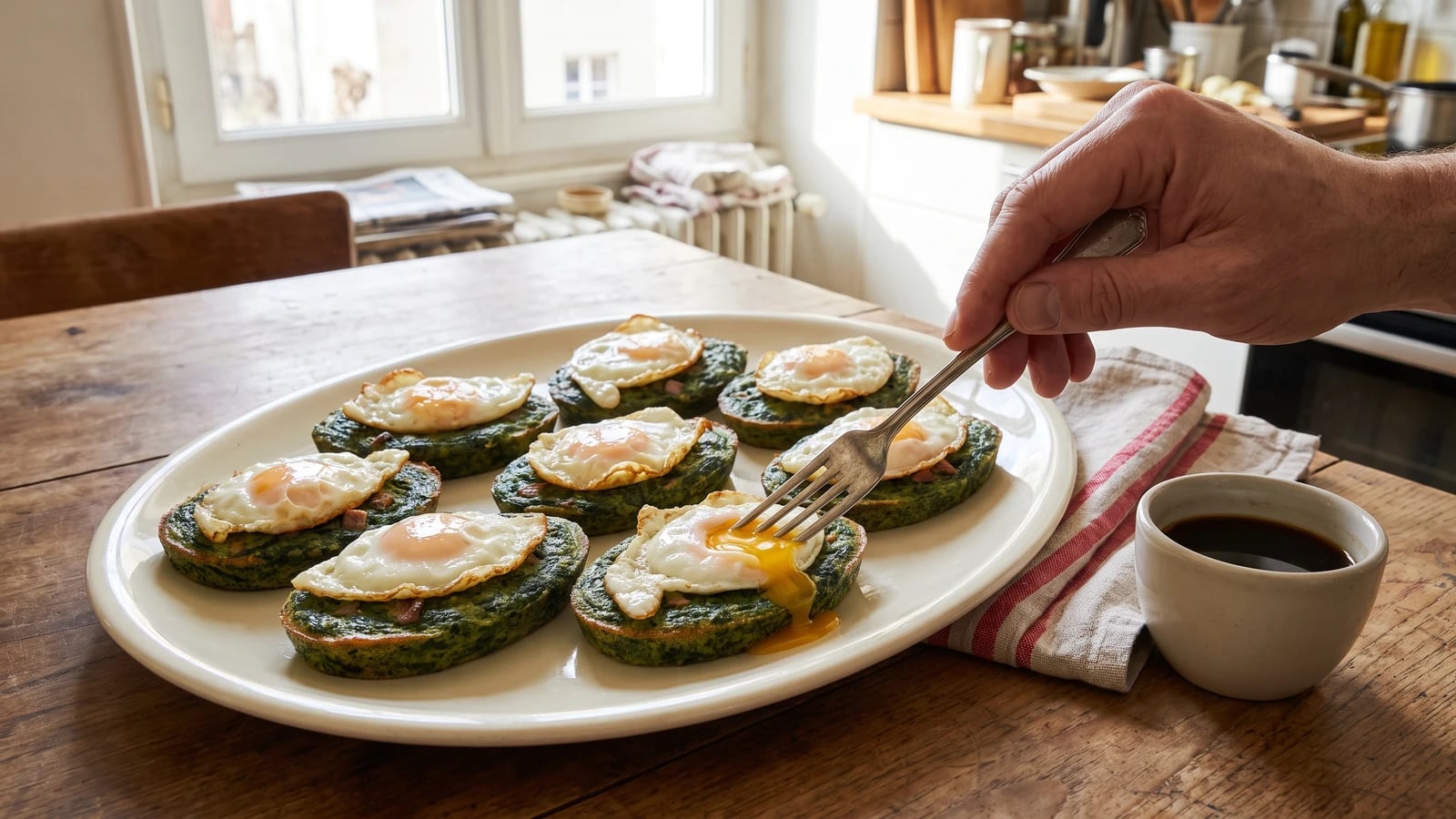
Crisp-edged eggs, liquid yolks, and butter-browned spinach subrics carrying diced anchovy: a compact classical composition that teaches control of hot fat and rewards immediate serving.
Œufs frits à la Romaine teaches the discipline of contrast: a crisp white around a flowing yolk, set over tender spinach sharpened with anchovy. The subrics, little oval vegetable cakes, give the eggs structure and absorb the yolk without becoming soft. One thing decides the dish before you touch the pan: the frying oil must be hot enough to seize the white immediately without scorching it.
The original formula assumed a saucier with the reduced binding sauce ready and a fry station turning subrics and eggs together at the instant of service. At home, make the linked subrics as their own finished component, hold eight briefly on a rack, then fry the eggs in small batches. The separate stations were brigade scaffolding and can go; the anchovy in the spinach and the eggs fried in oil are the dish and must stay. One cook, one stove, one evening.
Keep the yolks fluid and the whites just bronzed at their crinkled edges. The anchovy supplies the seasoning beneath them, so taste before reaching for salt. Bring the oil to its proper heat before the first egg meets it, and the rest moves quickly.
Œufs frits à la Romaine belongs to the Parisian grand-kitchen repertoire, where geographic names often signaled an ingredient affinity rather than a literal regional household recipe. Here à la romaine means spinach sharpened with anchovy beneath eggs fried in oil, a French reading of the Roman pairing of green leaves and salt fish. It should not be mistaken for a documented Roman breakfast; the little subrics place it firmly within the working French canon.
Quantity
8 small oval Subrics d’Épinards (No. 2137)
finished with the diced anchovy incorporated into the spinach mixture and kept warm
Quantity
6 fillets (about 1 oz / 28 g), for the Subrics d’Épinards (No. 2137)
drained and finely diced
Quantity
8
Quantity
3 cups (710 ml / 645 g)
for frying
| Ingredient | Quantity |
|---|---|
| prepared spinach subricsfinished with the diced anchovy incorporated into the spinach mixture and kept warm | 8 small oval Subrics d’Épinards (No. 2137) |
| oil-packed anchovy filletsdrained and finely diced | 6 fillets (about 1 oz / 28 g), for the Subrics d’Épinards (No. 2137) |
| large eggs | 8 |
| refined olive oilfor frying | 3 cups (710 ml / 645 g) |
Have the Subrics d’Épinards (No. 2137) finished according to their own formula, with the diced anchovy incorporated into the spinach preparation as this entry requires. Set the eight warm ovals on a wire rack over a sheet pan and hold them in a 200°F / 95°C oven while the oil heats. Keep them on the rack, not a flat plate, so their butter-browned undersides remain crisp.
Pour the refined olive oil into a deep-sided 10-inch / 25 cm sauté pan and heat it to 375°F / 190°C. The surface should shimmer without smoking, and a thread of egg white dropped in should tighten, bubble, and float at once. If it sinks quietly, wait; lukewarm oil makes greasy, wandering whites.
Crack two eggs into separate small cups. Slide them gently into opposite sides of the oil, then use two tablespoons to sweep the loose white inward around each yolk. Spoon a little hot oil over the whites, avoiding the yolks, and fry for 45 to 60 seconds, until the edges are crinkled and pale gold while the yolks remain soft beneath a thin veil of white. If a white races into ragged threads, don't discard it. Ça se rattrape: fold the strands back toward the yolk with the spoons, then let the oil return to 375°F / 190°C before adding the next eggs. Drain each pair on a clean wire rack and repeat.
Arrange two warm Subrics d’Épinards (No. 2137) on each warmed plate and place one fried egg squarely over each oval. Serve the moment the final pair is drained. No extra sauce or ornamental garnish is needed; the yolk runs into the anchovy spinach and finishes the composition at the table. À table!
1 serving (about 205g)
Culinary guides, cultural storytelling, and the editorial depth that makes cooking meaningful.
Discover Culinary ExplorerChef Juliette
A creamy omelette aux fines herbes closes around smoked-salmon-wrapped herring milts, gently poached in butter. Have the filling ready, then roll the eggs while they still shine.
Chef Juliette
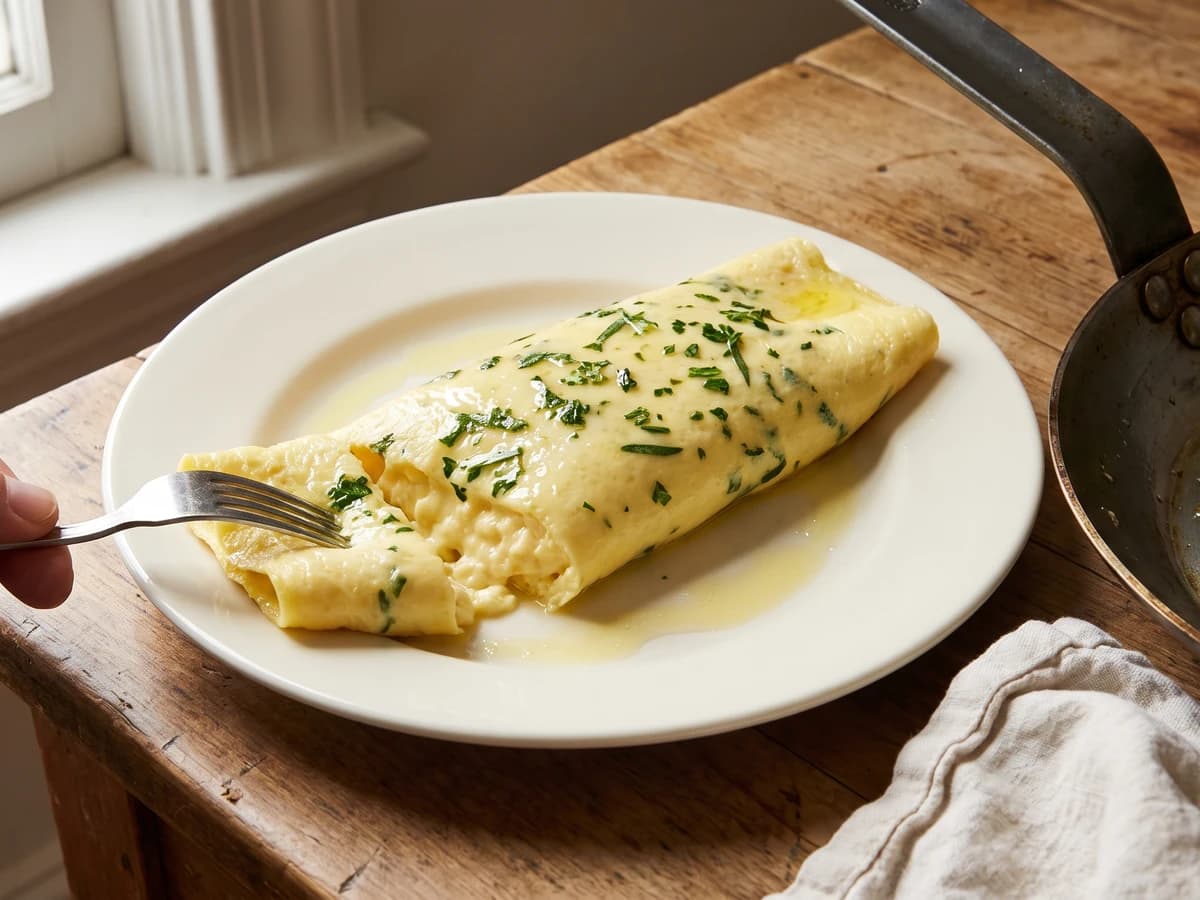
Four tender herbs, hot butter, and two eggs per pan: this rolled omelette teaches the quick hand and good judgment that keep the outside pale and the center creamy.
Chef Juliette
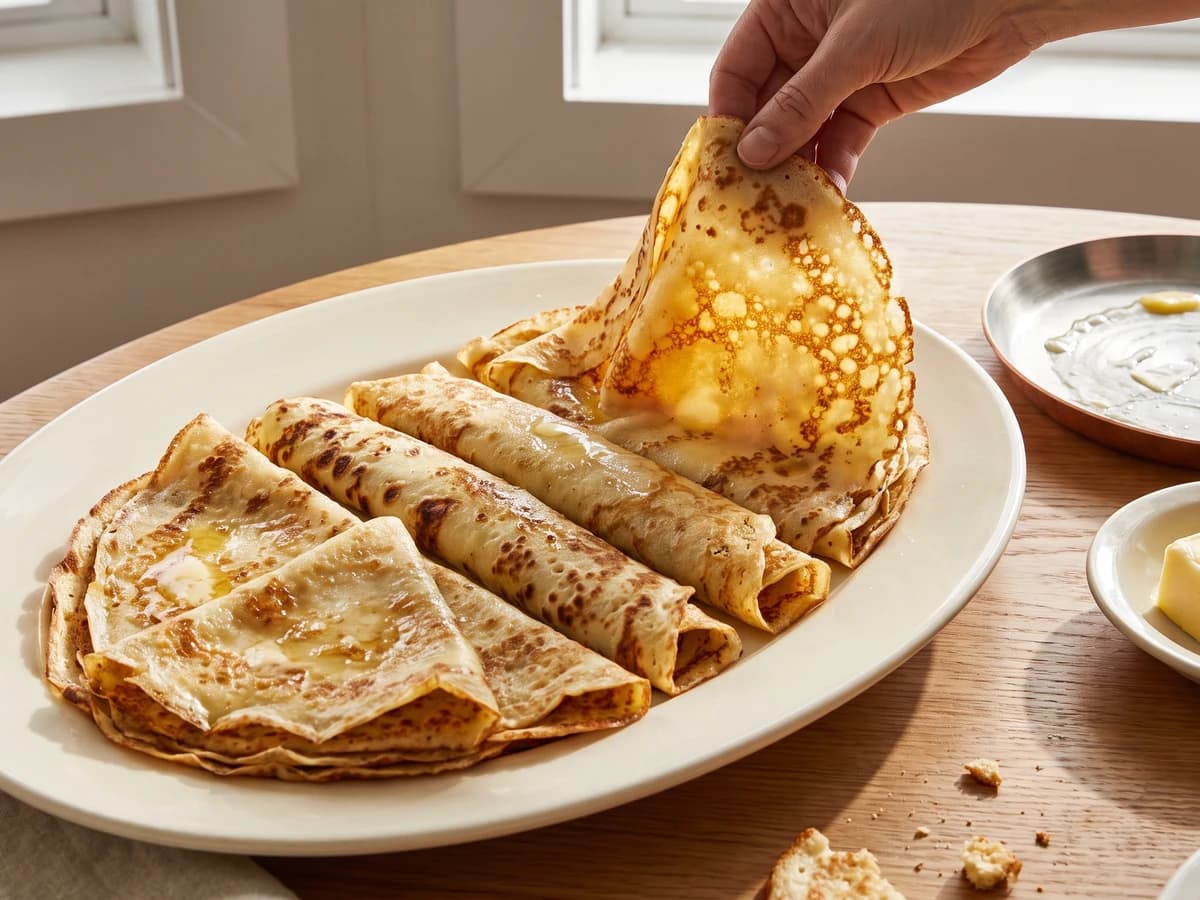
Four batters, one lesson: let the flour drink deeply before cooking, then spread the batter thinly in butter for crêpes and pannequets that bend without becoming tough.
Chef Juliette
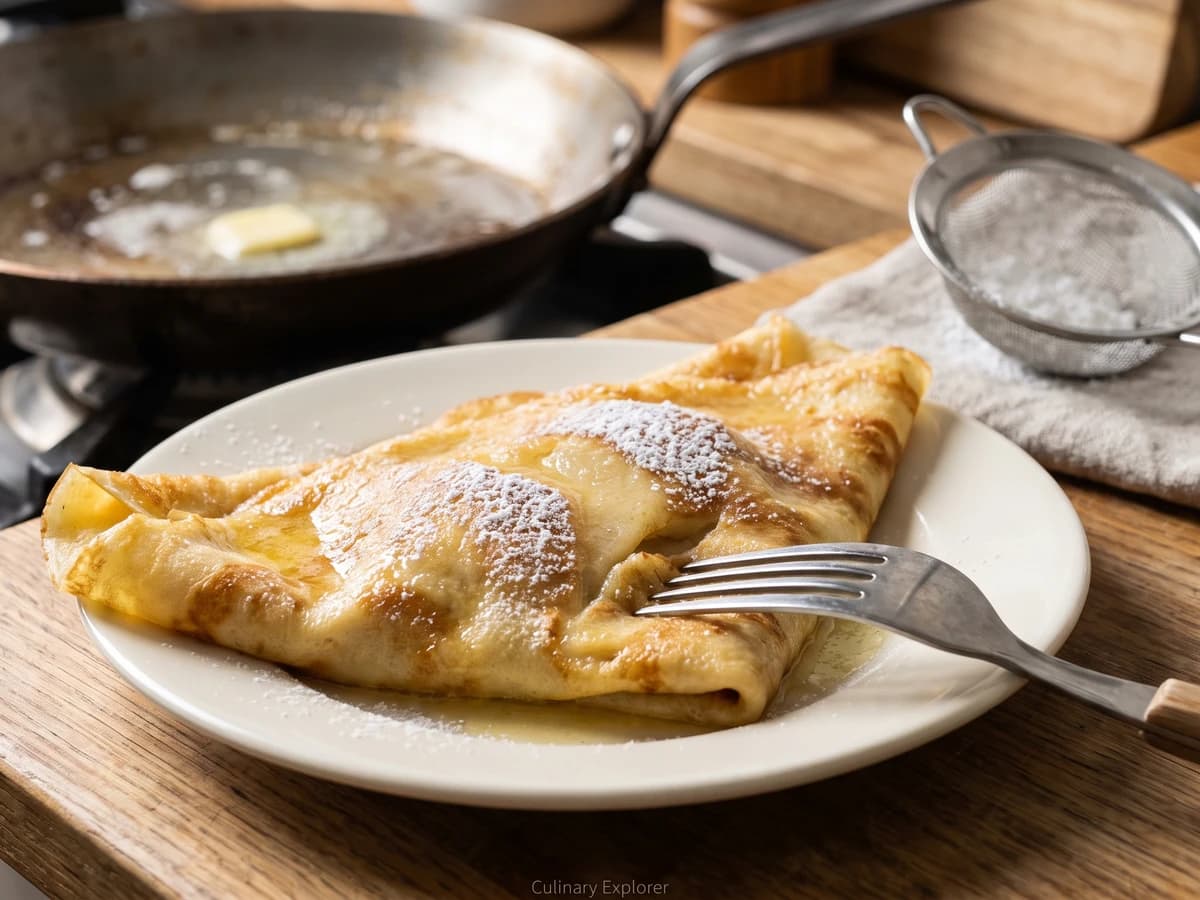
Crêpes au Couvent trap ripe Williams pear dice between two thin pours of sweet batter, then turn in one clean toss and reach the table butter-gold, powdered, and burning hot.