Chef Juliette
Omelette à l’Écossaise
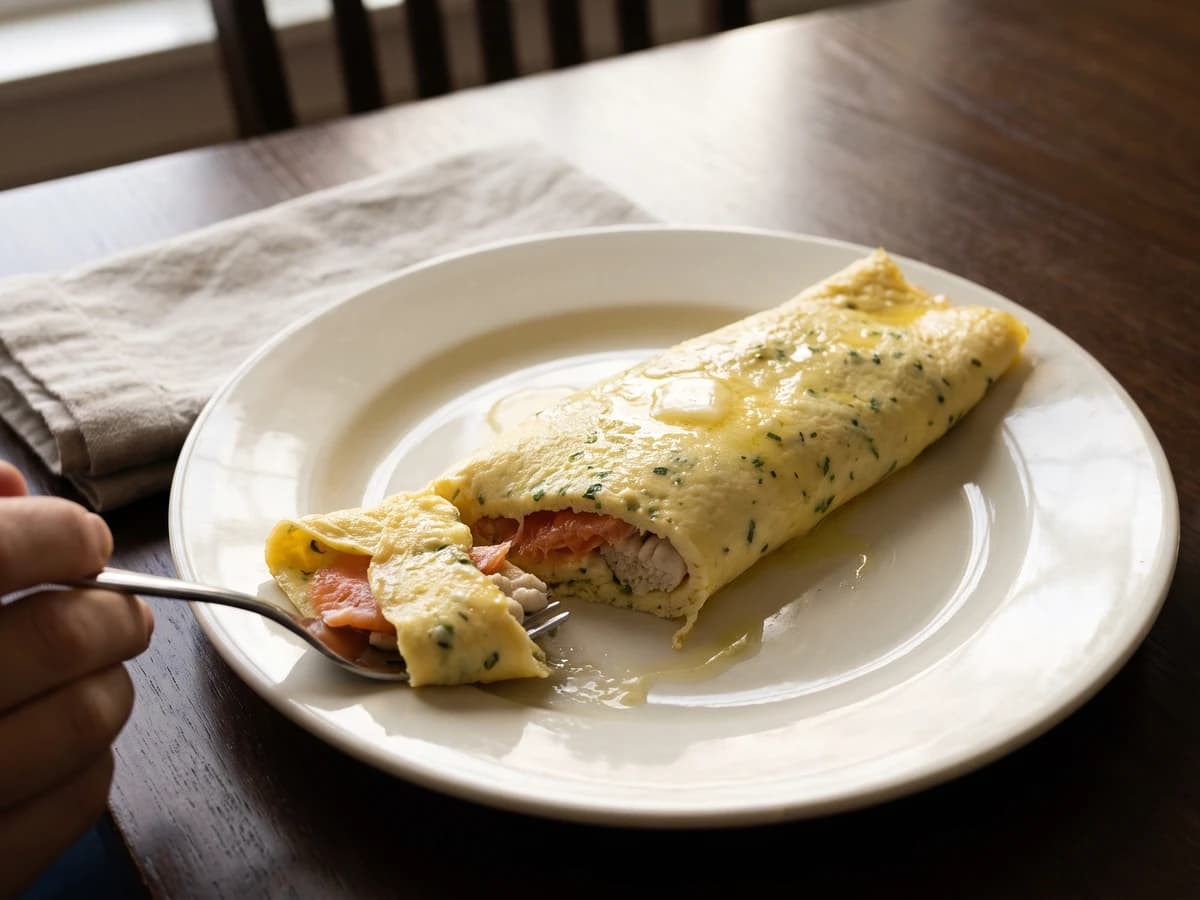
A creamy omelette aux fines herbes closes around smoked-salmon-wrapped herring milts, gently poached in butter. Have the filling ready, then roll the eggs while they still shine.
A cooking platform built around craft, culture, and the stories behind what we eat.
Created by Chef Juliette
Based on No. 488, Fried Eggs à la Provençale, from Le Guide Culinaire (1907) by Auguste Escoffier
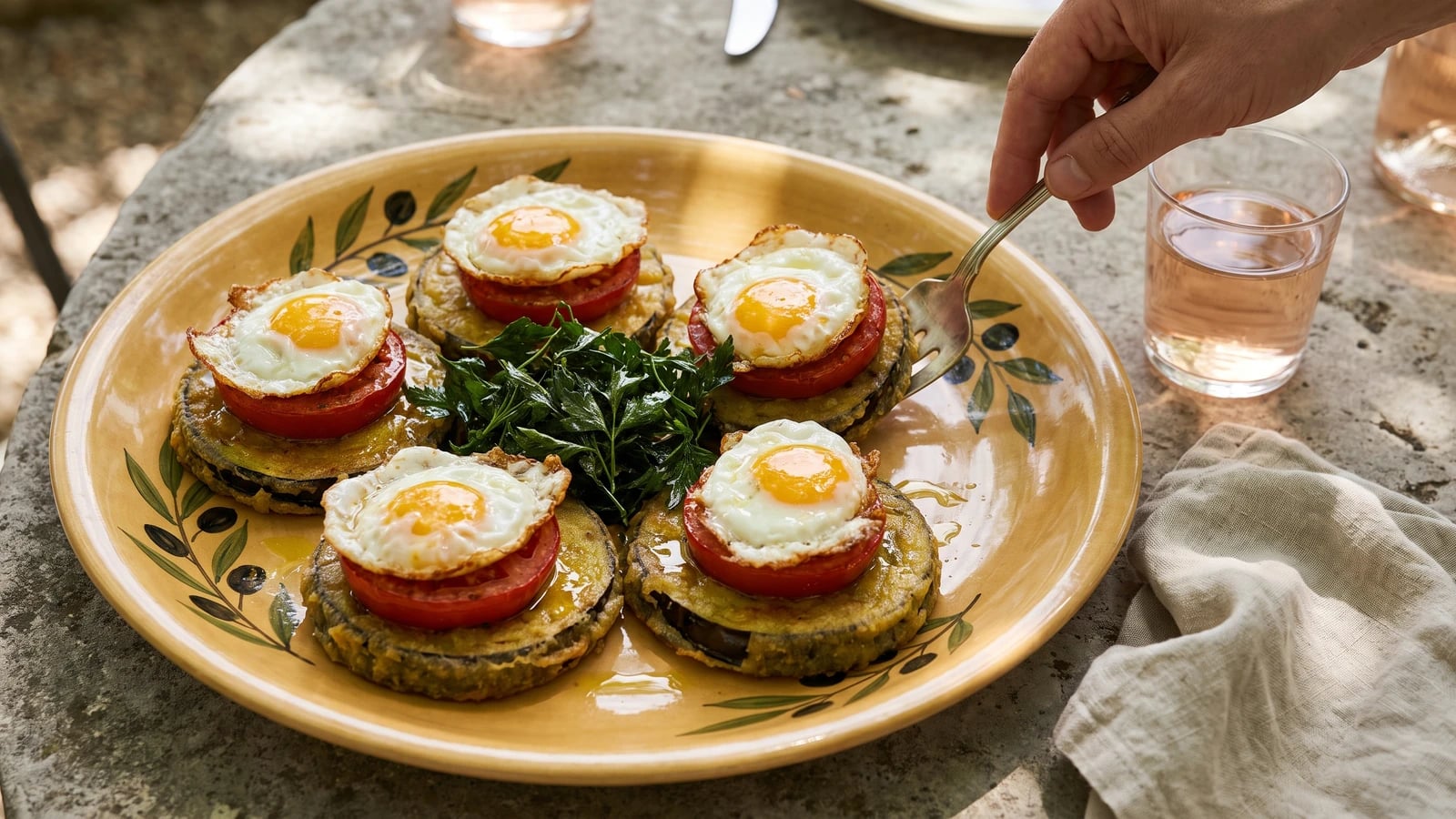
A Provençal lesson in disciplined frying: flour-crisp aubergine, ripe tomato, and a tender olive-oil-fried egg stacked high, with parsley crackling at the center of the platter.
Œufs frits à la Provençale (fried eggs with tomato and aubergine) teaches a small, serious lesson: successful frying depends on dry surfaces and steady heat. The aubergine should emerge bronzed and tender rather than oil-heavy, the parsley should crisp, and each egg white should set around a soft, glossy yolk. Before you touch the pan, dry every salted surface completely. Water is the saboteur here.
The original entry needs neither a saucier nor a stock kept simmering; what it quietly assumes is the brigade luxury of several hands frying aubergines, parsley, and eggs at once, then sending the platter out immediately. At home, four portions, one skillet, a wire rack, and a low oven do the same work. The rack and oven are service scaffolding and can go when two cooks share the stove. The thick floured aubergine, raw ripe tomato half, olive-oil-fried egg, and fried parsley are the dish itself, so every one stays exactly where the book put it. One cook, one stove, one evening.
Sequence keeps the crust crisp and the yolks tender: parsley first while the oil is clean, aubergine next, eggs last. The step that matters most is the blotting. If the salted aubergine still glistens with moisture, it isn't ready for flour or oil.
Œufs frits à la Provençale belongs to the classical kitchen's family of composed egg dishes, in which the words à la Provençale announce the larder of Provence through olive oil, tomato, aubergine, and parsley. The arrangement carried southern market produce into bourgeois and grand-kitchen service, where individual fried eggs were built into a symmetrical platter rather than served directly from the pan. Garlic is often treated as compulsory whenever Provence is named, but not here; this formula rests on its layered vegetables, olive-oil frying, and green center of fried parsley.
Quantity
1 (about 1¼ lb / 570 g)
cut crosswise into 4 broad center slices, each ¾ inch (2 cm) thick
Quantity
2 medium (about 10 oz / 280 g)
brought to room temperature and halved crosswise
Quantity
4
Quantity
½ cup (120 ml / 60 g)
Quantity
1½ teaspoons (7.5 ml / 9 g)
divided
Quantity
½ teaspoon (2.5 ml / 1 g)
divided
Quantity
1½ cups (360 ml / 330 g)
for shallow-frying
Quantity
1 loosely packed cup (240 ml / 20 g)
washed and dried completely
| Ingredient | Quantity |
|---|---|
| large auberginecut crosswise into 4 broad center slices, each ¾ inch (2 cm) thick | 1 (about 1¼ lb / 570 g) |
| ripe, firm tomatoesbrought to room temperature and halved crosswise | 2 medium (about 10 oz / 280 g) |
| large eggs | 4 |
| all-purpose flour | ½ cup (120 ml / 60 g) |
| fine sea saltdivided | 1½ teaspoons (7.5 ml / 9 g) |
| freshly ground black pepperdivided | ½ teaspoon (2.5 ml / 1 g) |
| olive oilfor shallow-frying | 1½ cups (360 ml / 330 g) |
| flat-leaf parsley sprigswashed and dried completely | 1 loosely packed cup (240 ml / 20 g) |
Heat the oven to 200°F (95°C). Set a wire rack over a rimmed baking sheet and place it in the oven. This is your home equivalent of the brigade's warm pass: it holds the fried aubergine briefly without trapping oil underneath or softening its crust. Set the serving platter nearby so assembly can happen quickly.
Season both sides of the aubergine with ¾ teaspoon (4 ml / 4.5 g) of the salt and leave the slices on a rack for 20 minutes. Shave a paper-thin piece from the rounded skin side of each tomato half so it can stand steadily, then season the cut faces with ¼ teaspoon (1 ml / 1.5 g) salt and a little pepper. Place the tomatoes cut-side down on a clean towel for 10 minutes. Press the aubergine thoroughly dry without rinsing it, and blot the tomatoes. The surfaces should feel dry, not tacky.
Pour the olive oil into a 12-inch (30 cm) heavy skillet to a depth of about ¼ inch (6 mm), reserving any excess for topping up, and heat it to 350°F (175°C). The parsley must be completely dry. Lower it into the oil in two loose handfuls with a slotted spoon, keeping your hands and face back, and fry for 10 to 15 seconds, just until the leaves stiffen and deepen slightly in color. Lift them immediately to a paper-lined plate and season with a pinch of the remaining salt. If the first handful stays limp, bring the oil fully back to temperature and return it for only 2 or 3 seconds. Ça se rattrape, but parsley turns bitter if allowed to brown.
Mix the flour with ¼ teaspoon (1 ml / 1.5 g) salt and half the remaining pepper in a shallow dish. Coat each aubergine slice on both sides immediately before frying, pressing lightly so the flour adheres, then shake away every loose patch. If the coating becomes gummy before it reaches the skillet, brush it off, blot the slice again, and re-flour it. Never send wet flour into the oil.
Return the oil to 350°F (175°C). Fry the aubergine two slices at a time, without crowding, for 3 to 4 minutes per side. Adjust the heat to keep the oil lively but never smoking, and add some reserved oil if the level falls sharply. The slices are ready when the flour crust is deep gold and a small knife passes through the center without resistance. Transfer them to the warm wire rack in the oven while the second batch cooks. If a slice comes out pale and heavy, restore the oil temperature and fry it for another 30 seconds per side, then hold it on the rack for 5 minutes so excess oil can drain.
Arrange the four aubergine slices in a circle on the serving platter. Set one tomato half on each, cut-side up, using the trimmed base to keep it steady. Leave the platter beside the stove while you fry the eggs; the tomatoes should remain fresh and structured, not cooked into softness.
Scoop any dark flour crumbs from the oil, then pour off all but about ¼ cup (60 ml / 55 g). Keep the skillet over medium heat. Crack each egg into a small cup before sliding it into the pan, and fry two at a time until the undersides are lightly crisp and the whites are nearly set, about 2 minutes. Tilt the skillet and spoon hot oil over the unset white, carefully avoiding the yolk. If the bottom colors before the top sets, lower the heat and cover the skillet for 20 to 30 seconds. Season each egg with the last salt and pepper.
Lift each egg with a thin spatula, let the excess oil fall back into the skillet, and settle it over a tomato half. Gather the fried parsley generously in the center of the circle, keeping its crisp leaves loose rather than compressing them. Bring the platter to the table immediately, while the aubergine crust is firm and the yolks remain soft. À table!
1 serving (about 230g)
Culinary guides, cultural storytelling, and the editorial depth that makes cooking meaningful.
Discover Culinary ExplorerChef Juliette
A creamy omelette aux fines herbes closes around smoked-salmon-wrapped herring milts, gently poached in butter. Have the filling ready, then roll the eggs while they still shine.
Chef Juliette
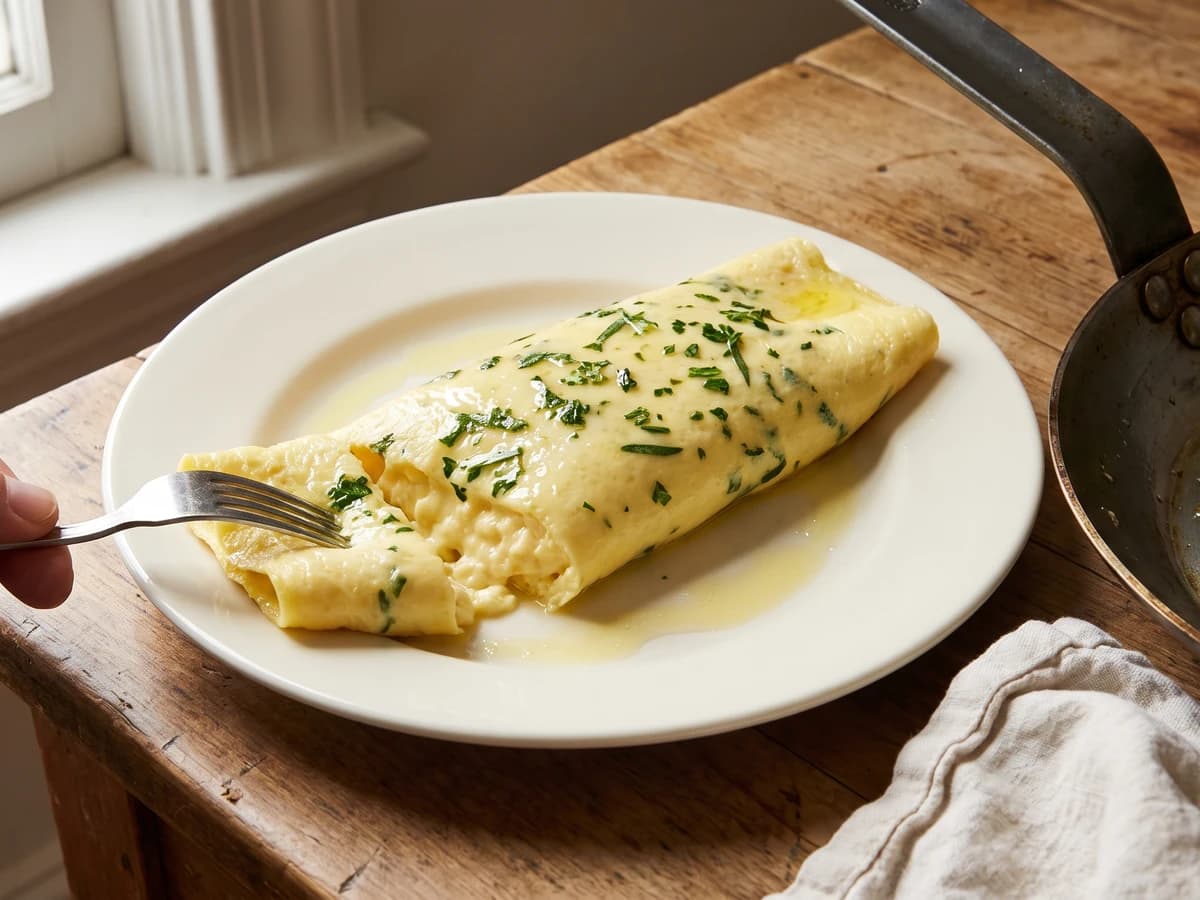
Four tender herbs, hot butter, and two eggs per pan: this rolled omelette teaches the quick hand and good judgment that keep the outside pale and the center creamy.
Chef Juliette
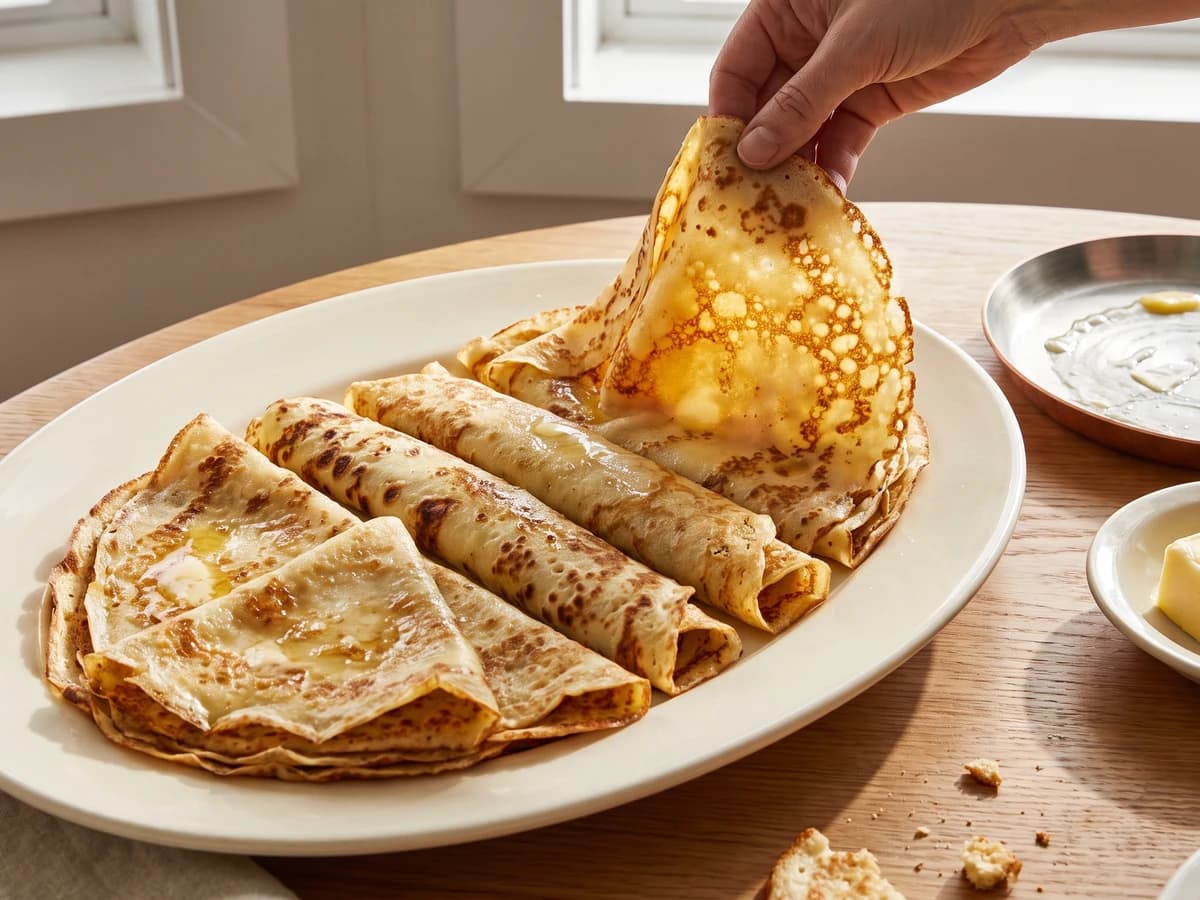
Four batters, one lesson: let the flour drink deeply before cooking, then spread the batter thinly in butter for crêpes and pannequets that bend without becoming tough.
Chef Juliette
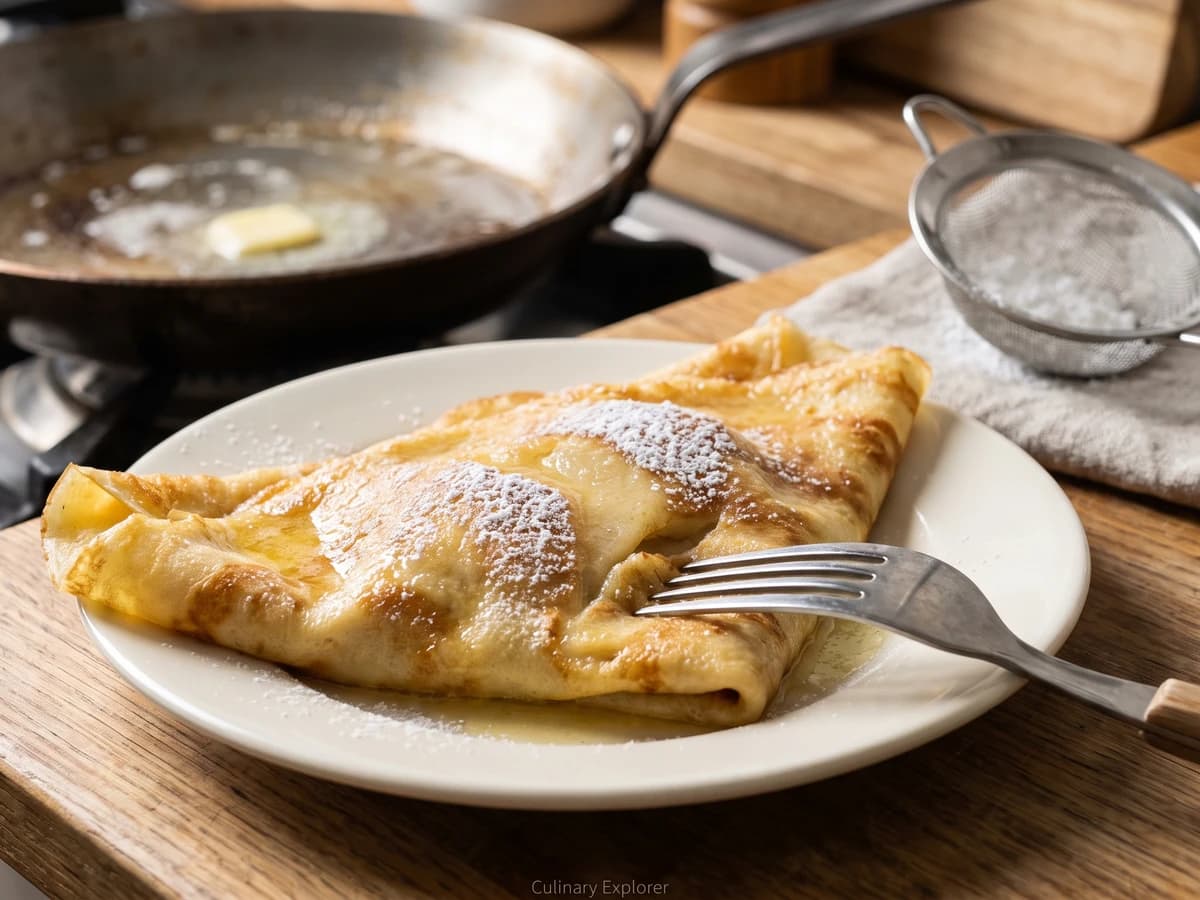
Crêpes au Couvent trap ripe Williams pear dice between two thin pours of sweet batter, then turn in one clean toss and reach the table butter-gold, powdered, and burning hot.