Chef Juliette
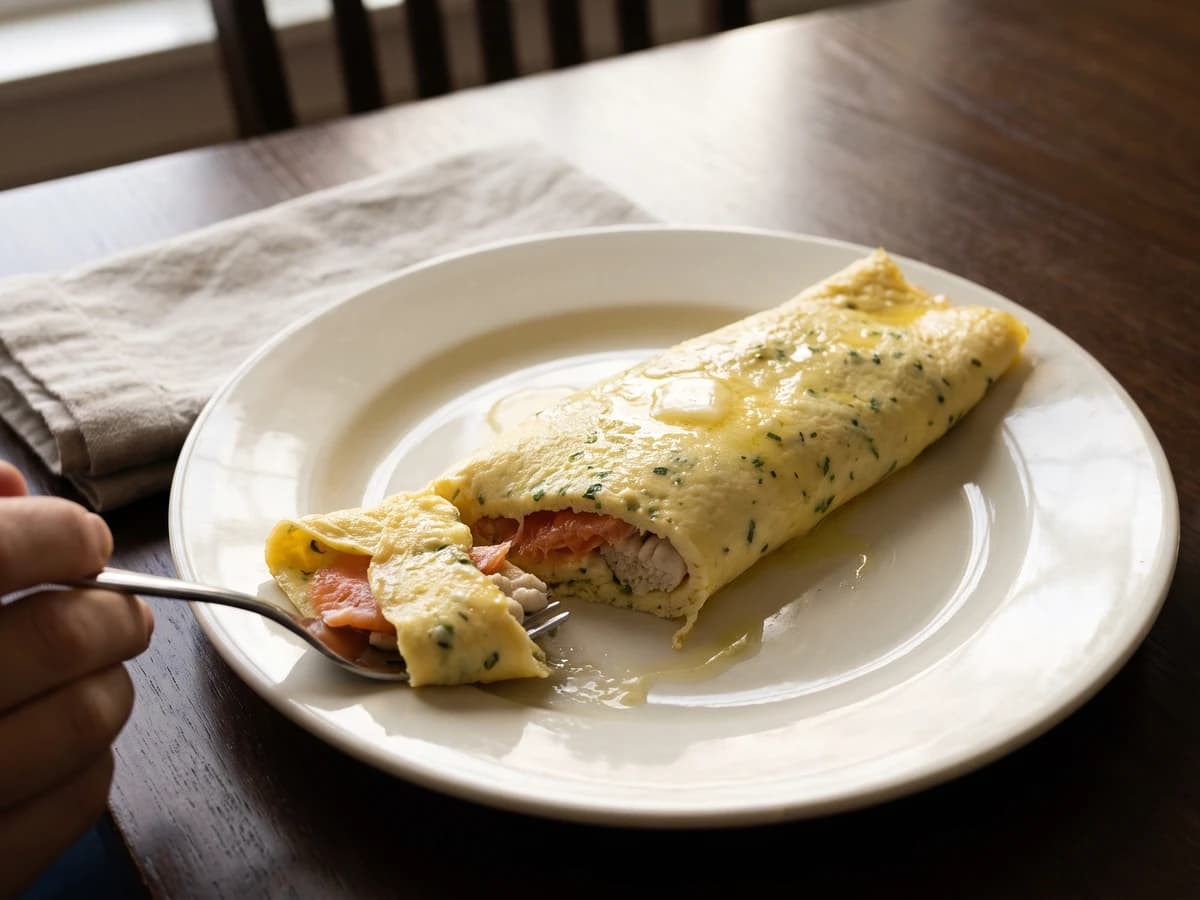
Omelette à l’Écossaise
A creamy omelette aux fines herbes closes around smoked-salmon-wrapped herring milts, gently poached in butter. Have the filling ready, then roll the eggs while they still shine.
A cooking platform built around craft, culture, and the stories behind what we eat.
Created by Chef Juliette
Based on No. 484, Fried Eggs à la Bordelaise, from Le Guide Culinaire (1907) by Auguste Escoffier
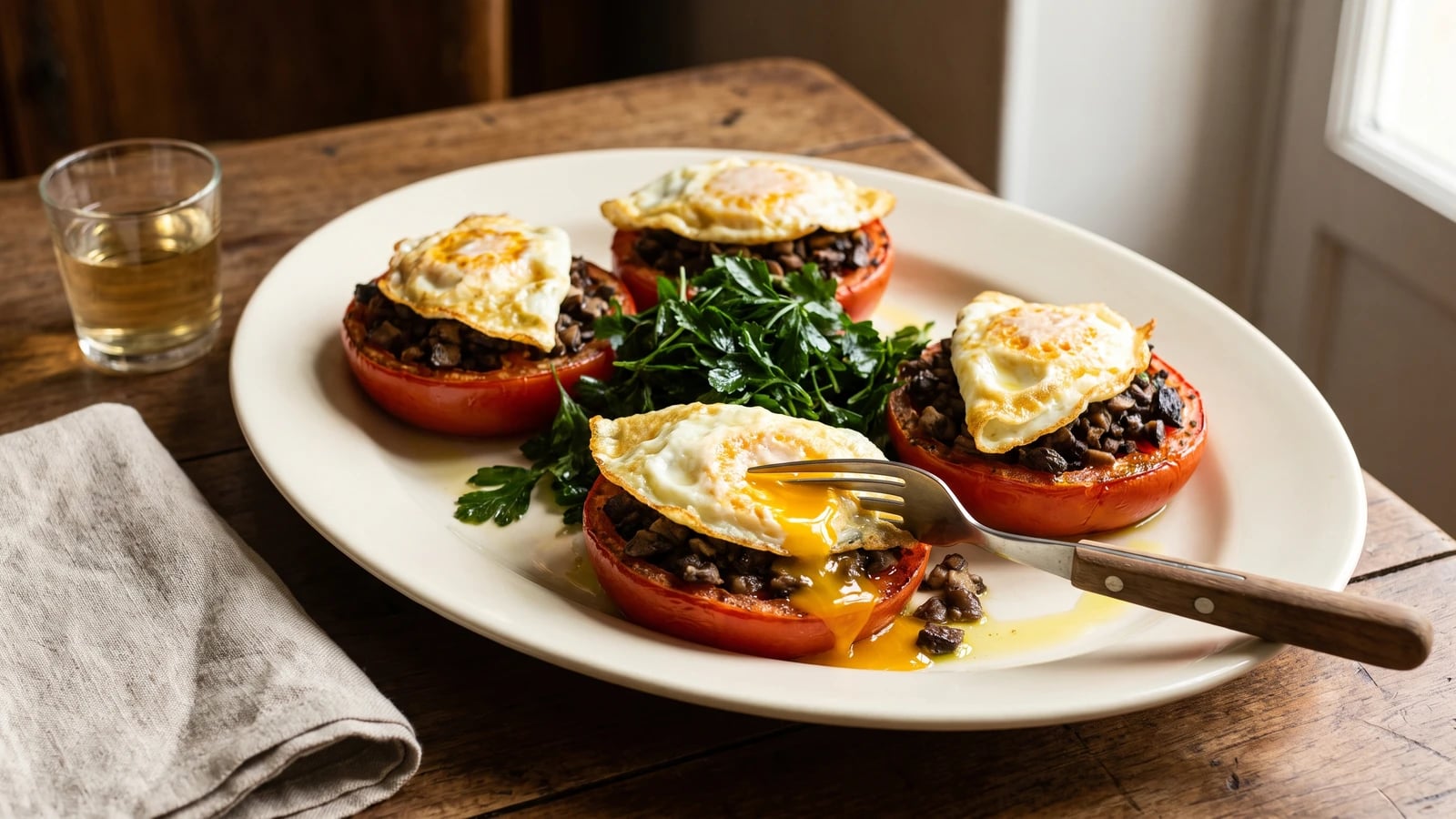
Four crisp-laced eggs crown shallot-scented Provençal tomatoes and bronze cèpes, with fried parsley in the middle: a composed supper that proves careful timing can make one skillet feel like a brigade.
Œufs frits à la bordelaise (fried eggs with cèpes and tomatoes) teaches orchestration. The one true thing to know before touching a pan is this: the tomatoes must be cooked and the cèpes browned before the first egg enters the fat, because œufs frits wait for no one. Done properly, each egg has a crisp, folded white and a flowing yolk, seated on a sweet-sharp tomato half packed with earthy mushrooms.
The old entry assumed a garnish cook with tomates à la Provençale ready, another pan for the cèpes, a fryer hot, and several hands to assemble the platter. At home, we keep its order but collapse the scaffolding: one wide skillet cooks the tomatoes and then the mushrooms, one small saucepan stands in for the brigade fryer, and a low oven holds the finished bases. I have scaled the dish to four eggs and four tomato halves, preserving the exact one-to-one ratio the book sets down. The parallel pans can go; the tomato, cèpe, egg, and fried-parsley architecture must stay. One cook, one stove, one evening.
Cèpes, the porcini mushrooms of the glossary, must lose their water and take real bronze before the shallot goes in. Then fry the eggs one at a time, gathering each white around its yolk in the hot oil. If the white wanders, two spoons bring it home. Ça se rattrape. Have every tomato filled and waiting before you fry that first egg. This sequence decides the dish.
Œufs frits à la bordelaise takes its name from Bordeaux and the surrounding Gironde, where cèpes cooked with shallot, garlic, and parsley provide the regional character; there is no red-wine sauce here. Its tomato pedestal is explicitly à la Provençale, a separate southern preparation that the classical repertoire borrowed without confusing the two regional identities. The ring of egg-topped tomatoes around fried parsley belongs to composed egg service, in which the garnish formed the dish's structure rather than serving as decoration.
Quantity
2 medium-large (about 450 g total)
halved crosswise
Quantity
1¼ teaspoons (6 ml / 7 g)
divided
Quantity
½ teaspoon (2.5 ml / 1 g)
divided
Quantity
3 tablespoons (45 ml / 30 g)
finely chopped and divided
Quantity
1 large clove (about 5 g)
finely chopped and divided
Quantity
3 tablespoons (45 ml / 12 g)
finely chopped and divided
Quantity
¼ cup (60 ml / 25 g)
Quantity
4 tablespoons (60 ml / 54 g)
divided
Quantity
3 cups (720 ml / 225 g)
cleaned and finely minced
Quantity
12 small sprigs (about 15 g)
washed and dried completely
Quantity
4
Quantity
3 cups (720 ml / 660 g)
| Ingredient | Quantity |
|---|---|
| ripe but firm tomatoeshalved crosswise | 2 medium-large (about 450 g total) |
| fine sea saltdivided | 1¼ teaspoons (6 ml / 7 g) |
| freshly ground black pepperdivided | ½ teaspoon (2.5 ml / 1 g) |
| shallotfinely chopped and divided | 3 tablespoons (45 ml / 30 g) |
| garlicfinely chopped and divided | 1 large clove (about 5 g) |
| flat-leaf parsley leavesfinely chopped and divided | 3 tablespoons (45 ml / 12 g) |
| fresh fine breadcrumbs | ¼ cup (60 ml / 25 g) |
| extra-virgin olive oildivided | 4 tablespoons (60 ml / 54 g) |
| fresh cèpes (porcini mushrooms)cleaned and finely minced | 3 cups (720 ml / 225 g) |
| flat-leaf parsley sprigswashed and dried completely | 12 small sprigs (about 15 g) |
| large eggs | 4 |
| neutral frying oil, such as grapeseed or sunflower | 3 cups (720 ml / 660 g) |
Heat the oven to 220°C (425°F), with a rack in the upper third. Scoop the loose seeds and watery pulp from each tomato half without piercing its walls, then trim a wafer from each rounded bottom so it will sit level. Season the cut faces with ½ teaspoon of the salt and invert them on a rack for 10 minutes. Pat them thoroughly dry. This draining matters: a wet tomato collapses into juice before its surface can brown.
Heat 2 tablespoons of the olive oil in a 30 cm (12-inch) skillet over medium-high heat. Lay in the tomato halves cut-side down and cook for 3 to 4 minutes, until their rims color and the cut faces begin to caramelize. Transfer them cut-side up to a rimmed baking sheet. Mix the breadcrumbs with 1 tablespoon of shallot, half the garlic, 1 tablespoon of chopped parsley, a pinch each of salt and pepper, and 1 teaspoon of oil from the skillet. Divide this among the tomatoes, giving each the pinch of shallot required by the source. Bake for 10 to 12 minutes, until tender but still able to hold its shape. These are the tomates à la Provençale, tomato halves cooked with garlic, parsley, crumbs, and olive oil. Lower the oven to 95°C (200°F) and keep them warm.
Return the skillet to high heat and add the remaining olive oil. Add the finely minced cèpes in an even layer and leave them untouched for 2 minutes, then sauté, cooking quickly in the shallow pan, until their released liquid has evaporated and the mushrooms take a deep bronze, 5 to 7 minutes more. If they stew in a grey puddle, don't discard them. Ça se rattrape: spread them wider, raise the heat, and let every drop cook away before asking them to brown. Add the remaining shallot and garlic, cook for 1 minute, then season with salt and pepper and fold in the remaining chopped parsley. This is the cèpe garnish à la Bordelaise. Divide it among the warm tomato halves and return them to the low oven.
Pour the neutral oil into a deep 20 cm (8-inch) saucepan, making certain the pan is no more than one-third full, and heat it to 180°C (350°F). The parsley must be completely dry, because water and hot oil are dangerous companions. Lower the sprigs into the oil with a wire skimmer in two batches. Fry for 8 to 12 seconds, just until the fierce bubbling subsides and the leaves become crisp and dark green. Drain on paper and season with a small pinch of salt.
Crack each egg into its own small ramekin. Keep the oil at 180°C (350°F), then slide in one egg from just above the surface. Using two spoons, gather the spreading white around the yolk and spoon hot oil only over any loose white. Fry for 45 to 60 seconds, until the white is fully opaque and crisp at its edges while the yolk remains soft. If the white flies outward, fold it back around the yolk with the spoons; ça se rattrape. If it browns almost at once, pull the pan off the heat for 20 seconds. If it stays pale and greasy, reheat the oil before frying the next egg. Lift each egg out with the skimmer, drain briefly, and season it. Work one at a time. Brigade speed is scaffolding; control is the dish.
Arrange the four mushroom-filled tomato halves in a ring on a warmed oval platter. Set one fried egg squarely on each half, then mound the fried parsley in the center exactly as the source directs. Bring the platter to the table immediately, while the egg whites are crisp and the yolks still flow into the cèpes beneath them. À table!
1 serving (about 220g)
Culinary guides, cultural storytelling, and the editorial depth that makes cooking meaningful.
Discover Culinary ExplorerChef Juliette
A creamy omelette aux fines herbes closes around smoked-salmon-wrapped herring milts, gently poached in butter. Have the filling ready, then roll the eggs while they still shine.
Chef Juliette
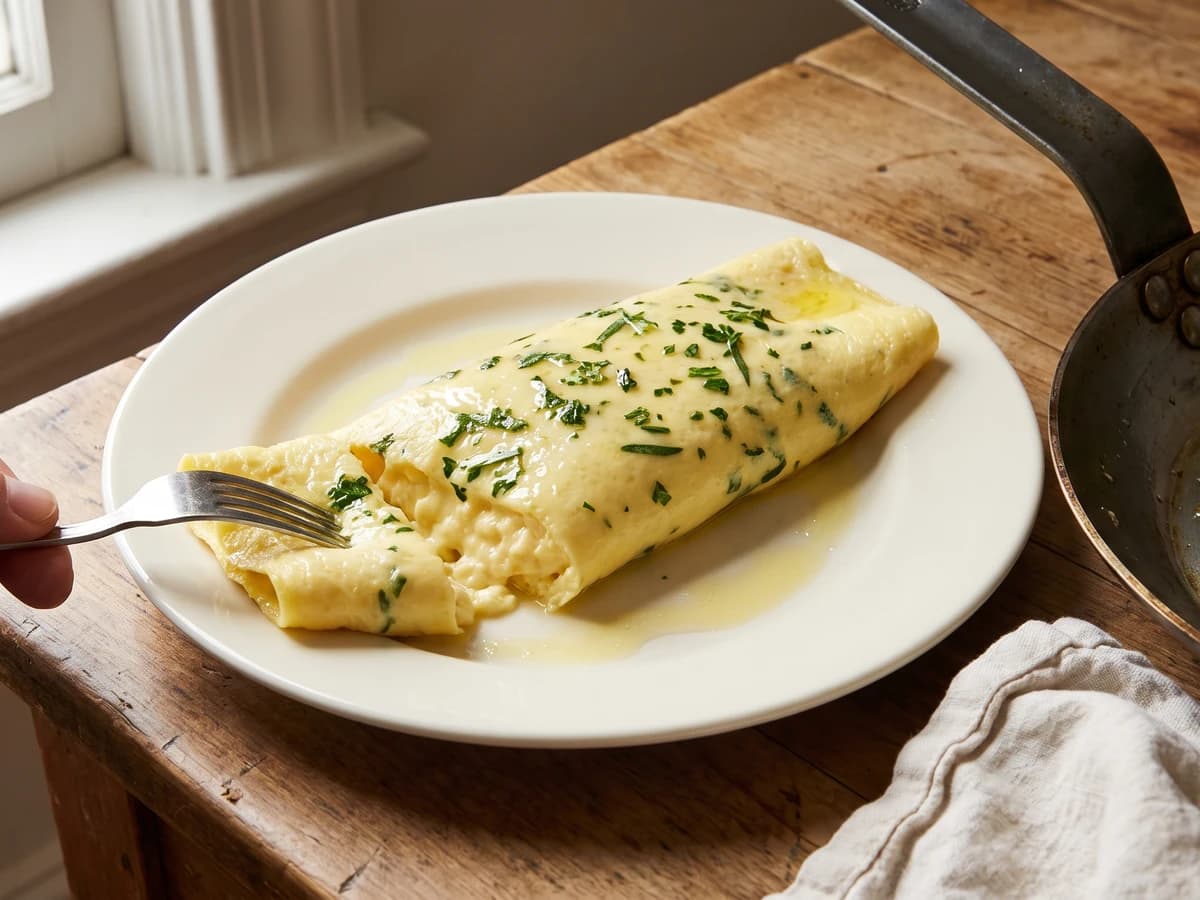
Four tender herbs, hot butter, and two eggs per pan: this rolled omelette teaches the quick hand and good judgment that keep the outside pale and the center creamy.
Chef Juliette
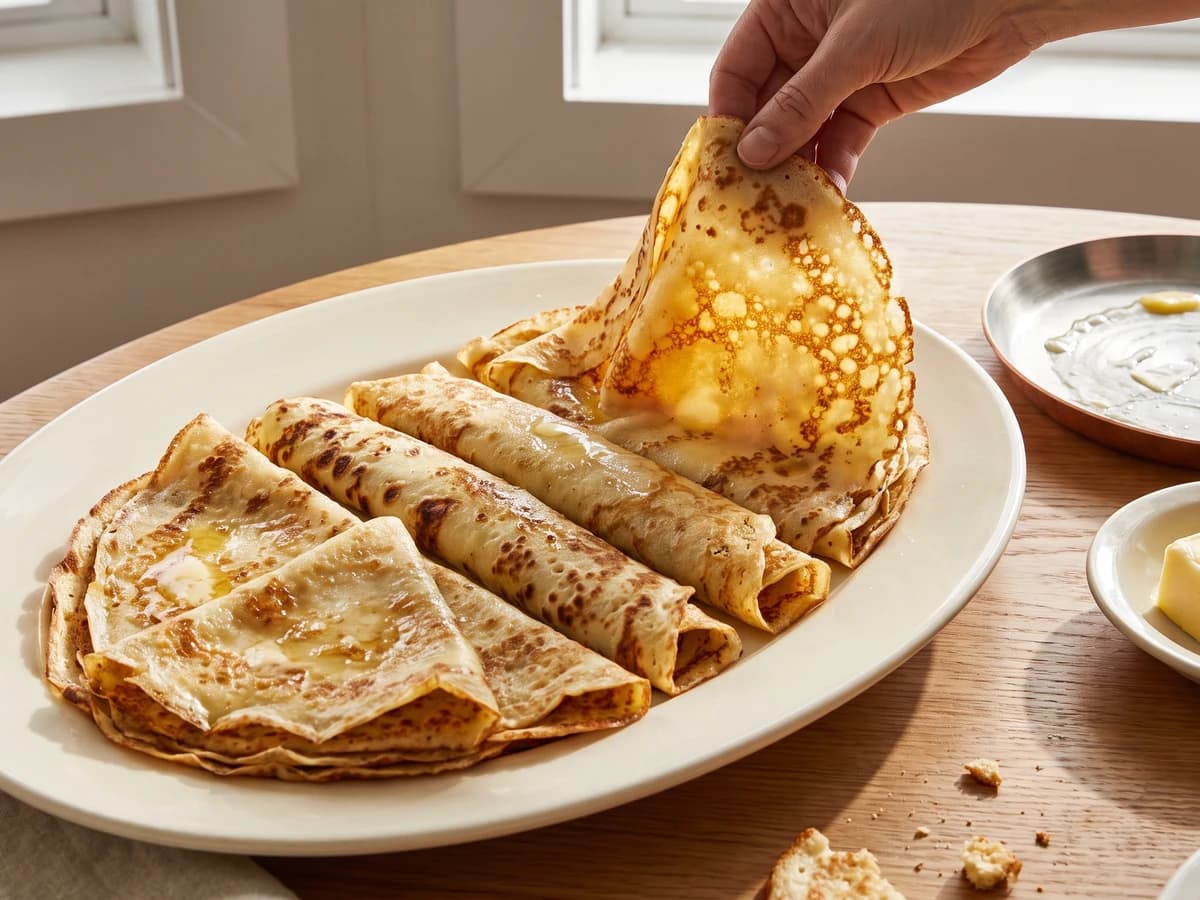
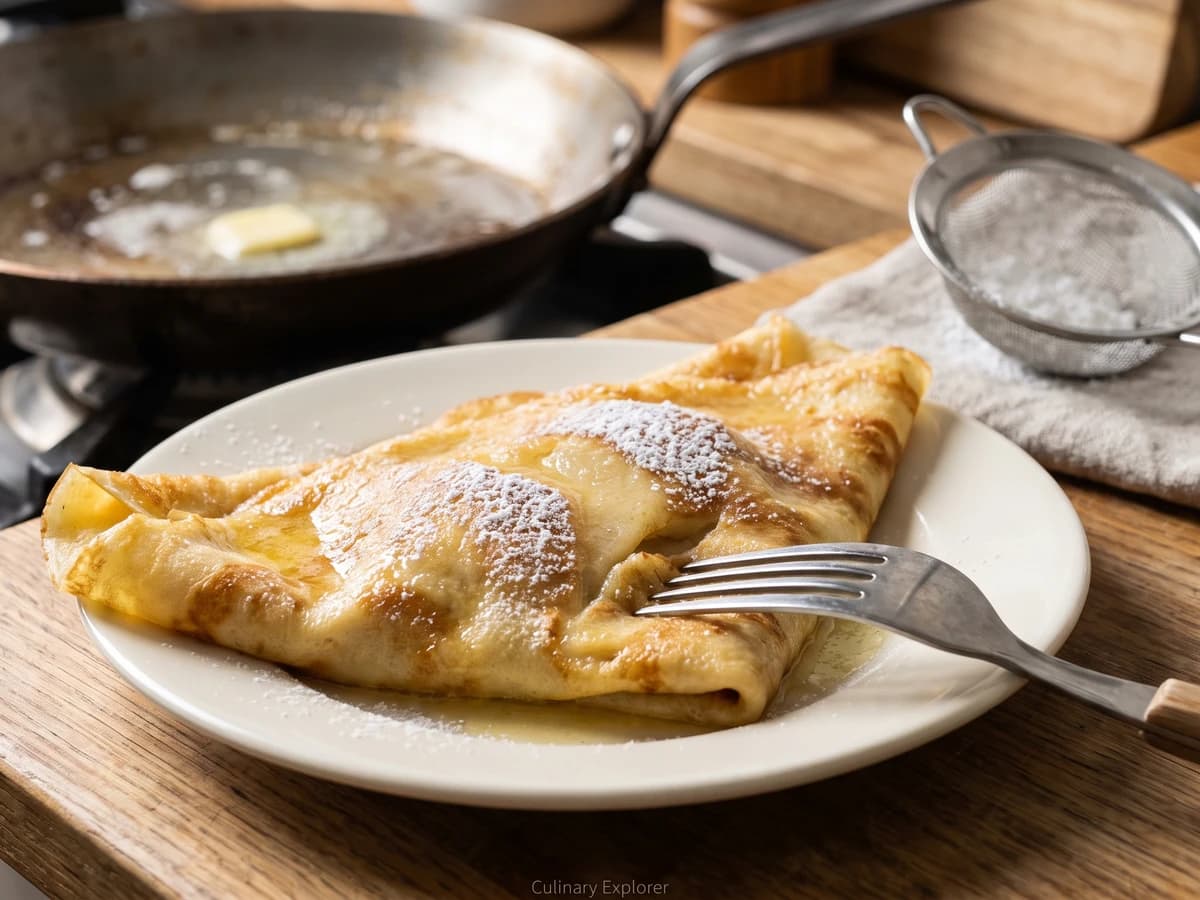
Four batters, one lesson: let the flour drink deeply before cooking, then spread the batter thinly in butter for crêpes and pannequets that bend without becoming tough.
Chef Juliette
Crêpes au Couvent trap ripe Williams pear dice between two thin pours of sweet batter, then turn in one clean toss and reach the table butter-gold, powdered, and burning hot.