Chef Juliette
Omelette à l’Écossaise
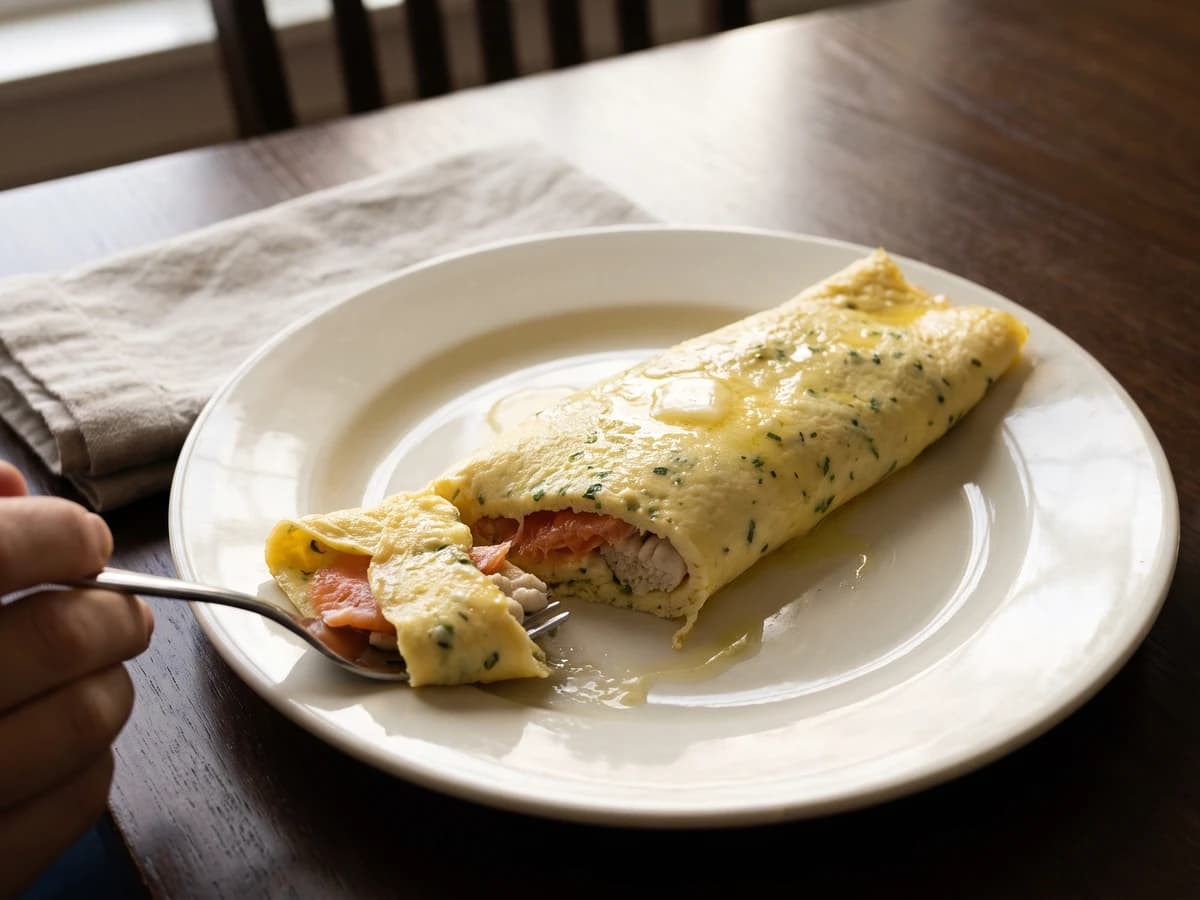
A creamy omelette aux fines herbes closes around smoked-salmon-wrapped herring milts, gently poached in butter. Have the filling ready, then roll the eggs while they still shine.
A cooking platform built around craft, culture, and the stories behind what we eat.
Created by Chef Juliette
Based on No. 483, The Preparation of Fried Eggs, from Le Guide Culinaire (1907) by Auguste Escoffier
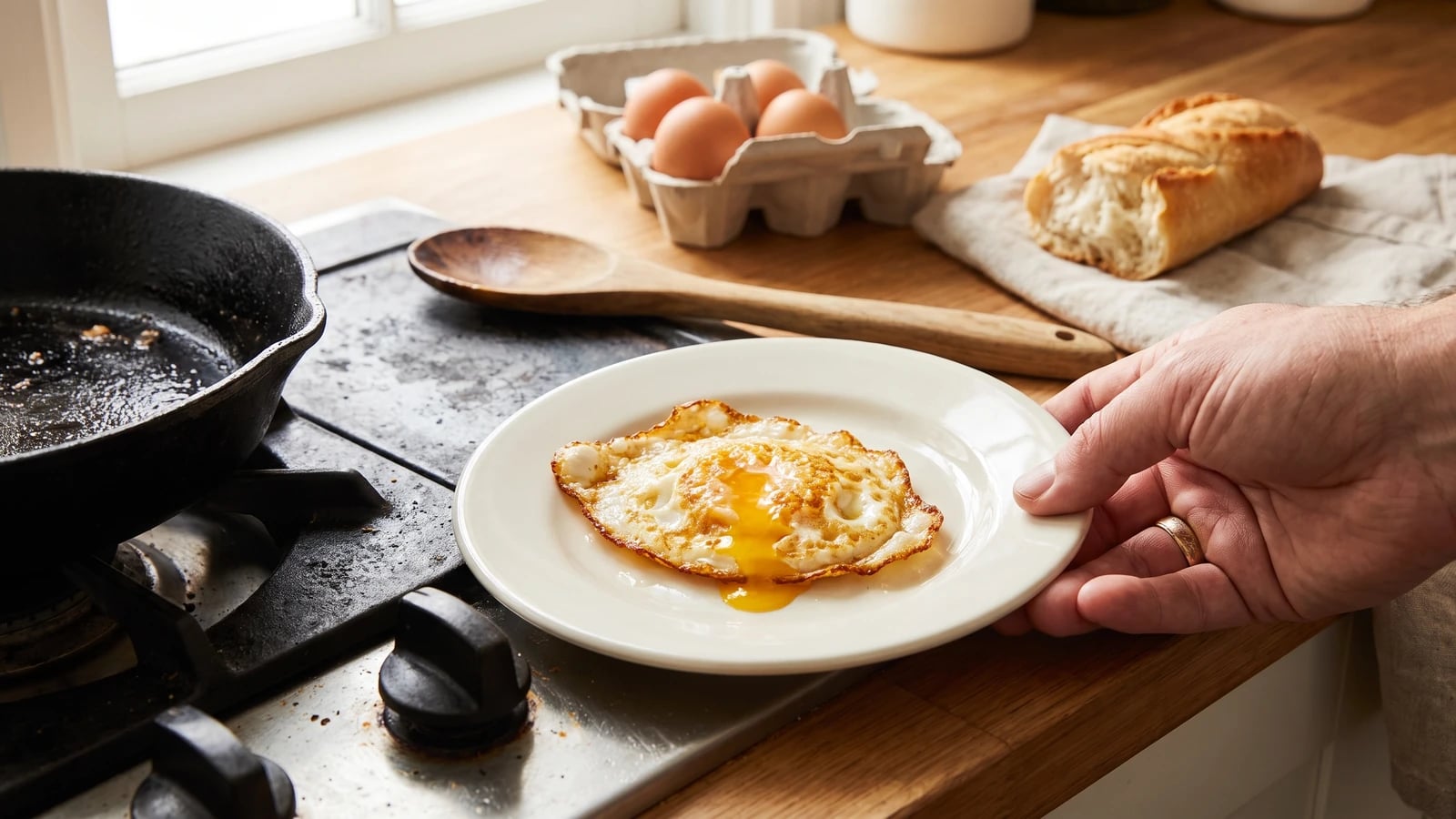
One egg, one pan, one minute: œufs frits turn a blistered, crisp-edged white around a protected soft yolk, proving that the smallest dishes demand the clearest timing.
Œufs frits teach the discipline of à la minute cooking, food made at the instant it is wanted. One egg at a time. That is the one true thing to know before you touch the pan: crowd the oil and the whites tangle, the temperature falls, and the yolks lose the small protection this method is built to give them.
The source assumes an omelet pan kept ready over the range, stretched linen for draining, and enough hands to repeat the motion through service. It needs no saucier, permanent stockpot, or salamander. At home, a 20-centimeter heavy skillet and a wire rack over absorbent paper do the work; I have scaled the open-ended required quantity to four eggs and changed only the draining cloth. The one-at-a-time frying and the fold of white over yolk are the dish, not brigade scaffolding.
When it is right, the outside white is blistered and crisp at its fringes, the folded centre tender, and the yolk soft beneath its little blanket. The movement is quick but not fussy. Let the white catch, draw it over the yolk with a wooden spoon, and lift the egg before the yolk firms. Wait for the first faint thread of smoke, then fry one egg, and only one egg.
Œufs frits belong to the national French classical table, especially its breakfast and light-supper register, rather than to one regional larder. The canon keeps them distinct from œufs sur le plat (eggs cooked flat in a small serving dish): œufs frits meet a deeper bath of hot oil, and their setting white is drawn over the yolk so the centre remains soft. Professional kitchens codified the one-at-a-time rhythm, but the method's scale and speed kept it entirely at home on an ordinary stove.
Quantity
4
Quantity
1¼ cups (300 ml / 273 g)
Quantity
½ teaspoon (2.5 ml / 3 g)
divided
Quantity
⅛ teaspoon (0.6 ml / 0.3 g)
divided
| Ingredient | Quantity |
|---|---|
| large eggs | 4 |
| fresh refined olive oil | 1¼ cups (300 ml / 273 g) |
| fine sea saltdivided | ½ teaspoon (2.5 ml / 3 g) |
| finely ground white pepperdivided | ⅛ teaspoon (0.6 ml / 0.3 g) |
Set a wire rack over a rimmed tray lined with absorbent paper, and place it beside the stove. Have a small plate, wooden spoon, slotted spoon, salt, and pepper within reach. Keep the eggs in their shells for now; each one is cracked and seasoned only when the oil is ready for it. Warm four serving plates gently, because œufs frits wait badly.
Pour the oil into a 20-centimeter heavy omelet pan or skillet, giving you a layer about 1 centimeter deep. Heat it over medium-high heat until the surface runs in fine, fast ripples and the first faint thread of smoke appears, roughly 200°C / 400°F if you use a thermometer. Turn the heat down a fraction at once. If the oil begins smoking steadily but still smells clean, lift the pan from the heat for about 30 seconds; ça se rattrape. Return it only when the smoke has stopped.
Break one egg onto the small plate without disturbing the yolk. Season it lightly with one quarter of the salt and pepper, then bring the plate close to the oil and let the egg slide away from you into the pan. Do not drop it from a height. The white should bubble and turn opaque immediately around its edges while the yolk remains whole.
As soon as the outer white solidifies, keep the wooden spoon low and use it to lift and roll those opaque portions over the yolk. Work around the egg until the yolk is loosely covered by white, protecting it from the fierce oil beneath. Fry for about 45 to 60 seconds in all, until the outside is crisp and pale gold but the centre still yields. If the white spreads and refuses to fold, leave it untouched for another 5 to 10 seconds, then gather it; the oil was slightly cool, but ça se rattrape. Bring the oil fully back to heat before the next egg.
Lift the egg with the slotted spoon and hold it over the pan for several seconds, then place it on the rack for no more than 30 seconds. Do not press it. Transfer it to a warm plate, return the oil to the faint-smoke threshold, and repeat with the remaining eggs, always one at a time. If the diners are seated, send each egg as it drains. The crisp white and soft yolk are worth more than everyone receiving a cooling plate at once. À table!
1 serving (about 61g)
Culinary guides, cultural storytelling, and the editorial depth that makes cooking meaningful.
Discover Culinary ExplorerChef Juliette
A creamy omelette aux fines herbes closes around smoked-salmon-wrapped herring milts, gently poached in butter. Have the filling ready, then roll the eggs while they still shine.
Chef Juliette
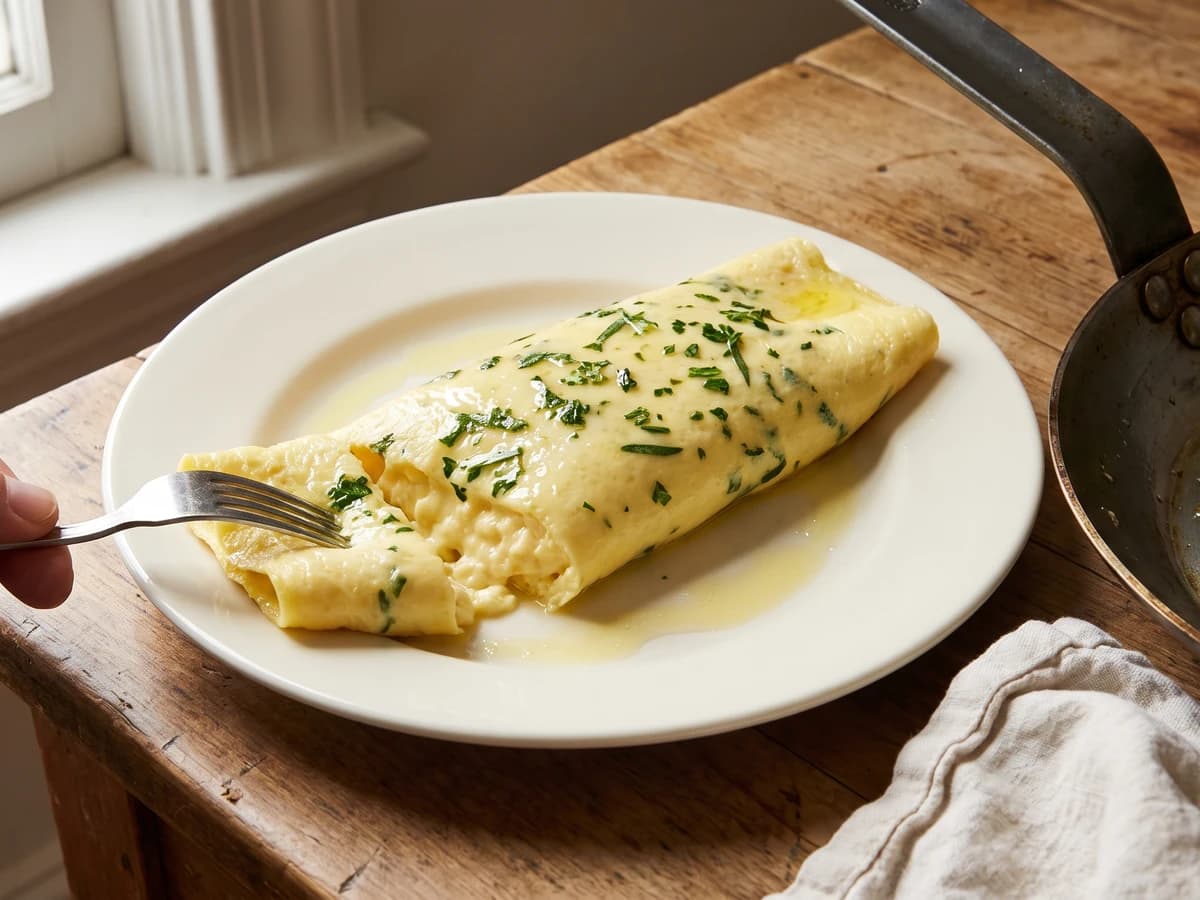
Four tender herbs, hot butter, and two eggs per pan: this rolled omelette teaches the quick hand and good judgment that keep the outside pale and the center creamy.
Chef Juliette
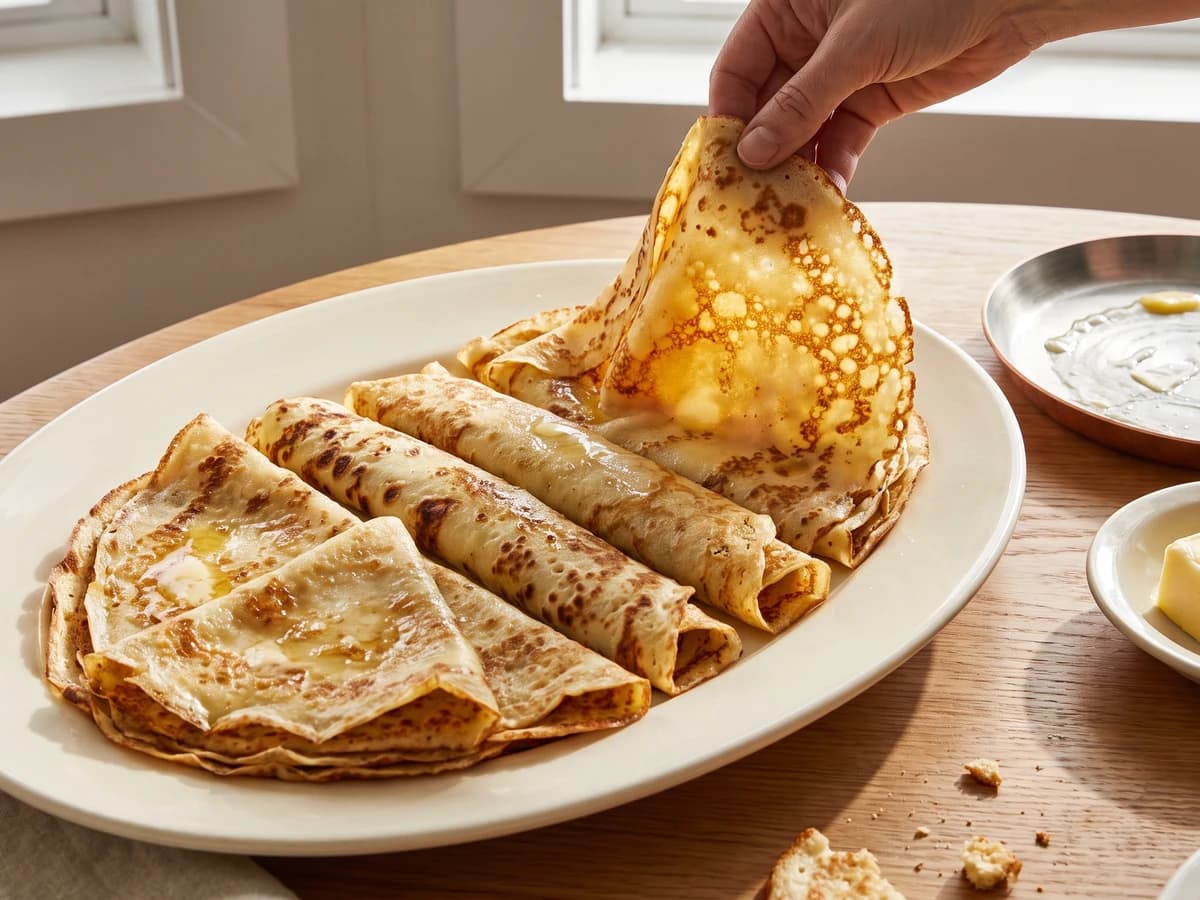
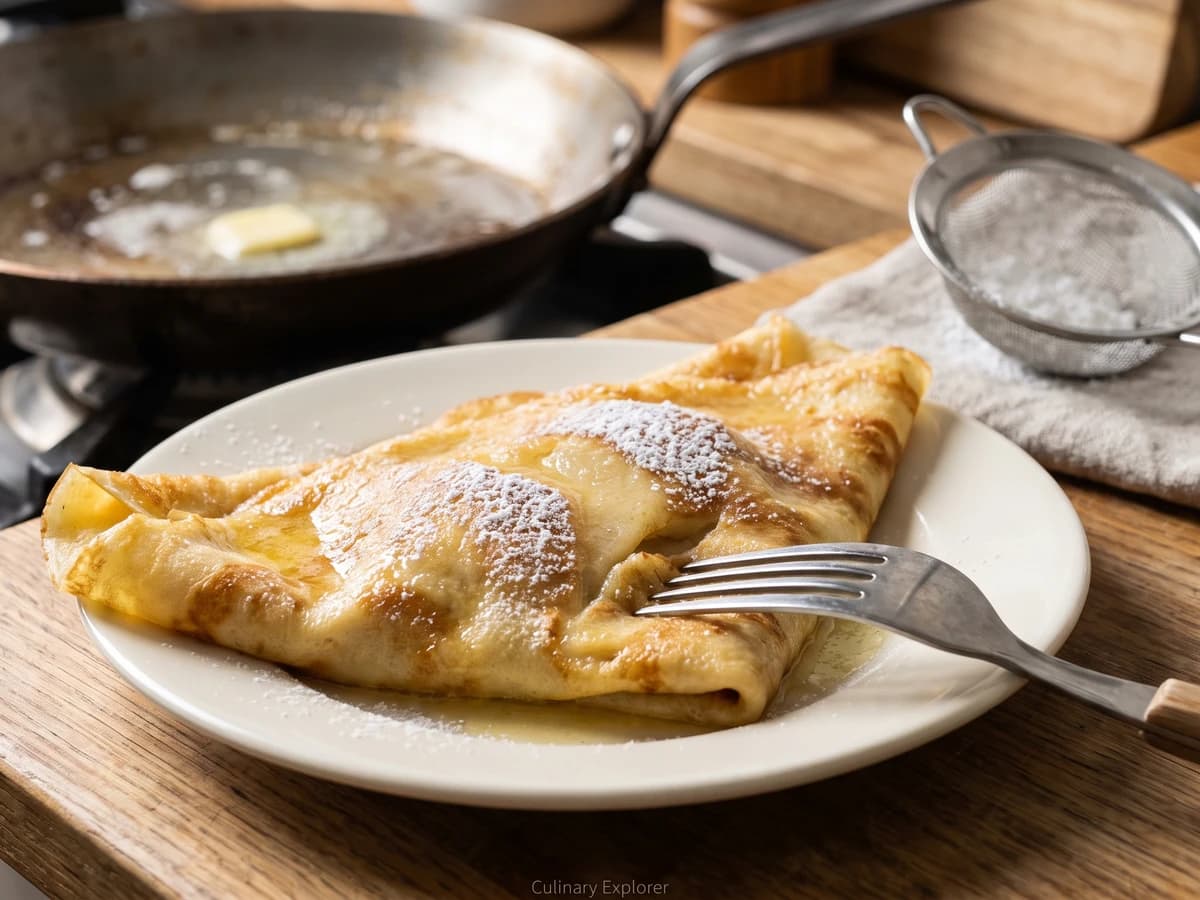
Four batters, one lesson: let the flour drink deeply before cooking, then spread the batter thinly in butter for crêpes and pannequets that bend without becoming tough.
Chef Juliette
Crêpes au Couvent trap ripe Williams pear dice between two thin pours of sweet batter, then turn in one clean toss and reach the table butter-gold, powdered, and burning hot.