Chef Juliette
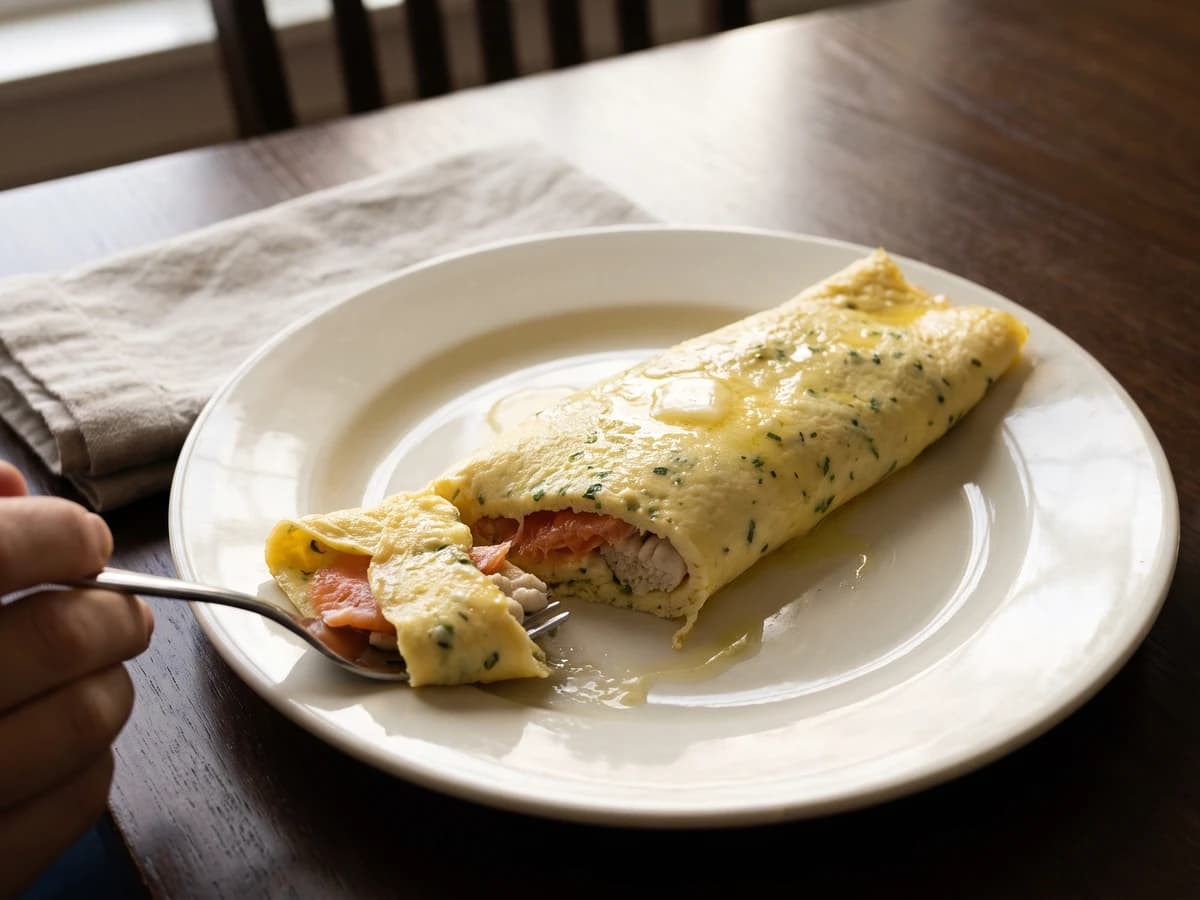
Omelette à l’Écossaise
A creamy omelette aux fines herbes closes around smoked-salmon-wrapped herring milts, gently poached in butter. Have the filling ready, then roll the eggs while they still shine.
A cooking platform built around craft, culture, and the stories behind what we eat.
Created by Chef Juliette
Based on No. 481, Scrambled Eggs with Truffles, from Le Guide Culinaire (1907) by Auguste Escoffier
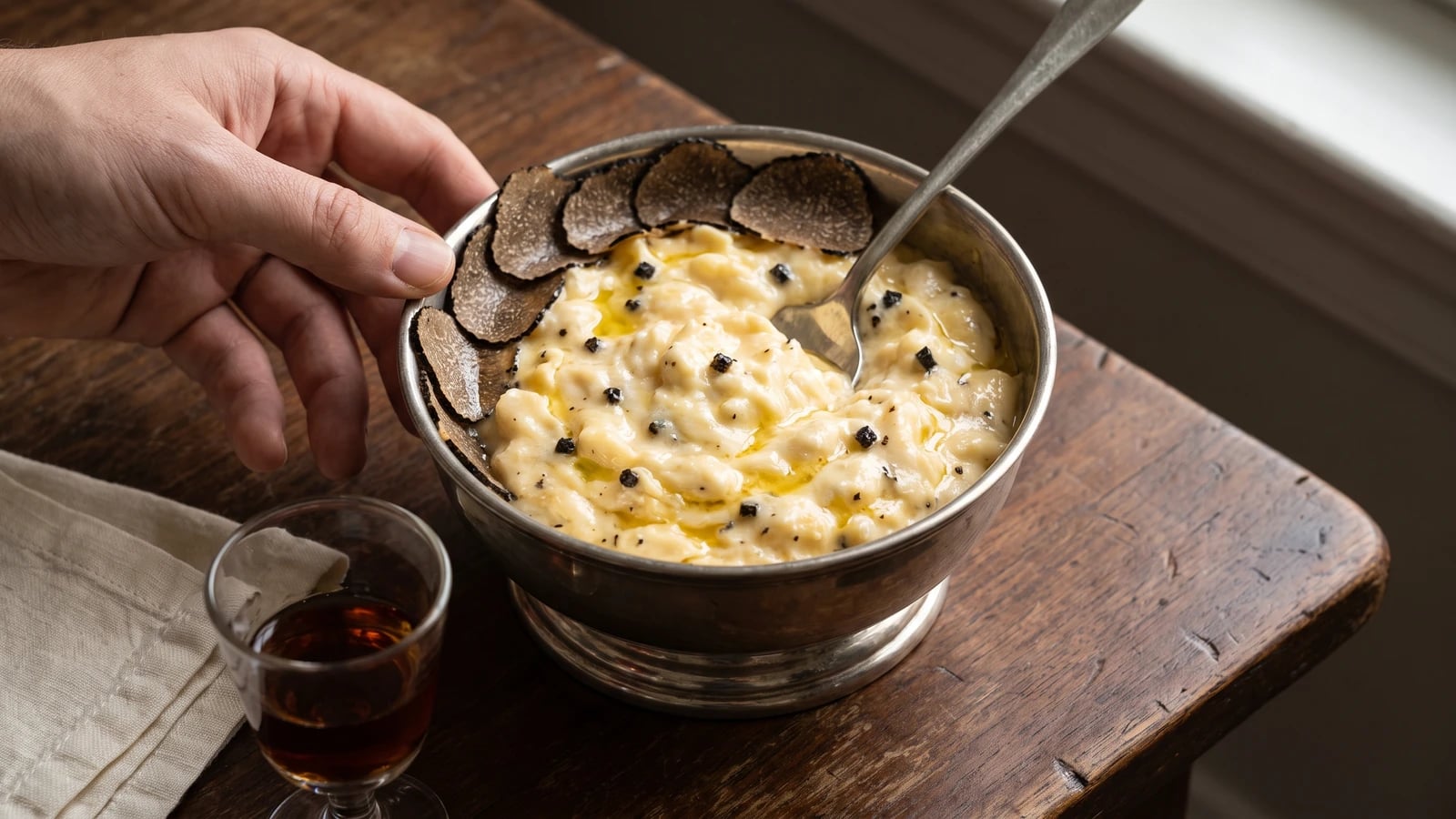
Œufs brouillés aux truffes turn eggs into a lesson in timing: Madeira-glazed truffle folded through soft curds, cold cream stopping the cooking, and a dark crown of slices laid on top.
Œufs brouillés aux truffes (soft-scrambled eggs with truffles) teaches one truth before the pan is warm: eggs finish cooking after they leave the heat, so you stop while they still look a shade too loose. The prize is a pale, flowing scramble scented through with Madeira and black truffle, not firm curds wearing an expensive garnish.
The book's entry assumes the mise en place of a grand kitchen: truffle already cooked in Madeira, a warmed timbale waiting, and one cook with no other pan calling. It needs neither a saucier's mother sauce nor a salamander. At home, a tiny saucepan makes the Madeira reduction, a heavy skillet becomes the dedicated egg pan, and one warmed serving bowl replaces formal service. Four pale puff-pastry tartlets remain the book's alternative, but that is service scaffolding. The Madeira-cooked dice, slow scramble, and sliced crown are the dish and must stay.
The deciding moment comes before the eggs appear finished. Pull the pan while small curds still drift through creamy egg, then arrest the heat with cold cream and butter. If they begin tightening too quickly, lift the pan at once. Ça se rattrape, and the method tells you precisely how.
Œufs brouillés aux truffes belong to the formal Parisian table, where softly scrambled eggs moved beyond breakfast once black truffles from Périgord entered the winter larder. Cooking the truffle in Madeira and serving the eggs in a timbale mark the grand-kitchen preparation, while pale puff-pastry tartlets turn the same mixture into a small entrée. Truffle alone does not carry the dish: the canon gives equal weight to the tenderness of the eggs, because hard curds squander even a magnificent truffle.
Quantity
1 small truffle, about 1 ounce (30 g)
cleaned; about one-third kept whole for cooking in Madeira, the remainder thinly sliced
Quantity
1/4 cup (60 ml / 60 g)
Quantity
8
Quantity
1/2 teaspoon (2.5 ml / 3 g)
Quantity
1/8 teaspoon (0.6 ml / 0.3 g)
Quantity
3 tablespoons (45 ml / 42 g)
divided
Quantity
2 tablespoons (30 ml / 30 g)
well chilled
Quantity
4 small shells
| Ingredient | Quantity |
|---|---|
| fresh black trufflecleaned; about one-third kept whole for cooking in Madeira, the remainder thinly sliced | 1 small truffle, about 1 ounce (30 g) |
| medium-dry Madeira | 1/4 cup (60 ml / 60 g) |
| large eggs | 8 |
| fine salt | 1/2 teaspoon (2.5 ml / 3 g) |
| finely ground white pepper | 1/8 teaspoon (0.6 ml / 0.3 g) |
| unsalted butterdivided | 3 tablespoons (45 ml / 42 g) |
| heavy creamwell chilled | 2 tablespoons (30 ml / 30 g) |
| pale-baked all-butter puff-pastry tartlet shells (optional) | 4 small shells |
Brush the truffle clean, wiping away stubborn soil with a barely damp cloth, then dry it carefully. Cut off a piece weighing about 1/3 ounce (10 g) and leave it whole for cooking in Madeira. Slice the remaining 2/3 ounce (20 g) very thinly with a truffle slicer or sharp knife, keeping the best broad slices for the crown. Fill the serving timbale or deep porcelain bowl with hot water so it warms while you cook.
Put the whole 1/3-ounce (10 g) piece of truffle and the Madeira in the smallest saucepan you own. Bring it only to a quiet simmer and cook for about 5 minutes, turning the truffle once, until the Madeira has reduced to roughly 1 tablespoon and looks glossy. Lift out the truffle, let it cool for 2 minutes, then cut it into small dice, preserving the book's sequence of cooking first and cutting afterward. Return the dice to the reduction and set the pan aside. If the Madeira catches or disappears entirely, lift it from the heat and loosen it with 1 teaspoon of water. Ça se rattrape.
Crack the eggs into a bowl and add the salt and white pepper. Beat just until the whites and yolks are fully joined, without whipping in a cap of foam. The eggs should pour as one golden liquid. Keep the cream cold, and cut 1 tablespoon of the butter into small pieces so it can melt quickly at the finish.
Melt the remaining 2 tablespoons of butter in a heavy 10-inch skillet over low heat. Add the eggs and stir continuously but calmly with a heatproof spatula, sweeping the floor and corners of the pan so nothing sets unnoticed. After 6 to 8 minutes, small tender curds will begin floating in a creamy base. Fold in the diced truffle with every drop of its Madeira reduction, then continue stirring for 30 to 60 seconds. If a dry film forms or the curds suddenly race ahead, take the pan off the heat and scrape the eggs into a cool bowl at once, then stir in 1 tablespoon of the cold cream. Ça se rattrape. Move at the first warning, because eggs already cooked hard cannot be made soft again.
Remove the pan while the eggs remain looser than you intend to serve them. Fold in the cold butter pieces and all the remaining cream, or the final tablespoon if some cream was used for rescue. Stir until the butter disappears and the eggs become glossy, creamy, and softly mounded. Taste immediately for salt. The cold finish arrests the cooking, but it does not hold it forever.
Empty and dry the warmed timbale, then pour in the eggs rather than packing them down. Arrange the reserved truffle slices in an overlapping crown around the surface and serve at once. For the book's alternative presentation, divide the eggs among four warm, pale-baked puff-pastry tartlet shells and place one broad truffle slice on each. Cooking well is not cooking fancy. À table!
1 serving (about 150g)
Culinary guides, cultural storytelling, and the editorial depth that makes cooking meaningful.
Discover Culinary ExplorerChef Juliette
A creamy omelette aux fines herbes closes around smoked-salmon-wrapped herring milts, gently poached in butter. Have the filling ready, then roll the eggs while they still shine.
Chef Juliette
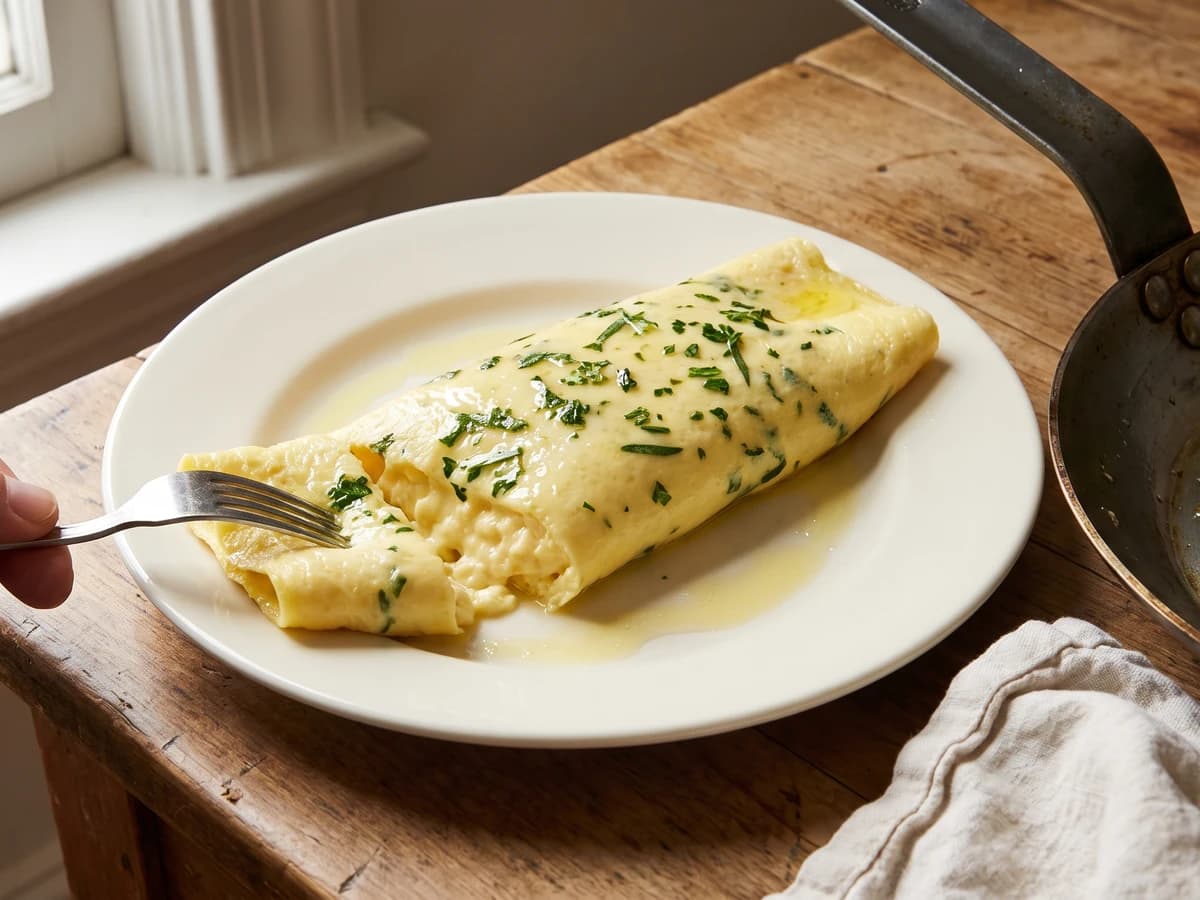
Four tender herbs, hot butter, and two eggs per pan: this rolled omelette teaches the quick hand and good judgment that keep the outside pale and the center creamy.
Chef Juliette
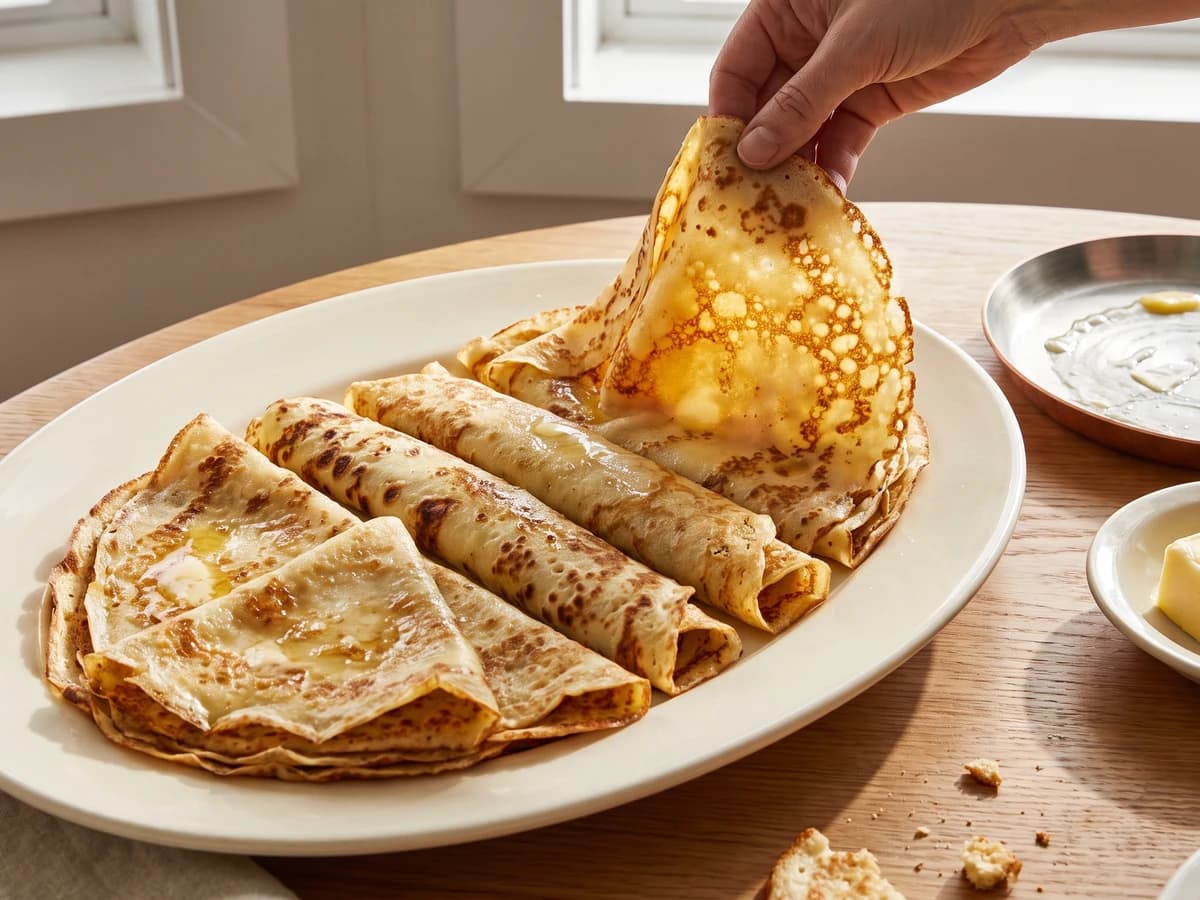
Four batters, one lesson: let the flour drink deeply before cooking, then spread the batter thinly in butter for crêpes and pannequets that bend without becoming tough.
Chef Juliette
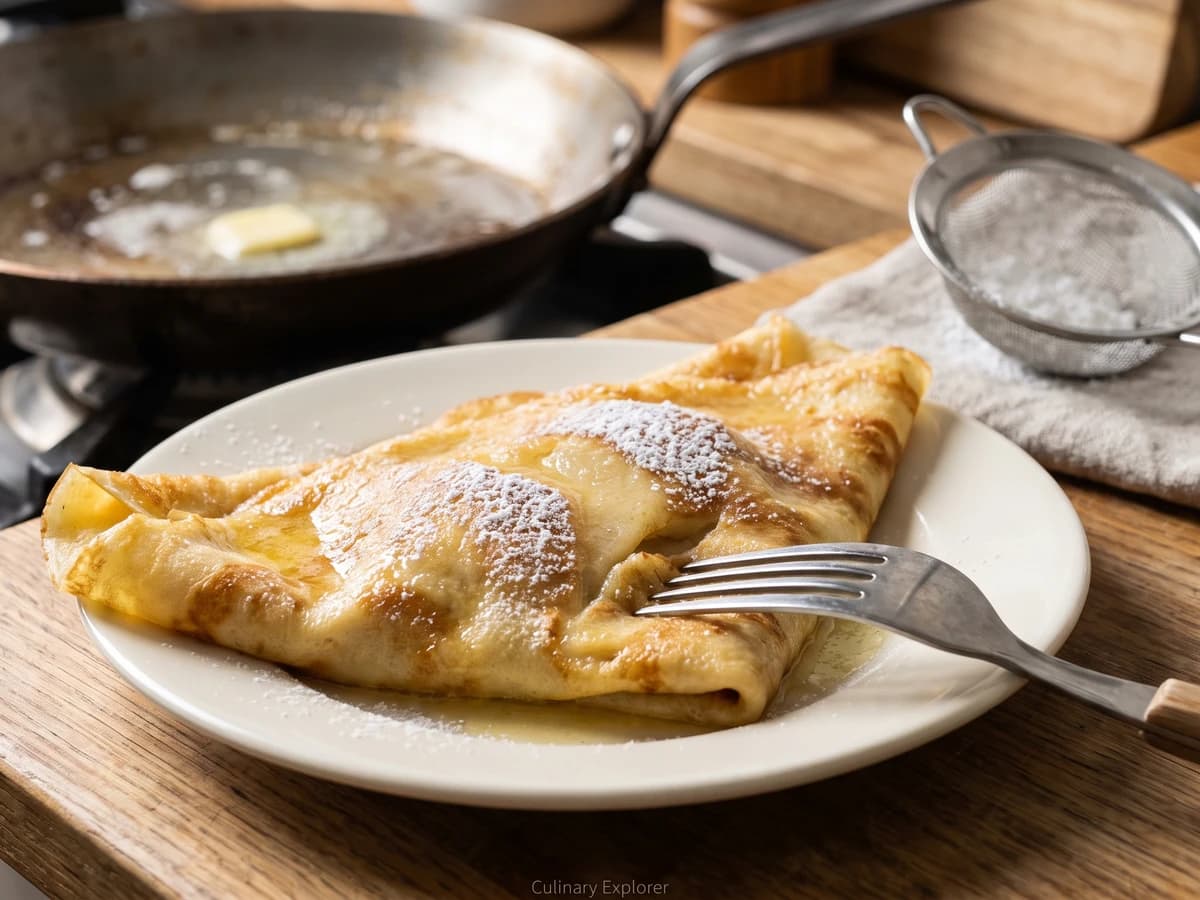
Crêpes au Couvent trap ripe Williams pear dice between two thin pours of sweet batter, then turn in one clean toss and reach the table butter-gold, powdered, and burning hot.