Chef Juliette
Ordinary or White Consommé
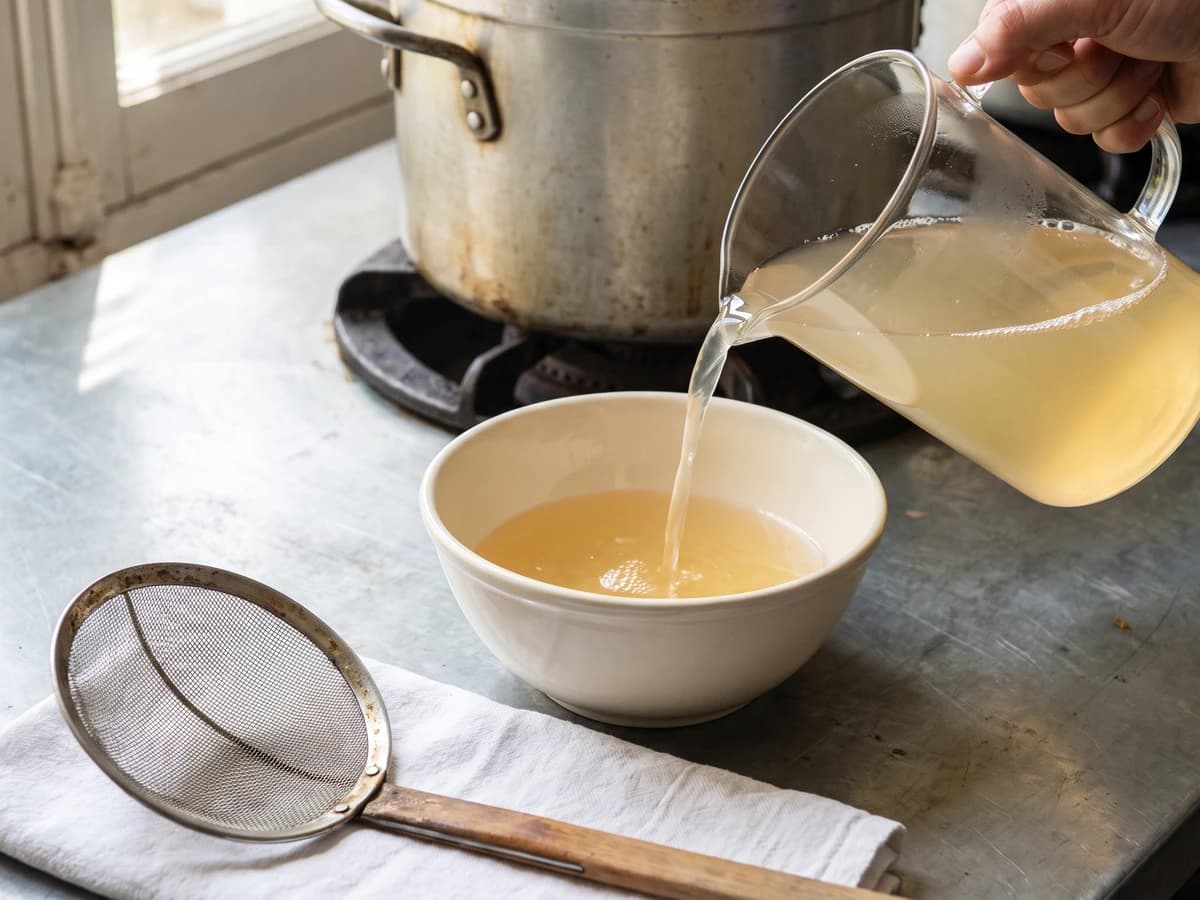
Beef shin, lean beef, and fowl begin in cold water and rise slowly toward a tremble. Skim before the boil, and you learn the quiet discipline that gives every clear French broth its backbone.
A cooking platform built around craft, culture, and the stories behind what we eat.
Created by Chef Juliette
Based on No. 48, Piquante Sauce, from Le Guide Culinaire (1907) by Auguste Escoffier
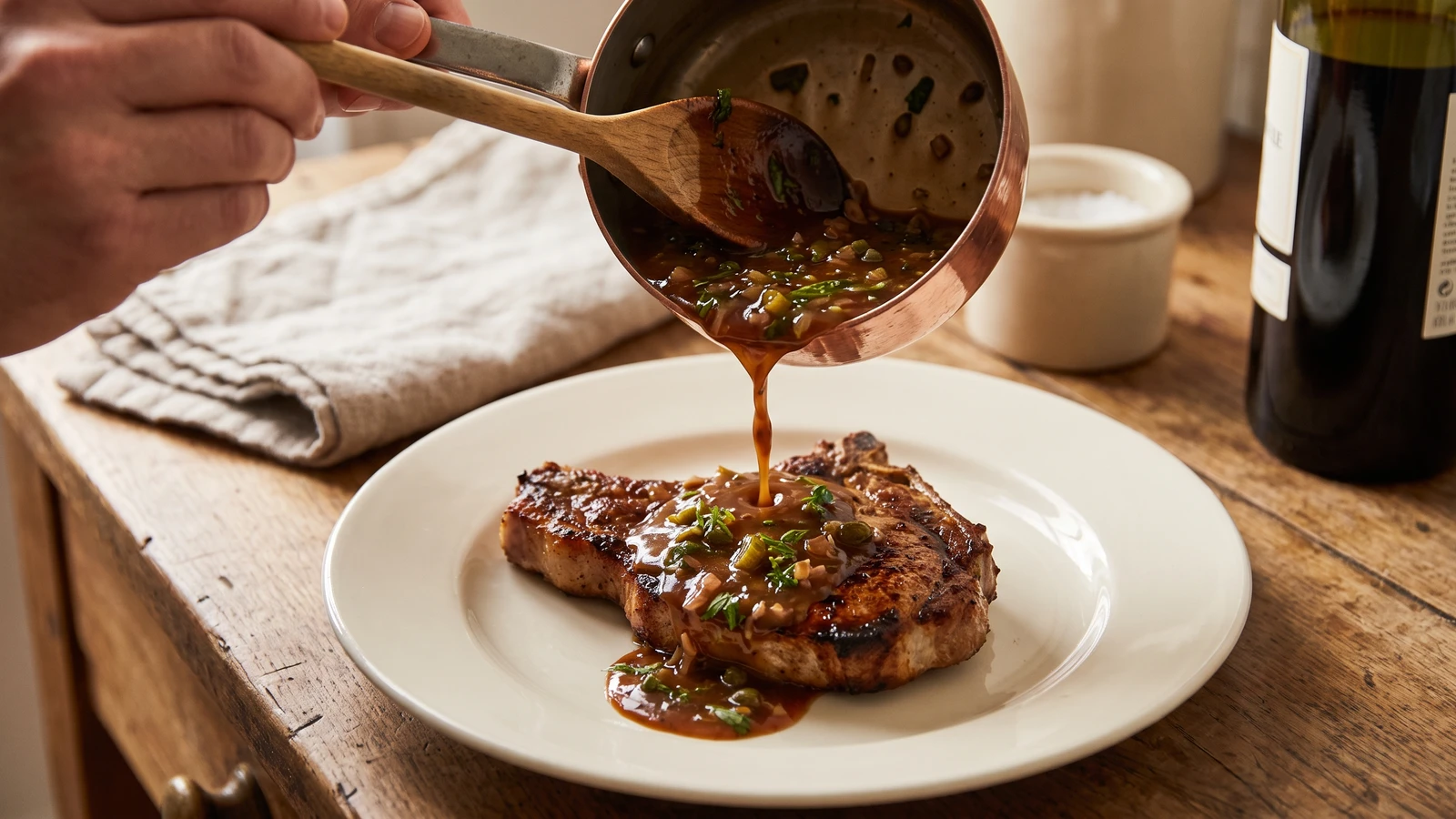
Sauce Piquante turns a proper reduction into the sharp companion pork wants: mellow half-glaze, vinegar and wine, then gherkins, capers, and fresh herbs stirred in off the heat so every edge stays bright.
Sauce Piquante (sharp shallot and pickle sauce) teaches one clean lesson: vinegar and wine must reduce before the half-glaze arrives. Do that, and their raw severity mellows into a lively edge that cuts through pork without bullying it. Reverse the order and the sauce tastes merely sour. The reduction is the dish.
The source recipe assumed a vegetable pan, a saucier on staff, and half-glaze drawn from a stockpot that never went cold. At home, use a small heavy saucepan and a good prepared half-glaze. I have halved the brigade formula because one cup generously sauces four plates, while keeping its proportions, its half-hour simmer, and its last-moment finish intact. The separate pan and constant skimming hand were brigade scaffolding; the acid reduction, gentle clarification, and off-heat garnish must stay. One cook, one stove, one evening.
When it is right, Sauce Piquante gleams deep chestnut and coats a spoon lightly, with green flecks of cornichon, caper, and herbs still distinct. Watch the first reduction closely and stop while liquid still covers the shallots. That is the one step that decides the sauce before the half-glaze ever meets the pan.
Sauce piquante belongs to the national French classical sauce repertoire rather than to one province: it is a half-glaze derivative sharpened with wine vinegar, shallot, pickles, capers, and herbs. It traveled naturally from grand kitchens to bourgeois and bistro tables because its acidity cuts the richness of pork and gives reheated meat a fresh edge. Piquante here means tart and briny, not chile-hot; its bite comes from reduction and the pickle jar.
Quantity
3 tablespoons (45 ml / 28 g)
very finely minced
Quantity
1/4 cup (60 ml / 60 g)
Quantity
1/4 cup (60 ml / 60 g)
Quantity
1 cup (240 ml / 250 g)
Quantity
2 tablespoons (30 ml / 28 g)
finely chopped
Quantity
1 tablespoon (15 ml / 14 g)
drained and finely chopped
Quantity
1/2 teaspoon (2.5 ml / 1 g)
finely chopped
| Ingredient | Quantity |
|---|---|
| shallotsvery finely minced | 3 tablespoons (45 ml / 28 g) |
| white wine vinegar | 1/4 cup (60 ml / 60 g) |
| dry white wine | 1/4 cup (60 ml / 60 g) |
| prepared half-glaze | 1 cup (240 ml / 250 g) |
| cornichons or sour gherkinsfinely chopped | 2 tablespoons (30 ml / 28 g) |
| capersdrained and finely chopped | 1 tablespoon (15 ml / 14 g) |
| mixed fresh chervil, flat-leaf parsley, and tarragonfinely chopped | 1/2 teaspoon (2.5 ml / 1 g) |
Mince the shallots very finely. Chop the cornichons and capers separately, then hold them aside. Leave the herbs uncut until the sauce has finished simmering, because chopped chervil and tarragon darken quickly and lose the fragrance the final garnish is meant to supply.
Put the shallots, vinegar, and white wine into a 1-quart heavy saucepan. Bring them to a lively simmer over medium heat and reduce by a good half, about 8 to 10 minutes. Roughly 1/4 cup of liquid should remain, the shallots should be translucent, and the raw vinegar smell should have softened. Do not let the pan run dry. If it goes syrupy before you catch it, remove it from the heat and stir in 1 tablespoon of water, scraping the bottom clean. Ça se rattrape. If it smells scorched, begin the reduction again, because burnt vinegar follows a sauce all the way to the plate.
Stir in the prepared half-glaze and bring the sauce just to a boil. Lower the heat immediately and hold it at a bare simmer for 30 minutes. Dépouiller means to skim and clarify: lift away the first foam and any beads of fat that gather at the surface with a shallow spoon, stirring the sauce occasionally so the bottom does not catch. It is ready when it looks clear and glossy and nappes, or coats, the back of a spoon in a thin, even film. If it tightens too soon, add hot water 1 tablespoon at a time and continue the gentle simmer; the half-hour cooking develops the sauce and should not be traded for violent reduction.
Finely chop the chervil, parsley, and tarragon. Take the saucepan completely off the heat, then fold in the cornichons, capers, and herbs. Do not boil the finished sauce again. Heat dulls the herbs and softens the pickles, while the original method depends on their fresh, briny edge arriving at the last moment. Taste before adding any seasoning; the half-glaze, capers, and cornichons usually provide all the salt required.
Spoon the Sauce Piquante at once over grilled pork chops, gently boiled pork, or reheated sliced or minced cold meat. Allow 3 to 4 tablespoons per serving, enough to glaze the meat and leave a little pool for bread without drowning it. À table!
1 serving (about 60g)
Culinary guides, cultural storytelling, and the editorial depth that makes cooking meaningful.
Discover Culinary ExplorerChef Juliette
Beef shin, lean beef, and fowl begin in cold water and rise slowly toward a tremble. Skim before the boil, and you learn the quiet discipline that gives every clear French broth its backbone.
Chef Juliette
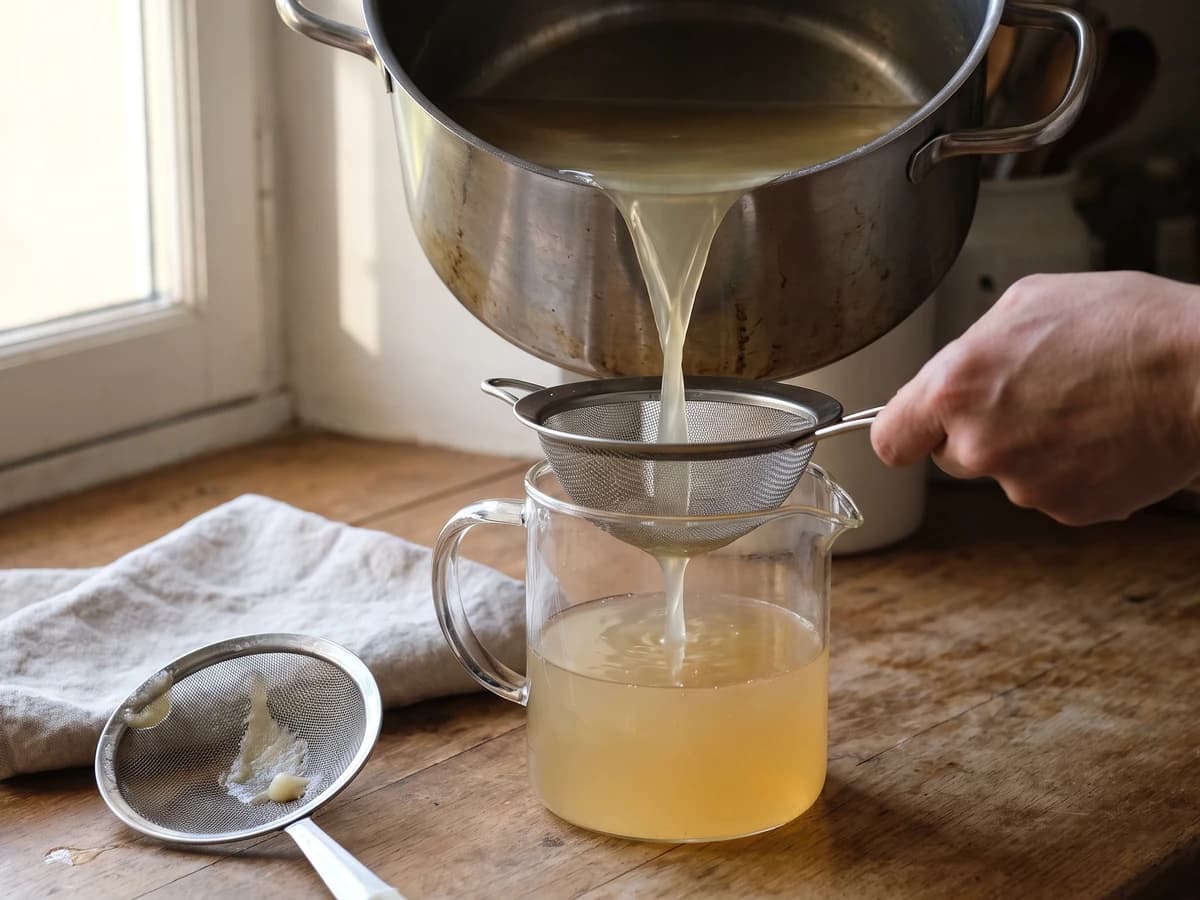
Break the veal bones small, then give them eight hours at a bare tremble. This pale, gelatinous fond becomes the quiet foundation beneath velouté, blanquette, and every sauce that must stay light.
Chef Juliette
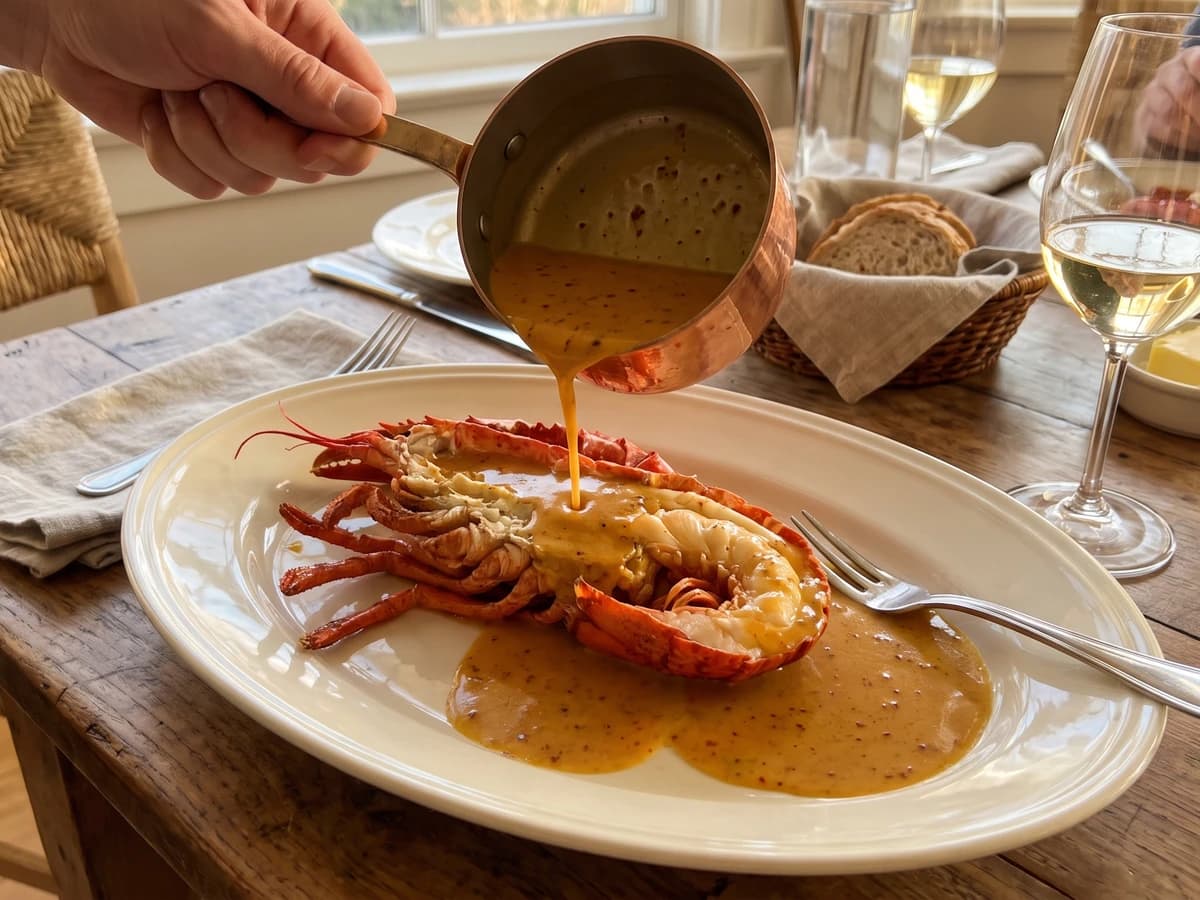
Sauce Orientale concentrates lobster-rich American Sauce with curry, then folds in cream away from the fire: a glossy, gently spiced derivative made for lobster, crayfish, and firm fish.
Chef Juliette
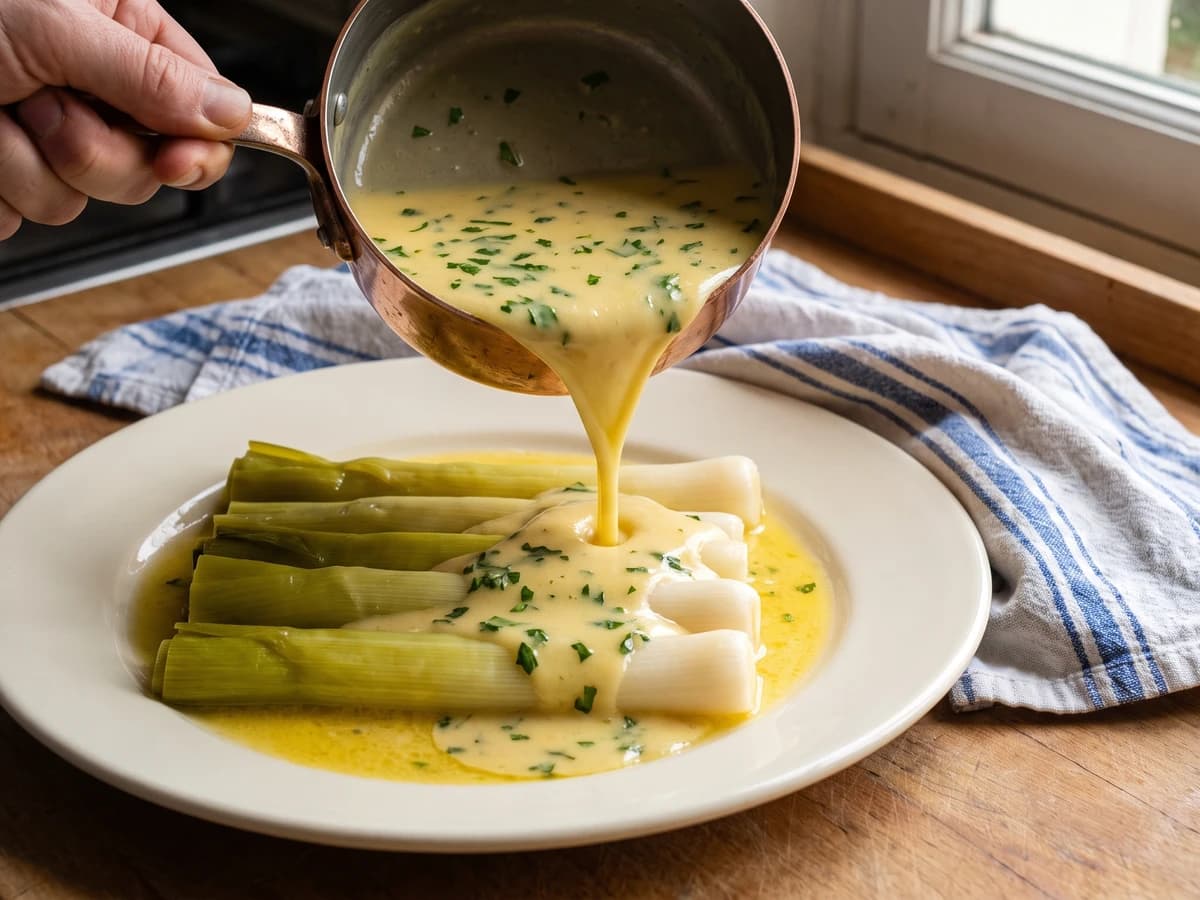
An old lesson in sauce families: Sauce Allemande takes mushroom liquor, then butter, lemon, and parsley, becoming a glossy Poulette for sheep's trotters, leeks, cauliflower, and anything needing gentle richness with a bright edge.