Chef Juliette
Omelette à l’Écossaise
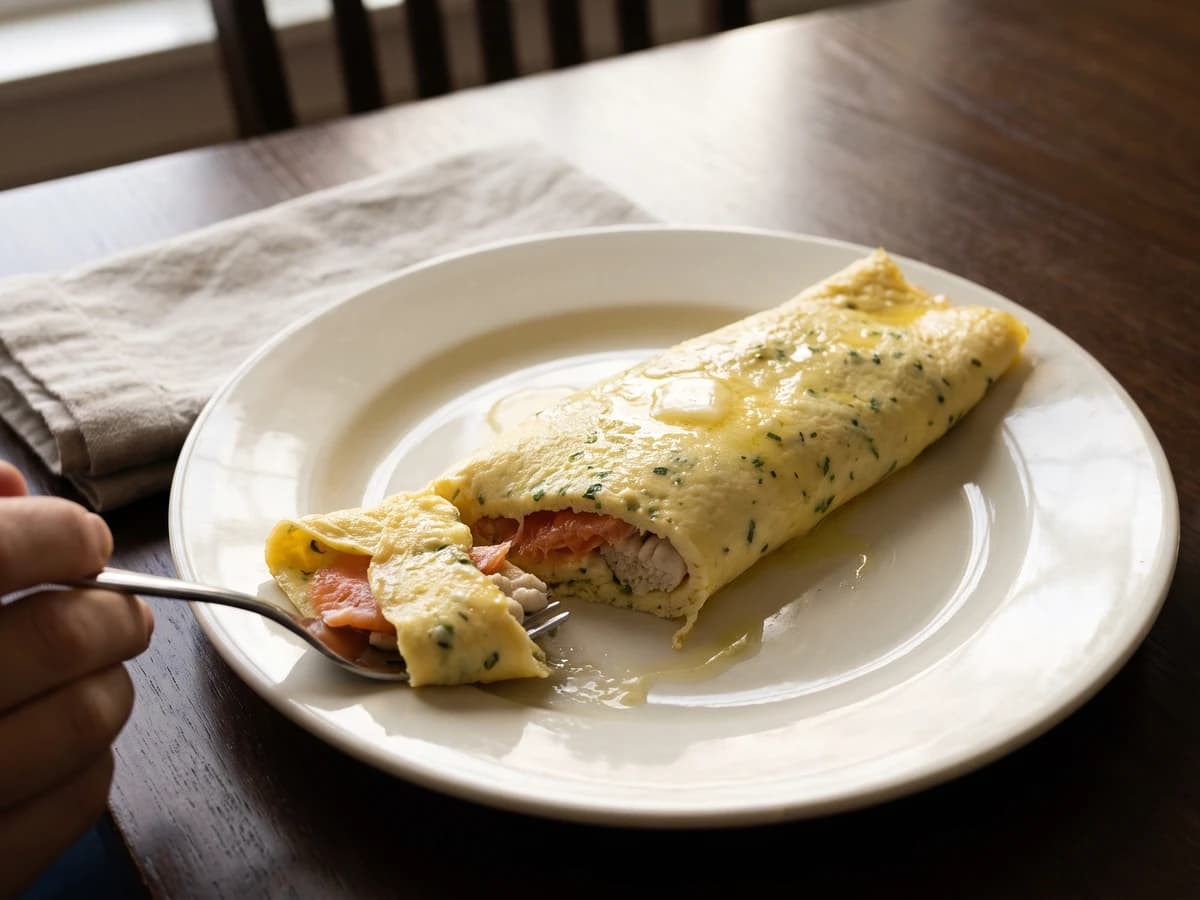
A creamy omelette aux fines herbes closes around smoked-salmon-wrapped herring milts, gently poached in butter. Have the filling ready, then roll the eggs while they still shine.
A cooking platform built around craft, culture, and the stories behind what we eat.
Created by Chef Juliette
Based on No. 478, Scrambled Eggs, Reine Margot, from Le Guide Culinaire (1907) by Auguste Escoffier
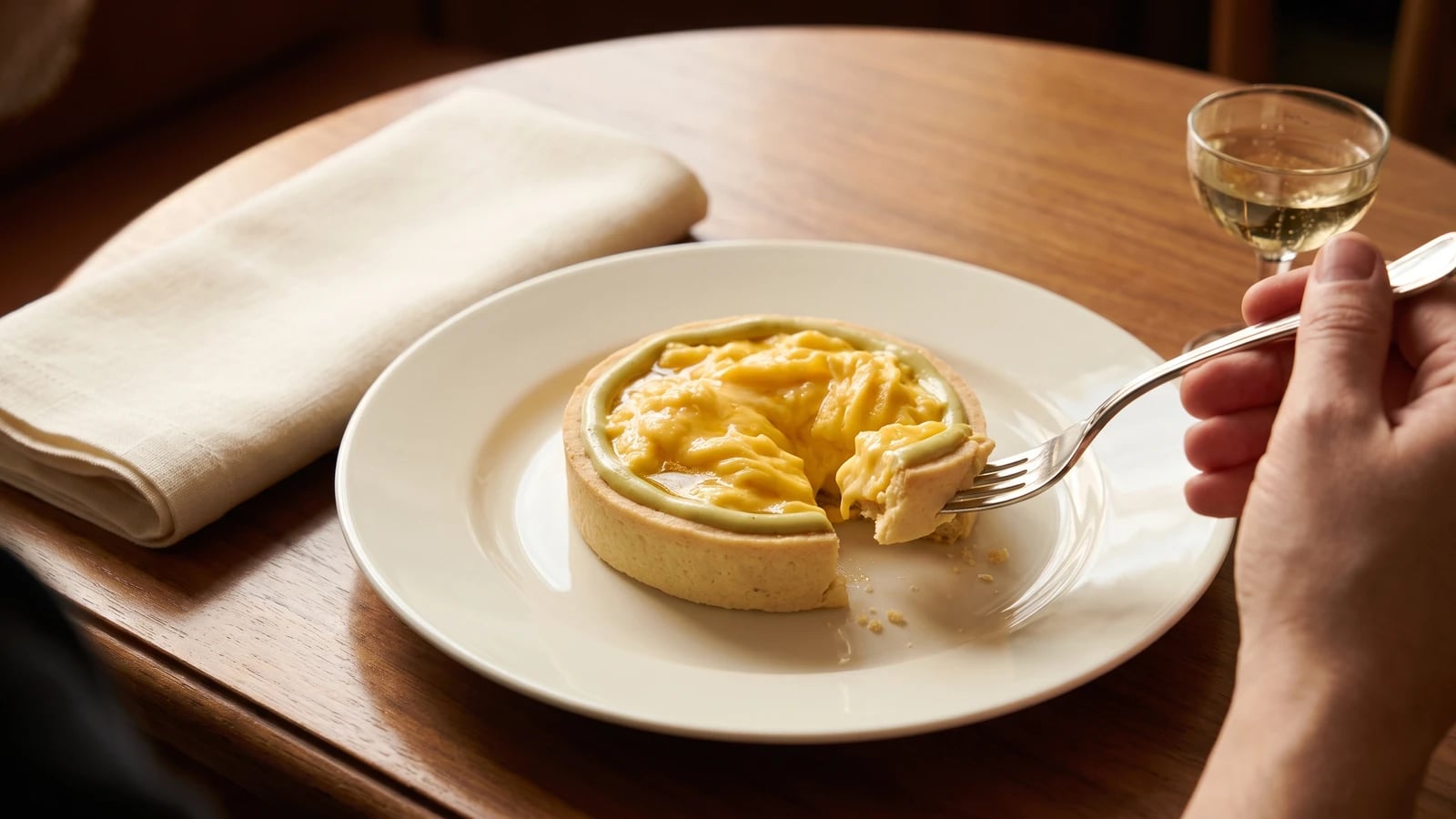
Soft almond-butter eggs, pale pastry, and a close ring of pistachio Béchamel make a formal little supper dish whose lesson is simple: leave the eggs looser than you think.
Œufs brouillés Reine Margot teaches control of residual heat. The one true thing to know before touching a pan is this: the eggs must leave it while they still look slightly too loose, because the warm tartlet and their own heat will finish the set. The reward is a spoon-soft, butter-glossed filling held by crisp, almost ivory pastry, with pistachio Béchamel tracing the rim.
The source instruction assumes a pastry section supplying tartlet cases baked without coloration, a saucier holding Béchamel, and nut butters already pounded and passed through a tamis. At home, four shells baked ahead, one small saucepan, and a mortar or spice grinder do the same work. The scale and holding apparatus change because four portions need neither brigade labor nor a long wait; the holding was scaffolding, while the pale pastry, beurre d'amandes (almond butter) in the eggs, and beurre de pistaches (pistachio butter) in the Béchamel are the dish and stay. One cook, one stove, one evening.
Scramble last and serve at once. The decisive minute comes when the eggs thicken into soft folds but still shine; take them off the heat then, not when they look finished, and let the beurre d'amandes halt the cooking.
Œufs brouillés Reine Margot belongs to the Parisian grand-kitchen repertoire, where named garnitures turned a familiar egg preparation into a composed entrée for formal service. The title invokes Marguerite de Valois, remembered as Reine Margot, but it is an honorific name, not evidence that the dish came from her table. Carried from grand kitchens to bourgeois dinner-party tables, it kept the almond-pistachio pairing; the ceremony lies in the arrangement, not in a different way of scrambling eggs.
Quantity
1¼ cups (300 ml / 150 g)
Quantity
⅓ cup (80 ml / 75 g)
cubed
Quantity
1
Quantity
2 to 3 tablespoons (30 to 45 ml / 30 to 45 g)
Quantity
1 teaspoon (5 ml / 6 g)
divided
Quantity
¼ teaspoon (1.25 ml / 0.5 g)
divided
Quantity
3 tablespoons (45 ml / 20 g)
Quantity
1 tablespoon plus 1½ teaspoons (22 ml / 20 g)
softened
Quantity
2 tablespoons (30 ml / 15 g)
blanched if their skins are dark
Quantity
1 tablespoon plus ¼ teaspoon (16 ml / 15 g)
softened
Quantity
2 teaspoons (10 ml / 9 g)
Quantity
1 tablespoon plus ½ teaspoon (18 ml / 9 g)
Quantity
⅔ cup (160 ml / 165 g)
Quantity
1 thin slice
Quantity
1
Quantity
1 pinch
Quantity
8
Quantity
2 tablespoons (30 ml / 28 g)
| Ingredient | Quantity |
|---|---|
| all-purpose flour, for the tartlet shells | 1¼ cups (300 ml / 150 g) |
| cold unsalted butter, for the tartlet shellscubed | ⅓ cup (80 ml / 75 g) |
| large egg yolk | 1 |
| ice water | 2 to 3 tablespoons (30 to 45 ml / 30 to 45 g) |
| fine sea saltdivided | 1 teaspoon (5 ml / 6 g) |
| ground white pepperdivided | ¼ teaspoon (1.25 ml / 0.5 g) |
| blanched sliced almonds | 3 tablespoons (45 ml / 20 g) |
| unsalted butter, for beurre d'amandessoftened | 1 tablespoon plus 1½ teaspoons (22 ml / 20 g) |
| unsalted shelled pistachiosblanched if their skins are dark | 2 tablespoons (30 ml / 15 g) |
| unsalted butter, for beurre de pistachessoftened | 1 tablespoon plus ¼ teaspoon (16 ml / 15 g) |
| unsalted butter, for the Béchamel | 2 teaspoons (10 ml / 9 g) |
| all-purpose flour, for the Béchamel | 1 tablespoon plus ½ teaspoon (18 ml / 9 g) |
| whole milk | ⅔ cup (160 ml / 165 g) |
| yellow onion | 1 thin slice |
| whole clove | 1 |
| freshly grated nutmeg | 1 pinch |
| large eggs | 8 |
| unsalted butter, for scrambling | 2 tablespoons (30 ml / 28 g) |
If the pistachio skins are dark, cover the nuts with boiling water for one minute, drain them, and rub away the loosened skins; dry them completely. Grind the almonds to the finest meal possible, then work in their softened butter until the beurre d'amandes becomes a smooth paste. Scrape it into a small bowl and repeat with the pistachios and their butter to make the beurre de pistaches. Keep the two clearly separate. Do not toast the nuts: browning would muddy the pistachio colour and replace their gentle sweetness with a stronger roasted flavour.
Combine the flour with ¼ teaspoon of the salt. Rub in the cold butter until the mixture resembles coarse sand with a few pea-sized flakes, then add the yolk and 2 tablespoons of ice water. Press the dough together without kneading it. If it remains crumbly when squeezed, add the final tablespoon of water drop by drop; if it feels sticky, chill it rather than burying it in more flour. Flatten into a disc, wrap, and chill for 30 minutes.
Heat the oven to 170°C/340°F. Roll the chilled pastry between sheets of parchment to about 3 mm thick, then cut four rounds large enough to line four 9 cm tartlet tins. Ease the pastry into the corners without stretching it, trim the rims, prick the bases, and chill for 15 minutes. Line each shell with parchment and weights, then bake for 14 to 16 minutes. Remove the weights and bake for another 4 to 6 minutes, only until the pastry is dry and firm while remaining almost ivory. A faint blond base is acceptable; a raw, damp base is not. If the rims begin colouring first, shield them with narrow strips of foil. Cool for five minutes, then unmould carefully.
Warm the milk with the onion, clove, and nutmeg until it barely trembles, then cover and infuse for five minutes. Remove the onion and clove, and reserve 2 tablespoons of the warm milk. Melt the Béchamel butter over low heat, stir in its flour, and cook this roux blanc, a white roux, for 90 seconds without letting it colour. Whisk in the remaining milk a little at a time, then simmer gently for about five minutes, stirring until the sauce is smooth, glossy, and able to fall from a spoon in a narrow cord. Season with ¼ teaspoon salt and a pinch of white pepper. If lumps form, remove the pan from the heat, whisk firmly, and pass the sauce through a fine sieve; if it is too thick to trace a line, loosen it with the reserved milk. Off the heat, whisk in all the beurre de pistaches. Cover the surface directly and hold the sauce in a bowl of warm water.
Return the tartlet shells to a 150°C/300°F oven for three minutes and set four plates somewhere warm, never hot. Beat the eggs just until the whites and yolks combine, seasoning them with the remaining salt and white pepper. Melt the scrambling butter in a clean heavy saucepan over low heat without browning it. Add the eggs and stir continuously with a flexible spatula, scraping the base and corners while moving the pan on and off the heat whenever the curds form too quickly. After six to eight minutes, the eggs should gather into small, soft folds that mound briefly and then relax. Remove the pan while they remain glossy and stir in all the beurre d'amandes. If the eggs begin tightening at the rim, lift the pan off the heat immediately and transfer them to a cool bowl while stirring in the almond butter. Ça se rattrape while they still shine; once they are dry and matte, no amount of butter can make them soft again.
Place one warm tartlet shell on each plate and divide the eggs among them, spooning rather than packing so the soft folds remain intact. Stir the pistachio Béchamel until fluid, warming it briefly over the water bath if needed. With a small spoon or piping bag, draw a narrow, continuous cord of sauce around each tartlet, close against its outer edge as the source directs. Carry the plates straight to the table. Œufs brouillés wait for nobody. À table!
1 serving (about 215g)
Culinary guides, cultural storytelling, and the editorial depth that makes cooking meaningful.
Discover Culinary ExplorerChef Juliette
A creamy omelette aux fines herbes closes around smoked-salmon-wrapped herring milts, gently poached in butter. Have the filling ready, then roll the eggs while they still shine.
Chef Juliette
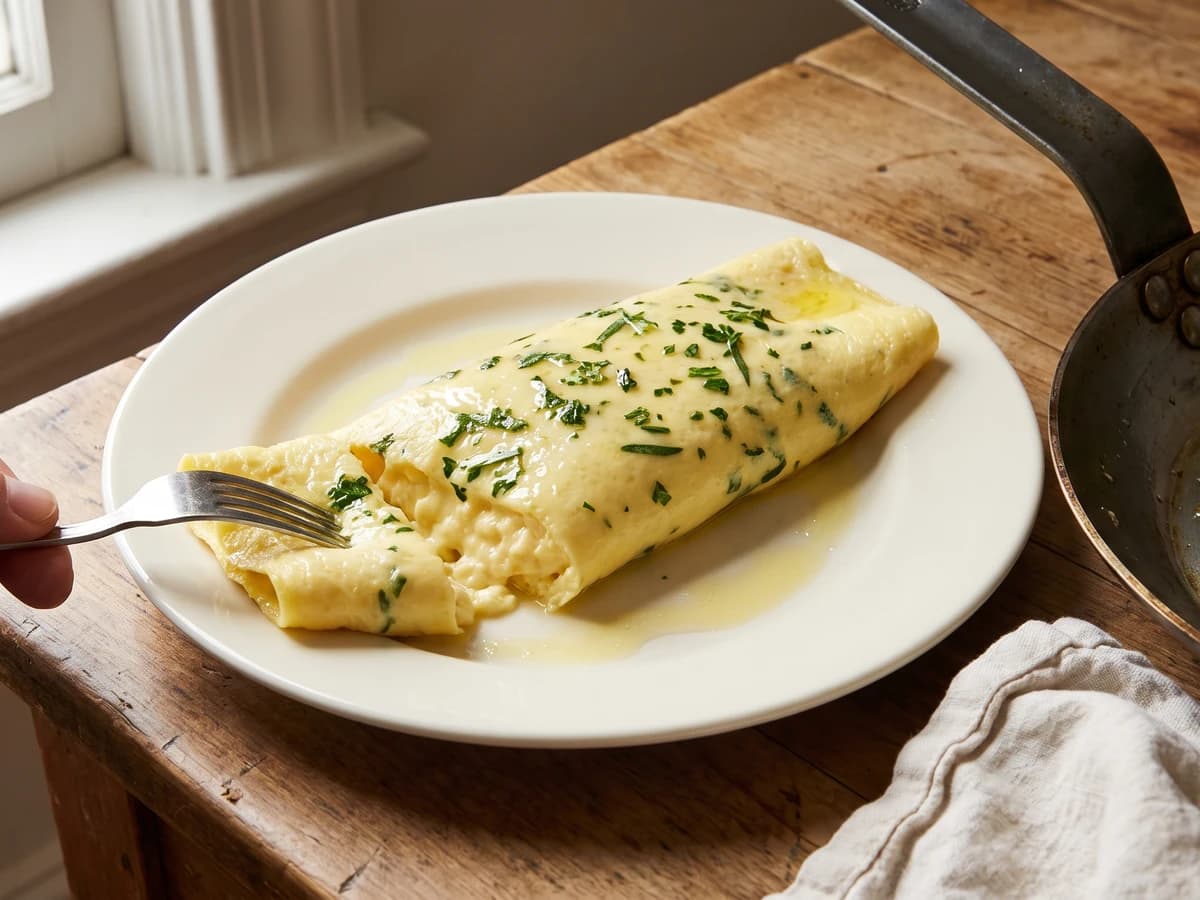
Four tender herbs, hot butter, and two eggs per pan: this rolled omelette teaches the quick hand and good judgment that keep the outside pale and the center creamy.
Chef Juliette
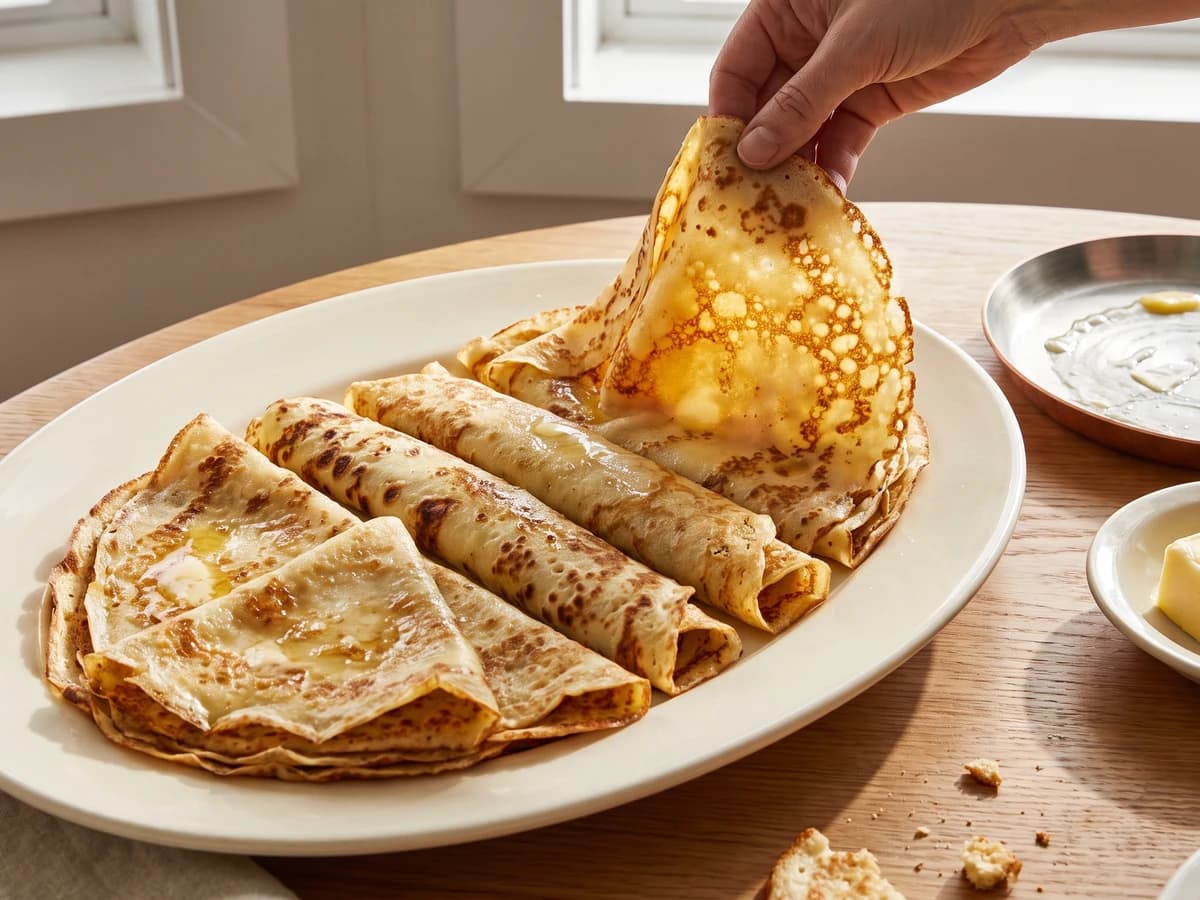
Four batters, one lesson: let the flour drink deeply before cooking, then spread the batter thinly in butter for crêpes and pannequets that bend without becoming tough.
Chef Juliette
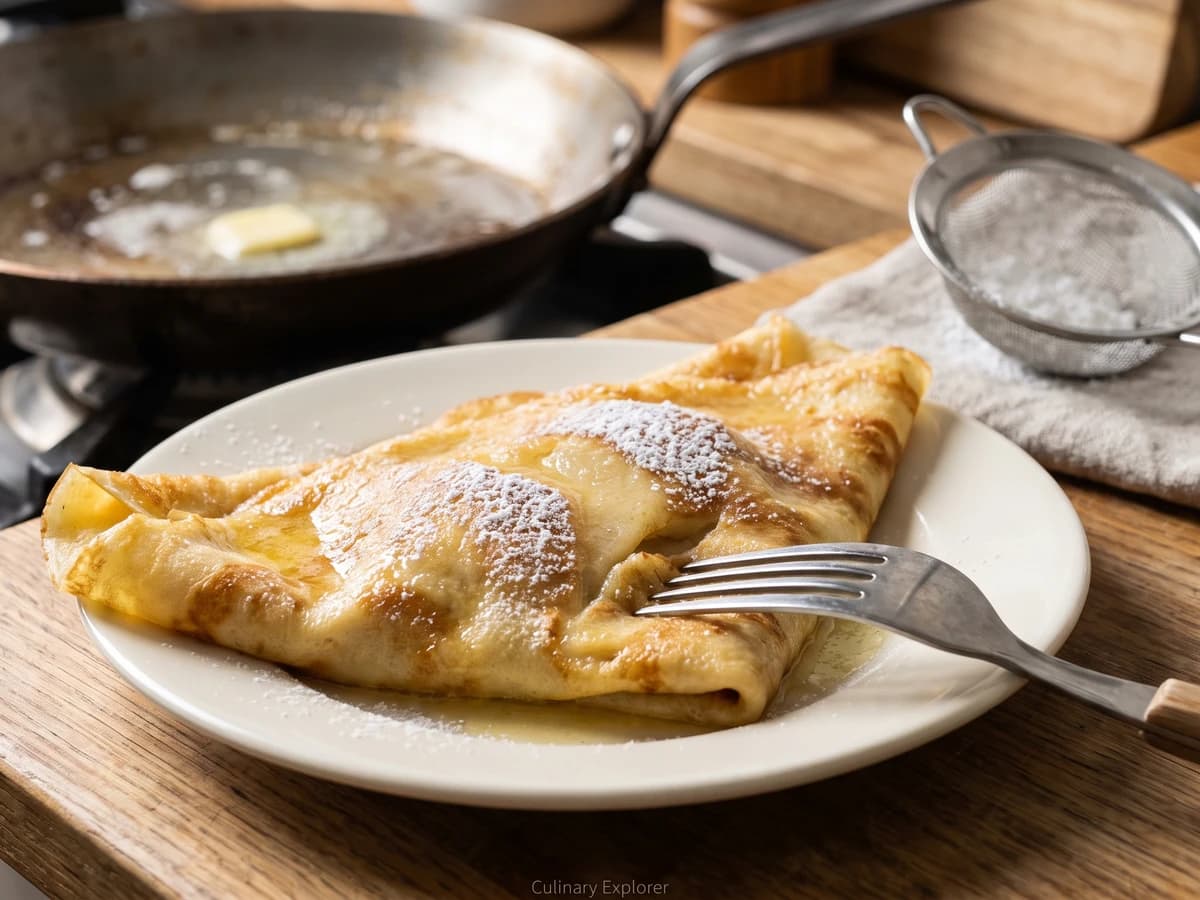
Crêpes au Couvent trap ripe Williams pear dice between two thin pours of sweet batter, then turn in one clean toss and reach the table butter-gold, powdered, and burning hot.