Chef Juliette
Omelette à l’Écossaise
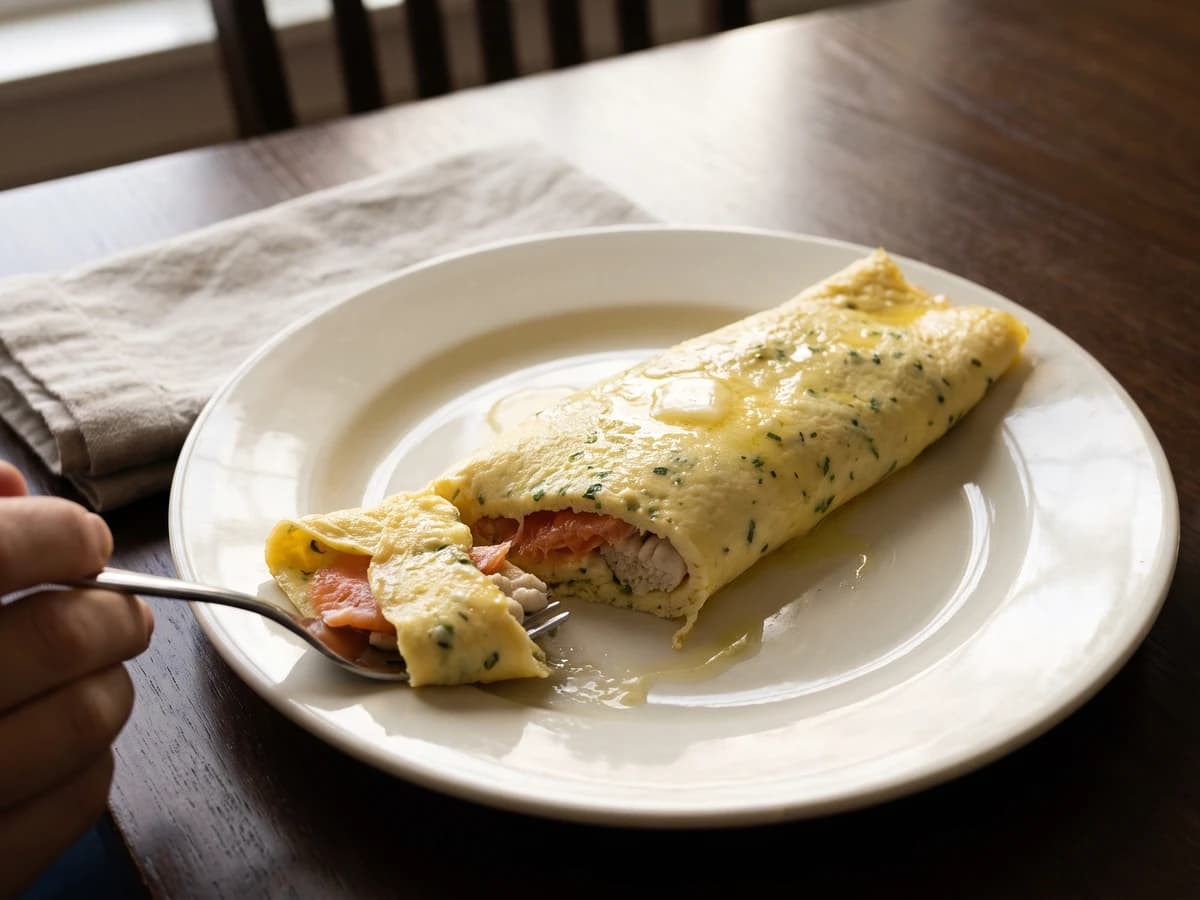
A creamy omelette aux fines herbes closes around smoked-salmon-wrapped herring milts, gently poached in butter. Have the filling ready, then roll the eggs while they still shine.
A cooking platform built around craft, culture, and the stories behind what we eat.
Created by Chef Juliette
Based on No. 477, Scrambled Eggs, Rachel, from Le Guide Culinaire (1907) by Auguste Escoffier
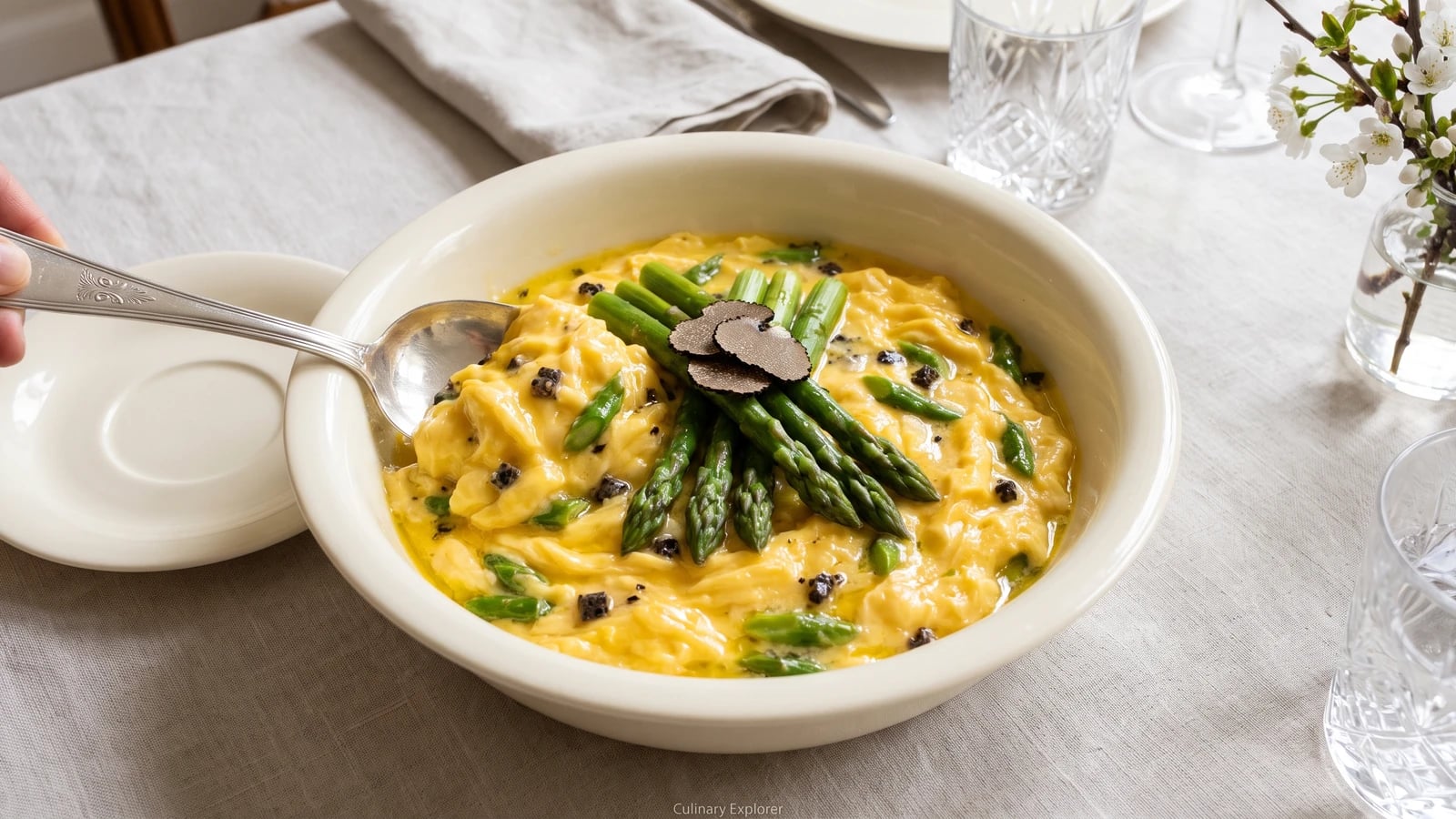
Soft French scrambled eggs folded with diced black truffle and asparagus tips, then brought to the table in a warm timbale with a green bundle and a dark crown of truffle.
Œufs brouillés Rachel (soft scrambled eggs with truffle and asparagus) teaches the central truth of French scrambled eggs: the pan keeps cooking them after it leaves the fire. Take them off while they still look a shade too loose, and they settle into soft, glossy folds rather than dry curds.
The original entry assumed a garnish station with asparagus heads already blanched, truffles divided into dice and perfect slices, and a timbale waiting warm at the instant the eggs were ready. It needs no saucier, stockpot, or salamander. At home, you prepare the two garnishes first and use a warmed porcelain serving dish as the timbale. That separate brigade labor is scaffolding and can happen ahead; low heat, constant stirring, and last-minute service are the dish and must stay. One cook, one stove, one evening.
When it is right, the eggs are butter-gold and barely holding their shape, the asparagus remains green and tender, and the truffle perfumes each spoonful without overwhelming it. Watch the curds, not the clock. If they begin setting faster than you can stir, lift the pan from the heat immediately; ça se rattrape with cold cream and patience.
Œufs brouillés Rachel belongs to the named-garnish vocabulary of the Parisian classical kitchen, where a familiar preparation changed identity through a precise and repeatable finish. Here Rachel means asparagus tips and truffle in two forms: dice and tips folded through the eggs, followed by a central bundle of asparagus encircled with truffle slices in a timbale. The name describes the garnish, not a different scrambling method, and the formal presentation traveled readily from grand dining rooms to special home tables because everything except the eggs could be prepared in advance.
Quantity
24 spears (about 12 oz / 340 g)
top 3 inches (7.5 cm) cut off; stalks reserved for another use
Quantity
1 small truffle (about 1 oz / 30 g)
two-thirds finely diced and the remainder cut into 12 thin slices
Quantity
8
Quantity
¼ cup (60 ml / 60 g)
thoroughly chilled
Quantity
¼ cup (4 tbsp / 60 ml / 57 g)
divided
Quantity
2 tsp (10 ml / 12 g)
divided
Quantity
⅛ tsp (0.6 ml / 0.3 g)
| Ingredient | Quantity |
|---|---|
| slender asparagus spearstop 3 inches (7.5 cm) cut off; stalks reserved for another use | 24 spears (about 12 oz / 340 g) |
| fresh black truffletwo-thirds finely diced and the remainder cut into 12 thin slices | 1 small truffle (about 1 oz / 30 g) |
| large eggs | 8 |
| heavy creamthoroughly chilled | ¼ cup (60 ml / 60 g) |
| unsalted butterdivided | ¼ cup (4 tbsp / 60 ml / 57 g) |
| fine saltdivided | 2 tsp (10 ml / 12 g) |
| ground white pepper | ⅛ tsp (0.6 ml / 0.3 g) |
Choose the eight straightest asparagus tips for the central fagot, or little bundle, and leave them whole. Cut the remaining sixteen tips crosswise into ½-inch (1.25 cm) pieces. Divide the truffle before the eggs demand your attention: finely dice two-thirds for folding through the curds, then cut the remainder into twelve thin slices for the crown. Cover the truffle closely so its perfume stays where it belongs.
Bring a small saucepan of water to a boil and season it with 1½ teaspoons of the salt. Add all the asparagus tips and blanch until brilliant green and just tender, 60 to 90 seconds. Drain, cool promptly under cold running water, and dry very thoroughly. If the tips remain wet, return them to the empty pan over low heat for a few seconds, tossing gently until the surface moisture disappears; water left on them would loosen the eggs.
Melt 1 tablespoon of the butter in the dry asparagus pan over low heat. Add the eight whole tips, turn them until glossy, then cover and take the pan off the heat. Warm a 1-quart porcelain timbale or deep serving bowl with hot water, then dry it just before serving. This replaces the hot serving ware a brigade kept ready throughout service, and it prevents the shallow dish from chilling the eggs on contact.
Crack the eggs into a bowl, add the remaining ½ teaspoon salt and the white pepper, then whisk only until the whites and yolks are completely joined. Melt 2 tablespoons of the butter in a heavy saucepan over low heat without letting it color. Add the eggs and stir continuously with a flexible spatula, sweeping the base, sides, and corners. Keep the heat low enough that small, creamy curds form gradually, about 7 to 10 minutes. C'est la même grammaire as any delicate egg liaison: gentle heat gives you control.
When the eggs have formed soft folds but still flow slowly from the spatula, remove the pan from the heat. Fold in the diced truffle, the cut asparagus tips, the cold cream, and the final tablespoon of cold butter. Stir just until the butter disappears and the garnish is evenly distributed. If the curds start tightening too quickly, stop the heat at once and add 1 tablespoon of the measured cold cream before continuing; ça se rattrape. Eggs already cooked dry cannot be made raw again, but the remaining cream will soften them enough to serve with confidence.
Spoon the œufs brouillés immediately into the warmed timbale, letting them settle naturally rather than packing them down. Arrange the eight buttered asparagus tips parallel in the center as a neat little fagot, with no string required. Set the twelve truffle slices around it in an even crown, each slice resting partly on the eggs. Carry the dish straight to the table while the curds still gleam. À table!
1 serving (about 160g)
Culinary guides, cultural storytelling, and the editorial depth that makes cooking meaningful.
Discover Culinary ExplorerChef Juliette
A creamy omelette aux fines herbes closes around smoked-salmon-wrapped herring milts, gently poached in butter. Have the filling ready, then roll the eggs while they still shine.
Chef Juliette
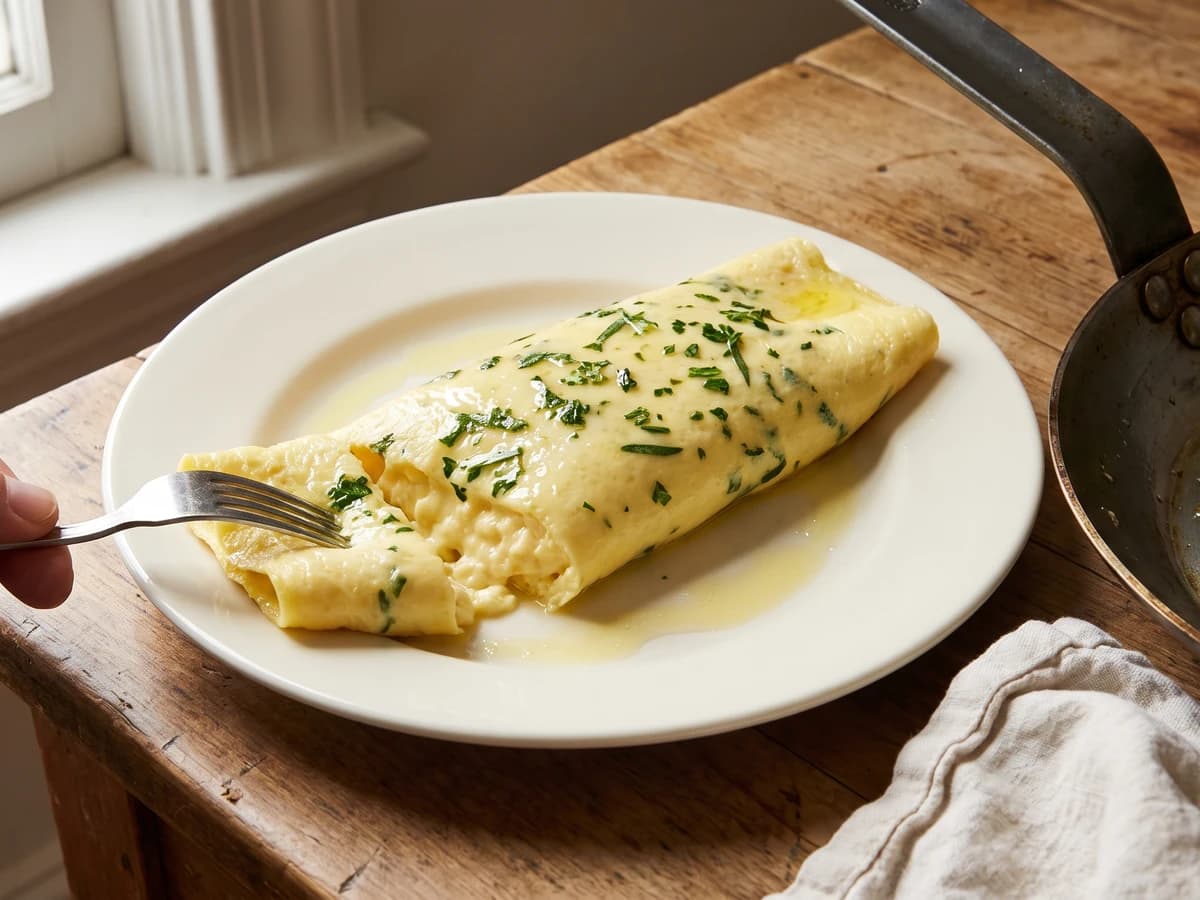
Four tender herbs, hot butter, and two eggs per pan: this rolled omelette teaches the quick hand and good judgment that keep the outside pale and the center creamy.
Chef Juliette
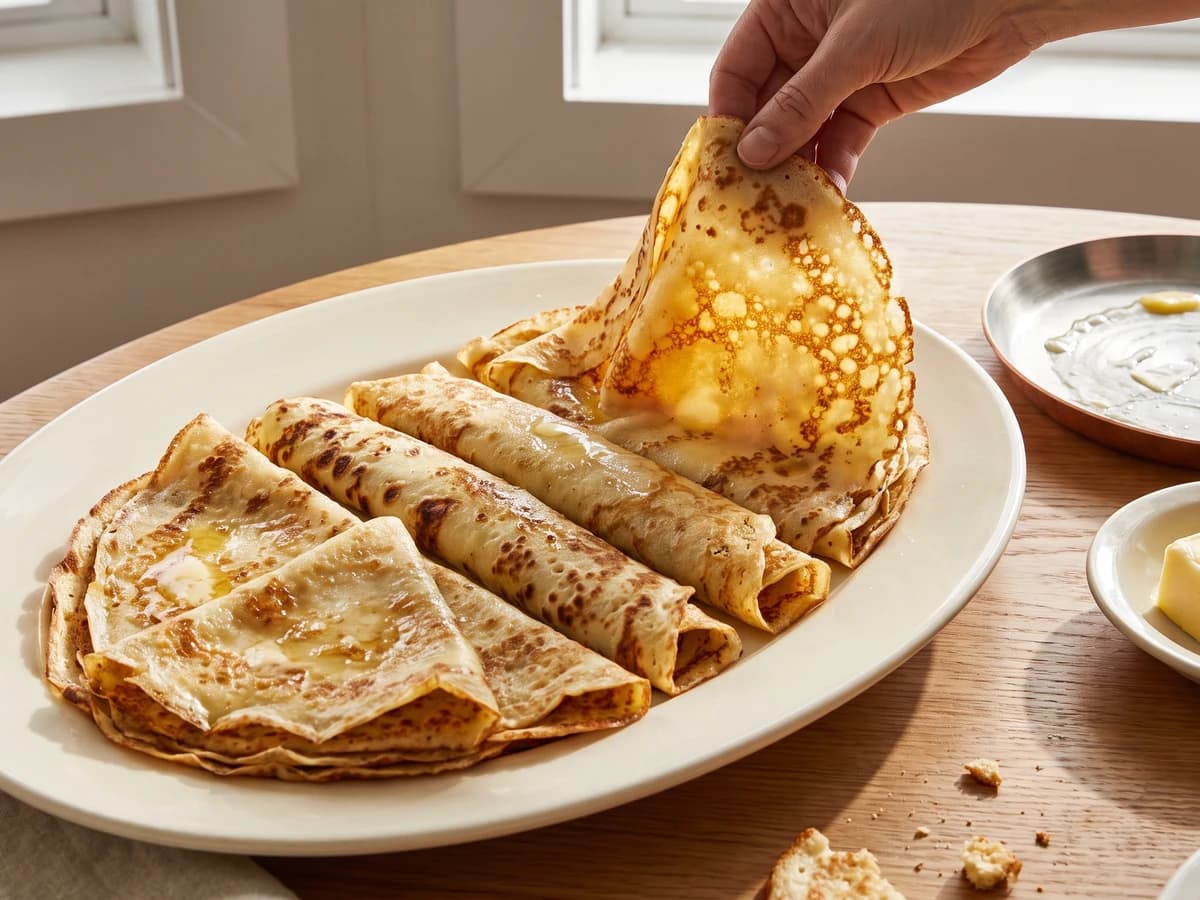
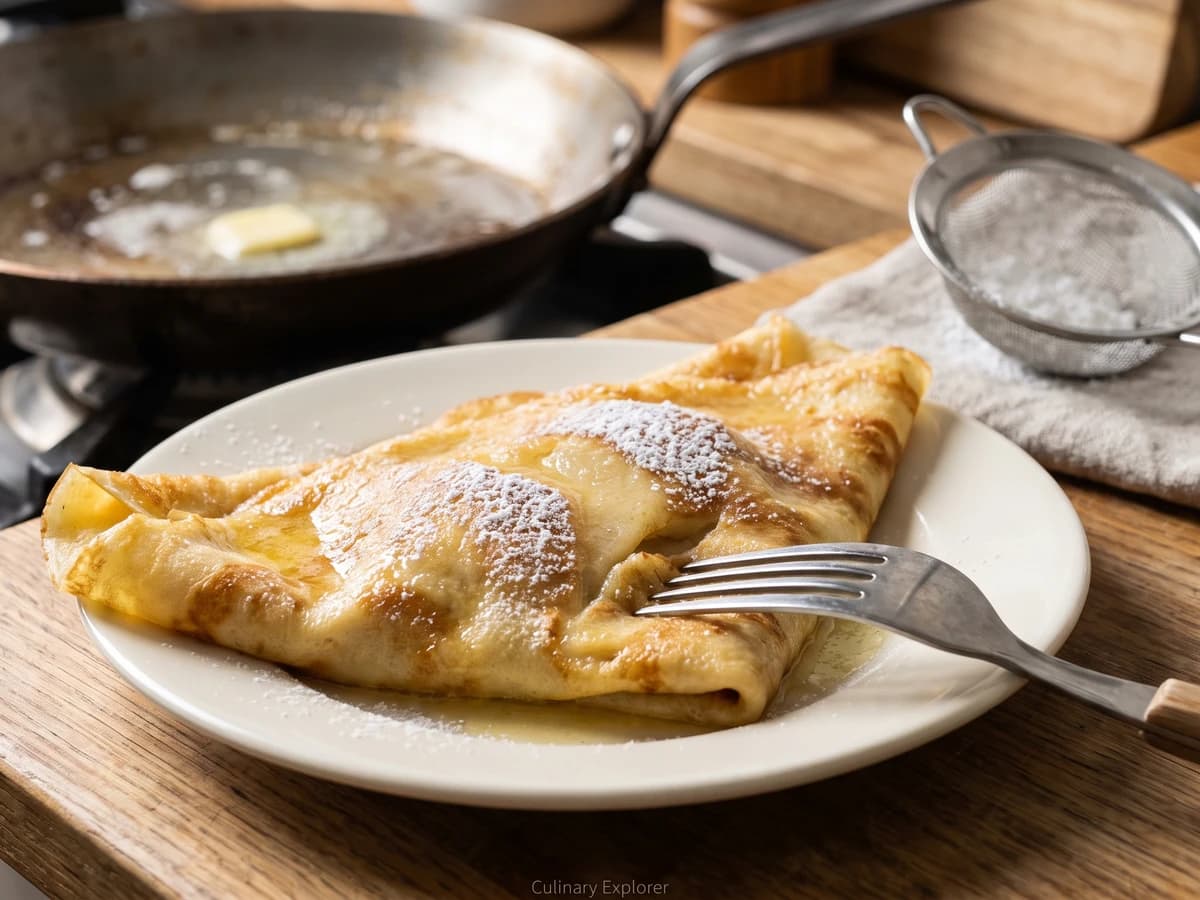
Four batters, one lesson: let the flour drink deeply before cooking, then spread the batter thinly in butter for crêpes and pannequets that bend without becoming tough.
Chef Juliette
Crêpes au Couvent trap ripe Williams pear dice between two thin pours of sweet batter, then turn in one clean toss and reach the table butter-gold, powdered, and burning hot.