Chef Juliette
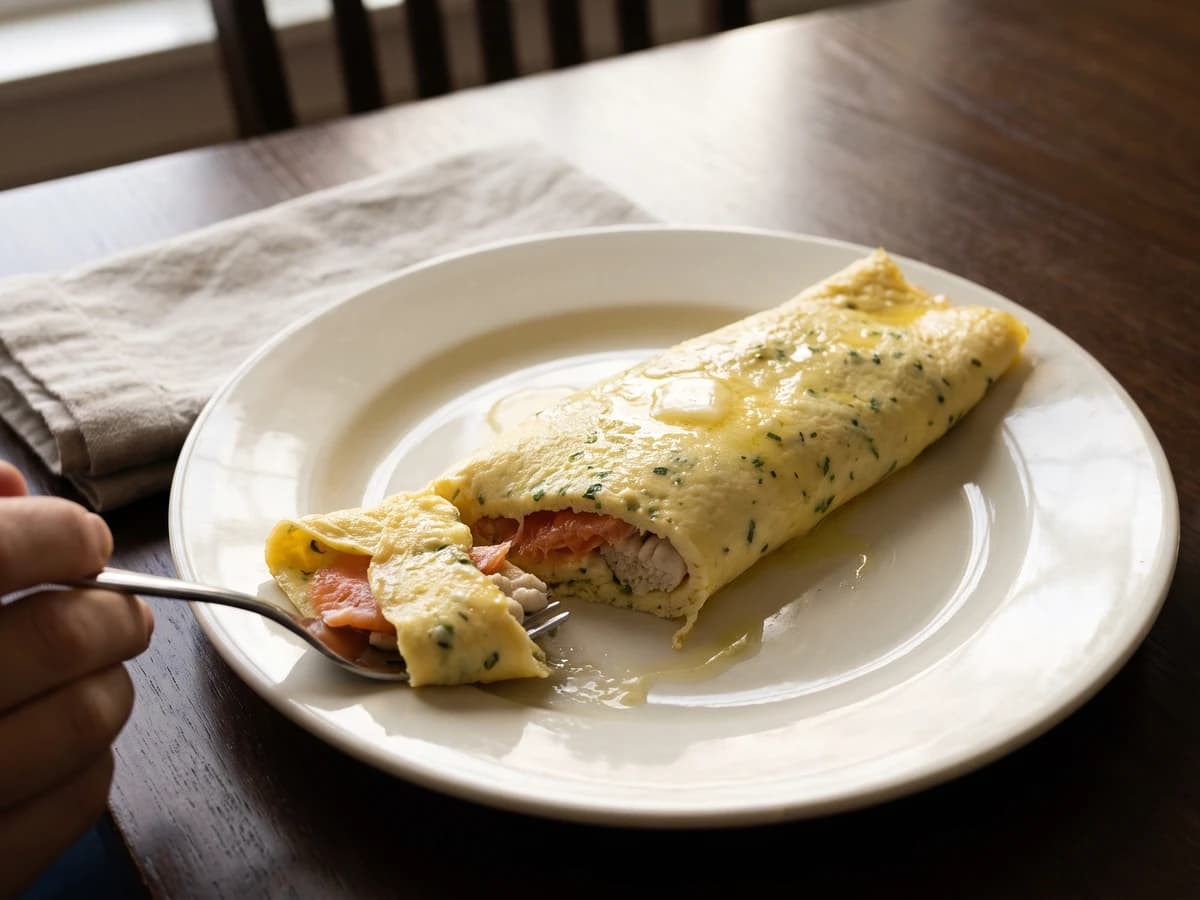
Omelette à l’Écossaise
A creamy omelette aux fines herbes closes around smoked-salmon-wrapped herring milts, gently poached in butter. Have the filling ready, then roll the eggs while they still shine.
A cooking platform built around craft, culture, and the stories behind what we eat.
Created by Chef Juliette
Based on No. 476, Scrambled Eggs, Princess Mary, from Le Guide Culinaire (1907) by Auguste Escoffier
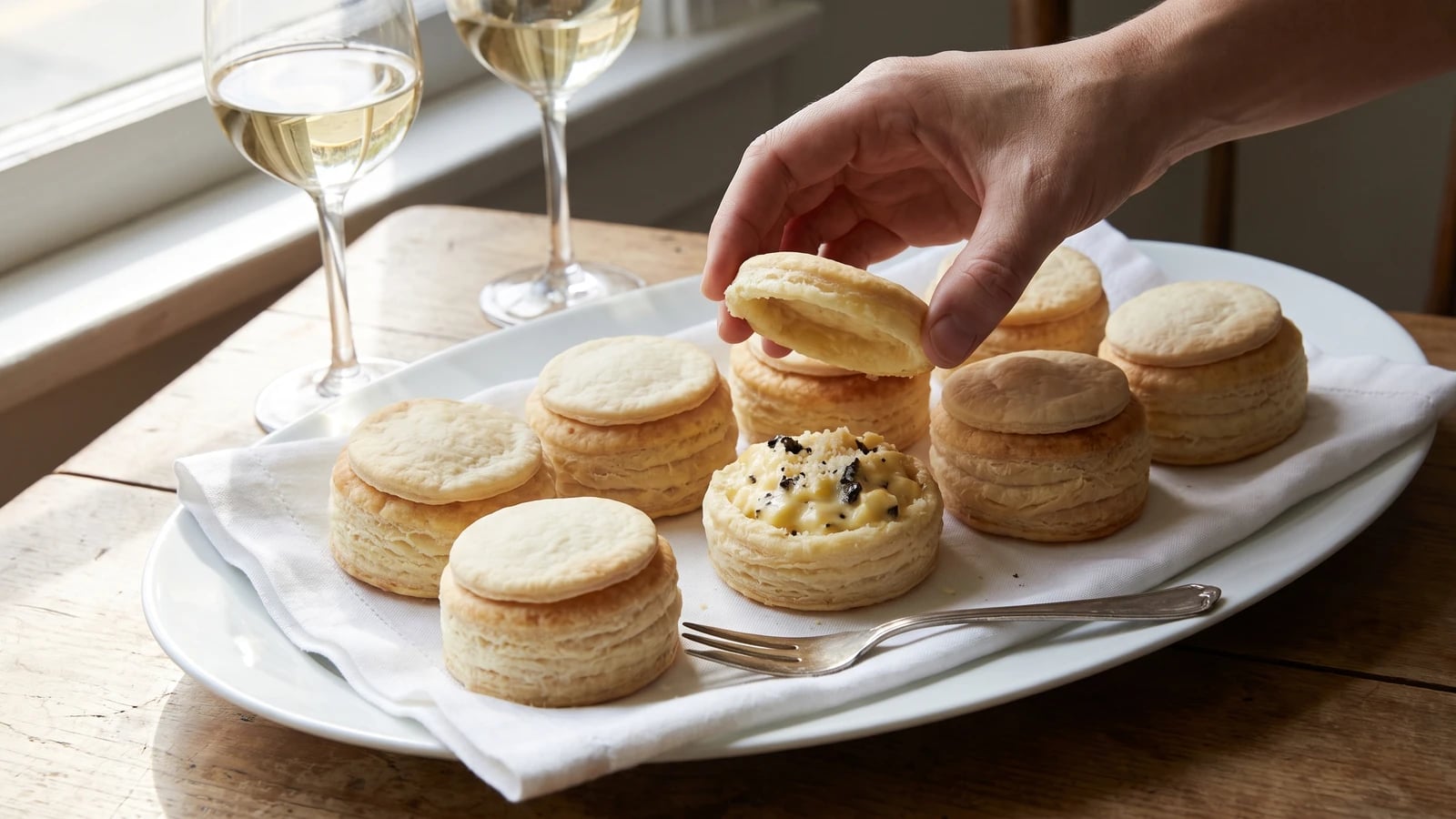
Pale, fluted puff-pastry timbales hide soft Parmesan eggs enriched with reduced velouté and black truffle, a formal little supper dish whose whole success rests on stopping the scramble while it still flows.
Œufs brouillés Princess Mary (soft scrambled eggs in puff-pastry timbales) teaches the discipline of readiness. Before you touch the egg pan, know the one true thing: every pastry case must be baked, unmoulded, and waiting. The eggs will give you no useful pause once they begin to set.
The original assumes a pastry station with puff-paste scraps and fancy cutters, dariole moulds at hand, and a saucier beside a stockpot that never went cold. At home, chilled all-butter puff pastry supplies the scraps, standard metal muffin wells can stand in for the little baba-shaped moulds, and a measured quarter-cup of stock becomes exactly the reduced velouté required. Eight timbales make a service for four. Separate pastry and sauce stations are brigade scaffolding and can go; the pale hollow cases, the two tablespoonfuls of velouté, the truffle, and the off-fire finish must stay. One cook, one stove, one evening.
The finished timbales should be crisp but barely coloured, their lids faintly gilded, with glossy eggs and black truffle just visible when one is lifted. Stop scrambling while the eggs still flow slowly from the spatula. That is the step that decides the dish.
Œufs brouillés Princess Mary belongs to the cosmopolitan palace and grand-hotel repertoire carried by French brigades between Paris and London, rather than to any provincial French table. Its royal title follows the canon's practice of dedicating composed garnishes to prominent guests; it does not mean the princess devised the recipe herself. Puff-paste trimmings reveal the pastry station's thrift, while Parmesan, truffle, and reduced velouté turn familiar scrambled eggs into a formal supper course.
Quantity
14 ounces (400 g)
Quantity
2 tablespoons (30 ml / 16 g)
for rolling
Quantity
3 tablespoons plus 1 teaspoon (50 ml / 47 g)
divided
Quantity
1
beaten, for gilding
Quantity
1 teaspoon (5 ml / 5 g)
Quantity
1 teaspoon (5 ml / 3 g)
for the velouté
Quantity
¼ cup (60 ml / 60 g)
Quantity
1 teaspoon (5 ml / 5 g)
preferably natural truffle juice from the jar
Quantity
8
pasteurized when appropriate for the guests
Quantity
⅓ cup (80 ml / 30 g)
finely grated
Quantity
1 small (about ¾ ounce / 20 g)
fresh or preserved, drained and cut into small dice
Quantity
½ teaspoon (2.5 ml / 3 g)
Quantity
⅛ teaspoon (0.6 ml / 0.3 g)
| Ingredient | Quantity |
|---|---|
| chilled all-butter puff pastry or neatly stacked puff-paste scraps | 14 ounces (400 g) |
| all-purpose flourfor rolling | 2 tablespoons (30 ml / 16 g) |
| unsalted butterdivided | 3 tablespoons plus 1 teaspoon (50 ml / 47 g) |
| large eggbeaten, for gilding | 1 |
| cold water | 1 teaspoon (5 ml / 5 g) |
| all-purpose flourfor the velouté | 1 teaspoon (5 ml / 3 g) |
| unsalted light chicken stock | ¼ cup (60 ml / 60 g) |
| truffle essencepreferably natural truffle juice from the jar | 1 teaspoon (5 ml / 5 g) |
| large eggspasteurized when appropriate for the guests | 8 |
| Parmesanfinely grated | ⅓ cup (80 ml / 30 g) |
| black trufflefresh or preserved, drained and cut into small dice | 1 small (about ¾ ounce / 20 g) |
| fine sea salt | ½ teaspoon (2.5 ml / 3 g) |
| freshly ground white pepper | ⅛ teaspoon (0.6 ml / 0.3 g) |
Soften 2 teaspoons of the butter and brush eight small dariole moulds, the little baba-shaped metal moulds named in the original. A standard metal muffin tin is the honest home equivalent, though its cases will be broader and less tapered. Stack puff-paste scraps neatly rather than kneading them, then roll the pastry on the lightly floured surface to ⅛ inch (3 mm) thick. Cut eight rounds large enough to line the moulds without stretching, press them gently into place, and trim the rims cleanly. Prick the bases once or twice. With a 2-inch (5 cm) indented or fluted cutter, stamp eight covers, then cut eight tiny ornaments from the remaining scraps. Chill everything for 15 minutes.
Heat the oven to 375°F (190°C). Beat the gilding egg with the cold water. Gild each cover, meaning brush its broad surface very lightly with beaten egg, keeping the cut edges dry so the layers can rise. Set a small indented ornament on each cover and leave that ornament ungilded. Line the pastry cases with small pieces of parchment and fill them with dry rice or baking weights. Bake the cases for 12 minutes, remove the weights, prick down any swollen base, and bake for another 5 to 7 minutes. Bake the covers on a separate tray for 10 to 13 minutes. Everything should be dry and crisp but no darker than pale straw, with only a faint gold sheen on the covers. If the edges colour too quickly, shield them loosely with foil. Unmould the cases while warm and keep them uncovered.
Melt 1 teaspoon of the butter in the smallest heavy saucepan over low heat. Stir in the teaspoon of flour and cook this roux blanc, a white roux, for 1 minute without letting it colour. Add the chicken stock in three additions, whisking each one smooth before the next. Simmer gently for 5 to 7 minutes, stirring often, until about 2 tablespoons (30 ml / 30 g) remain and the velouté coats the back of a spoon. If it becomes too thick, loosen it with a teaspoon of stock; if lumps appear, whisk firmly and strain it. Ça se rattrape. Remove it from the heat, stir in the truffle essence, and keep it barely warm.
Return the empty pastry cases and covers to the turned-off oven for 2 to 3 minutes, just long enough to warm them without deepening their colour. Whisk the eight eggs only until the whites and yolks meet, then stir in the Parmesan, salt, and white pepper. Keep the diced truffle and measured reduced velouté beside the stove. Once the eggs enter the pan, nothing should send you searching through a cupboard.
Melt 2 tablespoons of the butter in a heavy 9-inch (23 cm) skillet or saucepan over medium-low heat. When the butter foams without browning, add the egg mixture. Stir continuously with a flexible spatula, sweeping the base and corners so the eggs form small, tender curds. Lower the heat whenever the curds gather faster than you can fold them. Stop when the eggs are glossy, softly mounded, and still flow slowly from the spatula, about 5 to 7 minutes. If they tighten suddenly, lift the pan from the heat, set it on a cold damp towel, and stir in the reserved teaspoon of cold butter. Ça se rattrape if you catch them before they turn firm.
Keep the pan completely off the heat. Fold the 2 tablespoons of reduced velouté and all the diced truffle through the eggs with two or three broad turns. The mixture should remain loose enough to settle into the pastry but thick enough to hold a soft mound. Taste once for seasoning and do not return the pan to the fire; the warm cases will finish the eggs.
Divide the scrambled eggs among the eight warm timbales, filling each generously without crushing the pastry. Set the fluted covers lightly on top and arrange the cases upright on a clean folded linen napkin over a warmed platter, two timbales for each guest. Carry them directly to the table while the pastry is crisp and the centres are still glossy. À table!
1 serving (about 225g)
Culinary guides, cultural storytelling, and the editorial depth that makes cooking meaningful.
Discover Culinary ExplorerChef Juliette
A creamy omelette aux fines herbes closes around smoked-salmon-wrapped herring milts, gently poached in butter. Have the filling ready, then roll the eggs while they still shine.
Chef Juliette
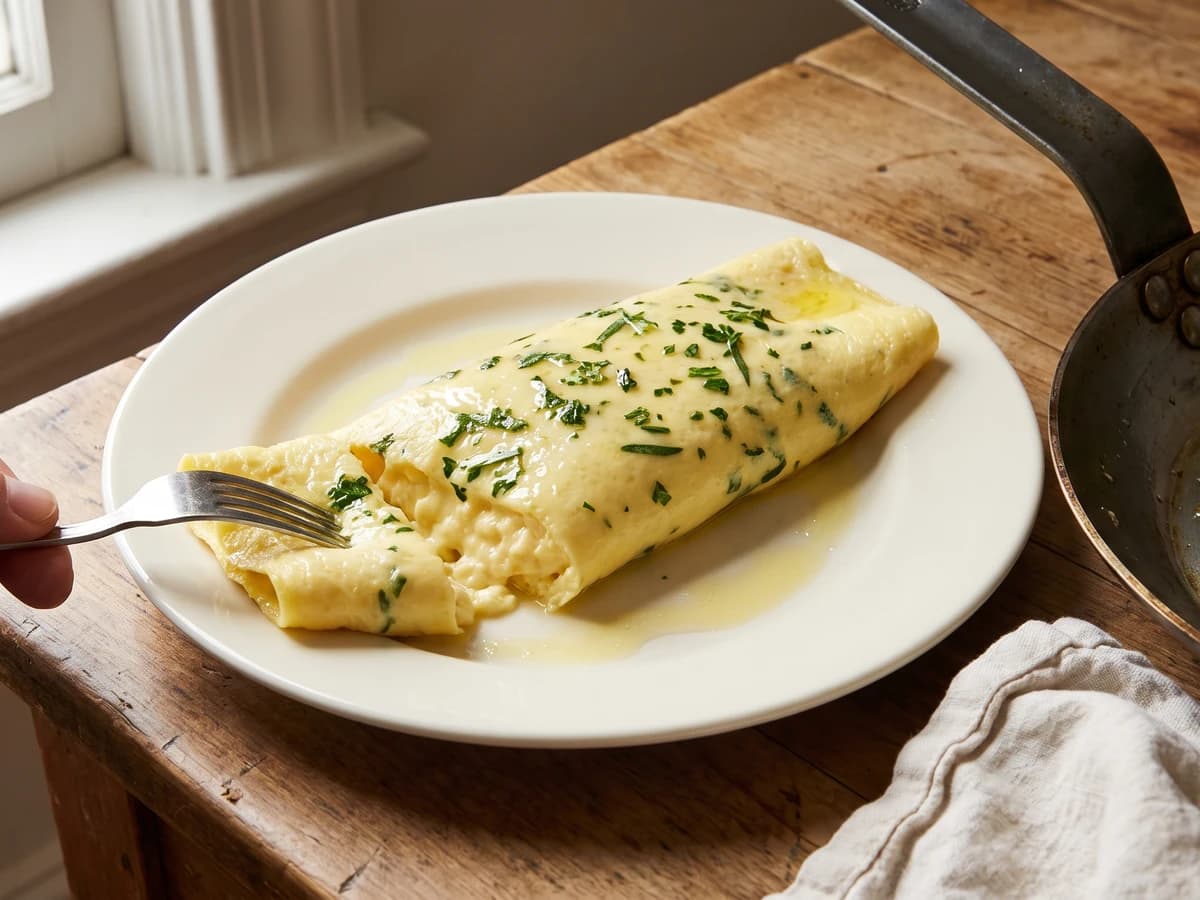
Four tender herbs, hot butter, and two eggs per pan: this rolled omelette teaches the quick hand and good judgment that keep the outside pale and the center creamy.
Chef Juliette
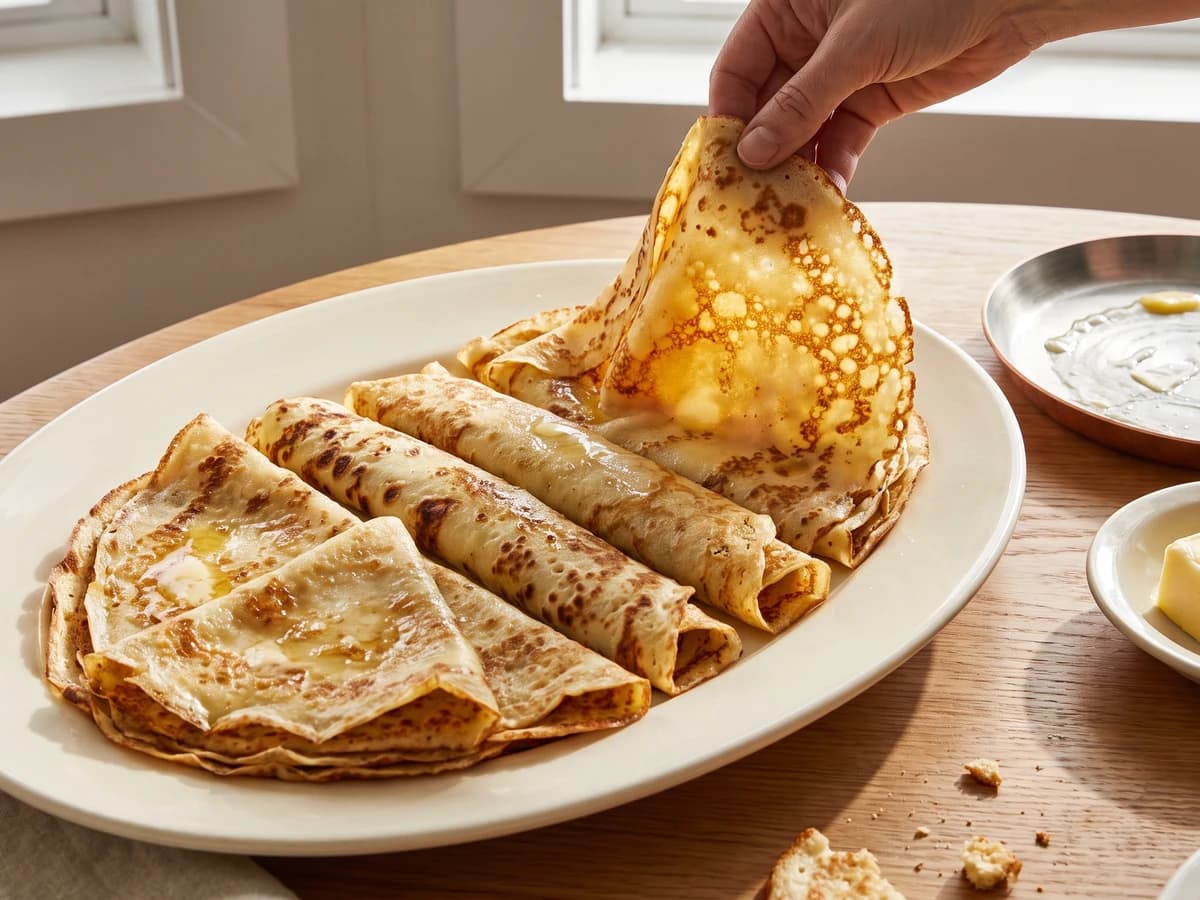
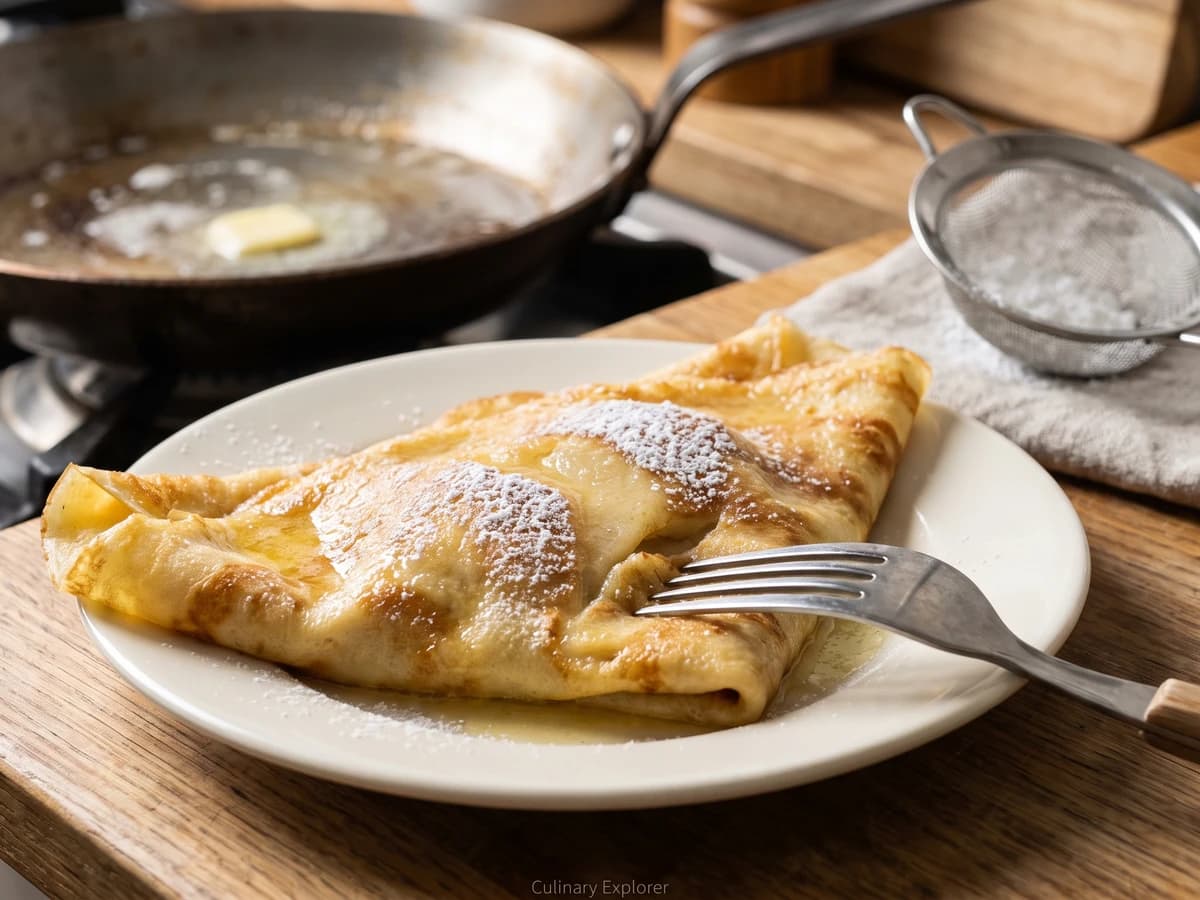
Four batters, one lesson: let the flour drink deeply before cooking, then spread the batter thinly in butter for crêpes and pannequets that bend without becoming tough.
Chef Juliette
Crêpes au Couvent trap ripe Williams pear dice between two thin pours of sweet batter, then turn in one clean toss and reach the table butter-gold, powdered, and burning hot.