Chef Juliette
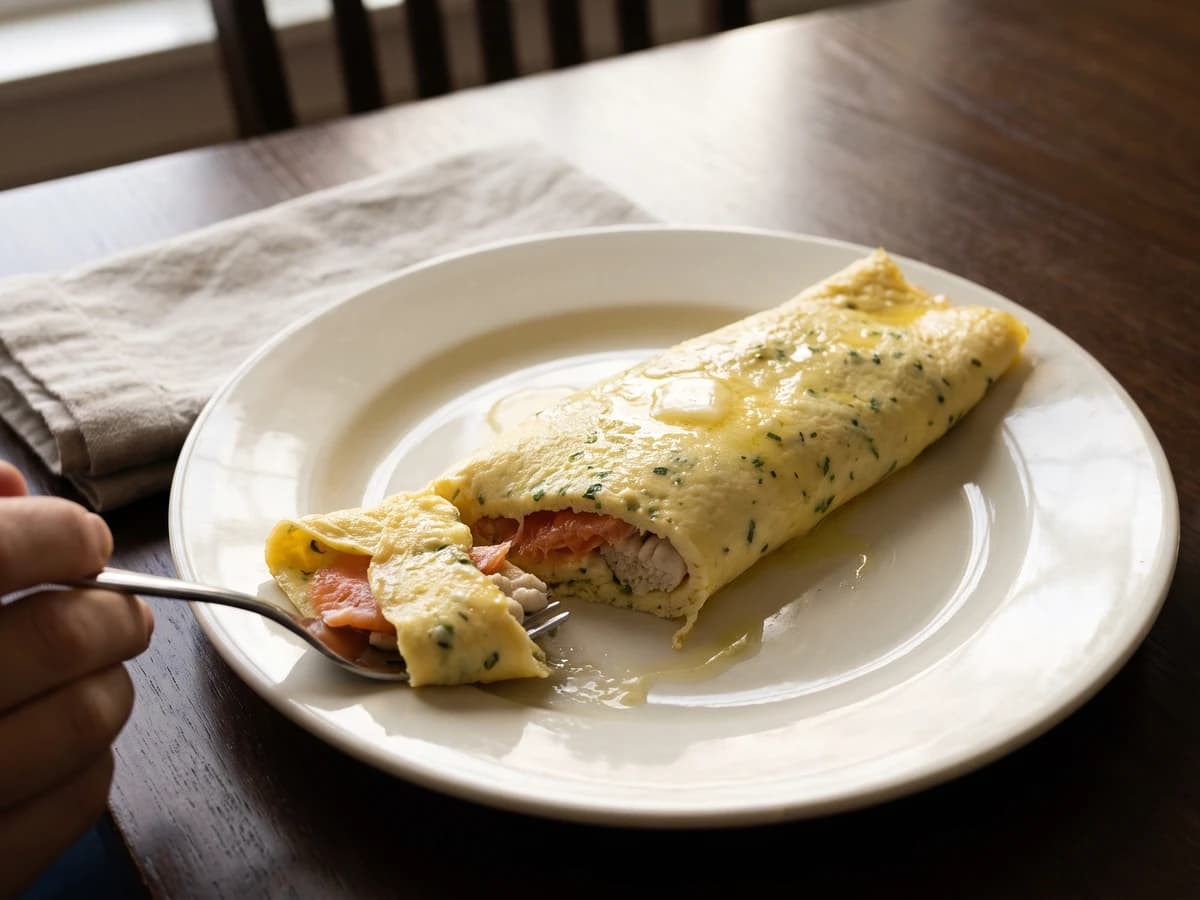
Omelette à l’Écossaise
A creamy omelette aux fines herbes closes around smoked-salmon-wrapped herring milts, gently poached in butter. Have the filling ready, then roll the eggs while they still shine.
A cooking platform built around craft, culture, and the stories behind what we eat.
Created by Chef Juliette
Based on No. 473, Scrambled Eggs, Orloff, from Le Guide Culinaire (1907) by Auguste Escoffier
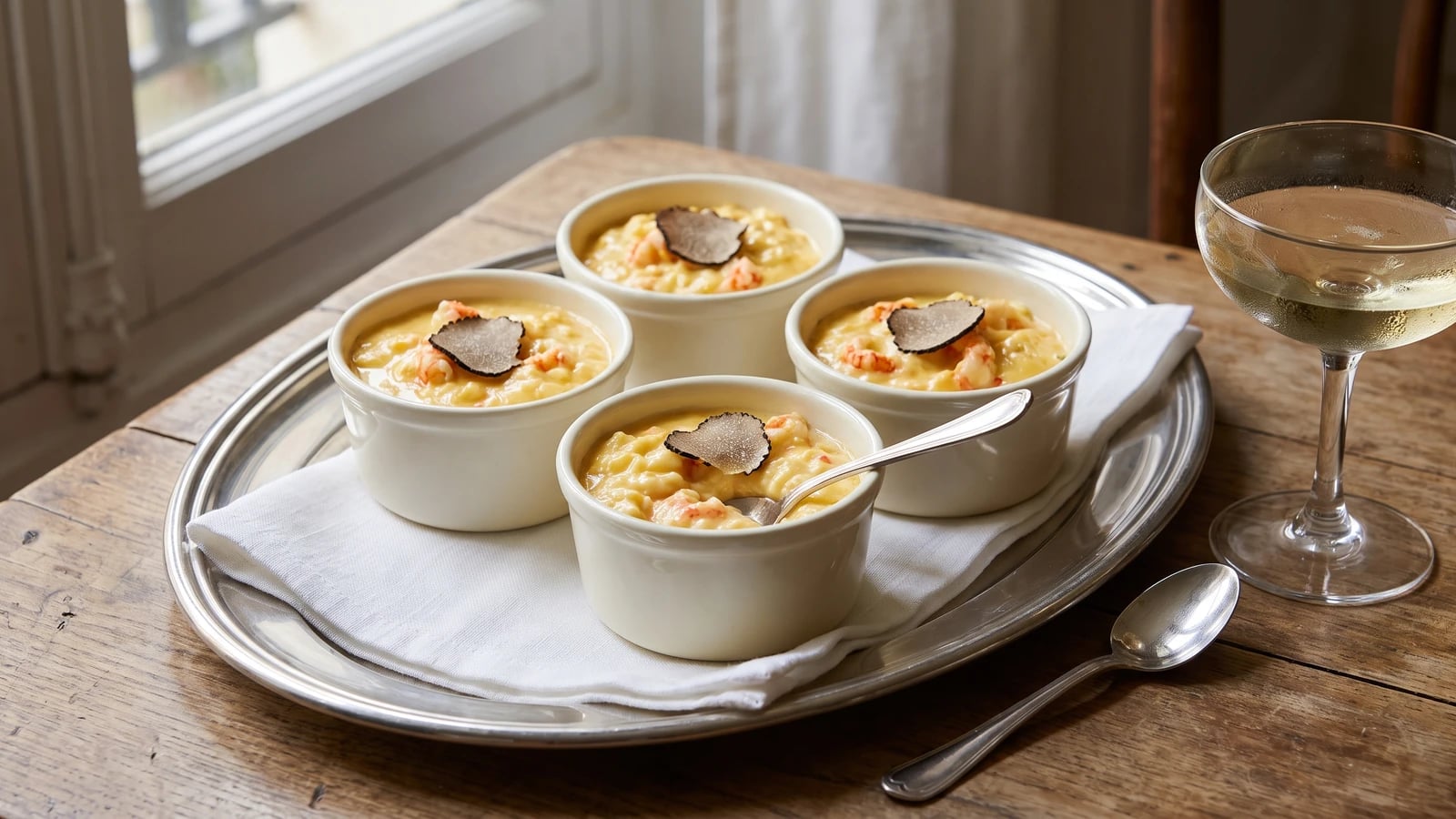
Œufs brouillés Orloff teach the nerve of French scrambling: cream-soft curds, warm crayfish, and black truffle served at once in porcelain, rich without heaviness and grand without requiring a brigade.
Œufs brouillés Orloff (soft scrambled eggs with crayfish and black truffle) teach the one truth of the pan: eggs must leave the heat while they still look too loose. Their own warmth finishes them on the way to the table, turning flowing curds into a soft, butter-gold cream around coral crayfish tails.
The old entry assumes cooked crayfish waiting in the larder, truffle sliced to order, one cook stirring the eggs, and another pair of hands warming and filling the porcelain cases. It calls for neither a saucier's reduction, a stockpot kept on the fire, nor a salamander. At home, ready-cooked whole crayfish tails and four warmed ramekins replace that brigade choreography without changing the dish.
Only the scaffolding goes: cooking live crayfish as separate service mise en place and passing four cases down a line. Eight eggs serve four, with twelve tails preserving the book's exact ratio of three tails for every two eggs; the thick cream, low heat, individual cases, and black truffle all stay because they are the dish. One cook, one stove, one evening. The moment that matters is the exit: pull the pan while the curds still flow slowly, then fold in the tails and serve without delay.
Œufs brouillés Orloff belong to the cosmopolitan Parisian grand-kitchen repertoire, where Russian aristocratic names met French technique in dishes intended for formal service. Orloff here is not the cheese-topped veal preparation carrying the same name; this entry defines the egg garnish precisely through thick cream, three crayfish tails for every two eggs, individual porcelain cases, and black truffle. In classical French service, enriched eggs could appear as a delicate entrée or supper dish, so this preparation belongs as naturally at dinner as it does at brunch.
Quantity
8
Quantity
1/4 cup (60 ml / 60 g)
Quantity
12 (about 1/2 cup / 70 g)
shelled and patted dry
Quantity
2 tablespoons (30 ml / 28 g)
divided
Quantity
1/2 teaspoon (2.5 ml / 3 g)
Quantity
1/8 teaspoon (0.6 ml / 0.3 g)
Quantity
4 very thin slices (about 8 g total)
fresh or cut from a drained whole preserved truffle
| Ingredient | Quantity |
|---|---|
| large eggs | 8 |
| thick heavy cream, 36% fat or higher | 1/4 cup (60 ml / 60 g) |
| whole cooked crayfish tailsshelled and patted dry | 12 (about 1/2 cup / 70 g) |
| unsalted butterdivided | 2 tablespoons (30 ml / 28 g) |
| fine sea salt | 1/2 teaspoon (2.5 ml / 3 g) |
| ground white pepper | 1/8 teaspoon (0.6 ml / 0.3 g) |
| black trufflefresh or cut from a drained whole preserved truffle | 4 very thin slices (about 8 g total) |
Set a folded linen napkin on an oval serving platter, then fill four 150 ml porcelain ramekins with very hot water to warm them. Drain and dry them just before the eggs are ready. Pat the crayfish tails dry, let them lose their refrigerator chill for ten minutes, and slice the truffle as thinly as your knife allows. Once the eggs meet the pan, there is no useful pause.
Break the eggs into a bowl and add the thick cream, salt, and white pepper. Beat with a fork until the whites and yolks are completely joined but the mixture is not frothy. Air makes large, dry curds; Œufs brouillés want a close, creamy texture that moves almost like a sauce.
Melt 1 1/2 tablespoons of the butter in a heavy 20 cm saucepan over low heat. Add the egg mixture and stir continuously with a flexible spatula, sweeping the floor, corners, and sides so no layer sets unnoticed. Move the pan off the heat whenever the curds gather too quickly, then return it once they relax. After five to seven minutes, the eggs should resemble a thick, glossy custard with very small curds. If broad dry sheets begin forming, remove the pan immediately and stir firmly until they break back into the softer mixture; a teaspoon of cold cream will loosen them if necessary. Ça se rattrape at this stage. Eggs dried all the way through cannot be made soft again.
Take the pan fully off the heat while the eggs still flow slowly from the spatula. Fold in the twelve crayfish tails and the remaining 1/2 tablespoon butter, stirring only twenty to thirty seconds so the tails warm without tightening. The cold butter arrests the cooking and gives the curds their final sheen.
Divide the Œufs brouillés among the four warm porcelain cases, working quickly and giving each guest three crayfish tails. Lay one fine slice of black truffle flat on each portion, arrange the cases on the napkin-lined platter, and carry them directly to the table. The eggs should settle softly around the spoon, never stand in a mound. À table!
1 serving (about 135g)
Culinary guides, cultural storytelling, and the editorial depth that makes cooking meaningful.
Discover Culinary ExplorerChef Juliette
A creamy omelette aux fines herbes closes around smoked-salmon-wrapped herring milts, gently poached in butter. Have the filling ready, then roll the eggs while they still shine.
Chef Juliette
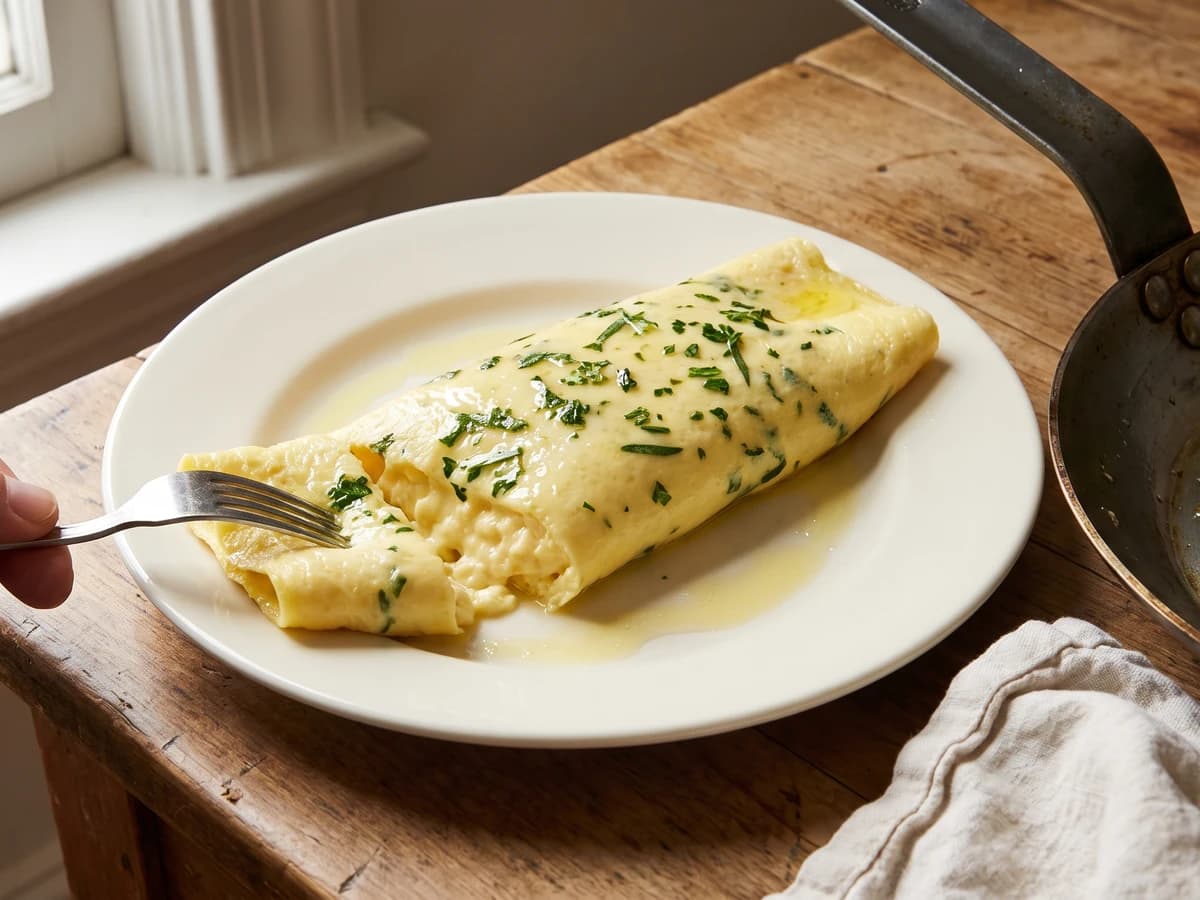
Four tender herbs, hot butter, and two eggs per pan: this rolled omelette teaches the quick hand and good judgment that keep the outside pale and the center creamy.
Chef Juliette
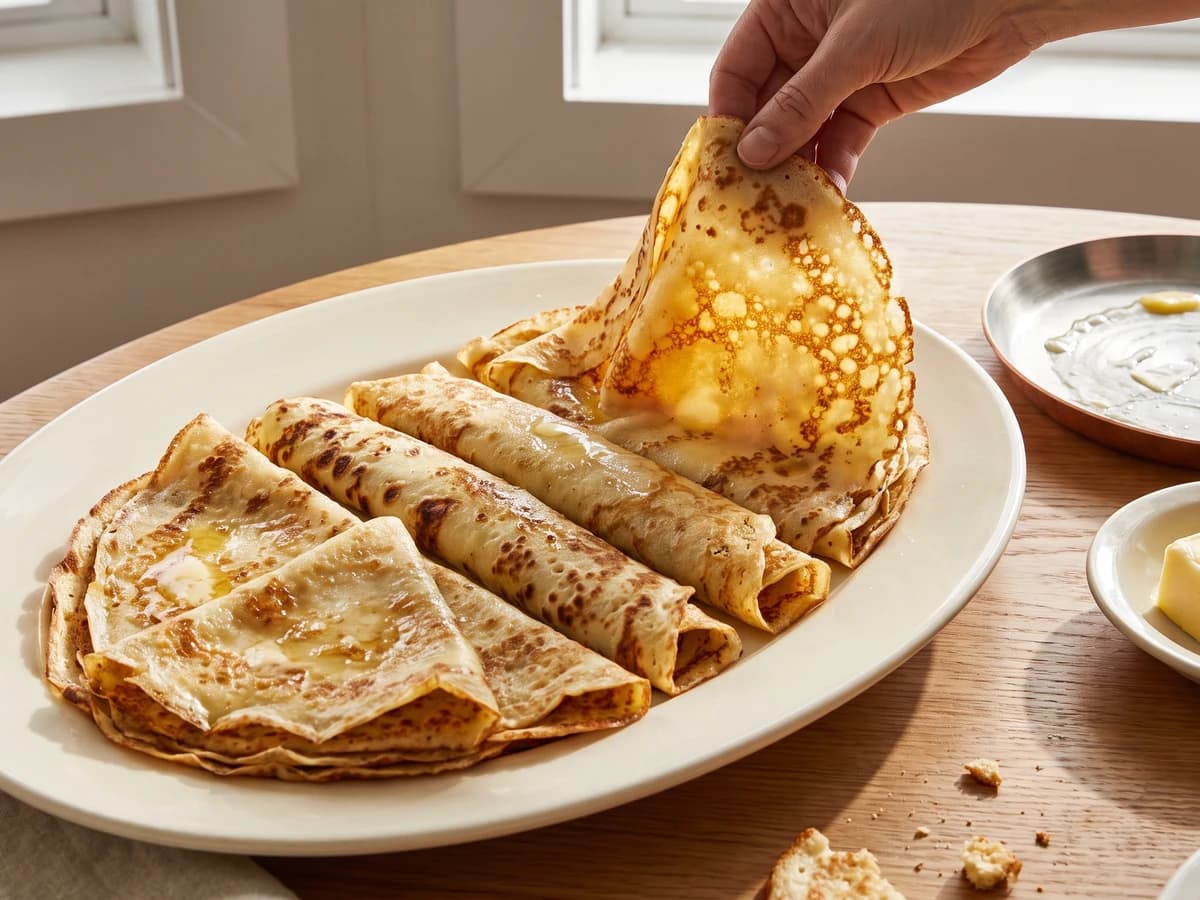
Four batters, one lesson: let the flour drink deeply before cooking, then spread the batter thinly in butter for crêpes and pannequets that bend without becoming tough.
Chef Juliette
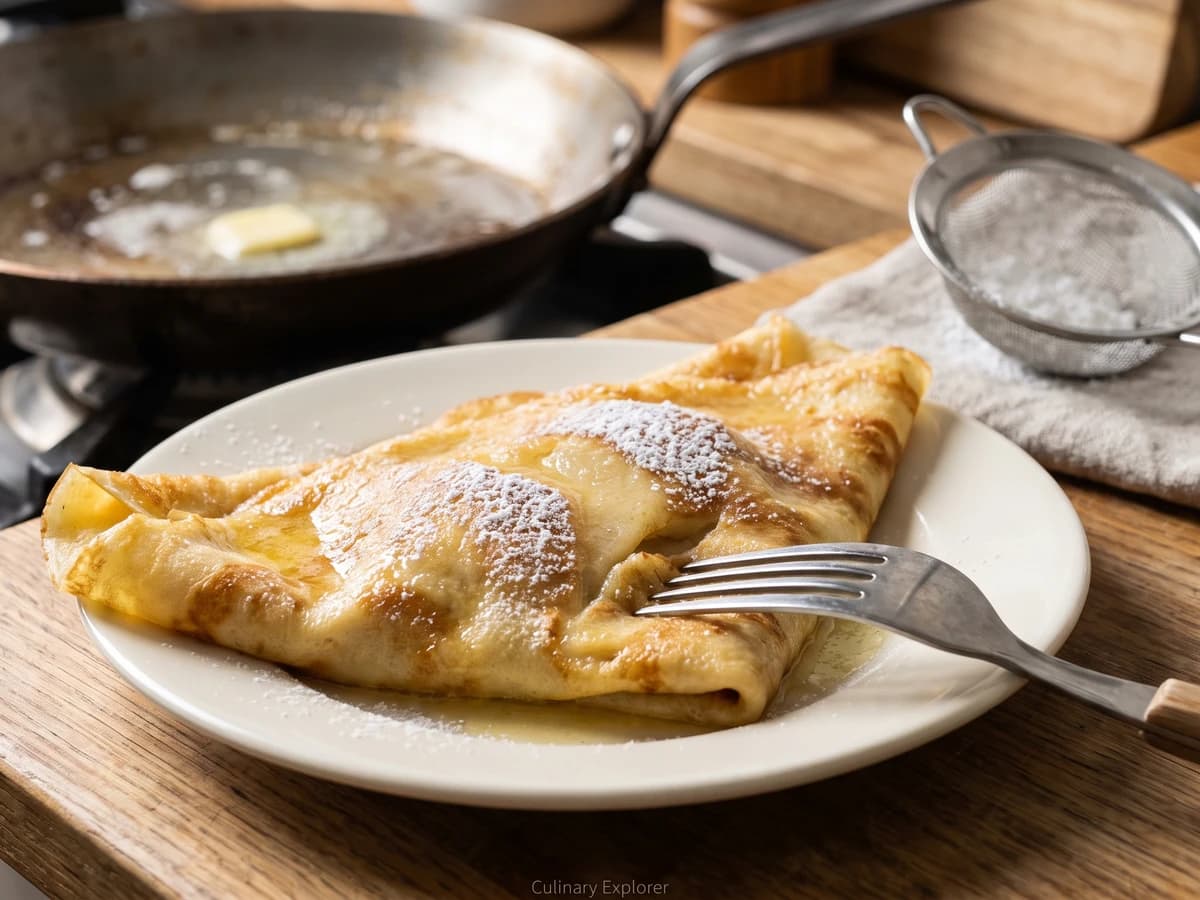
Crêpes au Couvent trap ripe Williams pear dice between two thin pours of sweet batter, then turn in one clean toss and reach the table butter-gold, powdered, and burning hot.