Chef Juliette
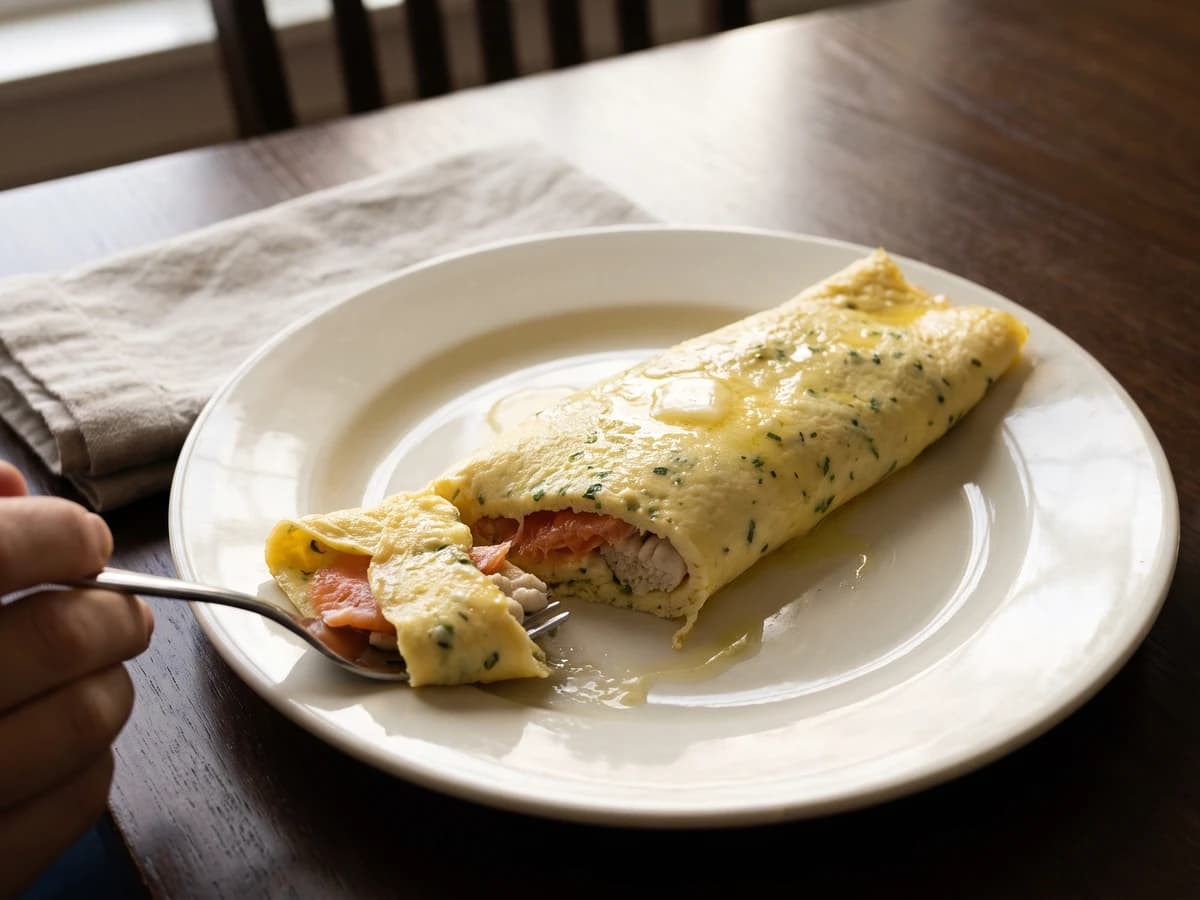
Omelette à l’Écossaise
A creamy omelette aux fines herbes closes around smoked-salmon-wrapped herring milts, gently poached in butter. Have the filling ready, then roll the eggs while they still shine.
A cooking platform built around craft, culture, and the stories behind what we eat.
Created by Chef Juliette
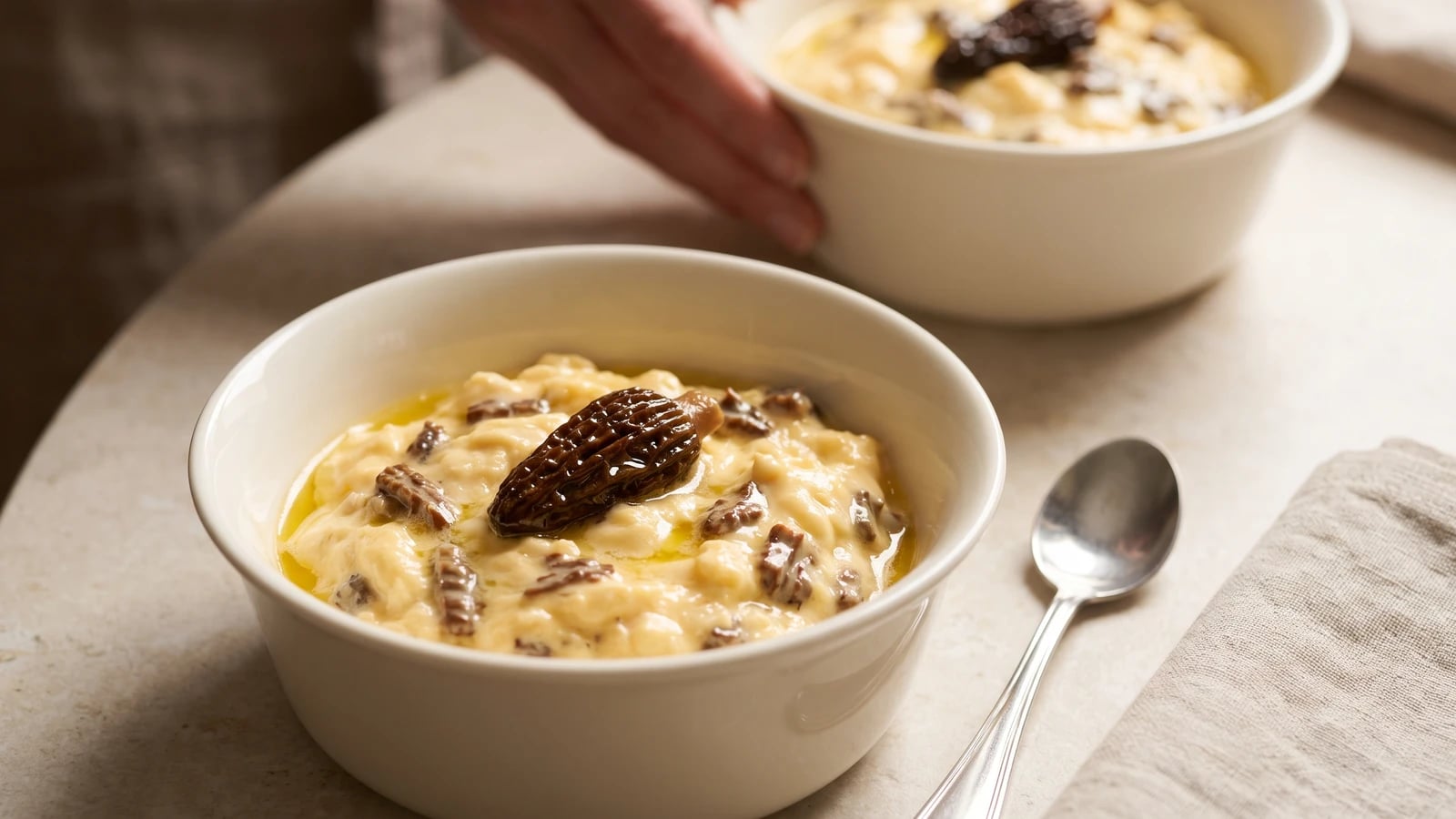
Based on No. 471, Scrambled Eggs with Morels, from Le Guide Culinaire (1907) by Auguste Escoffier
Soft œufs brouillés threaded with butter-sautéed morels and spooned into warm timbales, each crowned with a whole cap: a lesson in low heat, patient stirring, and stopping before the eggs look finished.
Œufs brouillés aux morilles teaches the most useful truth in egg cookery: take the pan off while the eggs still look slightly too loose. Residual heat finishes them; waiting for certainty gives you dry curds instead of the soft, spoonable cream this dish requires. Morels bring their deep woodland perfume, butter supplies the gloss, and the whole cap at the center tells the table exactly what waits beneath.
The original gives a sentence rather than a batch size. It assumes a brigade with one cook free to stir the eggs, another hand warming the timbales, and enough morels prepared in advance to choose four handsome crowns. This is not a saucier's dish, and neither a stockpot nor a salamander improves it. For one cook, one stove, one evening, I scale it to eight eggs, sauté the mushrooms first, and hold four whole caps while the eggs cook in a small heavy saucepan. The spare hands are scaffolding; gentle heat, constant movement, real butter, and the crowned timbales are the dish, so those stay.
The finish decides everything. Stir until the spatula leaves a trail that closes slowly, then remove the pan while the eggs still flow. If the heat races ahead, lift the pan and cool it with a spoonful of cream. Ça se rattrape.
Œufs brouillés aux morilles belong to the Parisian cuisine bourgeoise and classical dining-room repertoire, where very soft eggs were served in individual timbales and embellished with a prized seasonal garnish. Morels connected that formal service to the spring woods of eastern France, notably Franche-Comté and Savoie, and the composition traveled easily to private tables because eggs reveal the mushroom's perfume without burying it. Its creaminess comes chiefly from slow cooking and butter, not from pouring a cream sauce over finished eggs.
Quantity
2 loosely packed cups (475 ml / 200 g)
cleaned, four left whole and the remainder finely minced
Quantity
5 tablespoons (75 ml / 70 g)
divided
Quantity
8
Quantity
1/4 cup (60 ml / 60 g)
Quantity
3/4 teaspoon (3.75 ml / 4.5 g)
divided
Quantity
1/4 teaspoon (1.25 ml / 0.6 g)
divided
| Ingredient | Quantity |
|---|---|
| fresh morelscleaned, four left whole and the remainder finely minced | 2 loosely packed cups (475 ml / 200 g) |
| unsalted butterdivided | 5 tablespoons (75 ml / 70 g) |
| large eggs | 8 |
| cold heavy cream | 1/4 cup (60 ml / 60 g) |
| fine sea saltdivided | 3/4 teaspoon (3.75 ml / 4.5 g) |
| finely ground white pepperdivided | 1/4 teaspoon (1.25 ml / 0.6 g) |
Trim away the earthy ends of the stems. Brush the morels carefully, then swish them briefly in a bowl of cold water to release hidden grit. Run a little water through the hollow centers of the four finest mushrooms, drain them upside down, and dry everything thoroughly. Keep those four morels whole for the crowns and mince the remainder finely.
Melt 2 tablespoons (30 ml / 28 g) of the butter in a 25 cm skillet over medium heat. When it foams, add the whole and minced morels with 1/4 teaspoon (1.25 ml / 1.5 g) of the salt and half the white pepper. Sauté, tossing and stirring, for 7 to 9 minutes. The mushrooms will release liquid; keep cooking until that liquid has evaporated, the butter hisses clearly again, and the morels are tender and thoroughly cooked. Transfer the four whole morels to a small covered dish and keep the minced morels nearby.
Fill four 180 ml timbales or ramekins with hot water and set them beside the stove. Whisk the eggs with the remaining salt and white pepper just until the yolks and whites are fully joined. Don't beat in a head of foam; œufs brouillés should be dense and creamy, not airy.
Melt 2 tablespoons (30 ml / 28 g) of the butter in a heavy 2-liter saucepan over the lowest heat. Add the eggs and stir continuously with a flexible spatula, sweeping the base, corners, and sides so nothing sets unnoticed. Cook for 8 to 12 minutes, lifting the saucepan off the heat whenever the eggs begin setting faster at the edges than in the center. They are ready for the finish when they form tiny tender curds but still flow together like a loose porridge.
Remove the saucepan from the heat while the eggs still look slightly too loose. Fold in the minced morels, the remaining 1 tablespoon (15 ml / 14 g) butter, and the cold cream, using only the cream left if a spoonful went into the rescue. Stir just until the butter disappears and the morels are evenly distributed. The cold finish arrests the cooking and leaves the œufs brouillés glossy, soft, and spoonable. Taste at once and correct the seasoning if needed.
Empty and dry the warm timbales. Spoon in the œufs brouillés without packing or smoothing them flat, then place one whole cooked morel upright in the center of each. Serve immediately. Eggs wait for nobody, and these have reached their moment. À table!
1 serving (about 160g)
Culinary guides, cultural storytelling, and the editorial depth that makes cooking meaningful.
Discover Culinary ExplorerChef Juliette
A creamy omelette aux fines herbes closes around smoked-salmon-wrapped herring milts, gently poached in butter. Have the filling ready, then roll the eggs while they still shine.
Chef Juliette
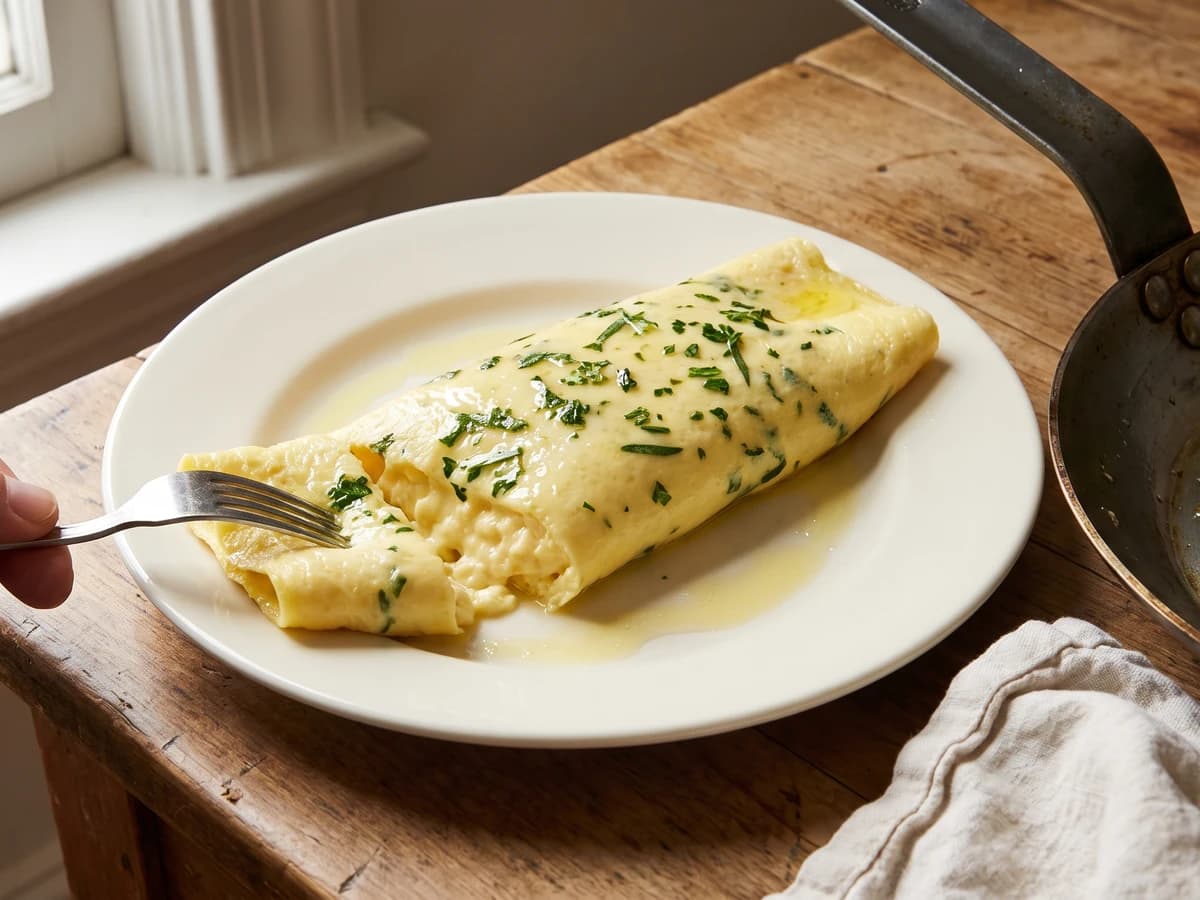
Four tender herbs, hot butter, and two eggs per pan: this rolled omelette teaches the quick hand and good judgment that keep the outside pale and the center creamy.
Chef Juliette
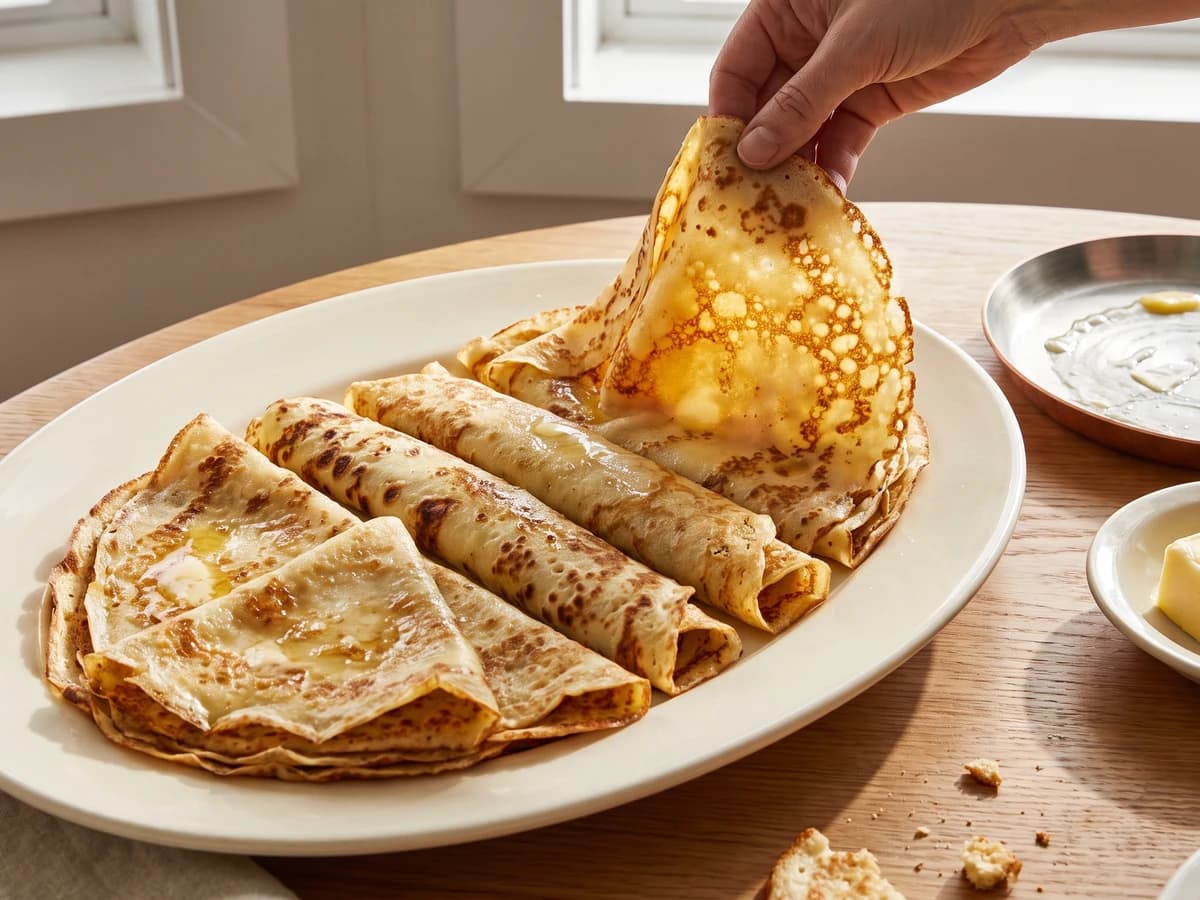
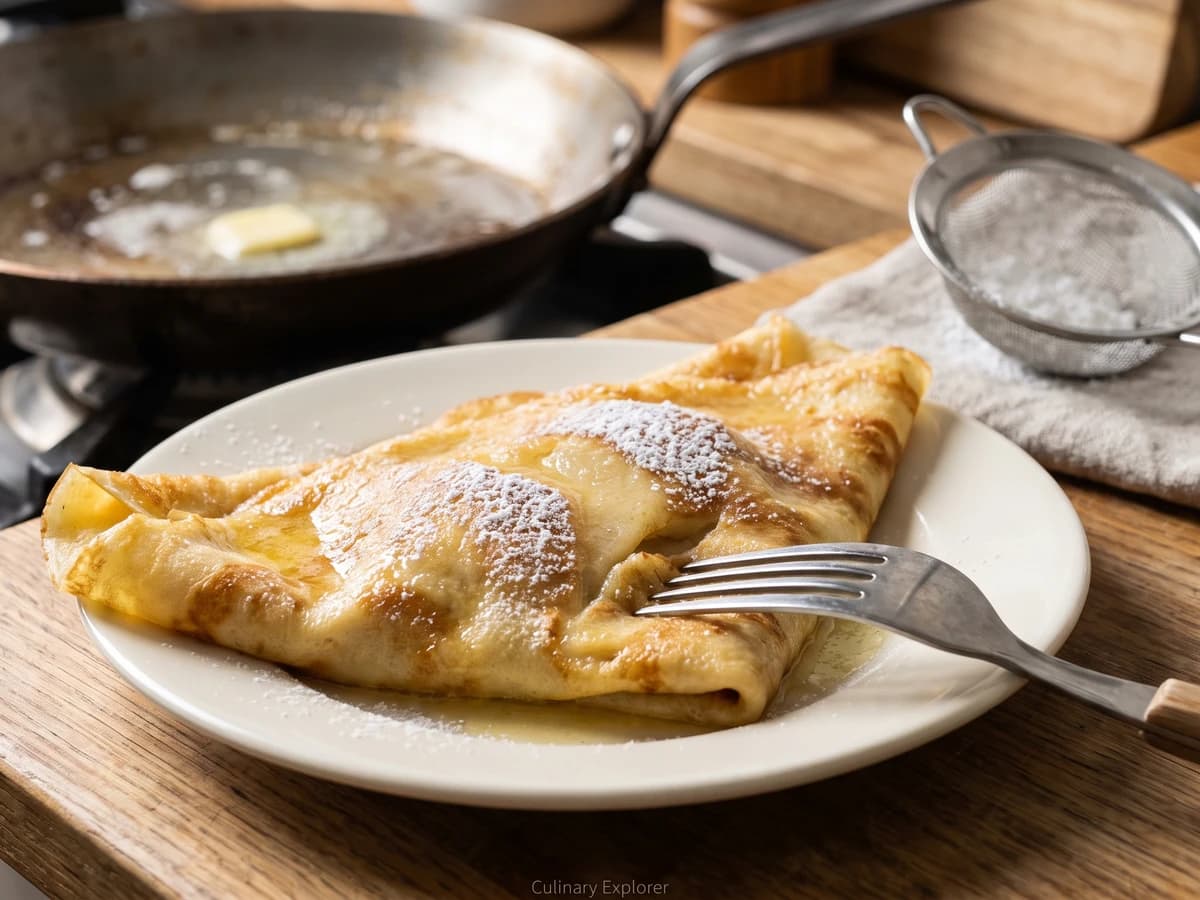
Four batters, one lesson: let the flour drink deeply before cooking, then spread the batter thinly in butter for crêpes and pannequets that bend without becoming tough.
Chef Juliette
Crêpes au Couvent trap ripe Williams pear dice between two thin pours of sweet batter, then turn in one clean toss and reach the table butter-gold, powdered, and burning hot.