Chef Juliette
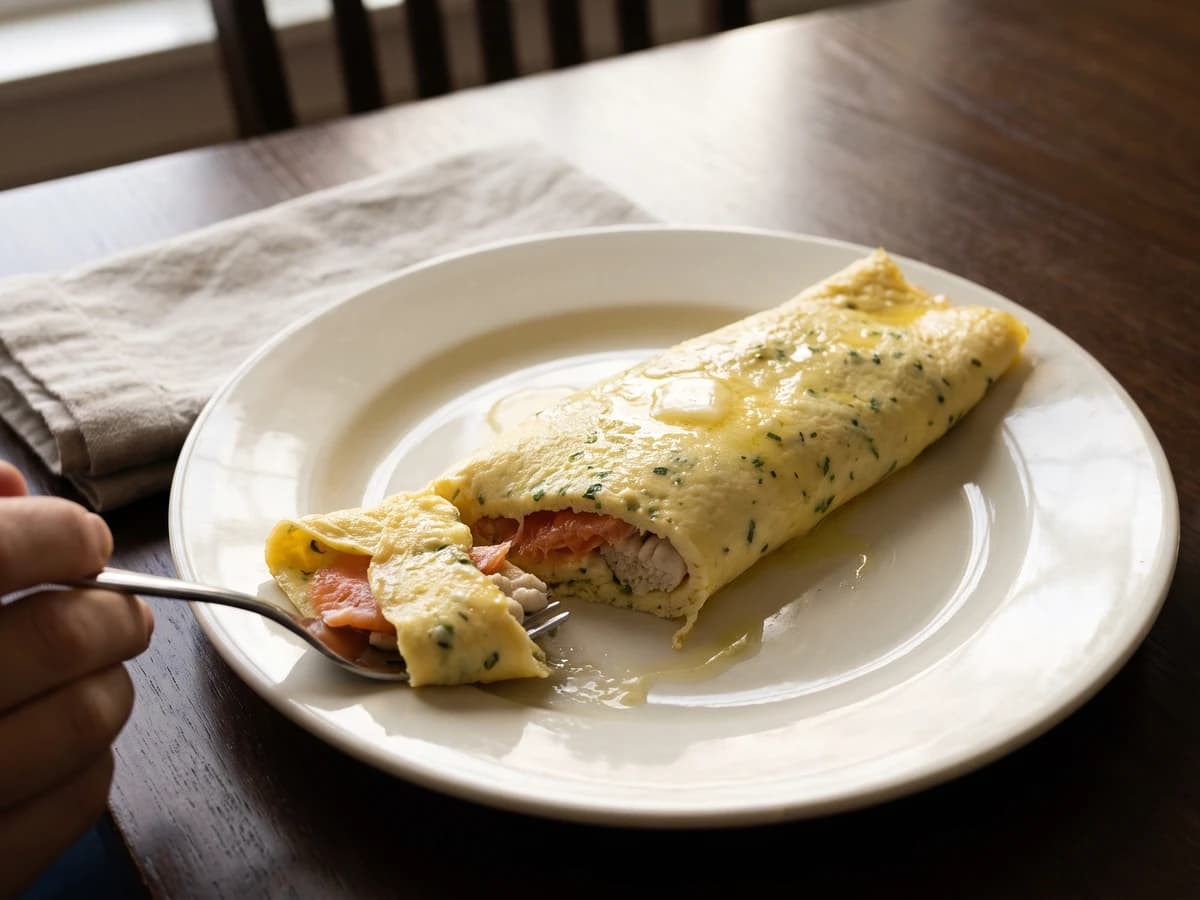
Omelette à l’Écossaise
A creamy omelette aux fines herbes closes around smoked-salmon-wrapped herring milts, gently poached in butter. Have the filling ready, then roll the eggs while they still shine.
A cooking platform built around craft, culture, and the stories behind what we eat.
Created by Chef Juliette
Based on No. 468, Scrambled Eggs Grand-mère, from Le Guide Culinaire (1907) by Auguste Escoffier
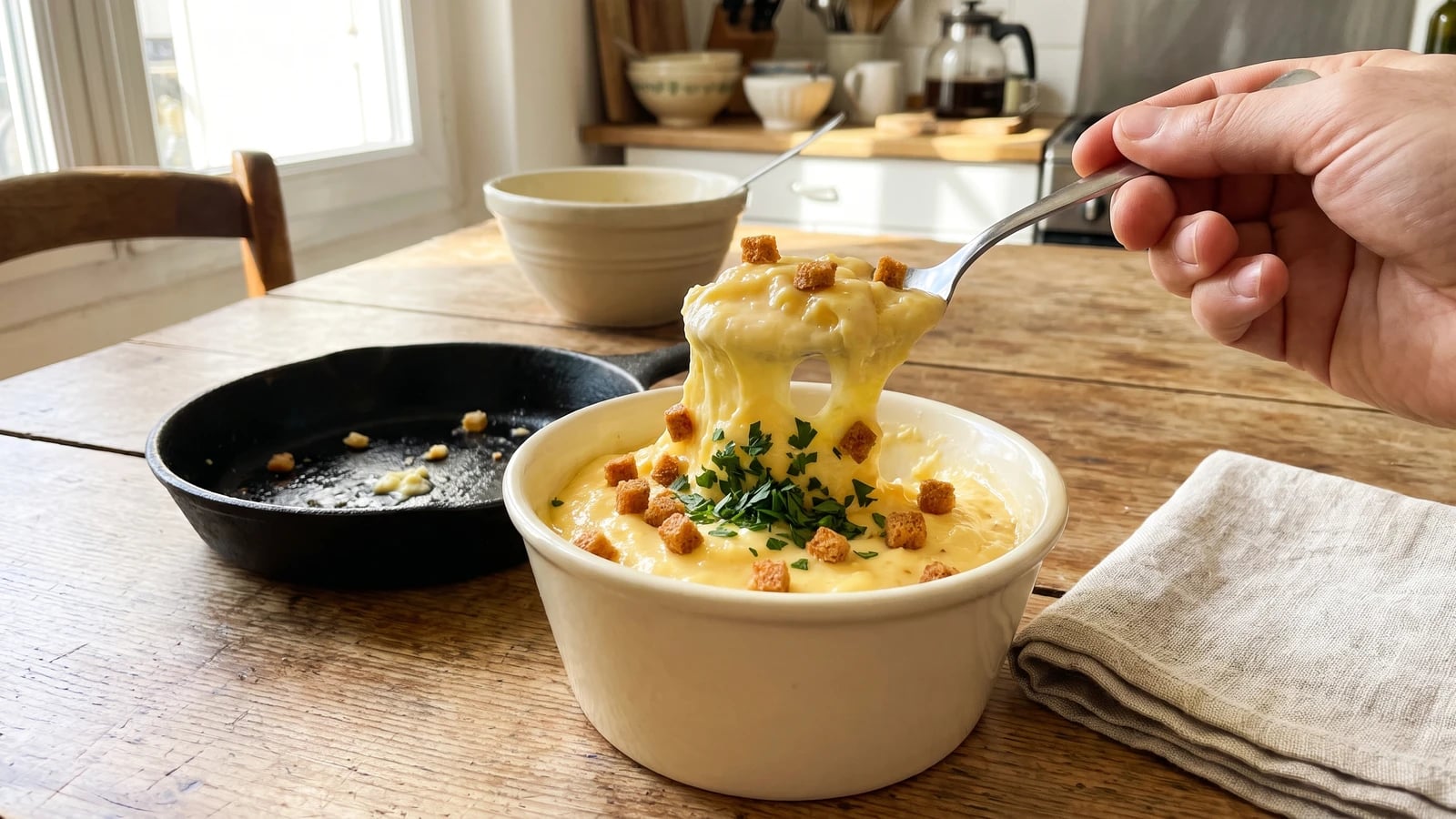
Soft œufs brouillés threaded with butter, hot crisp croutons, and a small green heart of parsley: a modest supper that teaches exactly when gentle eggs must leave the pan.
Œufs brouillés grand-mère (Grandmother’s scrambled eggs) teaches the central truth of scrambled eggs: they are finished before they look finished. Pull them while they remain loose, glossy, and almost pourable, because the pan’s stored heat will carry them the final distance. Wait for firm curds and you’ve already gone too far.
The original entry assumed a professional service with clarified butter ready, a warmed timbale waiting, and another pair of hands able to send the little croutons over very hot. At home, you fry them first, leave them in their heavy skillet, and warm your serving bowl with hot water while the eggs cook. The separate station and silver service are brigade scaffolding and can go. The clarified butter, the hot croutons folded into soft eggs, and the parsley placed in the middle are the dish, so they stay. The original spoonful of croutons becomes 1⅓ tablespoons for eight eggs, preserving its proportion while feeding four. One cook, one stove, one evening.
When the œufs brouillés are right, they settle into the bowl like a loose golden cream, with crisp little cubes appearing through the folds and parsley bright at the center. The step that matters most is stopping the cooking early, then beating in cold cream and butter before the curds lose their tenderness.
Œufs brouillés grand-mère belongs to the French cuisine bourgeoise breakfast and light-supper table rather than to one particular region: eggs, yesterday’s bread, butter, and parsley made useful with discipline. The grand kitchen adopted that household thrift and placed it within the classical family of garnished scrambled eggs, distinguishing this version by its tiny clarified-butter croutons and centered parsley. Grand-mère here is a repertory name, not the claim of one documented grandmother, and the homely title never excuses dry eggs or a heap of ordinary toast.
Quantity
8
Quantity
3 tablespoons (45 ml / 42 g)
divided
Quantity
2 tablespoons (30 ml / 30 g)
Quantity
1⅓ tablespoons (20 ml / 6 g)
cut into 5 mm dice
Quantity
1 tablespoon (15 ml / 14 g)
Quantity
½ teaspoon (2.5 ml / 3 g)
Quantity
⅛ teaspoon (0.6 ml / 0.3 g)
Quantity
1 generous pinch (about 1 teaspoon / 5 ml / 1 g)
finely chopped
| Ingredient | Quantity |
|---|---|
| large eggs | 8 |
| unsalted butterdivided | 3 tablespoons (45 ml / 42 g) |
| cold heavy cream | 2 tablespoons (30 ml / 30 g) |
| day-old white bread crustscut into 5 mm dice | 1⅓ tablespoons (20 ml / 6 g) |
| clarified butter | 1 tablespoon (15 ml / 14 g) |
| fine salt | ½ teaspoon (2.5 ml / 3 g) |
| ground white pepper | ⅛ teaspoon (0.6 ml / 0.3 g) |
| flat-leaf parsleyfinely chopped | 1 generous pinch (about 1 teaspoon / 5 ml / 1 g) |
Cut the bread crusts into neat 5 mm dice, chop the parsley, and divide the unsalted butter into 2 tablespoons for cooking and 1 tablespoon for finishing. Keep the finishing butter and cream cold. Fill a timbale, a deep serving bowl, with hot water and set it aside to warm; soft eggs cool quickly, and a cold bowl steals the pleasure before the first spoonful.
Heat the clarified butter in a small heavy skillet over medium heat. Add the bread dice and toss for 2 to 3 minutes, until every face is crisp and evenly butter-gold. Lift the skillet off the heat but leave the croûtons in it. Clarified butter matters here: without milk solids to scorch, it crisps the tiny cubes cleanly while keeping the flavor entirely of butter.
Break the eggs into a bowl, add the salt and white pepper, and whisk only until the whites and yolks are completely joined. Don’t beat in air. Œufs brouillés should be creamy and close-textured, not puffed or frothy. Cook them at once after seasoning.
Melt 2 tablespoons of the unsalted butter in a heavy saucepan over medium-low heat without letting it color. Add the eggs and stir continuously with a flexible spatula or wooden spoon, scraping the floor and corners in slow, steady sweeps. Lift the pan from the heat whenever a firm layer threatens to form, then return it once the temperature settles. After 5 to 7 minutes, the eggs should resemble loose golden porridge, with small tender curds suspended in a glossy cream and a path from the spoon that closes slowly.
Remove the saucepan while the eggs are softer than you intend to serve them. Stir in the cold finishing butter and all the remaining cream until they disappear into the curds and leave a smooth sheen. This is the final emulsion and the brake on the heat. If the eggs still look slightly too loose, they are exactly right; carryover cooking will tighten them in the bowl.
Return the croûton skillet to medium heat for 20 to 30 seconds, tossing until the clarified butter gleams again and the cubes are very hot. Fold them immediately into the œufs brouillés with two or three broad turns. Don’t stir them to exhaustion, or their crisp edges disappear into the eggs.
Empty and dry the warmed timbale, then spoon in the œufs brouillés without pressing or smoothing them flat. Gather the chopped parsley in a small pinch at the center, exactly as the dish requires, and serve at once. These eggs wait for nobody. À table!
1 serving (about 115g)
Culinary guides, cultural storytelling, and the editorial depth that makes cooking meaningful.
Discover Culinary ExplorerChef Juliette
A creamy omelette aux fines herbes closes around smoked-salmon-wrapped herring milts, gently poached in butter. Have the filling ready, then roll the eggs while they still shine.
Chef Juliette
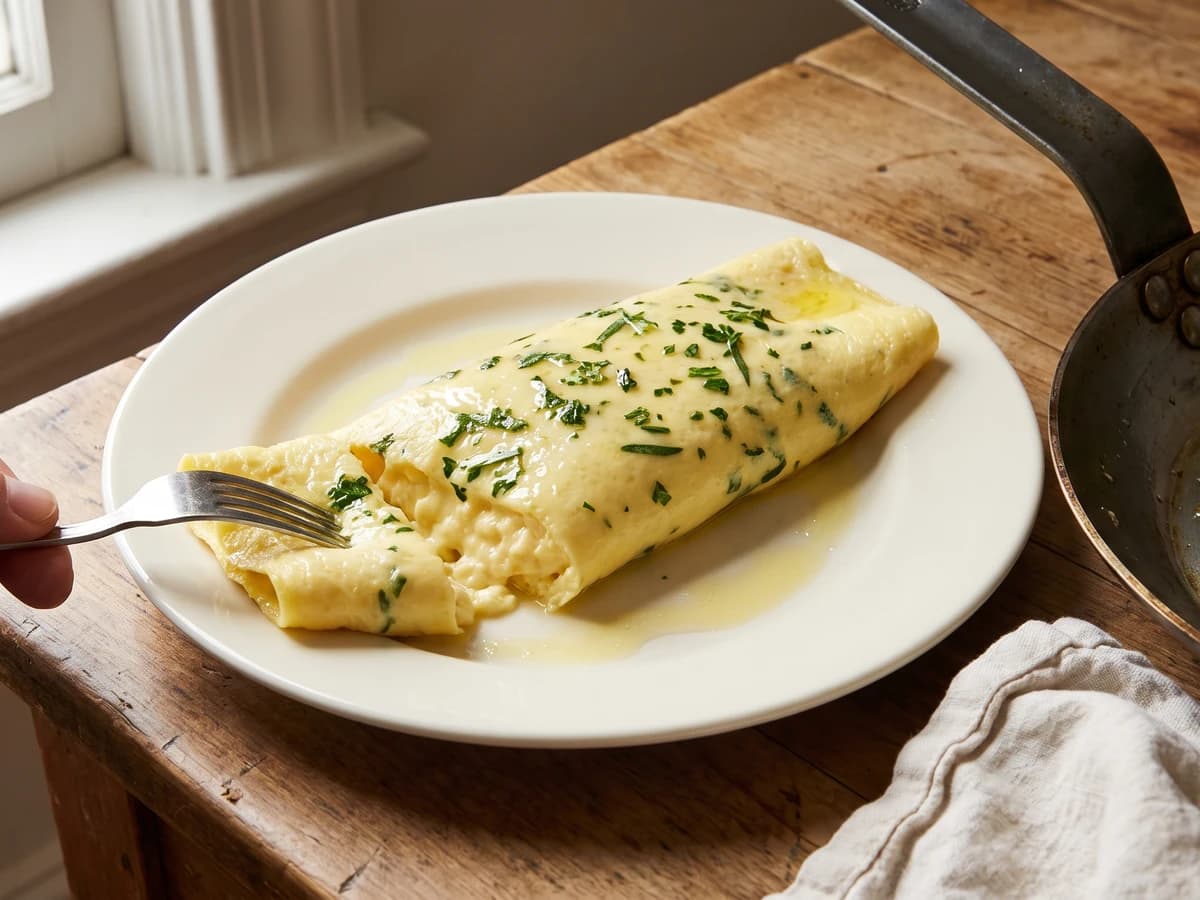
Four tender herbs, hot butter, and two eggs per pan: this rolled omelette teaches the quick hand and good judgment that keep the outside pale and the center creamy.
Chef Juliette
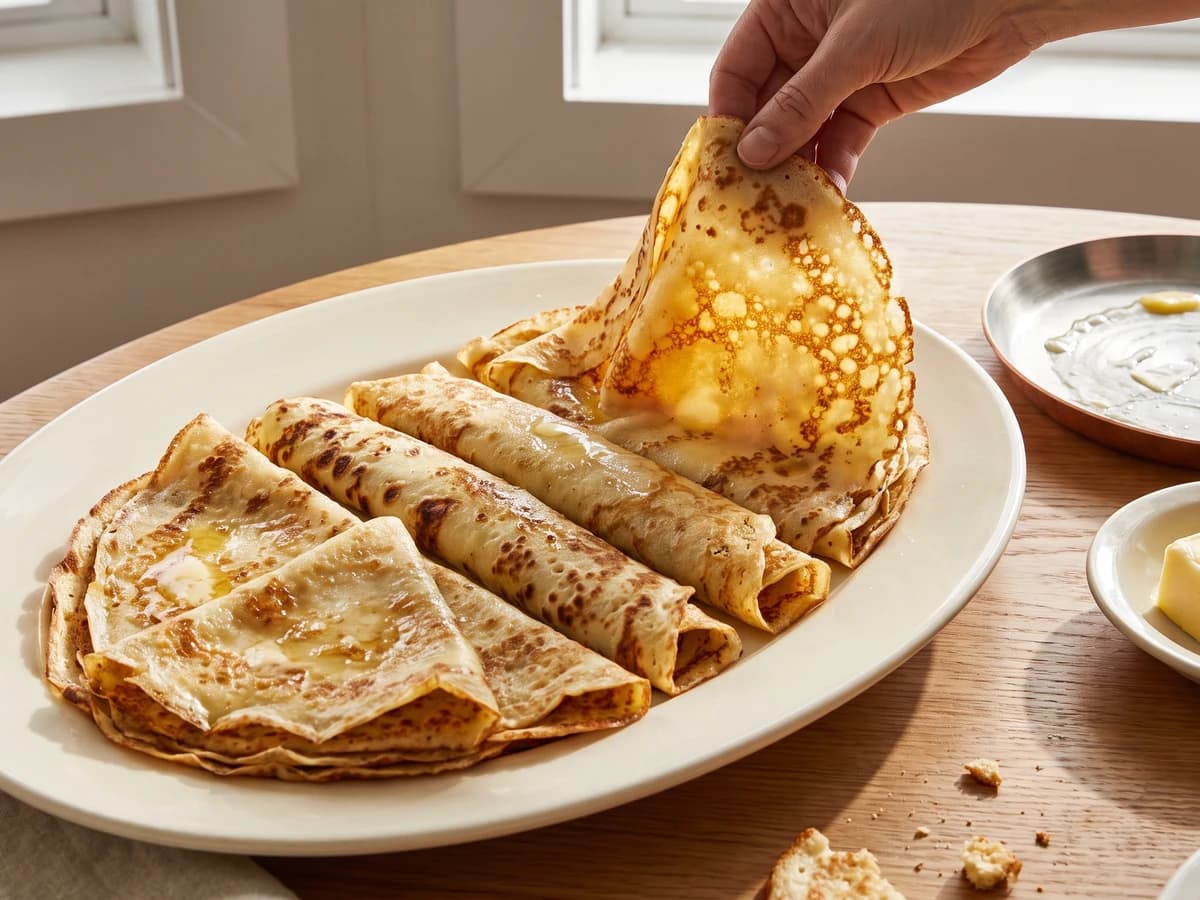
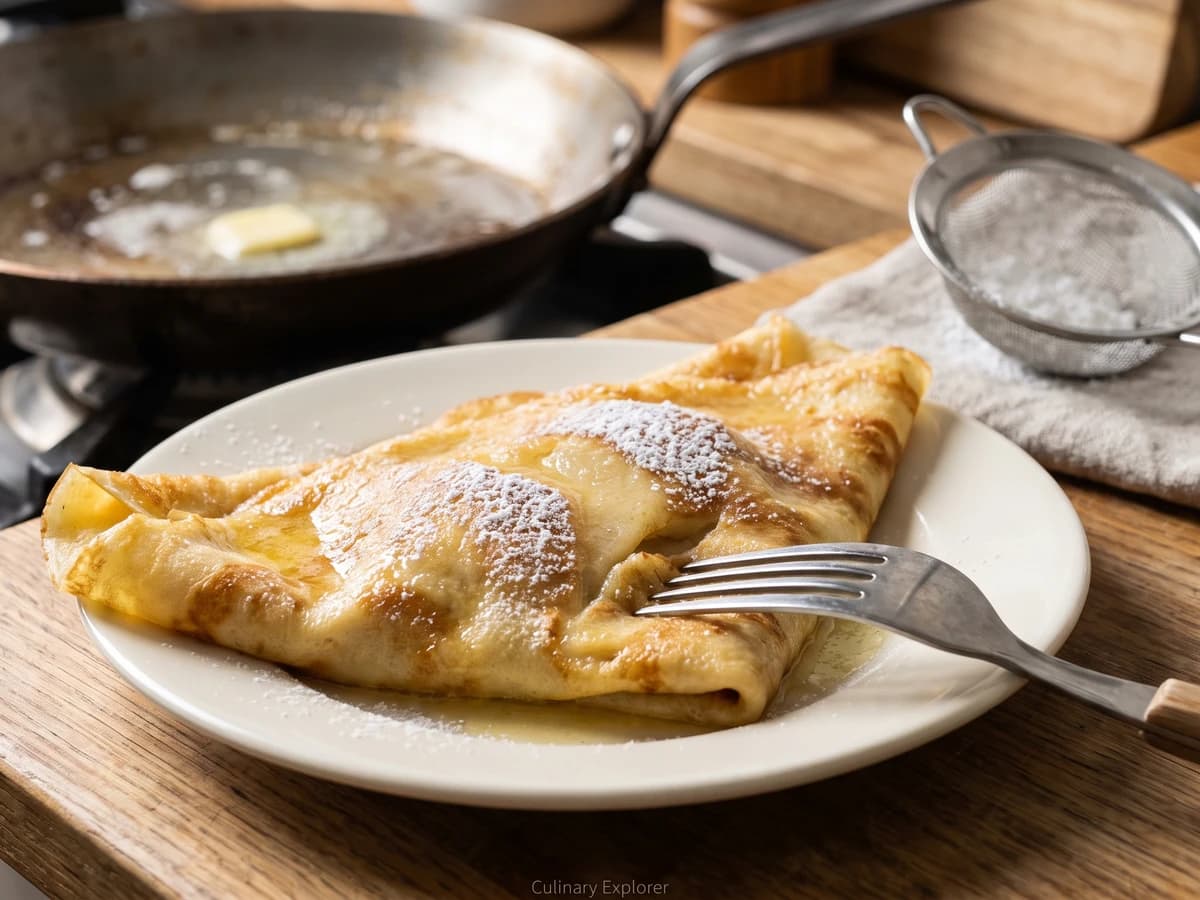
Four batters, one lesson: let the flour drink deeply before cooking, then spread the batter thinly in butter for crêpes and pannequets that bend without becoming tough.
Chef Juliette
Crêpes au Couvent trap ripe Williams pear dice between two thin pours of sweet batter, then turn in one clean toss and reach the table butter-gold, powdered, and burning hot.