Chef Juliette
Omelette à l’Écossaise
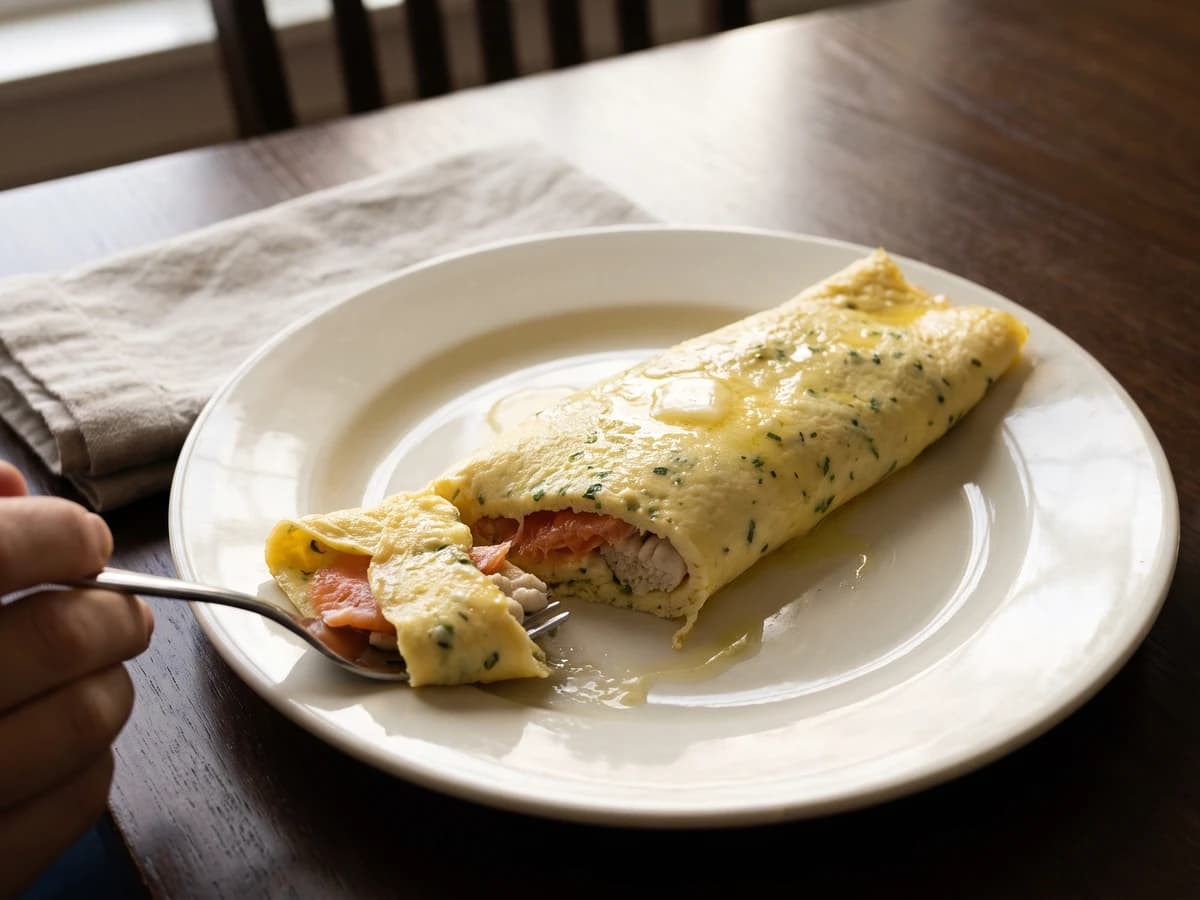
A creamy omelette aux fines herbes closes around smoked-salmon-wrapped herring milts, gently poached in butter. Have the filling ready, then roll the eggs while they still shine.
A cooking platform built around craft, culture, and the stories behind what we eat.
Created by Chef Juliette
Based on No. 467, Scrambled Eggs with Cheese, from Le Guide Culinaire (1907) by Auguste Escoffier
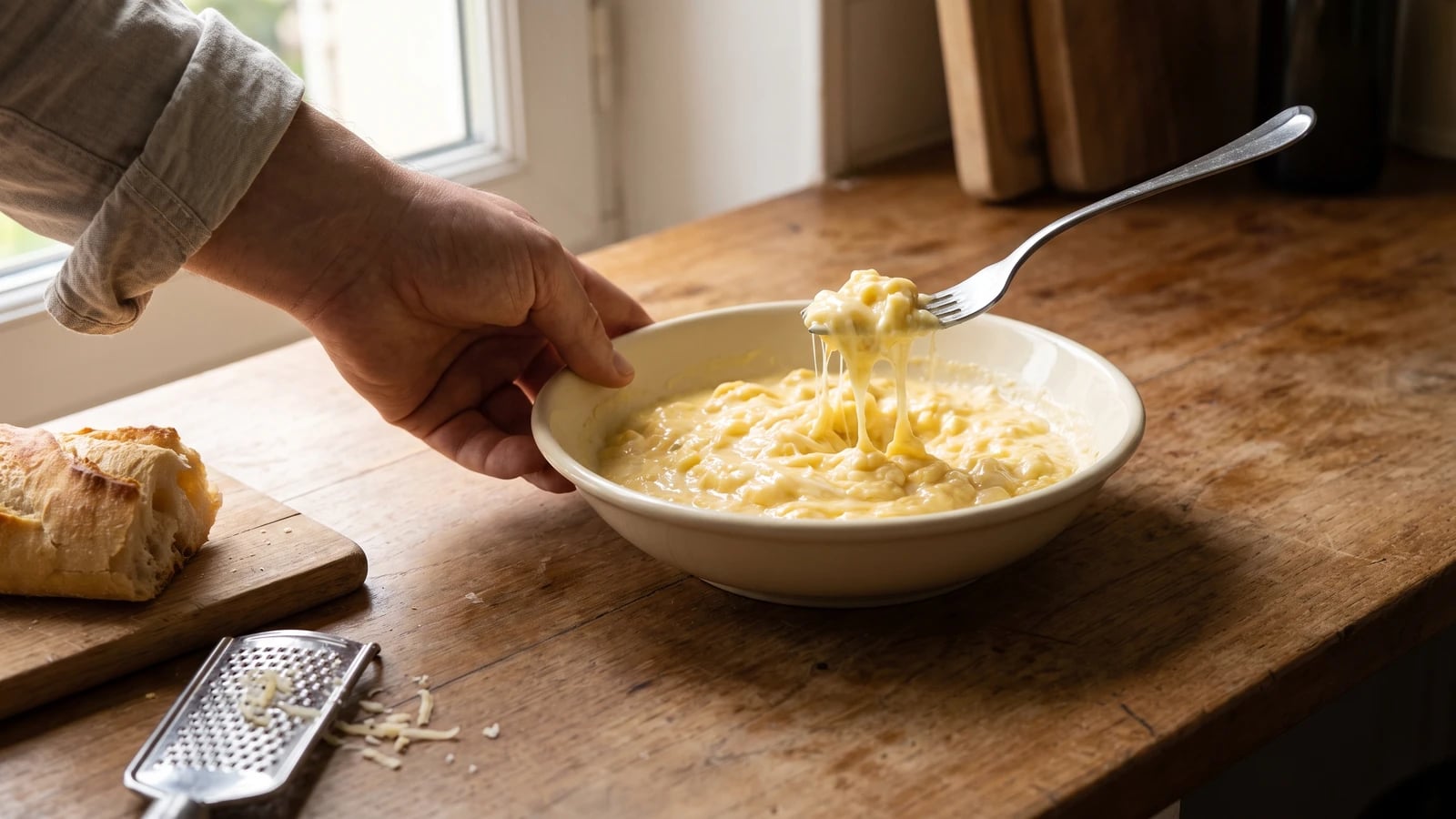
Fine, creamy curds threaded with Gruyère and Parmesan prove the first law of œufs brouillés: moderate heat and constant attention matter more than speed, equipment, or ceremony.
Œufs brouillés au fromage (scrambled eggs with cheese) teaches the governing principle of all œufs brouillés: the pan must never outrun your spoon. Gruyère and Parmesan melt through fine, creamy curds with a soft pull, not the tight, oily threads that fierce heat produces. Control the heat by moving the pan, rather than asking the eggs to endure it.
The source gives a ratio rather than a fixed batch and assumes a brigade cook already understands “the usual way.” Eight eggs feed four tonight, with 2 ounces each of Gruyère and Parmesan preserving the book’s proportion exactly. Its shorthand includes the buttered pan of classical egg cookery, so real butter stays; cream doesn’t appear and isn’t added. This formula needs no stock kept on the fire, no salamander, and no saucier on staff. The brigade scaffolding is assumed skill and service scale, so those go; the very moderate fire is the dish and must stay.
Set out warm plates before you begin, because œufs brouillés wait for nobody. The step that decides everything is stirring continuously while lifting the pan off and on the heat, then stopping when the eggs still look a shade too loose. The pan will finish them.
Œufs brouillés belong to the Parisian café and the French bourgeois table, where egg dishes served luncheon or light supper as readily as breakfast. The technique moved easily between household and grand kitchens because its refinement came from the cook’s hand, not costly ingredients; this cheese variation uses Gruyère and Parmesan in equal weights, beaten into the eggs before cooking. The common misconception is that œufs brouillés are an omelette broken apart, but their identity lies in the very moderate fire and steady stirring that produce a fine, creamy curd.
Quantity
8
Quantity
about ½ cup (120 ml / 2 oz / 57 g)
freshly and finely grated
Quantity
about ½ cup (120 ml / 2 oz / 57 g)
freshly and finely grated
Quantity
2 tablespoons (30 ml / 28 g)
divided, with ½ tablespoon kept cold
Quantity
¼ teaspoon (1.25 ml / 1.5 g)
Quantity
⅛ teaspoon (0.6 ml / 0.3 g)
| Ingredient | Quantity |
|---|---|
| large eggs | 8 |
| Gruyère cheesefreshly and finely grated | about ½ cup (120 ml / 2 oz / 57 g) |
| Parmesan cheesefreshly and finely grated | about ½ cup (120 ml / 2 oz / 57 g) |
| unsalted butterdivided, with ½ tablespoon kept cold | 2 tablespoons (30 ml / 28 g) |
| fine sea salt | ¼ teaspoon (1.25 ml / 1.5 g) |
| freshly ground white pepper | ⅛ teaspoon (0.6 ml / 0.3 g) |
Grate and weigh both cheeses, keeping them separate until their weights match. Fill four shallow serving bowls with hot water so they warm while the eggs cook, then set the butter, seasoning, spatula, and a dry towel beside the stove. Once the eggs meet the pan, your attention belongs to them.
Break the eggs into a wide bowl and beat until the whites and yolks are fully combined, but stop before they become foamy. Beat in the salt, white pepper, Gruyère, and Parmesan until the cheese is evenly suspended. Cook at once so the cheese doesn’t settle into a dense layer.
Put a 24 cm heavy nonstick skillet or 2-quart heavy saucepan over the lowest useful heat. Add 1½ tablespoons of the butter and let it melt slowly without browning. Swirl it over the bottom and into the corners; the butter is the cooking foundation, not a garnish.
Pour in the egg mixture and begin stirring immediately with the spatula, sweeping the bottom, sides, and corners in steady strokes. At first, little will happen. Continue for 6 to 8 minutes, lifting the pan off the heat whenever curds begin forming faster than you can fold them, until fine, moist curds gather and each pass of the spatula leaves a path that closes slowly. If the eggs start setting in large slabs or the cheese releases an oily slick, remove the pan at once, set it on the folded towel, and stir in the reserved cold butter. Ça se rattrape: keep stirring off the heat until the cooking slows, then return the pan only if the eggs remain very loose.
Remove the pan while the œufs brouillés remain glossy and slightly looser than you intend to serve them. Stir off the heat for another 20 seconds; the curds should be fine and creamy, with the cheese drawing into short, supple strands rather than leaking fat. Empty and dry the warm bowls, divide the eggs immediately, and taste before adding more salt because both cheeses carry their own. À table!
1 serving (about 130g)
Culinary guides, cultural storytelling, and the editorial depth that makes cooking meaningful.
Discover Culinary ExplorerChef Juliette
A creamy omelette aux fines herbes closes around smoked-salmon-wrapped herring milts, gently poached in butter. Have the filling ready, then roll the eggs while they still shine.
Chef Juliette
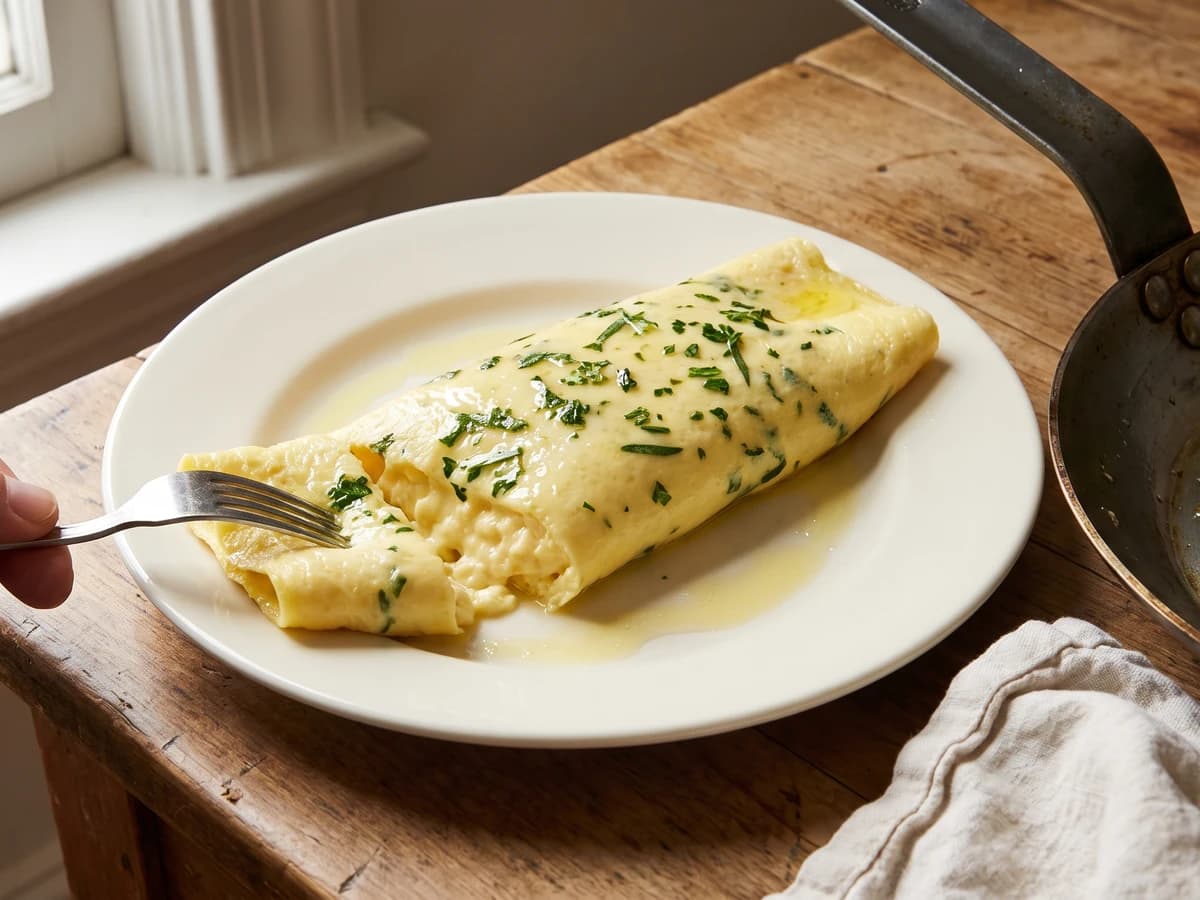
Four tender herbs, hot butter, and two eggs per pan: this rolled omelette teaches the quick hand and good judgment that keep the outside pale and the center creamy.
Chef Juliette
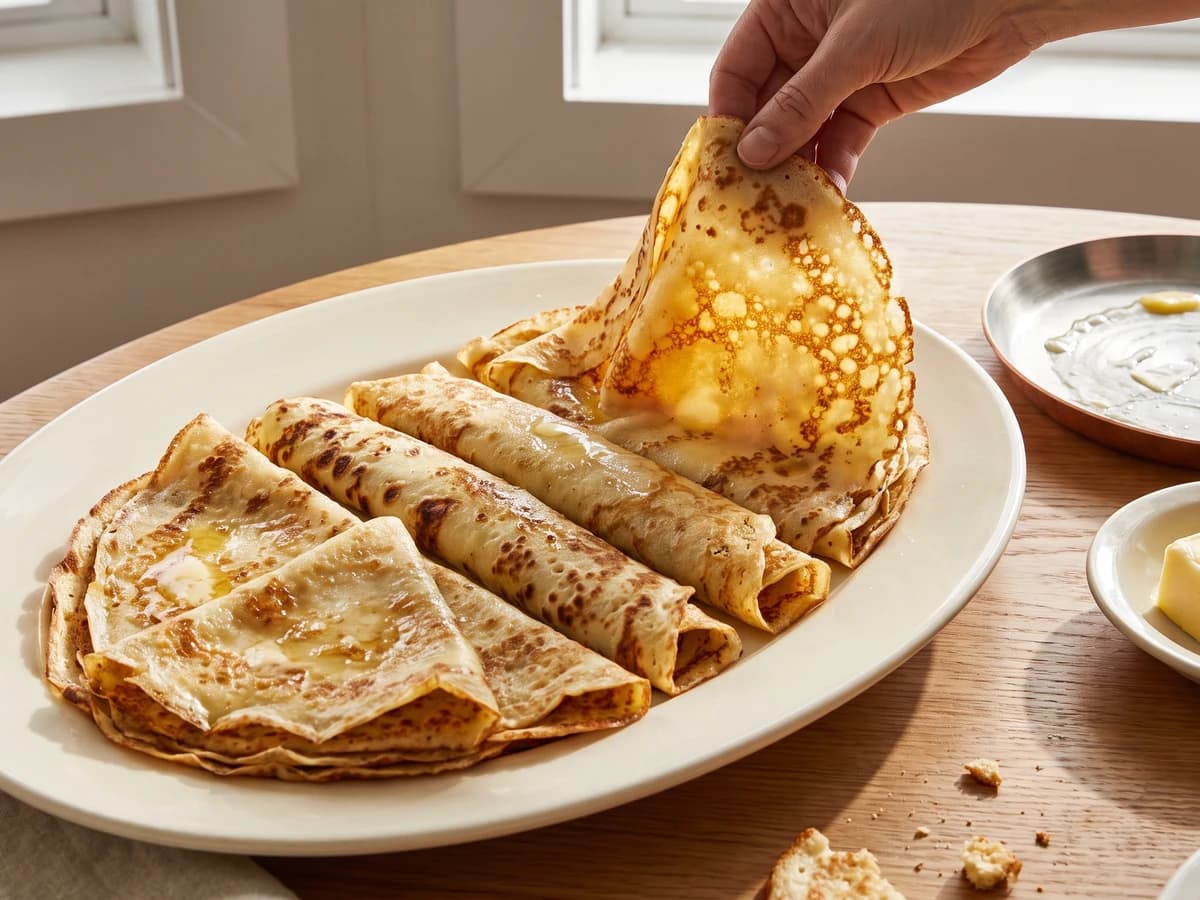
Four batters, one lesson: let the flour drink deeply before cooking, then spread the batter thinly in butter for crêpes and pannequets that bend without becoming tough.
Chef Juliette
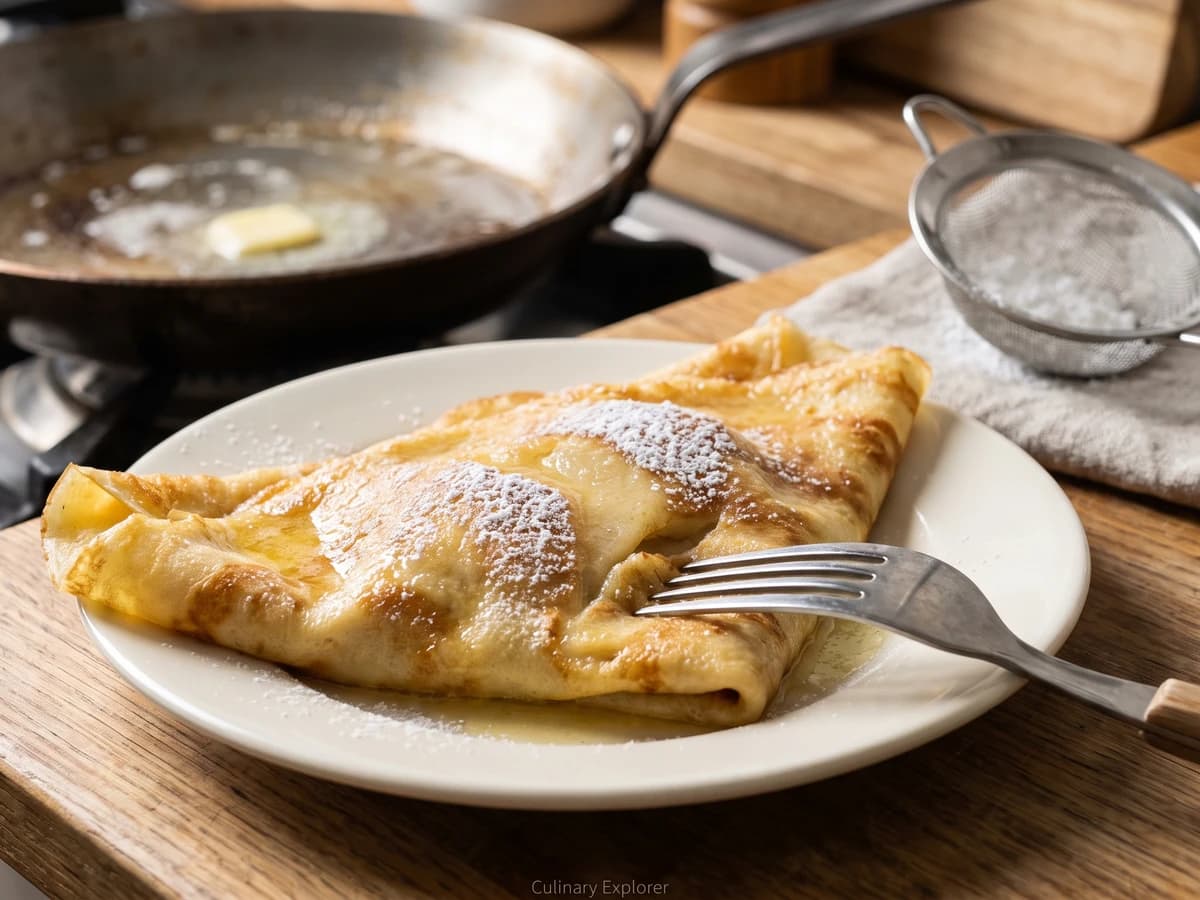
Crêpes au Couvent trap ripe Williams pear dice between two thin pours of sweet batter, then turn in one clean toss and reach the table butter-gold, powdered, and burning hot.