Chef Juliette
Omelette à l’Écossaise
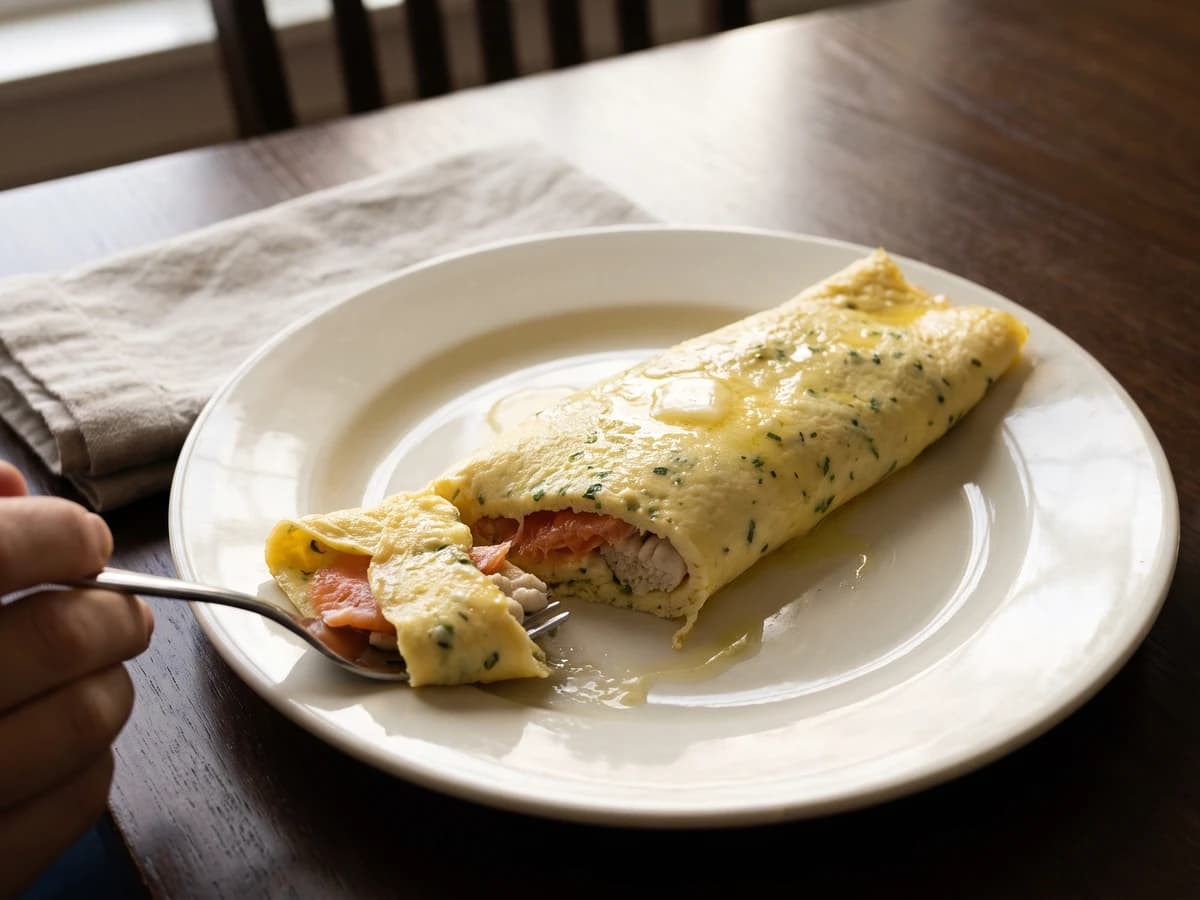
A creamy omelette aux fines herbes closes around smoked-salmon-wrapped herring milts, gently poached in butter. Have the filling ready, then roll the eggs while they still shine.
A cooking platform built around craft, culture, and the stories behind what we eat.
Created by Chef Juliette
Based on No. 466, Scrambled Eggs with Herbs, from Le Guide Culinaire (1907) by Auguste Escoffier
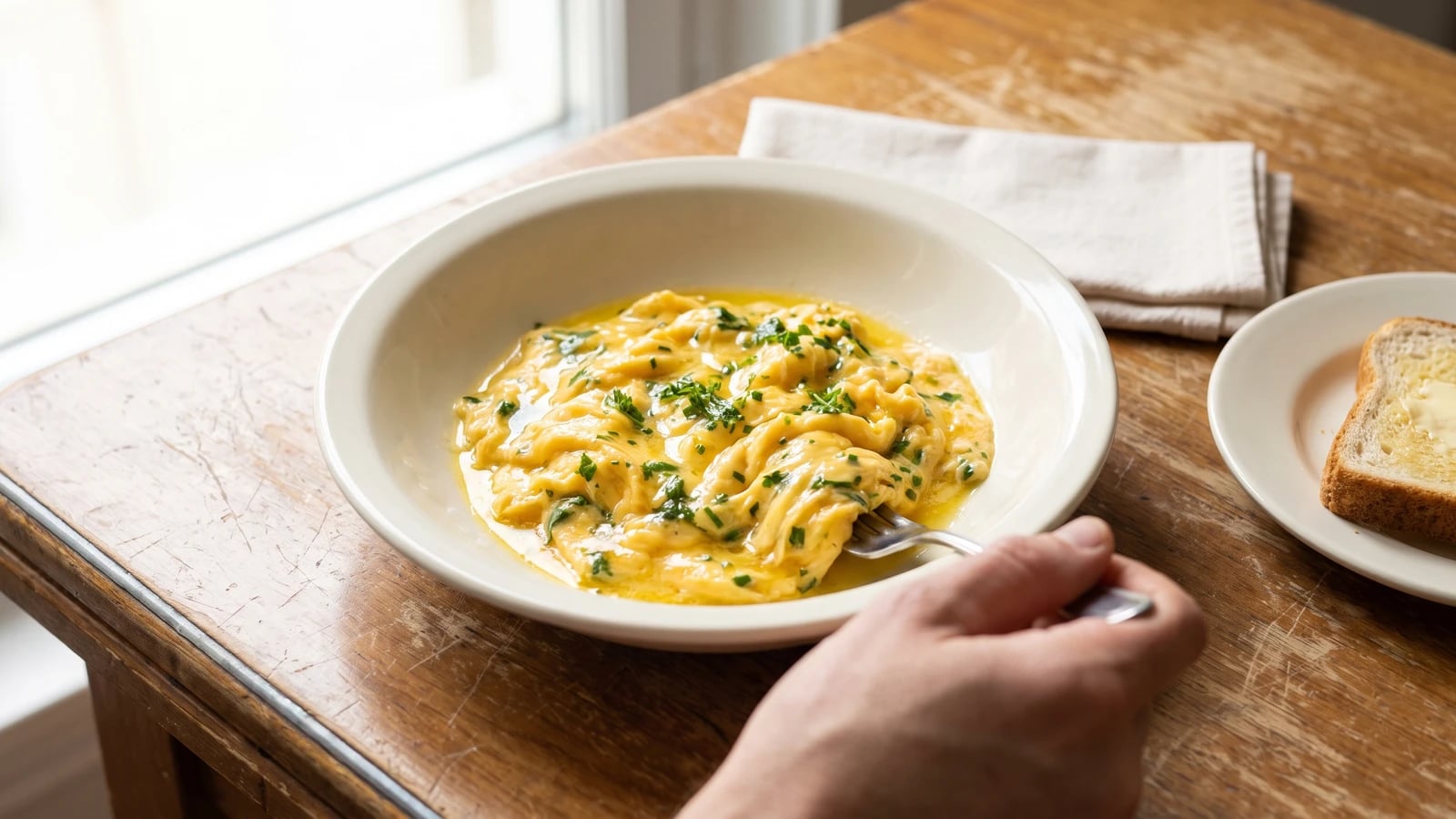
Slow heat turns eggs, butter, and cream into soft, glossy curds; a final tablespoon of parsley, chervil, chives, and tarragon makes this quick supper taste unmistakably French.
Œufs brouillés aux fines herbes (soft scrambled eggs with fine herbs) teach the gentlest form of heat control in the French canon. The one true thing to know before you touch the pan is that eggs keep cooking after you pull them away, so they must leave the heat while they still look slightly too loose. Do that, and egg, butter, and cream hold together in fine, glossy folds rather than tightening into dry curds.
The book gives only the herb addition because it assumes the cook already knows œufs brouillés: a dedicated egg cook, a bain-marie (water bath), and plates waiting the instant the eggs turn. Your honest equivalent is a heavy 20-centimetre saucepan, the lowest direct heat you own, and a flexible spatula. The bain-marie is brigade scaffolding and can go; constant gentle stirring is the dish and stays. The batch comes down to eight eggs for four people, while its single tablespoon of herbs remains exactly as written, equal parts parsley, chervil pluches, chives, and tarragon. One cook, one stove, one evening.
The herbs go in at the end, when their green scent can stay fresh against the warm richness. Keep stirring, pull early, and finish with cold cream and butter. If the eggs begin setting too quickly, lift the pan and cool them with a spoonful of the measured cream. Ça se rattrape. The decisive step is recognizing the soft custard stage before the curds tighten.
Œufs brouillés aux fines herbes belong to cuisine bourgeoise, the household breakfast and light-supper table found from Paris apartments to provincial town houses, rather than to one French region. Grand kitchens carried the preparation into hotel breakfast rooms, often relying on a bain-marie and immediate silver-dish service, while home cooks reached the same fine, creamy set in a small saucepan over low heat. Fines herbes is sometimes mistaken for any handful of green herbs, but this formula is exact: parsley, chervil pluches, chives, and tarragon in equal measure.
Quantity
8
Quantity
3 tablespoons (45 ml / 42 g)
divided, with 1 tablespoon kept cold
Quantity
2 tablespoons (30 ml / 30 g)
kept cold
Quantity
¾ teaspoon (3.75 ml / about 1 g)
finely chopped
Quantity
¾ teaspoon (3.75 ml / about 0.5 g)
picked free of coarse stems and finely chopped
Quantity
¾ teaspoon (3.75 ml / about 0.75 g)
finely snipped
Quantity
¾ teaspoon (3.75 ml / about 0.5 g)
finely chopped
Quantity
½ teaspoon (2.5 ml / 3 g)
Quantity
⅛ teaspoon (0.6 ml / 0.25 g)
| Ingredient | Quantity |
|---|---|
| large eggs | 8 |
| unsalted butterdivided, with 1 tablespoon kept cold | 3 tablespoons (45 ml / 42 g) |
| heavy creamkept cold | 2 tablespoons (30 ml / 30 g) |
| flat-leaf parsley leavesfinely chopped | ¾ teaspoon (3.75 ml / about 1 g) |
| chervil pluchespicked free of coarse stems and finely chopped | ¾ teaspoon (3.75 ml / about 0.5 g) |
| chivesfinely snipped | ¾ teaspoon (3.75 ml / about 0.75 g) |
| tarragon leavesfinely chopped | ¾ teaspoon (3.75 ml / about 0.5 g) |
| fine sea salt | ½ teaspoon (2.5 ml / 3 g) |
| freshly ground white pepper | ⅛ teaspoon (0.6 ml / 0.25 g) |
Pick the chervil into pluches, tender leafy shreds without coarse stems. Chop the parsley, chervil, chives, and tarragon separately, then measure an equal ¾ teaspoon of each and mix them together. Give the mixture one final pass with the knife so it is fine but not crushed. The book's tablespoon is the total mixture, not a tablespoon of each; keep that proportion and set the fines herbes aside.
Fill four shallow serving bowls with hot tap water so they will be ready for the eggs. Break the eggs into a mixing bowl, add the salt and white pepper, and beat only until the yolks and whites are completely joined. Don't whisk in a cap of bubbles; œufs brouillés should be creamy and close-textured, not airy. Cut the reserved cold tablespoon of butter into small pieces. Melt the remaining 2 tablespoons of butter in the saucepan over the lowest heat until fluid but entirely uncolored.
Pour the eggs into the melted butter and begin stirring immediately with the spatula, sweeping slowly across the bottom, around the sides, and into every corner. They may appear unchanged for several minutes. Leave the heat low; patience, not a hotter burner, creates the fine curd. As the eggs thicken, lift the pan from the heat for twenty seconds whenever they begin setting faster than you can stir, then return it. If a firm sheet forms or the curds tighten suddenly, take the pan off at once and stir in 1 tablespoon of the measured cold cream. Ça se rattrape: the cream won't make large curds small again, but it stops them drying and restores their softness.
After about 7 to 10 minutes, the eggs should resemble a loose custard filled with tiny folds, and a trail drawn by the spatula should close slowly. Remove the pan while the mixture still looks slightly wetter than you want to eat it. Stir in the cold butter pieces until they disappear, then add all the remaining cream and fold through the full tablespoon of fines herbes with three or four strokes. The cold finish arrests the cooking and completes the emulsion. If the eggs still pool like raw liquid after thirty seconds, return them to the lowest heat in ten-second intervals, stirring between each; don't correct them with a sudden blast of heat.
Pour the water from the warm bowls and dry them well. Divide the œufs brouillés among them immediately, letting the eggs settle into soft mounds rather than packing or shaping them. They should gleam with butter, hold briefly on the spoon, and relax gently at the edges. This dish does not wait for the table; the table waits for it. À table!
1 serving (about 110g)
Culinary guides, cultural storytelling, and the editorial depth that makes cooking meaningful.
Discover Culinary ExplorerChef Juliette
A creamy omelette aux fines herbes closes around smoked-salmon-wrapped herring milts, gently poached in butter. Have the filling ready, then roll the eggs while they still shine.
Chef Juliette
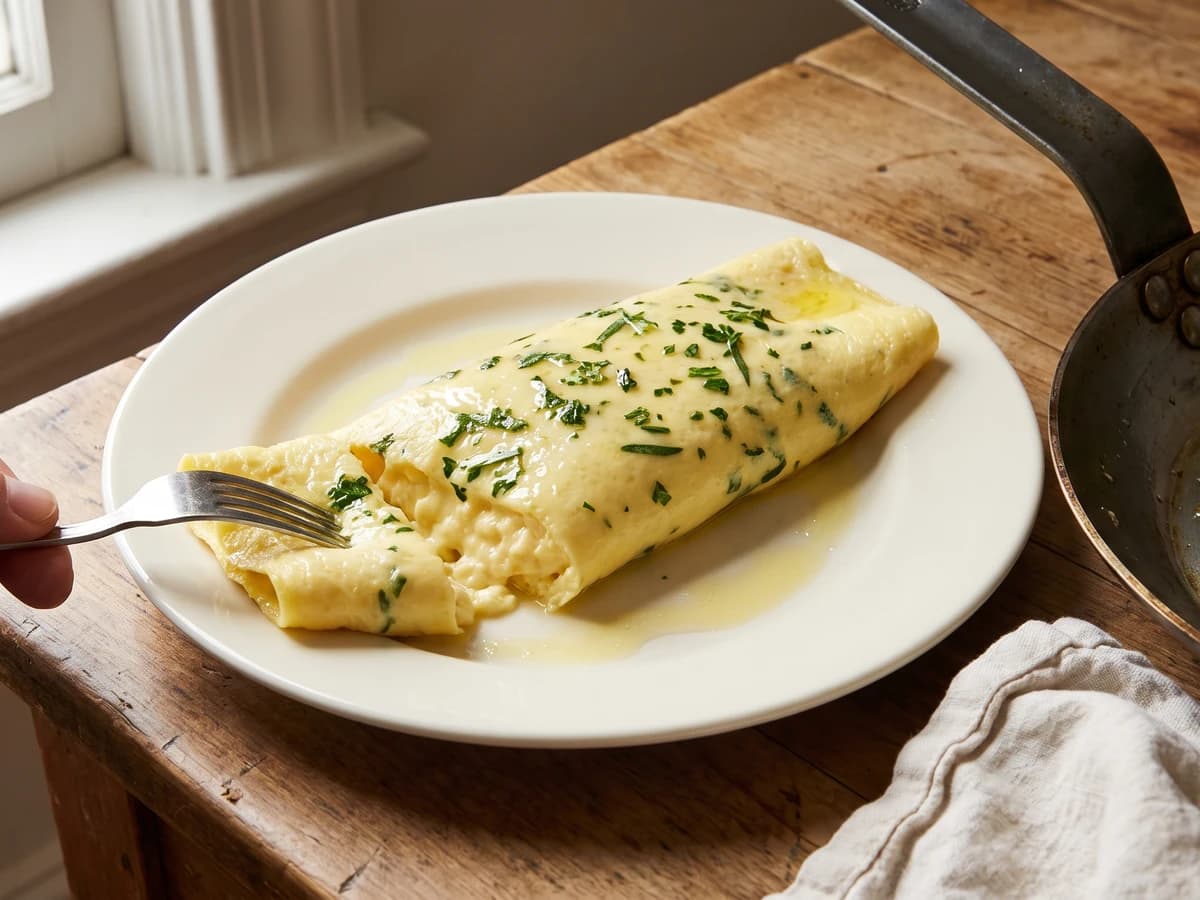
Four tender herbs, hot butter, and two eggs per pan: this rolled omelette teaches the quick hand and good judgment that keep the outside pale and the center creamy.
Chef Juliette
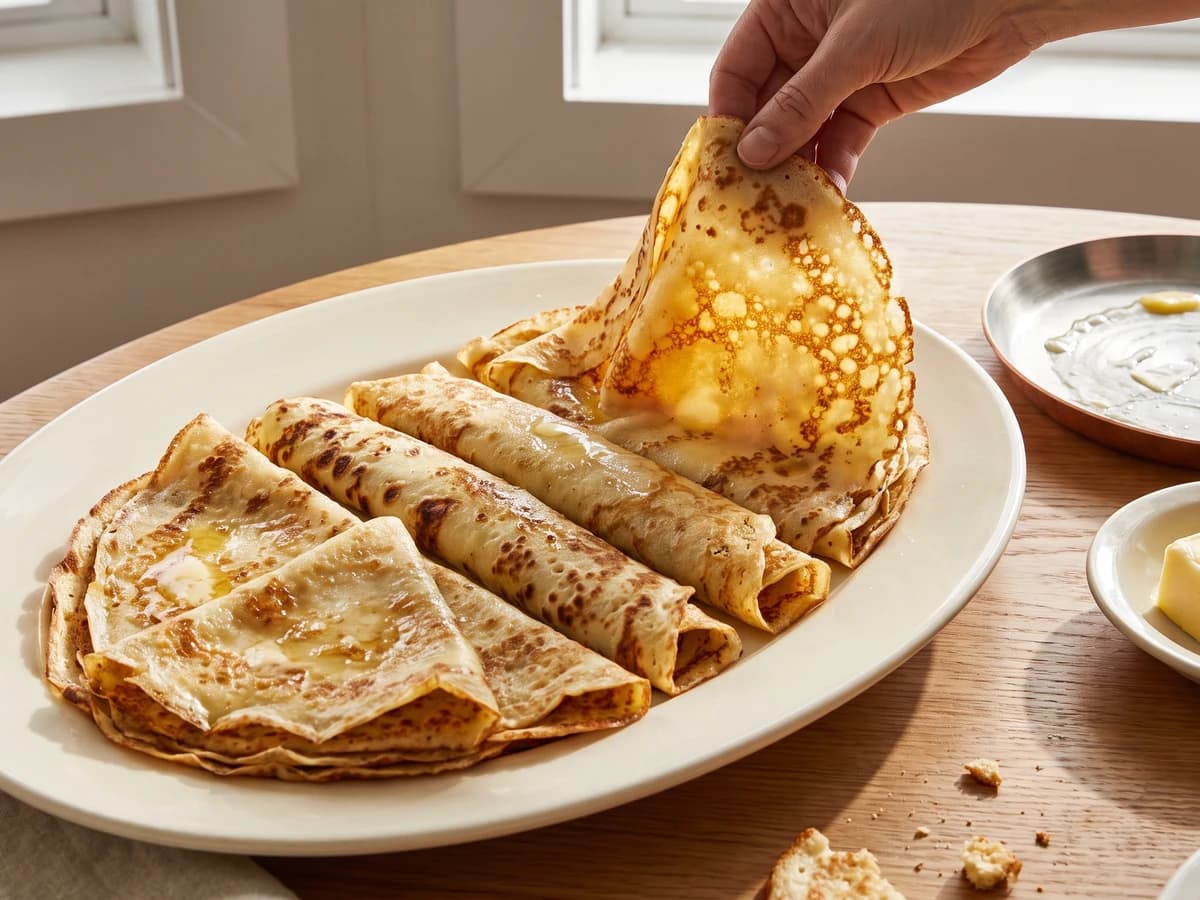
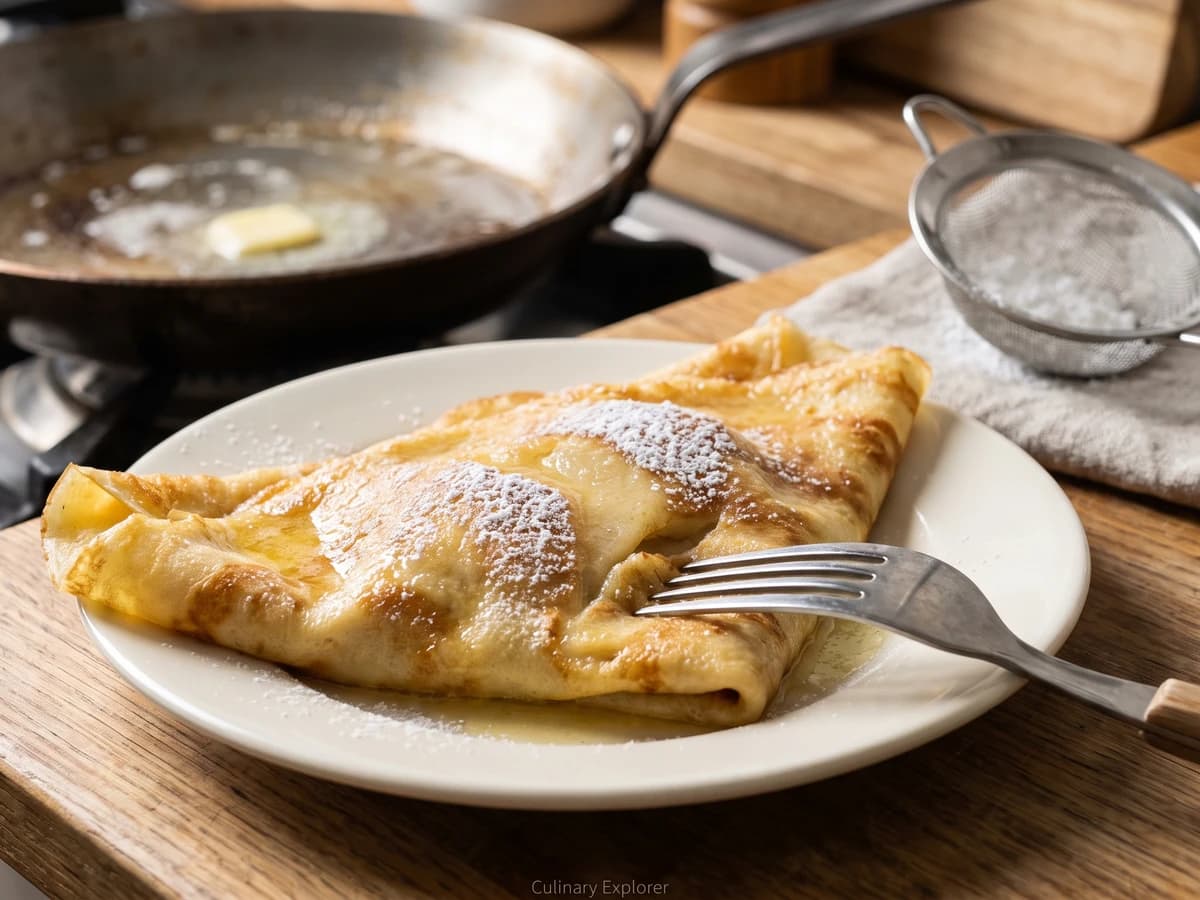
Four batters, one lesson: let the flour drink deeply before cooking, then spread the batter thinly in butter for crêpes and pannequets that bend without becoming tough.
Chef Juliette
Crêpes au Couvent trap ripe Williams pear dice between two thin pours of sweet batter, then turn in one clean toss and reach the table butter-gold, powdered, and burning hot.