Chef Juliette
Omelette à l’Écossaise
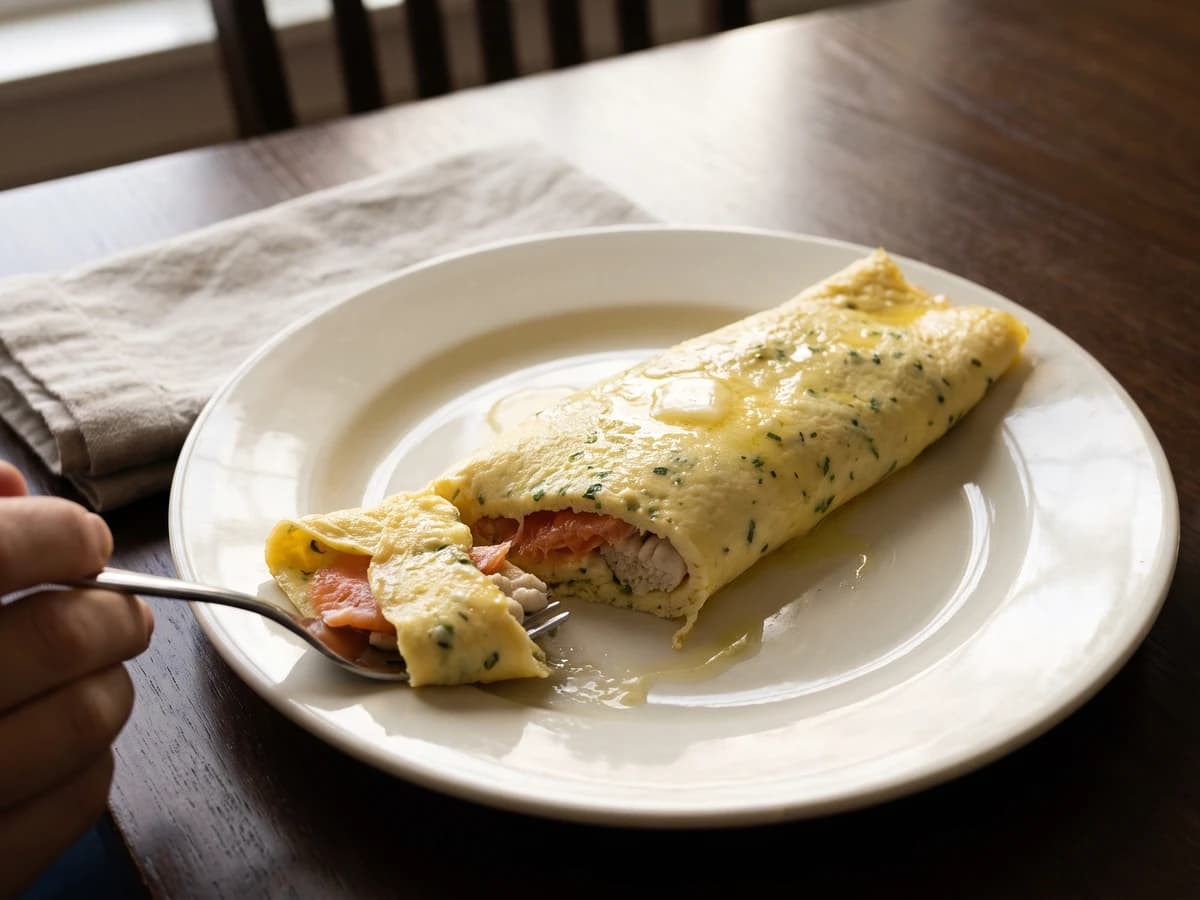
A creamy omelette aux fines herbes closes around smoked-salmon-wrapped herring milts, gently poached in butter. Have the filling ready, then roll the eggs while they still shine.
A cooking platform built around craft, culture, and the stories behind what we eat.
Created by Chef Juliette
Based on No. 465, Scrambled Eggs with Shrimps, from Le Guide Culinaire (1907) by Auguste Escoffier
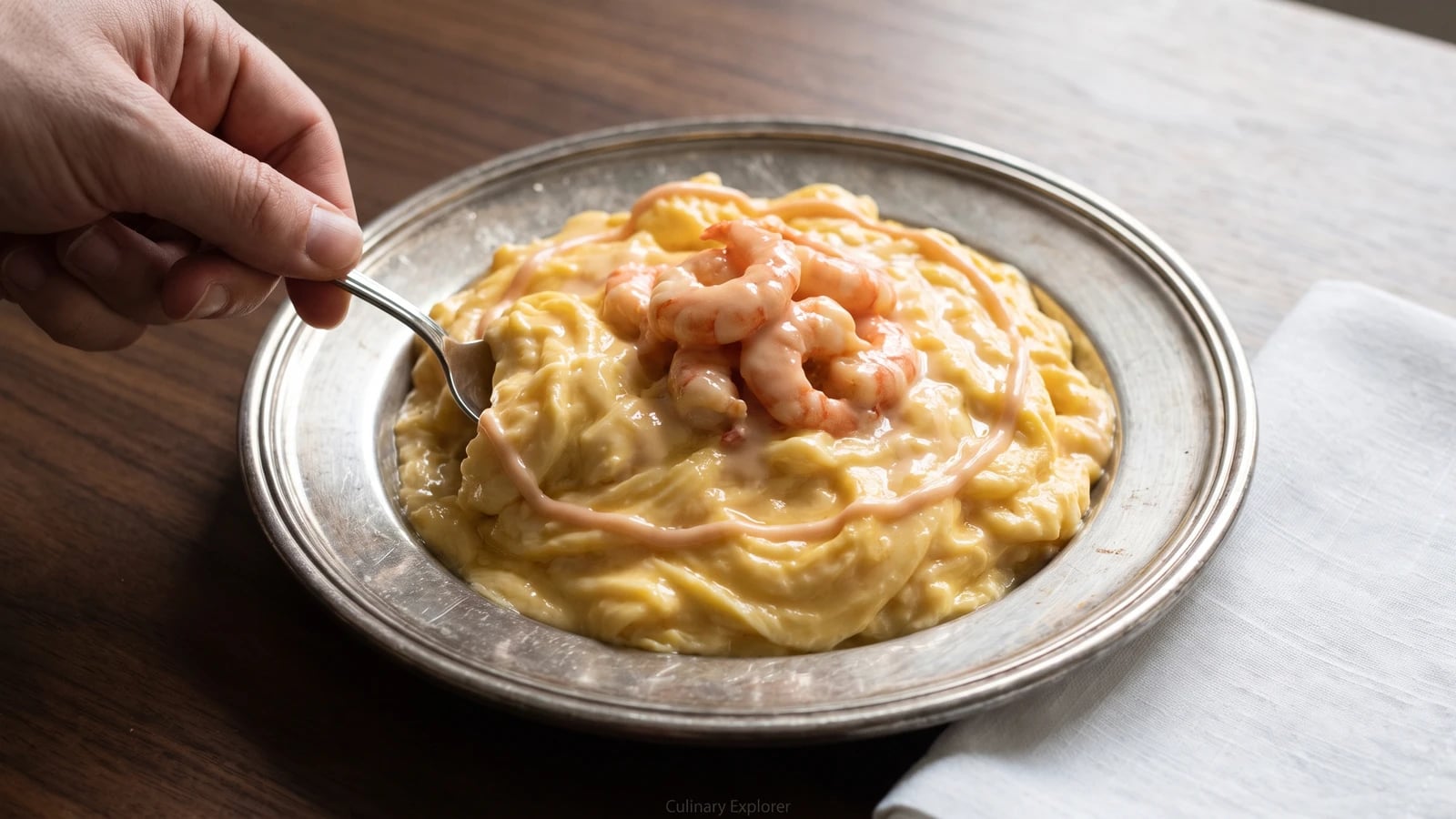
Soft œufs brouillés, a warm timbale, and shrimp tails glossed with Shrimp Sauce: a composed egg dish whose whole lesson is stopping the curds while they still flow.
Œufs brouillés aux crevettes (soft scrambled eggs with shrimps) teaches the most useful truth about eggs: take them off the heat before they look finished. The curds should pour in slow folds, not sit in dry pieces, because the warm pan and timbale will finish what the flame began. That one decision is the dish.
The old entry assumed a saucier with Shrimp Sauce already finished, a commis to clean the tails, and a silver timbale waiting warm. At home, prepare the sauce as its own finished component, hold it over barely hot water, use cooked peeled shrimp, and warm a straight-sided serving bowl. The sauce and central heap are the dish and stay exactly; the silver, extra hands, and banquet quantity are brigade scaffolding, so they go. This version serves four: one cook, one stove, one evening.
Cook the eggs last and serve at once. Stop when they still seem one minute too loose, then arrest the heat with cold butter and cream. If they begin to tighten too quickly, lift the pan and stir there, because ça se rattrape while they are still moist. The last turn of the spatula matters most.
Œufs brouillés aux crevettes belongs to the composed egg repertory of Parisian grand kitchens and bourgeois supper tables, not to a single coastal province. Classical service turned plain soft eggs into a named dish by arranging a distinct garnish in the centre and repeating its sauce as a thread, a grammar used across many preparations of œufs brouillés. Stirring the shrimp through the eggs changes that composition; here the tails remain a small sauced heap, exactly where the source places them.
Quantity
8
Quantity
4 tablespoons (60 ml / 56 g)
divided, with 1 tablespoon kept cold
Quantity
2 tablespoons (30 ml / 30 g)
cold
Quantity
1/4 teaspoon (1.25 ml / 1.5 g)
Quantity
1/8 teaspoon (0.6 ml / 0.3 g)
Quantity
1⅓ cups (320 ml / 200 g)
well drained and patted dry
Quantity
5 tablespoons (75 ml / 75 g)
prepared and divided
| Ingredient | Quantity |
|---|---|
| large eggs | 8 |
| unsalted butterdivided, with 1 tablespoon kept cold | 4 tablespoons (60 ml / 56 g) |
| heavy creamcold | 2 tablespoons (30 ml / 30 g) |
| fine sea salt | 1/4 teaspoon (1.25 ml / 1.5 g) |
| ground white pepper | 1/8 teaspoon (0.6 ml / 0.3 g) |
| cooked peeled small shrimp tailswell drained and patted dry | 1⅓ cups (320 ml / 200 g) |
| Shrimp Sauceprepared and divided | 5 tablespoons (75 ml / 75 g) |
Fill the timbale or serving bowl with very hot water and set it aside. Make a bain-marie (hot-water bath) with about 1 inch of barely simmering water in a wide shallow pan. Warm the prepared Shrimp Sauce in a small heatproof bowl set in the water until it flows readily and looks glossy, but never let it bubble. Transfer 2 tablespoons (30 ml) to a second warmed cup for the finishing thread, then fold the shrimp tails into the remaining 3 tablespoons (45 ml). Heat only until the tails are warm, cover, and turn off the flame beneath the bain-marie. Boiling makes the shrimp rubbery and may split the sauce.
Crack the eggs into a bowl and add the salt and white pepper. Beat with a fork or whisk only until the whites and yolks are completely joined. You want an even liquid without a cap of foam; trapped air gives large dry curds instead of the close, creamy texture of œufs brouillés.
Melt 3 tablespoons (42 g) of the butter in a heavy saucepan over low heat without letting it colour. Add the eggs and stir continuously with a flat-edged spoon or flexible spatula, reaching into every corner and scraping the base in slow, broad strokes. Lift the pan off the flame whenever the eggs set faster at the bottom than they loosen under the spatula. After 5 to 8 minutes, the eggs should thicken into small, tender folds while remaining fluid enough to settle back into themselves. If a firm skin forms or dry curds begin piling up, remove the pan completely and stir in 1 teaspoon of the measured cold cream. Ça se rattrape: keep stirring off the heat until the pan cools, then return it to the flame for only a few seconds at a time.
Take the pan off the heat when the eggs form a creamy mound that relaxes slowly after each stroke. They should look slightly looser than you intend to serve them. Stir in the remaining 1 tablespoon (14 g) cold butter and the remaining cold cream, including whatever remains after a rescue, until the eggs gleam and the butter disappears. This is the arrêt de cuisson, the deliberate stopping of the cooking. If the eggs are still watery rather than creamy, return them to the lowest heat in five-second intervals while stirring.
Empty and dry the warmed timbale. Spoon in the œufs brouillés immediately, letting them mound generously, then make a shallow hollow in the centre. Stir the shrimp tails once so they are evenly bound and place them in a neat little heap in that hollow. Circle the eggs with the reserved thread of warm Shrimp Sauce, keeping the line narrow enough that the eggs remain visible. Carry the timbale straight to the table. Soft eggs do not wait politely. À table!
1 serving (about 185g)
Culinary guides, cultural storytelling, and the editorial depth that makes cooking meaningful.
Discover Culinary ExplorerChef Juliette
A creamy omelette aux fines herbes closes around smoked-salmon-wrapped herring milts, gently poached in butter. Have the filling ready, then roll the eggs while they still shine.
Chef Juliette
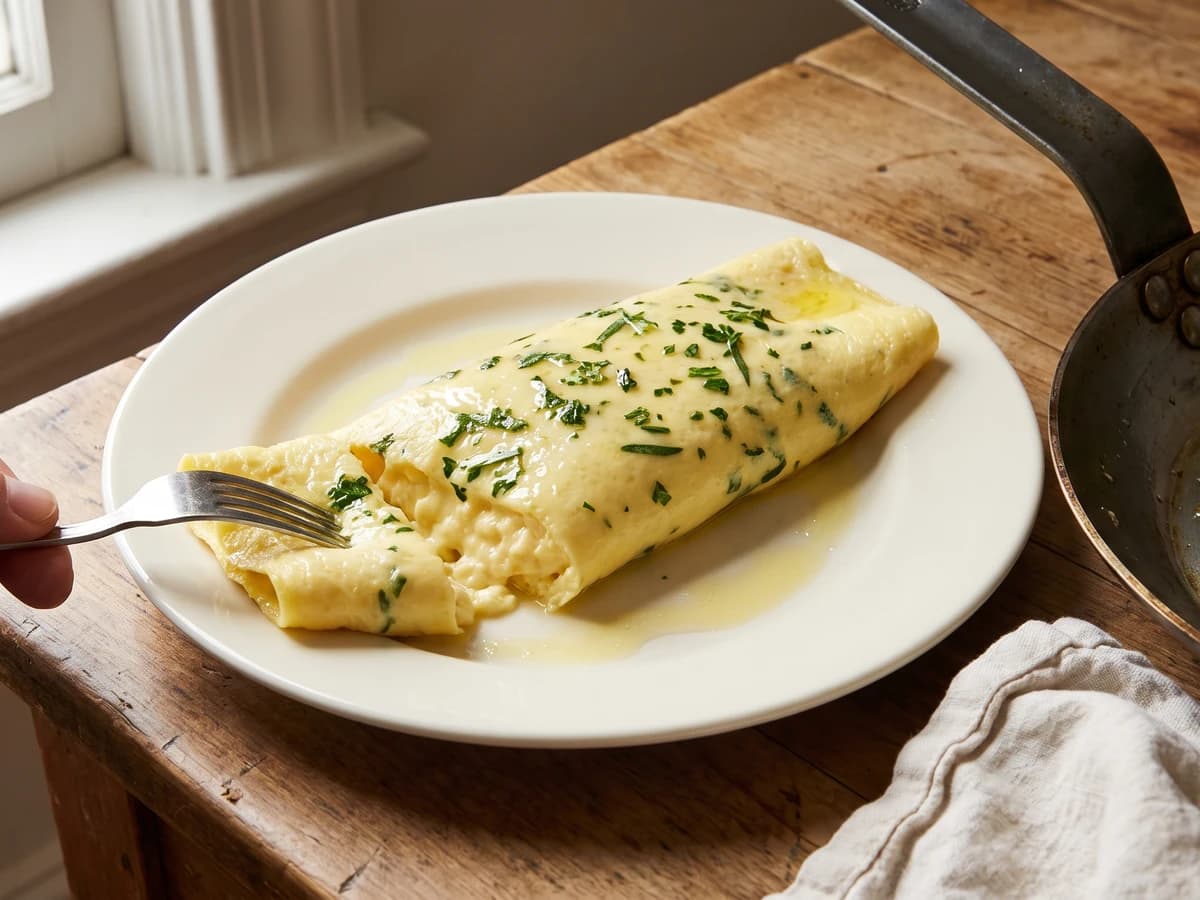
Four tender herbs, hot butter, and two eggs per pan: this rolled omelette teaches the quick hand and good judgment that keep the outside pale and the center creamy.
Chef Juliette
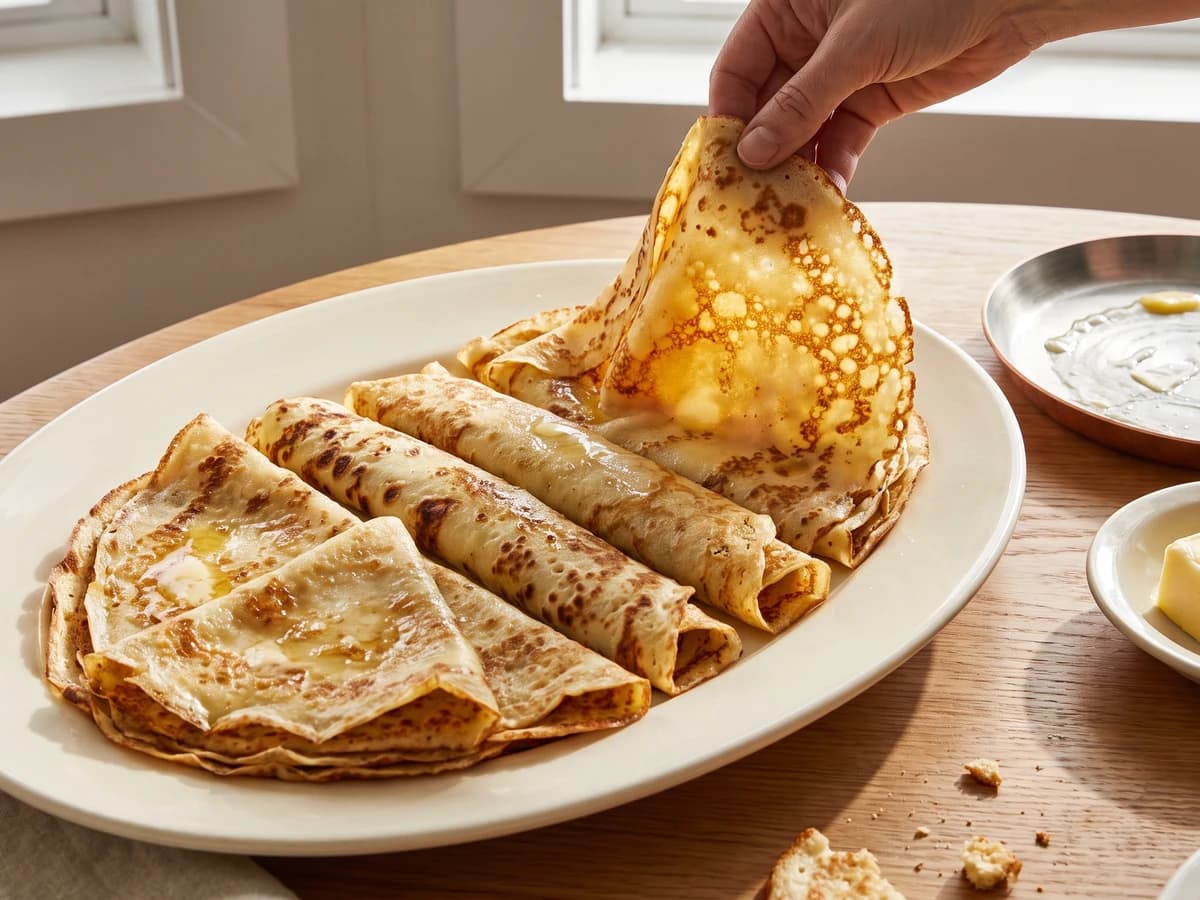
Four batters, one lesson: let the flour drink deeply before cooking, then spread the batter thinly in butter for crêpes and pannequets that bend without becoming tough.
Chef Juliette
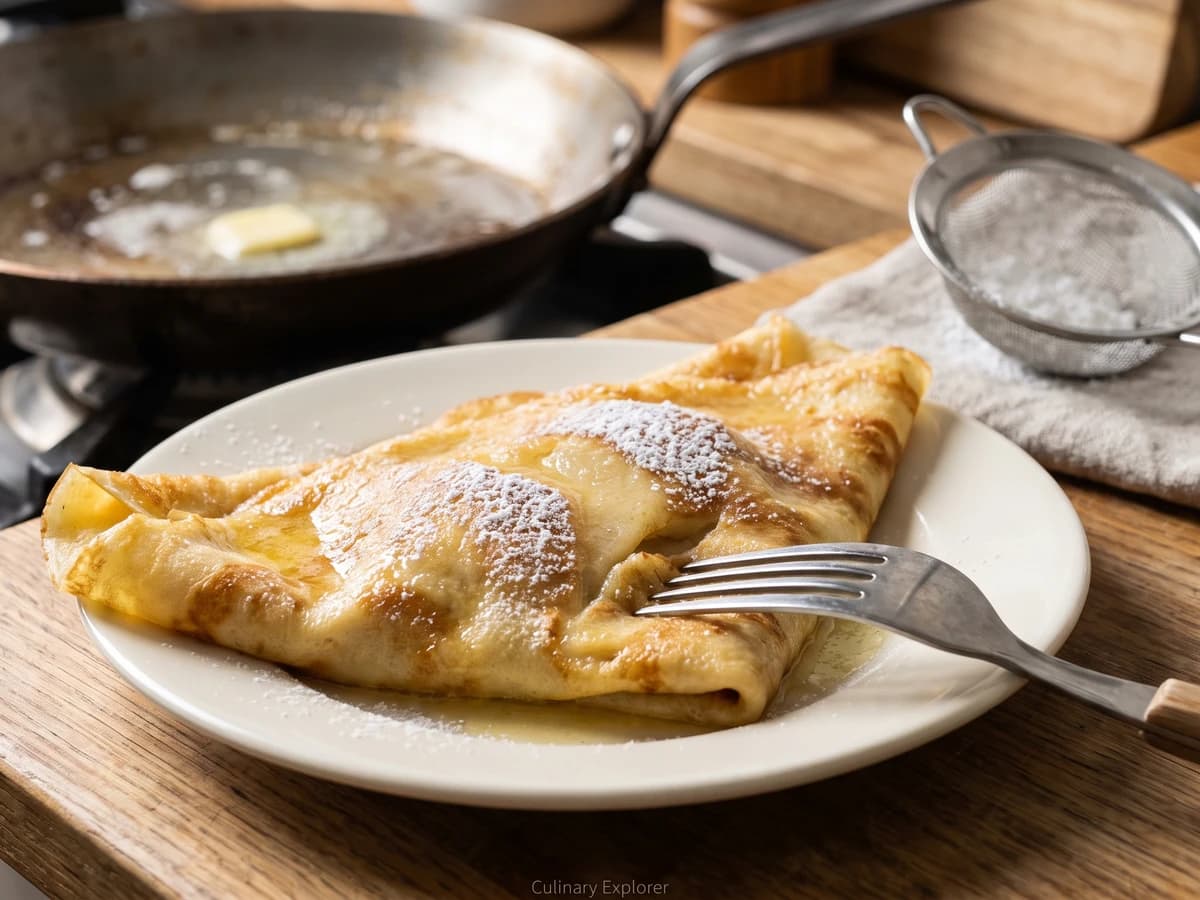
Crêpes au Couvent trap ripe Williams pear dice between two thin pours of sweet batter, then turn in one clean toss and reach the table butter-gold, powdered, and burning hot.