Chef Juliette
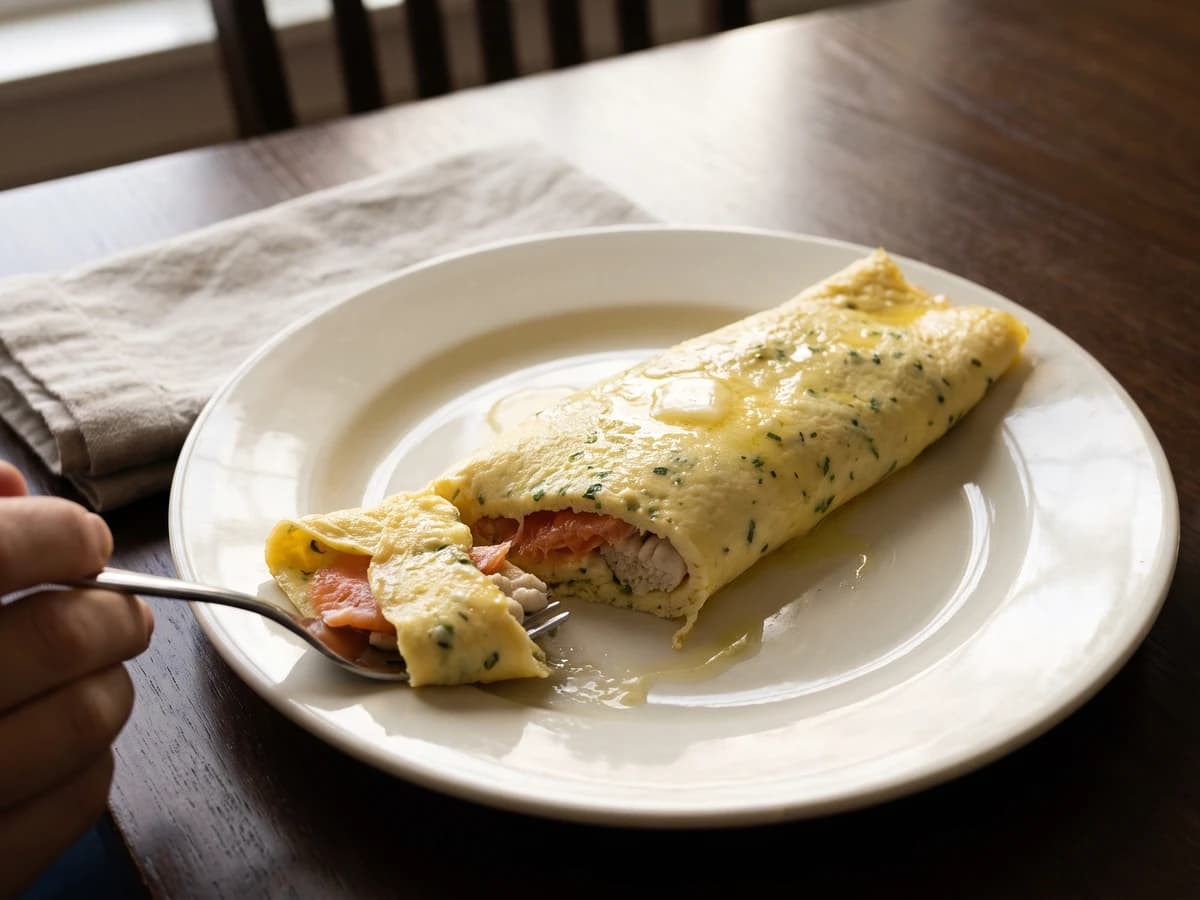
Omelette à l’Écossaise
A creamy omelette aux fines herbes closes around smoked-salmon-wrapped herring milts, gently poached in butter. Have the filling ready, then roll the eggs while they still shine.
A cooking platform built around craft, culture, and the stories behind what we eat.
Created by Chef Juliette
Based on No. 464, Scrambled Eggs, Chatillon, from Le Guide Culinaire (1907) by Auguste Escoffier
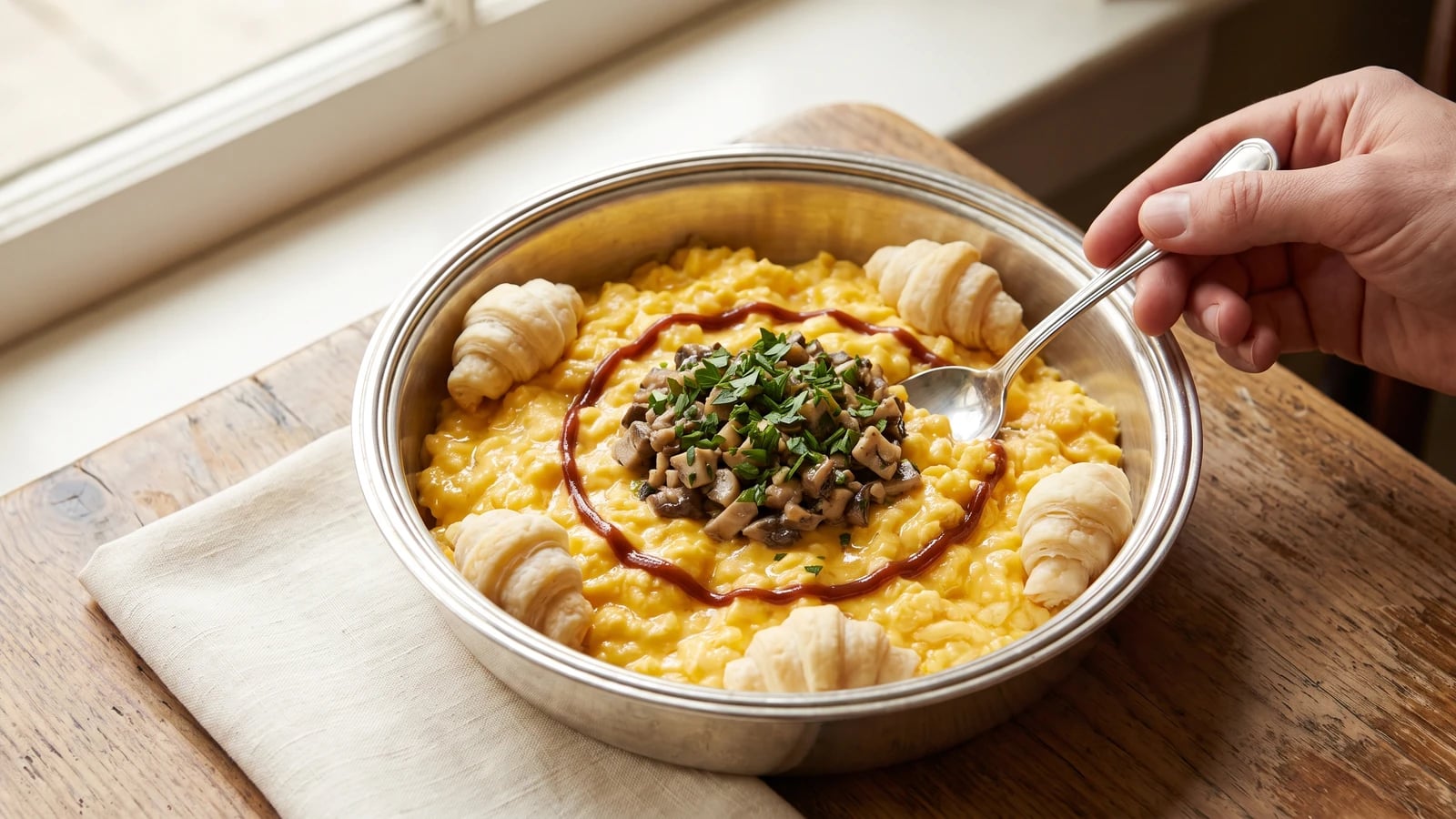
Soft œufs brouillés gathered in a warm timbale, centred with butter-sautéed mushrooms, circled by glossy meat glaze, and bordered with pale puff crescents: classical contrast made possible on one stove.
Œufs brouillés Châtillon (soft scrambled eggs with mushrooms, meat glaze, and puff-pastry crescents) teaches the one true rule of scrambled eggs: the pan must stop before the eggs do. Carry them to the timbale while they are still loose and glossy, because their own heat finishes the setting. Wait for firmness in the pan and you will serve curds, not œufs brouillés.
The brigade formula assumed a pâtissier's puff paste already rolled, a saucier on staff with glace de viande warm, and another pair of hands to arrange the garnish while the eggs stayed tender. For four at home, I use one sheet of all-butter puff pastry and a spoonful of prepared glace de viande, or veal demi-glace reduced to glazing strength. I have removed the pastry station and the perpetual stockpot because they are scaffolding. The low, patient scrambling, mushrooms minced raw and then sautéed in butter, and exact final arrangement are the dish and must stay. One cook, one stove, one evening.
Have the crescents baked, mushrooms warm, glaze fluid, and timbale heated before the eggs meet the pan. Timing decides Châtillon: when the spatula leaves a path that closes slowly, pull the pan, finish with cold cream and butter, and serve at once.
Œufs brouillés Châtillon belong to the codified Parisian repertoire of named egg dishes, in which a place-name often signals a fixed garnish rather than a claim of farmhouse origin. Châtillon here means the precise company arranged around the eggs: mushrooms minced raw and sautéed in butter, parsley, a thread of glace de viande, and pale puff crescents at the timbale's edge. The composition passed naturally from grand dining-room service to the bourgeois supper table because its luxury lies in timing and arrangement, not rare ingredients.
Quantity
1 sheet (about 8 ounces / 225 g)
thawed but cold
Quantity
2 cups finely minced (475 ml / 225 g)
minced raw
Quantity
6 tablespoons (90 ml / 85 g)
divided
Quantity
8
Quantity
1/4 cup (60 ml / 60 g)
cold and divided
Quantity
3/4 teaspoon (3.75 ml / 4 g)
divided
Quantity
1/8 teaspoon (0.6 ml / 0.3 g)
Quantity
1 tablespoon (15 ml / 4 g)
finely chopped
Quantity
1 tablespoon (15 ml / 18 g)
Quantity
Up to 1 tablespoon (15 ml / 15 g)
| Ingredient | Quantity |
|---|---|
| all-butter puff pastrythawed but cold | 1 sheet (about 8 ounces / 225 g) |
| white button mushroomsminced raw | 2 cups finely minced (475 ml / 225 g) |
| unsalted butterdivided | 6 tablespoons (90 ml / 85 g) |
| large eggs | 8 |
| heavy creamcold and divided | 1/4 cup (60 ml / 60 g) |
| fine sea saltdivided | 3/4 teaspoon (3.75 ml / 4 g) |
| ground white pepper | 1/8 teaspoon (0.6 ml / 0.3 g) |
| flat-leaf parsleyfinely chopped | 1 tablespoon (15 ml / 4 g) |
| prepared glace de viande (meat glaze) | 1 tablespoon (15 ml / 18 g) |
| water (optional) | Up to 1 tablespoon (15 ml / 15 g) |
Heat the oven to 400°F (200°C) and line a sheet pan with parchment. Keep the puff pastry cold as you unfold it. Cut rounds with a 2-inch (5 cm) cutter, then overlap the cutter on each round and cut again to make 16 to 20 small crescents. Arrange them on the pan and chill for 10 minutes. Bake for 12 to 15 minutes, until fully risen, dry at the sides, and only pale gold. Deep browning would overwhelm the delicate eggs, so take them out once the layers are crisp and set.
Melt 2 tablespoons of the butter in a broad skillet over medium-high heat until it foams. Add the mushrooms, minced while raw as the formula requires, with a pinch of the salt. Sauté, cooking briskly in the butter while stirring often, until their released liquid has evaporated and the mince is tender with a faint golden edge, 6 to 8 minutes. If the pan floods, raise the heat and keep stirring rather than draining it; the mushroom liquor will cook back into the garnish. Cover and hold warm.
Fill a shallow 1½-quart timbale or round heatproof serving bowl with hot water and leave it to warm. Put the glace de viande in a very small saucepan over low heat. Warm it until fluid enough to fall from a spoon in a fine thread. If it remains too stiff, loosen it drop by drop with water; if it runs like broth, simmer briefly until it draws a glossy line. Set the parsley and baked crescents beside the stove, then empty and dry the timbale.
Crack the eggs into a bowl, add the remaining salt and the white pepper, and whisk only until the whites and yolks are united, not frothy. Melt 3 tablespoons of the butter in a heavy 2-quart saucepan over low heat. Add the eggs and stir continuously with a flexible spatula, sweeping the base, sides, and corners so nothing sets unseen. Lift the pan from the heat whenever the curds form faster than you can stir. This patient heat is the dish. If firm grains suddenly appear at the edge, pull the pan away and beat in 1 tablespoon of the cold cream at once. Ça se rattrape.
Continue stirring until the eggs resemble a loose, glossy custard with very small curds, 6 to 10 minutes in all. They are ready when the spatula leaves a path across the pan and that path closes slowly. Remove the pan before the eggs look finished, then fold in the remaining 1 tablespoon butter and the remaining cold cream. The butter and cream arrest the cooking and give the œufs brouillés their soft finish. Taste for salt and move directly to the timbale.
Spoon the œufs brouillés into the warm timbale and make a shallow hollow in the centre. Mound the warm sautéed mushrooms in that hollow and sprinkle only the mushrooms with parsley. Draw a fine, unbroken thread of melted glace de viande around the garnish without flooding the eggs. Set the pale puff crescents in a close border beside the inner wall of the timbale and serve immediately. À table!
1 serving (about 200g)
Culinary guides, cultural storytelling, and the editorial depth that makes cooking meaningful.
Discover Culinary ExplorerChef Juliette
A creamy omelette aux fines herbes closes around smoked-salmon-wrapped herring milts, gently poached in butter. Have the filling ready, then roll the eggs while they still shine.
Chef Juliette
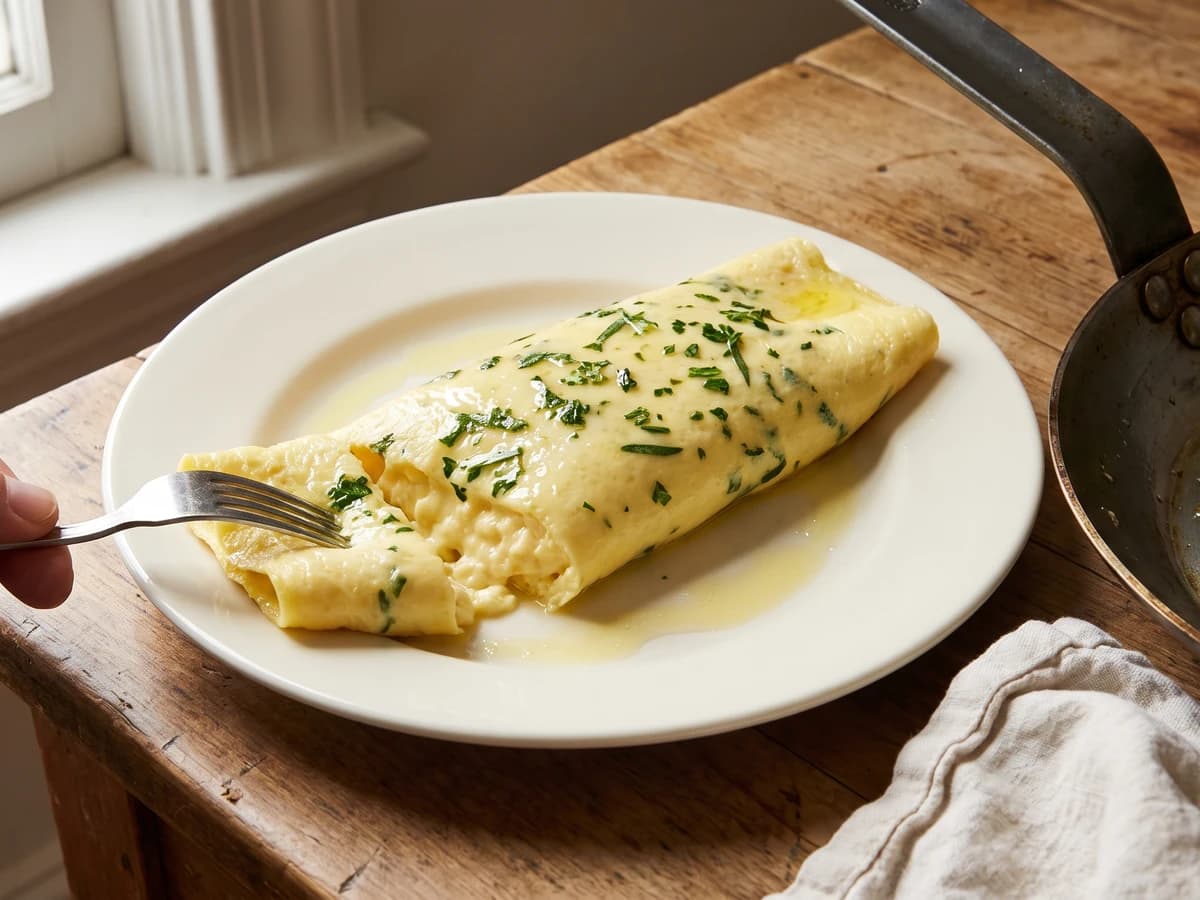
Four tender herbs, hot butter, and two eggs per pan: this rolled omelette teaches the quick hand and good judgment that keep the outside pale and the center creamy.
Chef Juliette
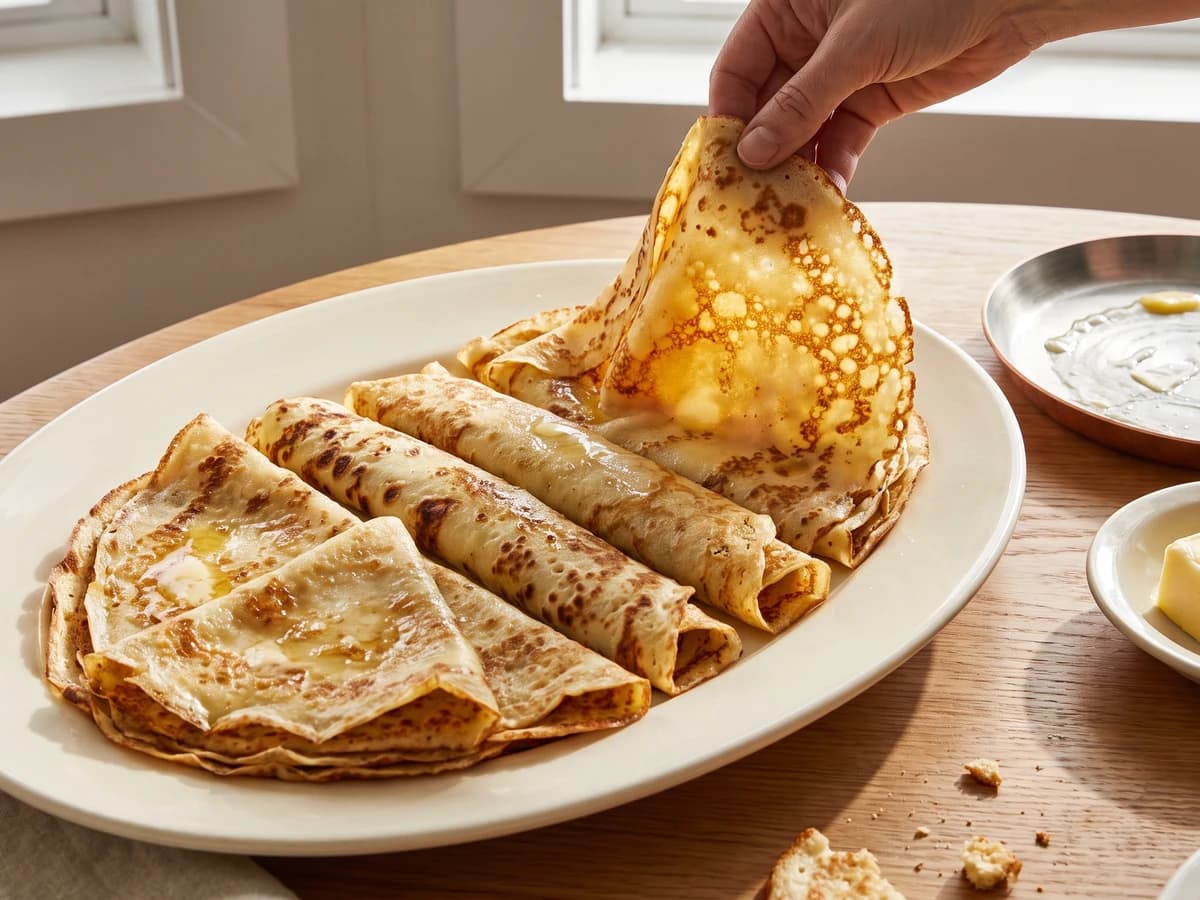
Four batters, one lesson: let the flour drink deeply before cooking, then spread the batter thinly in butter for crêpes and pannequets that bend without becoming tough.
Chef Juliette
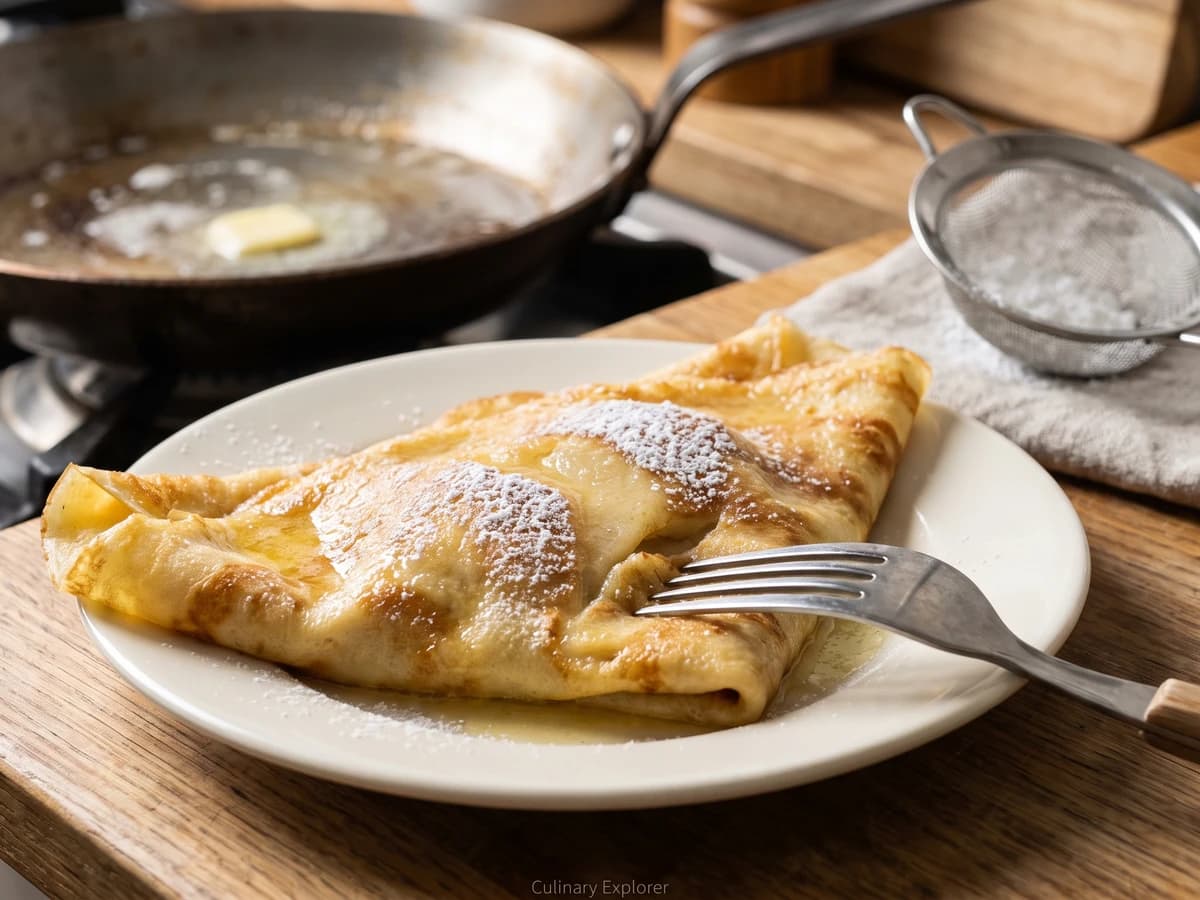
Crêpes au Couvent trap ripe Williams pear dice between two thin pours of sweet batter, then turn in one clean toss and reach the table butter-gold, powdered, and burning hot.