Chef Juliette
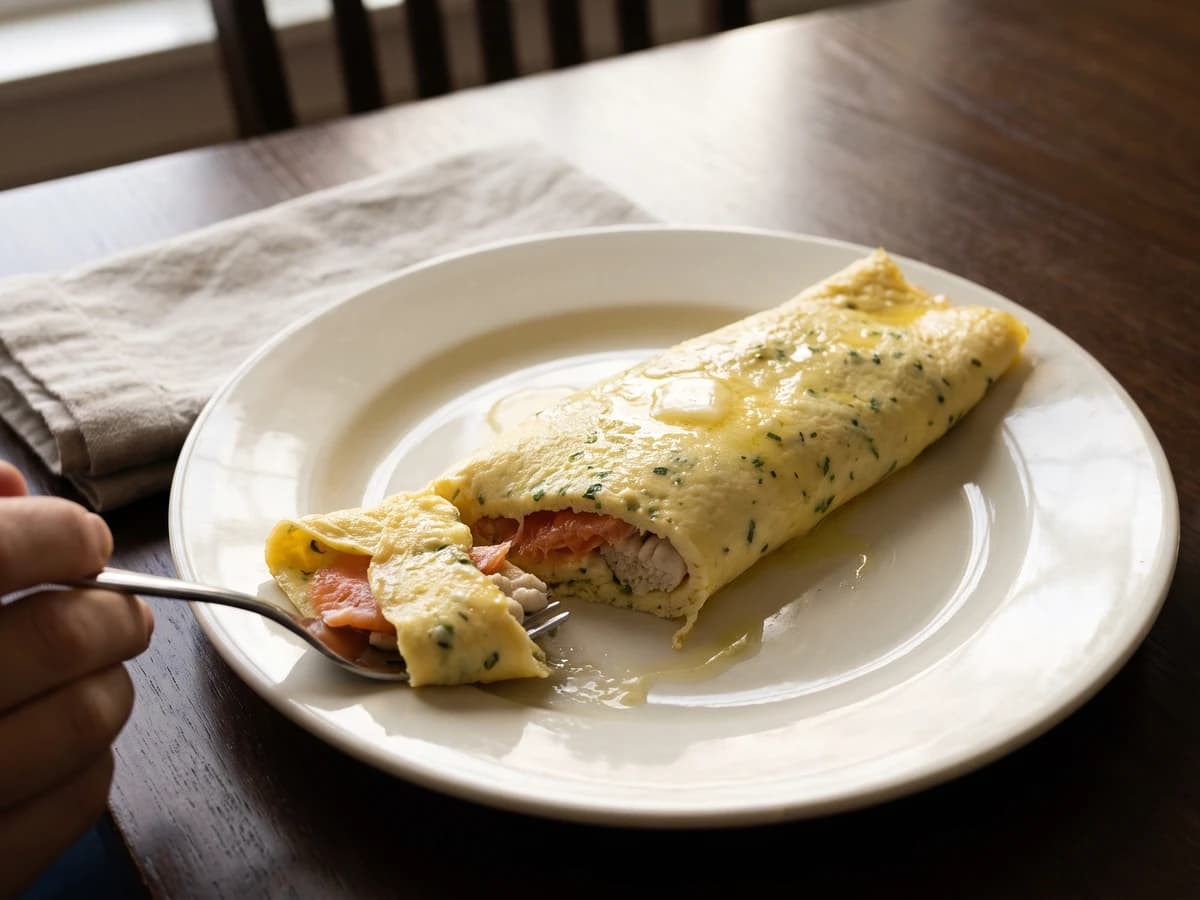
Omelette à l’Écossaise
A creamy omelette aux fines herbes closes around smoked-salmon-wrapped herring milts, gently poached in butter. Have the filling ready, then roll the eggs while they still shine.
A cooking platform built around craft, culture, and the stories behind what we eat.
Created by Chef Juliette
Based on No. 461, Scrambled Eggs à la Bohémienne, from Le Guide Culinaire (1907) by Auguste Escoffier
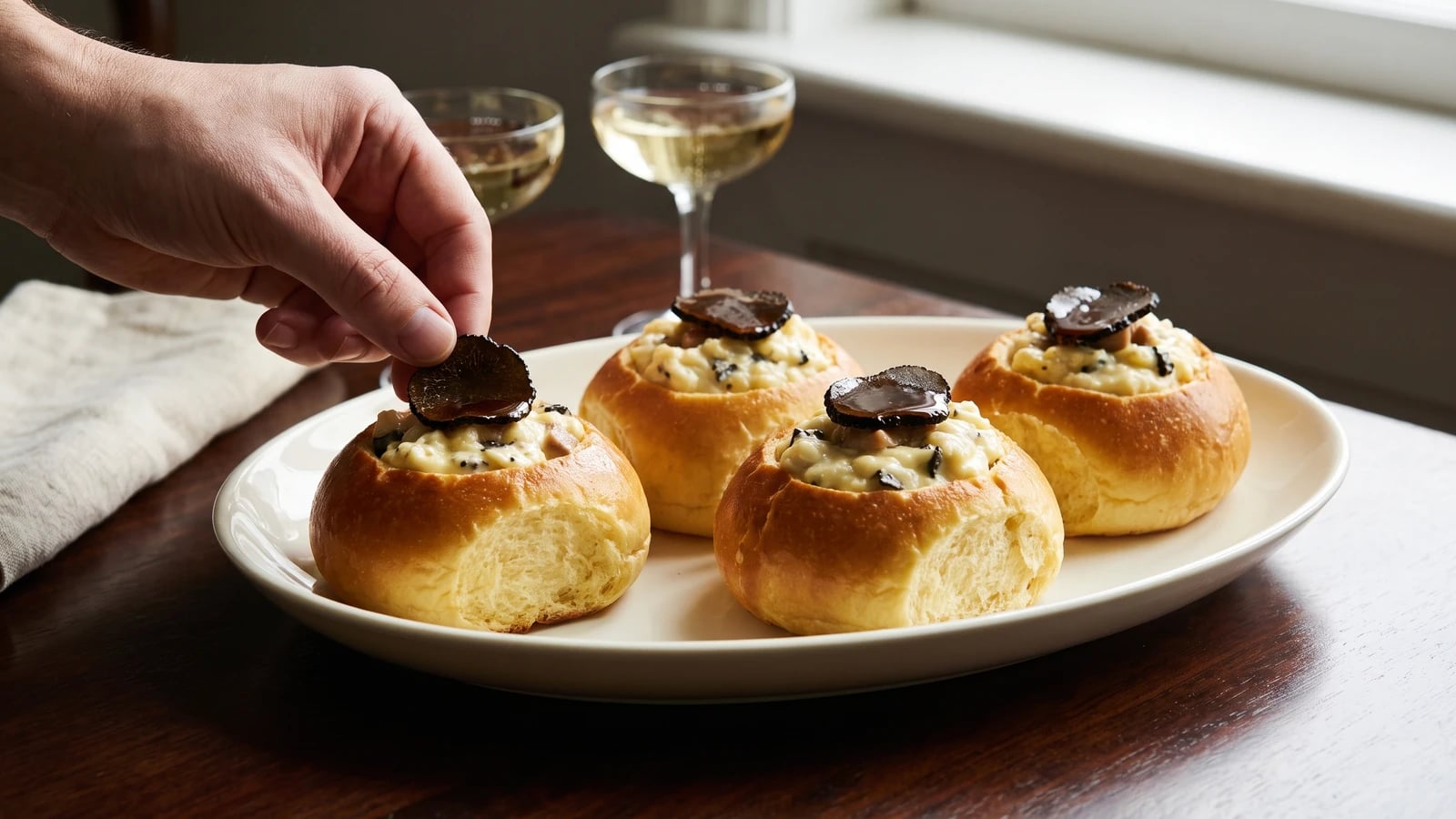
Soft Œufs Brouillés tucked into warm cottage brioches with foie gras and black truffle, then crowned with a slice glossed in glace de viande: grand-kitchen luxury made calm enough for one stove.
Œufs Brouillés à la Bohémienne (soft-scrambled eggs with foie gras and truffle in brioche) teaches one true thing: eggs must leave the heat before they look finished. Their curds should remain small, loose, and glossy, because the saucepan, the foie gras, and the warm brioche will carry them the final distance.
The brigade entry assumed a saucier free to stir, a stockpot never off the fire for glace de viande (meat glaze), a pastry station supplying cottage brioches, and a salamander waiting to warm them. At home, a heavy saucepan, good prepared veal demi-glace reduced to a glaze, bakery brioches, and a moderate oven do the work. The standing stockpot, pastry station, and salamander are brigade scaffolding and can go. Two eggs per brioche, one-half ounce of foie gras and one-quarter ounce of diced truffle for every two eggs, the gentle scramble, and the glazed truffle crown are the dish and stay. One cook, one stove, one evening.
Have every case warm and every enrichment measured before the eggs meet the pan. The decisive step is pulling the Œufs Brouillés while they still relax from the spoon rather than sitting in a firm mound. If they begin setting too quickly, lift the pan and cool them at once. Ça se rattrape.
Œufs Brouillés à la Bohémienne belongs to the grand Parisian dining-room repertoire, where softly scrambled eggs were served as a savory entrée and individual brioches provided both case and bread. Its title names the prescribed classical treatment of foie gras, diced truffle, and a truffle slice coated with meat glaze, not a regional breakfast from Bohemia. It is also distinct from the aubergine preparation called bohémienne in Provence, a separate dish from a separate larder.
Quantity
4 small brioches, about 10 ounces / 280 grams total
Quantity
8
Quantity
¼ cup (60 ml / 56 g)
cut into small dice
Quantity
3 tablespoons (45 ml / 28 g)
finely diced
Quantity
4 thin slices, about ⅓ ounce / 8 grams total
reserved for the crowns
Quantity
3 tablespoons (45 ml / 43 g)
divided
Quantity
2 tablespoons (30 ml / 30 g)
Quantity
3 tablespoons (45 ml / 45 g)
reduced to glace de viande
Quantity
½ teaspoon (2.5 ml / 3 g)
Quantity
⅛ teaspoon (0.6 ml / 0.3 g)
| Ingredient | Quantity |
|---|---|
| individual brioches à tête (cottage brioches) | 4 small brioches, about 10 ounces / 280 grams total |
| large eggs | 8 |
| cooked foie gras terrinecut into small dice | ¼ cup (60 ml / 56 g) |
| black trufflefinely diced | 3 tablespoons (45 ml / 28 g) |
| black trufflereserved for the crowns | 4 thin slices, about ⅓ ounce / 8 grams total |
| cold unsalted butterdivided | 3 tablespoons (45 ml / 43 g) |
| cold heavy cream | 2 tablespoons (30 ml / 30 g) |
| prepared unsalted veal demi-glacereduced to glace de viande | 3 tablespoons (45 ml / 45 g) |
| fine sea salt | ½ teaspoon (2.5 ml / 3 g) |
| finely ground white pepper | ⅛ teaspoon (0.6 ml / 0.3 g) |
Put the prepared veal demi-glace in a small saucepan and simmer it gently until it reduces from 3 tablespoons to about 1 tablespoon, thick enough to coat a truffle slice with a dark, glossy film. This is your glace de viande, the honest home equivalent of the concentrated meat glaze once kept ready beside the stockpot. Hold it over the lowest heat. If it turns tacky or begins setting into threads, whisk in warm water ½ teaspoon at a time until it flows from the brush again.
Heat the oven to 325°F (165°C). Slice the topknot from each brioche with a small serrated knife, then remove the crumb with a teaspoon, leaving an intact base and walls about ⅜ inch (1 cm) thick. Set the hollow cases and their caps on a baking sheet and warm them for 6 to 8 minutes, just until the interiors feel dry and the butter-rich crust smells fresh. Keep them warm with the oven switched off. The cases should remain tender, not turn into toast.
Keep the diced foie gras cool but not ice-cold. Put the diced truffle beside it and lay the four whole slices near the warm glace de viande. Crack the eggs into a bowl, add the salt and white pepper, and whisk only until the whites and yolks are evenly joined. Don't beat in air. Measure the cream and divide the butter into 2 tablespoons for cooking and 1 tablespoon for finishing. Once the eggs begin, there is no useful pause.
Melt 2 tablespoons of the butter in a heavy 2-quart saucepan over the lowest heat. Add the eggs and stir continuously with a flexible spatula, sweeping the floor, sides, and corners so no layer sets unattended. Lift the pan from the burner whenever the curds form faster than you can stir. After 7 to 10 minutes, the eggs should form tiny, tender curds suspended in a glossy cream, mounding briefly on the spatula before relaxing. If dry curds begin gathering at the edge, take the pan completely off the heat, set its base on a cool damp towel, and stir in 1 tablespoon of the measured cold cream. Ça se rattrape: keep stirring until the texture relaxes, then return the pan to the heat only in five-second intervals. When the eggs are still looser than you intend to serve them, remove them from the heat and stir in the remaining cold butter and cream. Fold in the diced foie gras and the full 3 tablespoons of diced truffle. The residual heat should soften the foie gras around the curds without melting it away.
Set the warm brioche cases on their serving platter and divide the Œufs Brouillés among them immediately, allowing the filling to sit generously above each rim. Brush each whole truffle slice on both sides with the warm glace de viande and place one flat upon each filled brioche. Set the warmed brioche caps alongside rather than covering the truffle crown. Serve at once, while the eggs still move softly beneath the spoon. À table!
1 serving (about 210g)
Culinary guides, cultural storytelling, and the editorial depth that makes cooking meaningful.
Discover Culinary ExplorerChef Juliette
A creamy omelette aux fines herbes closes around smoked-salmon-wrapped herring milts, gently poached in butter. Have the filling ready, then roll the eggs while they still shine.
Chef Juliette
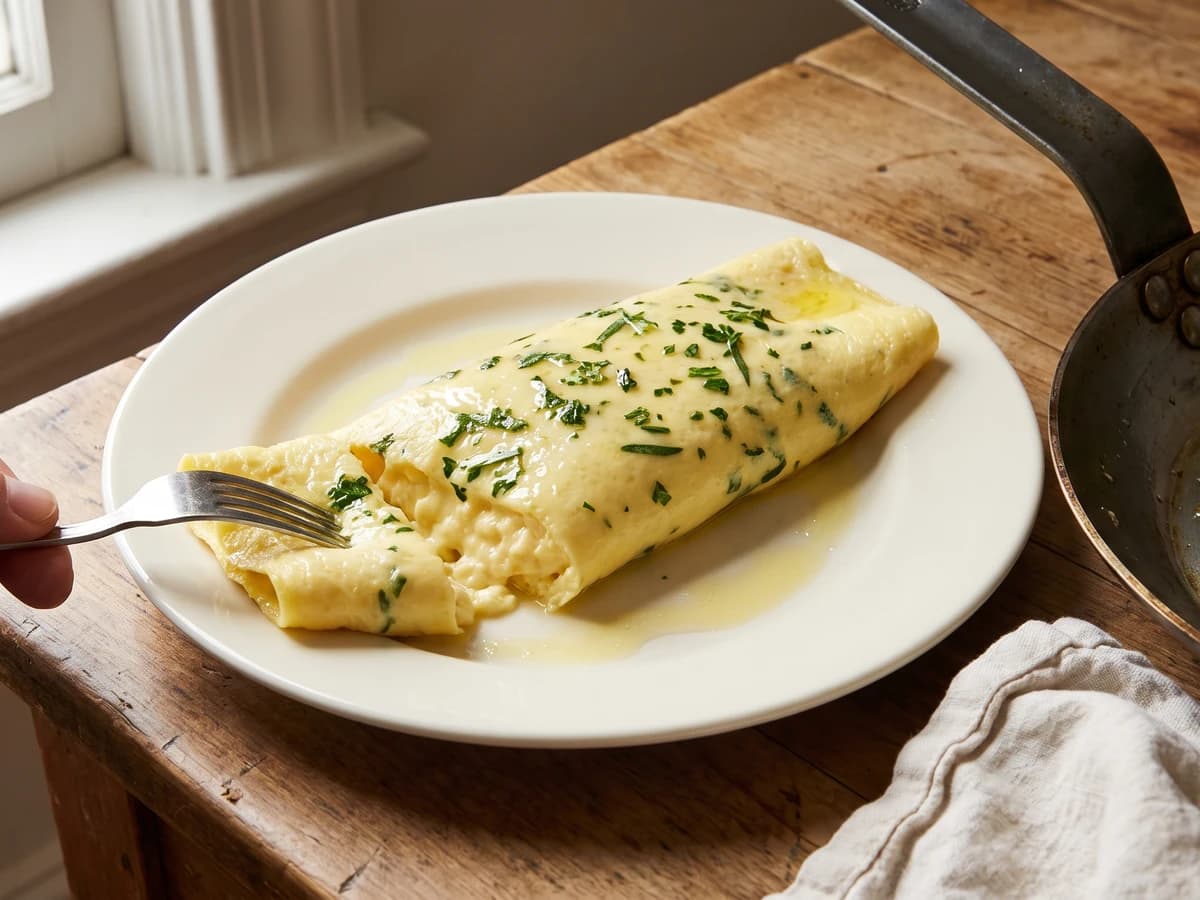
Four tender herbs, hot butter, and two eggs per pan: this rolled omelette teaches the quick hand and good judgment that keep the outside pale and the center creamy.
Chef Juliette
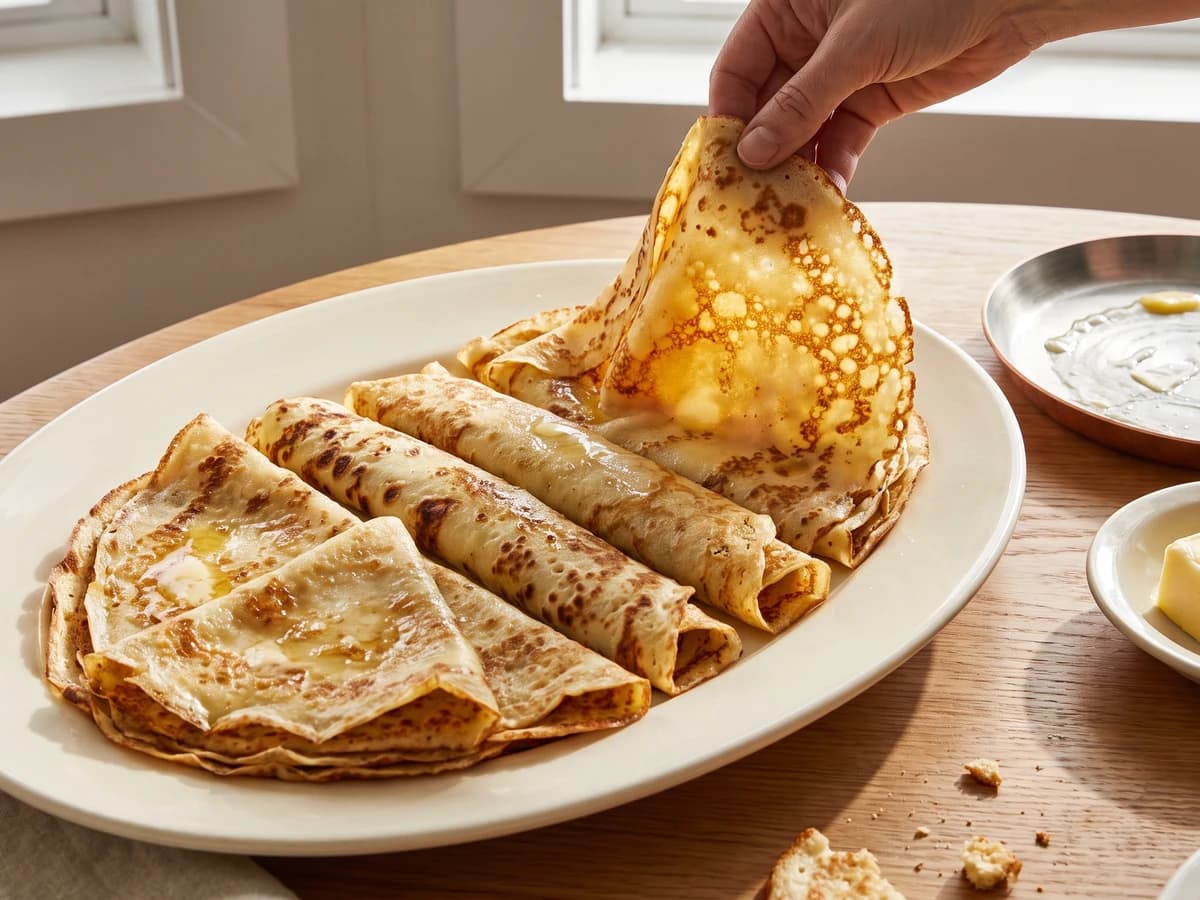
Four batters, one lesson: let the flour drink deeply before cooking, then spread the batter thinly in butter for crêpes and pannequets that bend without becoming tough.
Chef Juliette
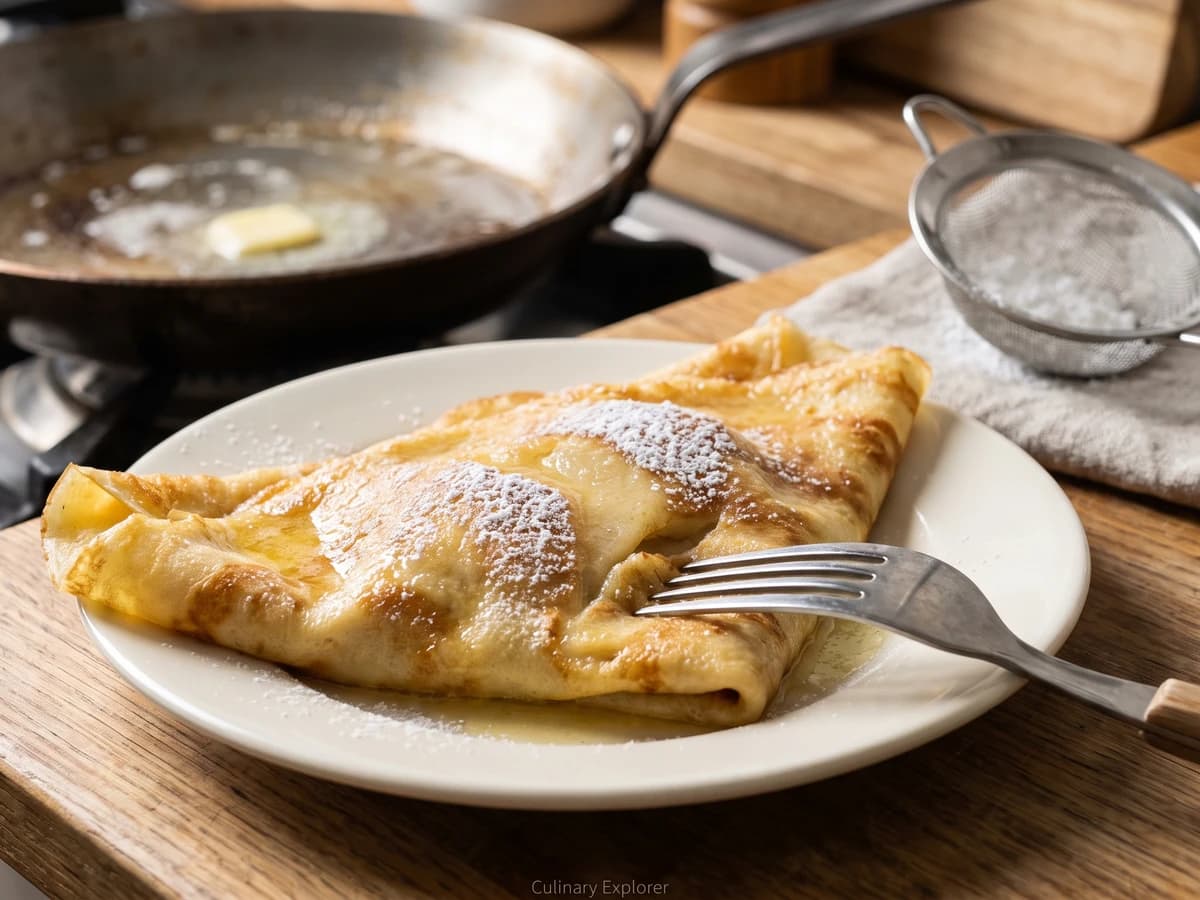
Crêpes au Couvent trap ripe Williams pear dice between two thin pours of sweet batter, then turn in one clean toss and reach the table butter-gold, powdered, and burning hot.