Chef Juliette
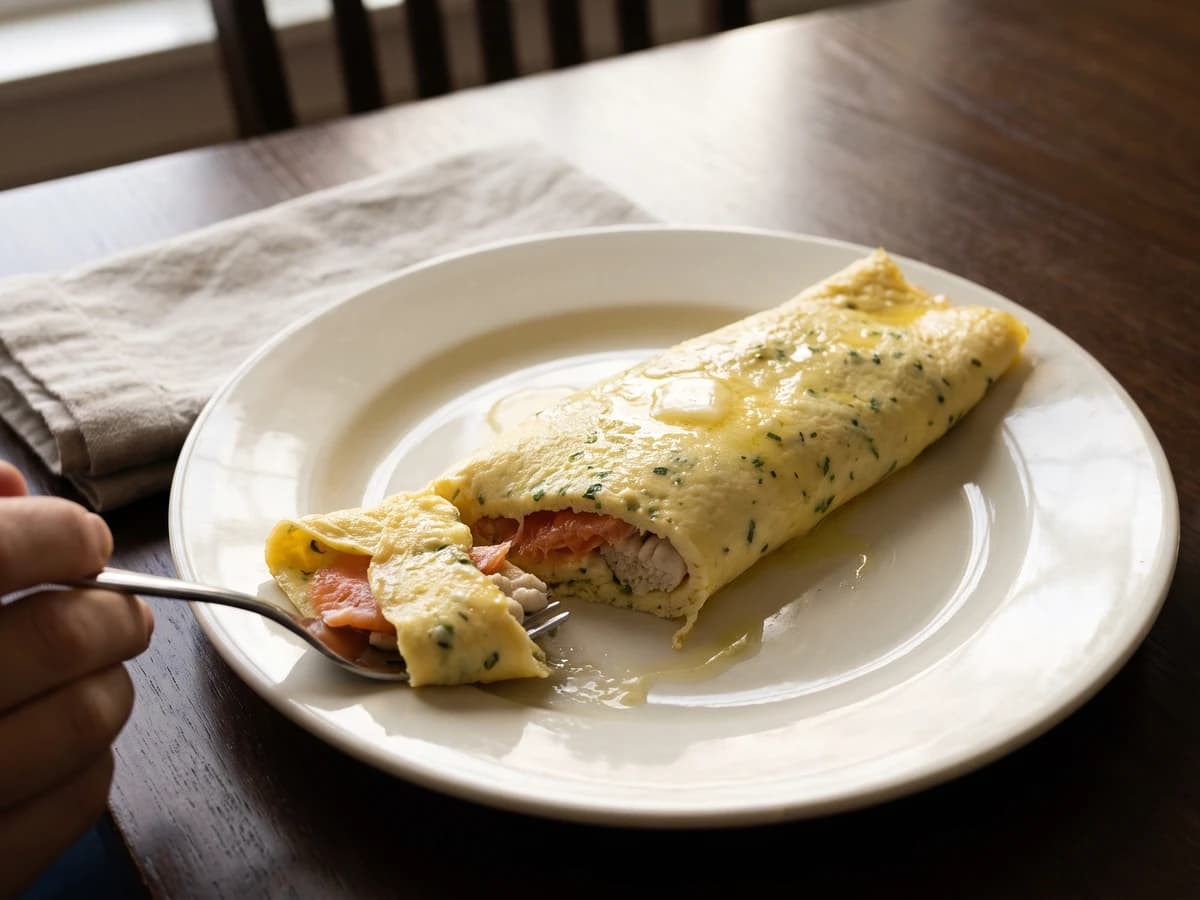
Omelette à l’Écossaise
A creamy omelette aux fines herbes closes around smoked-salmon-wrapped herring milts, gently poached in butter. Have the filling ready, then roll the eggs while they still shine.
A cooking platform built around craft, culture, and the stories behind what we eat.
Created by Chef Juliette
Based on No. 460, Method of Scrambling Eggs, from Le Guide Culinaire (1907) by Auguste Escoffier
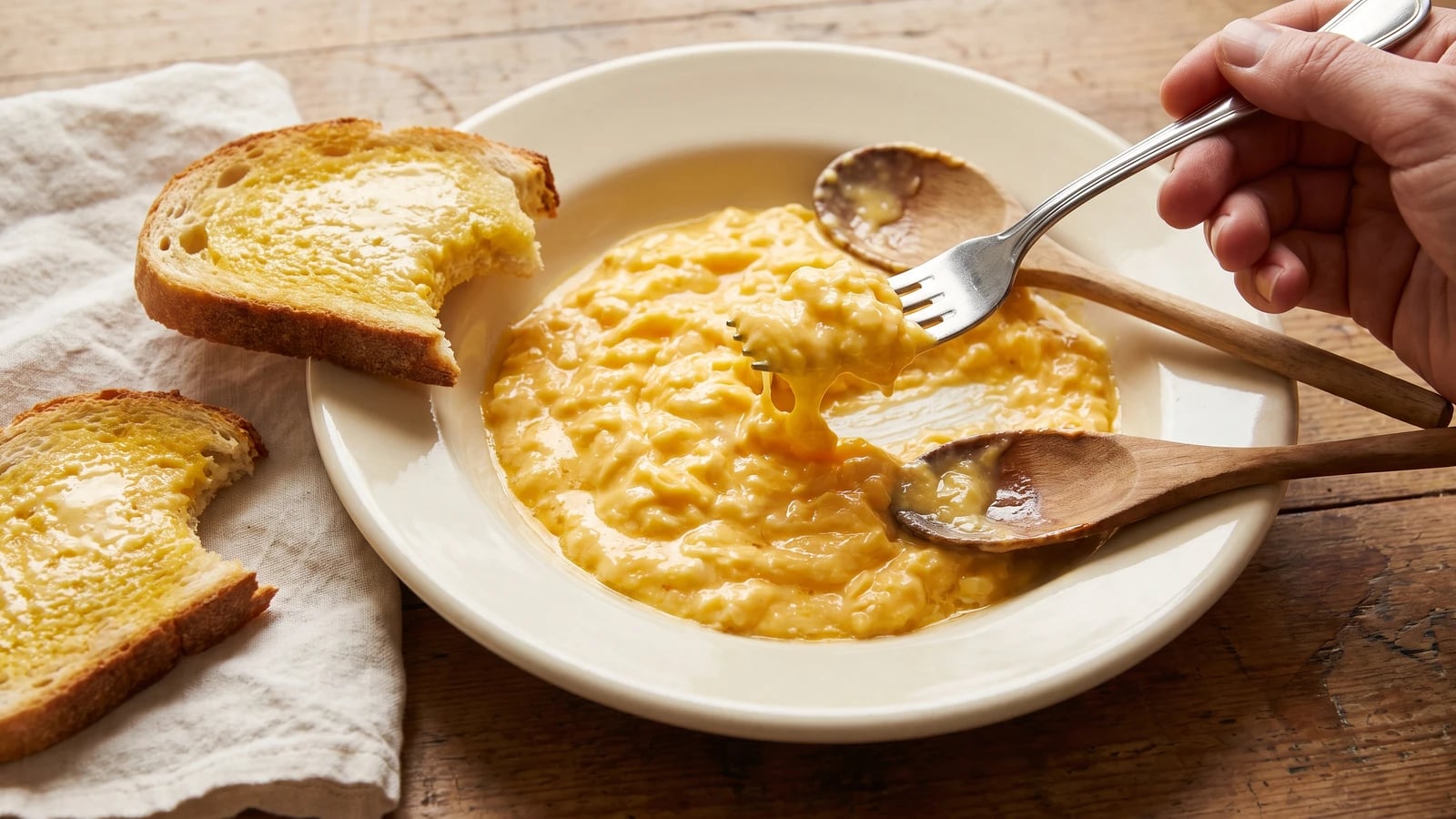
Œufs brouillés teach the discipline of gentle heat: stir without pause, stop while they still flow, then let cold butter and cream turn four eggs into a glossy supper for two.
Œufs brouillés teach one true thing: eggs obey gentle heat. Let the fire grow fierce and their proteins seize into lumps; keep it moderate, stir without pause, and they thicken into a smooth, custard-like mass that still flows from the spoon.
The original entry assumed a thick-bottomed sauté pan and a cook free to attend six eggs from first stir to final spoonful. Here the batch is reduced to four eggs for two people, with every butter and cream proportion preserved. A small heavy pan softens the pulses of a home burner and responds quickly when lifted from the heat. One cook, one stove, one evening.
The catalog of garnishes that follows the master method is brigade scaffolding, so it stays outside this plain preparation. Moderate heat, constant stirring, and the off-fire finish of cold butter and cream are the dish itself, and they must stay. Keep the spoon moving, especially along the pan floor and corners; that is the step that decides everything.
Œufs brouillés belong to the French classical table as a master egg preparation, found in Parisian cafés and bourgeois home kitchens rather than claimed by one province. Grand kitchens taught the plain method first and gave each garnish its own named variation, which is why the base remains deliberately spare. The defining practice is to add butter and cream after the pan leaves the fire, not at the beginning, preserving the eggs' smooth texture while arresting their cooking.
Quantity
4
beaten moderately immediately before cooking
Quantity
1 tablespoon plus 1 teaspoon (20 ml / 19 g)
for the pan
Quantity
2 tablespoons (30 ml / 28 g)
cut into 4 small pieces for finishing
Quantity
2 tablespoons (30 ml / 30 g)
Quantity
1 large pinch (about 1/8 teaspoon / 0.6 ml / 0.8 g)
Quantity
1 small pinch (about 1/16 teaspoon / 0.3 ml / 0.1 g)
| Ingredient | Quantity |
|---|---|
| large eggsbeaten moderately immediately before cooking | 4 |
| unsalted butterfor the pan | 1 tablespoon plus 1 teaspoon (20 ml / 19 g) |
| cold unsalted buttercut into 4 small pieces for finishing | 2 tablespoons (30 ml / 28 g) |
| cold heavy cream | 2 tablespoons (30 ml / 30 g) |
| fine salt | 1 large pinch (about 1/8 teaspoon / 0.6 ml / 0.8 g) |
| freshly ground pepper | 1 small pinch (about 1/16 teaspoon / 0.3 ml / 0.1 g) |
Cut the finishing butter into four small pieces and keep it cold beside the measured cream. Place the wooden spoon and serving plates within reach. Once the eggs begin thickening, the method allows no useful pause.
Put the butter for the pan into a 20 cm heavy-bottomed sauté pan or small saucepan over medium-low heat. Warm it only until melted and slightly heated, with no browning and no angry sputter. If it begins coloring, lift the pan off the burner and let it settle before continuing.
Take the pan briefly off the heat. Beat the eggs moderately with the salt and pepper, using a fork for just ten to fifteen strokes, until yolks and whites are combined but not frothy. Pour them immediately into the warm butter, scraping the bowl clean. Beating at the last moment preserves the method's close, creamy texture.
Return the pan to medium-low heat and stir constantly with the wooden spoon, sweeping across the floor, around the curve, and into every corner. At first the eggs will remain fluid; then the spoon will leave a path that closes slowly as the mixture thickens. Lift the pan off the burner whenever the edges set faster than the center. If a firm skin or small lumps appear, remove the pan immediately and beat in one piece of the measured cold butter with 1 teaspoon of the measured cream, stirring until the seized egg breaks back into the creamy mass. Ça se rattrape when caught early; once the whole pan is dry, no finish can make it smooth again.
When the eggs form a smooth, creamy mass that mounds softly but still flows, remove the pan from the heat. Stir in the remaining cold butter one piece at a time, letting each disappear before adding the next, then fold in the remaining cream. The eggs should look glossy and slightly looser than you intend to serve them. If they remain plainly liquid, return the pan to the lowest heat for five to ten seconds while stirring, then remove it again at once.
Spoon the œufs brouillés onto warm plates immediately, dividing every glossy bit between them. They continue setting in the pan and on the plate, so the final minute belongs to serving, not tidying. The plain master method needs no garnish. À table!
1 serving (about 135g)
Culinary guides, cultural storytelling, and the editorial depth that makes cooking meaningful.
Discover Culinary ExplorerChef Juliette
A creamy omelette aux fines herbes closes around smoked-salmon-wrapped herring milts, gently poached in butter. Have the filling ready, then roll the eggs while they still shine.
Chef Juliette
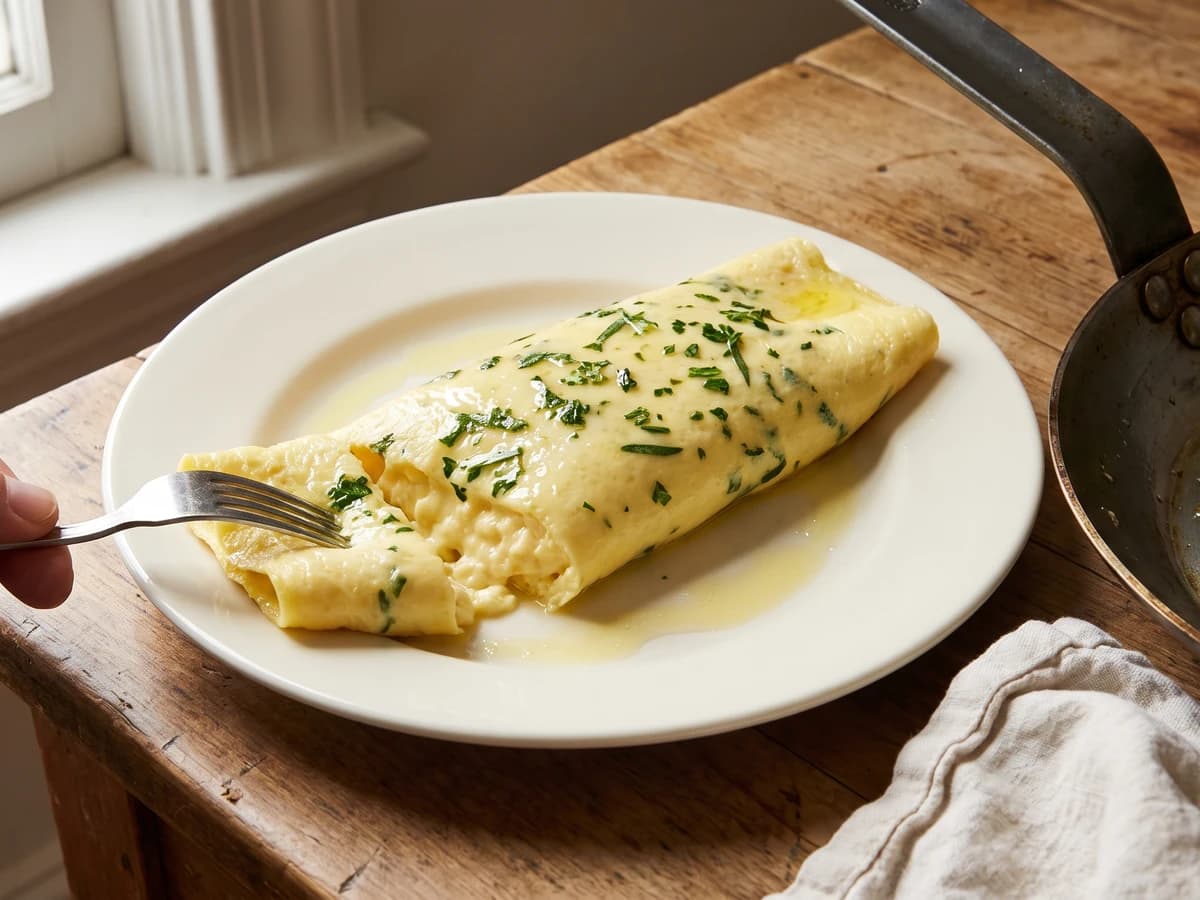
Four tender herbs, hot butter, and two eggs per pan: this rolled omelette teaches the quick hand and good judgment that keep the outside pale and the center creamy.
Chef Juliette
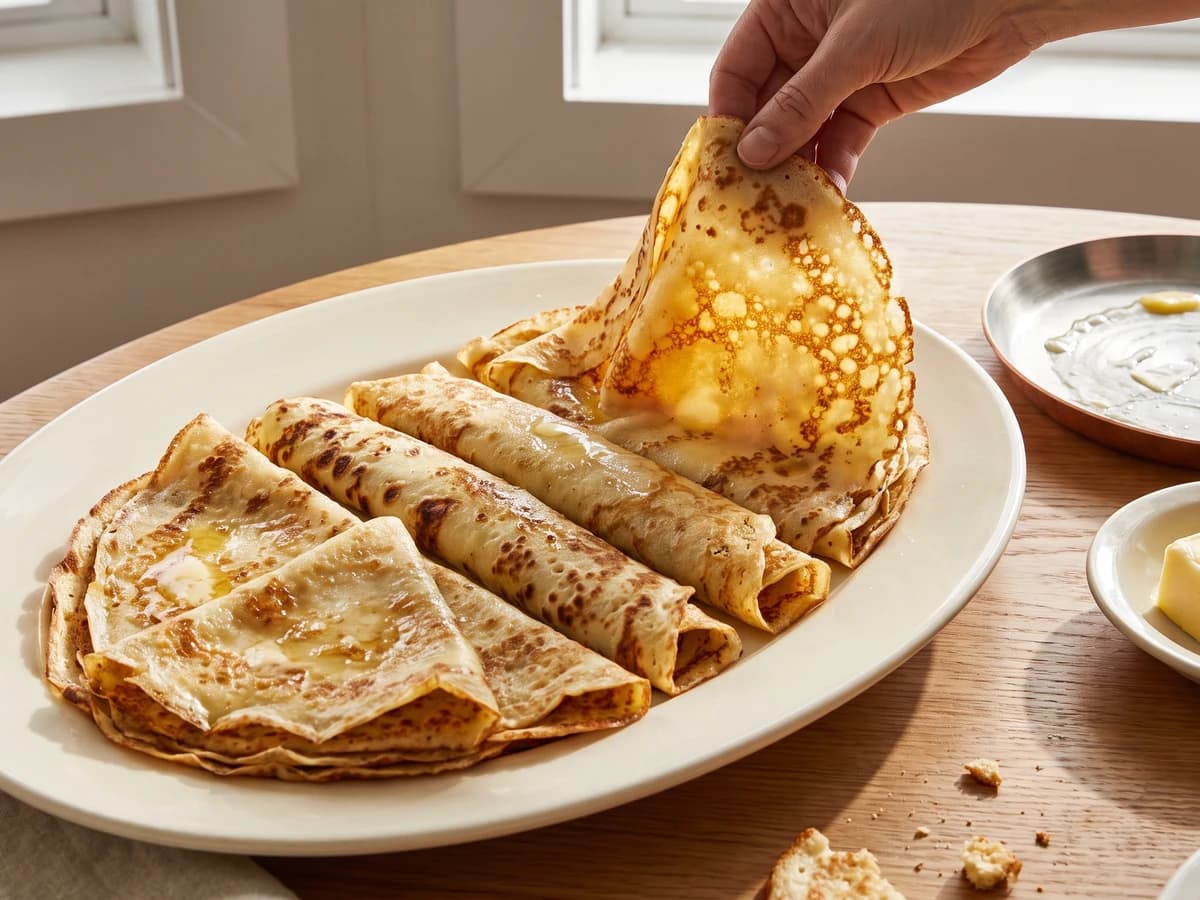
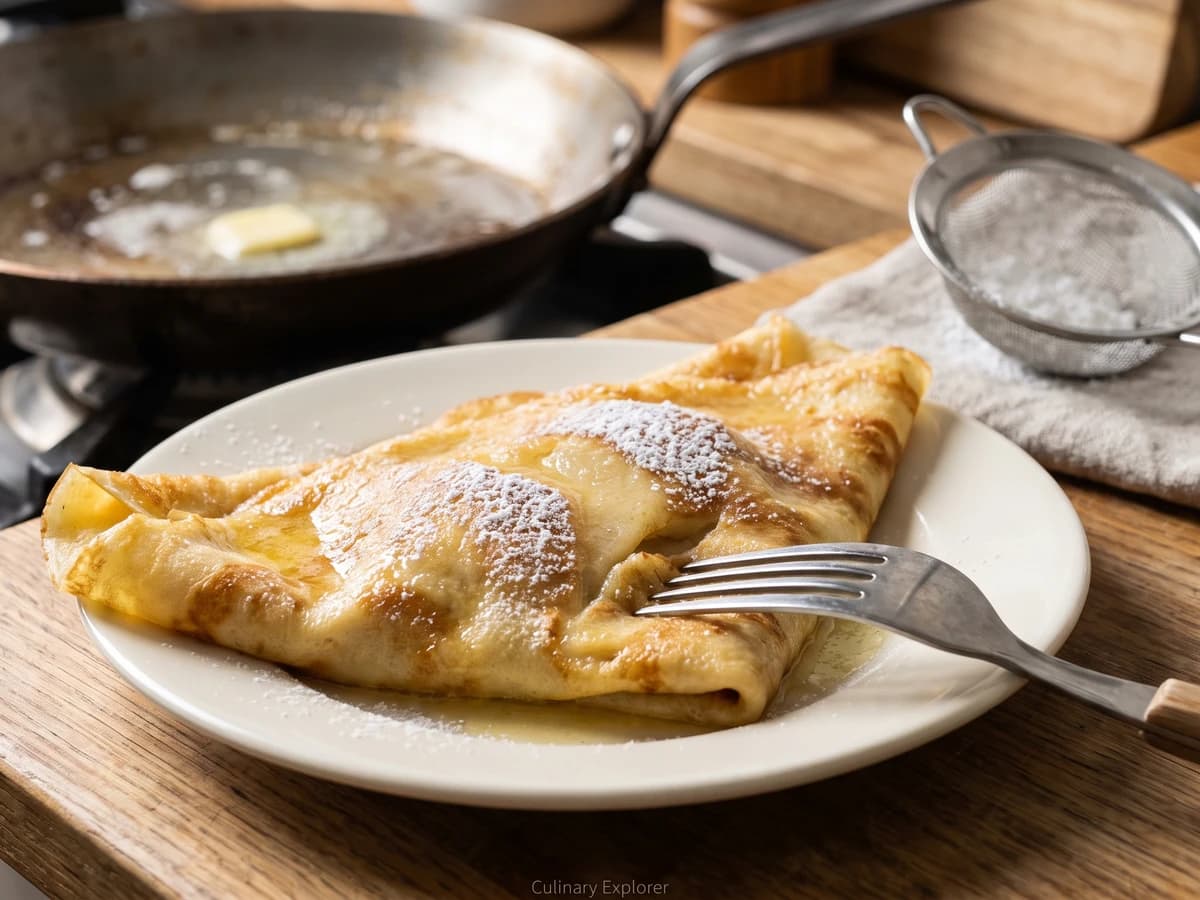
Four batters, one lesson: let the flour drink deeply before cooking, then spread the batter thinly in butter for crêpes and pannequets that bend without becoming tough.
Chef Juliette
Crêpes au Couvent trap ripe Williams pear dice between two thin pours of sweet batter, then turn in one clean toss and reach the table butter-gold, powdered, and burning hot.