Chef Juliette
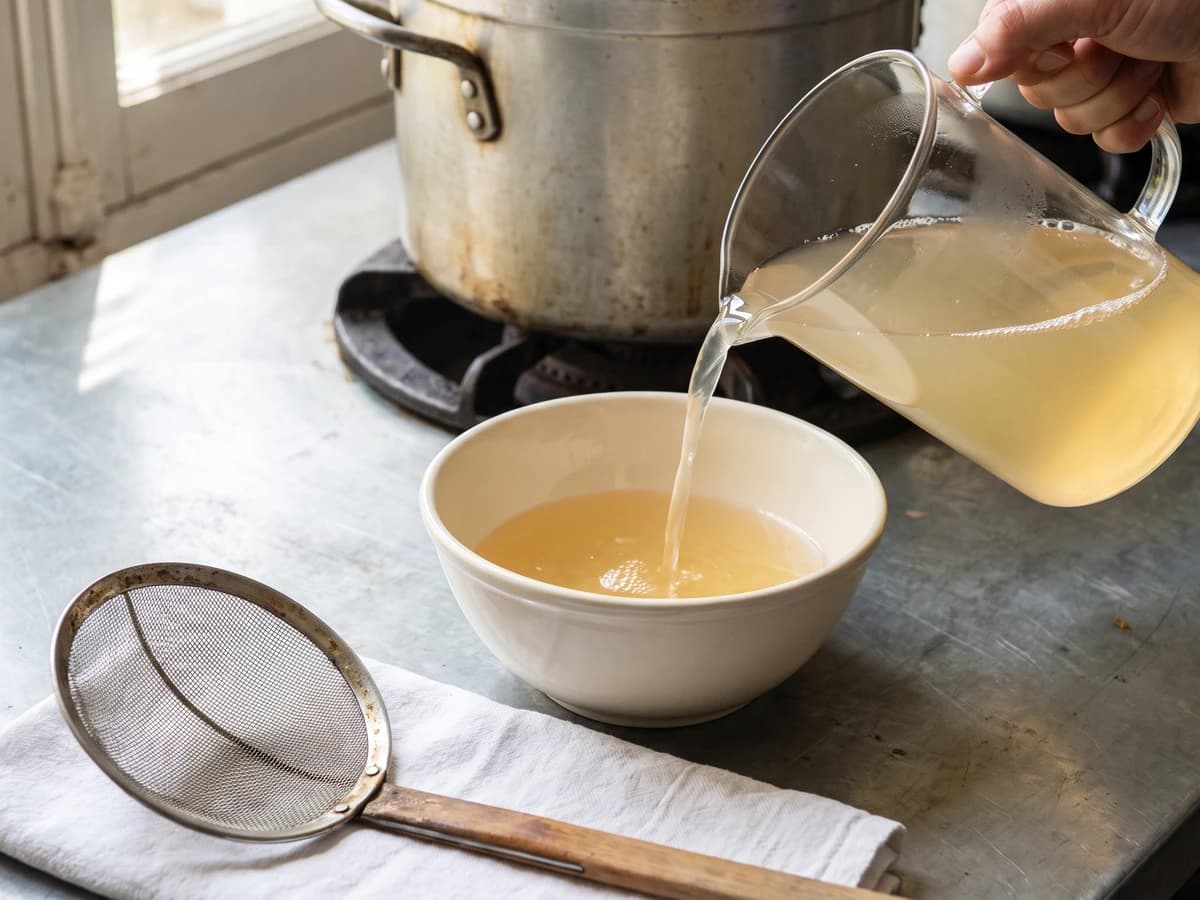
Ordinary or White Consommé
Beef shin, lean beef, and fowl begin in cold water and rise slowly toward a tremble. Skim before the boil, and you learn the quiet discipline that gives every clear French broth its backbone.
A cooking platform built around craft, culture, and the stories behind what we eat.
Created by Chef Juliette
Based on No. 46, Pignons Sauce, from Le Guide Culinaire (1907) by Auguste Escoffier
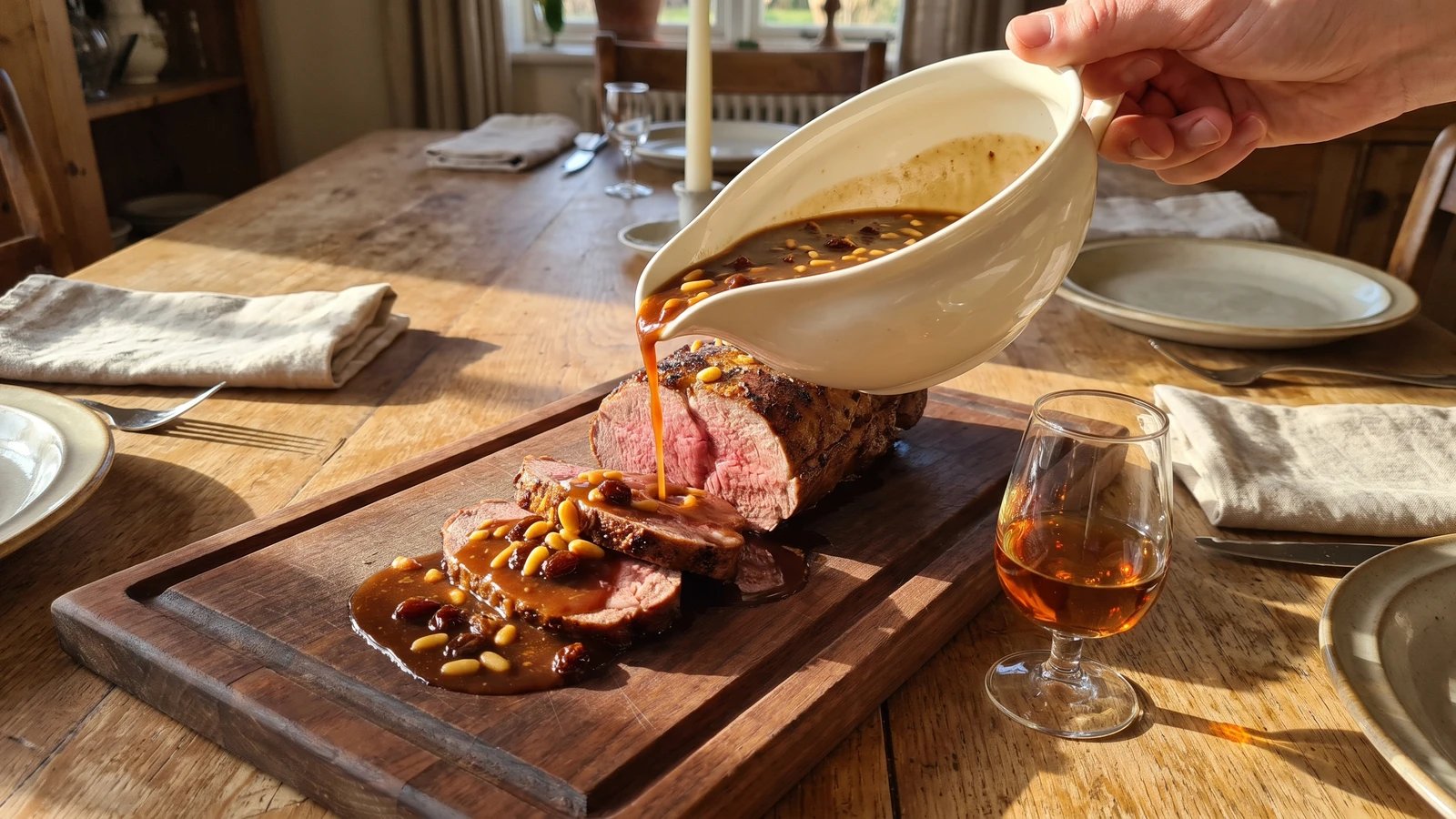
A dark, glossy derivative of Ordinary Poivrade Sauce (No. 49), sharpened with juniper, rounded by Madeira, and studded with toasted pine kernels and plumped raisins for a roast joint of venison.
Sauce Pignons (pine-kernel game sauce) teaches the purpose of a derivative sauce: begin with a complete foundation, then change its character through a precise last-minute finish. Ordinary Poivrade Sauce (No. 49) supplies the dark fond, pepper, and vinegar; juniper sharpens it for game, while raisins, toasted pine kernels, and Madeira soften its edges without turning it sweet.
The original recipe assumed a saucier on staff, Ordinary Poivrade Sauce (No. 49) waiting beside service, and all the stockpot labor already folded into that finished base. At home, make or thaw the Poivrade first. A dry skillet replaces the separate grill, a fine sieve lined with damp cheesecloth replaces linen, and modern seedless raisins spare you stoning each fruit. Those are brigade scaffolding and may go. The finished Poivrade, the book's proportions, and the service-time addition of every garnish are the dish and must stay. This is one finite batch of about two quarts, one cook, one stove, one evening.
The one step that decides Sauce Pignons is the finish. Add the strained infusion, fruit, kernels, and Madeira only when the sauce is ready to leave the stove; prolonged boiling flattens the wine, bloats the raisins, and steals the pine kernels' gentle bite.
Sauce Pignons belongs to the classical French game table, particularly the service of roasted or marinated joints of venison, rather than to the household cooking of one province. It developed as a derivative of Ordinary Poivrade Sauce (No. 49), coupling juniper's forest scent with the sweet-sour balance of raisins, Madeira, and vinegar. The old expression “fir-apple kernels” means pine kernels, and despite the sauce's name, they are a toasted garnish rather than its thickening foundation.
Quantity
6 cups (1.42 L / about 1.45 kg) Ordinary Poivrade Sauce (No. 49)
Quantity
1½ cups (360 ml / 360 g)
Quantity
about 1¾ cups (415 ml / 170 g)
concassed (roughly crushed)
Quantity
about ½ cup plus 1 tablespoon (135 ml / 85 g)
washed
Quantity
2 cups (475 ml / 475 g)
Quantity
about ⅔ cup (160 ml / 85 g)
Quantity
¾ cup (180 ml / about 180 g)
| Ingredient | Quantity |
|---|---|
| Ordinary Poivrade Sauce, fully prepared | 6 cups (1.42 L / about 1.45 kg) Ordinary Poivrade Sauce (No. 49) |
| water for the juniper infusion | 1½ cups (360 ml / 360 g) |
| dried culinary juniper berriesconcassed (roughly crushed) | about 1¾ cups (415 ml / 170 g) |
| seedless raisinswashed | about ½ cup plus 1 tablespoon (135 ml / 85 g) |
| tepid water for soaking the raisins | 2 cups (475 ml / 475 g) |
| raw pine kernels (pine nuts) | about ⅔ cup (160 ml / 85 g) |
| Madeira wine | ¾ cup (180 ml / about 180 g) |
Rinse the raisins and inspect them for any seeds, then cover them with the tepid soaking water for about 1 hour. They should plump without becoming swollen or fragile. Drain them thoroughly just before finishing the sauce. If you forgot the soak and the raisins remain hard, ça se rattrape: cover them with just-boiled water for 10 minutes, then drain and blot them dry.
Concass the juniper berries, crushing them roughly with a mortar or beneath a rolling pin. Split berries release their resinous perfume; powder releases bitterness and clouds the sauce. Bring the infusion water to a boil in a small covered saucepan, add the juniper, return it just to a simmer, then cover and remove it from the heat. Let it infuse for 20 minutes and keep it covered until the final strain.
Spread the pine kernels in a dry skillet over medium-low heat. Toss them constantly until they are evenly butter-gold and smell gently nutty, then tip them immediately onto a cool plate. The old instruction calls this grilling; the dry skillet gives the same result without special equipment. Pine kernels travel from pale to burnt very quickly, and scorched ones must be replaced.
Put the fully prepared Ordinary Poivrade Sauce (No. 49) in a heavy saucepan with enough room for the finishing ingredients. Bring it to a clean boil while stirring along the bottom, then lower the heat to a steady simmer. If the sauce begins to catch, don't scrape the scorched layer into it. Pour the clear upper sauce into a clean pan and continue; the batch can still be saved.
Line a fine-mesh sieve with damp cheesecloth and strain the juniper infusion directly into the simmering Poivrade, without pressing on the berries. Stir and let the sauce return briefly to the boil until it once again coats the back of a spoon. If the infusion has loosened it too far, ça se rattrape: reduce it now, before adding the garnish. Stir in the drained raisins and toasted pine kernels, remove the pan from the heat, and add the Madeira. Do not boil it again. The sauce should be glossy and dark, with the juniper arriving first, Madeira behind it, and small bursts of fruit and toasted pine.
Transfer the Sauce Pignons to a warmed saucière and serve it immediately with a roasted joint, saddle, or haunch of venison. Spoon it beside the carved meat so the browned surface remains visible and each guest can take as much fruit and pine kernel as desired. If service pauses, hold the sauce for no more than 10 minutes over barely warm water, never direct heat. À table!
1 serving (about 60g)
Culinary guides, cultural storytelling, and the editorial depth that makes cooking meaningful.
Discover Culinary ExplorerChef Juliette
Beef shin, lean beef, and fowl begin in cold water and rise slowly toward a tremble. Skim before the boil, and you learn the quiet discipline that gives every clear French broth its backbone.
Chef Juliette
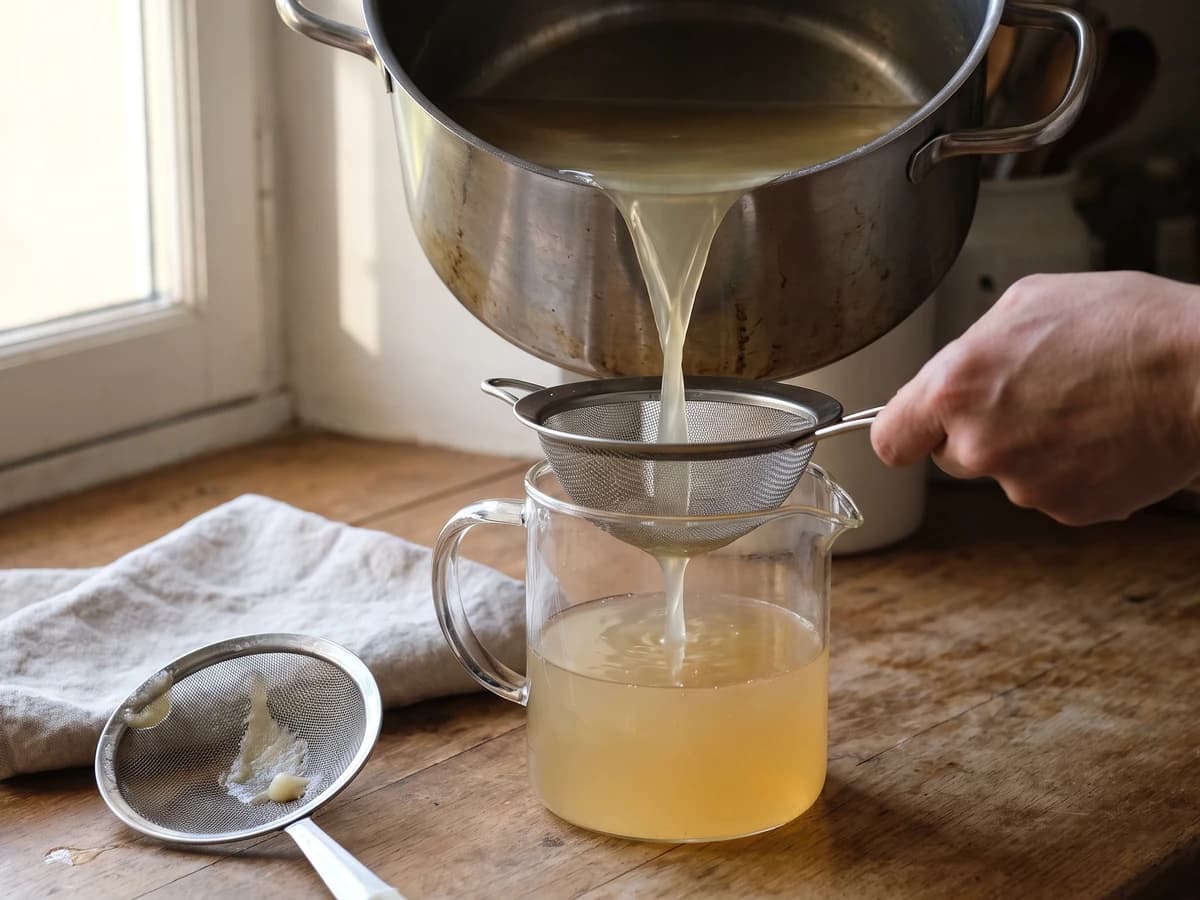
Break the veal bones small, then give them eight hours at a bare tremble. This pale, gelatinous fond becomes the quiet foundation beneath velouté, blanquette, and every sauce that must stay light.
Chef Juliette
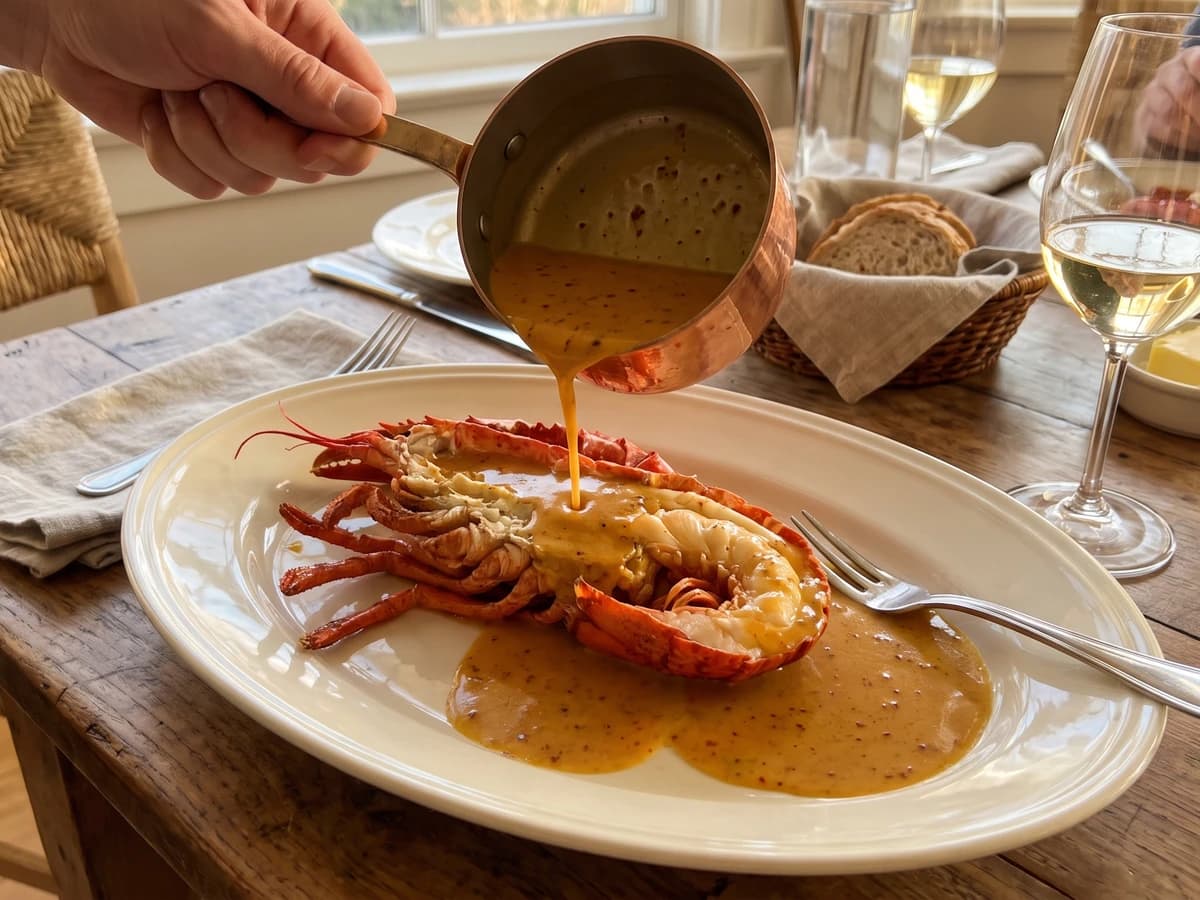
Sauce Orientale concentrates lobster-rich American Sauce with curry, then folds in cream away from the fire: a glossy, gently spiced derivative made for lobster, crayfish, and firm fish.
Chef Juliette
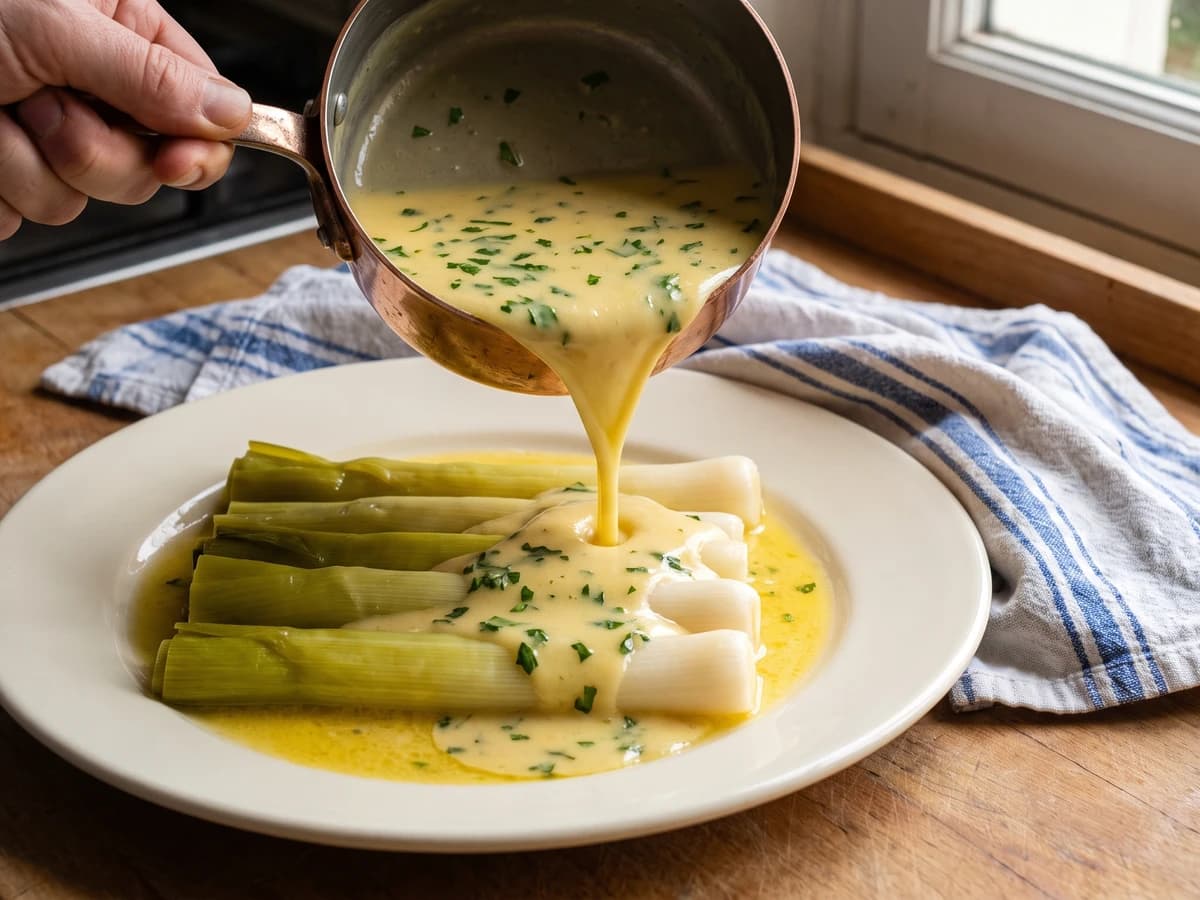
An old lesson in sauce families: Sauce Allemande takes mushroom liquor, then butter, lemon, and parsley, becoming a glossy Poulette for sheep's trotters, leeks, cauliflower, and anything needing gentle richness with a bright edge.