Chef Juliette
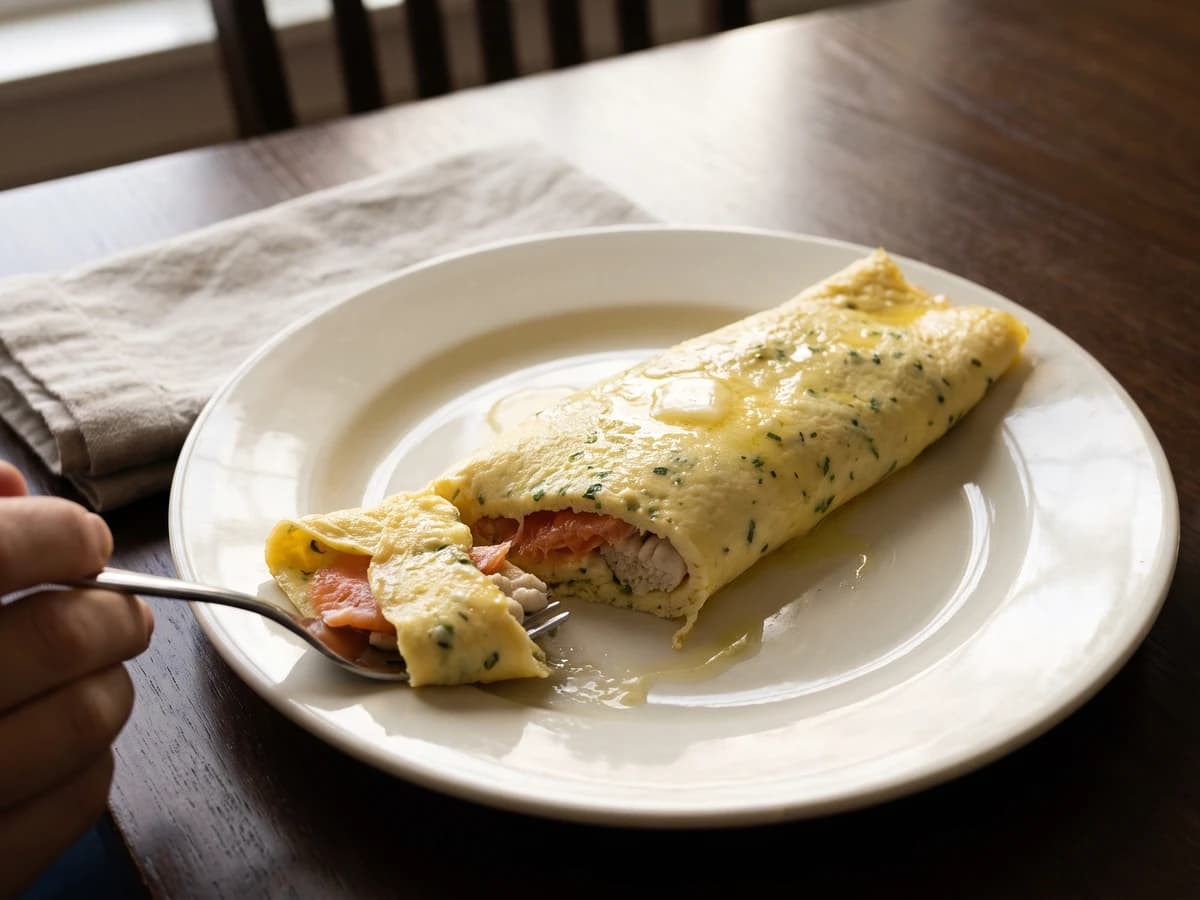
Omelette à l’Écossaise
A creamy omelette aux fines herbes closes around smoked-salmon-wrapped herring milts, gently poached in butter. Have the filling ready, then roll the eggs while they still shine.
A cooking platform built around craft, culture, and the stories behind what we eat.
Created by Chef Juliette
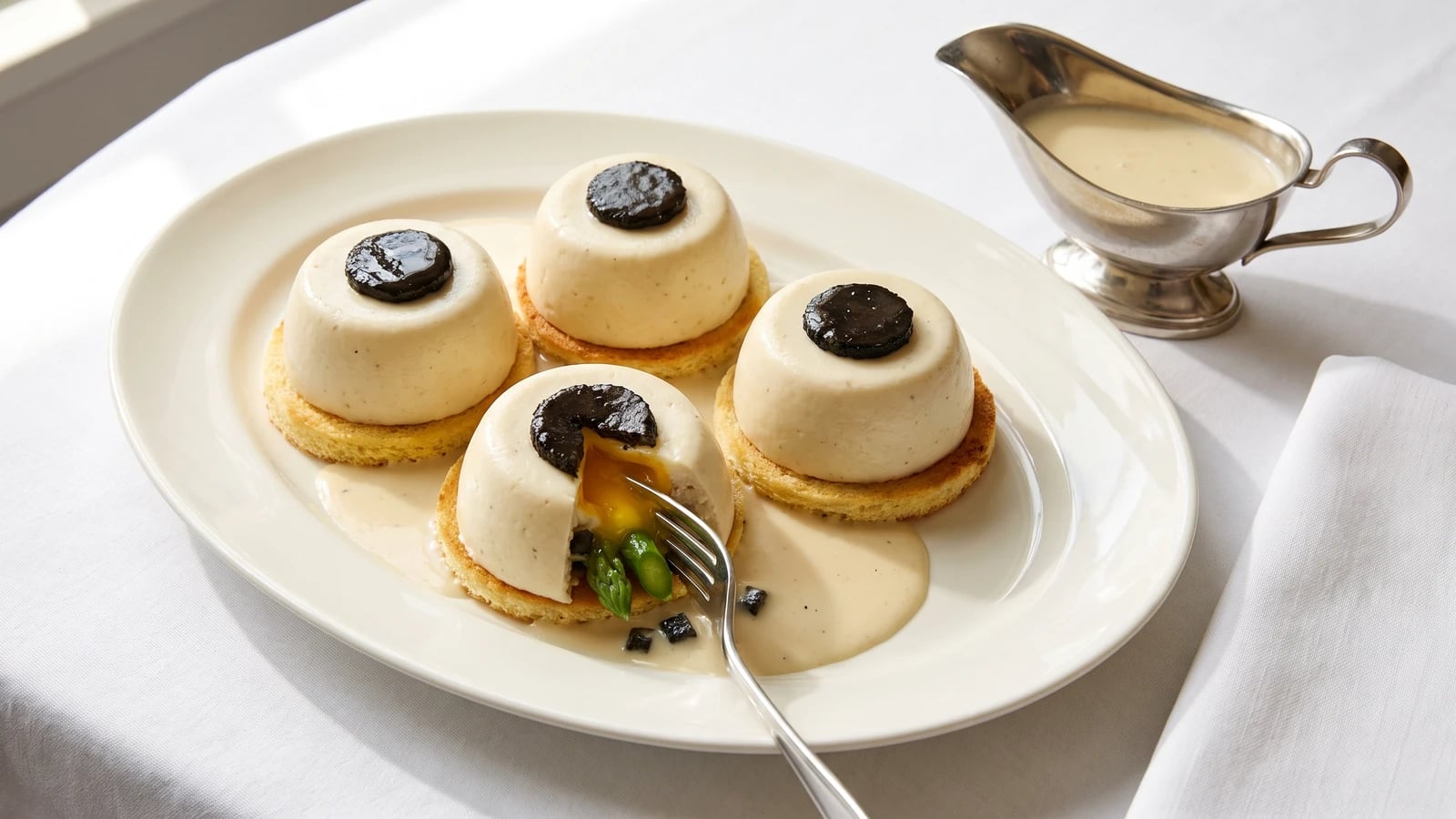
Based on No. 457, Princess Moulded Eggs, from Le Guide Culinaire (1907) by Auguste Escoffier
Soft truffled eggs and spring asparagus held in delicate chicken forcemeat, poached in individual moulds, turned onto buttered toast, and circled with clear poultry velouté.
Œufs moulés Princesse (Princess moulded eggs) teach one exact lesson: a filling that feels almost underdone in the pan becomes tender once enclosed and poached. The scrambled eggs must remain loose and glossy; the beaten raw egg, kept at the source's ratio of one to every four scrambled, binds them inside the mould without turning them firm.
The original kitchen assumed a saucier, poultry stock never off the fire, finished chicken forcemeat waiting at another station, and trays of dariole-moulds (small, narrow metal moulds). For four guests, we make a small farce mousseline in a food processor, build the poultry velouté from a blond roux and good stock, and use four straight-sided metal pudding moulds if darioles aren't in your cupboard. What changed is the batch size and equipment, not the intent. The stockpot and separate stations were brigade scaffolding; the thin forcemeat shell, black truffle, asparagus, raw-egg ratio, and twelve-minute bain-marie (hot-water bath) are the dish. One cook, one stove, one evening.
Turned onto buttered toast, each little ivory mould wears a black truffle round on top and sits inside a pale ribbon of velouté. Cut through and the centre should be soft gold, green with asparagus, and darkly flecked with truffle. Before you touch the pan, remember the step that decides everything: pull the scrambled eggs while they still look too loose to serve.
Œufs moulés Princesse belong to the codified Parisian table of grand cuisine, where eggs formed a distinct course and individual dariole-moulds turned soft preparations into composed service pieces. In classical menu language, Princesse points to asparagus tips, often joined by truffle and delicate poultry elements, rather than to a documented royal biography. The dish passed naturally into bourgeois special-occasion dining because each portion could be unmoulded neatly while the velouté was carried separately to the table.
Quantity
1¼ cups (300 ml / 170 g)
cut into ½-inch cubes and kept very cold
Quantity
1
kept very cold
Quantity
⅓ cup (80 ml / 80 g)
kept very cold
Quantity
5 tablespoons (75 ml / 70 g)
divided
Quantity
2 tablespoons (30 ml / 28 g)
cut into 4 thin rounds with the remainder finely diced
Quantity
16 tips, about ¾ cup (180 ml / 85 g)
trimmed to 1½ inches
Quantity
5
divided: 4 for scrambling and 1 beaten raw
Quantity
1 tablespoon (15 ml / 8 g)
Quantity
1 cup (240 ml / 240 g)
warmed
Quantity
4 rounds, about 2 ounces (60 g) total
cut 2½ inches wide
Quantity
1 tablespoon (15 ml / 18 g)
Quantity
1 teaspoon (5 ml / 6 g)
divided
Quantity
¼ teaspoon (1.25 ml / 0.5 g)
divided
| Ingredient | Quantity |
|---|---|
| skinless chicken breastcut into ½-inch cubes and kept very cold | 1¼ cups (300 ml / 170 g) |
| large egg whitekept very cold | 1 |
| heavy creamkept very cold | ⅓ cup (80 ml / 80 g) |
| unsalted butterdivided | 5 tablespoons (75 ml / 70 g) |
| fresh or preserved whole black trufflecut into 4 thin rounds with the remainder finely diced | 2 tablespoons (30 ml / 28 g) |
| slender asparagus tipstrimmed to 1½ inches | 16 tips, about ¾ cup (180 ml / 85 g) |
| large eggsdivided: 4 for scrambling and 1 beaten raw | 5 |
| all-purpose flour | 1 tablespoon (15 ml / 8 g) |
| good unsalted chicken stockwarmed | 1 cup (240 ml / 240 g) |
| pain de mie or brioche roundscut 2½ inches wide | 4 rounds, about 2 ounces (60 g) total |
| fine sea salt for blanching | 1 tablespoon (15 ml / 18 g) |
| fine sea saltdivided | 1 teaspoon (5 ml / 6 g) |
| ground white pepperdivided | ¼ teaspoon (1.25 ml / 0.5 g) |
Chill the food-processor bowl and blade for 10 minutes. Add the cold chicken, ½ teaspoon of the fine salt, and a pinch of white pepper, then process until the meat becomes a smooth, tacky paste. Add the egg white and process again until fully absorbed. With the machine running, pour in the cold cream gradually and stop as soon as the farce mousseline, a fine chicken forcemeat, looks smooth, pale, and softly cohesive. If it turns loose or greasy, stop and chill the bowl for 10 minutes before pulsing again. Ça se rattrape; warmth, not the formula, is the culprit. Cover and refrigerate.
Melt 1 tablespoon of the butter in a small saucepan over gentle heat. Stir in the flour and cook this roux blond, a pale butter-and-flour thickener, for 2 minutes without letting it colour. Whisk in the warm chicken stock a little at a time, smoothing each addition before the next, then simmer gently for 10 to 12 minutes. The clear poultry velouté should lightly nap the back of a spoon while remaining fluid enough to fall in a narrow thread. Season with ¼ teaspoon salt and a pinch of white pepper, then strain. If it has lumps, whisk firmly and pass it through the sieve; don't discard it. Hold it over the lowest heat, loosening with a spoonful of stock if it tightens.
Use 1 tablespoon of butter to coat four 5-ounce dariole-moulds generously. Lay one thin, very dark truffle round flat in the bottom of each. With a damp teaspoon or narrow offset spatula, spread a continuous layer of farce mousseline about ⅛ inch thick over the sides only, leaving the truffle visible at the base and reserving enough farce to seal the tops. Patch every gap now, because an unlined patch lets the egg filling escape against the metal. Chill the lined moulds for 10 minutes so the coating firms.
Bring a small saucepan of water to a boil and season it with the blanching salt. Add the asparagus tips and cook for 60 to 90 seconds, just until bright green and barely tender. Cool them in cold water, drain, and blot them thoroughly; water clinging to the asparagus would thin the eggs. Leave slender tips whole. Cut the truffle left after making the four rounds into small, even dice.
Reserve 1 teaspoon from 2 tablespoons of butter, then melt the rest in a small heavy saucepan. Beat 4 eggs with the remaining ¼ teaspoon salt and white pepper, pour them into the pan, and cook over low heat while stirring continuously across the bottom. Lift the pan from the heat whenever the eggs begin setting too quickly. Stop when tiny curds have formed but the mixture remains glossy and loose enough to pour. If the edges tighten, scrape everything into a cool bowl and stir in the reserved cold butter; ça se rattrape while the centre is still wet. Fold in the asparagus tips and diced truffle. Beat the fifth raw egg separately and fold it through, preserving the source's exact proportion of 1 raw egg to every 4 scrambled.
Spoon the egg mixture into the chilled moulds, filling each only two-thirds full. Divide the asparagus and truffle evenly and tap each mould once against a folded cloth to settle the filling without compressing it. Spread the remaining farce mousseline in a thin layer across each top, joining it cleanly to the lining around the sides. If the farce drags the eggs, dip the spatula in cold water and smooth with a light hand. Keep the sealed top just below the rim.
Line a wide lidded sauté pan with a folded kitchen towel or silicone mat and set the moulds upright on it. Pour barely simmering water around them to reach two-thirds of the way up their sides, cover the pan, and hold the bain-marie at the gentlest tremble for 12 minutes. Don't let the water boil hard; if it does, lower the heat and crack the lid until it calms. Vigorous water toughens the farce and the eggs together. The forcemeat cap should be opaque and spring lightly, with a safe internal temperature of 165°F (74°C). If needed, continue in 2-minute intervals. Ceramic ramekins heat more slowly and may require 15 to 18 minutes.
While the moulds poach, melt the final tablespoon of butter in a skillet and toast the bread rounds over medium heat until butter-gold on both sides. Set them in a circle on a warm platter. Rest the cooked moulds for 1 minute, loosen only the farce seal at the rim with a thin knife, and invert one onto each toast. If a mould refuses to release, dip its base in the hot bain-marie for 5 seconds and try again. Ring the eggs with a narrow thread of warm clear poultry velouté, leaving their smooth sides visible, and send the remainder in a sauceboat. Serve immediately. À table!
1 serving (about 225g)
Culinary guides, cultural storytelling, and the editorial depth that makes cooking meaningful.
Discover Culinary ExplorerChef Juliette
A creamy omelette aux fines herbes closes around smoked-salmon-wrapped herring milts, gently poached in butter. Have the filling ready, then roll the eggs while they still shine.
Chef Juliette
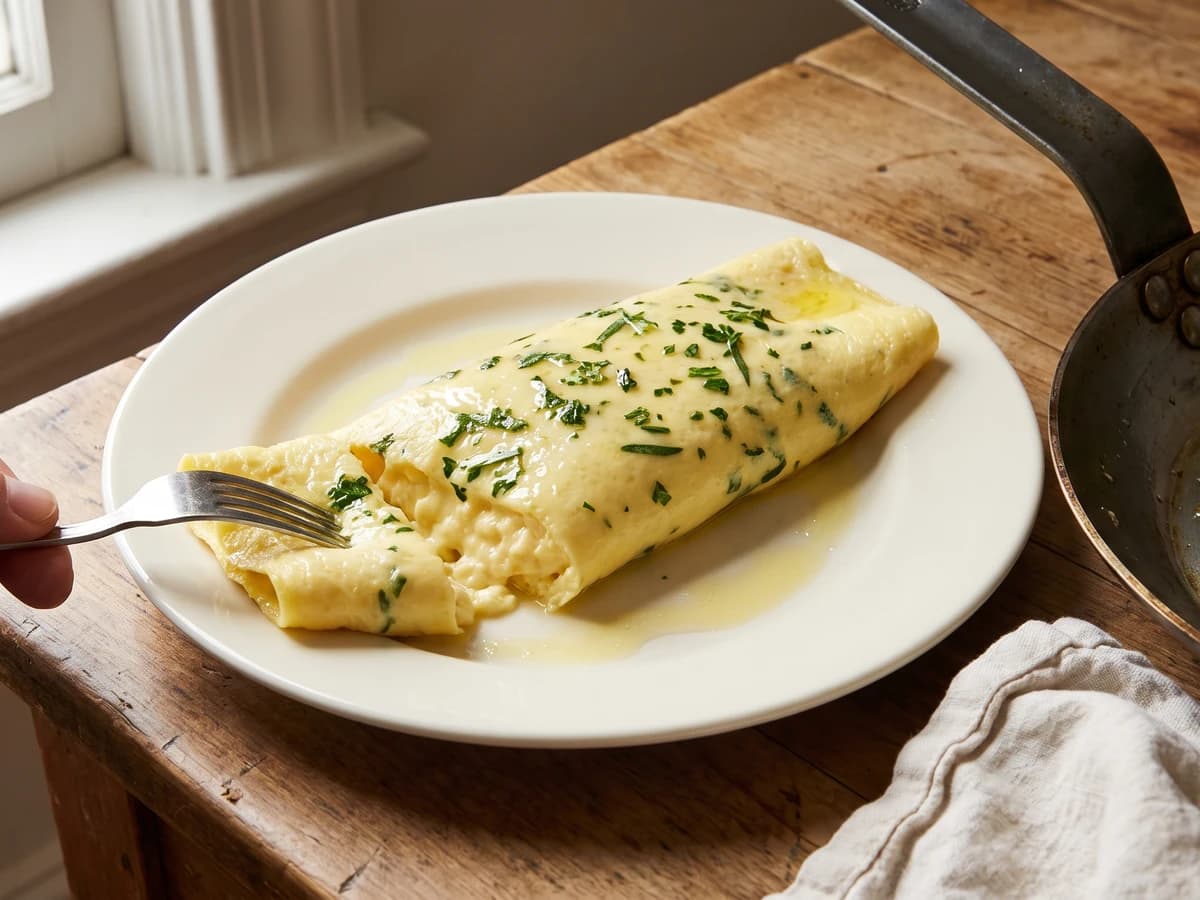
Four tender herbs, hot butter, and two eggs per pan: this rolled omelette teaches the quick hand and good judgment that keep the outside pale and the center creamy.
Chef Juliette
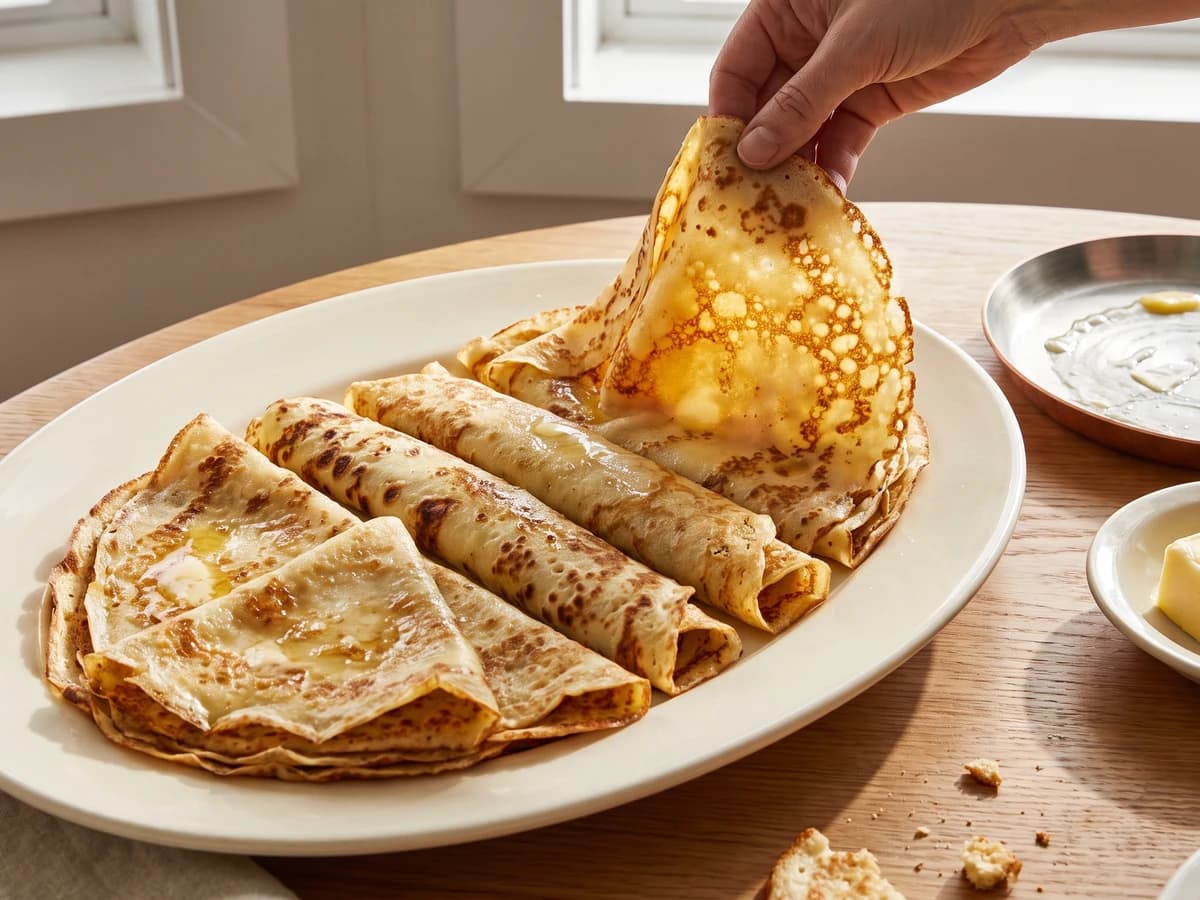
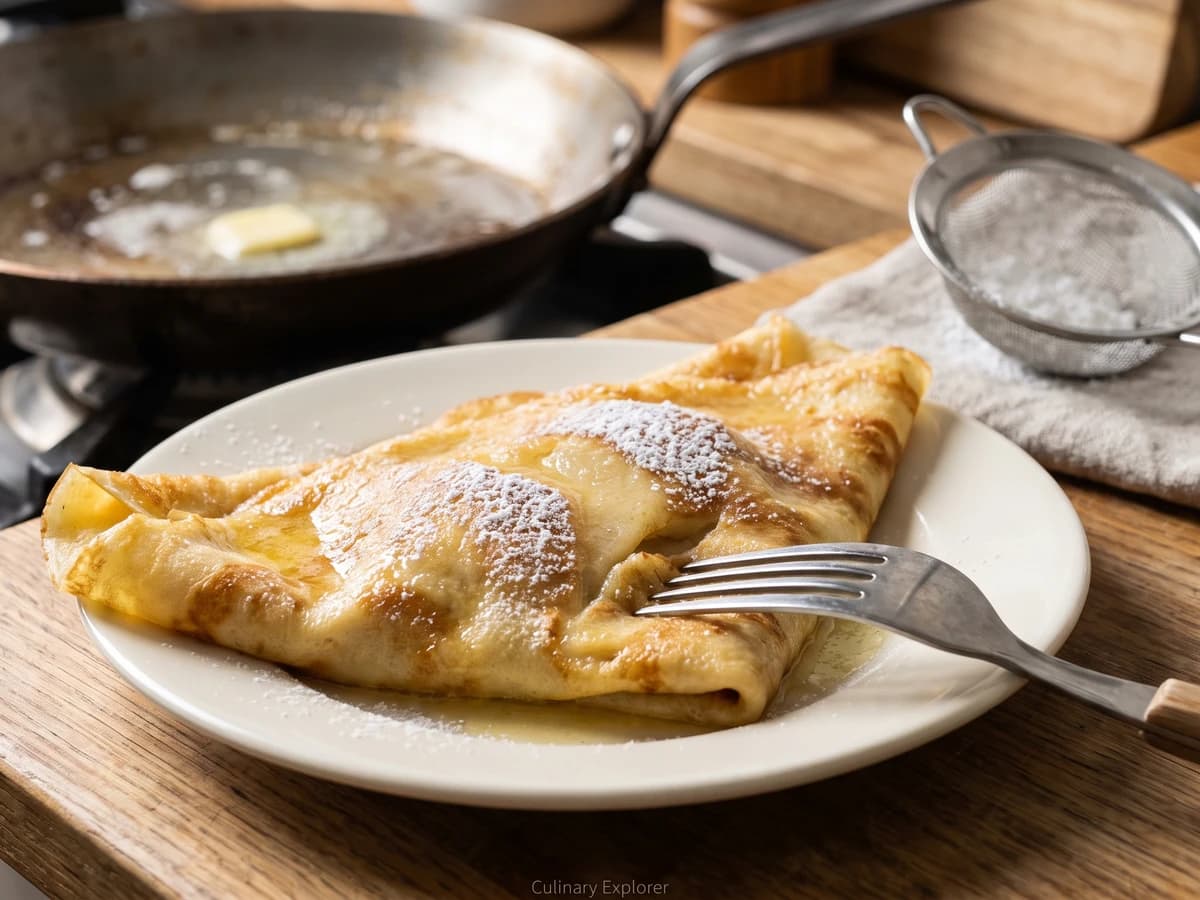
Four batters, one lesson: let the flour drink deeply before cooking, then spread the batter thinly in butter for crêpes and pannequets that bend without becoming tough.
Chef Juliette
Crêpes au Couvent trap ripe Williams pear dice between two thin pours of sweet batter, then turn in one clean toss and reach the table butter-gold, powdered, and burning hot.