Chef Juliette
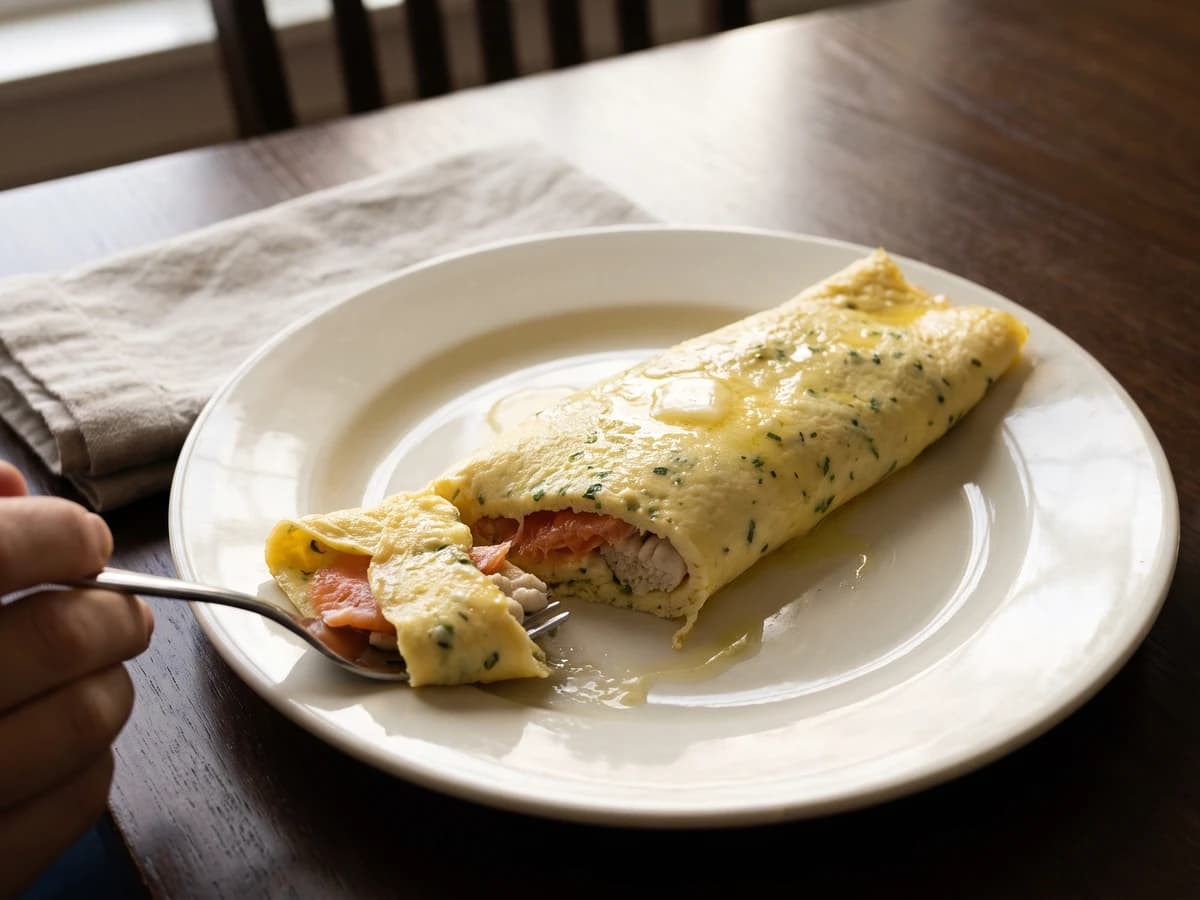
Omelette à l’Écossaise
A creamy omelette aux fines herbes closes around smoked-salmon-wrapped herring milts, gently poached in butter. Have the filling ready, then roll the eggs while they still shine.
A cooking platform built around craft, culture, and the stories behind what we eat.
Created by Chef Juliette
Based on No. 456, Polignac Moulded Eggs, from Le Guide Culinaire (1907) by Auguste Escoffier
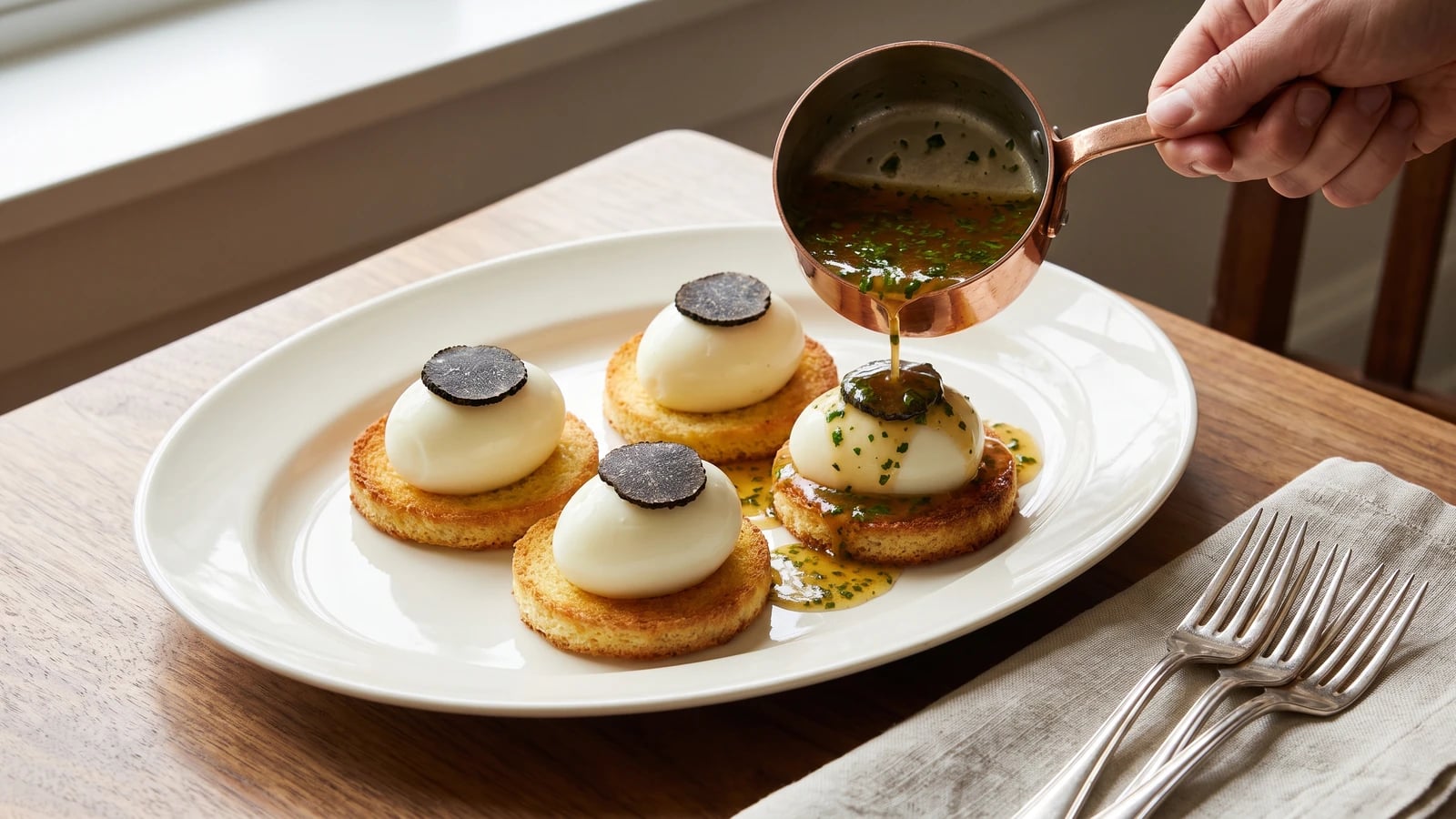
Truffle lines each little mould, the egg poaches gently in a bain-marie, and crisp toast receives the turning: a Parisian egg dish whose true lesson is tenderness under ceremony.
Œufs moulés Polignac (Polignac moulded eggs) teach the discipline of gentle heat: the egg must set enough to stand when turned out, yet keep a tender white and yielding yolk. The truffle should appear on its crown, the buttered toast should keep its edges crisp, and the sauce should fall in a glossy coat. The one true thing to know before you touch the pan is this: the water of the bain-marie (hot-water bath) must barely tremble.
The original assumed a saucier with melted meat glaze ready, a stockpot never cold, and ranks of Baba-moulds. It called for no salamander, because nothing here is gratinéed. Those are brigade scaffolding, not the dish: this version serves four from small dariole moulds, and one cup of unsalted, gelatin-rich stock reduces to the glaze required. The book’s exact ratio remains intact, three tablespoons of glaze to one-quarter pound of Maître-d’Hôtel butter. What must stay is the truffle floor, the moulded poach, the round of toast, and that particular sauce.
Once the water settles to a barely visible tremble, everything else is assembly. One cook, one stove, one evening. Guard that poach, and the ceremony takes care of itself.
Œufs moulés Polignac belong to the Parisian grand-kitchen repertoire of named egg dishes, where mould, garnish, and sauce identified a preparation as precisely as its title. Polignac is the name of a noble house rooted in Velay, but the dish is not an Auvergnat farmhouse breakfast; it is a formal table preparation built around truffle, toast, and meat glaze. Like many such egg dishes, it traveled from private dining rooms into hotels and bourgeois homes as small metal moulds, preserved truffle, and concentrated stock came within reach of the home kitchen.
Quantity
3 tablespoons (45 ml / about 45 g), from 1 cup (240 ml / 240 g) stock
made by reducing unsalted, gelatin-rich veal or beef stock
Quantity
½ cup (120 ml / 113 g / ¼ lb)
softened
Quantity
1 tablespoon (15 ml / 4 g)
very finely chopped
Quantity
2 teaspoons (10 ml / 10 g)
Quantity
½ teaspoon (2.5 ml / 3 g)
divided
Quantity
¼ teaspoon (1.25 ml / 0.6 g)
divided
Quantity
1 tablespoon (15 ml / 14 g)
softened
Quantity
4 thin slices (about ⅓ ounce / 10 g total)
fresh or preserved and drained
Quantity
4
at room temperature
Quantity
4 rounds (2¾ inches / 7 cm across; about 4 ounces / 112 g total)
Quantity
2 tablespoons (30 ml / 28 g)
melted
| Ingredient | Quantity |
|---|---|
| glace de viande (meat glaze)made by reducing unsalted, gelatin-rich veal or beef stock | 3 tablespoons (45 ml / about 45 g), from 1 cup (240 ml / 240 g) stock |
| unsalted butter for the Maître-d’Hôtel buttersoftened | ½ cup (120 ml / 113 g / ¼ lb) |
| flat-leaf parsleyvery finely chopped | 1 tablespoon (15 ml / 4 g) |
| fresh lemon juice | 2 teaspoons (10 ml / 10 g) |
| fine sea saltdivided | ½ teaspoon (2.5 ml / 3 g) |
| ground white pepperdivided | ¼ teaspoon (1.25 ml / 0.6 g) |
| unsalted butter for the mouldssoftened | 1 tablespoon (15 ml / 14 g) |
| black truffle slicesfresh or preserved and drained | 4 thin slices (about ⅓ ounce / 10 g total) |
| large eggsat room temperature | 4 |
| pain de mie or firm white bread rounds | 4 rounds (2¾ inches / 7 cm across; about 4 ounces / 112 g total) |
| unsalted butter for the toastmelted | 2 tablespoons (30 ml / 28 g) |
Pour the unsalted stock into a small, wide saucepan and reduce it at a lively simmer until exactly 3 tablespoons (45 ml / about 45 g) remain, usually 12 to 18 minutes. The glace de viande should look dark and glossy and lightly coat a spoon, but it must still pour. Measure it rather than guessing. If it reduces too far, whisk in hot water one teaspoon at a time until the measure returns to 3 tablespoons; reduction concentrates salt as fiercely as flavour, which is why the stock must begin unsalted.
Mash the ½ cup softened butter with the parsley, lemon juice, half the salt, and half the white pepper until evenly combined. This is Maître-d’Hôtel butter (parsley-lemon compound butter). Keep it soft but not oily while you prepare the eggs; if the kitchen is warm enough to melt it, set it somewhere cool.
Coat the interiors of four Baba-moulds or dariole moulds generously with the softened butter, carrying it right to the rims. Lay one truffle slice flat in the bottom of each; this becomes the dark crown when the egg is turned out. Brush both sides of the bread rounds with melted butter and brown them in a skillet over medium heat until crisp and butter-gold, about 2 minutes per side. Arrange the toast rounds in a circle on a warm oval platter.
Crack each egg into a separate cup, then slip one into each prepared mould without disturbing the truffle. Season with the remaining salt and white pepper. Set the moulds in a wide lidded sauté pan and pour simmering water carefully around them until it reaches halfway up their sides. Cover and poach over the lowest heat for 8 to 11 minutes, until each white looks opaque and softly set while the yolk still trembles beneath it. The water must barely move. If it begins bubbling hard, pull the pan from the heat and add a spoonful of cool water before returning it to a lower flame. Ça se rattrape, provided you stop the boil promptly.
Lift the moulds from the bain-marie onto a folded towel. Warm the measured glace de viande over the lowest heat just until fluid, then whisk in the Maître-d’Hôtel butter in four additions. Let each addition melt before the next, but never allow the sauce to simmer or the parsley will darken and the butter may separate. The finished sauce should be fluid, glossy, and lightly thickened by the gelatin in the glaze. If it turns oily, take it off the heat; whisk 1 teaspoon cool water in a clean warm bowl, then rebuild the sauce by adding the separated mixture a spoonful at a time.
Run the tip of a thin palette knife just around the upper edge of each egg. Invert one mould over each toast round, wait three seconds, and lift it straight upward. If an egg clings, dip the bottom of the mould back into the warm bain-marie for five seconds and try again; if the truffle remains behind, simply return it to the egg’s crown. Arrange the four eggs in their circle, coat them generously with the warm sauce, and serve at once. Never apologize at your own table. À table!
1 serving (about 130g)
Culinary guides, cultural storytelling, and the editorial depth that makes cooking meaningful.
Discover Culinary ExplorerChef Juliette
A creamy omelette aux fines herbes closes around smoked-salmon-wrapped herring milts, gently poached in butter. Have the filling ready, then roll the eggs while they still shine.
Chef Juliette
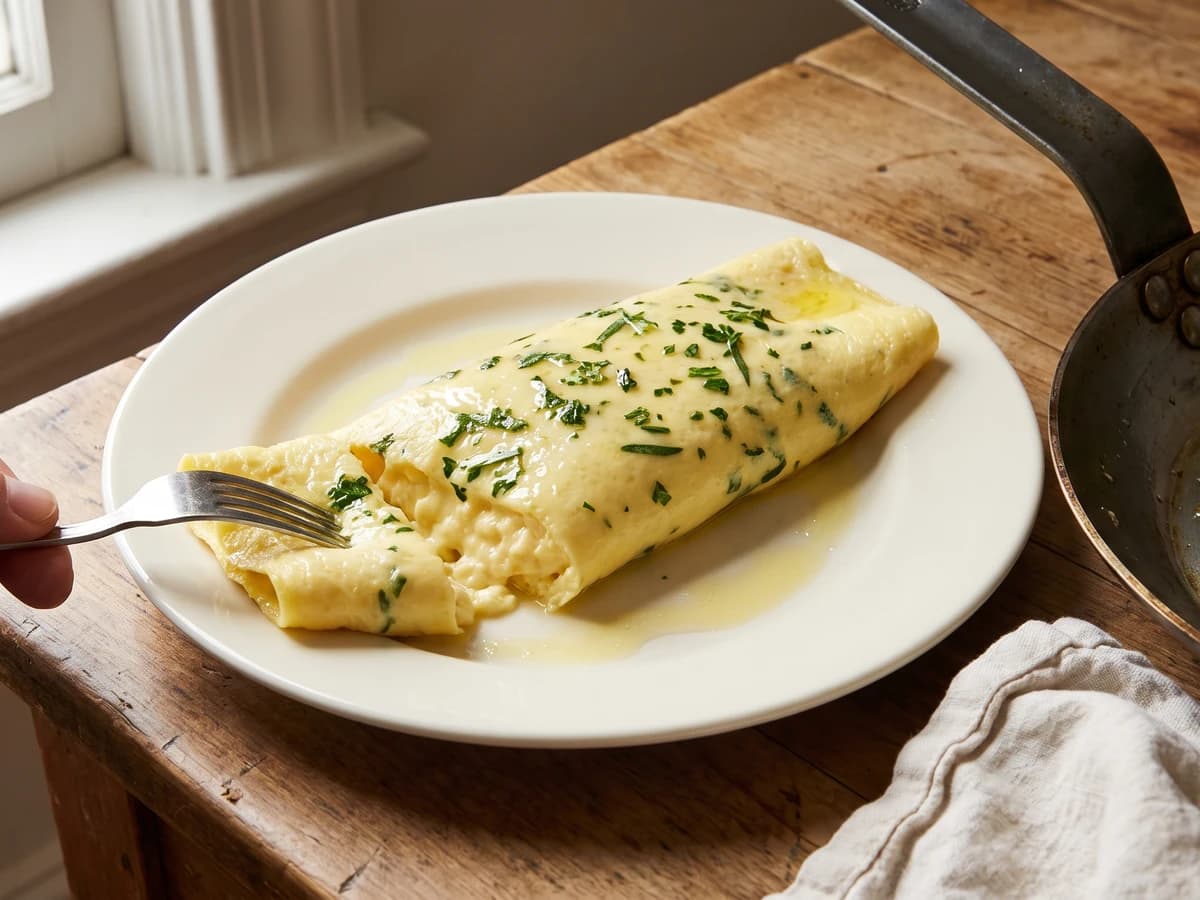
Four tender herbs, hot butter, and two eggs per pan: this rolled omelette teaches the quick hand and good judgment that keep the outside pale and the center creamy.
Chef Juliette
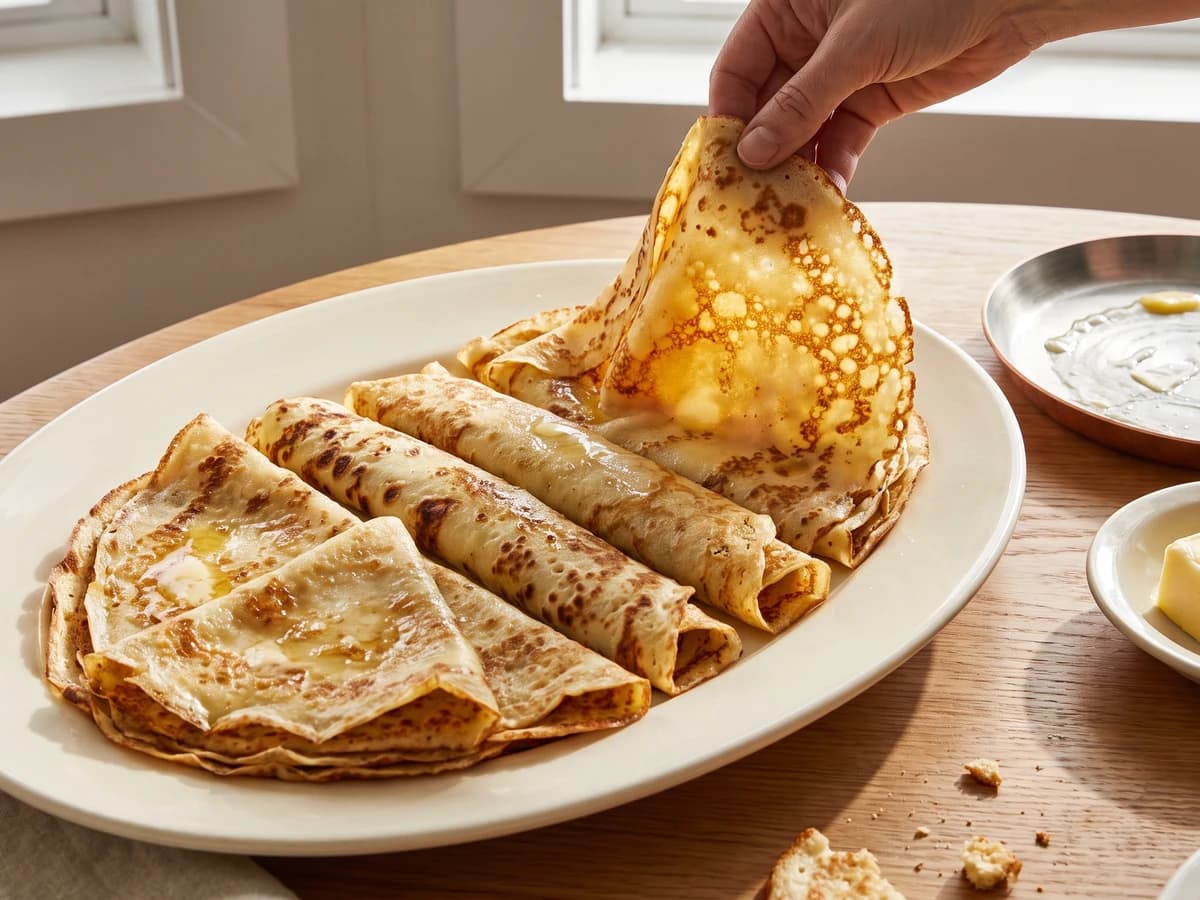
Four batters, one lesson: let the flour drink deeply before cooking, then spread the batter thinly in butter for crêpes and pannequets that bend without becoming tough.
Chef Juliette
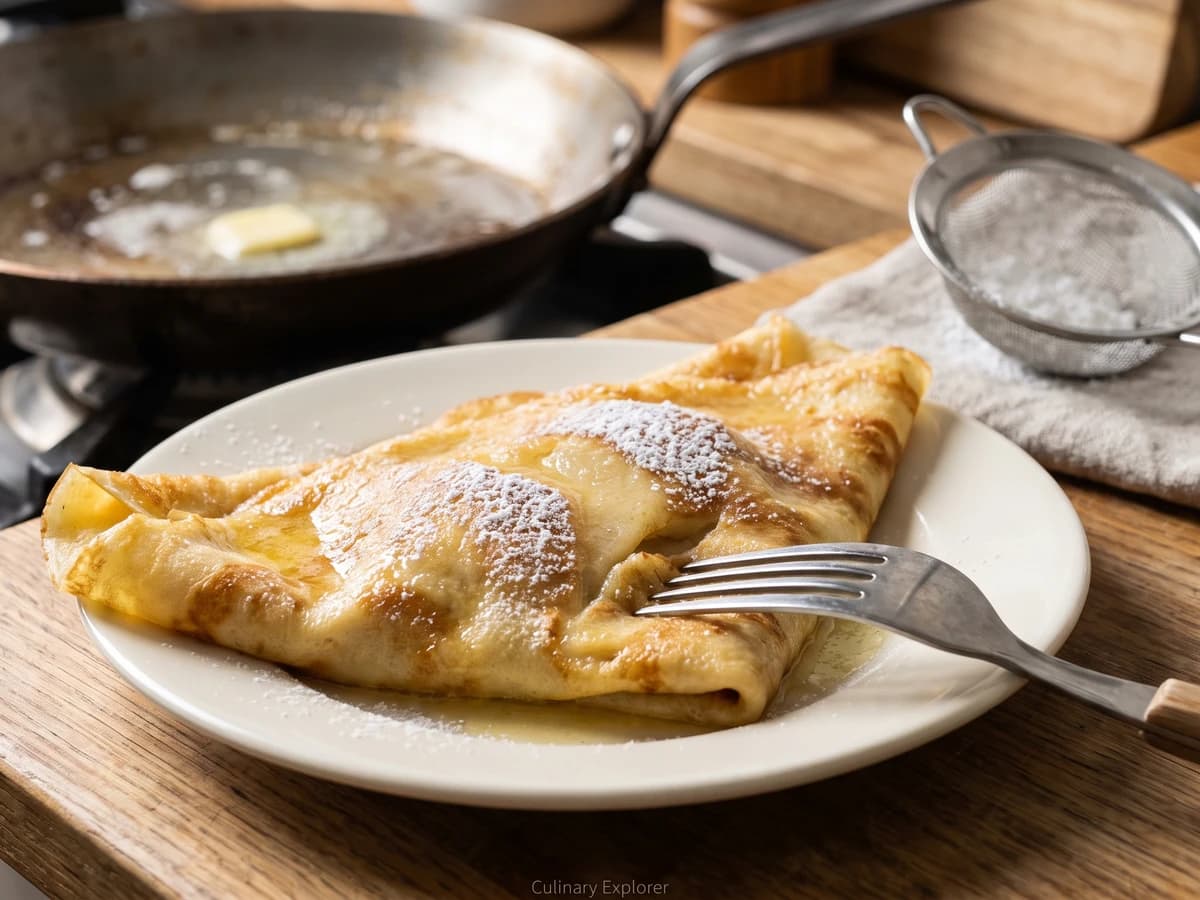
Crêpes au Couvent trap ripe Williams pear dice between two thin pours of sweet batter, then turn in one clean toss and reach the table butter-gold, powdered, and burning hot.