Chef Juliette
Omelette à l’Écossaise
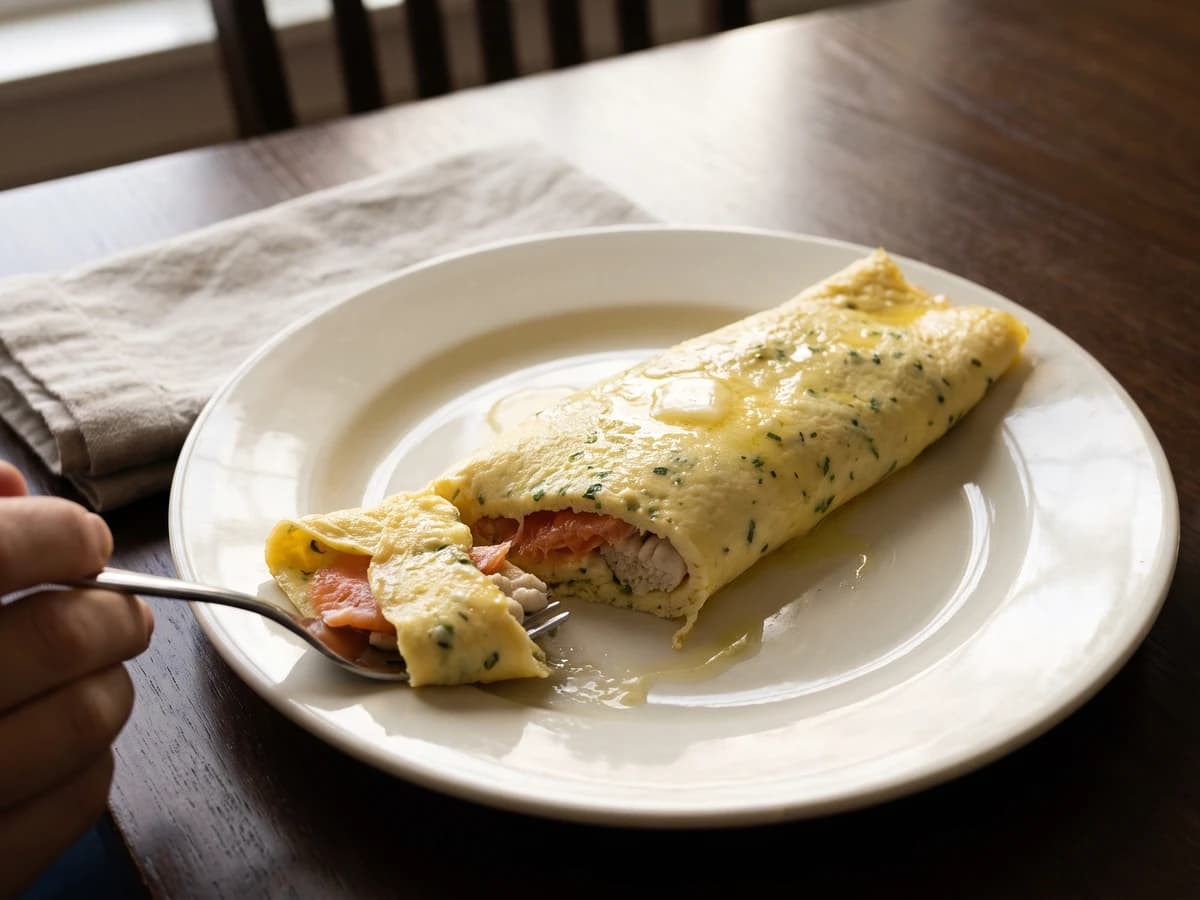
A creamy omelette aux fines herbes closes around smoked-salmon-wrapped herring milts, gently poached in butter. Have the filling ready, then roll the eggs while they still shine.
A cooking platform built around craft, culture, and the stories behind what we eat.
Created by Chef Juliette
Based on No. 455, Moulded Eggs Palermitaine, from Le Guide Culinaire (1907) by Auguste Escoffier
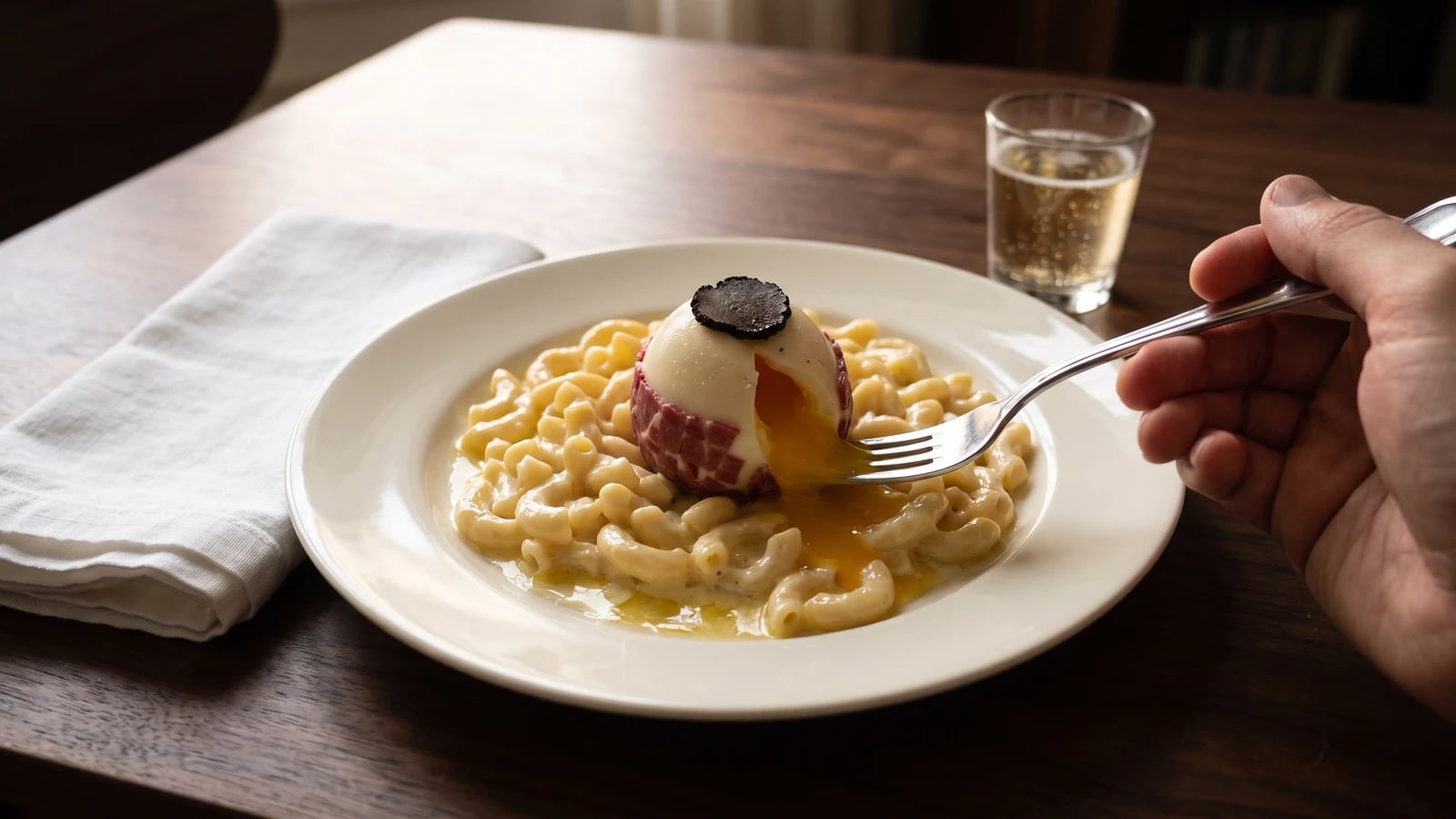
Truffle, cured tongue, a softly set egg, and macaroni in cream meet inside a crisp tartlet, a precise lesson in gentle poaching and confident unmoulding for the special-occasion table.
Œufs moulés à la palermitaine (Palermo-style moulded eggs) teaches one precise thing: a buttered mould releases cleanly only when its lining is truly cold. The reward is handsome without fuss, a softly poached egg wearing a black truffle round on its crown and a ruby mosaic of cured tongue at its sides, settled over crisp pastry and macaroni glazed with cream.
The original entry assumes a brigade's quiet abundance: Baba-moulds (small, tapered cylindrical moulds) bedded in ice, baked tartlet crusts at one station, and macaroni with cream ready at another. At home, four metal dariole moulds stand in for Baba-moulds because their taper releases the eggs in the same way, the refrigerator replaces the ice bed, and a low oven steadies the bain-marie (hot-water bath) while pastry and macaroni are made in sequence. The ice bed and extra hands were scaffolding. The truffle base, tongue fixed in butter, gentle bain-marie, crisp tartlet, and creamed macaroni are the dish, so all of them stay.
Work in that order and this becomes one cook, one stove, one evening. Press the truffle and tongue into softened butter, then chill until a fingertip leaves no mark before you crack in the eggs. That firm, cold lining is the one step that matters most; if it is soft, the pattern slides away before the water ever warms.
Œufs moulés à la palermitaine belong to the Parisian grande-cuisine repertory of individually moulded eggs, in which a place-name identified a fixed garnish as much as a birthplace. Palermitaine points toward Palermo through the macaroni, while truffle, scarlet cured tongue, buttered moulds, and tartlet crusts speak in the language of the French formal table. It is not a household Sicilian breakfast carried north unchanged, but a French composition that turned an Italian association into a codified presentation.
Quantity
1 cup (125 g)
Quantity
2½ teaspoons (15 g), divided
Quantity
4½ tablespoons (65 g)
diced
Quantity
1
Quantity
1 to 2 tablespoons (15 to 30 ml / 15 to 30 g)
Quantity
2 tablespoons (30 ml / 28 g)
Quantity
4 thin rounds (about 8 g)
drained if preserved
Quantity
⅓ cup (55 g)
very finely chopped
Quantity
4
Quantity
1 cup (100 g)
Quantity
¾ cup (180 ml / 180 g)
Quantity
1 tablespoon (15 ml / 14 g)
diced
Quantity
⅛ teaspoon (0.3 g)
| Ingredient | Quantity |
|---|---|
| all-purpose flour | 1 cup (125 g) |
| fine salt | 2½ teaspoons (15 g), divided |
| cold unsalted butter for the pastrydiced | 4½ tablespoons (65 g) |
| large egg yolk | 1 |
| ice water | 1 to 2 tablespoons (15 to 30 ml / 15 to 30 g) |
| softened unsalted butter for the moulds | 2 tablespoons (30 ml / 28 g) |
| fresh or whole preserved black truffledrained if preserved | 4 thin rounds (about 8 g) |
| cooked cured beef tongue with a rosy-red interiorvery finely chopped | ⅓ cup (55 g) |
| large eggs | 4 |
| small dried macaroni | 1 cup (100 g) |
| heavy cream | ¾ cup (180 ml / 180 g) |
| cold unsalted butter for the macaronidiced | 1 tablespoon (15 ml / 14 g) |
| ground white pepper | ⅛ teaspoon (0.3 g) |
Combine the flour with ¼ teaspoon (1.5 g) of the salt. Rub in the 4½ tablespoons (65 g) cold butter until the mixture resembles coarse crumbs with a few pea-sized flakes remaining. Stir in the yolk and 1 tablespoon (15 ml / 15 g) ice water, then add only enough of the remaining water to make the dough hold when squeezed. Press it together without kneading, flatten into a disc, cover, and chill for 30 minutes. If it remains sandy, add water one teaspoon at a time; if it turns sticky, return it to the cold instead of burying it in more flour. Ça se rattrape.
Heat the oven to 375°F (190°C). Divide the dough into four pieces and roll each between sheets of baking parchment to about ⅛ inch (3 mm) thick. Line four 3½-inch (9 cm) tartlet tins, press the pastry into the corners, trim the rims, and prick the bases lightly. Chill for 10 minutes, then line with parchment and pastry weights. Bake for 10 minutes, remove the weights, and bake for another 5 to 7 minutes, until the bases are dry and the edges are an even butter-gold. Cool for 5 minutes before unmoulding onto a rack. These shells will not return to the oven, so a damp, pale base cannot be left for later to fix.
Coat the bottoms and sides of four 4-ounce (120 ml) Baba-moulds generously and evenly with the softened butter. Press one truffle round flat against the bottom of each, then scatter the finely chopped red tongue over the sides and press it gently into the butter without making a solid wall. Refrigerate for at least 15 minutes, until the butter is completely firm. If a piece of tongue falls when you tilt a mould, the butter is still too warm; press it back and chill again. Do not add the eggs until every piece holds.
Cook the macaroni in a medium saucepan of boiling water seasoned with 1½ teaspoons (9 g) of the salt until tender but still holding its shape. Drain it very thoroughly. Reserve 1 tablespoon (15 ml / 15 g) of the cream, then simmer the remainder in the dry saucepan until reduced by roughly one-third and able to coat a spoon. Add the macaroni and cook gently for 2 minutes so it drinks in the cream. Remove from the heat, stir in the cold butter, and season with ¼ teaspoon (1.5 g) salt and half the white pepper. Cover and keep warm. If the macaroni tightens while the eggs cook, loosen it with the reserved cream; do not drown it, because loose cream will soften the tartlet crusts.
Lower the oven to 325°F (160°C). Break each egg first into a small cup, then slide it gently into a chilled mould without disturbing the tongue lining. Season each with about ⅛ teaspoon (0.75 g) salt and a trace of the remaining white pepper. Keep the moulds cold while you prepare the water bath; the butter must remain firm until the cooking begins.
Set the moulds on a folded kitchen towel inside a deep roasting tin so they cannot slide. Pour just-simmering water around them to come halfway up their sides, then tent the tin loosely with foil. Bake for 10 minutes before checking, then continue for 1 to 4 minutes as needed. The whites should move as one tender mass with no transparent patch at the center, while the yolks still yield beneath a light touch. Lift each mould from the bain-marie as soon as it reaches that point. If a white remains watery, return that mould to the bath for 1 minute. Gentle correction works; a hard boil only toughens the egg.
Divide the warm macaroni with cream among the tartlet crusts and make a shallow hollow in each center. Run the tip of a thin knife only around the upper rim of an egg, place a tartlet upside down over the mould, then invert both together and lift the mould away with one decisive motion. If the egg clings, dip the base of the mould in the hot bain-marie for 3 to 5 seconds and try again. Ça se rattrape: any tongue left behind can be lifted with the knife and pressed onto the egg while the butter is soft. Serve at once, while the pastry is crisp, the cream gleams, and the yolk remains tender. À table!
1 serving (about 220g)
Culinary guides, cultural storytelling, and the editorial depth that makes cooking meaningful.
Discover Culinary ExplorerChef Juliette
A creamy omelette aux fines herbes closes around smoked-salmon-wrapped herring milts, gently poached in butter. Have the filling ready, then roll the eggs while they still shine.
Chef Juliette
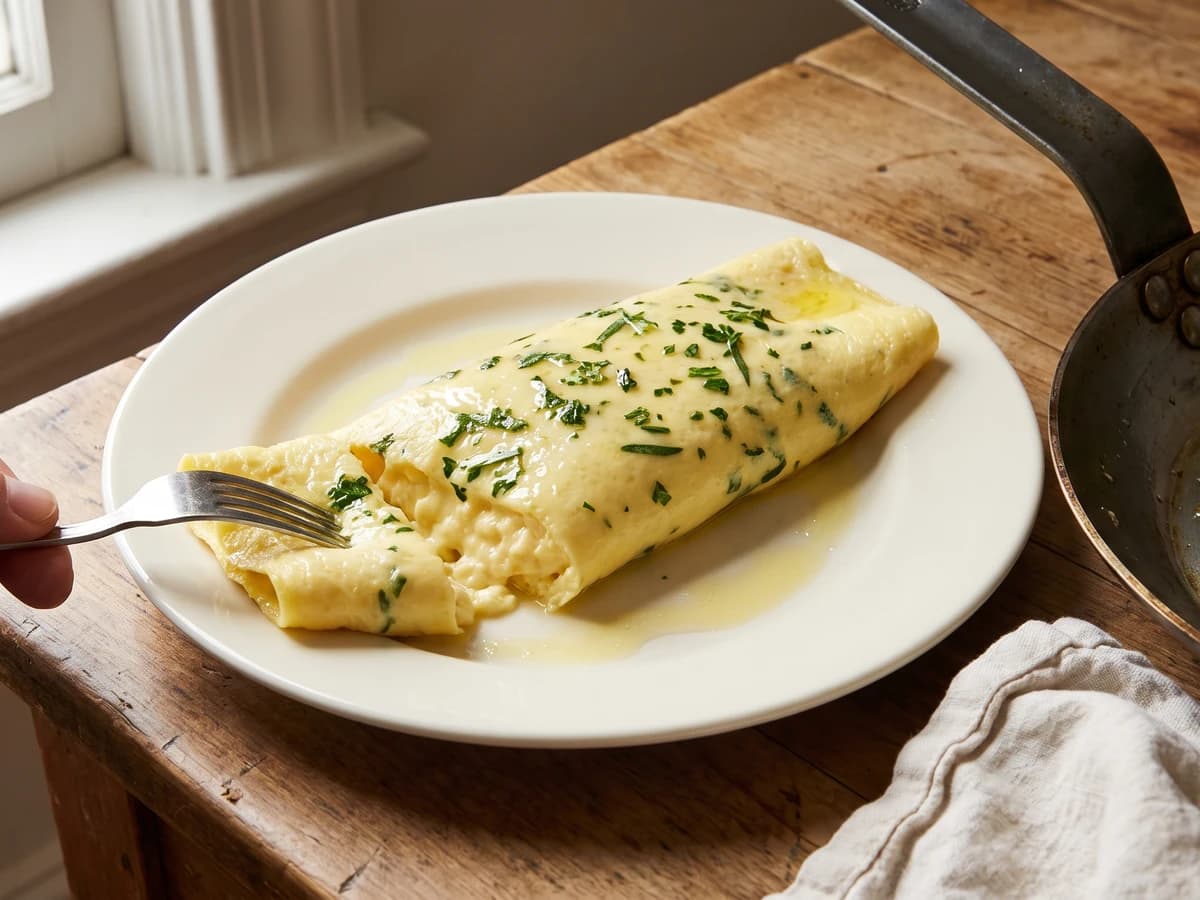
Four tender herbs, hot butter, and two eggs per pan: this rolled omelette teaches the quick hand and good judgment that keep the outside pale and the center creamy.
Chef Juliette
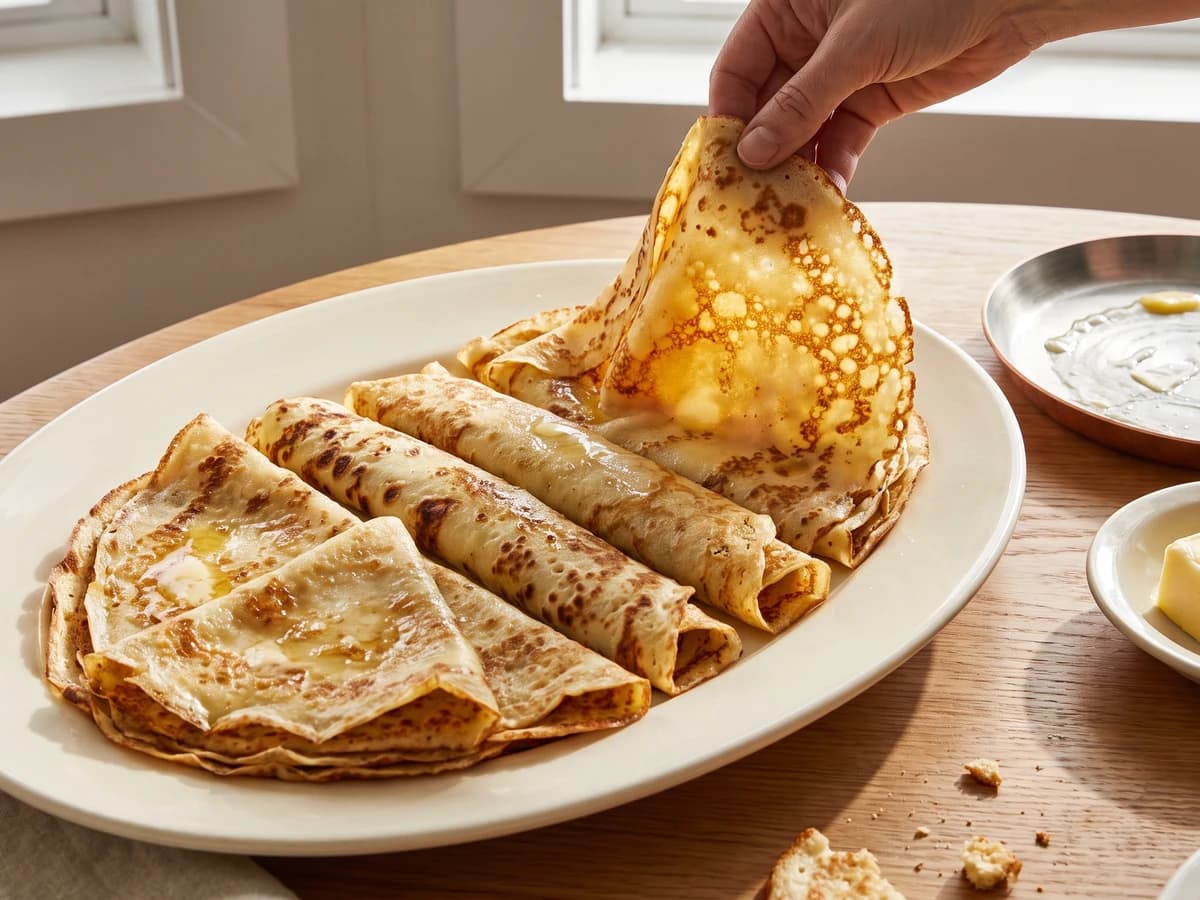
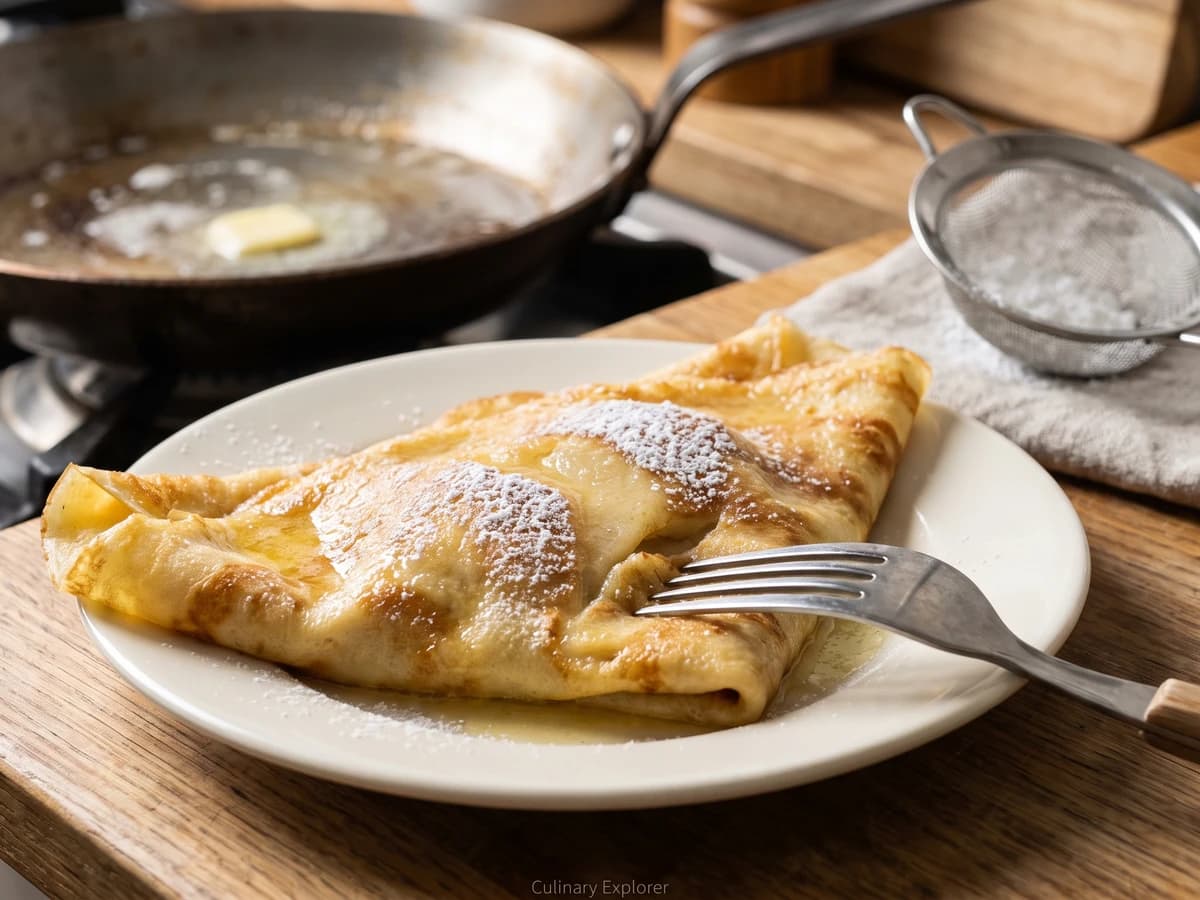
Four batters, one lesson: let the flour drink deeply before cooking, then spread the batter thinly in butter for crêpes and pannequets that bend without becoming tough.
Chef Juliette
Crêpes au Couvent trap ripe Williams pear dice between two thin pours of sweet batter, then turn in one clean toss and reach the table butter-gold, powdered, and burning hot.