Chef Juliette
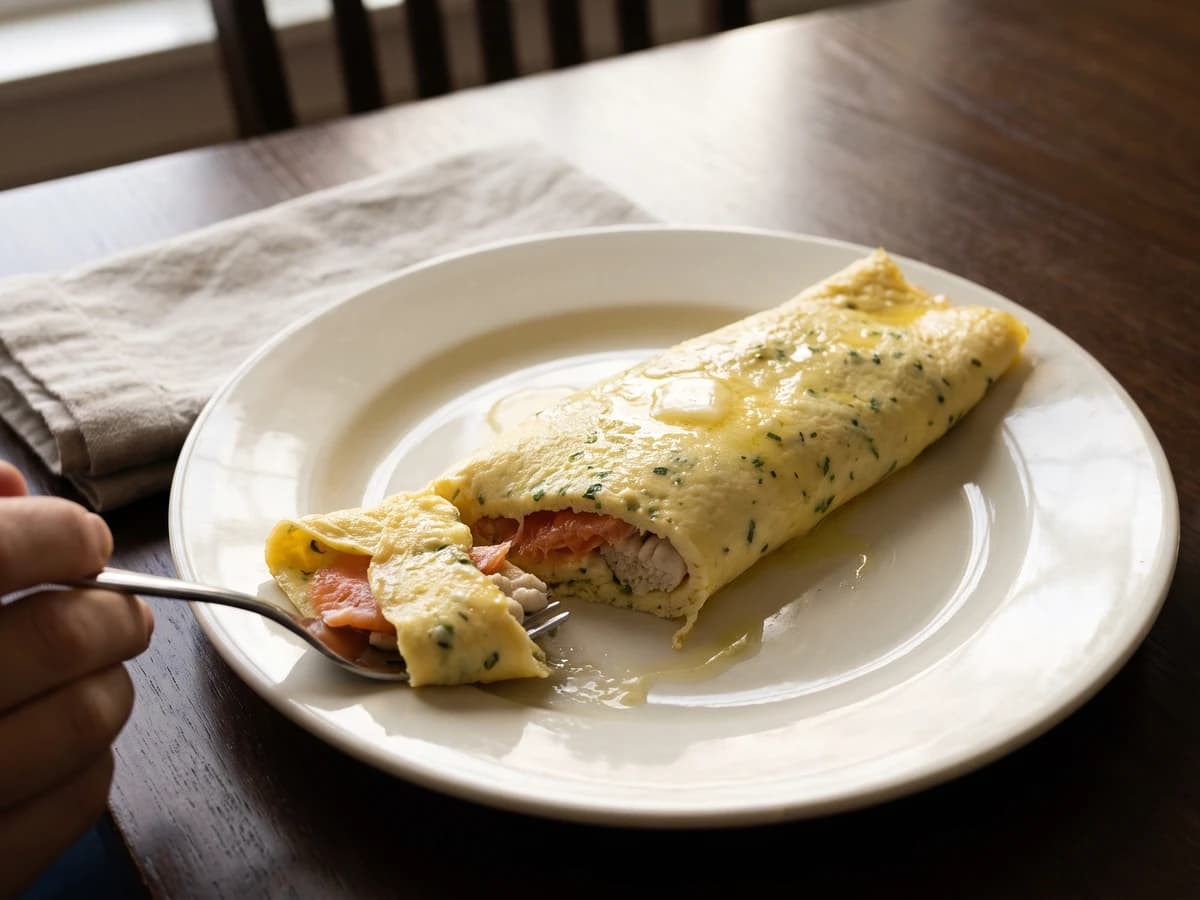
Omelette à l’Écossaise
A creamy omelette aux fines herbes closes around smoked-salmon-wrapped herring milts, gently poached in butter. Have the filling ready, then roll the eggs while they still shine.
A cooking platform built around craft, culture, and the stories behind what we eat.
Created by Chef Juliette
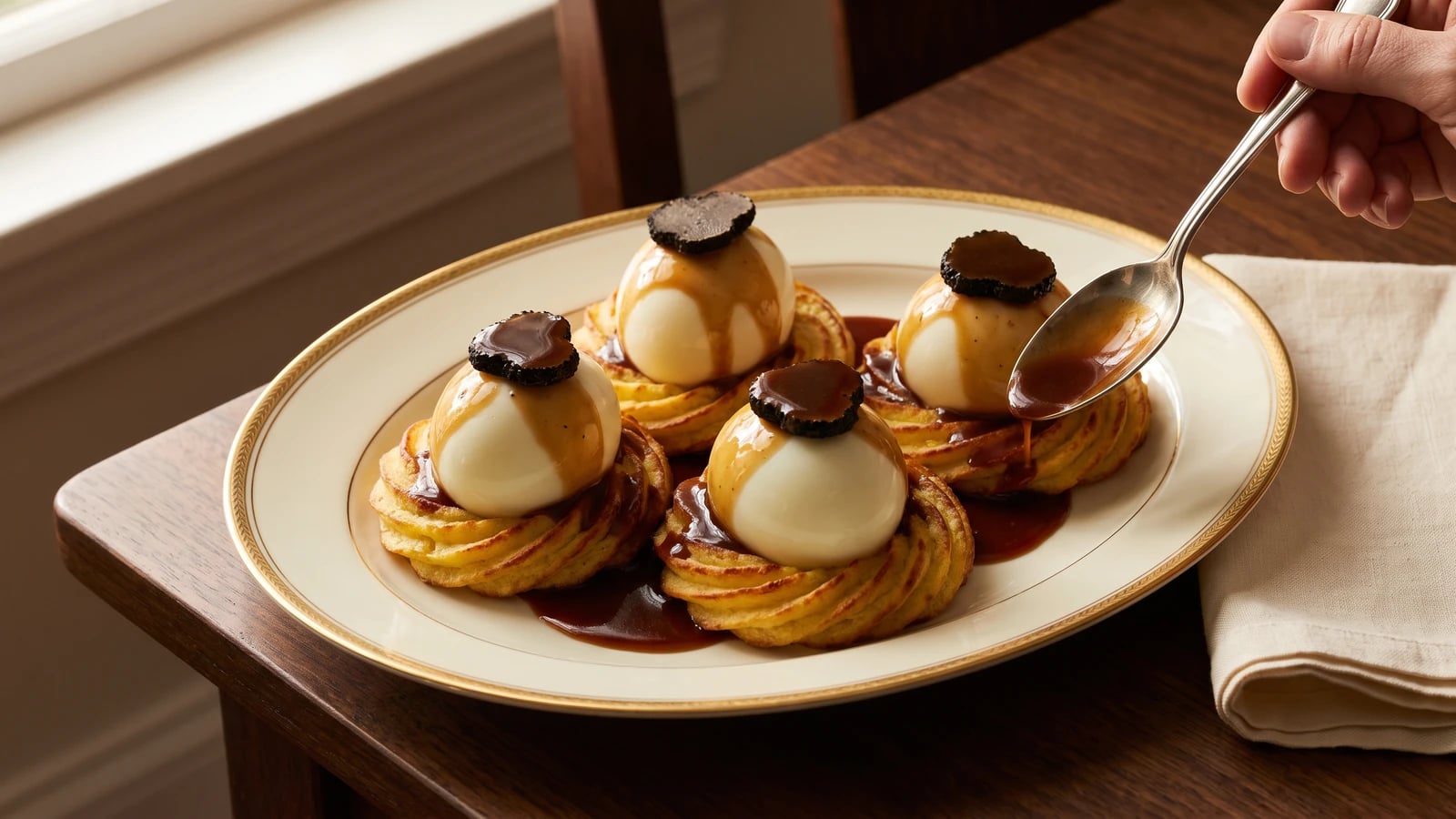
Based on No. 451, Moulded Eggs à la Duchesse, from Le Guide Culinaire (1907) by Auguste Escoffier
Four truffle-crowned eggs, gently moulded in a bain-marie, sit on gilded Duchesse-potato galettes beneath glossy veal gravy. The lesson is timing: finish every pedestal and sauce before the yolks begin to set.
Œufs moulés à la Duchesse (moulded eggs on fluted Duchesse-potato rounds) teaches orchestration. The one true thing to know before touching a pan is this: the gravy must be glossy, the galettes golden, and the platter warm before the eggs enter their bain-marie (hot-water bath). A softly poached yolk will wait for no saucier.
The original assumed a saucier on staff, veal stock never off the fire, rows of buttered baba-moulds, Duchesse potatoes waiting in a piping bag, and a salamander ready to color them. A home kitchen gets four tapered moulds, good unsalted veal stock reduced in a small pan and bound with beurre manié (kneaded butter and flour), plus a hot oven for the final gilding. Separate brigade stations were scaffolding, so they collapse into one careful sequence for four. The truffle floor, the moulded bain-marie poach, the fluted potato galette, and the thick veal gravy are the dish, so every one stays. One cook, one stove, one evening.
When it lands correctly, each egg is a tender white dome crowned with black truffle, its yolk still flowing over butter-rich potato beneath a mahogany veil of gravy. Prepare everything that can wait first. Then poach the eggs, unmould them, and serve without hesitation.
Œufs moulés à la Duchesse belongs to the Parisian grand-kitchen repertoire, where composed egg dishes appeared as entrées and their names encoded a cooking method, a garnish, and a sauce. Duchesse is not a regional claim or a reliable portrait of one particular noblewoman; here it names the butter-and-yolk-enriched potato preparation shaped into a fluted pedestal. The truffle-lined mould and thick veal gravy show how the everyday egg traveled into formal service without surrendering the soft yolk at its heart.
Quantity
1 pound (450 g)
peeled and cut into 1-inch (2.5 cm) chunks
Quantity
1 tablespoon plus 1 teaspoon (20 ml / 24 g)
divided
Quantity
3 tablespoons (45 ml / 42 g)
cut into pieces
Quantity
3
divided
Quantity
1 teaspoon (5 ml / 5 g)
Quantity
2 cups (480 ml / 480 g)
Quantity
2 teaspoons (10 ml / 9 g)
softened
Quantity
1 tablespoon (15 ml / 8 g)
Quantity
1/4 teaspoon (1.25 ml / 0.6 g)
divided
Quantity
1 tablespoon (15 ml / 14 g)
very soft
Quantity
4 broad slices (about 1/3 ounce / 10 g)
fresh, or preserved and drained
Quantity
4
at cool room temperature
| Ingredient | Quantity |
|---|---|
| Yukon Gold or other floury potatoespeeled and cut into 1-inch (2.5 cm) chunks | 1 pound (450 g) |
| fine sea saltdivided | 1 tablespoon plus 1 teaspoon (20 ml / 24 g) |
| unsalted butter for the potatoescut into pieces | 3 tablespoons (45 ml / 42 g) |
| large egg yolksdivided | 3 |
| water | 1 teaspoon (5 ml / 5 g) |
| good-quality unsalted veal stock | 2 cups (480 ml / 480 g) |
| unsalted butter for the beurre maniésoftened | 2 teaspoons (10 ml / 9 g) |
| all-purpose flour | 1 tablespoon (15 ml / 8 g) |
| ground white pepperdivided | 1/4 teaspoon (1.25 ml / 0.6 g) |
| unsalted butter for the mouldsvery soft | 1 tablespoon (15 ml / 14 g) |
| black trufflefresh, or preserved and drained | 4 broad slices (about 1/3 ounce / 10 g) |
| large eggsat cool room temperature | 4 |
Heat the oven to 425°F (220°C), with a rack in the upper third, and line a small baking sheet. Pour the veal stock into a wide saucepan and hold it at a lively simmer until reduced to 1 cup (240 ml), about 20 to 25 minutes. Mash the softened butter and flour together until completely smooth, then whisk the beurre manié into the simmering stock in small pieces. Simmer for 3 minutes, whisking, until the gravy coats the back of a spoon in an even film. Season with 1/4 teaspoon of the salt and a small pinch of white pepper. Cover and hold over the gentlest heat. If it tightens while waiting, whisk in hot water a teaspoon at a time; if it remains thin, simmer it uncovered for another minute or two.
Put the potatoes in a saucepan, cover them with cold water by 1 inch (2.5 cm), and add 1 tablespoon of the salt. Bring to a gentle boil and cook for 15 to 18 minutes, until a knife passes through without resistance. Drain thoroughly, return the potatoes to the dry pan, and shake them over low heat for 1 to 2 minutes to drive off surface moisture. Press them through a potato ricer while hot. Beat in the 3 tablespoons of butter, 1/2 teaspoon salt, and another small pinch of white pepper. Let the purée cool for 2 minutes, then beat in 2 egg yolks just until smooth. It must hold a clean ridge; if it slumps, spread it on a plate and chill it for 10 minutes. Don't add flour, which makes the galettes heavy.
Fit a piping bag with a 1/2-inch (1.25 cm) open-star tip and fill it with the warm Duchesse potatoes. Pipe four tight, solid spiral galettes on the lined sheet, each about 3 1/2 inches (9 cm) wide and 1/2 inch (1.25 cm) high. Keep the centers level so the eggs won't lean. Whisk the remaining yolk with the water, then brush a thin coat over the ridges without crushing them. This is the gilding called for in the original method: beaten egg gives the potato its burnished surface under strong heat.
Bake the galettes for 12 to 15 minutes, rotating the sheet once if needed, until the fluted ridges are deep butter-gold and the bases feel firm enough to lift. Transfer them carefully to a warmed oval platter and arrange them in a crown. Reduce the oven to 325°F (165°C). Keep the platter warm while you poach the eggs, but don't cover the galettes or their ridges will soften.
Generously butter four baba-moulds, the small tapered cylindrical moulds that widen toward the rim. Coat the bottoms and sides completely, because an unbuttered patch is where the egg will catch. Lay one broad truffle slice flat in the bottom of each. Crack every egg into a separate cup first, then slide one gently into each mould without disturbing the truffle. Season the eggs with the remaining 1/4 teaspoon salt and white pepper. Set the moulds on a folded kitchen towel inside a deep roasting pan; the towel keeps them steady in the water.
Pour just-boiled water into the roasting pan until it reaches halfway up the sides of the moulds. Transfer the bain-marie to the 325°F (165°C) oven and poach for 9 to 13 minutes, checking metal moulds at 9 minutes and ceramic ones at 11. The whites should look opaque and barely set while the centers still quiver over the liquid yolks. The water must remain calm; if it bubbles hard, pull the pan out, add a splash of cool water, and lower the oven slightly. Lift the moulds from the bath and rest them for only 30 seconds. Residual heat finishes the whites quickly.
Run a thin flexible knife around the upper edge of each egg without reaching the yolk. Invert one mould directly over each galette, tap it once, and lift vertically so the black truffle appears at the crown. If an egg sticks, dip the base of its mould back into the hot water for 5 seconds and loosen the edge again. If a little white tears, turn that side inward and cover it with gravy. Ça se rattrape. Whisk the warm gravy until glossy, then spoon it generously over each egg so it coats the dome and pools lightly on the potato without hiding every gilded ridge. Serve at once. À table!
1 serving (about 240g)
Culinary guides, cultural storytelling, and the editorial depth that makes cooking meaningful.
Discover Culinary ExplorerChef Juliette
A creamy omelette aux fines herbes closes around smoked-salmon-wrapped herring milts, gently poached in butter. Have the filling ready, then roll the eggs while they still shine.
Chef Juliette
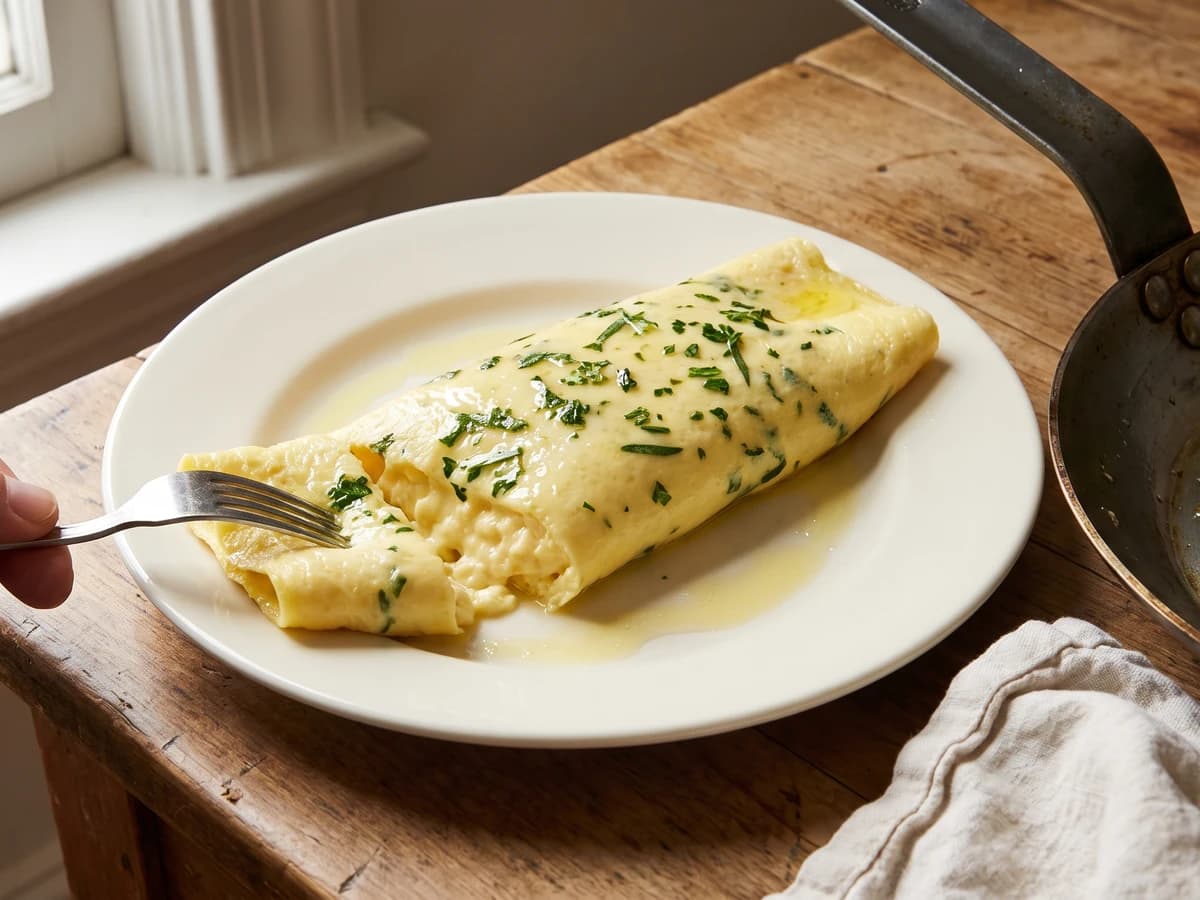
Four tender herbs, hot butter, and two eggs per pan: this rolled omelette teaches the quick hand and good judgment that keep the outside pale and the center creamy.
Chef Juliette
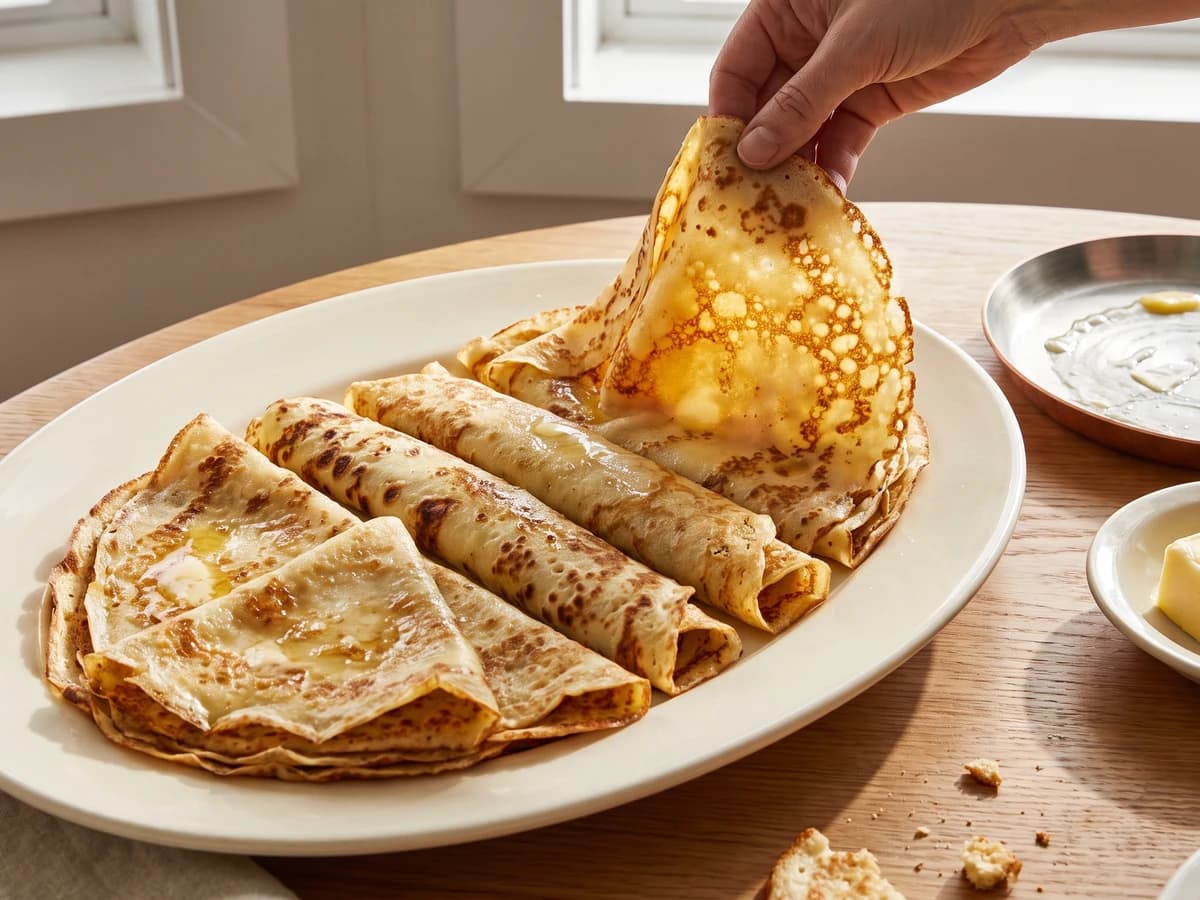
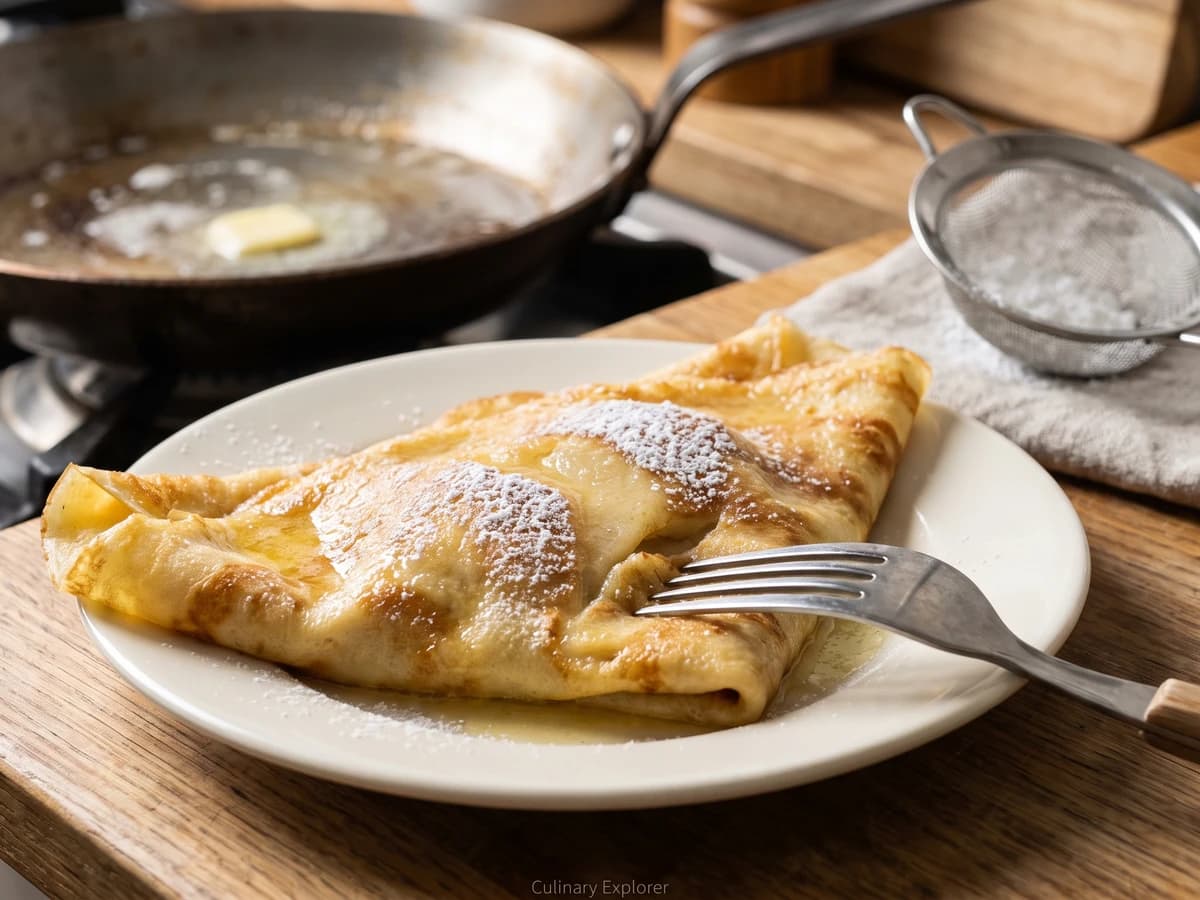
Four batters, one lesson: let the flour drink deeply before cooking, then spread the batter thinly in butter for crêpes and pannequets that bend without becoming tough.
Chef Juliette
Crêpes au Couvent trap ripe Williams pear dice between two thin pours of sweet batter, then turn in one clean toss and reach the table butter-gold, powdered, and burning hot.