Chef Juliette
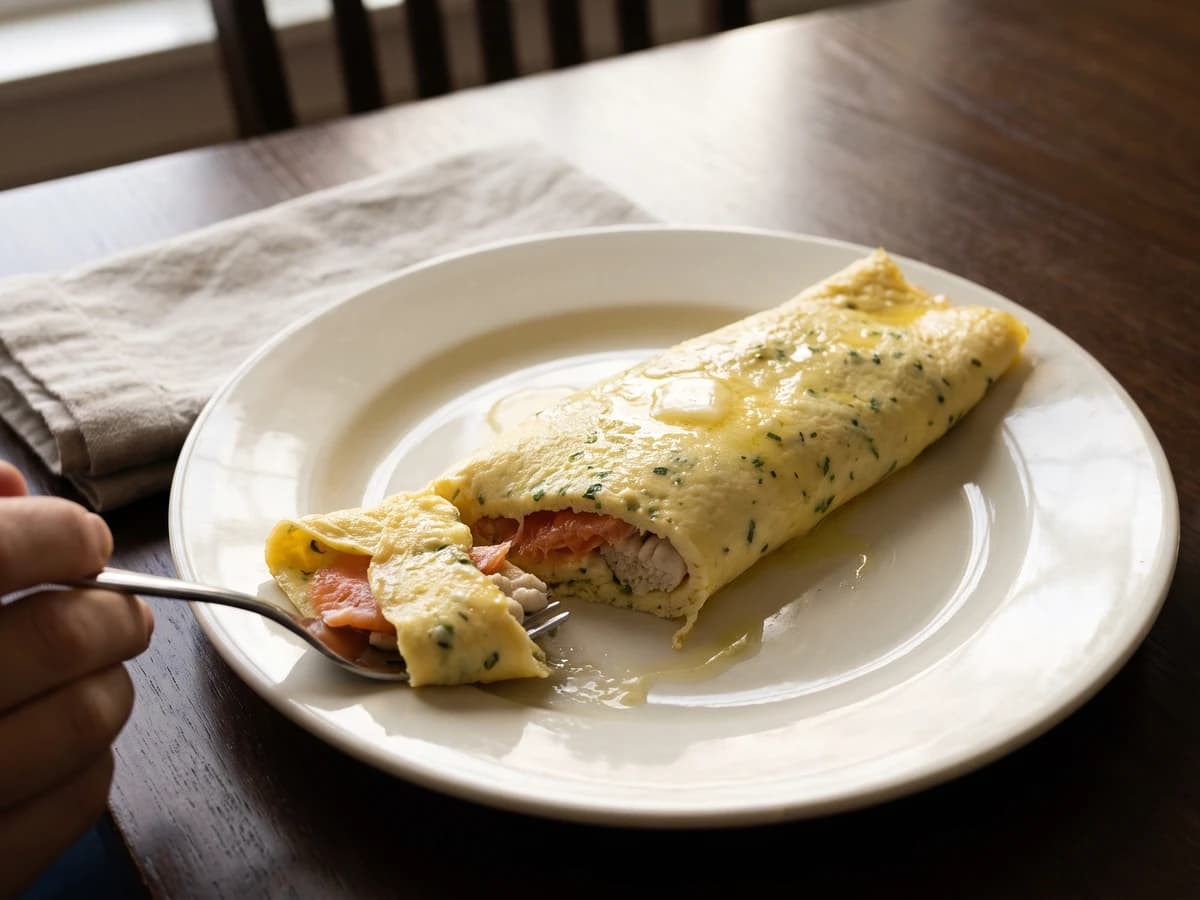
Omelette à l’Écossaise
A creamy omelette aux fines herbes closes around smoked-salmon-wrapped herring milts, gently poached in butter. Have the filling ready, then roll the eggs while they still shine.
A cooking platform built around craft, culture, and the stories behind what we eat.
Created by Chef Juliette
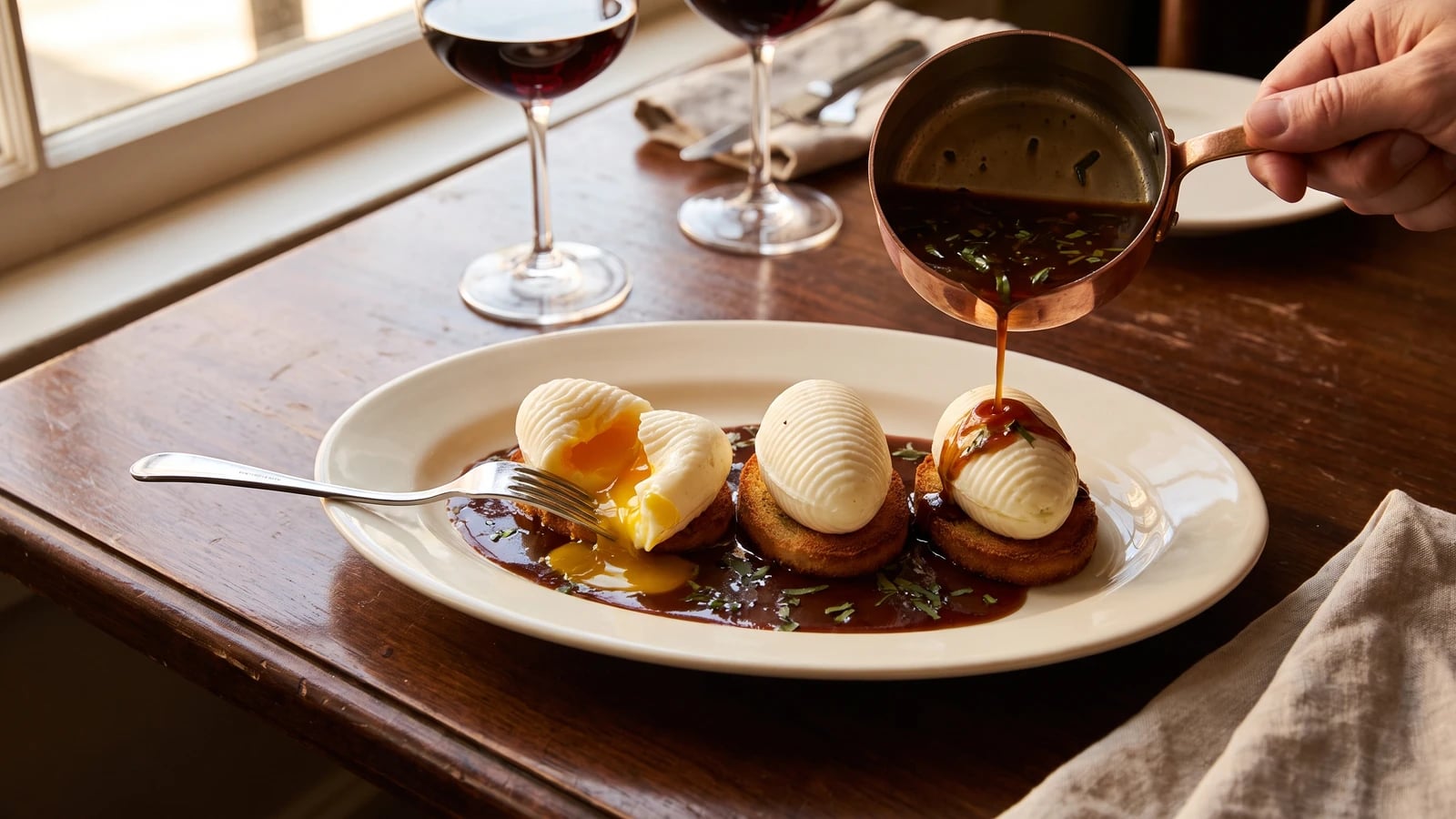
Based on No. 450, Moulded Eggs à la Carignan, from Le Guide Culinaire (1907) by Auguste Escoffier
Shell-moulded eggs teach the gentleness of the bain-marie: a tender yolk held in fine chicken forcemeat, turned onto butter-fried toast, then covered with glossy Châteaubriand sauce.
Œufs moulés à la Carignan (shell-moulded eggs with chicken forcemeat and Châteaubriand sauce) teach one precise lesson: gentle heat must set three textures at once. The forcemeat must cook through, the white must turn tender and opaque, and the yolk must remain yielding. Before touching a pan, know this: the bain-marie, a hot-water bath, must quiver, never boil.
The original assumed a saucier on staff, a stock never off the fire, fine poultry forcemeat waiting in the cold, and trays of narrow scallop-shell Madeleine-moulds. At home, a small processor makes the forcemeat, gelatin-rich stock reduces into the sauce foundation, and four large shell moulds or oval metal ramekins replace the brigade tray. The production volume and holding pots were scaffolding, so they go. The thin lining, gentle poach, matching butter-fried toast, and sauce Châteaubriand are the dish, so they stay. One cook, one stove, one evening.
Turned out properly, each egg keeps the ridges of its mould and sits proudly on a crisp golden croûton, with mahogany sauce gleaming over the pale shell and soft yolk. Cooking well is not cooking fancy. Watch the water, not the clock: the quiet bain-marie decides the dish.
Œufs moulés à la Carignan belong to the named-garnish vocabulary of Parisian grande cuisine, where a mould, a lining, a shaped croûton, and a finished sauce gave each egg preparation its identity. The title does not indicate the Carignan grape or a southern regional pantry: the defining combination is the narrow scallop-shell Madeleine-mould, chicken forcemeat or crayfish butter, and sauce Châteaubriand. What appears as banquet service rests on domestic techniques, gentle bain-marie poaching and bread fried in butter, which is why the dish still makes sense at a small special-occasion table.
Quantity
3½ ounces (100 g)
very cold and diced
Quantity
1 tablespoon (15 ml / 15 g)
very cold
Quantity
2 tablespoons (30 ml / 30 g)
very cold, with 1 teaspoon reserved
Quantity
¼ teaspoon (1.25 ml / 1.5 g), plus more as needed
Quantity
⅛ teaspoon (0.6 ml / 0.3 g), plus more as needed
Quantity
1 tablespoon (15 ml / 14 g)
softened
Quantity
¼ cup (60 ml / 55 g)
softened, for use in place of the chicken forcemeat
Quantity
4
Quantity
½ cup (120 ml / 120 g)
Quantity
1 small (about 2 tablespoons / 30 ml / 25 g)
finely chopped
Quantity
⅓ cup loosely packed (80 ml / 25 g)
thinly sliced if using whole mushrooms
Quantity
1 sprig
Quantity
1 small
Quantity
1¼ cups (300 ml / 300 g)
preferably gelatin-rich
Quantity
4 tablespoons (60 ml / 56 g)
cold and diced
Quantity
1 teaspoon (5 ml / 5 g)
Quantity
1 tablespoon (15 ml / 3 g)
finely chopped
Quantity
4 thick slices
Quantity
3 tablespoons (45 ml / 42 g)
| Ingredient | Quantity |
|---|---|
| boneless, skinless chicken breastvery cold and diced | 3½ ounces (100 g) |
| liquid egg whitevery cold | 1 tablespoon (15 ml / 15 g) |
| heavy creamvery cold, with 1 teaspoon reserved | 2 tablespoons (30 ml / 30 g) |
| fine sea salt | ¼ teaspoon (1.25 ml / 1.5 g), plus more as needed |
| ground white pepper | ⅛ teaspoon (0.6 ml / 0.3 g), plus more as needed |
| unsalted butter for the mouldssoftened | 1 tablespoon (15 ml / 14 g) |
| beurre d’écrevisse, or crayfish butter (optional)softened, for use in place of the chicken forcemeat | ¼ cup (60 ml / 55 g) |
| large eggs | 4 |
| dry white wine | ½ cup (120 ml / 120 g) |
| shallotfinely chopped | 1 small (about 2 tablespoons / 30 ml / 25 g) |
| button-mushroom trimmings or button mushroomsthinly sliced if using whole mushrooms | ⅓ cup loosely packed (80 ml / 25 g) |
| thyme | 1 sprig |
| bay leaf | 1 small |
| rich unsalted veal or beef stockpreferably gelatin-rich | 1¼ cups (300 ml / 300 g) |
| unsalted butter for the saucecold and diced | 4 tablespoons (60 ml / 56 g) |
| fresh lemon juice | 1 teaspoon (5 ml / 5 g) |
| fresh tarragonfinely chopped | 1 tablespoon (15 ml / 3 g) |
| day-old pain de mie or firm white sandwich bread | 4 thick slices |
| unsalted butter for frying the toast | 3 tablespoons (45 ml / 42 g) |
Keep the chicken, egg white, cream, and processor bowl thoroughly cold. Pulse the chicken with the measured salt and white pepper until it forms a sticky paste, scrape down the bowl, then pulse in the egg white. Add all but the reserved teaspoon of cream in a thin stream and stop as soon as the farce de volaille, the fine chicken forcemeat, becomes smooth and cohesive. Press it through a fine sieve for the cleanest shell pattern. Poach a teaspoonful in barely simmering water until cooked through, then taste and correct the seasoning. If the farce grows loose or greasy, it has become too warm. Stop, chill it over ice until firm, then work in the reserved cold cream. Do not force a warm emulsion to behave.
Combine the wine, shallot, mushroom trimmings, thyme, and bay leaf in a small saucier. Boil briskly until about 2 tablespoons remain and the wine smells rounded rather than raw. Add the stock and simmer until reduced to about ⅔ cup, glossy enough to coat the back of a spoon. Strain into a clean pan and discard the aromatics. Off the heat, whisk in the cold butter a few pieces at a time, then add the lemon juice and tarragon. Taste before adding salt. If the sauce separates, put a teaspoon of cold water in a clean pan and whisk the broken sauce into it gradually. Ça se rattrape. Hold the sauce over warm, never simmering, water.
Heat the oven to 325°F (165°C). Butter four individual Madeleine-moulds, narrow scallop-shell moulds holding about 3½ to 4 ounces each. Spread the cold farce over the base and sides in an even layer about ⅛ inch (3 mm) thick, leaving no gaps and stopping just below the rim. If using beurre d’écrevisse instead, spread 1 tablespoon inside each buttered mould. Set the moulds level in a deep roasting pan. Break each egg into a cup first, then slide it into the centre of a prepared mould so no shell or broken yolk spoils the batch. Season lightly.
Pour very hot water into the roasting pan until it reaches halfway up the moulds. Cover loosely with a lid or foil, leaving one corner open so excess moisture can escape. Bake for 10 to 13 minutes, checking at 9 minutes. The water should barely tremble, the egg whites should be opaque but softly yielding, and the thin chicken lining should register 165°F (74°C) at its outer edge. If the bath begins bubbling, lift the pan out, add a little cool water to the bath, and lower the oven by 20°F (10°C). If the white remains translucent, return the pan for 1 to 2 minutes. Moulds lined with beurre d’écrevisse usually need only 7 to 9 minutes because there is no poultry layer to cook.
While the eggs poach, use an empty mould as a template to cut the bread into four elongated ovals matching its outline. Melt the frying butter in a broad pan over medium heat. When its foam subsides, fry the croûtons until deep butter-gold and crisp on both sides, about 2 minutes per side. Butter, not oil. The browned milk solids belong to the flavour of the dish. Drain the croûtons briefly on a rack and arrange them on a warm platter.
Lift the moulds from the bain-marie and rest them for 1 minute. Run a thin knife only around the upper rim, place a croûton over each mould, and invert the two together so the egg lands directly on its toast. If one clings, set the bottom of the mould back in the hot water for 5 seconds, loosen the rim again, and try once more. Nappe each egg with warm sauce Châteaubriand, coating it generously while leaving a little shell pattern visible. Serve immediately, while the toast remains crisp and the yolk soft. À table!
1 serving (about 180g)
Culinary guides, cultural storytelling, and the editorial depth that makes cooking meaningful.
Discover Culinary ExplorerChef Juliette
A creamy omelette aux fines herbes closes around smoked-salmon-wrapped herring milts, gently poached in butter. Have the filling ready, then roll the eggs while they still shine.
Chef Juliette
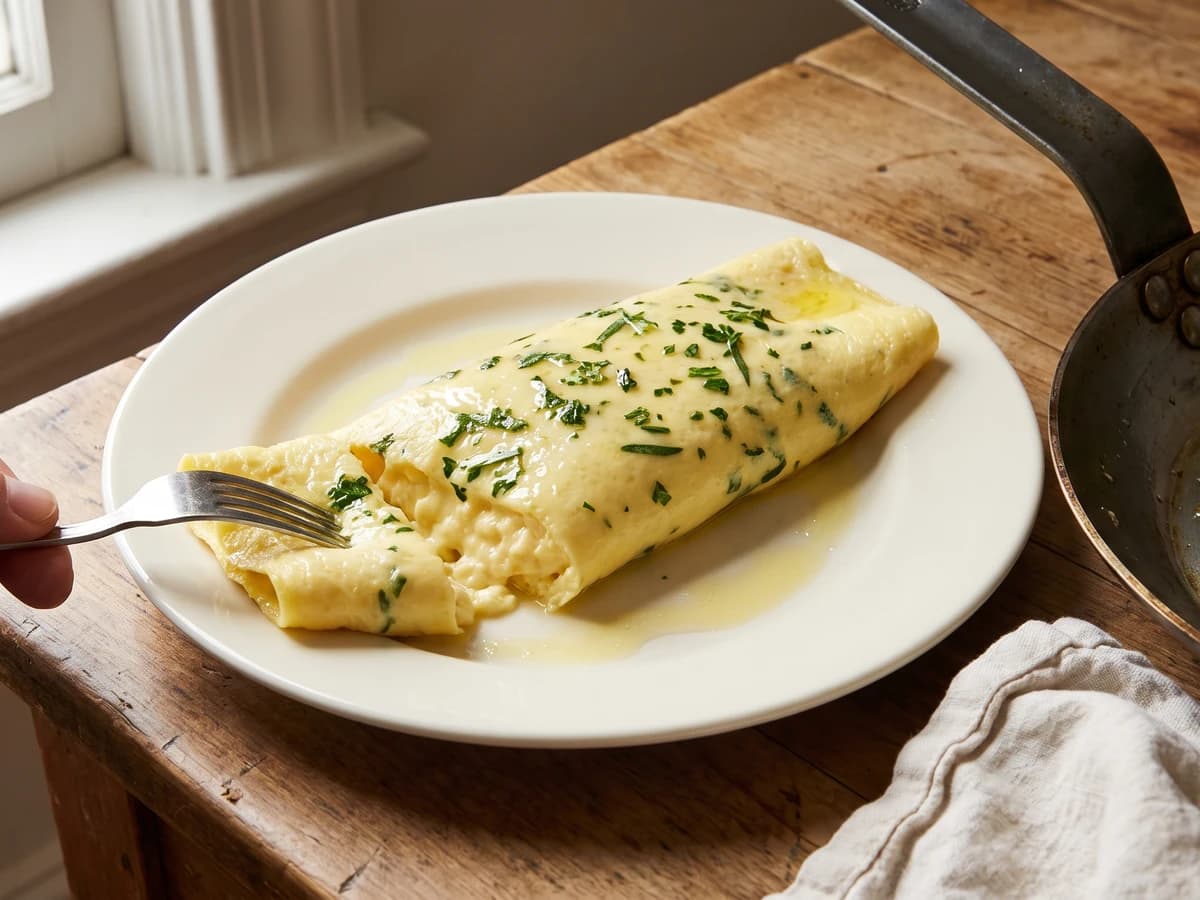
Four tender herbs, hot butter, and two eggs per pan: this rolled omelette teaches the quick hand and good judgment that keep the outside pale and the center creamy.
Chef Juliette
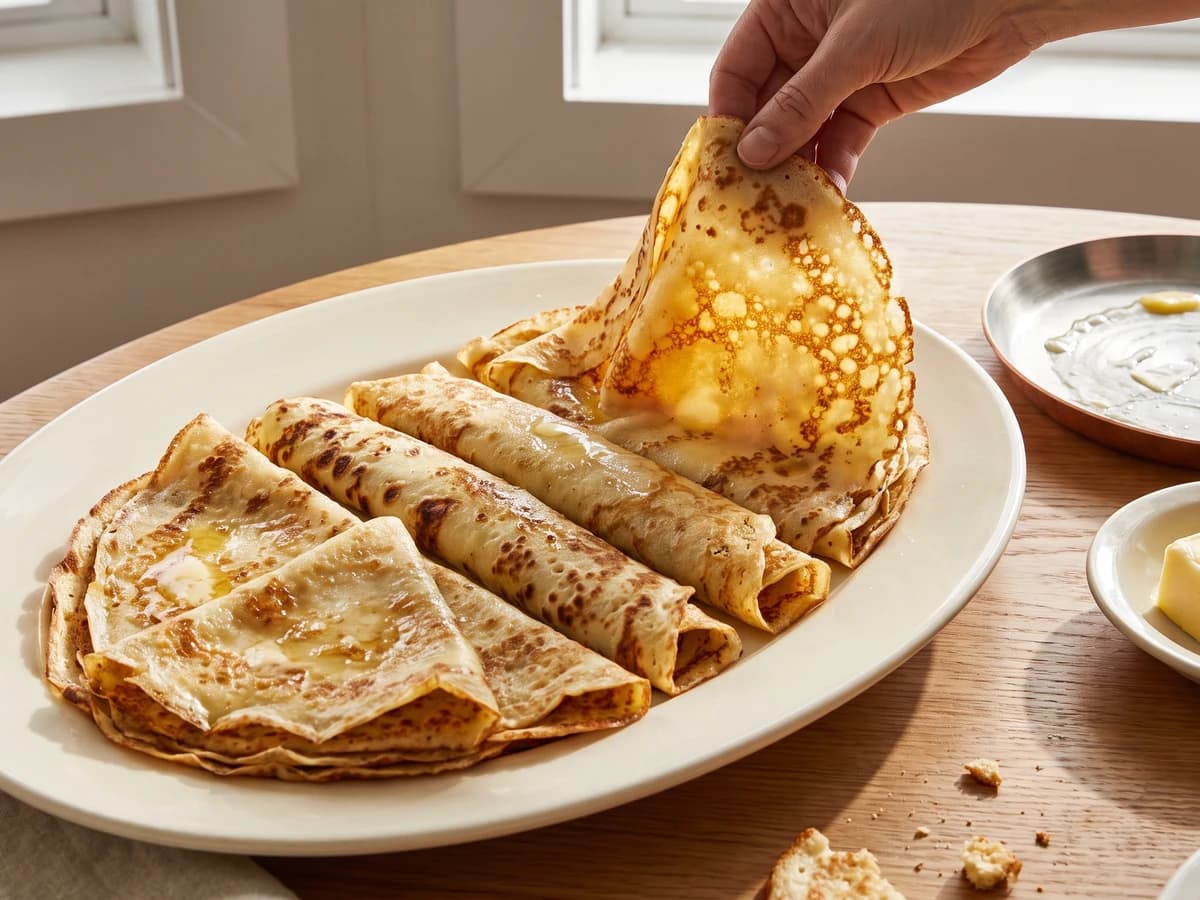
Four batters, one lesson: let the flour drink deeply before cooking, then spread the batter thinly in butter for crêpes and pannequets that bend without becoming tough.
Chef Juliette
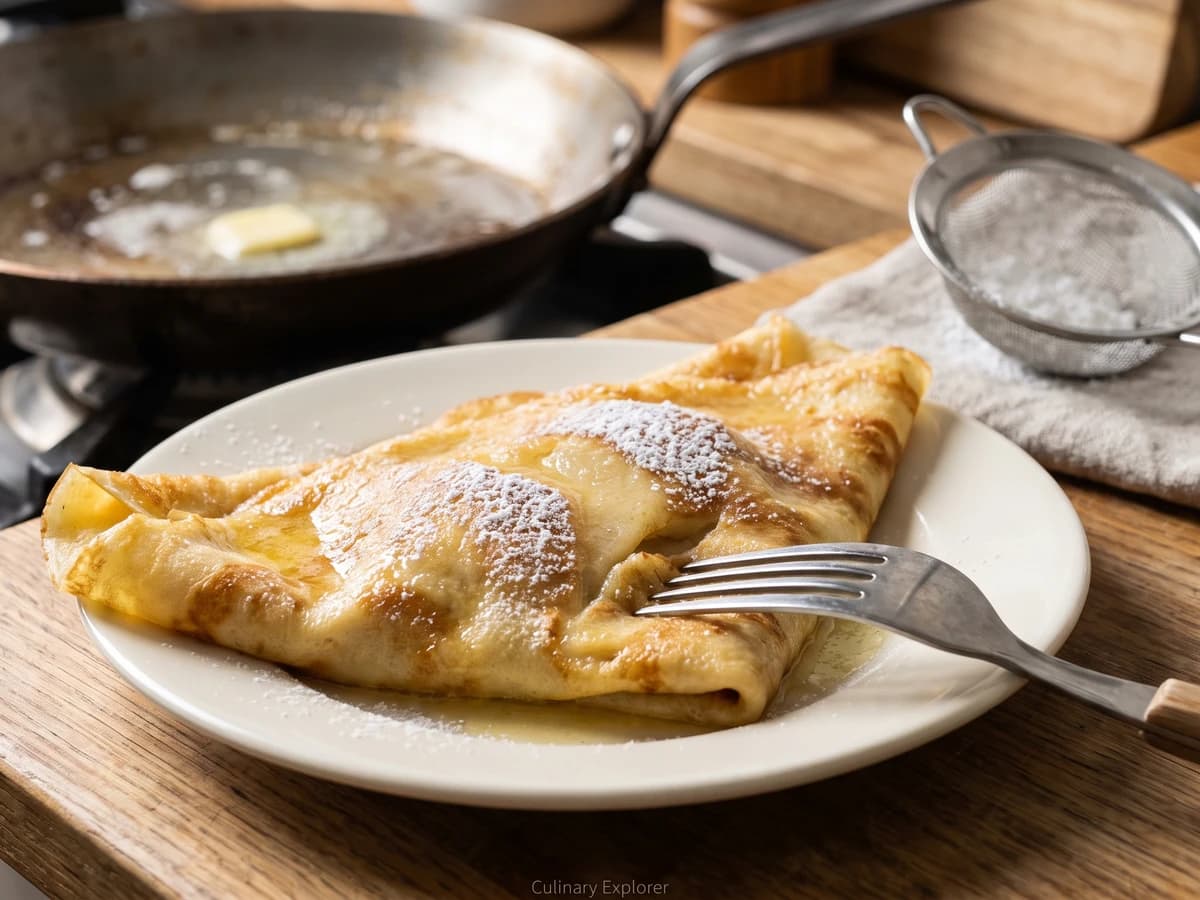
Crêpes au Couvent trap ripe Williams pear dice between two thin pours of sweet batter, then turn in one clean toss and reach the table butter-gold, powdered, and burning hot.