Chef Juliette
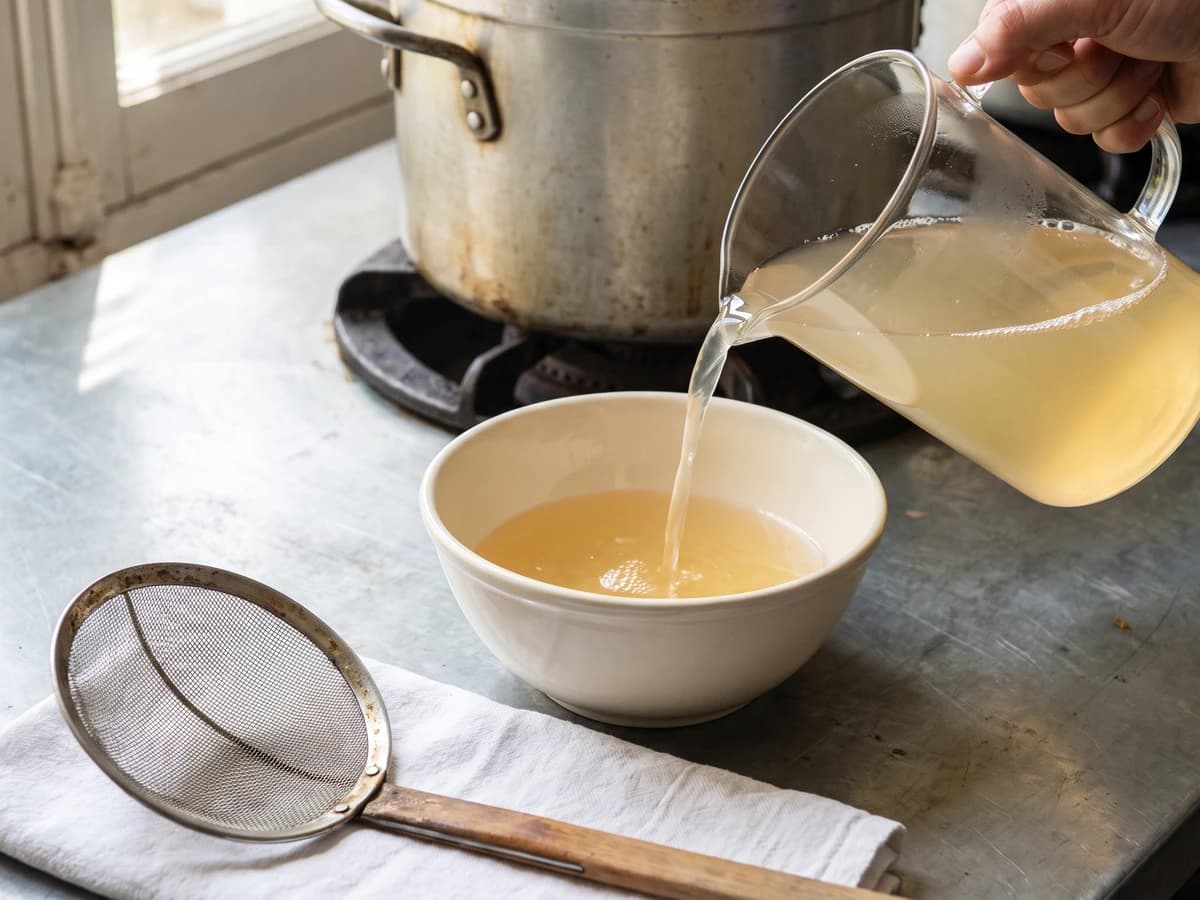
Ordinary or White Consommé
Beef shin, lean beef, and fowl begin in cold water and rise slowly toward a tremble. Skim before the boil, and you learn the quiet discipline that gives every clear French broth its backbone.
A cooking platform built around craft, culture, and the stories behind what we eat.
Created by Chef Juliette
Based on No. 45, Marrow Sauce, from Le Guide Culinaire (1907) by Auguste Escoffier
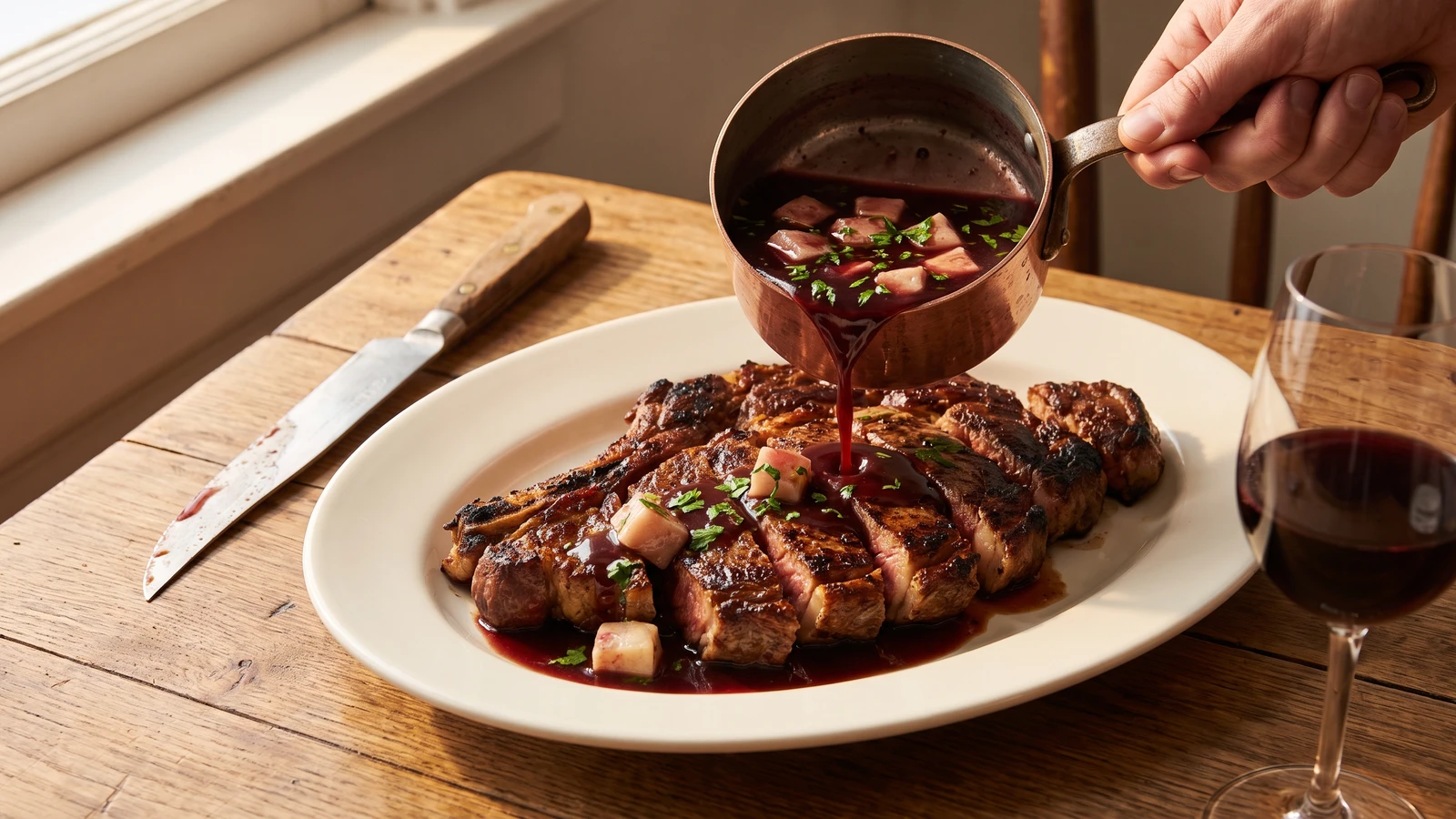
Wine-dark Sauce à la moelle brings tender cubes of poached marrow and bright scalded parsley to Bordelaise, a precise finish for grilled beef or, enriched with butter, vegetables.
Sauce à la moelle (marrow sauce) teaches the logic of a derivative sauce: the base does the long work, and the final garnish gives it a new identity. The one true thing to know before touching a pan is that marrow wants gentle handling. Poach it just until tender and add it after the sauce is ready; boil those cubes in the sauce and they disappear into grease.
The original entry assumed a saucier at the stove, Sauce Bordelaise (No. 32) standing ready, and a stockpot never cold. For one cook, one stove, one evening, the honest equivalent is a completed two-quart batch of that referenced sauce, reheated while you poach the marrow and scald the parsley. This scales the open-ended brigade quantity to a home batch while keeping the book's ratios intact: six ounces of marrow, one teaspoon of parsley, and, for vegetables, three ounces of butter per quart. The linen straining and long simmer belong to the Bordelaise entry and need not be repeated here; that is brigade scaffolding. The finished base, gentle poach, and late garnish are the dish, and they stay.
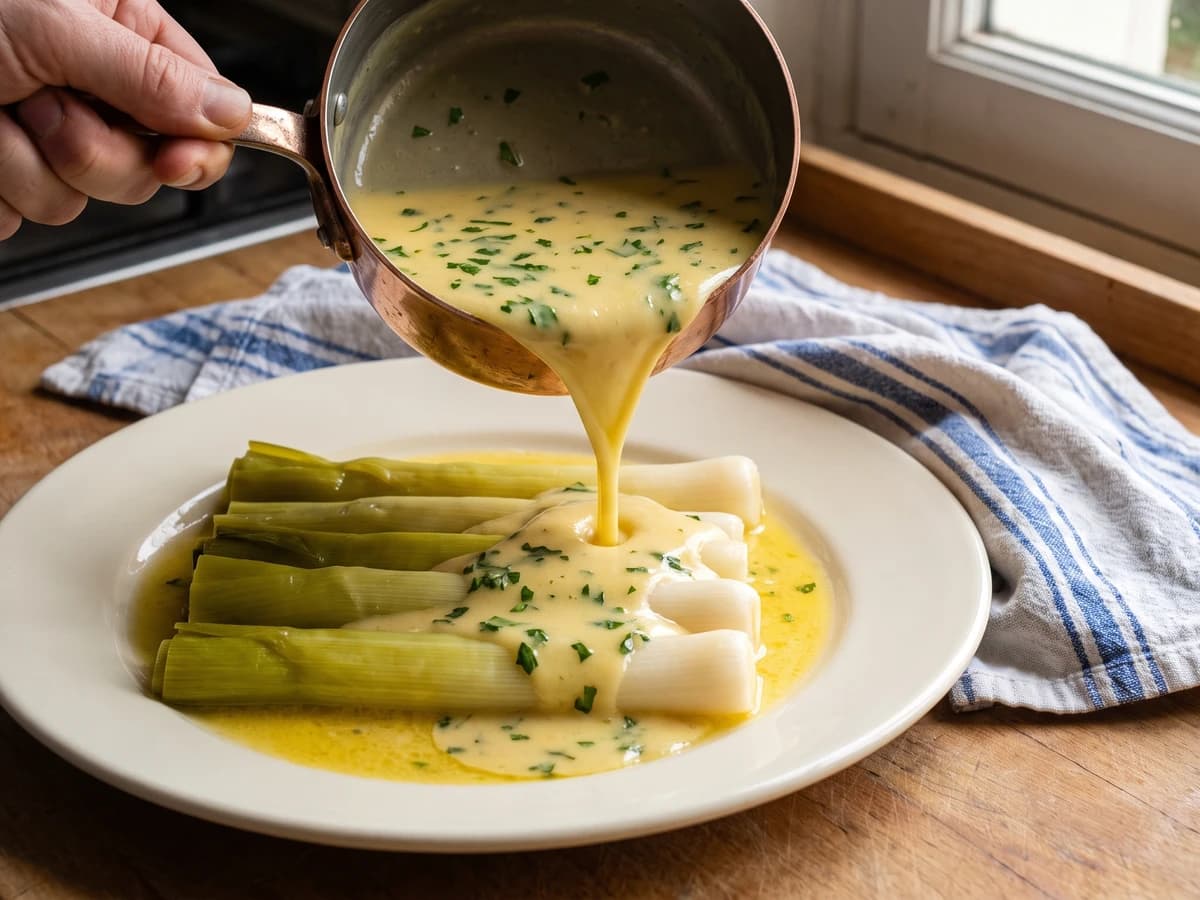
At the table, the sauce should be wine-dark and glossy, carrying pale cubes of marrow that soften under the tongue and green parsley that keeps the richness alert. Leave it clear for grilled butcher's meat, or monter au beurre away from the heat when it accompanies vegetables. Keep your eye on the marrow poach, because that brief minute decides the whole sauce.
Although its parent sauce points toward Bordeaux in southwestern France, Sauce à la moelle belongs to the classical derivative-sauce repertoire rather than to a single Bordelais household table. The red-wine and marrow affinity served with grilled butcher's meat traveled into grand kitchens, where a final garnish gave each derivative its identity. In this source, Sauce Bordelaise already carries marrow; Sauce à la moelle is not a renaming, but a more generous marrow finish marked by scalded parsley.
Quantity
8 cups (1.9 L / approximately 2 kg) Sauce Bordelaise (No. 32)
Quantity
About 1½ cups (355 ml / 340 g / 12 oz)
cut into ½-inch cubes
Quantity
2 teaspoons (10 ml / 4 g)
finely chopped
Quantity
8 cups (1.9 L / 1.9 kg)
divided
Quantity
2 teaspoons (10 ml / 12 g)
Quantity
¾ cup (180 ml / 170 g / 6 oz)
cut into small cubes
| Ingredient | Quantity |
|---|---|
| finished Sauce Bordelaise | 8 cups (1.9 L / approximately 2 kg) Sauce Bordelaise (No. 32) |
| cold beef marrowcut into ½-inch cubes | About 1½ cups (355 ml / 340 g / 12 oz) |
| flat-leaf parsleyfinely chopped | 2 teaspoons (10 ml / 4 g) |
| waterdivided | 8 cups (1.9 L / 1.9 kg) |
| fine sea salt | 2 teaspoons (10 ml / 12 g) |
| cold unsalted butter (optional)cut into small cubes | ¾ cup (180 ml / 170 g / 6 oz) |
Keep the marrow refrigerator-cold and cut it into neat ½-inch cubes with a thin, sharp knife, wiping the blade between cuts. If the marrow smears instead of cutting cleanly, stop and chill it for 10 minutes. Ça se rattrape. Cold marrow keeps its shape in the water and reaches the sauce as tender cubes rather than rendered fat.
Reserve 1 cup of the measured water and keep it cold. Bring the remaining water and salt to a full boil in a medium saucepan. Put the chopped parsley in a fine-mesh sieve, lower it into the boiling water for one second, then lift it out immediately. Drain well and press it gently between clean towels. The scald removes the raw edge while keeping the parsley green and distinct.
Return the salted water to a boil, then lower the heat until the surface barely trembles. Slide in the marrow and poach for 1 to 2 minutes, just until the outside turns pale and the cubes feel tender but remain intact. Drain at once and spread them in one layer on a folded towel. If fat begins beading rapidly across the water or the corners of the cubes blur, remove the pan from the heat, pour in the reserved cold water to arrest the cooking, and drain immediately. Ça se rattrape.
Pour the finished Sauce Bordelaise (No. 32) into a 4-quart saucepan and warm it over medium-low heat until it reaches a bare simmer and coats the back of a spoon. This is already a completed sauce, so do not rebuild its reduction or add another seasoning layer. If refrigeration has made it too tight, loosen it with a tablespoon of hot water; if it is thin, simmer briefly before the marrow enters.
If the sauce will accompany vegetables, monter au beurre (mount with butter): take the saucepan completely off the heat and whisk in the cold butter a few cubes at a time, adding each portion only after the last has disappeared. For grilled beef, skip the butter so the sauce keeps its clearer wine-dark character. If the butter separates into an oily rim, put a tablespoon of cold water in a clean saucepan and whisk the broken sauce into it gradually. Ça se rattrape.
Add the well-drained marrow cubes and scalded parsley to the sauce, folding them through with a broad spoon so the marrow remains whole. Return the pan to the lowest heat for no more than 30 seconds, just long enough to warm the garnish. Never let it simmer now; boiling would empty the cubes into the sauce and undo the careful poach. Serve at once over grilled butcher's meat, or spoon the buttered version generously over vegetables. À table!
1 serving (about 60g)
Culinary guides, cultural storytelling, and the editorial depth that makes cooking meaningful.
Discover Culinary ExplorerChef Juliette
Beef shin, lean beef, and fowl begin in cold water and rise slowly toward a tremble. Skim before the boil, and you learn the quiet discipline that gives every clear French broth its backbone.
Chef Juliette
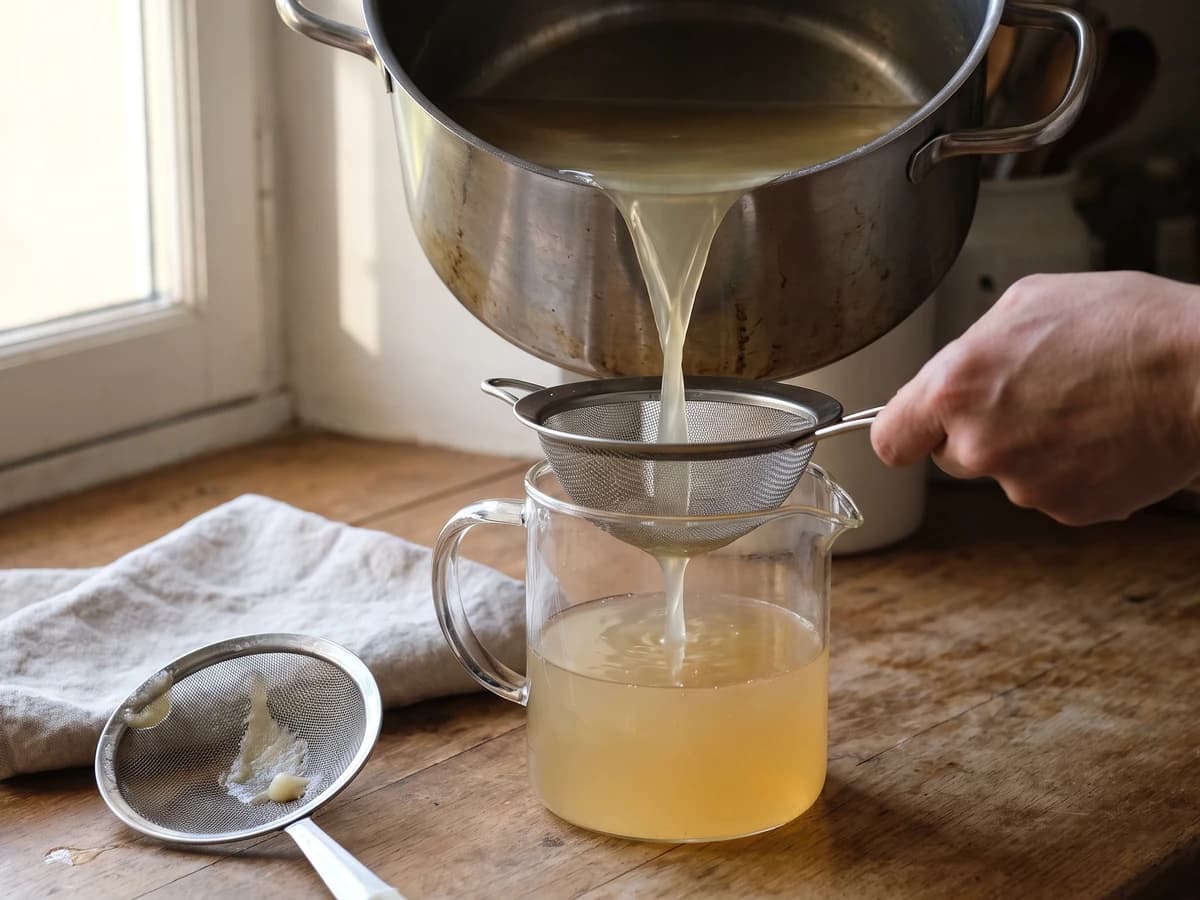
Break the veal bones small, then give them eight hours at a bare tremble. This pale, gelatinous fond becomes the quiet foundation beneath velouté, blanquette, and every sauce that must stay light.
Chef Juliette
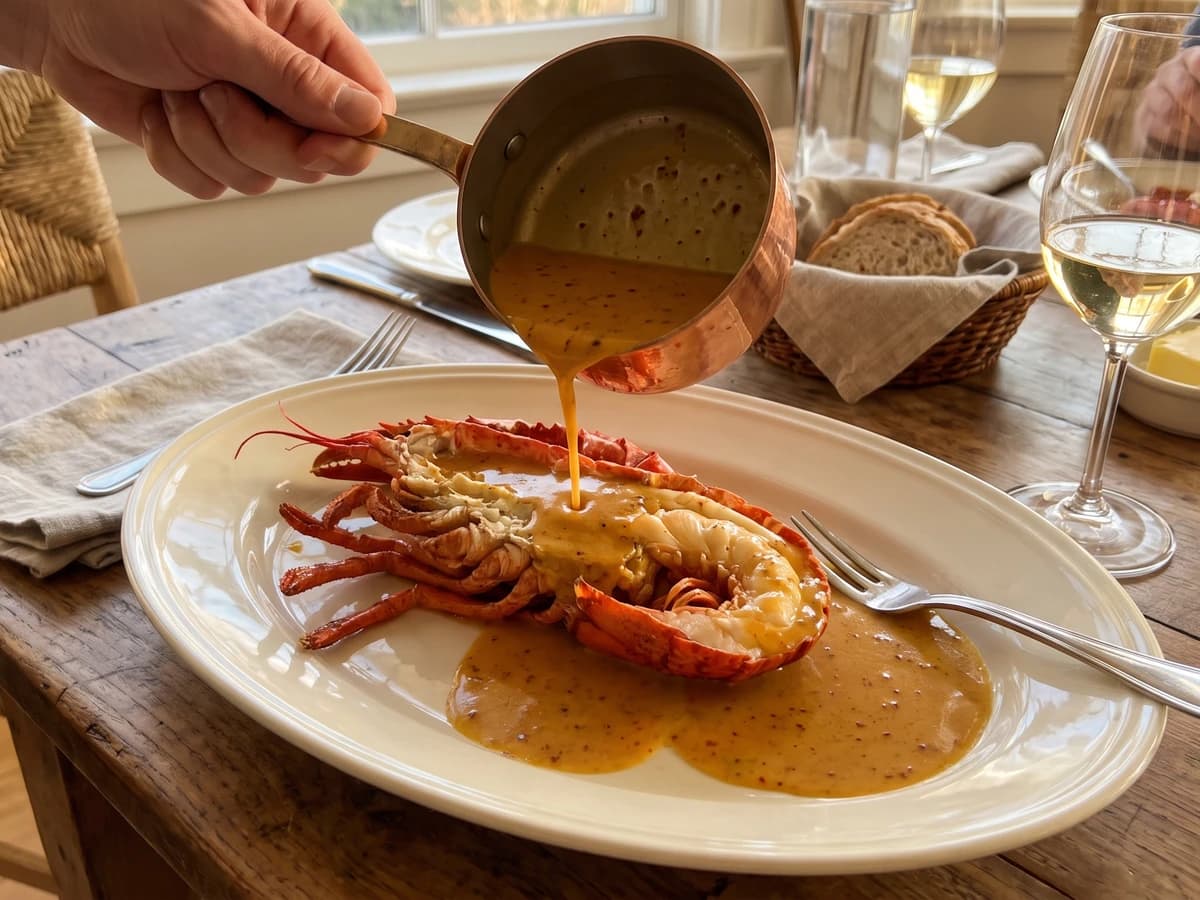
Sauce Orientale concentrates lobster-rich American Sauce with curry, then folds in cream away from the fire: a glossy, gently spiced derivative made for lobster, crayfish, and firm fish.
Chef Juliette
An old lesson in sauce families: Sauce Allemande takes mushroom liquor, then butter, lemon, and parsley, becoming a glossy Poulette for sheep's trotters, leeks, cauliflower, and anything needing gentle richness with a bright edge.