Chef Juliette
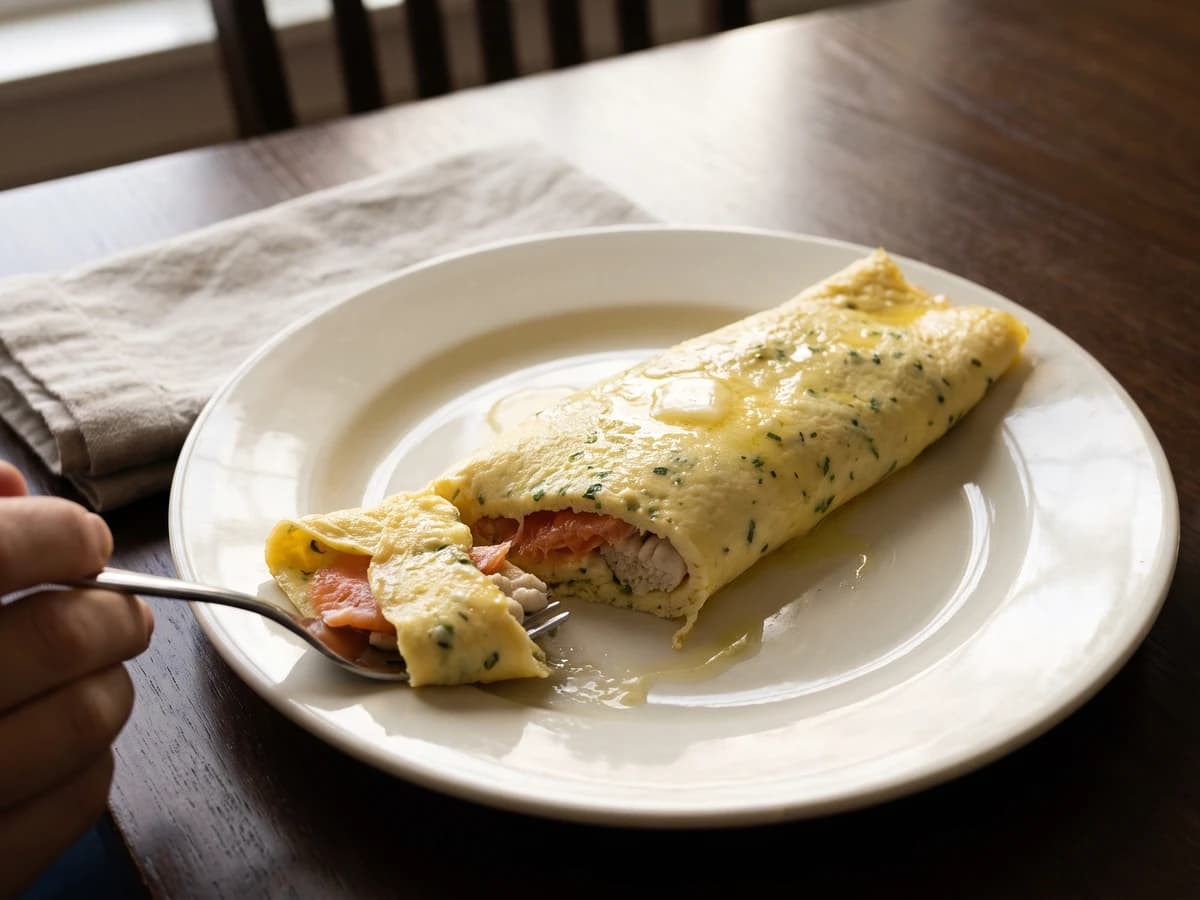
Omelette à l’Écossaise
A creamy omelette aux fines herbes closes around smoked-salmon-wrapped herring milts, gently poached in butter. Have the filling ready, then roll the eggs while they still shine.
A cooking platform built around craft, culture, and the stories behind what we eat.
Created by Chef Juliette
Based on No. 448, Eggs en Cocotte à la Soubise, from Le Guide Culinaire (1907) by Auguste Escoffier
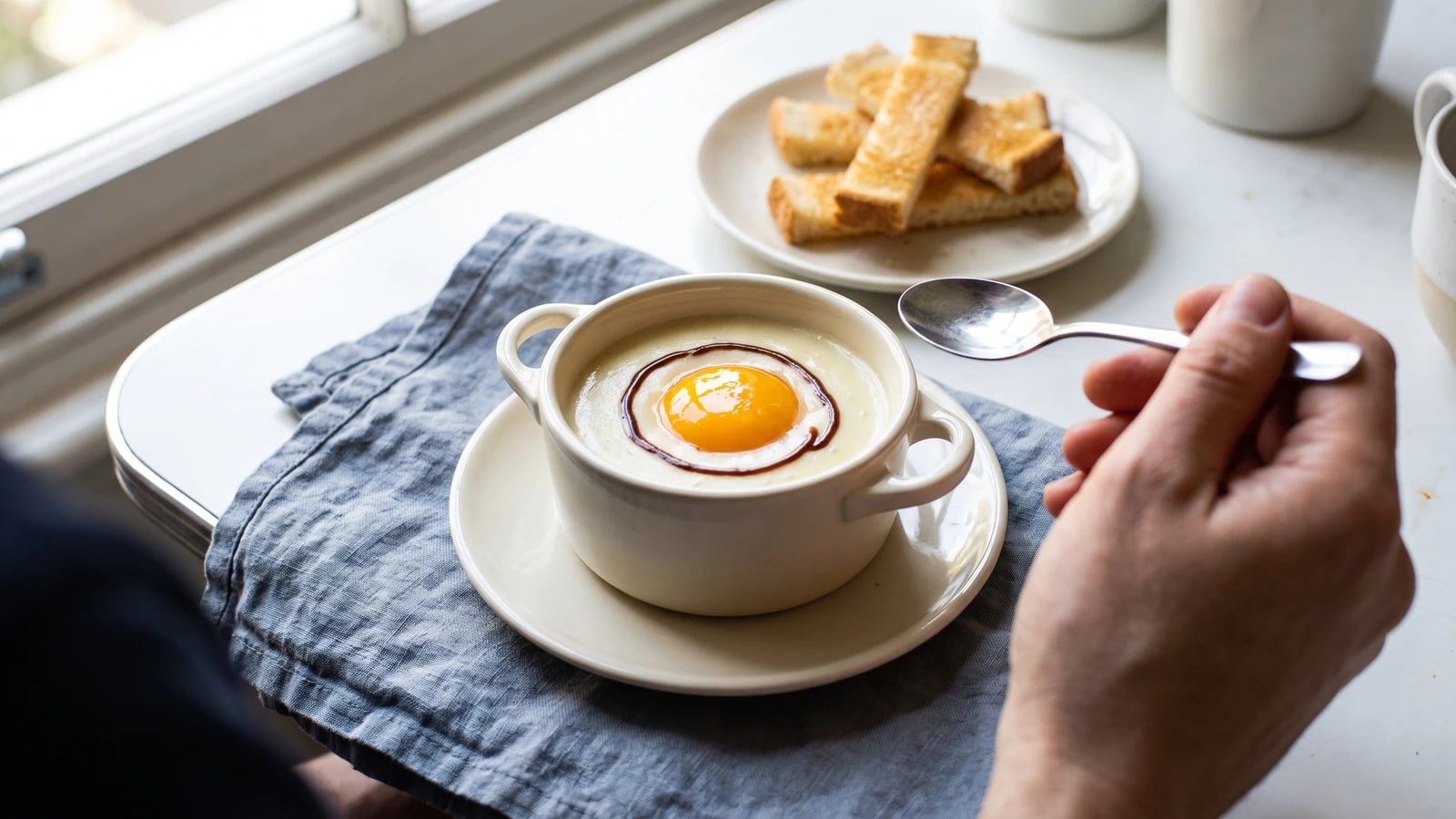
Silky Soubise lines each little pot, an egg poaches gently inside, and concentrated meat glaze circles the trembling yolk: a precise lesson in soft heat, built for four.
Œufs en Cocotte à la Soubise (eggs poached in little pots lined with onion purée) teach controlled cuisson: the Soubise cushions the egg while gentle heat sets the white around a flowing yolk. The one true thing to know before touching a pan is that the egg keeps cooking after its cocotte leaves the water bath. Pull it while the centre still trembles.
The original entry assumed a saucier with thick Soubise ready, a stockpot whose glace de viande (concentrated meat glaze) never ran out, and rows of cocottes passing through service. At home, the onion and béchamel are built together in one saucepan, unsalted stock reduces to the single spoonful of glaze required, and a bain-marie (hot-water bath) supplies the controlled poaching heat. A salamander is unnecessary here; the steady oven treats the egg more gently. Separate holding pans and brigade quantities were scaffolding, so they go. The onion lining, tender poach, and dark ring of glaze are the dish, so they stay. One cook, one stove, one evening.
At the table, the Soubise is ivory and sweet, the yolk runs gold through it, and the glace de viande supplies one dark, savory line rather than a blanket of sauce. Watch the white, not the clock: lift each cocotte when the white has just lost its glassy look and the yolk still moves freely.
Œufs en cocotte belong to the Parisian bourgeois table and to classical kitchens that adopted the small porcelain vessel, cooking and serving the egg in the same pot. Soubise, the pale onion purée associated with the house of Soubise, passed from the sauce repertoire into egg cookery, where its sweetness softened the concentrated savor of glace de viande. This preparation is often confused with cream-topped baked eggs, but its identity lies in the thick onion lining and the dark thread drawn around the yolk.
Quantity
¾ cup (180 ml / 180 g)
for the glace de viande
Quantity
2 tablespoons (30 ml / 28 g)
Quantity
1½ cups (360 ml / 180 g)
very thinly sliced
Quantity
1 tablespoon (15 ml / 8 g)
Quantity
½ cup (120 ml / 123 g)
Quantity
2 tablespoons (30 ml / 30 g)
Quantity
¾ teaspoon (3.75 ml / 4.5 g)
divided
Quantity
⅛ teaspoon (0.6 ml / 0.3 g)
divided
Quantity
4
| Ingredient | Quantity |
|---|---|
| unsalted gelatin-rich beef or veal stockfor the glace de viande | ¾ cup (180 ml / 180 g) |
| unsalted butter | 2 tablespoons (30 ml / 28 g) |
| yellow onionvery thinly sliced | 1½ cups (360 ml / 180 g) |
| all-purpose flour | 1 tablespoon (15 ml / 8 g) |
| whole milk | ½ cup (120 ml / 123 g) |
| heavy cream | 2 tablespoons (30 ml / 30 g) |
| fine saltdivided | ¾ teaspoon (3.75 ml / 4.5 g) |
| ground white pepperdivided | ⅛ teaspoon (0.6 ml / 0.3 g) |
| large eggs | 4 |
Pour the stock into the smallest saucepan that holds it comfortably and bring it to a lively simmer over medium heat. Reduce it to 1 tablespoon (15 ml), about 15 to 20 minutes, lowering the heat as the bubbles become thick and glossy. Stay beside it for the final minutes. If it tightens into a sticky syrup before you need it, remove it from the heat and whisk in 1 teaspoon of hot water. Keep it warm enough to pour.
Melt the butter in a heavy saucepan over low heat. Add the onions and ½ teaspoon of the salt, cover, and cook for 12 to 15 minutes, stirring every few minutes, until completely tender and translucent without browning. If the edges begin to color, lower the heat and add 1 teaspoon of water. Pale sweetness is the intent; browned onions make a pleasant sauce, but they do not make this Soubise.
Stir the flour through the softened onions and cook for 1 minute without allowing it to color. Add the milk in three additions, stirring each one smooth before the next, then simmer gently for 6 to 8 minutes until the flour tastes cooked and the mixture is very thick. Purée it with an immersion blender until silky, then stir in the cream and half the white pepper. Press it through a fine sieve only if visible onion fibers remain. The Soubise must cling to the side of a spoon without sliding. If it runs, simmer it for another minute; if it stands like paste, loosen it with milk a teaspoon at a time. Ça se rattrape.
Heat the oven to 325°F (165°C) and bring a kettle of water to a boil. Divide the warm Soubise among four 4-ounce (120 ml) cocottes, using roughly ¼ cup (60 ml) for each. With the back of a spoon, spread a thick, even coating over the bottom and up the sides, leaving a shallow hollow in the centre for the egg. Set the cocottes in a deep roasting pan.
Crack each egg into a small cup, then slide it carefully into a lined cocotte so the yolk remains whole. Season with the remaining salt and white pepper. Place the roasting pan on the oven rack and pour in enough boiling water to reach halfway up the cocottes. Bake uncovered for 9 to 13 minutes, checking at 8 minutes, until each white is opaque around the edge and softly set near the yolk while the yolk still wobbles freely. Remove cocottes individually as they become ready. If a white remains glassy, return that cocotte to the bath for 1 minute; ça se rattrape. A firm yolk does not, so pull early.
Lift the cocottes from the bath and dry their undersides. Warm the glace de viande over very low heat if it has begun to set; it should fall from a teaspoon in a fine thread. If it drops like jelly, loosen it with a few drops of hot water. Draw a narrow ring around each yolk without covering it, exactly as the source directs. Serve immediately, with toast ready for the yolk and Soubise. À table!
1 serving (about 140g)
Culinary guides, cultural storytelling, and the editorial depth that makes cooking meaningful.
Discover Culinary ExplorerChef Juliette
A creamy omelette aux fines herbes closes around smoked-salmon-wrapped herring milts, gently poached in butter. Have the filling ready, then roll the eggs while they still shine.
Chef Juliette
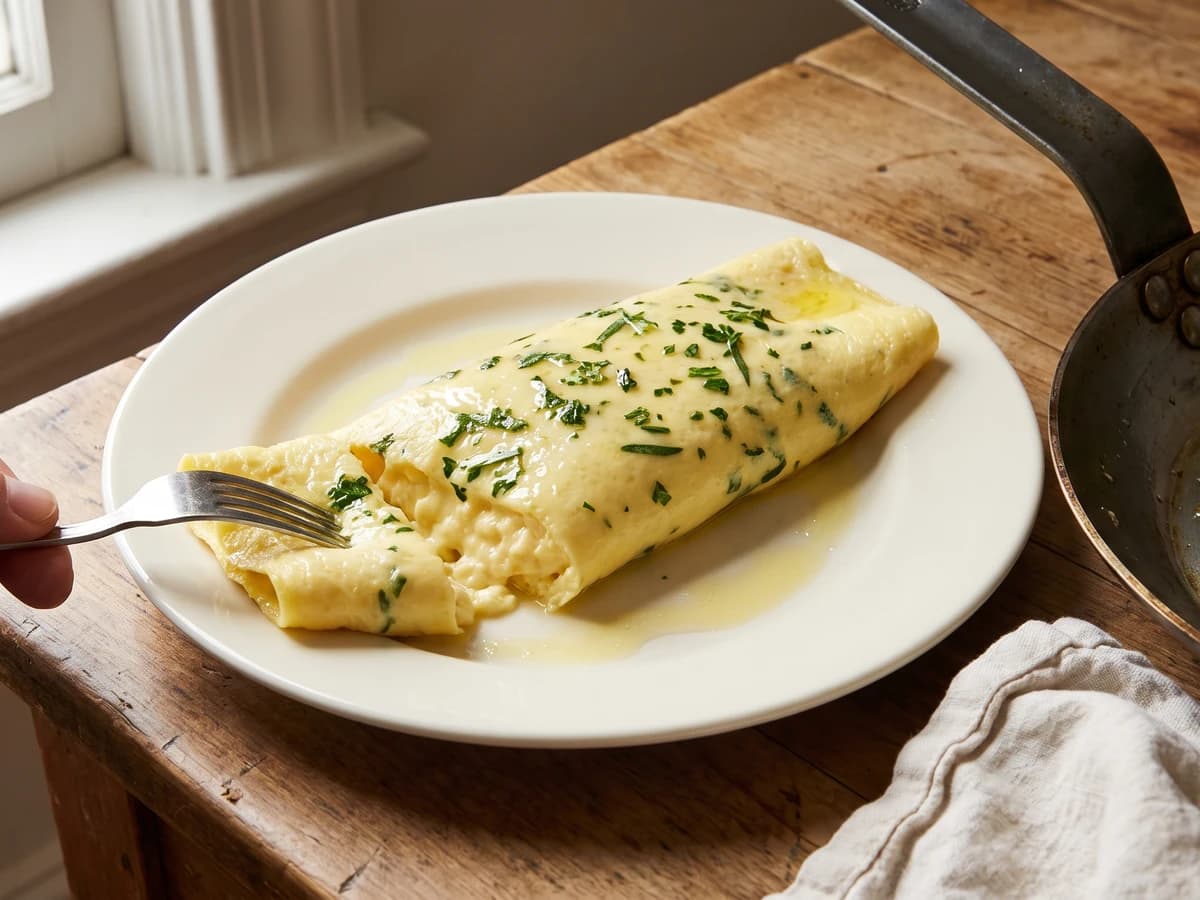
Four tender herbs, hot butter, and two eggs per pan: this rolled omelette teaches the quick hand and good judgment that keep the outside pale and the center creamy.
Chef Juliette
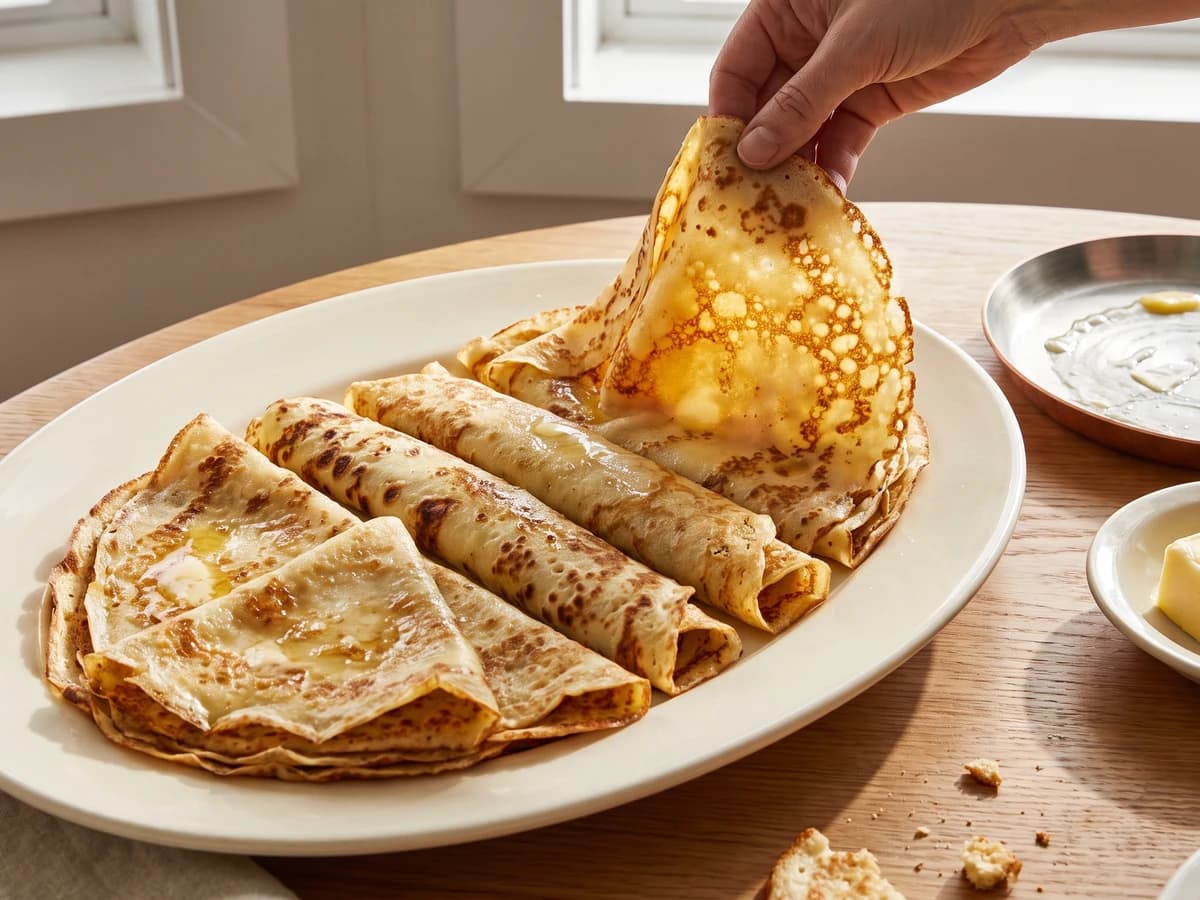
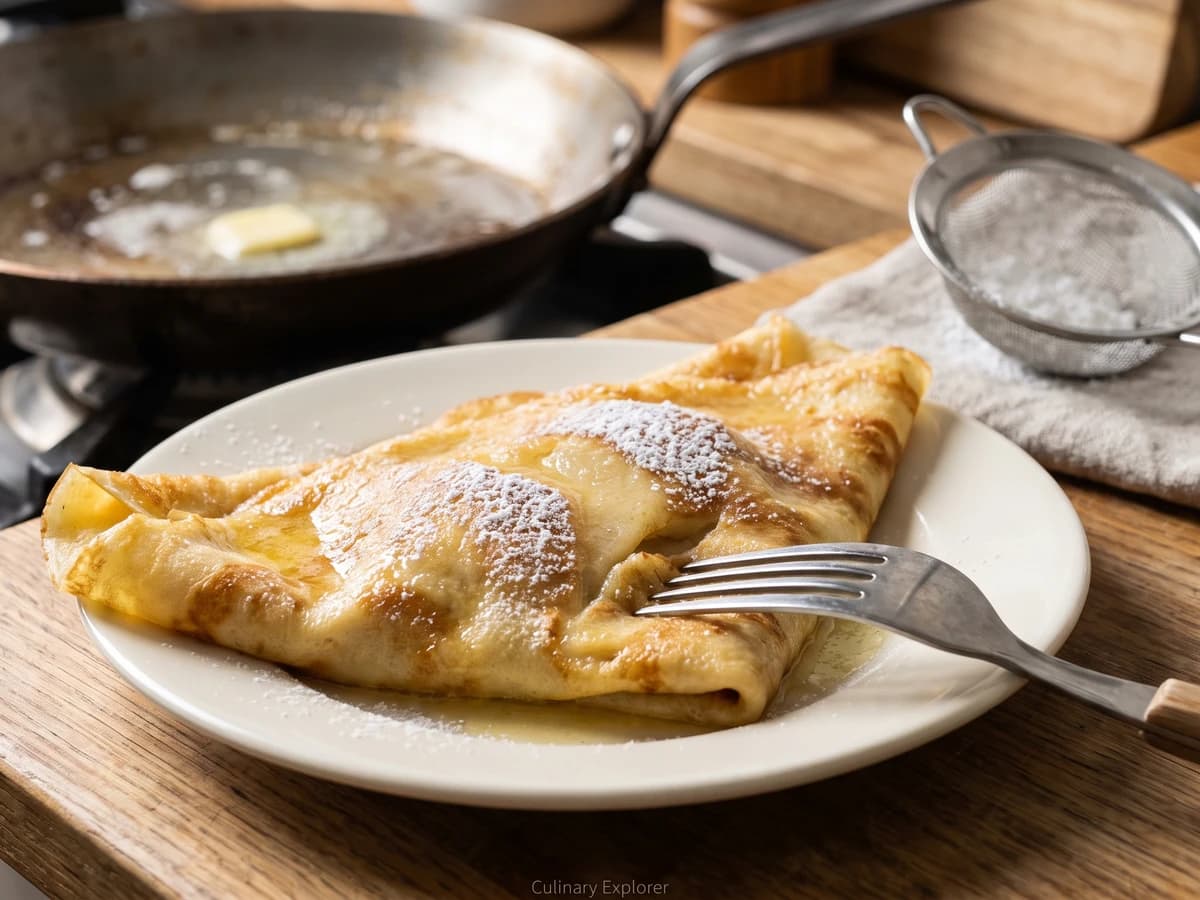
Four batters, one lesson: let the flour drink deeply before cooking, then spread the batter thinly in butter for crêpes and pannequets that bend without becoming tough.
Chef Juliette
Crêpes au Couvent trap ripe Williams pear dice between two thin pours of sweet batter, then turn in one clean toss and reach the table butter-gold, powdered, and burning hot.