Chef Juliette
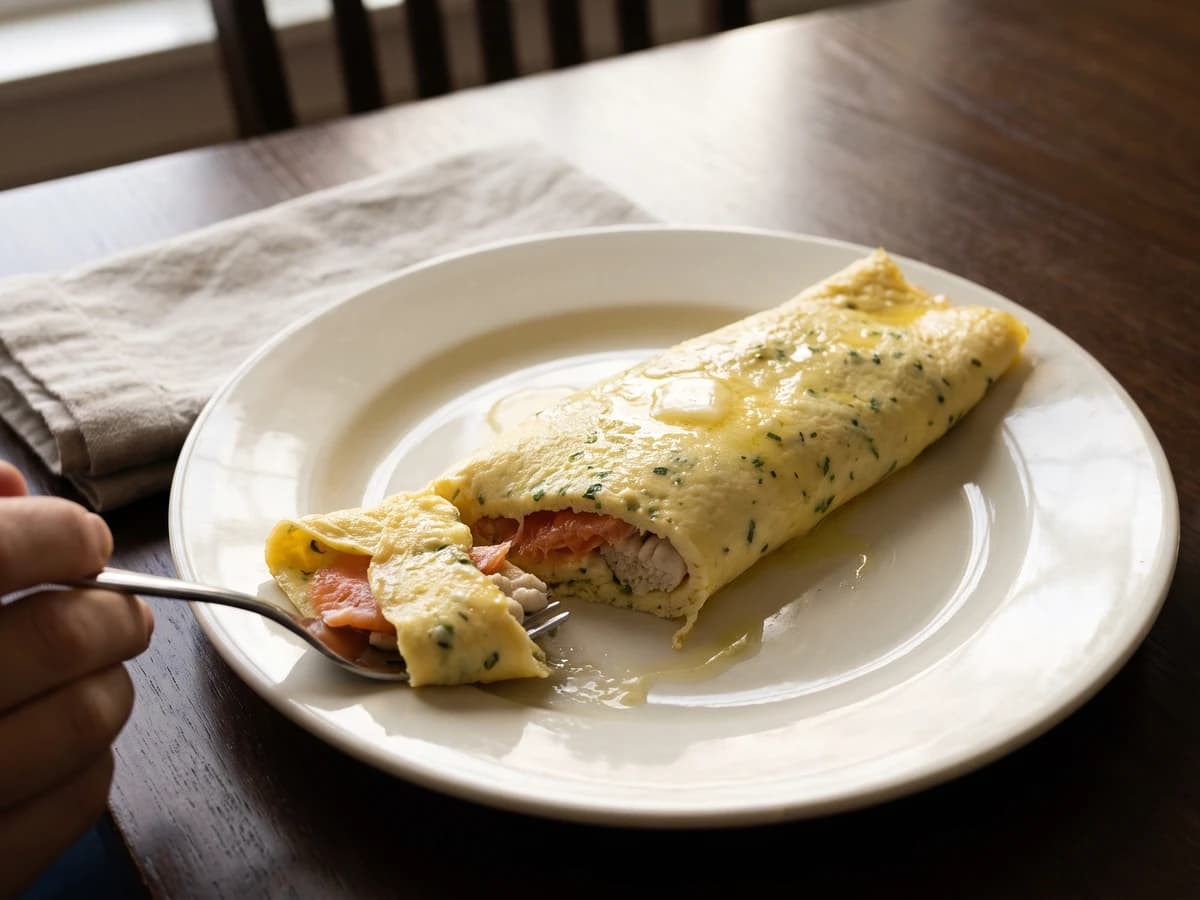
Omelette à l’Écossaise
A creamy omelette aux fines herbes closes around smoked-salmon-wrapped herring milts, gently poached in butter. Have the filling ready, then roll the eggs while they still shine.
A cooking platform built around craft, culture, and the stories behind what we eat.
Created by Chef Juliette
Based on No. 446, Eggs en Cocotte à la Maraichère, from Le Guide Culinaire (1907) by Auguste Escoffier
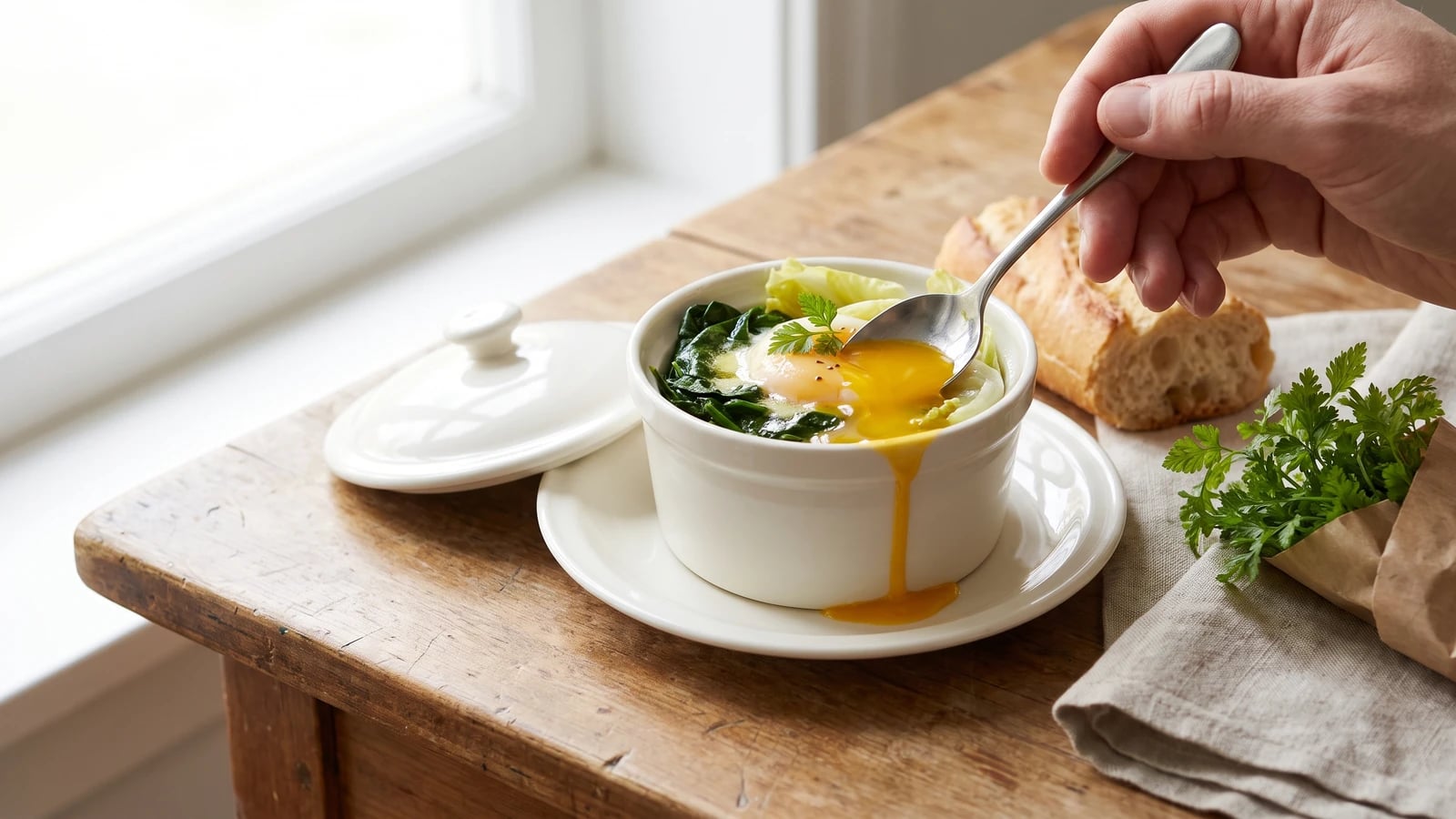
Œufs en cocotte à la maraîchère teaches moisture control: three garden greens held in butter, one softly poached egg above, and a chervil pluche at the last instant.
Œufs en cocotte à la maraîchère (eggs poached in little pots, market-gardener style) teaches one quiet but decisive principle: wet greens and tender eggs cannot share a cocotte. The spinach must be cooked, chopped, and pressed; the sorrel and lettuce must be étuvés au beurre (gently stewed in butter) until their own water is gone. Then the egg can poach against a buttery lining rather than float over it.
The original entry assumed a brigade with cooked spinach already waiting, tender leaves stewing at another station, and a row of cocottes timed for service. Unlike many grand-kitchen formulas, this one needs no saucier, perpetual stockpot, or salamander. At home, one saucepan blanches the spinach, one skillet tends the other greens, and a roasting pan becomes the bain-marie (hot-water bath). Holding trays and a relay of hands are scaffolding and can go; cooking the spinach separately and stewing the sorrel and lettuce in butter must stay. Four cocottes, one cook, one stove, one evening.
Press the spinach until your fist can no longer find a drop, then cook the sorrel and lettuce until melted butter is visible again on the pan floor. That is the step that decides the dish. If the greens are dry and supple, the white poaches tenderly against them and the yolk remains golden. Do this before you crack a single egg.
Œufs en cocotte belong to French cuisine bourgeoise, particularly the Parisian table, where individual earthenware or porcelain pots carried eggs neatly from kitchen to diner and passed naturally into the classical hotel repertoire. À la maraîchère is a garnish designation tied to the market gardeners who supplied urban kitchens, not the name of a dish claimed by one province. This formula shows the designation at its most delicate: spinach for body, lettuce for sweetness, sorrel for acidity, and a chervil pluche as the deliberately spare finish.
Quantity
6 packed cups (1.4 L / 180 g)
washed, with tough stems removed
Quantity
2 packed cups (475 ml / 60 g)
washed, with tough stems removed
Quantity
3 loosely packed cups (710 ml / 90 g)
washed and torn into large pieces
Quantity
3 tablespoons (45 ml / 43 g)
divided
Quantity
4
Quantity
¾ teaspoon (3.75 ml / 4.5 g)
divided
Quantity
⅛ teaspoon (0.6 ml / 0.3 g)
divided
Quantity
4
tender leafy sprigs
| Ingredient | Quantity |
|---|---|
| young spinach leaveswashed, with tough stems removed | 6 packed cups (1.4 L / 180 g) |
| sorrel leaveswashed, with tough stems removed | 2 packed cups (475 ml / 60 g) |
| butter lettuce leaveswashed and torn into large pieces | 3 loosely packed cups (710 ml / 90 g) |
| unsalted butterdivided | 3 tablespoons (45 ml / 43 g) |
| large eggs | 4 |
| fine sea saltdivided | ¾ teaspoon (3.75 ml / 4.5 g) |
| freshly ground white pepperdivided | ⅛ teaspoon (0.6 ml / 0.3 g) |
| fine chervil pluchestender leafy sprigs | 4 |
Heat the oven to 350°F (180°C) with a rack in the middle. Use 1 tablespoon (15 ml / 14 g) of the butter to coat the bottoms and sides of four 6-fluid-ounce (180 ml) ovenproof cocottes or ramekins. Set them in a roasting pan and bring a kettle of water to a boil for the bain-marie.
Bring a medium saucepan of water to a full boil. Add the spinach and push it beneath the water for 30 to 45 seconds, just until every leaf collapses and turns deep green. Drain immediately, cool under running water, then gather the spinach in a clean kitchen towel and twist firmly until no more water falls. Chop it finely. Pressing is the point, not a polite gesture; water left here will collect beneath the egg.
Melt the remaining 2 tablespoons (30 ml / 28 g) butter in a 10-inch (25 cm) skillet over medium-low heat. Add the sorrel and lettuce with half the salt and pepper, cover, and cook for 3 minutes. Uncover and stir gently for another 3 to 5 minutes, until the lettuce is tender, the sorrel has melted into olive-green ribbons, and the pan holds butter rather than watery juice. Fold in the chopped spinach and warm it for 30 seconds. If liquid still pools, raise the heat briefly and stir until it cooks away. Ça se rattrape. Do not brown the leaves.
Divide the greens among the buttered cocottes while they are warm, pressing them over the bottom and partway up the sides to make a generous lining with a shallow hollow in the center. Let them settle for 2 minutes. Crack each egg first into a small cup, then slide one into each cocotte without breaking the yolk. Season with the reserved salt and white pepper.
Pour the just-boiled water into the roasting pan until it reaches halfway up the cocottes. Transfer the pan carefully to the oven and bake for 9 to 13 minutes. Begin checking at 9 minutes: the outer white should be opaque and softly set, a narrow halo beside the yolk may remain faintly translucent, and the yolk must still move when the cocotte is nudged. Lift each cocotte from the bath as it reaches that point, even if its neighbors need another minute. If the whites lag while the yolks are setting quickly, cover the pan loosely with foil for 1 minute; the trapped gentle heat will finish the surface without demanding a harder oven.
Remove the cocottes from the bain-marie and dry their bases. Set each on a small plate, then place one fine chervil pluche, the tender leafy tip rather than chopped herb confetti, directly on each yolk. Serve at once with bread close by for the buttery greens and soft yolk. À table!
1 serving (about 125g)
Culinary guides, cultural storytelling, and the editorial depth that makes cooking meaningful.
Discover Culinary ExplorerChef Juliette
A creamy omelette aux fines herbes closes around smoked-salmon-wrapped herring milts, gently poached in butter. Have the filling ready, then roll the eggs while they still shine.
Chef Juliette
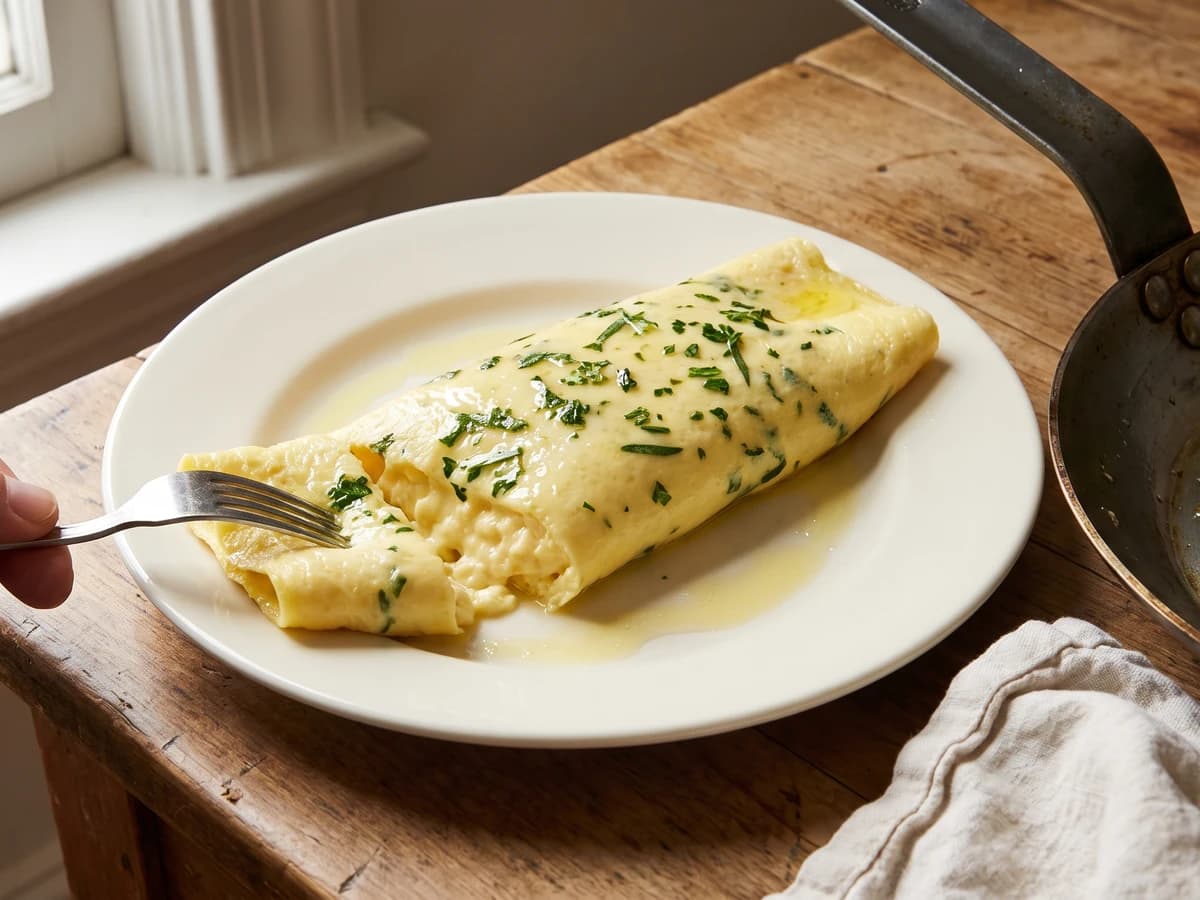
Four tender herbs, hot butter, and two eggs per pan: this rolled omelette teaches the quick hand and good judgment that keep the outside pale and the center creamy.
Chef Juliette
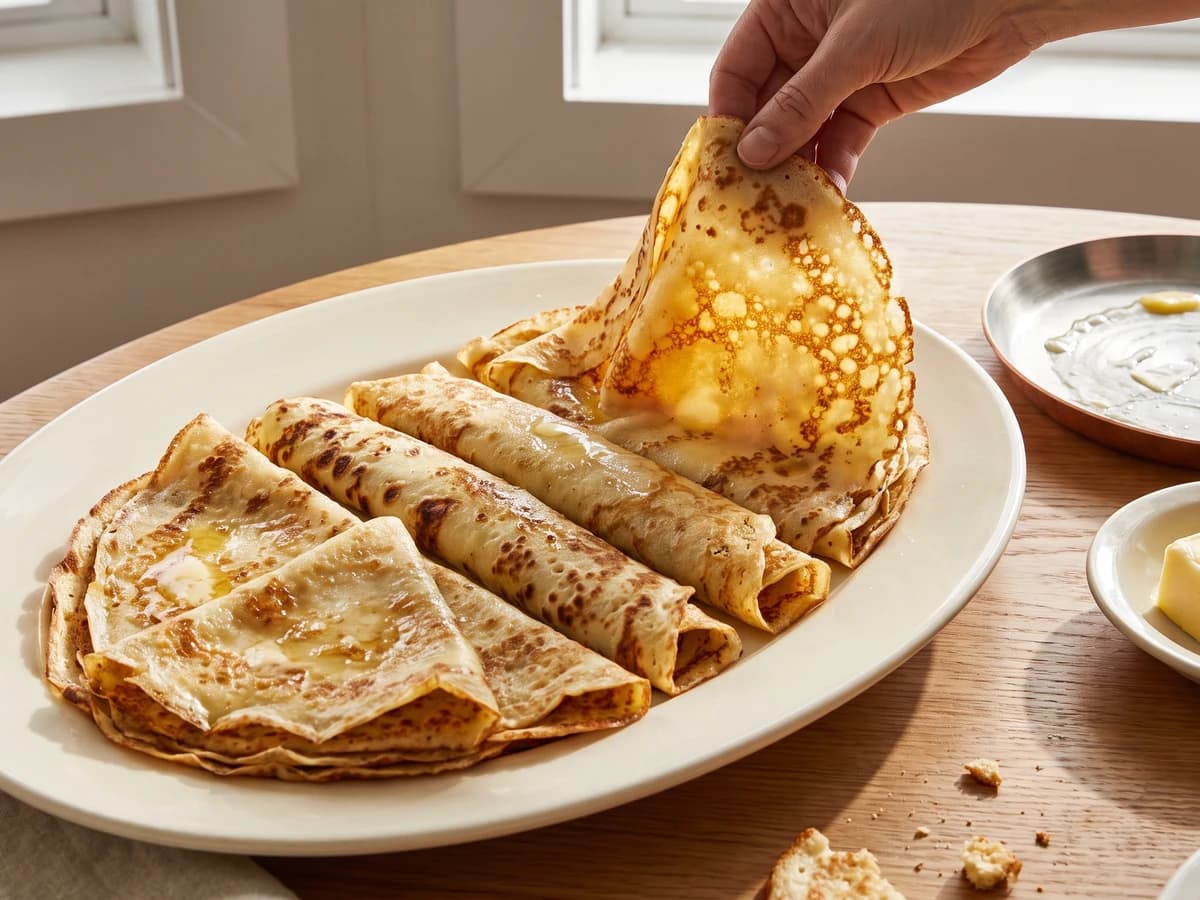
Four batters, one lesson: let the flour drink deeply before cooking, then spread the batter thinly in butter for crêpes and pannequets that bend without becoming tough.
Chef Juliette
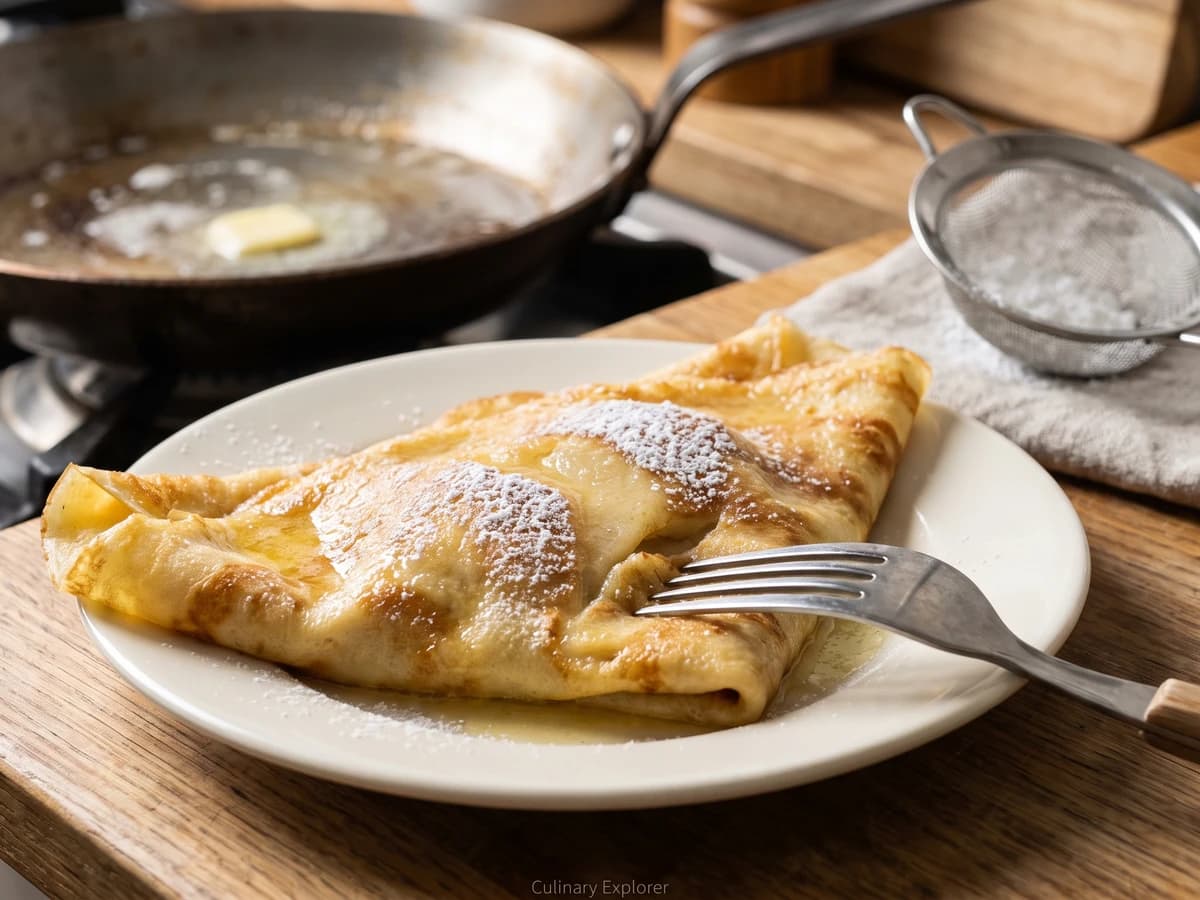
Crêpes au Couvent trap ripe Williams pear dice between two thin pours of sweet batter, then turn in one clean toss and reach the table butter-gold, powdered, and burning hot.