Chef Juliette
Omelette à l’Écossaise
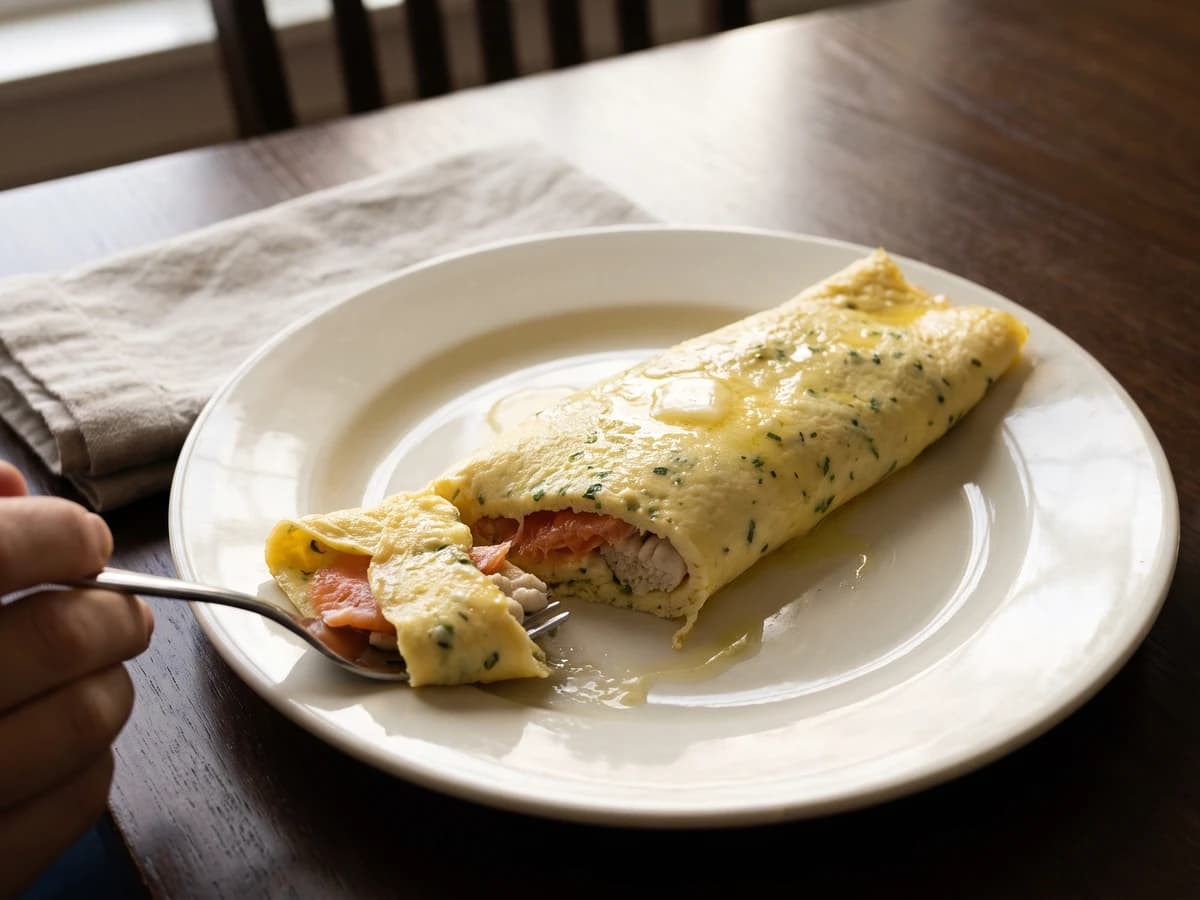
A creamy omelette aux fines herbes closes around smoked-salmon-wrapped herring milts, gently poached in butter. Have the filling ready, then roll the eggs while they still shine.
A cooking platform built around craft, culture, and the stories behind what we eat.
Created by Chef Juliette
Based on No. 445, Eggs en Cocotte à la Lorraine, from Le Guide Culinaire (1907) by Auguste Escoffier
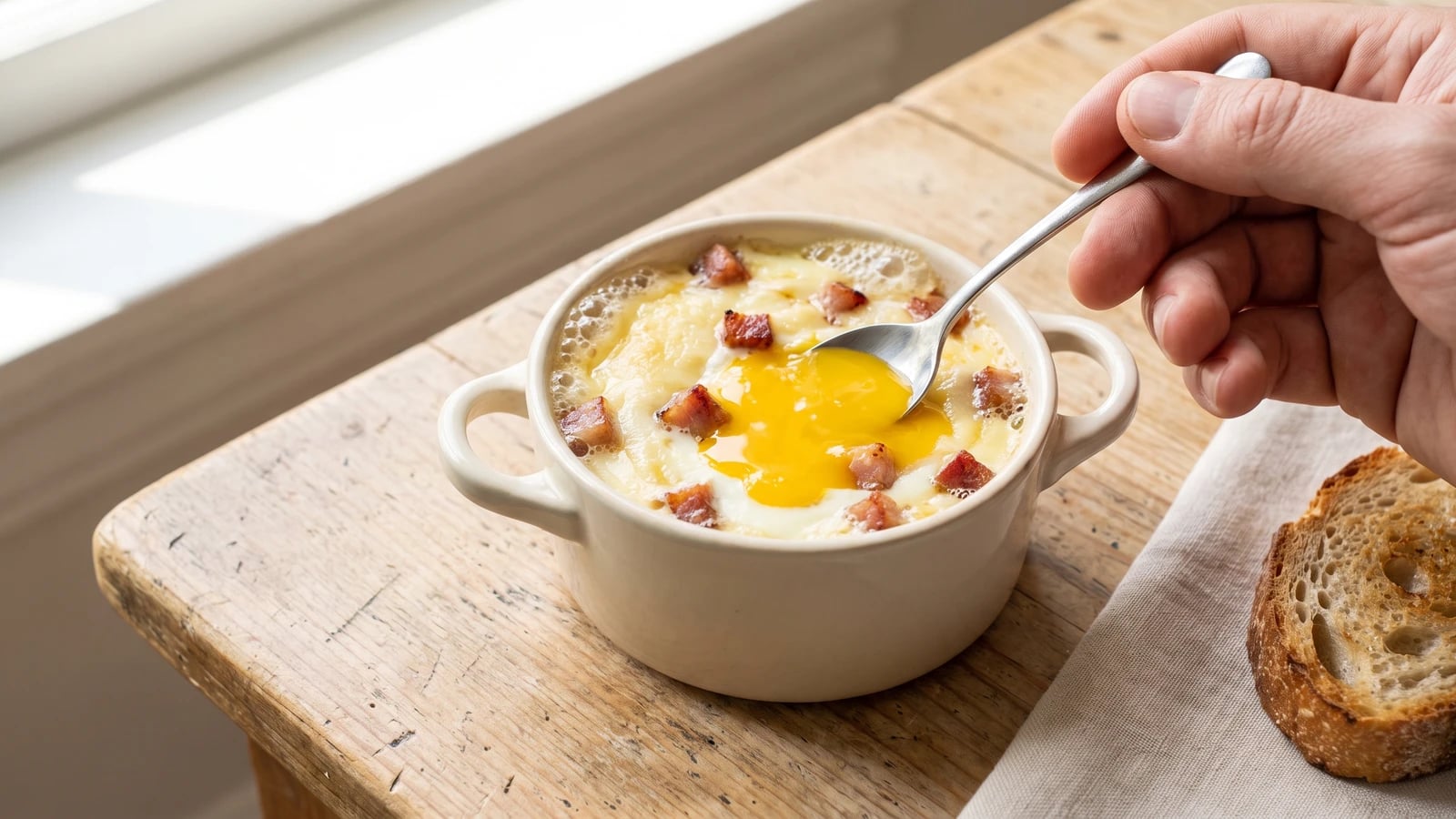
Four little cocottes, each layered with crisp pork belly, three thin slices of Gruyère, boiling cream, and a softly poached egg: a lesson in how gentle heat turns simple richness into supper.
Œufs en cocotte à la Lorraine (soft-poached eggs in little pots, Lorraine-style) teaches the gentlest lesson in the egg canon: the water bath, not the clock, makes tender whites around a liquid yolk. Fried pork belly, three paper-thin slices of Gruyère, and boiling cream sit beneath each egg, so the spoon finds pork, salt, milk, and yolk in one stroke.
The old entry assumed a row of cocottes moving through service, cream already boiling, and a cook who needed no explanation for 'poach in the usual way.' It calls for no saucier, perpetual stockpot, or salamander. At home, four small ramekins in one roasting pan are the honest equivalent; I have scaled the brigade row to four servings and kept exactly one teaspoon pork, three slices of Gruyère, and one tablespoon cream in each. The service line was scaffolding. Those proportions and the gentle poach are the dish. One cook, one stove, one evening.
A soft egg gives no reward for bravado. Have the water boiling before you crack the eggs, then lift each cocotte the moment its white sets; if one lags behind, it can stay while the others come out. Judging that final minute is the one step that matters.
Œufs en cocotte belong to French cuisine bourgeoise, where individual porcelain pots carried gently poached eggs directly from kitchen to table. The qualifier à la Lorraine points east to Lorraine's pork-and-dairy larder; in this classical preparation, fried pork belly, cream, and Gruyère form the garnish, though Gruyère reflects the wider classical pantry rather than a strictly local cheese. Unlike the familiar argument over cheese in quiche Lorraine, the Gruyère here is explicit, three thin slices in every cocotte.
Quantity
4
Quantity
4 teaspoons (20 ml / 25 g)
cut into ¼-inch dice
Quantity
12 paper-thin slices, about ¾ cup loosely packed (180 ml / 60 g)
Quantity
¼ cup (60 ml / 60 g)
brought to a boil just before using
Quantity
1 teaspoon (5 ml / 5 g)
softened
Quantity
⅛ teaspoon (0.6 ml / 0.8 g)
Quantity
⅛ teaspoon (0.6 ml / 0.3 g)
| Ingredient | Quantity |
|---|---|
| large eggs | 4 |
| poitrine de porc (unsmoked cured pork belly)cut into ¼-inch dice | 4 teaspoons (20 ml / 25 g) |
| Gruyère | 12 paper-thin slices, about ¾ cup loosely packed (180 ml / 60 g) |
| heavy creambrought to a boil just before using | ¼ cup (60 ml / 60 g) |
| unsalted buttersoftened | 1 teaspoon (5 ml / 5 g) |
| fine sea salt | ⅛ teaspoon (0.6 ml / 0.8 g) |
| finely ground white pepper | ⅛ teaspoon (0.6 ml / 0.3 g) |
Heat the oven to 375°F (190°C) and bring a kettle of water to a full boil. Butter the insides of four 4-ounce (120 ml) ovenproof cocottes, then arrange them in a deep roasting pan. This will become the bain-marie, the water bath that protects the eggs from the oven's direct heat; without it, the edges turn rubbery before the centres set.
Set the diced poitrine de porc in a small cold skillet and place it over medium heat. Fry for 4 to 5 minutes, stirring occasionally, until the fat renders and the little cubes are lightly crisp and bronze. Lift them out with a slotted spoon, leaving excess fat behind, and put exactly one teaspoon into each cocotte.
Lay three paper-thin slices of Gruyère over the pork in each cocotte, folding them if necessary so they sit below the rim. Bring the cream just to a boil in a small saucepan, then immediately spoon one tablespoon into each pot. Boiling cream is not brigade fussiness here: it gives the egg a warm start, helping its white set gently before the yolk loses its softness.
Crack one egg into a small cup, check it for shell, and slide it gently into the first cocotte without breaking the yolk. Repeat with the remaining eggs. Divide the salt and white pepper lightly among them, seasoning the white more than the yolk; the pork and Gruyère already carry plenty of salt.
Pour boiling water into the roasting pan until it reaches halfway up the cocottes, taking care that none splashes into the eggs. Bake uncovered for 8 minutes, then check each pot individually. Remove a cocotte as soon as its white is opaque at the edge and softly set over the surface while the yolk still trembles, usually after 9 to 12 minutes. If a white remains glassy, leave only that pot in the bain-marie for another minute; ça se rattrape. A firm yolk does not, so check early and trust your eyes.
Lift the cocottes carefully from the water, dry their bottoms, and set each on a small plate to protect the table and the cook's fingers. Rest them for 1 minute, no longer, so the trembling white settles while the yolk remains fluid. Bring them straight to the table with toasted country bread for reaching the pork, melted Gruyère, and cream beneath the egg. À table!
1 serving (about 85g)
Culinary guides, cultural storytelling, and the editorial depth that makes cooking meaningful.
Discover Culinary ExplorerChef Juliette
A creamy omelette aux fines herbes closes around smoked-salmon-wrapped herring milts, gently poached in butter. Have the filling ready, then roll the eggs while they still shine.
Chef Juliette
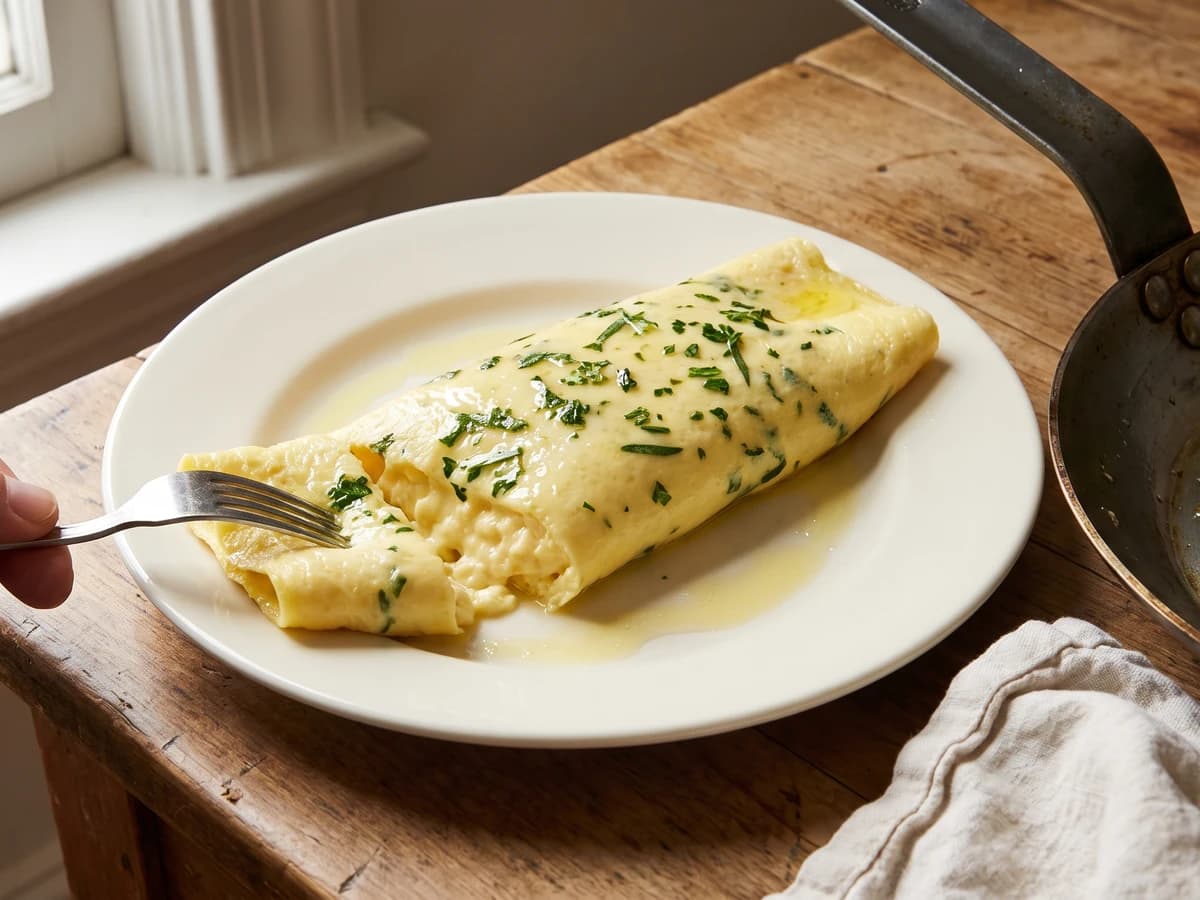
Four tender herbs, hot butter, and two eggs per pan: this rolled omelette teaches the quick hand and good judgment that keep the outside pale and the center creamy.
Chef Juliette
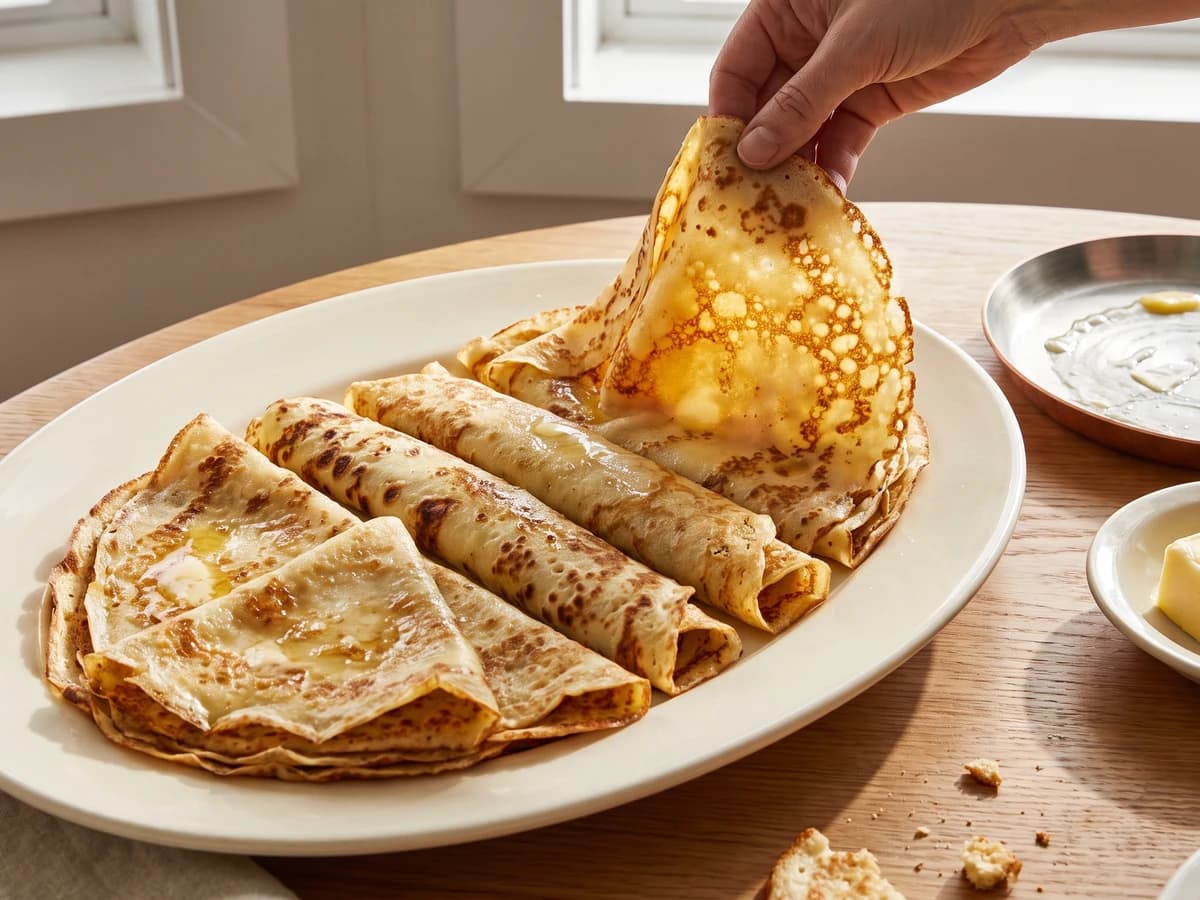
Four batters, one lesson: let the flour drink deeply before cooking, then spread the batter thinly in butter for crêpes and pannequets that bend without becoming tough.
Chef Juliette
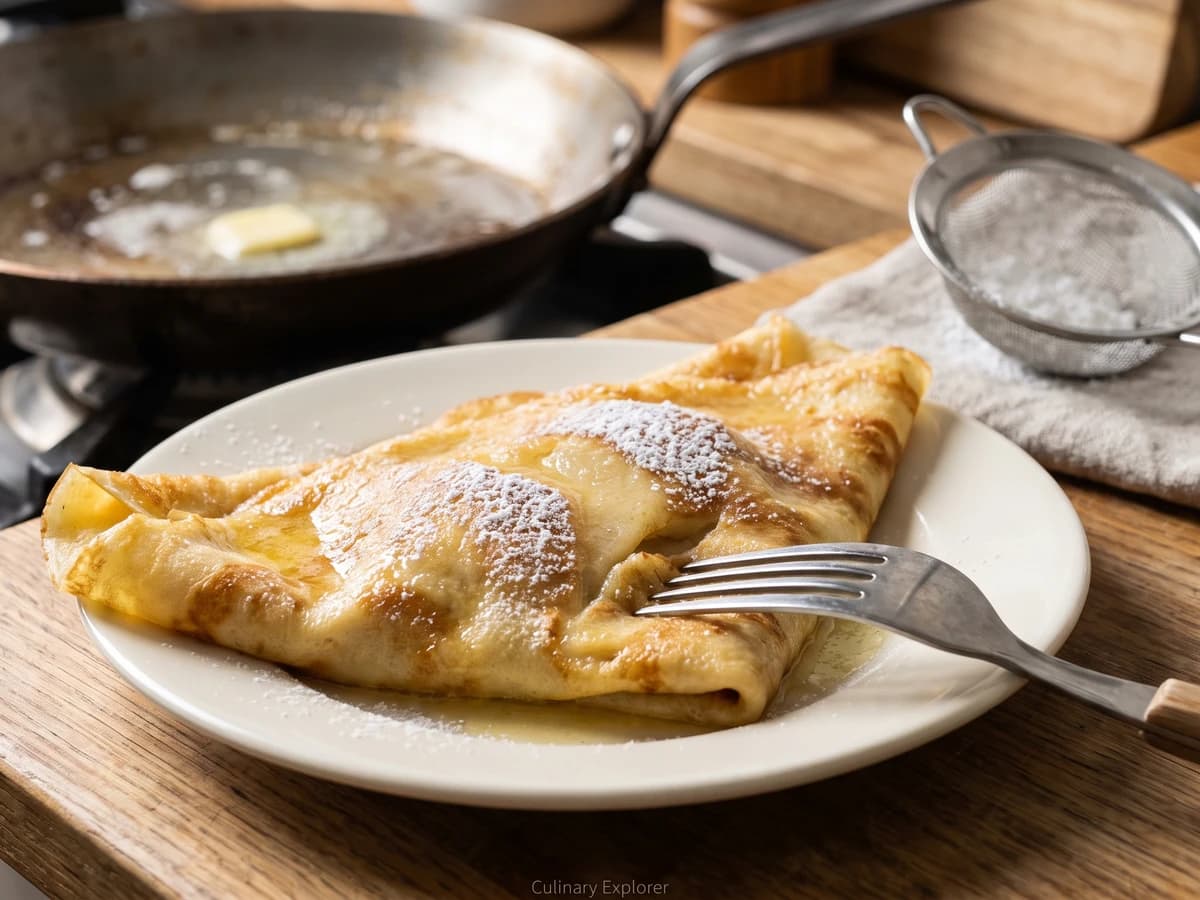
Crêpes au Couvent trap ripe Williams pear dice between two thin pours of sweet batter, then turn in one clean toss and reach the table butter-gold, powdered, and burning hot.