Chef Juliette
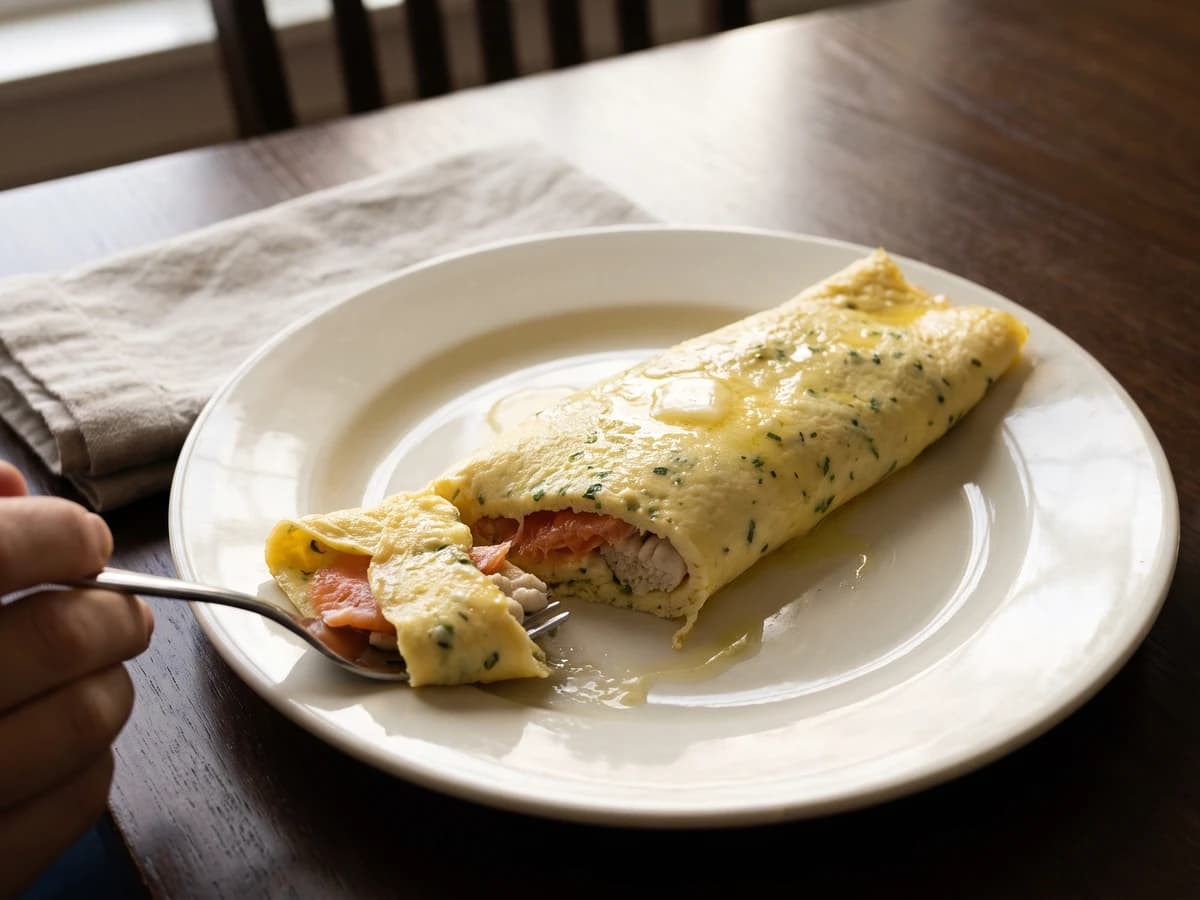
Omelette à l’Écossaise
A creamy omelette aux fines herbes closes around smoked-salmon-wrapped herring milts, gently poached in butter. Have the filling ready, then roll the eggs while they still shine.
A cooking platform built around craft, culture, and the stories behind what we eat.
Created by Chef Juliette
Based on No. 444, Eggs en Cocotte with Gravy, from Le Guide Culinaire (1907) by Auguste Escoffier
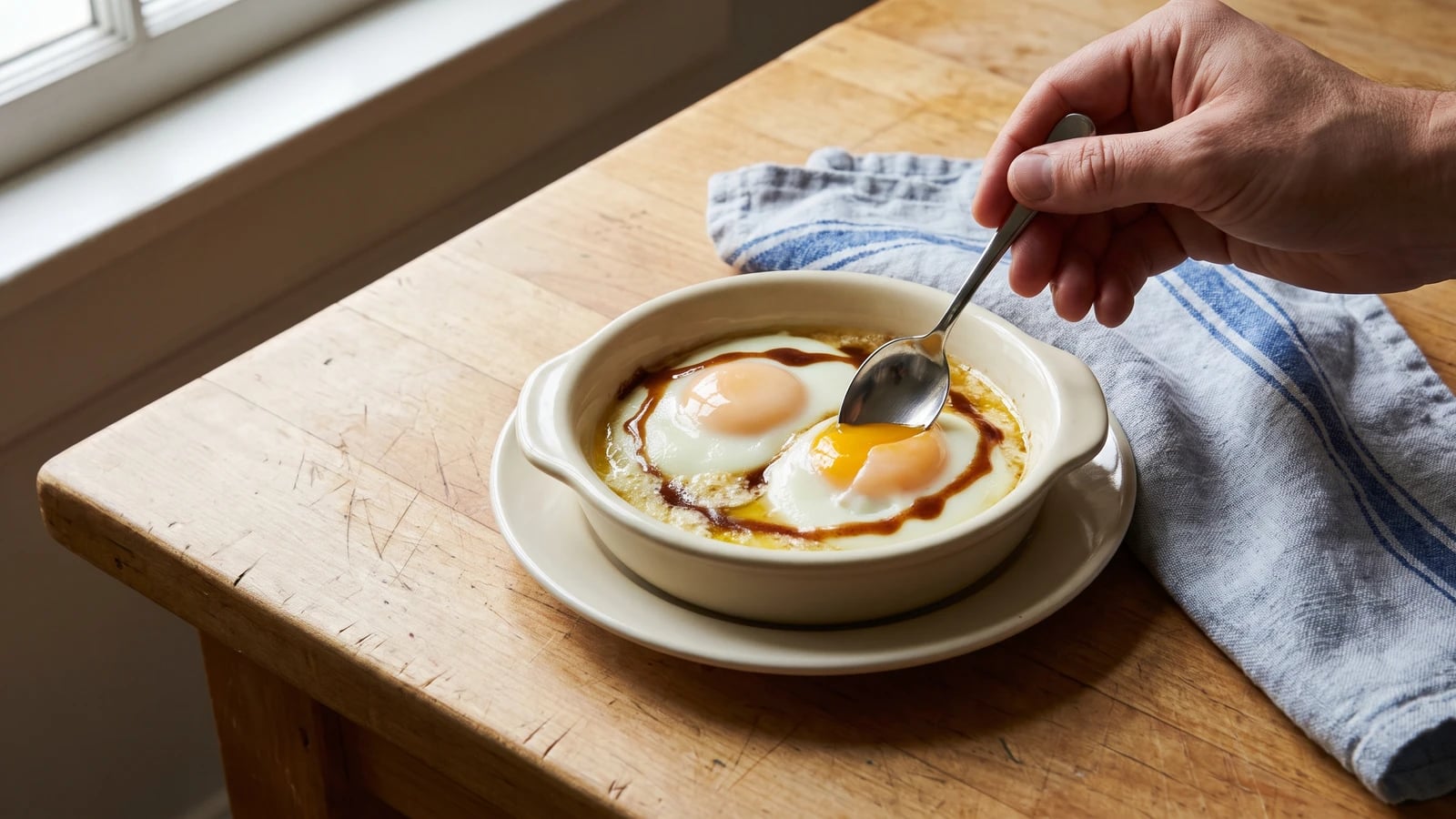
Eggs, butter, gentle heat, and a dark thread of veal gravy: Œufs en cocotte au jus teach the exact moment to stop cooking, while the yolks still tremble.
Œufs en cocotte au jus (eggs poached in little pots with veal gravy) teach the one true thing about eggs: stop the cooking while they still look a breath underdone. The hot porcelain and bain-marie keep working after the oven door opens, so fully set whites in the oven mean firm yolks at the table.
The original line assumed a saucier on staff, a stockpot never off the fire, and rows of small cocottes watched to the second. A home kitchen needs four 6-ounce ramekins, a roasting tin for the bain-marie, and 1/4 cup of finished reduced veal gravy from a trusted butcher or your freezer. No salamander is used because nothing is gratinéed. Making a stockpot for four spoonfuls is brigade scaffolding and goes, but buttering each pot, poaching gently, and adding the gravy only at service are the dish and stay. One cook, one stove, one evening.
When it is right, the whites are tender and barely quivering, the yolks flow under a spoon, and the veal gravy sits as a narrow mahogany ring, enough to deepen the egg without smothering it. Pull the cocottes when a faint translucent veil still clings beside the yolks. That is the step that decides everything.
Œufs en cocotte belong to the French bourgeois breakfast and supper table, with Parisian hotel kitchens carrying the same small-pot method into the classical service repertoire. The cocotte is not decoration: cooking and serving in the same buttered vessel protects the tender white and allows many finishes without changing the base. In the au jus version, gravy does not mean a flour-thickened blanket; it is reduced veal jus, applied in a narrow thread only after poaching.
Quantity
8
Quantity
2 tablespoons (30 ml / 28 g)
softened
Quantity
1/4 cup (60 ml / 65 g)
warmed to a light coating consistency
Quantity
1/4 teaspoon (1.25 ml / 1.5 g)
Quantity
1/8 teaspoon (0.6 ml / 0.3 g)
| Ingredient | Quantity |
|---|---|
| large eggs | 8 |
| unsalted buttersoftened | 2 tablespoons (30 ml / 28 g) |
| reduced veal gravywarmed to a light coating consistency | 1/4 cup (60 ml / 65 g) |
| fine sea salt | 1/4 teaspoon (1.25 ml / 1.5 g) |
| finely ground white pepper | 1/8 teaspoon (0.6 ml / 0.3 g) |
Heat the oven to 325°F (160°C) with a rack in the middle. Bring a kettle of water to a boil, then let it stand while you prepare the eggs. Choose a roasting tin that holds the four cocottes without crowding; the water must circulate around them, but they must not knock together.
Warm the reduced veal gravy in the smallest saucepan you own over gentle heat. It should be glossy and fluid enough to fall from a spoon in a narrow, continuous thread. If it runs like broth, simmer it briefly; if it tightens into a sticky glaze, whisk in boiling water one teaspoon (5 ml / 5 g) at a time. Ça se rattrape. Taste it now, then keep it warm without letting it boil.
Butter the bottoms and sides of four shallow 6-ounce (180 ml) porcelain cocottes generously, carrying the butter right to the rims. Break two eggs into each cocotte without piercing the yolks. Season the whites evenly with the salt and white pepper, keeping most of the seasoning off the yolks so their surfaces remain clear.
Set the cocottes in the roasting tin and pour the hot water around them until it reaches halfway up their sides, taking care that none enters the eggs. Transfer the tin to the oven and begin checking after 10 minutes; they usually need 12 to 16 minutes. The outer whites should be opaque, while a faint translucent veil remains close to the yolks and the whole centre quivers when nudged. Pull each cocotte as it reaches that point. If a white is still plainly liquid, leave that cocotte in the hot bain-marie outside the oven for 30 to 60 seconds, checking often. Ça se rattrape. A yolk that has set cannot be uncooked, so trust the appearance, not the clock.
Lift the cocottes from the water and dry their undersides on a folded towel. Stir the gravy, then spoon about one tablespoon (15 ml / 16 g) into each cocotte, drawing a narrow ring around the two yolks rather than pouring over them. Add no cream, cheese, or herbs; buttered eggs and veal gravy are the whole preparation. Serve immediately in the cocottes. À table!
1 serving (about 120g)
Culinary guides, cultural storytelling, and the editorial depth that makes cooking meaningful.
Discover Culinary ExplorerChef Juliette
A creamy omelette aux fines herbes closes around smoked-salmon-wrapped herring milts, gently poached in butter. Have the filling ready, then roll the eggs while they still shine.
Chef Juliette
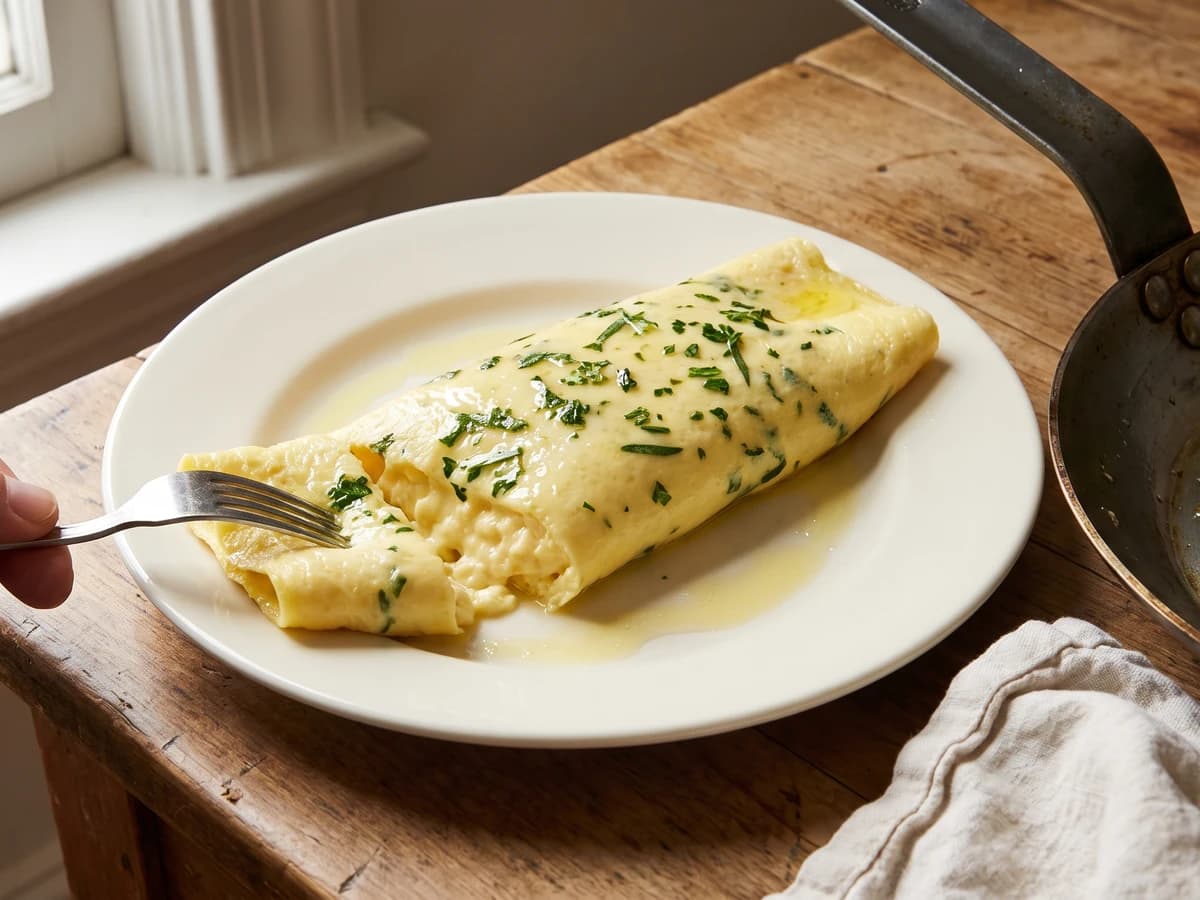
Four tender herbs, hot butter, and two eggs per pan: this rolled omelette teaches the quick hand and good judgment that keep the outside pale and the center creamy.
Chef Juliette
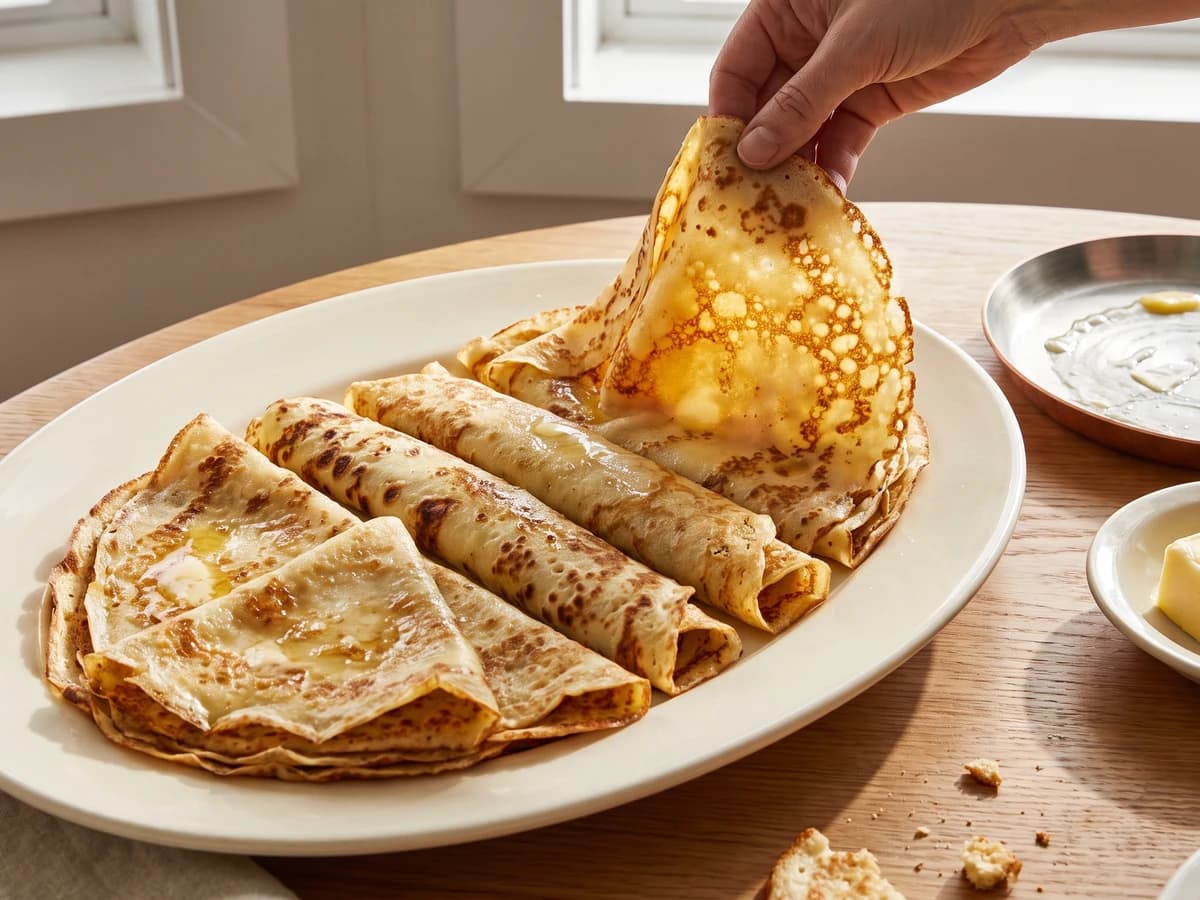
Four batters, one lesson: let the flour drink deeply before cooking, then spread the batter thinly in butter for crêpes and pannequets that bend without becoming tough.
Chef Juliette
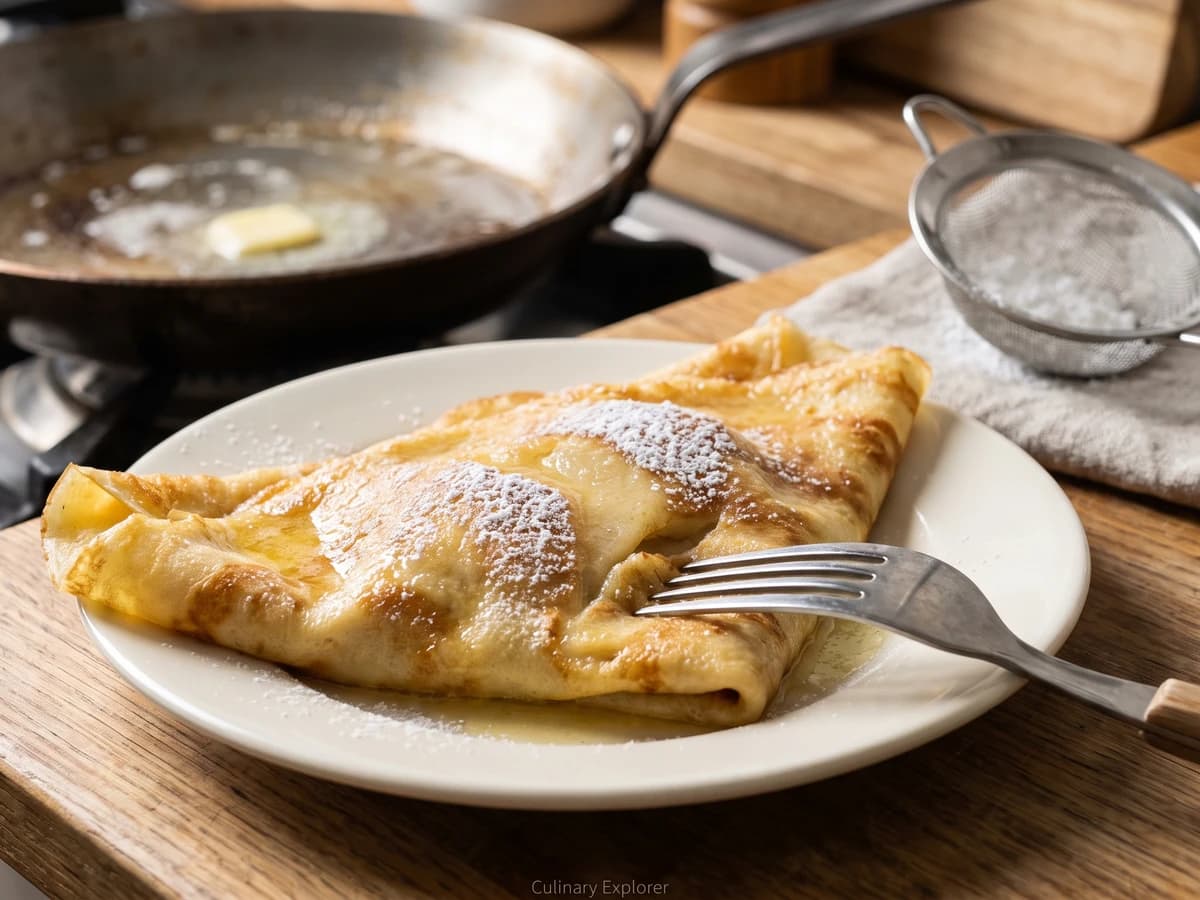
Crêpes au Couvent trap ripe Williams pear dice between two thin pours of sweet batter, then turn in one clean toss and reach the table butter-gold, powdered, and burning hot.