Chef Juliette
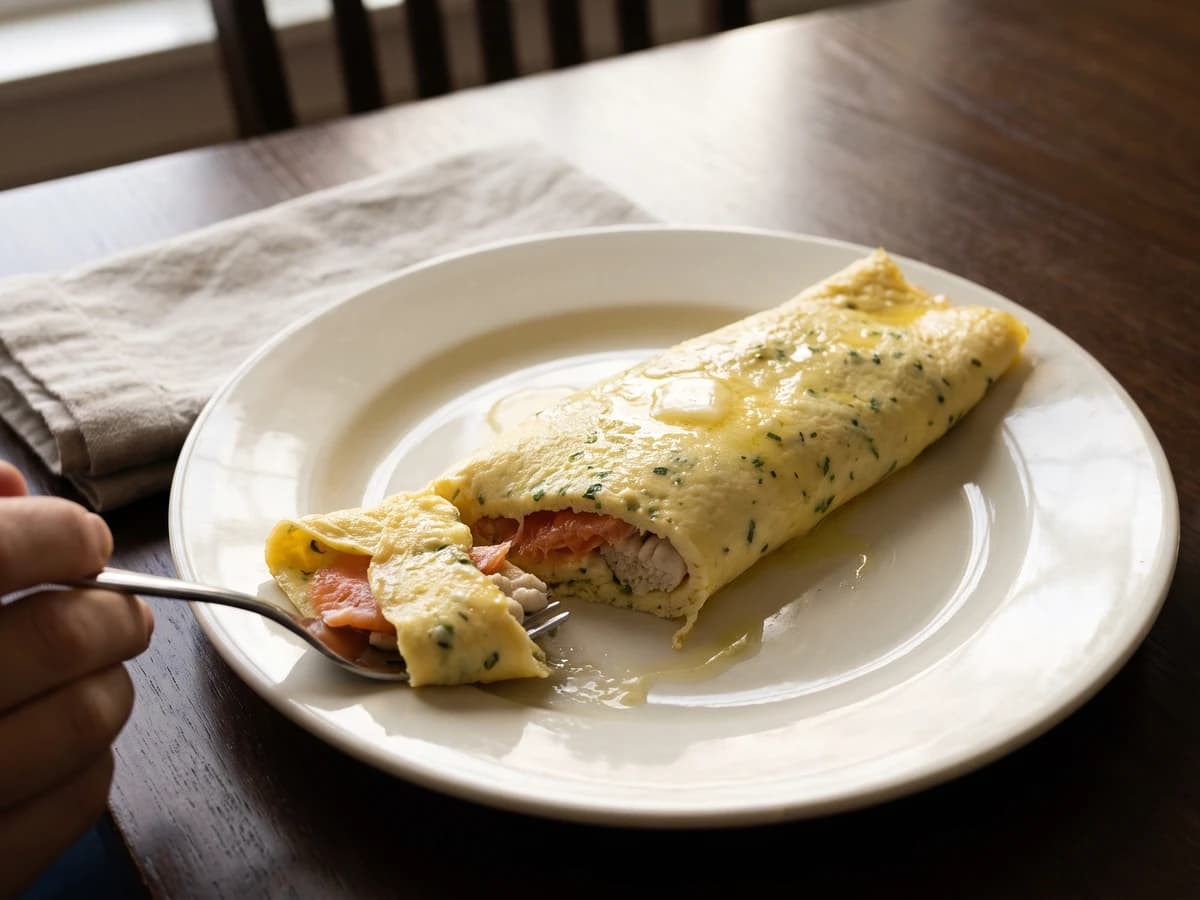
Omelette à l’Écossaise
A creamy omelette aux fines herbes closes around smoked-salmon-wrapped herring milts, gently poached in butter. Have the filling ready, then roll the eggs while they still shine.
A cooking platform built around craft, culture, and the stories behind what we eat.
Created by Chef Juliette
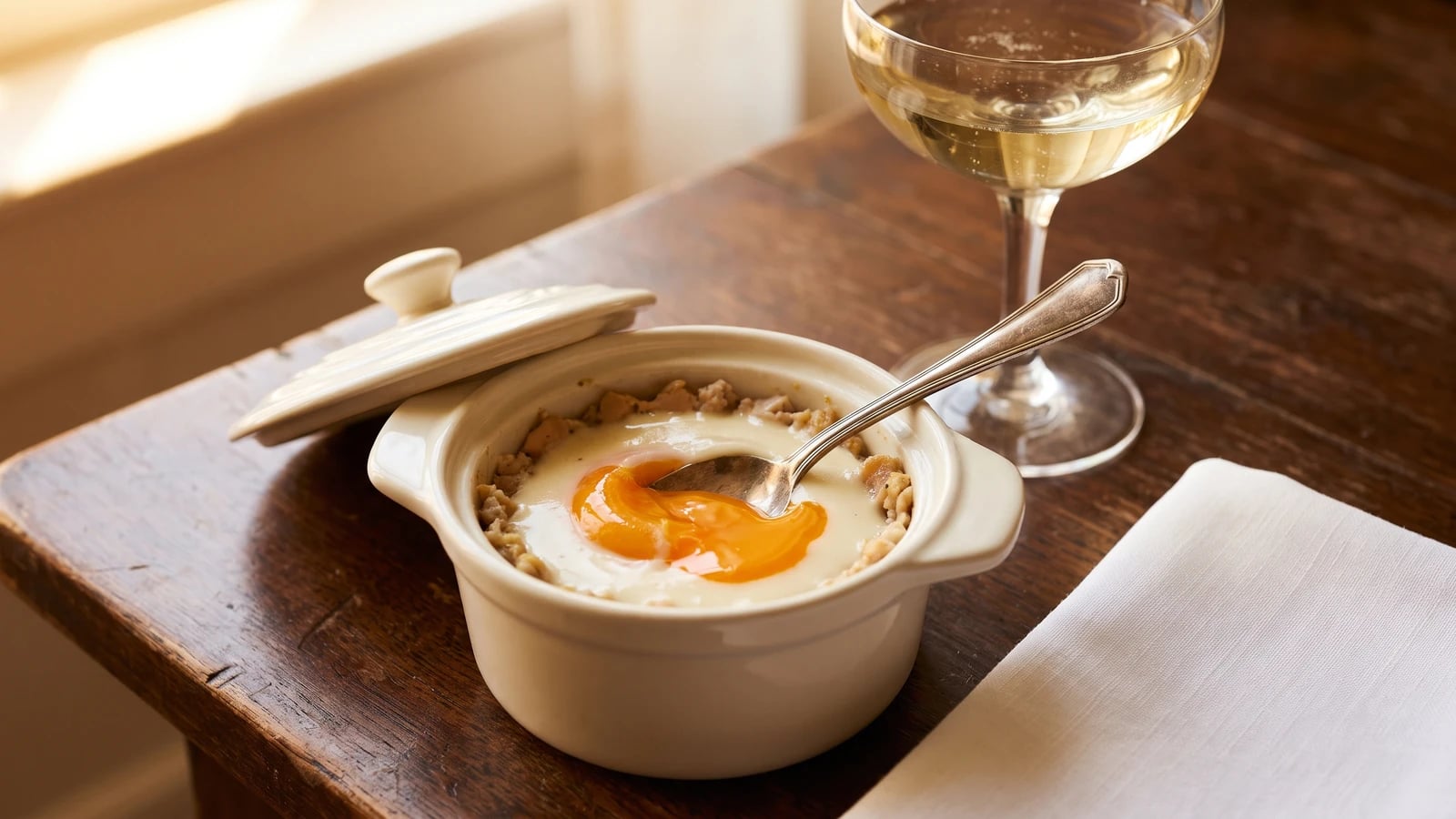
Based on No. 443, Eggs en Cocotte à la Jeannette, from Le Guide Culinaire (1907) by Auguste Escoffier
Chicken forcemeat enriched with foie gras lines each cocotte, cradling a softly poached egg under a fine ring of poultry velouté: a grand-kitchen composition made intimate for four.
Œufs en cocotte à la Jeannette (eggs poached in little pots lined with chicken forcemeat and foie gras) teaches one precise lesson: gentle heat must cook the poultry lining through while leaving the egg tender. The water bath may tremble. It must never boil.
The book's entry assumed a garde-manger ready with cream forcemeat, a saucier on staff, poultry stock never off the fire, and rows of cocottes timed for service. A salamander, useful for glazing other egg dishes, has no work here; browning would ruin the tender surface. At home, four ramekins sit in one roasting pan, the forcemeat and velouté arrive as finished components, and a small piece of plain foie gras terrine replaces opening a whole raw lobe because it incorporates smoothly at this scale. The separate stations are scaffolding and can go. The one-third-inch lining, the one-fifth measure of foie gras, and the gentle poach are the dish, so they stay. One cook, one stove, one evening.
Finished properly, each spoon passes through glossy velouté and tender egg into a pale, finely textured lining rich with chicken and foie gras. Keep that lining cold and even, then guard the water bath once the cocottes enter the oven: a bare tremble, never a boil, is the step that decides everything.
Œufs en cocotte à la Jeannette belongs to the Parisian classical service table, where individual cocottes let kitchens turn eggs into composed first courses with their own garnishes and sauces. Jeannette does not identify a province; in the canon, the à la name identifies this exact garnish of cream-enriched chicken forcemeat, foie gras, and poultry velouté. The preparation moved naturally to bourgeois home suppers because the little vessel performs the service itself, protecting the egg during cooking and carrying it directly to each guest.
Quantity
1 teaspoon (5 ml / 5 g)
softened
Quantity
1¼ cups (300 ml / about 315 g)
chilled; prepared as a finished component
Quantity
¼ cup (60 ml / about 60 g)
chilled and passed through a fine sieve; exactly one-fifth the forcemeat's volume
Quantity
4
Quantity
¼ teaspoon (1.25 ml / 1.5 g)
divided
Quantity
⅛ teaspoon (0.6 ml / 0.3 g)
Quantity
¼ cup (60 ml / about 60 g)
prepared as a finished component
Quantity
About 4 cups (960 ml / 960 g)
or enough to reach halfway up the cocottes
| Ingredient | Quantity |
|---|---|
| unsalted buttersoftened | 1 teaspoon (5 ml / 5 g) |
| Chicken Forcemeat with Creamchilled; prepared as a finished component | 1¼ cups (300 ml / about 315 g) |
| plain cooked foie gras from a terrinechilled and passed through a fine sieve; exactly one-fifth the forcemeat's volume | ¼ cup (60 ml / about 60 g) |
| large eggs | 4 |
| fine saltdivided | ¼ teaspoon (1.25 ml / 1.5 g) |
| freshly ground white pepper | ⅛ teaspoon (0.6 ml / 0.3 g) |
| Poultry Veloutéprepared as a finished component | ¼ cup (60 ml / about 60 g) |
| freshly boiled wateror enough to reach halfway up the cocottes | About 4 cups (960 ml / 960 g) |
Heat the oven to 350°F (175°C) with a rack in the middle, and bring the water to a boil. Butter four straight-sided 6-ounce (180 ml) cocottes or ramekins lightly, covering the bottoms and sides without leaving thick patches. Arrange them in a deep roasting pan with a little space between each one.
Put the chilled Chicken Forcemeat with Cream in a cold bowl and fold in the sieved foie gras with a flexible spatula until evenly blended. The ¼ cup of foie gras is exactly one-fifth the volume of the 1¼ cups of forcemeat, preserving the book's proportion. Work briefly and keep everything cold; if the mixture loosens or develops greasy streaks, set the bowl over ice for ten minutes, then fold gently until smooth.
Divide the enriched forcemeat equally among the cocottes. With the back of a teaspoon dipped in cold water, press it over each bottom and up the sides in an even one-third-inch (8 mm) layer, leaving a well in the middle for the egg. Eliminate air pockets where the bottom meets the wall. If the lining slides down, the mixture has warmed; chill the lined cocottes for ten minutes and smooth it back into place before continuing.
Break each egg separately into a small cup, then slide it gently into the well of one cocotte so the yolk remains centered and whole. Season the eggs with the salt and white pepper, dividing both evenly. Keep the seasoning on the egg rather than stirring it into the finished forcemeat, which should already be properly seasoned.
Set the roasting pan on the pulled-out oven rack. Pour the freshly boiled water around the cocottes until it reaches halfway up their sides, tent the pan loosely with foil, and slide the rack in. Poach for 18 to 22 minutes, checking at 16 minutes: the whites should look opaque and tender, the yolks should still yield beneath a light touch, and an instant-read thermometer inserted into the poultry lining without piercing the yolk must register 165°F (74°C). If the water begins bubbling hard, pull out the rack, add a little cool water, and lower the oven to 325°F (165°C). Ça se rattrape. Continue gently until the poultry reaches its safe temperature.
While the eggs poach, warm the Poultry Velouté in a small saucepan over low heat until fluid and glossy, but do not let it reduce or boil. If a skin forms, whisk it smooth. If the sauce is too tight to fall in a fine thread, whisk in hot water one teaspoon at a time until it pours neatly from the spoon.
Lift the cocottes carefully from the bain-marie and dry their bottoms. Let them stand for one minute, then spoon a narrow thread of Poultry Velouté around each egg where the white meets the forcemeat, using about one tablespoon per cocotte. Do not cover the yolk or flood the lining; the sauce is a ring, not a blanket. Serve immediately in the vessels that cooked them. À table!
1 serving (about 155g)
Culinary guides, cultural storytelling, and the editorial depth that makes cooking meaningful.
Discover Culinary ExplorerChef Juliette
A creamy omelette aux fines herbes closes around smoked-salmon-wrapped herring milts, gently poached in butter. Have the filling ready, then roll the eggs while they still shine.
Chef Juliette
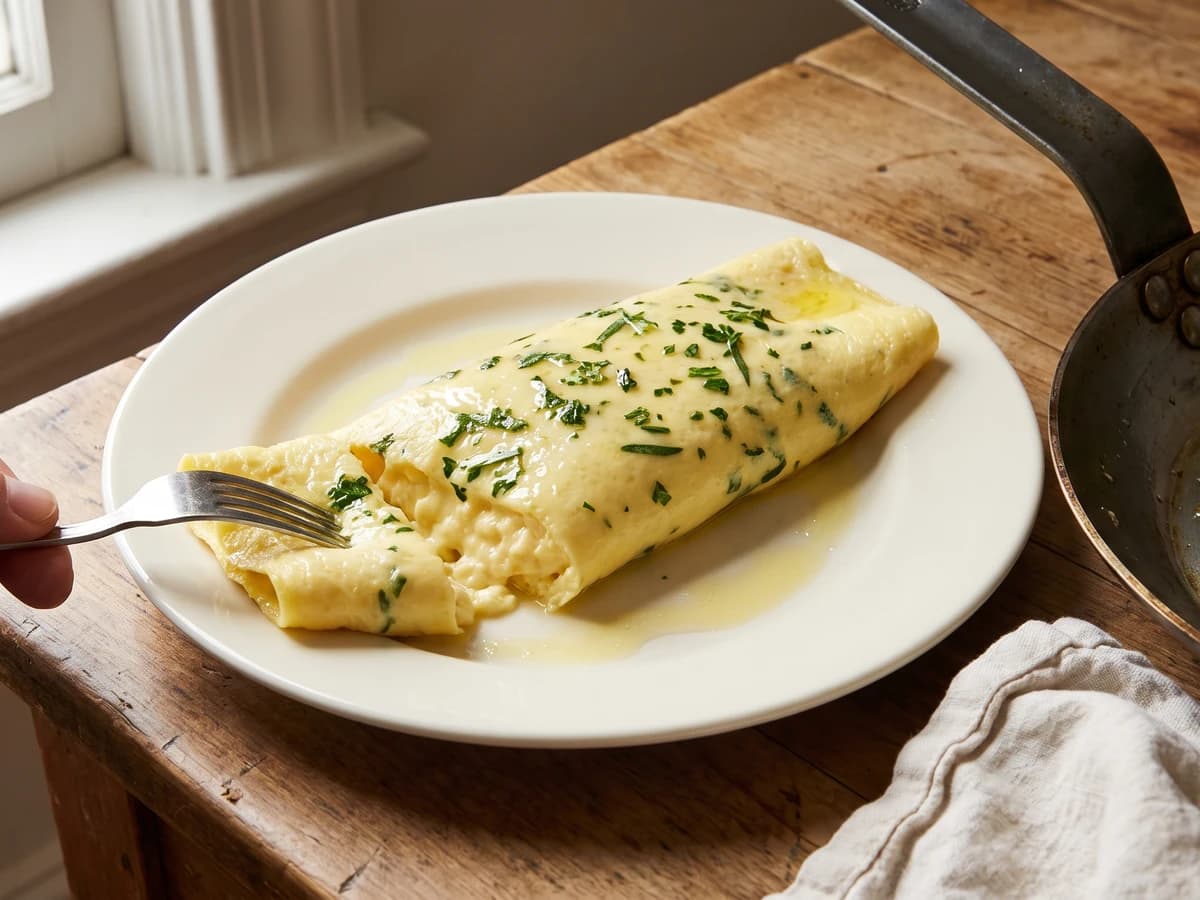
Four tender herbs, hot butter, and two eggs per pan: this rolled omelette teaches the quick hand and good judgment that keep the outside pale and the center creamy.
Chef Juliette
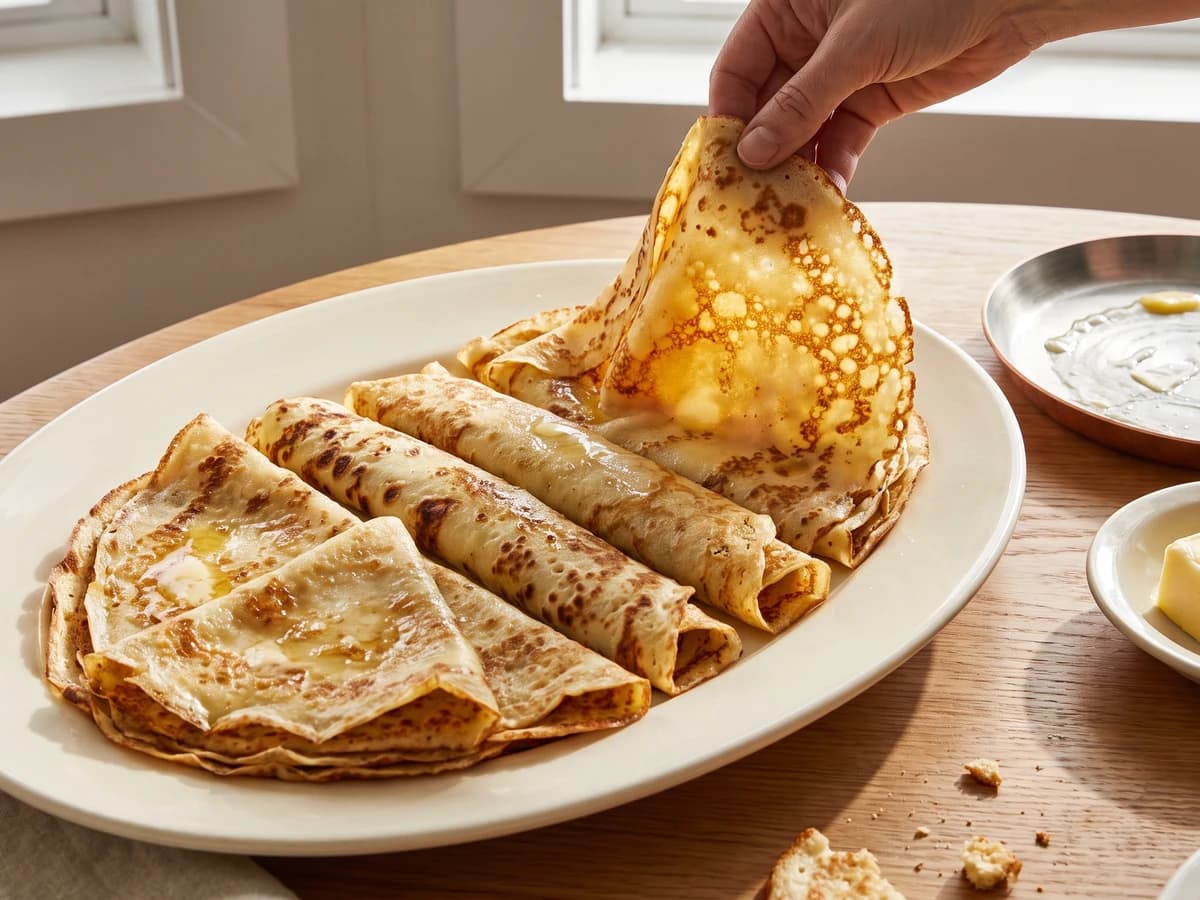
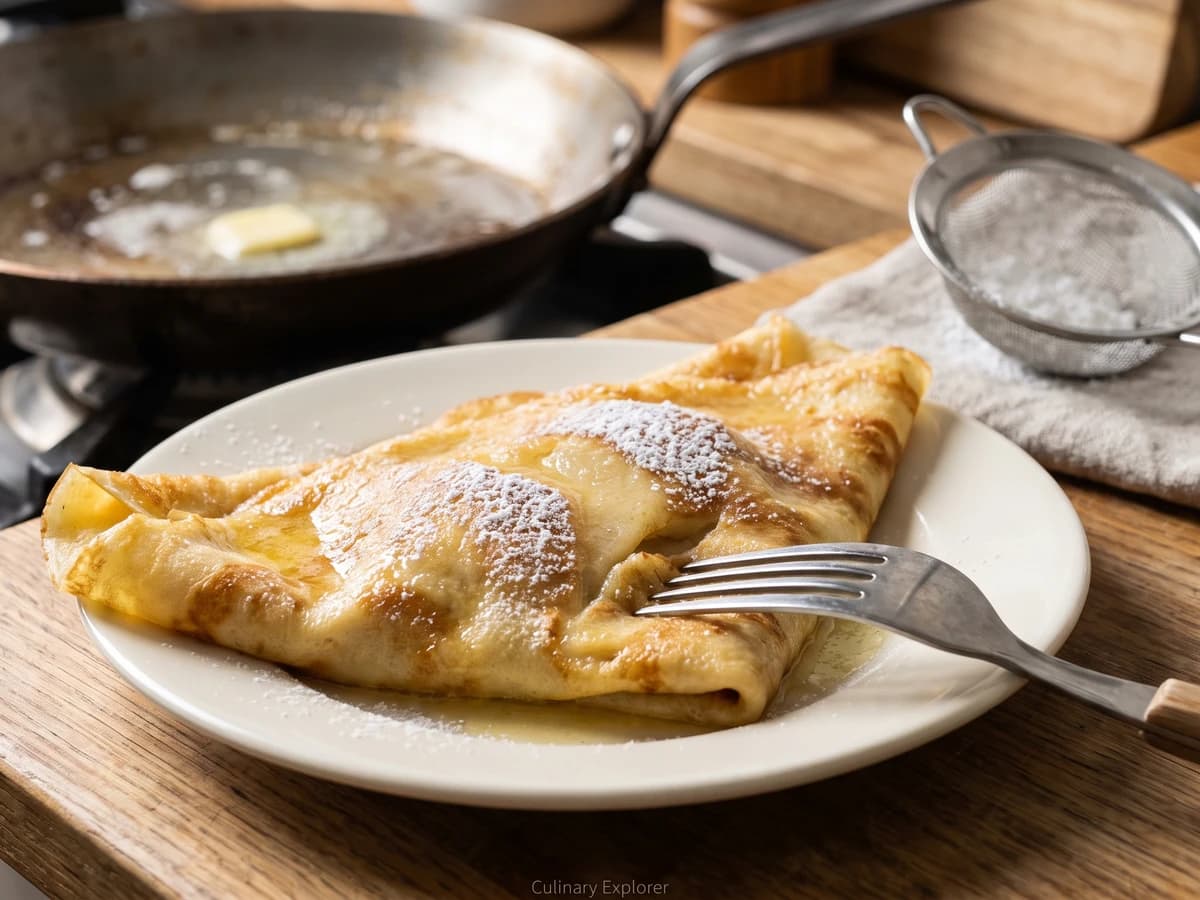
Four batters, one lesson: let the flour drink deeply before cooking, then spread the batter thinly in butter for crêpes and pannequets that bend without becoming tough.
Chef Juliette
Crêpes au Couvent trap ripe Williams pear dice between two thin pours of sweet batter, then turn in one clean toss and reach the table butter-gold, powdered, and burning hot.