Chef Juliette
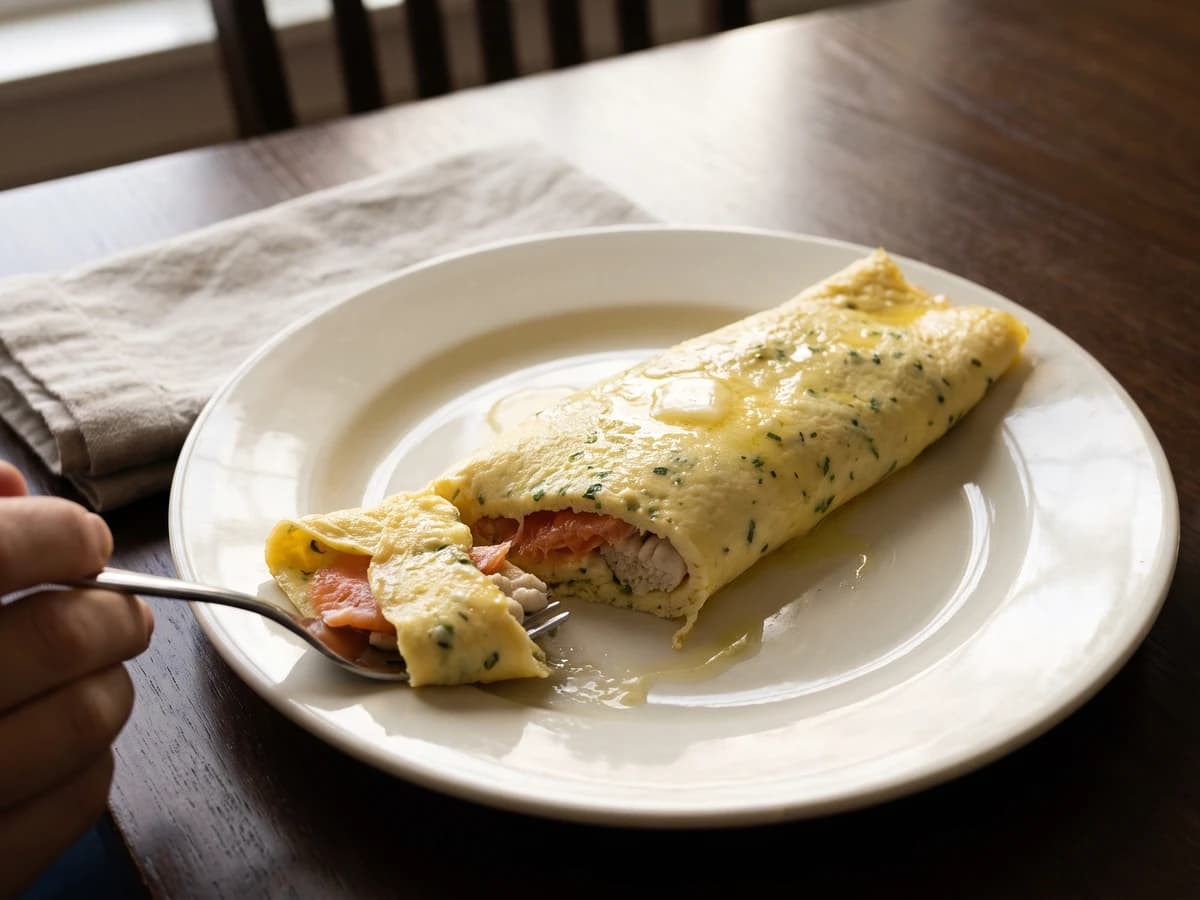
Omelette à l’Écossaise
A creamy omelette aux fines herbes closes around smoked-salmon-wrapped herring milts, gently poached in butter. Have the filling ready, then roll the eggs while they still shine.
A cooking platform built around craft, culture, and the stories behind what we eat.
Created by Chef Juliette
Based on No. 442, Eggs en Cocotte with Cream, from Le Guide Culinaire (1907) by Auguste Escoffier
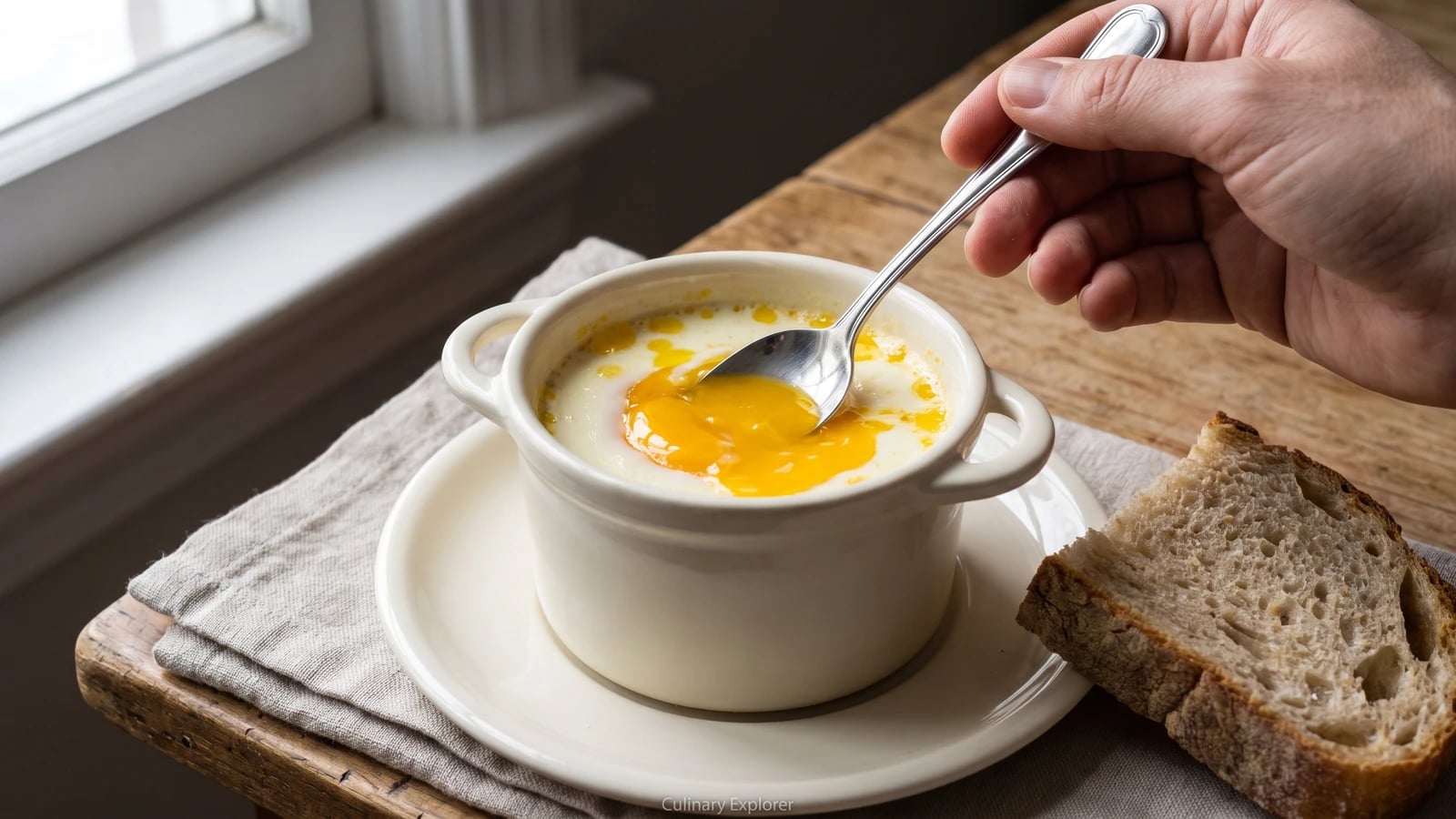
Œufs en cocotte turn cream, butter, and eggs into the gentlest lesson in heat: warmed pots and a quiet bain-marie set the whites tender while the yolks stay gloriously fluid.
Œufs en cocotte à la crème (eggs gently poached in little pots with cream) teach the first law of egg cookery: the white needs enough heat to set tenderly, while the yolk must be spared. Boiling cream begins the work from below, the bain-marie tempers the oven around it, and two pea-sized pieces of butter keep the surface rich. The one true thing is this: take the cocottes out before they look completely done, because the hot porcelain finishes the egg.
The service kitchen behind the entry assumed a rank of cocottes already hot and a deep bain-marie kept ready. Your equivalent is four 4-ounce ramekins warmed together in the oven and a roasting tin filled halfway with boiling water. The source gives its proportions per cocotte, so this version makes four and preserves each ratio exactly: one tablespoon of boiling cream, one egg, and two pea-sized pieces of butter. The service line was scaffolding and can go; warmed pots, boiling cream, and the gentle poach are the dish and must stay. One cook, one stove, one evening.
When they are right, the whites are pearly and tender, the cream gathers at the edges beneath a sheen of butter, and the yolks run gold beneath the spoon. Watch the white at the edge and lift the cocottes while the center still trembles; that early removal is the step that decides the dish.
Œufs en cocotte belong less to one region than to France's cuisine bourgeoise, where individual fireproof pots carried eggs directly from kitchen to table for breakfast, a light supper, or a first course. The cream preparation became the foundational type for a whole family of cocotte eggs, with later garnishes changing while the gentle bain-marie remained. Despite the oven, this is poaching rather than ordinary baking: hot water buffers the heat, and cream alone does not make the dish Norman.
Quantity
4
Quantity
1/4 cup (60 ml / 60 g)
Quantity
2 teaspoons (10 ml / 9 g)
cut into 8 pea-sized pieces
Quantity
1/4 teaspoon (1.25 ml / 1.5 g)
Quantity
1/8 teaspoon (0.6 ml / 0.25 g)
Quantity
About 6 cups (1.4 L / 1.4 kg)
for the bain-marie
| Ingredient | Quantity |
|---|---|
| large eggs | 4 |
| heavy cream | 1/4 cup (60 ml / 60 g) |
| unsalted buttercut into 8 pea-sized pieces | 2 teaspoons (10 ml / 9 g) |
| fine sea salt | 1/4 teaspoon (1.25 ml / 1.5 g) |
| finely ground white pepper | 1/8 teaspoon (0.6 ml / 0.25 g) |
| boiling waterfor the bain-marie | About 6 cups (1.4 L / 1.4 kg) |
Heat the oven to 325°F (165°C), with a rack in the middle. Arrange four 4-ounce (120 ml) ovenproof cocottes or shallow ramekins in a deep roasting tin and warm them in the oven for 5 minutes. Meanwhile, bring the water to a boil. Warming the cocottes is not ceremony: a cold vessel steals the first heat from the cream and leaves the whites lagging behind the yolks.
Remove the roasting tin to a firm heatproof surface, keeping the cocottes inside. Heat the cream in the smallest saucepan you own until bubbles crowd its edge and the surface just begins to rise, then take it off the heat before it reduces. Divide it immediately among the hot cocottes, exactly 1 tablespoon (15 ml / 15 g) in each.
Break each egg into a small cup first, then slide one gently into each cocotte so the yolk stays whole. Divide the salt and white pepper evenly over the eggs. Place two pea-sized pieces of butter on each white, leaving the yolk visible. Keep this order intact: boiling cream, egg, seasoning, butter. It is the preparation's whole architecture.
Pour the boiling water carefully into the roasting tin until it reaches halfway up the sides of the cocottes. This is the bain-marie, a hot-water bath that buffers the oven's heat and poaches the eggs gently. Transfer the tin to the oven and cook for 10 minutes, then inspect every minute; most eggs need 12 to 14 minutes altogether. The outer whites should be opaque and tender, the centers barely set, and the yolks should wobble freely beneath their buttered gloss. If a clear thread of white still runs when one cocotte is tipped slightly, ça se rattrape: return the tin to the oven for 1 minute and check again. Pull them early because you can give them another minute; a firm yolk cannot be made fluid again.
Lift each cocotte from the bain-marie with a broad spatula and an oven mitt, then dry its underside and set it on a heatproof saucer. Rest the eggs for no more than 1 minute, just long enough for the trembling whites to settle. Serve immediately while the cream remains fluid and the yolks run beneath the spoon. À table!
1 serving (about 65g)
Culinary guides, cultural storytelling, and the editorial depth that makes cooking meaningful.
Discover Culinary ExplorerChef Juliette
A creamy omelette aux fines herbes closes around smoked-salmon-wrapped herring milts, gently poached in butter. Have the filling ready, then roll the eggs while they still shine.
Chef Juliette
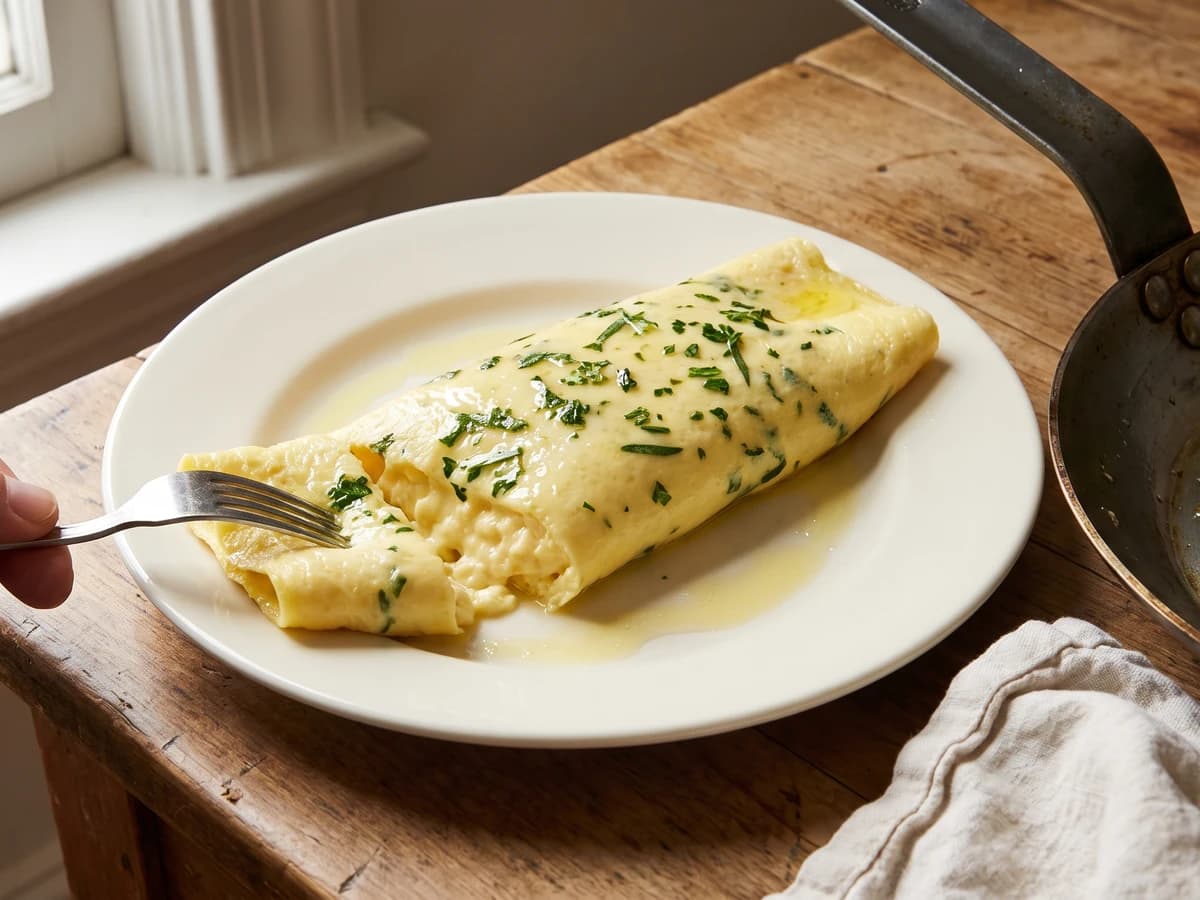
Four tender herbs, hot butter, and two eggs per pan: this rolled omelette teaches the quick hand and good judgment that keep the outside pale and the center creamy.
Chef Juliette
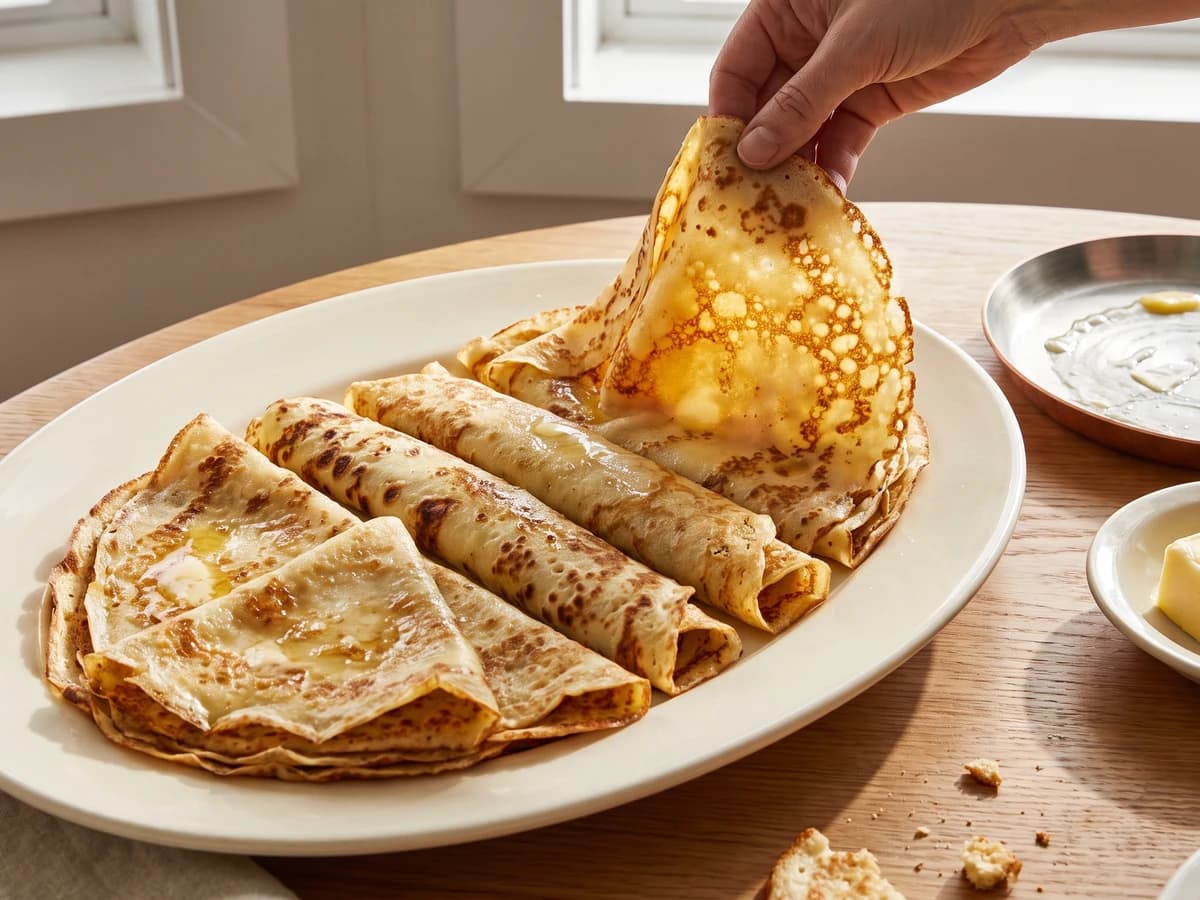
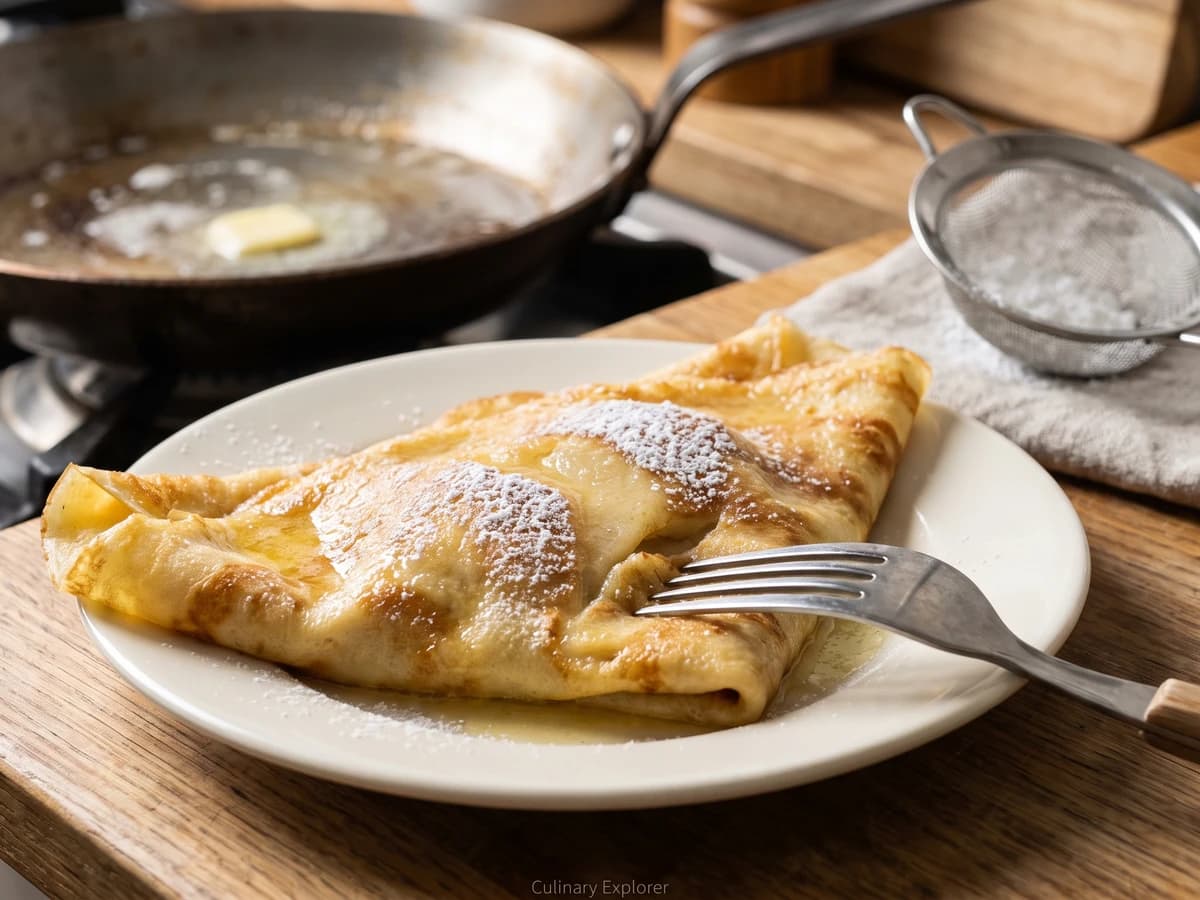
Four batters, one lesson: let the flour drink deeply before cooking, then spread the batter thinly in butter for crêpes and pannequets that bend without becoming tough.
Chef Juliette
Crêpes au Couvent trap ripe Williams pear dice between two thin pours of sweet batter, then turn in one clean toss and reach the table butter-gold, powdered, and burning hot.