Chef Juliette
Omelette à l’Écossaise
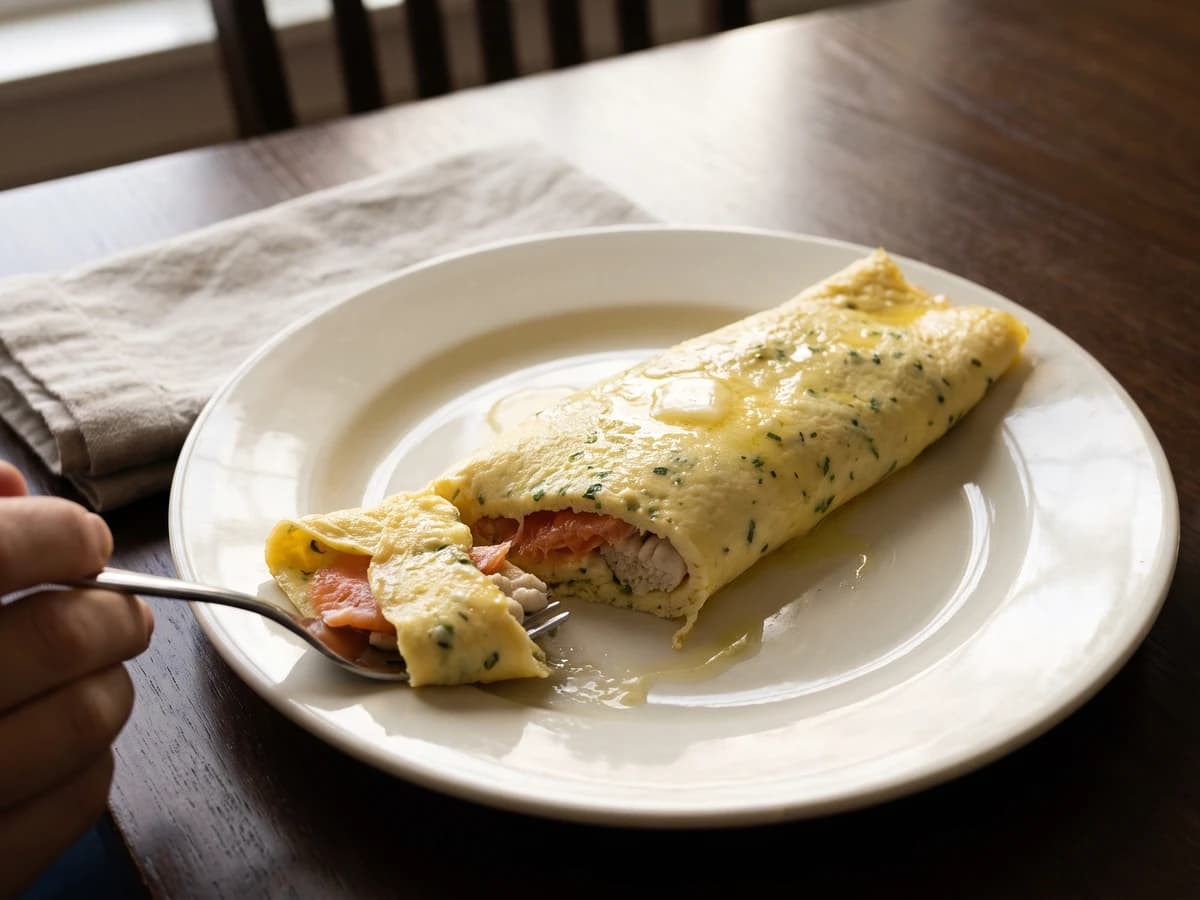
A creamy omelette aux fines herbes closes around smoked-salmon-wrapped herring milts, gently poached in butter. Have the filling ready, then roll the eggs while they still shine.
A cooking platform built around craft, culture, and the stories behind what we eat.
Created by Chef Juliette
Based on No. 441, Eggs en Cocotte au Chambertin, from Le Guide Culinaire (1907) by Auguste Escoffier
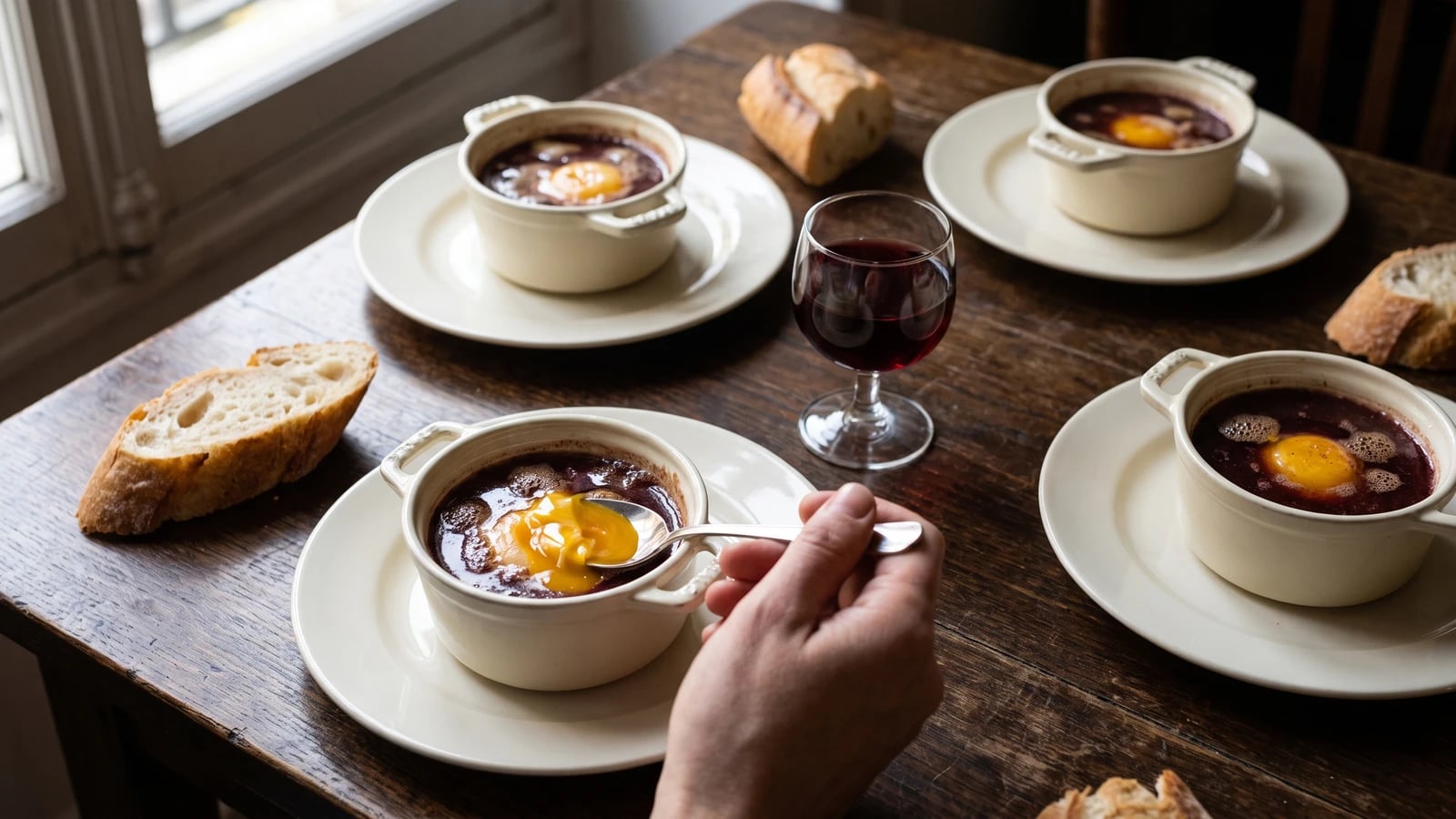
A Burgundy lesson in controlled heat: eggs poached directly in glossy Chambertin sauce, held tender in individual cocottes, then flashed beneath the broiler until the whites veil and the yolks remain fluid.
Œufs en cocotte au Chambertin teaches controlled heat. The sauce must be at a true simmer when the egg enters, then the water around the cocotte must settle to the faintest tremble. That contrast sets the white tender while leaving the yolk fluid. C'est la même grammaire as any fine poach: decisive heat first, restraint afterward.
The brigade recipe assumed a saucier on staff, a stock never off the fire, cocottes that could sit at the corner of the range, and a salamander waiting for the last glaze. At home, a small saucepan builds the cup of sauce required, strong unsalted stock supplies its body, a lidded sauté pan becomes the bain-marie (hot-water bath), and the broiler gives the final flash. The brigade quantity becomes four cocottes, and fragile home ramekins are heated in water rather than set directly over a burner. That is scaffolding. The wine reduction, the egg broken into simmering sauce, the gentle poach, and the quick glaze are the dish, so they stay.
One cook, one stove, one evening. Watch the transition from bubbling sauce to barely trembling water, because that single change of heat decides whether the egg emerges silken or tough.
Œufs en cocotte au Chambertin belongs to Burgundy's wine cookery, where eggs and red wine meet most famously in œufs en meurette at household and bistro tables. The cocotte treatment carries that idea into the classical dining room: a smooth sauce named for Chambertin, the grand cru of Gevrey-Chambertin in the Côte de Nuits, replaces the rustic garnishes, and each egg poaches directly in its own pot. It is not simply a baked egg with wine spooned over it; the simmering sauce and last glaze are part of the technique.
Quantity
1½ cups (360 ml / 355 g)
Quantity
1 small (30 g)
thinly sliced
Quantity
1 small sprig
Quantity
1 small
Quantity
6
lightly crushed
Quantity
2 tablespoons (30 ml / 28 g)
divided
Quantity
1 tablespoon (15 ml / 8 g)
Quantity
1 teaspoon (5 ml / 6 g)
Quantity
1¼ cups (300 ml / 300 g)
Quantity
½ teaspoon (2.5 ml / 3 g), divided, plus more as needed
Quantity
4
at room temperature
Quantity
About 4 cups (1 L / 1 kg)
| Ingredient | Quantity |
|---|---|
| Chambertin or another dry red Burgundy Pinot Noir | 1½ cups (360 ml / 355 g) |
| shallotthinly sliced | 1 small (30 g) |
| thyme | 1 small sprig |
| bay leaf | 1 small |
| black peppercornslightly crushed | 6 |
| unsalted butterdivided | 2 tablespoons (30 ml / 28 g) |
| all-purpose flour | 1 tablespoon (15 ml / 8 g) |
| tomato paste | 1 teaspoon (5 ml / 6 g) |
| strong unsalted beef or veal stock | 1¼ cups (300 ml / 300 g) |
| fine sea salt | ½ teaspoon (2.5 ml / 3 g), divided, plus more as needed |
| large eggsat room temperature | 4 |
| water for the bain-marie | About 4 cups (1 L / 1 kg) |
Combine the wine, shallot, thyme, bay leaf, and peppercorns in a small heavy saucepan. Bring to a lively boil and reduce until only a scant ⅓ cup (80 ml) remains, about 15 minutes. The aroma should be deep and vinous, with no raw alcoholic sting. Strain through a fine sieve, pressing the shallot gently, then discard the aromatics. If the wine slips past this point and turns syrupy, loosen it with 2 tablespoons of the measured stock before continuing.
Melt 1 tablespoon of the butter in the saucepan over medium heat. Stir in the flour and cook for 2 to 3 minutes, stirring constantly, until the roux smells nutty and reaches the colour of a hazelnut. Add the tomato paste and cook for another minute. Take the pan from the heat and whisk in the stock a little at a time, making a smooth paste with the first addition before adding the rest. Whisk in the wine reduction, return to a bare simmer, and cook for 12 to 15 minutes, until reduced to about 1 cup (240 ml) and nappant, thick enough to coat the back of a spoon. If it is thin, reduce it longer; if it is too tight, add stock by the spoonful. Lumps are not a verdict. Ça se rattrape: whisk firmly, then pass the sauce through the fine sieve. Off the heat, whisk in the remaining butter and season lightly with salt.
Set an oven rack about 4 inches (10 cm) below the broiler and heat the broiler. Bring the water to a boil in a kettle. Arrange four 6-ounce (180 ml) broiler-safe cocottes in the lidded sauté pan, divide the sauce among them, ¼ cup (60 ml) per pot, so each is one-third full, and pour boiling water around them to come halfway up their sides. Cover the pan and hold it over low heat until the sauce bubbles around the edges, about 2 minutes. Heating the pots in water is the home equivalent of setting old stovetop cocottes at the corner of the range.
Uncover the pan. Working close to the surface so the yolk remains whole, break one egg directly into the simmering sauce in each cocotte. Season every egg with a small grain of salt. Do not stir or spoon sauce over the top; the white must settle into the wine sauce of its own accord.
Cover the pan at once and lower the heat until the water barely trembles. Poach for 4 to 6 minutes, checking at 4 minutes, until the white is opaque around its edge and softly set over the yolk, while the yolk still moves freely when the cocotte is nudged. If the water begins boiling hard, pull the pan off the heat for 30 seconds, then return it at a lower setting. If the whites remain loose while the yolks are nearly ready, take the pan off the heat and leave it covered for 45 seconds; the trapped heat finishes them gently.
Grip each cocotte firmly with silicone-tipped tongs, support its base with a broad spatula, and transfer it to a rimmed metal tray. Blot any water from the outside. Pass the cocottes beneath the broiler for 15 to 30 seconds, watching without turning away, until the last translucent film of white turns ivory and the sauce shines at the rim. Glacer means a quick final gloss here, not browning. If one egg needs more time, give it another 5 seconds alone; keeping all four under the heat would sacrifice three yolks to rescue one.
Set each hot cocotte on a small plate and serve immediately, with thick slices of bread for gathering the wine-dark sauce and liquid yolk. Warn everyone that the pots are hot, then let them break the yolks themselves. À table!
1 serving (about 130g)
Culinary guides, cultural storytelling, and the editorial depth that makes cooking meaningful.
Discover Culinary ExplorerChef Juliette
A creamy omelette aux fines herbes closes around smoked-salmon-wrapped herring milts, gently poached in butter. Have the filling ready, then roll the eggs while they still shine.
Chef Juliette
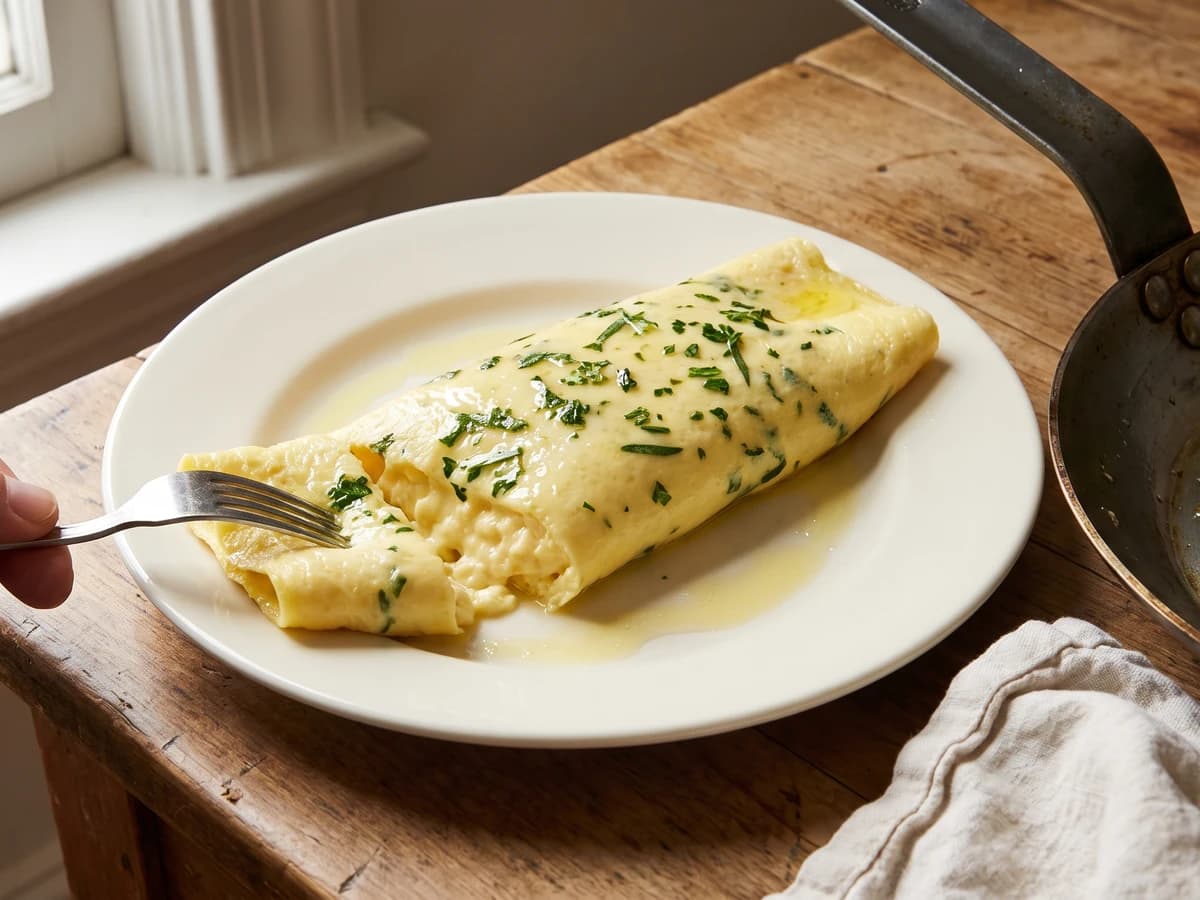
Four tender herbs, hot butter, and two eggs per pan: this rolled omelette teaches the quick hand and good judgment that keep the outside pale and the center creamy.
Chef Juliette
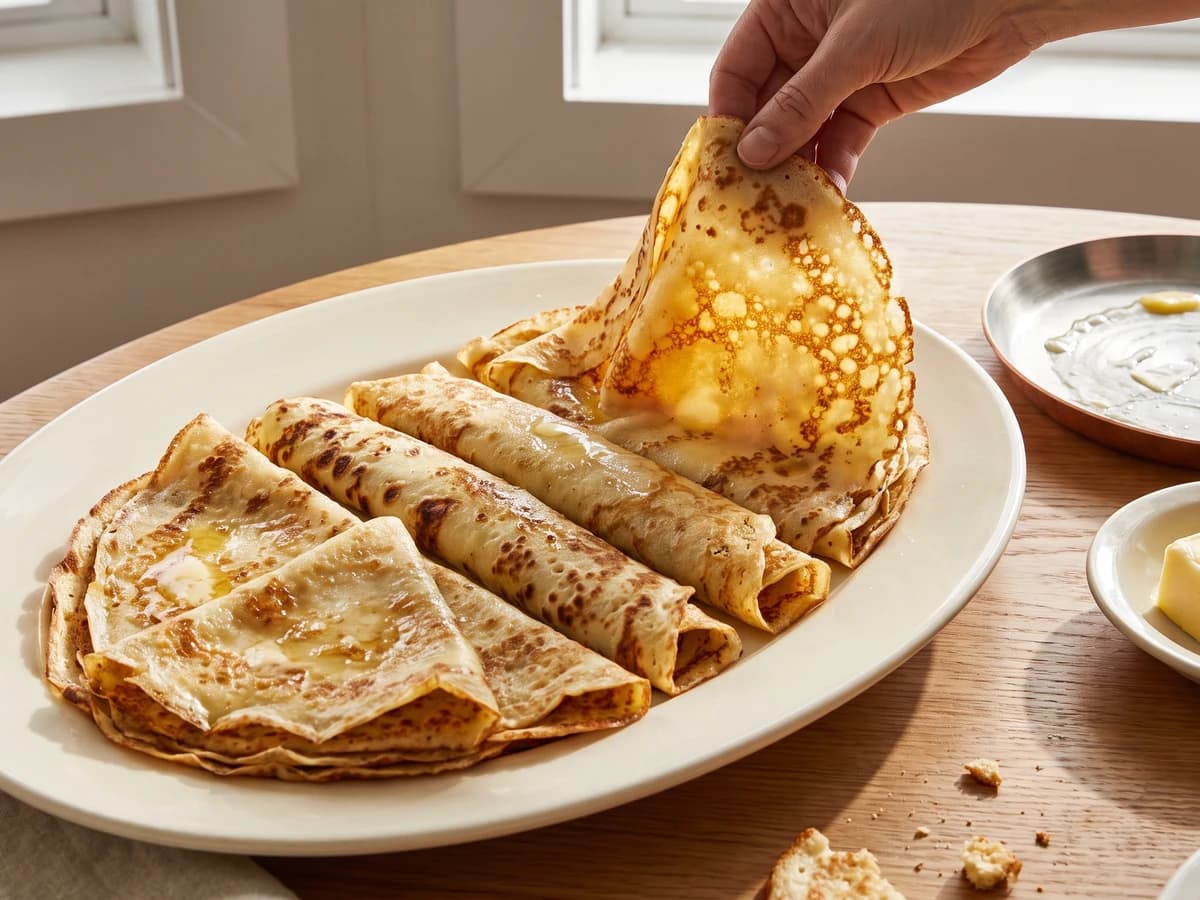
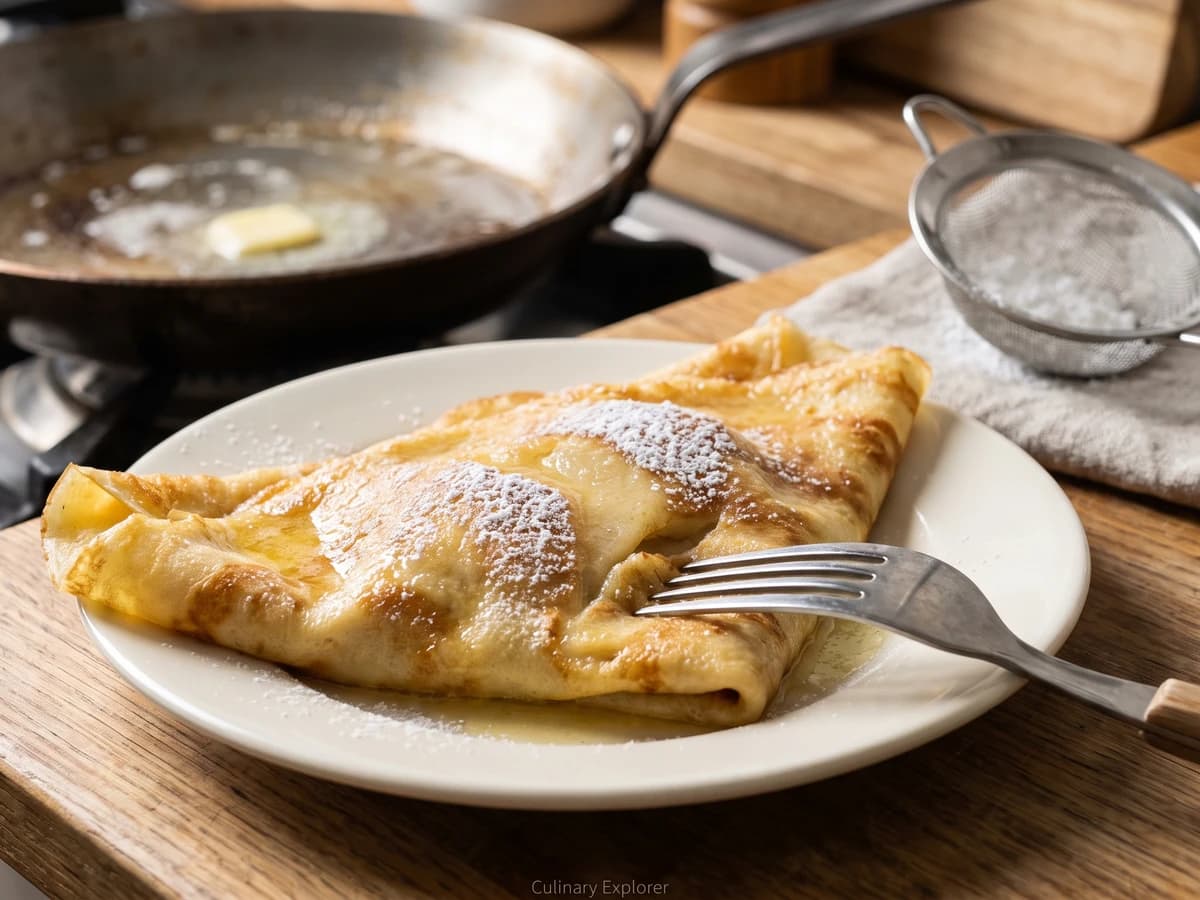
Four batters, one lesson: let the flour drink deeply before cooking, then spread the batter thinly in butter for crêpes and pannequets that bend without becoming tough.
Chef Juliette
Crêpes au Couvent trap ripe Williams pear dice between two thin pours of sweet batter, then turn in one clean toss and reach the table butter-gold, powdered, and burning hot.