Chef Juliette
Omelette à l’Écossaise
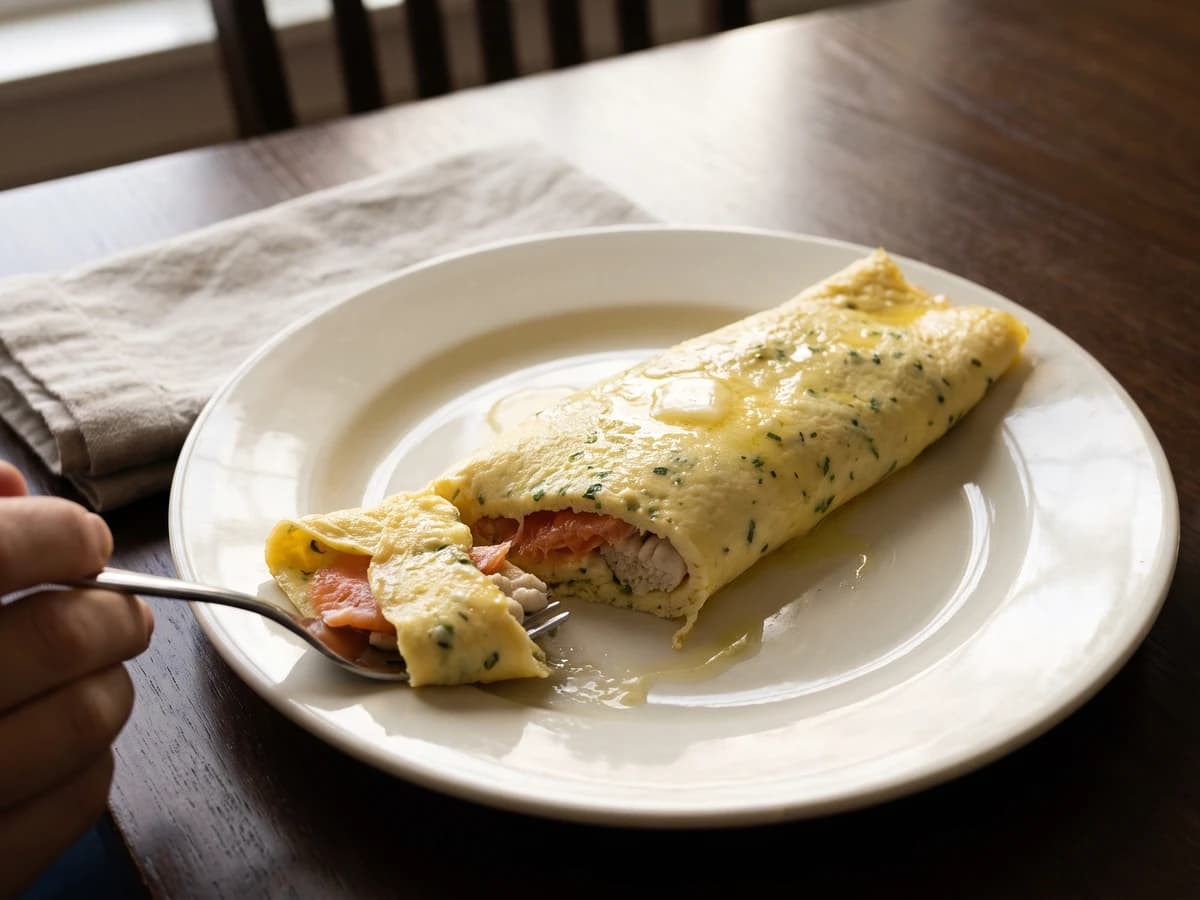
A creamy omelette aux fines herbes closes around smoked-salmon-wrapped herring milts, gently poached in butter. Have the filling ready, then roll the eggs while they still shine.
A cooking platform built around craft, culture, and the stories behind what we eat.
Created by Chef Juliette
Based on No. 439, Eggs à la Tripe, Bourgeoise, from Le Guide Culinaire (1907) by Auguste Escoffier
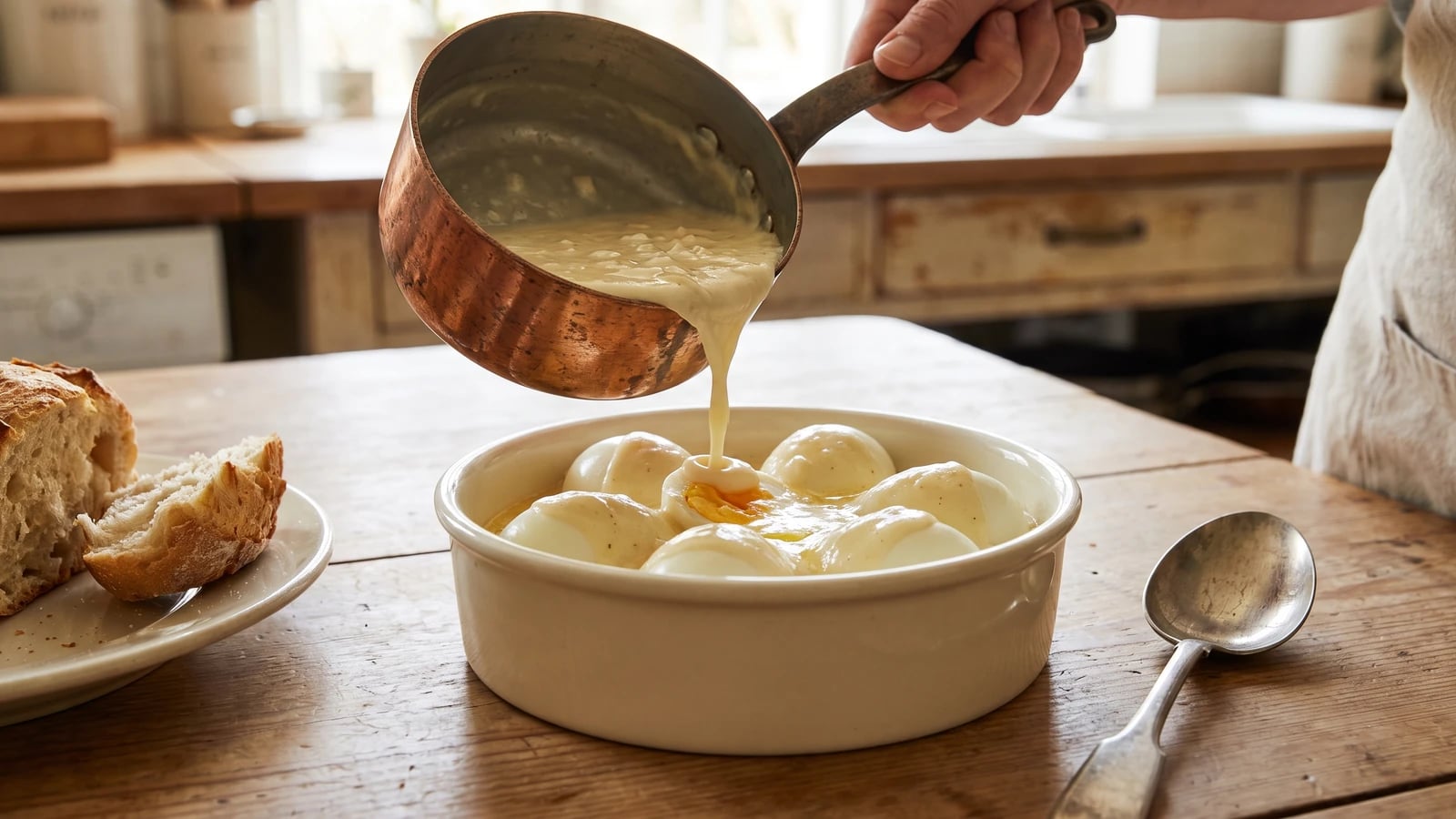
Œufs à la tripe turns four modest eggs into supper: tender quarters under an ivory onion-and-milk sauce, kept pale, sieved smooth, and served fiercely hot. The lesson is gentle heat.
Œufs à la tripe, bourgeoise (quartered hard-cooked eggs under a smooth onion-and-milk sauce) teaches the discipline of cooking without coloration: flavor must deepen while color does not. The one true thing is this: the onions must become completely tender in butter without taking even a bronze edge, because their pale sweetness is the sauce.
The source formula was written for six eggs and a kitchen where a saucier could watch the pan, a tammy waited on the bench, and another clean saucepan could be reached for without thought. For four servings, its stated proportions are reduced to two-thirds. A fine-mesh sieve is the honest home equivalent of the tammy, and the same rinsed saucepan handles the final reheating. That extra pan is brigade scaffolding and goes; the twenty-minute simmer, thorough sieving, and very hot finish are the dish and stay.
When it is right, the sauce is ivory, glossy, and lightly thickened, carrying the sweetness of onion without a visible piece remaining. One cook, one stove, one evening, and no stock or salamander belongs here. Keep the onions pale before the flour goes in; that is the step that decides the dish.
Œufs à la tripe belongs not to one province but to the cuisine bourgeoise of Paris and France's provincial towns, where hard-cooked eggs and onions made an economical supper before passing from household practice into the classical repertory. The name contains no offal: à la tripe describes eggs dressed in the onion-rich manner associated with tripe preparations. In the bourgeoise form, the softened onion is rubbed through a fine sieve, leaving its sweetness and body while removing every visible piece.
Quantity
4
Quantity
1⅓ large (about 1¾ cups / 415 ml / 270 g)
finely chopped
Quantity
2 tablespoons (30 ml / 28 g)
Quantity
1 tablespoon plus ½ teaspoon (17 ml / 9 g)
Quantity
1½ cups plus 1½ tablespoons (380 ml / 390 g)
heated just to boiling
Quantity
½ teaspoon (2.5 ml / 3 g)
divided
Quantity
⅛ teaspoon (0.6 ml / 0.3 g)
freshly ground
Quantity
1/16 teaspoon (0.3 ml / 0.1 g)
freshly grated
| Ingredient | Quantity |
|---|---|
| large eggs | 4 |
| yellow onionsfinely chopped | 1⅓ large (about 1¾ cups / 415 ml / 270 g) |
| unsalted butter | 2 tablespoons (30 ml / 28 g) |
| plain flour | 1 tablespoon plus ½ teaspoon (17 ml / 9 g) |
| whole milkheated just to boiling | 1½ cups plus 1½ tablespoons (380 ml / 390 g) |
| fine saltdivided | ½ teaspoon (2.5 ml / 3 g) |
| white pepperfreshly ground | ⅛ teaspoon (0.6 ml / 0.3 g) |
| nutmegfreshly grated | 1/16 teaspoon (0.3 ml / 0.1 g) |
Set the eggs in a medium saucepan in one layer and cover them by 1 inch (2.5 cm) with cold water. Bring just to a boil over medium heat, cover, remove from the heat, and leave for 11 minutes. Transfer the eggs to cold water for 5 minutes, then peel them and keep them whole while the sauce cooks. The yolks should be completely set and golden, not ringed with green; cooling stops the cooking before that ring forms.
Wipe the same saucepan dry and melt the butter over low heat. Add the chopped onions and ¼ teaspoon of the salt, cover, and stew gently for 10 to 12 minutes, stirring often, until the onions are completely soft and translucent but show no brown edges. If they begin to color, pull the pan from the heat and stir in 1 tablespoon from the measured milk, then return the pan over lower heat. Ça se rattrape if you catch it early; once the onions are deeply browned, the ivory finish cannot be restored.
Heat the milk in a microwave-safe jug or small saucepan until it just reaches the boil. Sprinkle the flour evenly over the softened onions and stir over low heat for 2 minutes. This roux blanc (white roux) must lose its raw flour smell without taking color. Add the very hot milk in three additions, whisking each addition smooth before pouring the next, then season with the remaining salt, the white pepper, and nutmeg. If the milk went in too quickly and the roux formed beads, lift the pan from the heat and whisk firmly; the final sieve will catch any stubborn lumps.
Bring the sauce to the gentlest simmer and cook uncovered for the full 20 minutes, stirring across the pan floor every 2 or 3 minutes. It should give only lazy bubbles while the onions collapse and the raw edge leaves the flour. If it tightens enough to hold a trench behind the spoon, add boiling water a tablespoon at a time to replace what evaporated. If the milk catches on the bottom, do not scrape it up; pour the clean upper sauce into the heatproof jug, rinse the saucepan, and continue over lower heat.
Set a fine-mesh sieve over the heatproof jug and pour in the sauce. Rub it through firmly with a flexible spatula, pressing until only dry onion fibers remain; do not merely strain away the onions, because the pulp passing through the mesh gives the sauce its body. Rinse the saucepan, return the sieved sauce to it, and reheat over medium-low heat until very hot, glossy, and just bubbling at the edge. If it is too thick to pour generously, whisk in a teaspoon of boiling water; if too thin, simmer it for another minute. Taste and correct the seasoning.
Warm a 1-quart (950 ml) round serving bowl or timbale with hot water, then empty and dry it. Quarter the eggs lengthwise and arrange them snugly in the warm dish, yolk sides showing. Pour the onion sauce over them at once, covering every quarter while the sauce is very hot. Serve immediately; the sauce warms the eggs without simmering their whites into rubber. À table!
1 serving (about 205g)
Culinary guides, cultural storytelling, and the editorial depth that makes cooking meaningful.
Discover Culinary ExplorerChef Juliette
A creamy omelette aux fines herbes closes around smoked-salmon-wrapped herring milts, gently poached in butter. Have the filling ready, then roll the eggs while they still shine.
Chef Juliette
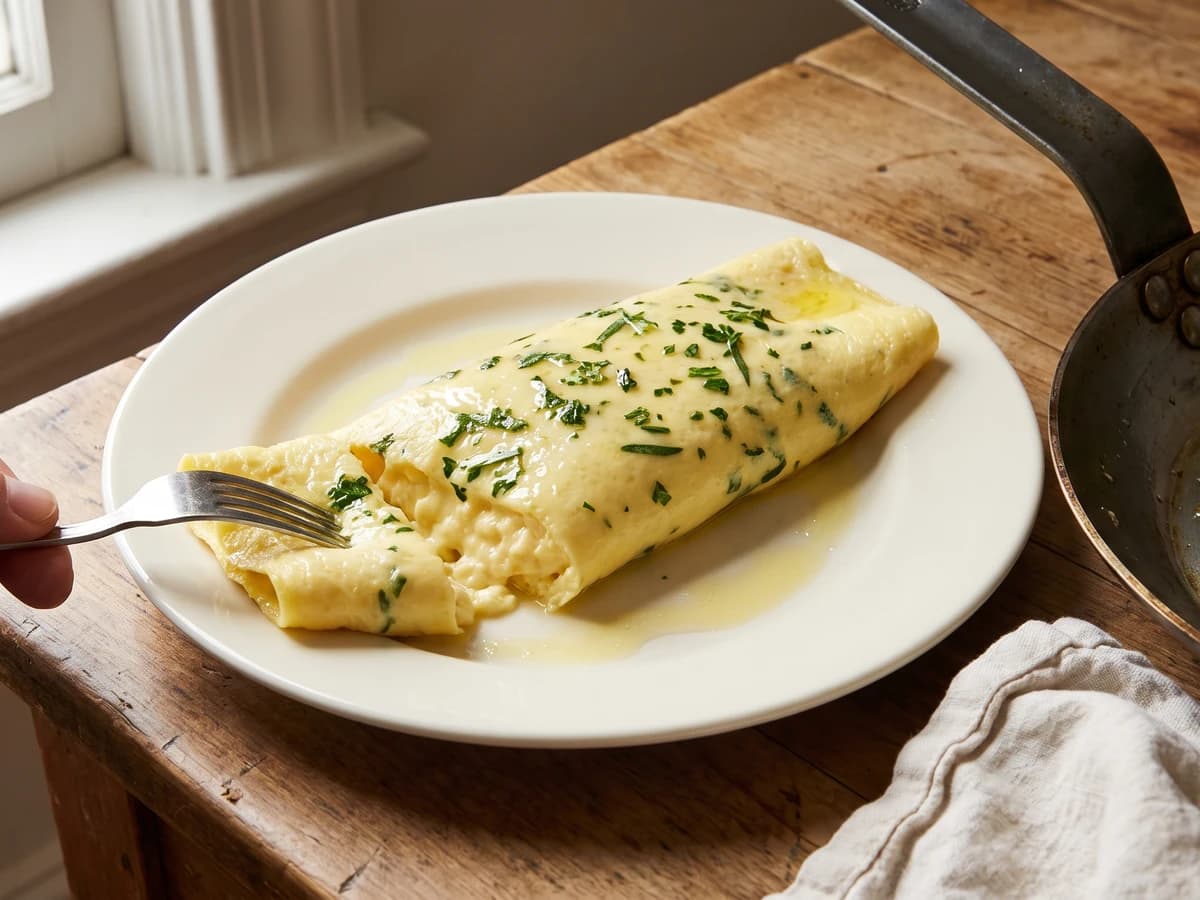
Four tender herbs, hot butter, and two eggs per pan: this rolled omelette teaches the quick hand and good judgment that keep the outside pale and the center creamy.
Chef Juliette
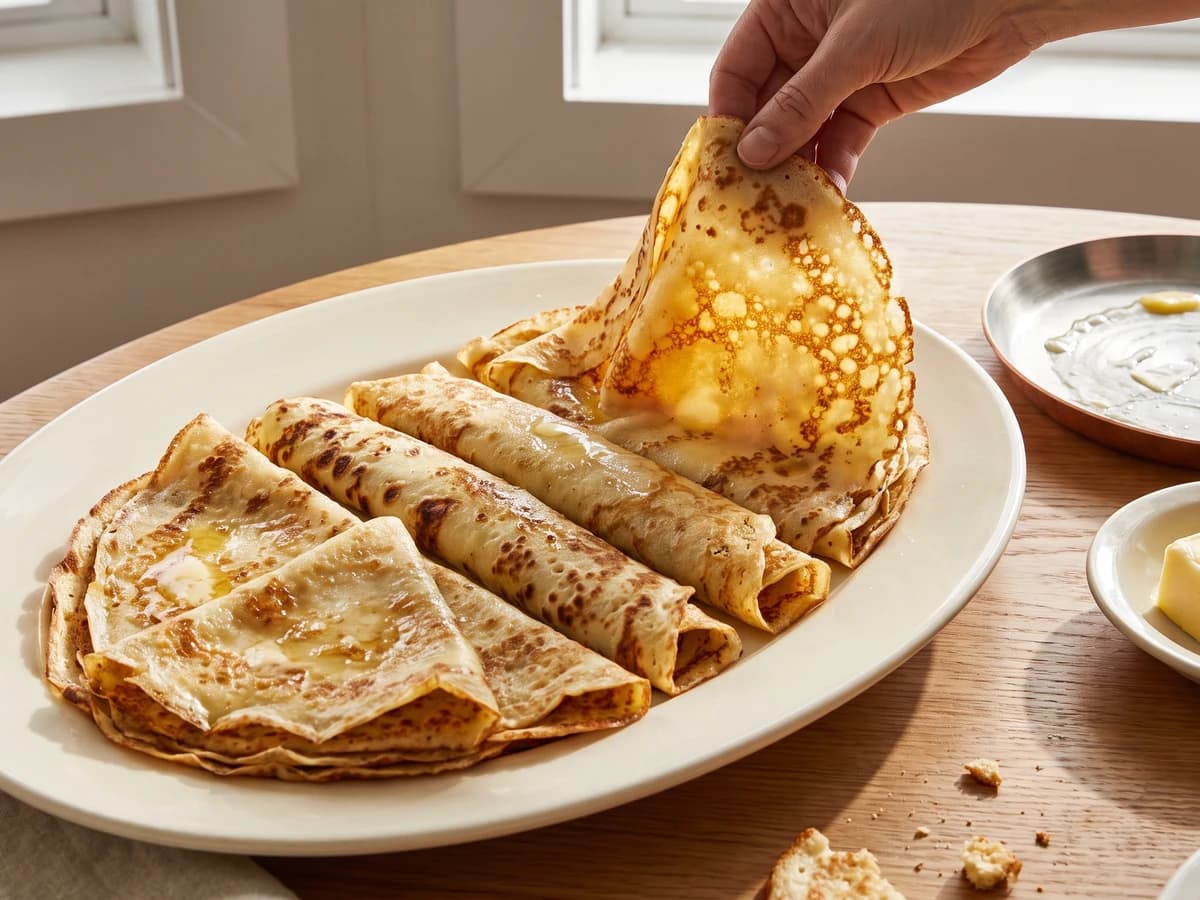
Four batters, one lesson: let the flour drink deeply before cooking, then spread the batter thinly in butter for crêpes and pannequets that bend without becoming tough.
Chef Juliette
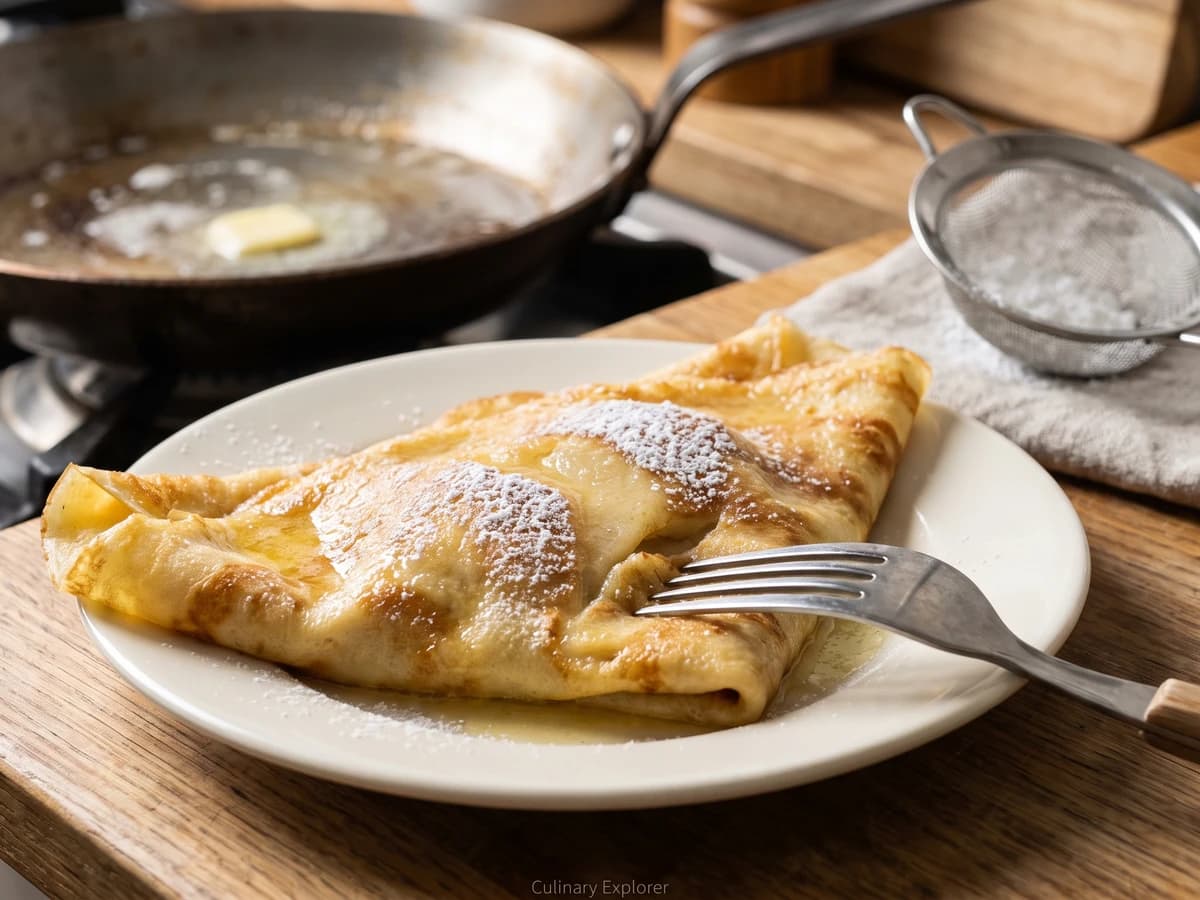
Crêpes au Couvent trap ripe Williams pear dice between two thin pours of sweet batter, then turn in one clean toss and reach the table butter-gold, powdered, and burning hot.