Chef Juliette
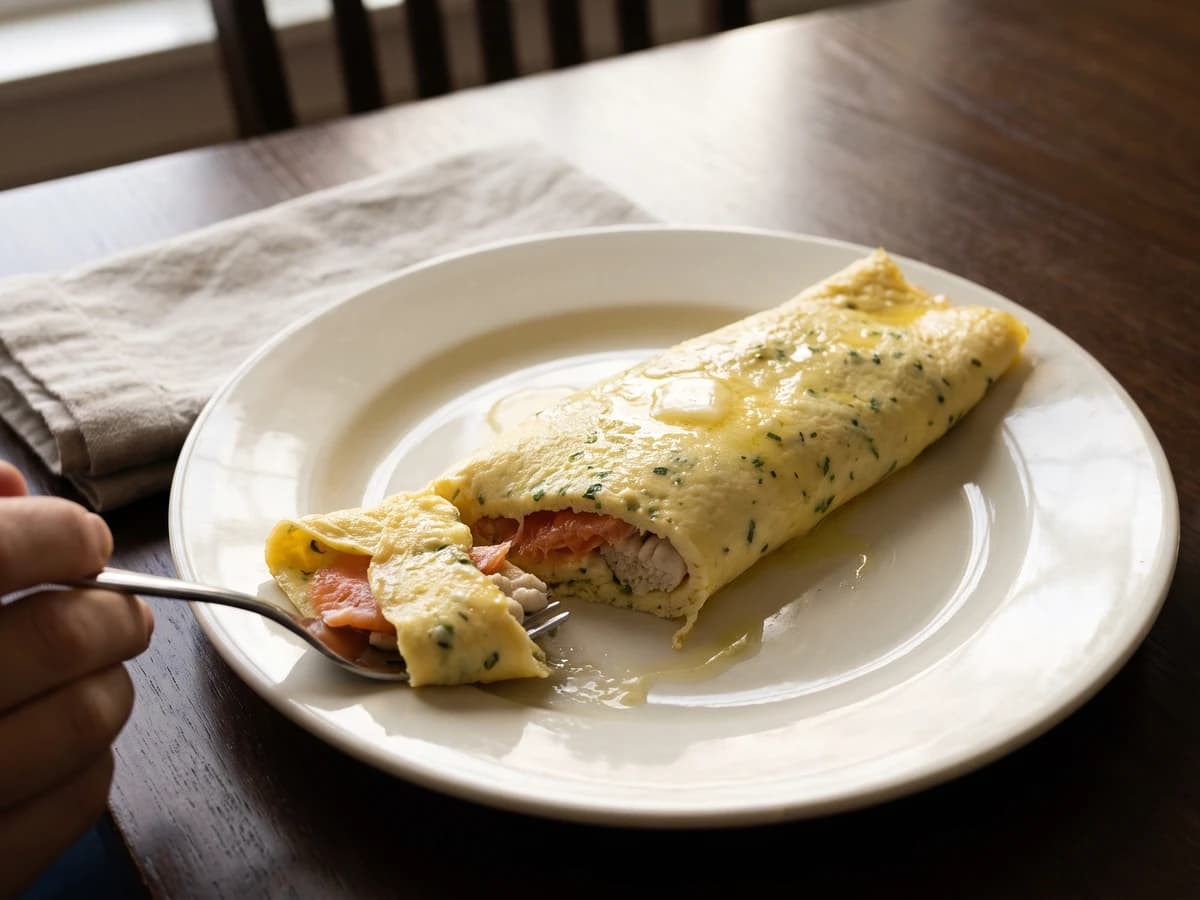
Omelette à l’Écossaise
A creamy omelette aux fines herbes closes around smoked-salmon-wrapped herring milts, gently poached in butter. Have the filling ready, then roll the eggs while they still shine.
A cooking platform built around craft, culture, and the stories behind what we eat.
Created by Chef Juliette
Based on No. 438, Eggs à la Tripe, from Le Guide Culinaire (1907) by Auguste Escoffier
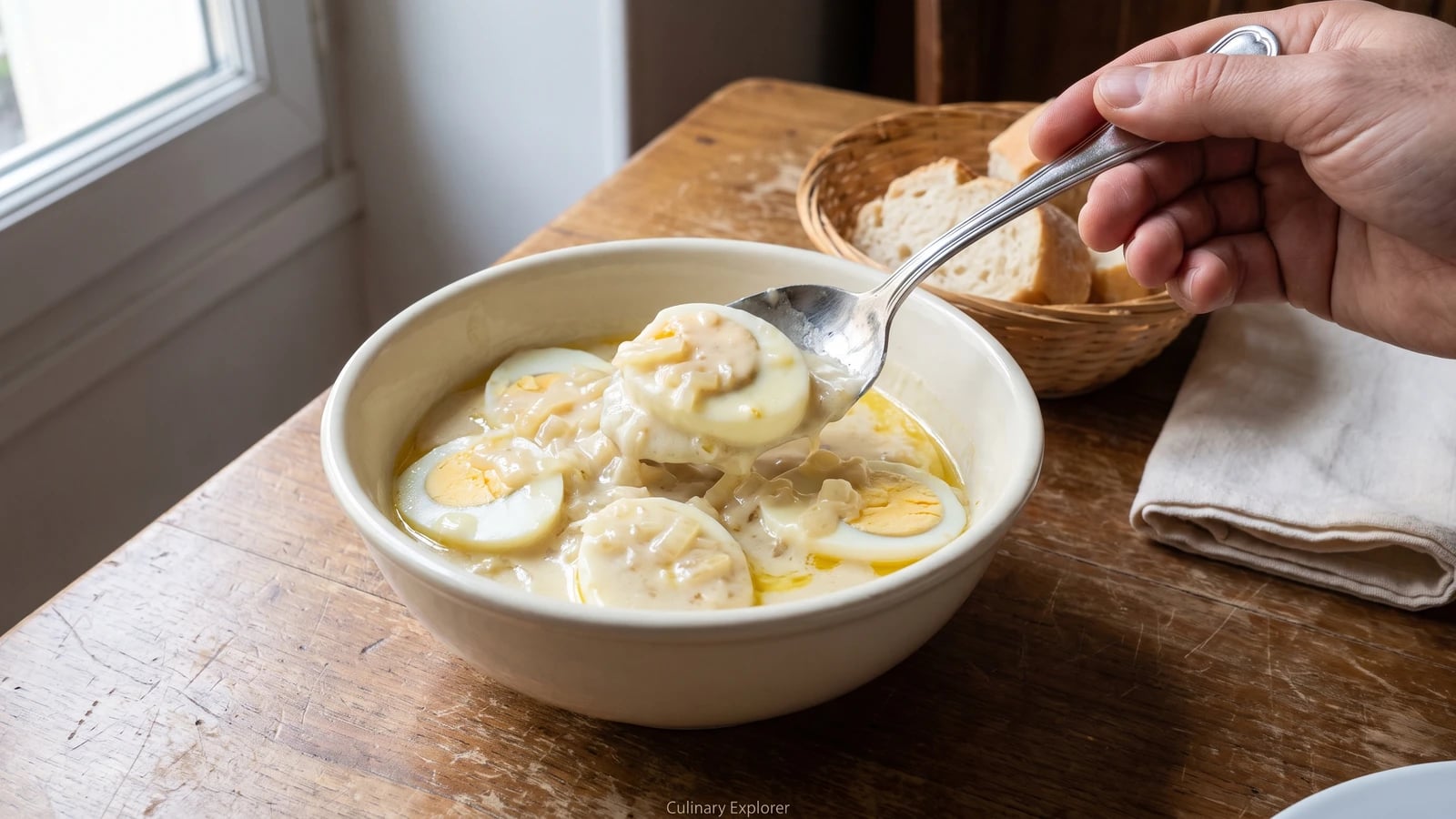
Œufs à la tripe is a quiet lesson in restraint: onions kept pale, Béchamel held supple, and broad slices of egg folded in last, so a modest supper arrives generous and whole.
Œufs à la tripe (hard-cooked eggs with onions in Béchamel) teaches the value of cooking without colour. The onions must become meltingly soft while staying pale, because their sweetness should disappear into the ivory sauce rather than announce itself through caramelization. Brown onions make good food, but they make the wrong dish here.
The old entry assumed a saucier could hand over finished Béchamel and that service had a proper timbale waiting. For four servings, its six eggs, two onions, and half-pint of sauce are scaled by two-thirds, with the same proportions kept intact. A measured portion of finished Béchamel and a warmed deep serving bowl are the honest home equivalents. The separate sauce station and silver service are brigade scaffolding; the pale onions, ten-minute simmer, and last-minute addition of the eggs are the dish. One cook, one stove, one evening.
When it is right, the onion nearly dissolves into a glossy cream sauce while the broad egg slices remain distinct, their yellow centres whole. Fold them in only long enough to warm through. The step that matters most is this: keep the onions pale.
Œufs à la tripe belongs to the French cuisine bourgeoise table, where economical egg preparations were treated as composed entrées rather than makeshift suppers. It traveled from domestic cooking into the codified grand-kitchen repertoire with its thrift and simplicity intact. Despite the name, it contains no offal; the broad pale slices in their creamy onion sauce merely recalled the appearance of a tripe preparation.
Quantity
4
Quantity
1 large plus 1 small (about 1⅓ medium; 1⅓ cups / 200 g)
finely minced
Quantity
1½ tablespoons (22 ml / 21 g)
Quantity
⅔ cup (160 ml / 165 g)
warm
| Ingredient | Quantity |
|---|---|
| large eggs | 4 |
| yellow onionsfinely minced | 1 large plus 1 small (about 1⅓ medium; 1⅓ cups / 200 g) |
| unsalted butter | 1½ tablespoons (22 ml / 21 g) |
| finished Béchamel saucewarm | ⅔ cup (160 ml / 165 g) |
Place the eggs in a saucepan and cover them with cool water. Bring just to the boil, cover, remove from the heat, and leave for 10 minutes. Cool them promptly in cold water, peel, and cut crosswise into broad slices about ¼ inch (6 mm) thick. Use a thin, damp knife and lift each slice gently so the yolk remains nested inside the white.
Reserve about a teaspoon of the butter, then melt the rest in a heavy pan over low heat. Add the minced onions, cover, and étuver them, meaning stew them gently in their own moisture, for 12 to 15 minutes. Stir every few minutes until they are very soft, translucent, and still pale. If the edges begin to gold, pull the pan from the heat and add a spoonful of water to stop the cooking. For darker patches, lift the pale onions out, wipe the pan, and continue with the reserved butter. Ça se rattrape.
Add the warm Béchamel sauce to the softened onions and stir thoroughly. Hold the sauce at the barest simmer for exactly 10 minutes, stirring along the bottom often enough to prevent catching. It should nap the back of a spoon while still falling from it in a broad ribbon. If it tightens into a paste, remove it from the heat and whisk in boiling water a teaspoon at a time until supple again.
A few minutes before serving, slide the egg slices into the sauce and fold them through once or twice with a flexible spatula. Keep the heat very low and warm for 2 to 3 minutes without boiling. Stirring breaks the whites and loosens the yolks, so turn the sauce over the eggs rather than chasing them around the pan. If a yolk begins to slip, stop folding and spoon the hot sauce over the remaining slices instead.
Transfer the œufs à la tripe immediately to a warmed deep serving bowl, the useful home equivalent of the old timbale. Spoon the onions and Béchamel around the egg slices without burying them completely, and bring the bowl straight to the table. À table!
1 serving (about 140g)
Culinary guides, cultural storytelling, and the editorial depth that makes cooking meaningful.
Discover Culinary ExplorerChef Juliette
A creamy omelette aux fines herbes closes around smoked-salmon-wrapped herring milts, gently poached in butter. Have the filling ready, then roll the eggs while they still shine.
Chef Juliette
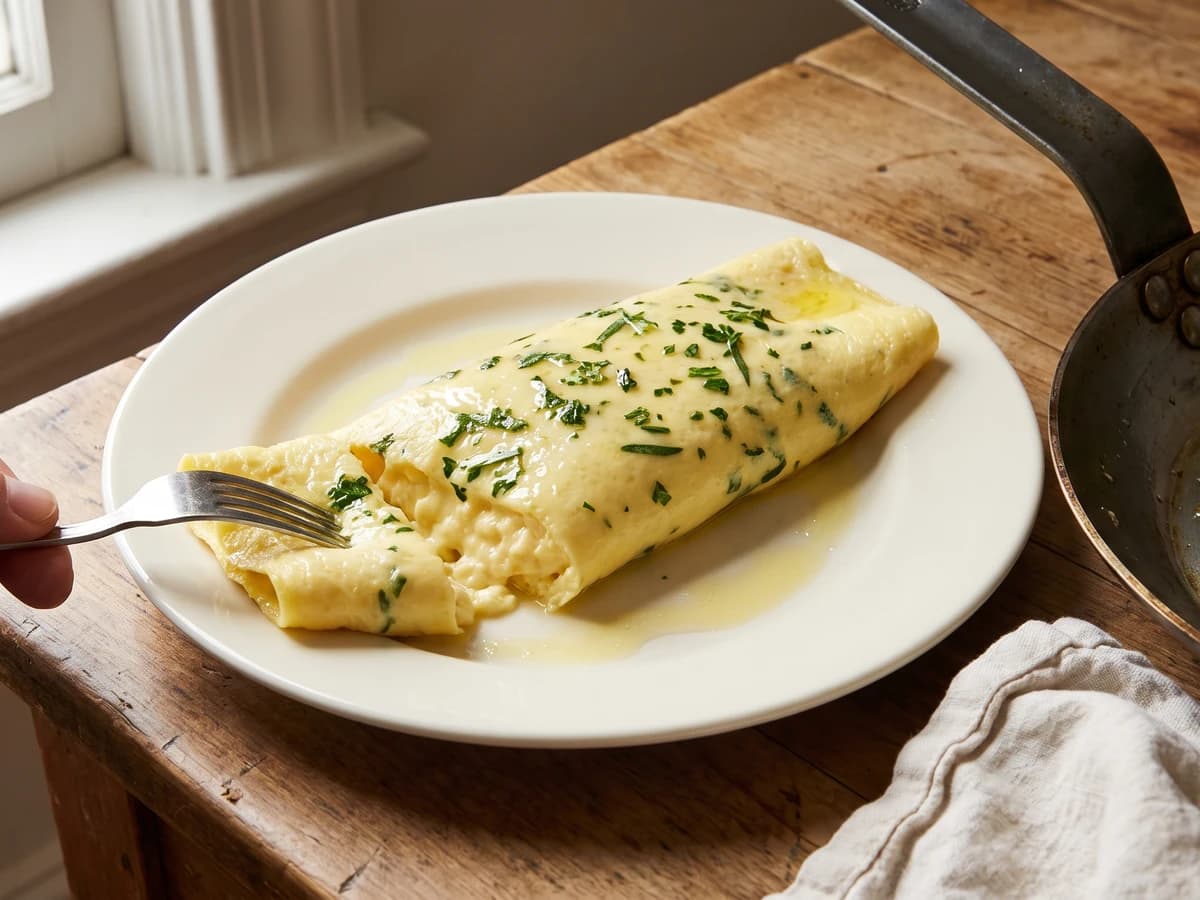
Four tender herbs, hot butter, and two eggs per pan: this rolled omelette teaches the quick hand and good judgment that keep the outside pale and the center creamy.
Chef Juliette
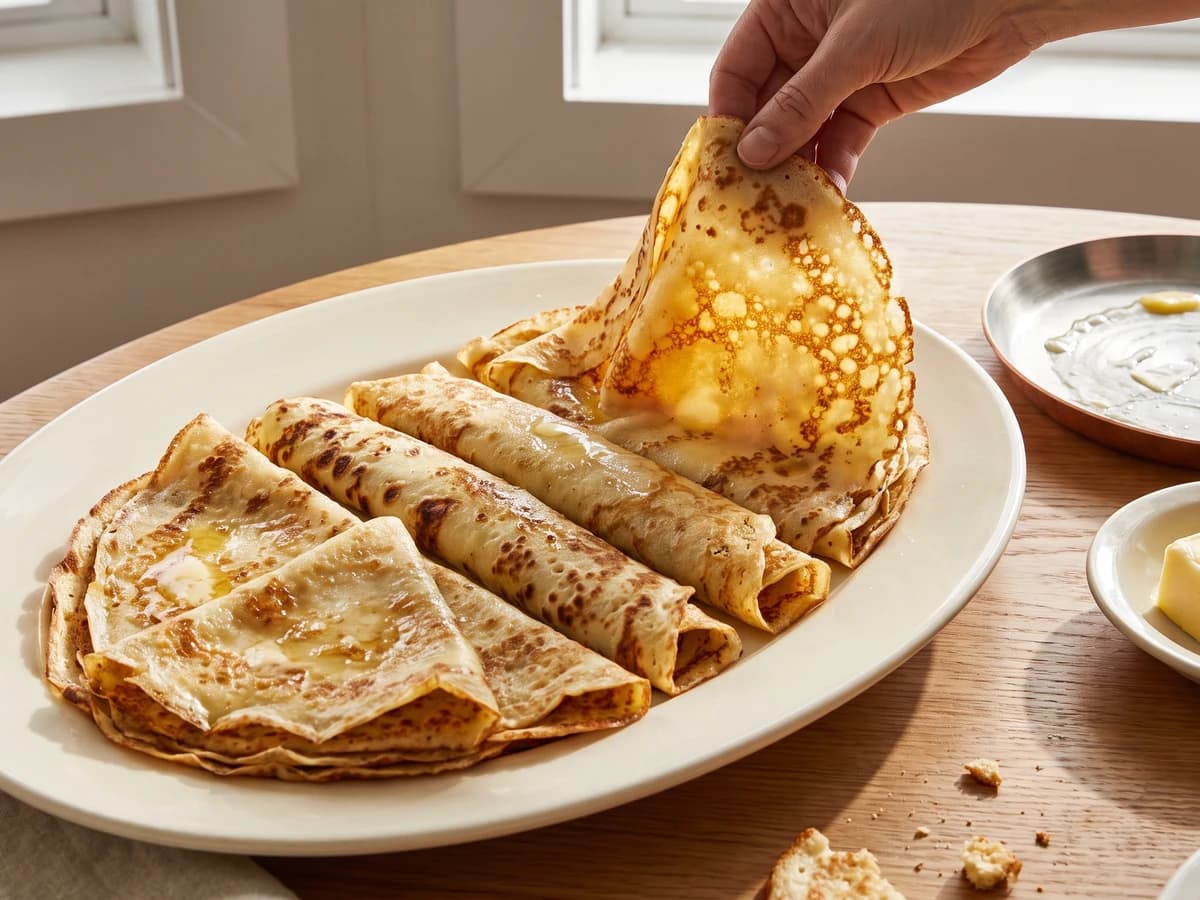
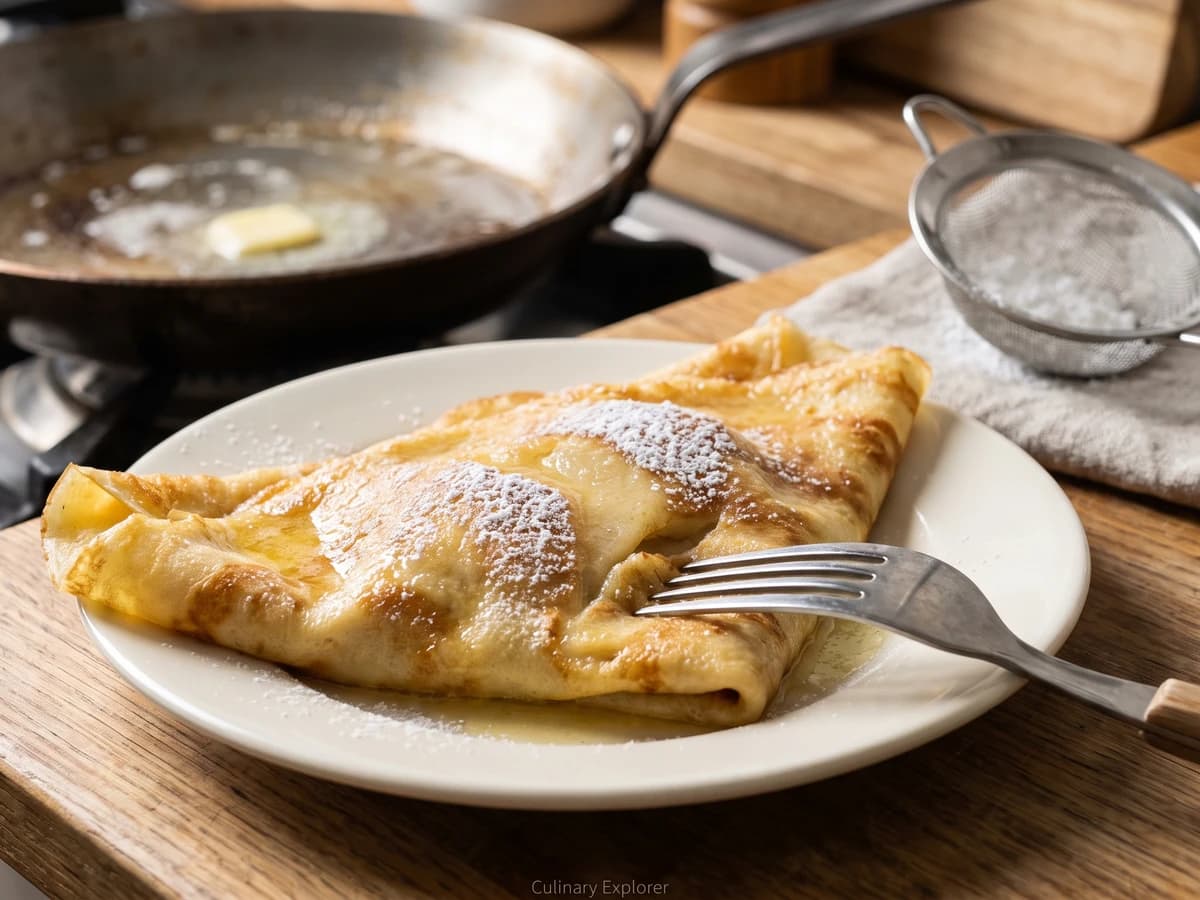
Four batters, one lesson: let the flour drink deeply before cooking, then spread the batter thinly in butter for crêpes and pannequets that bend without becoming tough.
Chef Juliette
Crêpes au Couvent trap ripe Williams pear dice between two thin pours of sweet batter, then turn in one clean toss and reach the table butter-gold, powdered, and burning hot.