Chef Juliette
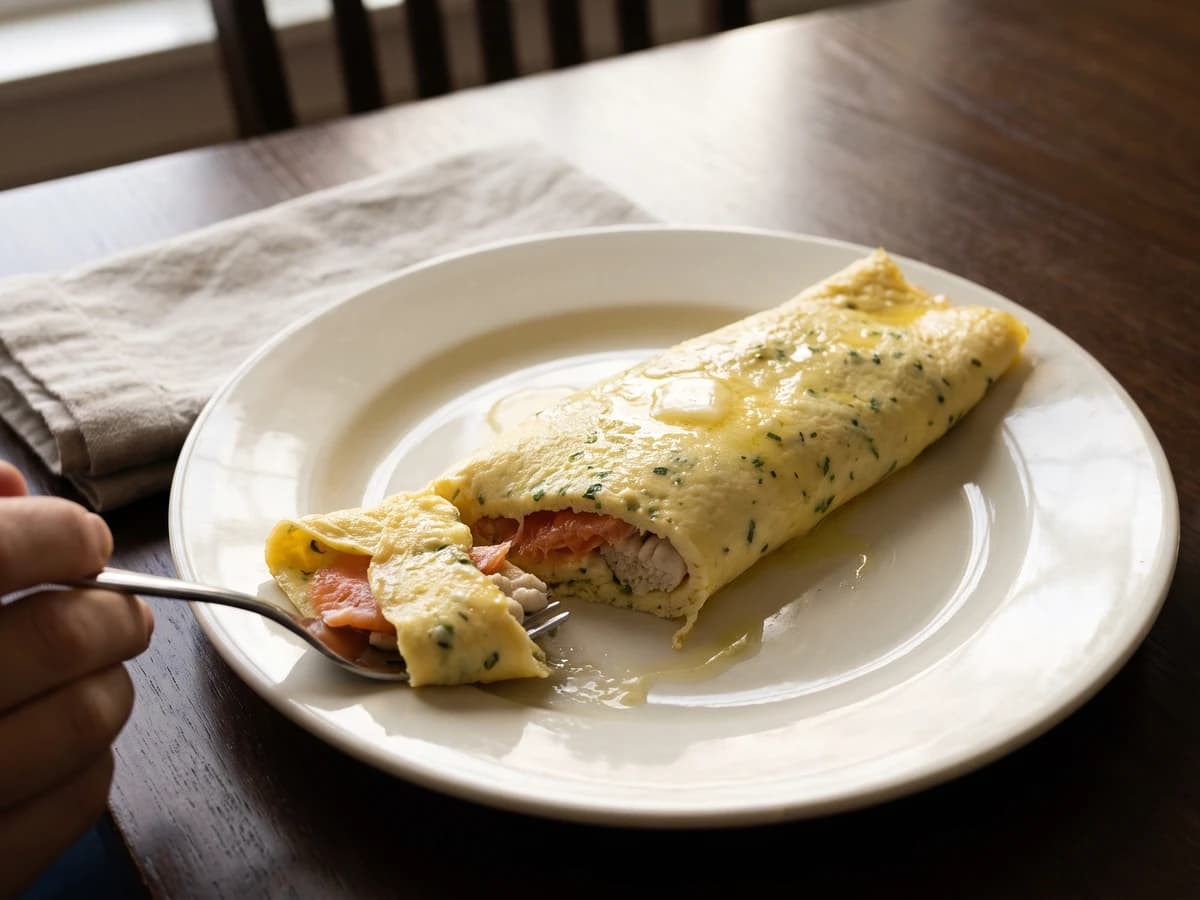
Omelette à l’Écossaise
A creamy omelette aux fines herbes closes around smoked-salmon-wrapped herring milts, gently poached in butter. Have the filling ready, then roll the eggs while they still shine.
A cooking platform built around craft, culture, and the stories behind what we eat.
Created by Chef Juliette
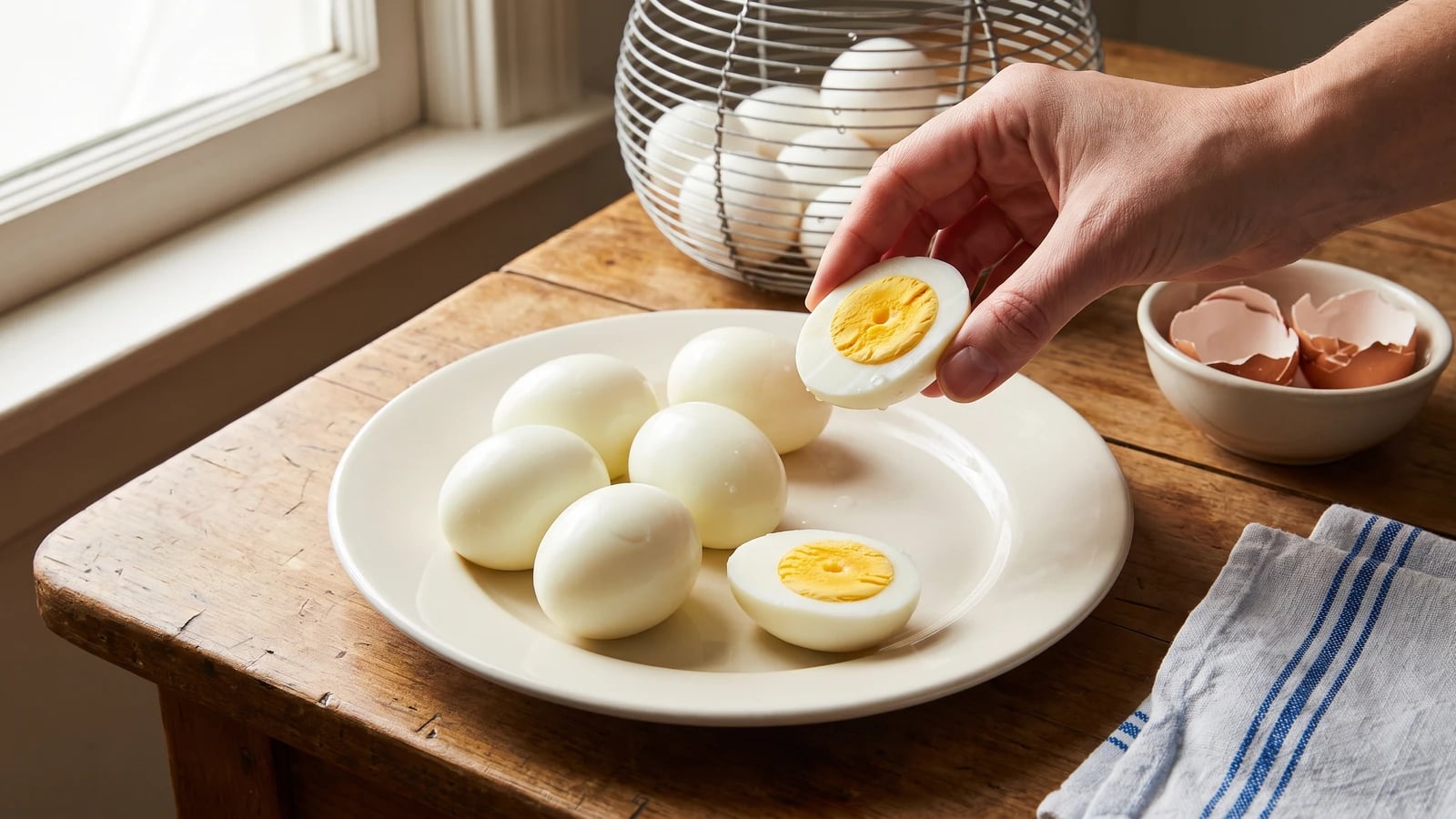
Based on No. 433, Hard-boiled Eggs, from Le Guide Culinaire (1907) by Auguste Escoffier
Œufs durs reward precision, not endurance: lower every egg together, count ten minutes only after the water boils again, then cool at once for tender whites and clean yellow yolks.
Œufs durs (hard-boiled eggs) teach the value of an honest clock. Hard does not mean boiled without limit. The one true thing to know before touching the pan is that excess cooking toughens the albumin-rich whites, so the timing begins when the water returns to the boil and ends without negotiation.
The classical formula assumed a large-holed colander and enough eggs to justify lowering a whole batch at once. For eight eggs at home, a wire steamer basket does the same work without crowding the stove. Only the quantity and equipment have changed. The colander is brigade scaffolding; simultaneous lowering, exact timing, immediate cooling, and careful shelling are the dish itself. One cook, one stove, one evening.
Done properly, the whites are tender rather than rubbery, the yolks are fully set and clean yellow, and the shells lift away without taking half the egg with them. Start the clock only when the water returns to the boil. That honest count decides everything.
Œufs durs have no single provincial birthplace; their real home in France is the everyday family table, where they become picnics, composed salads, and cold hors-d'œuvre. Paris bistros gave them particular visibility through œufs mayonnaise and œufs mimosa, turning a household staple into a first course that depends entirely on sound cooking. The classical misconception is in the name: hard-boiled never meant boiled indefinitely, and French kitchen manuals have long treated exact timing as protection against tough whites.
Quantity
8
all of similar size and starting temperature
Quantity
16 cups (3.8 L / 3.8 kg)
divided between boiling and cooling
| Ingredient | Quantity |
|---|---|
| large eggsall of similar size and starting temperature | 8 |
| waterdivided between boiling and cooling | 16 cups (3.8 L / 3.8 kg) |
Pour 8 cups (1.9 L) of the water into a 3-quart (2.8 L) saucepan and bring it to a full boil. Put the remaining water into a large bowl for cooling. Have the basket and timer beside the stove before the eggs go in; once they do, precision matters more than haste.
Arrange the eggs in a wire steamer basket or heatproof large-holed colander, ideally in one layer. Lower the whole basket gently into the boiling water so every egg begins cooking at the same moment. The water will fall off the boil. If a shell cracks, lower the heat one notch so the eggs stop knocking together; any escaped white will set, and the egg remains usable.
Wait until the water returns to a steady boil, then start the timer. Cook the large eggs listed for exactly 10 minutes; if using medium eggs, stop at 8 minutes. Keep the boil steady rather than violent, and never add extra time for certainty, because certainty bought with tough whites is poor business. If the timer runs long, drain the eggs immediately. Their texture cannot be reversed, but they can be chopped for œufs mimosa or a composed salad. Ça se rattrape.
At the final second, lift out the entire basket, drain it, and plunge the eggs together into the bowl of cold water. Stir them gently and replace some of the water if it grows warm, then leave the eggs submerged for 10 minutes. Prompt cooling stops the cooking carried in the shells and helps keep the yolks clean yellow.
Tap each egg first at its broad end, where the air pocket gives you room, then crack the shell lightly all over and roll it beneath your palm. Begin peeling at the broad end, slipping a fingertip beneath the thin membrane rather than gouging the white. If the shell clings, peel the egg while submerged in the cooling water; the water works beneath the membrane and carries away fragments. Dry the œufs durs and serve, or refrigerate promptly. À table!
1 serving (about 100g)
Culinary guides, cultural storytelling, and the editorial depth that makes cooking meaningful.
Discover Culinary ExplorerChef Juliette
A creamy omelette aux fines herbes closes around smoked-salmon-wrapped herring milts, gently poached in butter. Have the filling ready, then roll the eggs while they still shine.
Chef Juliette
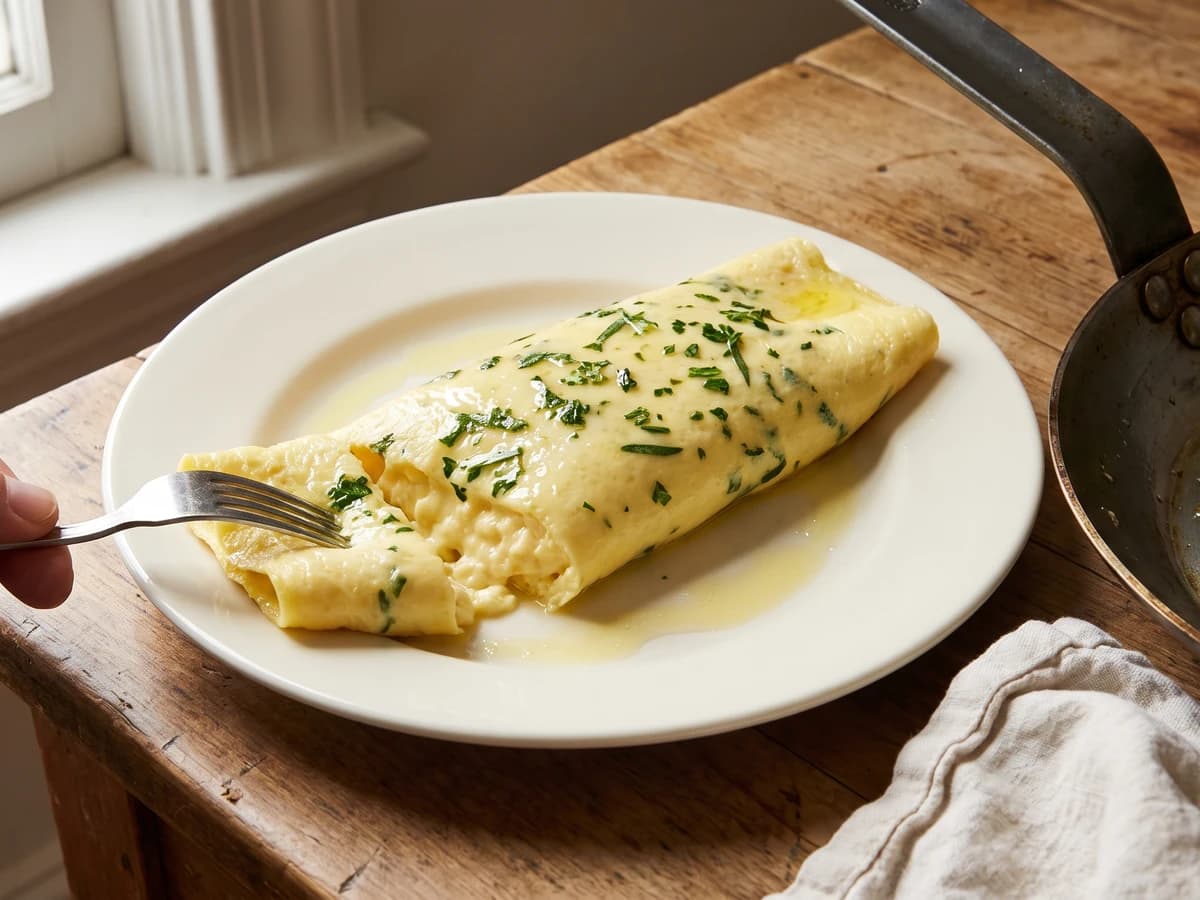
Four tender herbs, hot butter, and two eggs per pan: this rolled omelette teaches the quick hand and good judgment that keep the outside pale and the center creamy.
Chef Juliette
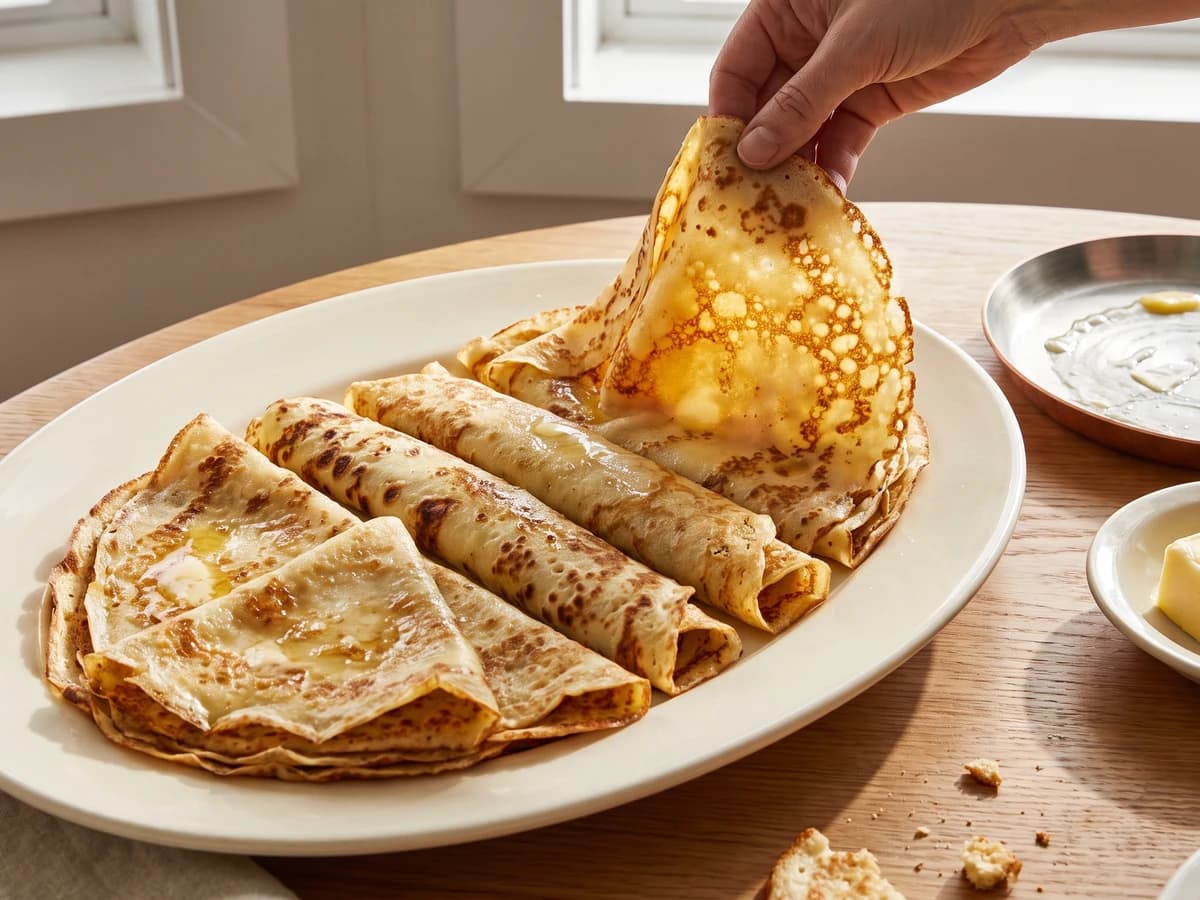
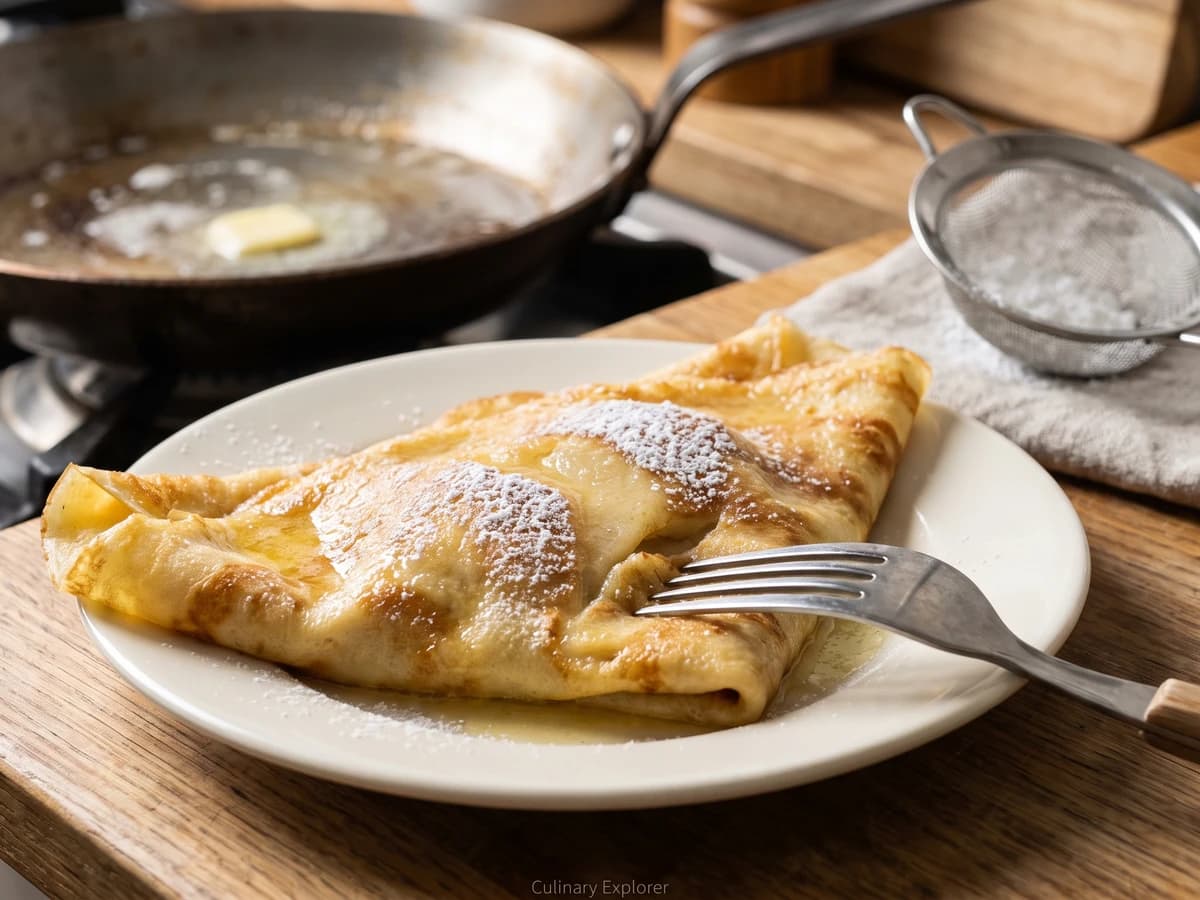
Four batters, one lesson: let the flour drink deeply before cooking, then spread the batter thinly in butter for crêpes and pannequets that bend without becoming tough.
Chef Juliette
Crêpes au Couvent trap ripe Williams pear dice between two thin pours of sweet batter, then turn in one clean toss and reach the table butter-gold, powdered, and burning hot.