Chef Juliette
Omelette à l’Écossaise
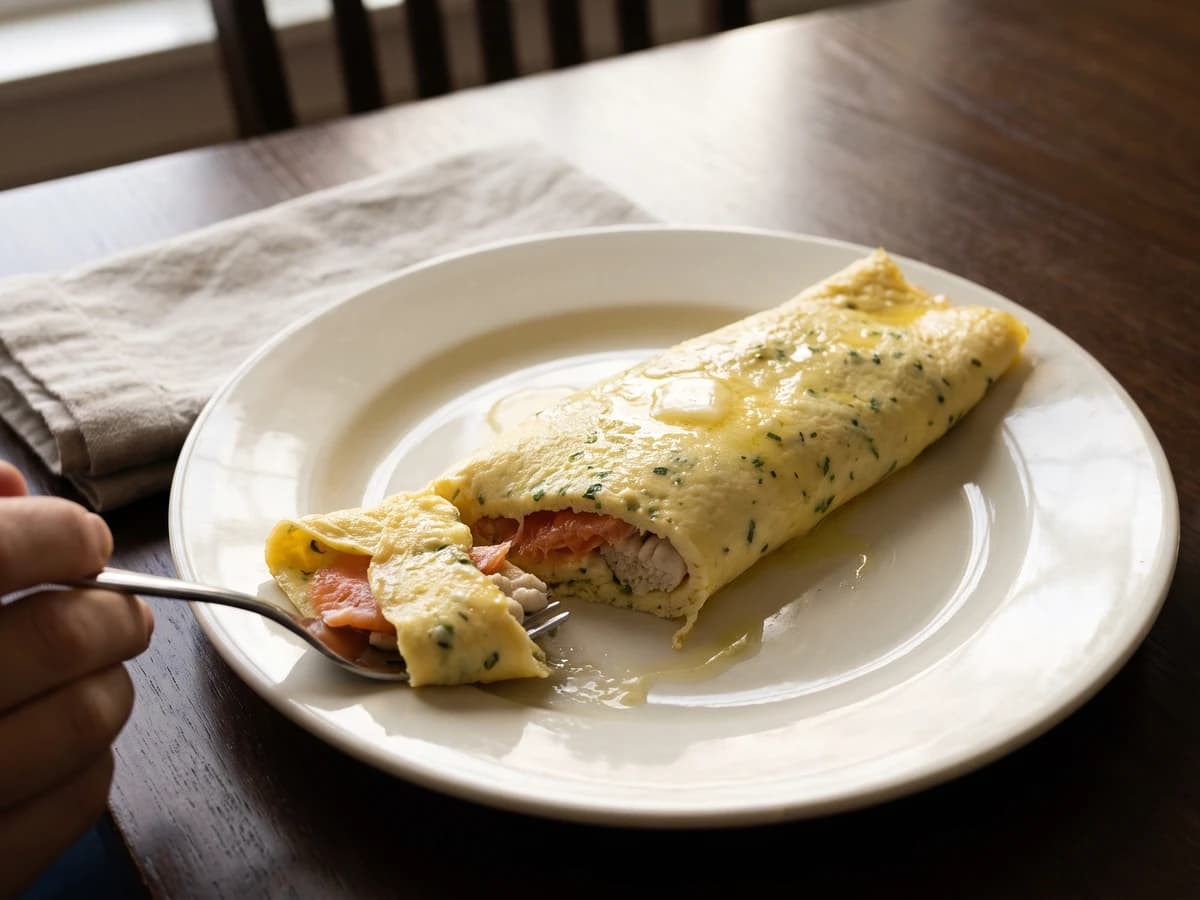
A creamy omelette aux fines herbes closes around smoked-salmon-wrapped herring milts, gently poached in butter. Have the filling ready, then roll the eggs while they still shine.
A cooking platform built around craft, culture, and the stories behind what we eat.
Created by Chef Juliette
Based on No. 431, Poached Eggs Victoria, from Le Guide Culinaire (1907) by Auguste Escoffier
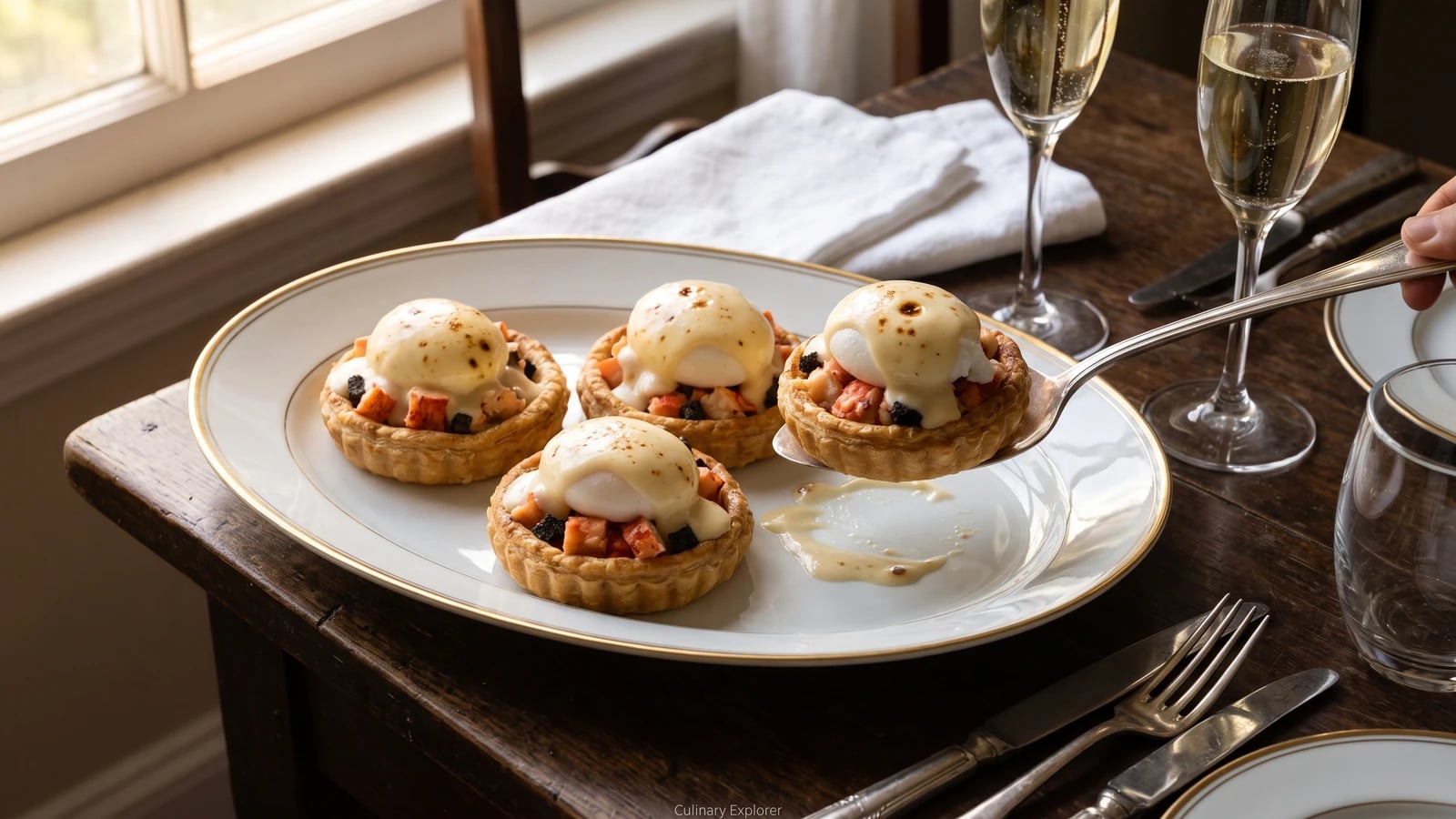
A crisp tartlet, lobster-truffle salpicon, a trembling poached egg, and glossy Diplomate sauce glazed butter-gold under fierce heat: four classical layers aligned for one generous bite.
Œufs pochés Victoria teaches the architecture of a composed egg dish: crisp shell beneath, salpicon (an even dice bound with sauce) inside, a tender poached egg above, then one sauce joining every layer. The one true thing is simple. The egg must be dry and the Diplomate sauce must be nappant (thick enough to coat a spoon) before they meet. A wet egg sheds its sauce; a loose sauce cannot glaze.
The original assumed a saucier on staff, a stock never off the fire, tartlet crusts already baked, and a salamander fierce enough to colour the plate in seconds. At home, begin with finished Diplomate sauce and baked all-butter shells, warm them gently, and use a fully heated overhead broiler. Those separate production stations were brigade scaffolding and can go. The lobster-truffle salpicon, delicate poach, complete coating, and fast glaze are the dish and must stay. One cook, one stove, one evening.
For four tartlets, the book's salpicon is reduced evenly by one third: three ounces of lobster become two, one-half ounce of truffle becomes one-third, and three tablespoons of binding sauce become two. The ratio does not move. Under fierce heat, the ivory coating freckles butter-gold while the yolk stays fluid enough to run into the salpicon. Dry every egg and bring the sauce to nappant before assembly. That is the step that decides the glaze.
Œufs pochés Victoria belongs to the Parisian grand-kitchen repertoire of named garnishes, where Victoria signalled shellfish, truffle, and a rich sauce rather than the pantry of a particular French region. It was conceived as a savoury egg entrée, not a breakfast plate: the tartlet supplied structure, the salpicon luxury, and fierce upper heat the final glaze. The dish moved naturally onto formal home tables once small tartlet moulds and domestic broilers could reproduce that service without a brigade.
Quantity
4, each 3 inches (7.5 cm) wide
Quantity
1/3 cup (80 ml / 57 g)
cut into 1/4-inch (6 mm) dice
Quantity
1 tablespoon (15 ml / 9 g)
cut into 1/8-inch (3 mm) dice
Quantity
10 tablespoons (150 ml / 155 g)
divided and kept warm
Quantity
5
4 for serving and 1 spare
Quantity
1 tablespoon (15 ml / 15 g)
| Ingredient | Quantity |
|---|---|
| baked all-butter tartlet crusts | 4, each 3 inches (7.5 cm) wide |
| cooked spiny-lobster meatcut into 1/4-inch (6 mm) dice | 1/3 cup (80 ml / 57 g) |
| black trufflecut into 1/8-inch (3 mm) dice | 1 tablespoon (15 ml / 9 g) |
| prepared Diplomate saucedivided and kept warm | 10 tablespoons (150 ml / 155 g) |
| large eggs4 for serving and 1 spare | 5 |
| white wine vinegar | 1 tablespoon (15 ml / 15 g) |
Heat the oven to 325°F (165°C). Warm the tartlet crusts on a small baking sheet for 5 minutes, then arrange them on a shallow broiler-safe platter. Switch the broiler to high and set a rack about 5 inches (13 cm) below the element. Warm the Diplomate sauce over the gentlest heat until it flows from a spoon in a broad ribbon and leaves an even coat behind. If it has tightened, stir in hot water a teaspoon at a time; if it runs like cream, simmer it briefly until nappant. Do not let it boil.
Measure exactly 2 tablespoons (30 ml / 31 g) of the warm Diplomate sauce into a small saucepan. Fold in the diced spiny lobster and truffle, keeping every piece distinct but evenly coated. This is the salpicon, and its small, regular dice lets each tartlet receive lobster and truffle in the book's proportion. Warm it over very low heat for 1 minute, just until the lobster loses its chill. Divide it among the four warm tartlet crusts.
Fill a wide sauté pan with 2 1/2 inches (6 cm) of water, add the vinegar, and bring it to 180 to 190°F (82 to 88°C), with only a slight tremble at the surface. Crack each egg into its own small cup. Lower two eggs at a time into the water and poach for 2 1/2 to 3 minutes, gently drawing any wandering white around its yolk with a spoon. The whites should be set and the yolks fluid. Lift each egg out with a slotted spoon and drain it on a clean folded towel. If a yolk breaks, use the spare egg. Ça se rattrape.
Blot the top and underside of every egg until no water remains, then settle one onto each lobster-truffle tartlet. Spoon the remaining Diplomate sauce over the eggs, about 2 tablespoons per tartlet, covering each white completely and letting a little sauce meet the filling below. If the coating slides off, lift the egg, blot it again, and simmer the sauce for 20 seconds before recoating. If it sits in heavy clumps, loosen it with a teaspoon of hot water. This is the moment that matters, and it can be corrected before the platter reaches the broiler.
Set the platter beneath the fully heated broiler for 30 to 75 seconds, watching without interruption. The Diplomate sauce should swell slightly and turn butter-gold at its highest points, with a few bronzed freckles but no hard crust. Rotate the platter if the heat falls unevenly. Pull it the moment the glaze colours; lingering there cooks the yolks and gains nothing.
Set the hot platter directly on the table and serve one tartlet to each guest. The shell should remain crisp, the salpicon should be warm and distinct, and the yolk should run into the lobster, truffle, and sauce when cut. This dish waits for no one. À table!
1 serving (about 135g)
Culinary guides, cultural storytelling, and the editorial depth that makes cooking meaningful.
Discover Culinary ExplorerChef Juliette
A creamy omelette aux fines herbes closes around smoked-salmon-wrapped herring milts, gently poached in butter. Have the filling ready, then roll the eggs while they still shine.
Chef Juliette
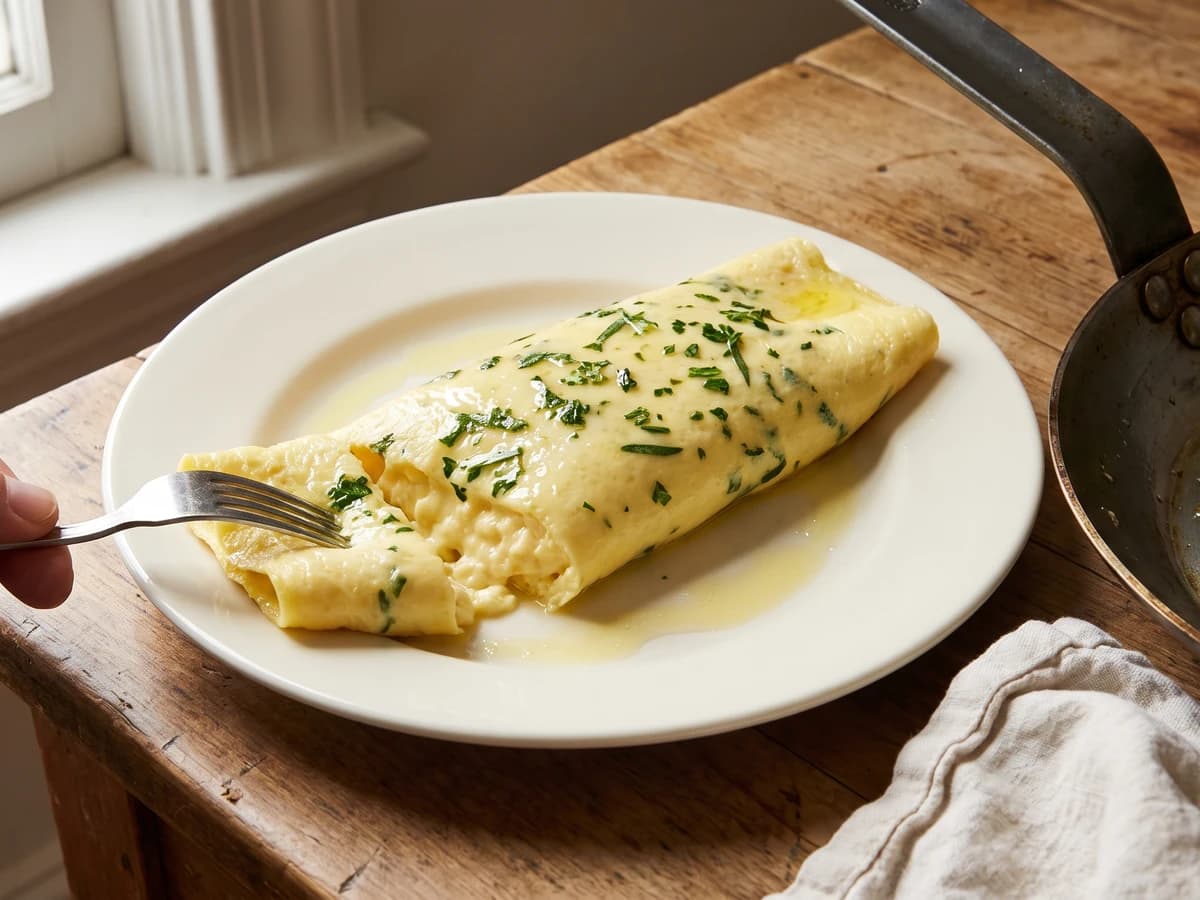
Four tender herbs, hot butter, and two eggs per pan: this rolled omelette teaches the quick hand and good judgment that keep the outside pale and the center creamy.
Chef Juliette
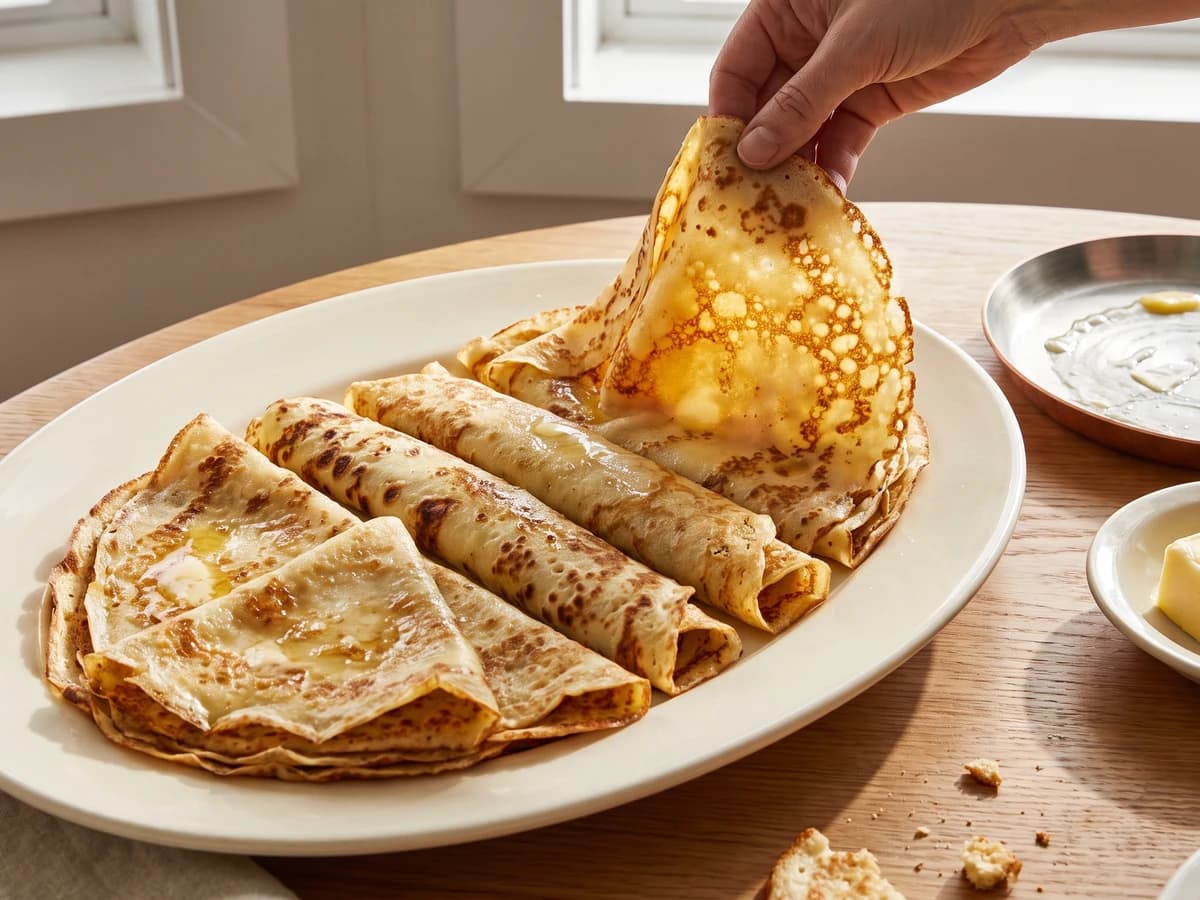
Four batters, one lesson: let the flour drink deeply before cooking, then spread the batter thinly in butter for crêpes and pannequets that bend without becoming tough.
Chef Juliette
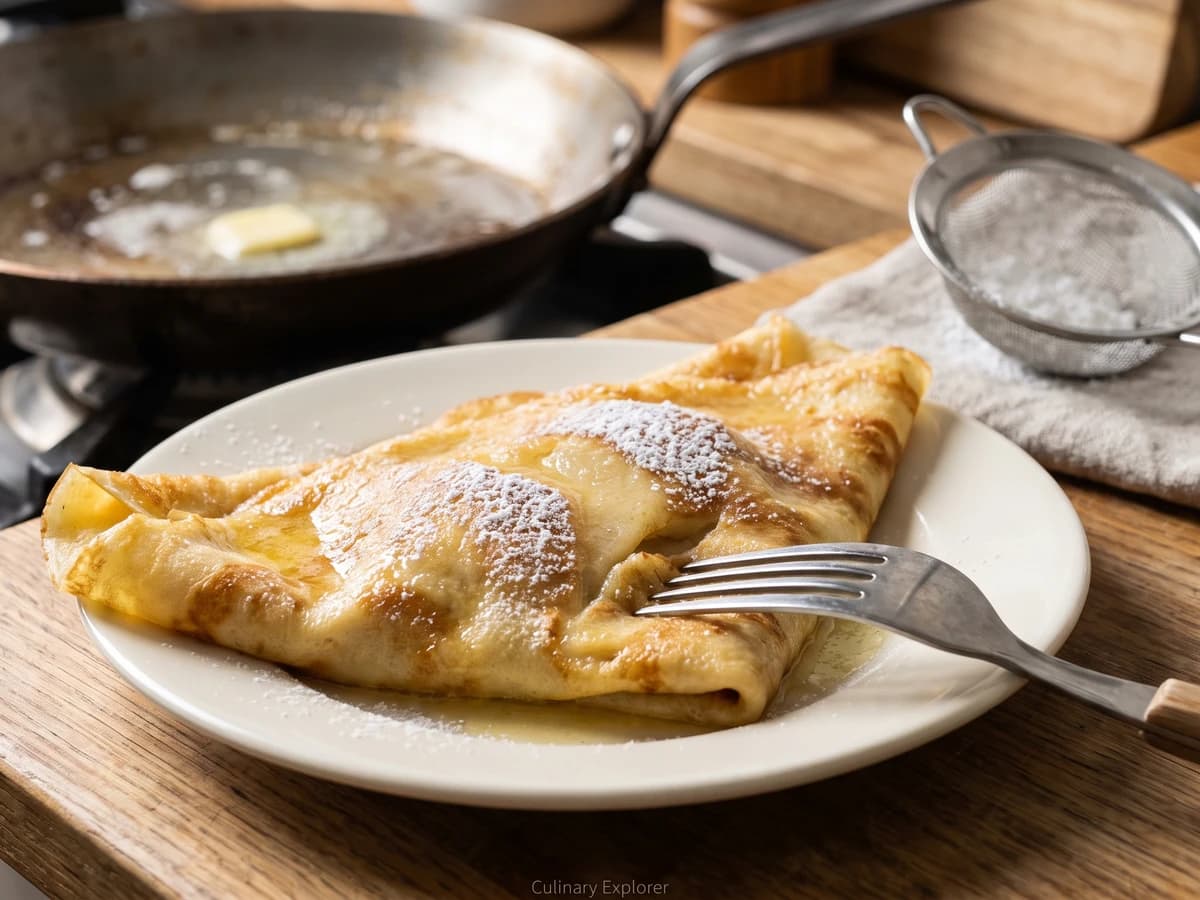
Crêpes au Couvent trap ripe Williams pear dice between two thin pours of sweet batter, then turn in one clean toss and reach the table butter-gold, powdered, and burning hot.