Chef Juliette
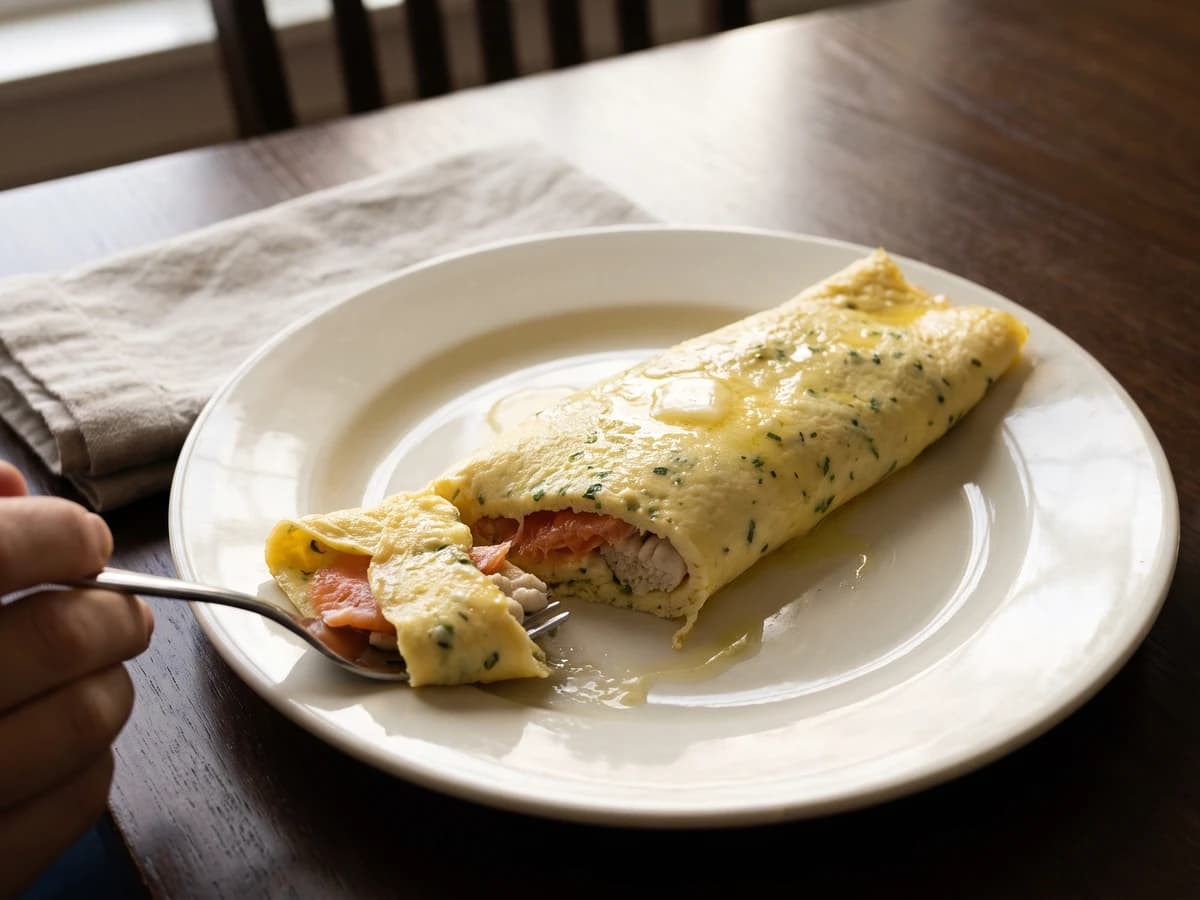
Omelette à l’Écossaise
A creamy omelette aux fines herbes closes around smoked-salmon-wrapped herring milts, gently poached in butter. Have the filling ready, then roll the eggs while they still shine.
A cooking platform built around craft, culture, and the stories behind what we eat.
Created by Chef Juliette
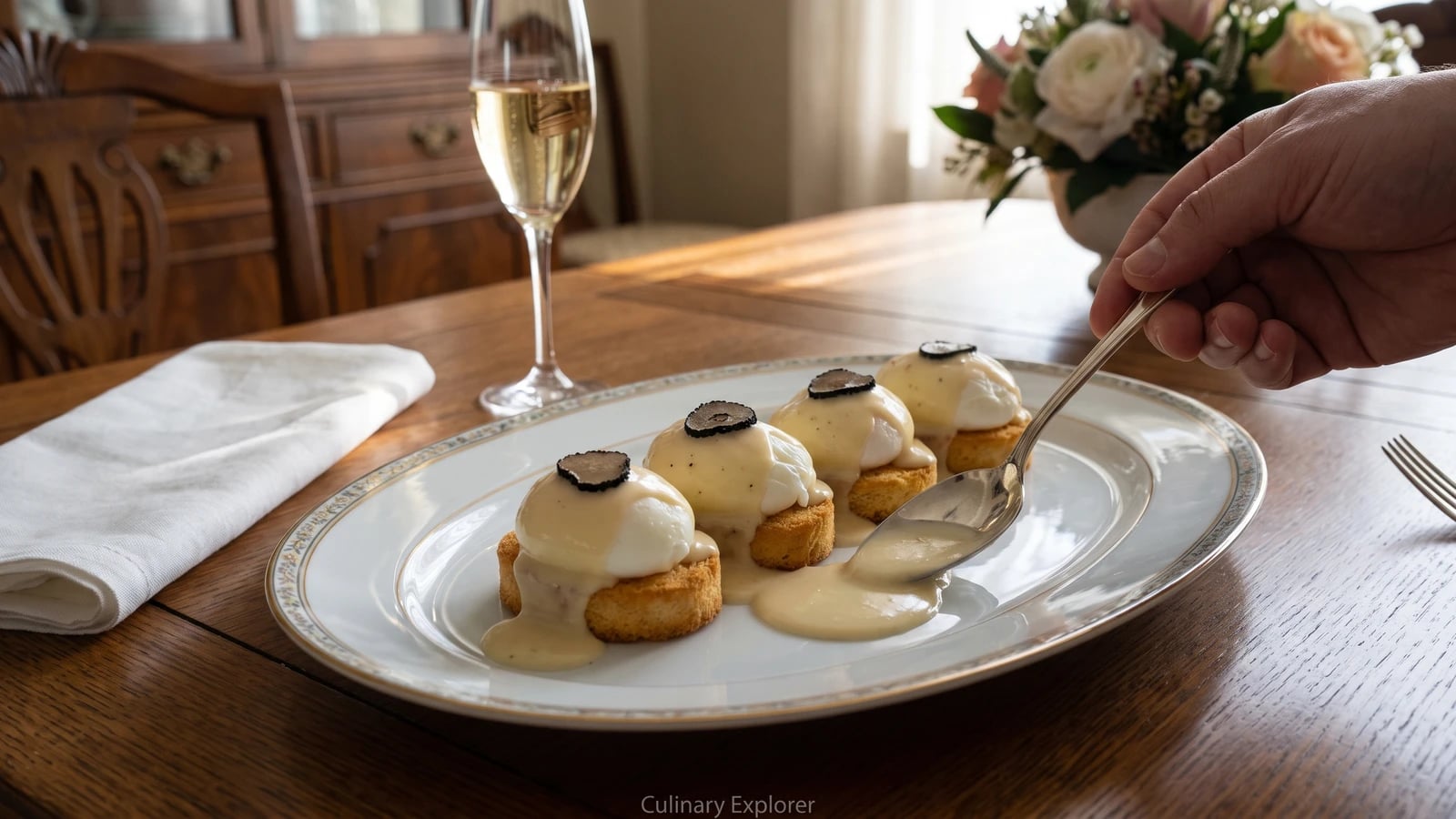
Based on No. 430, Poached Eggs Sévigné, from Le Guide Culinaire (1907) by Auguste Escoffier
Four poached eggs, four crisp butter-fried rusks, and one exacting lesson in moisture control: braised lettuce beneath, poultry velouté above, and a black truffle ring marking every portion.
Œufs pochés Sévigné (Sévigné-style poached eggs) teaches moisture control. The one true thing to know before touching a pan is this: the braised lettuce and poached eggs must be thoroughly drained, or their water will soften the fried rusks and thin the velouté. Crisp below, tender at the center, glossy above. Every layer depends on that balance.
The classical formula assumed a saucier on staff, poultry stock never off the fire, several hands timing the eggs, and a salamander keeping plates warm. At home, one saucepan reduces good unsalted stock into poultry essence, the same stock builds a small velouté, and a low oven holds the rusks briefly. This version cuts the brigade's duplicate pans and prolonged holding because they are scaffolding, not flavor; it keeps the braised lettuce, clarified-butter rusk, poached egg, poultry essence, velouté, and black truffle ring because those are the dish. One cook, one stove, one evening.
The finished platter is generous and wonderfully composed: four golden rusks arranged in a circle, soft eggs settled over savory lettuce, ivory sauce clinging to their curves, and black truffle rings standing out like seals. The decisive step is drying the braised lettuce until no liquid follows the knife.
Œufs pochés Sévigné belongs to the named-garnish repertory of Parisian grand cuisine rather than to a regional farmhouse table, and its title honors Madame de Sévigné. Its identity rests on a fixed arrangement: fried bread filled with braised lettuce, poached egg, poultry-enriched velouté, and a ring cut from very black truffle. As such dishes passed from staffed dining rooms to bourgeois tables, their components proved friendly to advance preparation, though the final assembly still demanded speed.
Quantity
3 cups (720 ml / 720 g)
divided
Quantity
2 hearts (about 300 g)
trimmed and quartered lengthwise
Quantity
4 tablespoons (60 ml / 57 g)
divided
Quantity
3 tablespoons (45 ml / 24 g)
Quantity
1½ teaspoons (7.5 ml / 9 g)
divided
Quantity
¼ teaspoon (1.25 ml / 0.6 g)
Quantity
4 slices (about 120 g)
cut ⅝ inch (1.5 cm) thick
Quantity
4 tablespoons (60 ml / 55 g)
Quantity
4
Quantity
2 quarts (1.9 L / 1.9 kg)
Quantity
2 tablespoons (30 ml / 30 g)
Quantity
1 whole truffle (about 20 g)
fresh or preserved and drained
| Ingredient | Quantity |
|---|---|
| unsalted, gelatin-rich chicken stockdivided | 3 cups (720 ml / 720 g) |
| small butter lettuce heartstrimmed and quartered lengthwise | 2 hearts (about 300 g) |
| unsalted butterdivided | 4 tablespoons (60 ml / 57 g) |
| all-purpose flour | 3 tablespoons (45 ml / 24 g) |
| fine sea saltdivided | 1½ teaspoons (7.5 ml / 9 g) |
| ground white pepper | ¼ teaspoon (1.25 ml / 0.6 g) |
| firm white sandwich breadcut ⅝ inch (1.5 cm) thick | 4 slices (about 120 g) |
| clarified butter | 4 tablespoons (60 ml / 55 g) |
| large eggs | 4 |
| water | 2 quarts (1.9 L / 1.9 kg) |
| white wine vinegar | 2 tablespoons (30 ml / 30 g) |
| very black winter trufflefresh or preserved and drained | 1 whole truffle (about 20 g) |
Pour 1 cup (240 ml) of the chicken stock into a small heavy saucepan and bring it to a lively simmer. Reduce it to ¼ cup (60 ml), about 12 to 15 minutes, until it tastes deeply of poultry and lightly coats a spoon. This is the poultry essence that gives the velouté its authority without requiring a stockpot on the fire all day. If it becomes salty before it has enough body, stop reducing; ça se rattrape by using only part of the essence and loosening the finished sauce with water.
Melt 1 tablespoon (15 ml / 14 g) of the butter in a covered sauté pan over medium heat. Add the lettuce quarters, ½ cup (120 ml) of the stock, and a generous pinch of the salt. Cover and braise gently for 12 to 15 minutes, turning once, until the leaves are tender through their pale ribs but have not browned. Drain them in a sieve, press firmly with the back of a spoon, then mince them finely. Press once more. This is the step that decides the dish: if moisture still beads around the mince, return it to the dry pan and stir over low heat until the excess disappears. The lettuce should be succulent, never wet.
Melt 2 tablespoons (30 ml / 28 g) of the butter in a heavy saucepan over medium-low heat. Stir in the flour and cook this blond roux, the butter-and-flour base, for 2 minutes without letting it color. Add the remaining 1½ cups (360 ml) stock a little at a time, whisking each addition smooth before the next. Bring to a bare simmer and cook for 15 minutes, whisking along the pan floor and skimming any film from the surface. Whisk in the poultry essence, season with white pepper and enough salt to bring the chicken flavor forward, then pass the velouté through a fine sieve. Off the heat, whisk in the final tablespoon (15 ml / 14 g) of butter. The sauce should be nappant, thick enough to coat a spoon softly. If it is lumpy, strain it; if too thick, whisk in hot water one spoonful at a time; if too thin, simmer it a little longer.
Heat the oven to 200°F (95°C). Cut the bread into four rounds about 3¼ inches (8 cm) wide. Score a 2-inch (5-cm) circle in the center of each without cutting through the bottom, then lift out enough crumb to leave a shallow well and a sturdy base. Heat the clarified butter in a wide skillet over medium heat and fry the rusks until evenly golden and crisp, about 2 minutes per side, spooning butter around their rims. Drain them briefly on a rack, fill each well with one quarter of the warm minced lettuce, and hold them in the low oven for no more than 10 minutes. If a base has softened, set it in a dry skillet for 30 seconds before filling.
Bring the water and vinegar to 180 to 185°F (82 to 85°C) in a wide saucepan, where the surface trembles but never boils. Crack each egg into a fine-mesh strainer for a few seconds to shed its loose white, then slip it into a small cup. Lower the eggs into the water one at a time, leaving room between them, and poach for 3 to 3½ minutes, until each white is set and the yolk remains yielding. If the whites begin to feather, the water is moving too hard; lower the heat and fold the stray white gently around its egg with a spoon. Lift the eggs with a slotted spoon, trim only the wildest edges, and blot the undersides thoroughly on a clean towel.
Warm the velouté gently without boiling, loosening it with a spoonful of hot water if it has tightened while standing. Arrange the four filled rusks in a circle on a warmed oval platter and set one drained egg on each. Spoon the velouté over every egg, coating it generously while leaving a rim of golden bread visible. Slice four thin rounds from the widest part of the truffle and stamp a small circle from the center of each to form the prescribed black rings. Set one ring squarely on every egg and serve at once. À table!
1 serving (about 295g)
Culinary guides, cultural storytelling, and the editorial depth that makes cooking meaningful.
Discover Culinary ExplorerChef Juliette
A creamy omelette aux fines herbes closes around smoked-salmon-wrapped herring milts, gently poached in butter. Have the filling ready, then roll the eggs while they still shine.
Chef Juliette
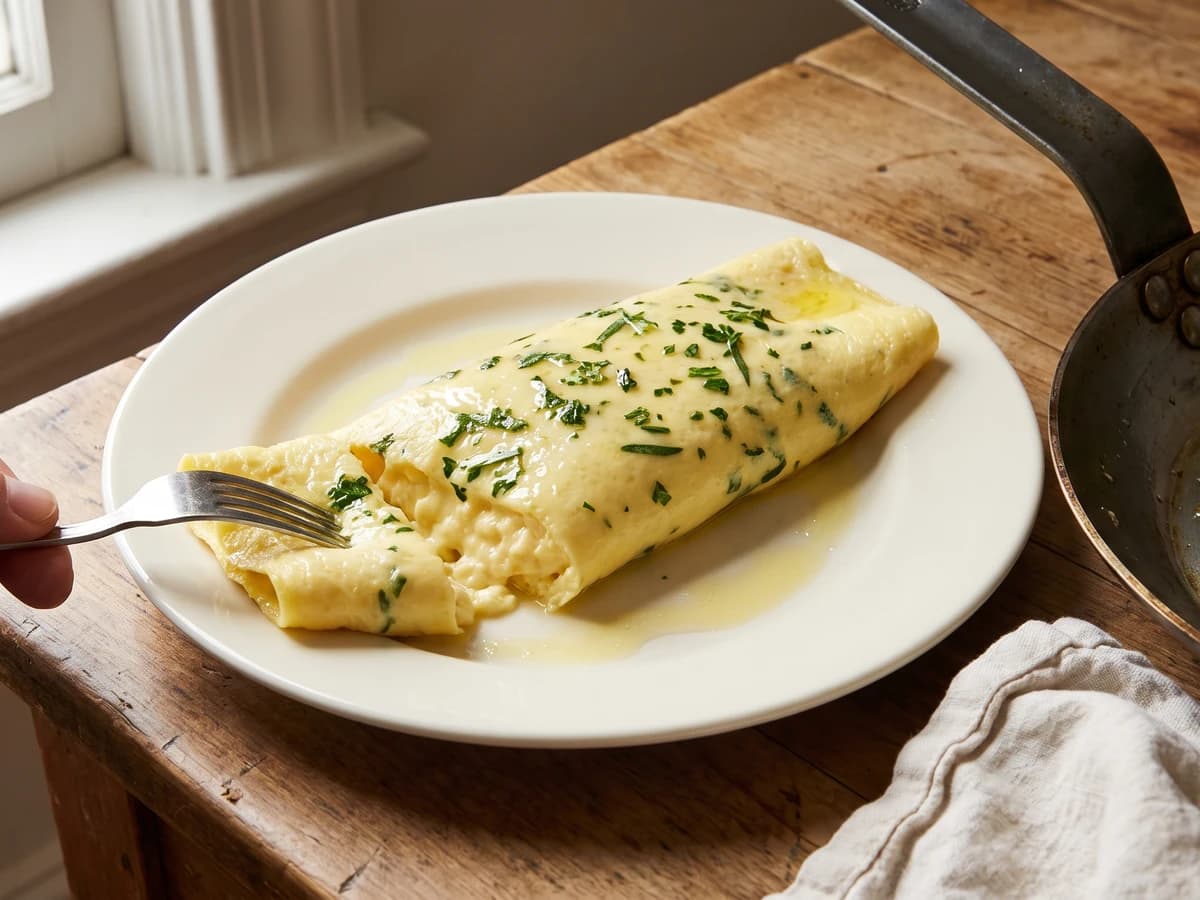
Four tender herbs, hot butter, and two eggs per pan: this rolled omelette teaches the quick hand and good judgment that keep the outside pale and the center creamy.
Chef Juliette
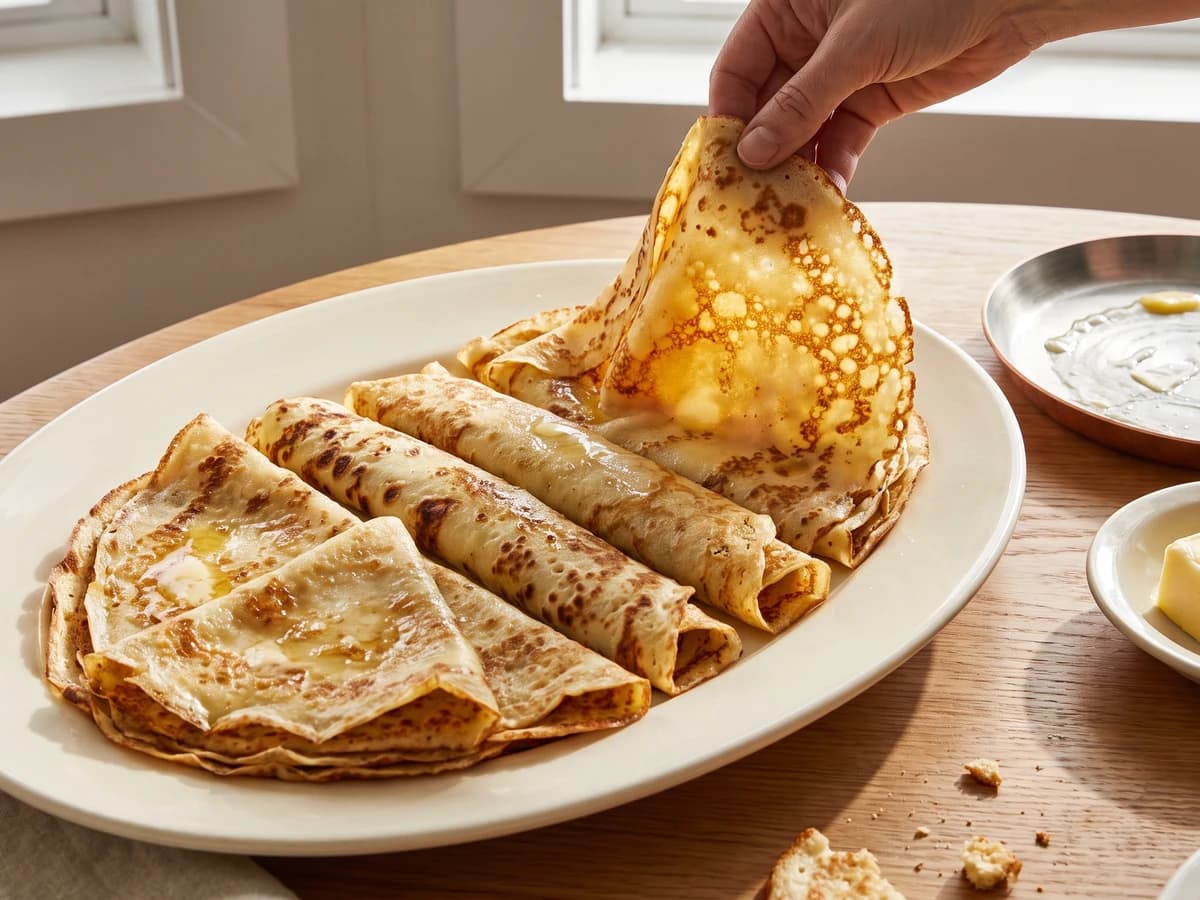
Four batters, one lesson: let the flour drink deeply before cooking, then spread the batter thinly in butter for crêpes and pannequets that bend without becoming tough.
Chef Juliette
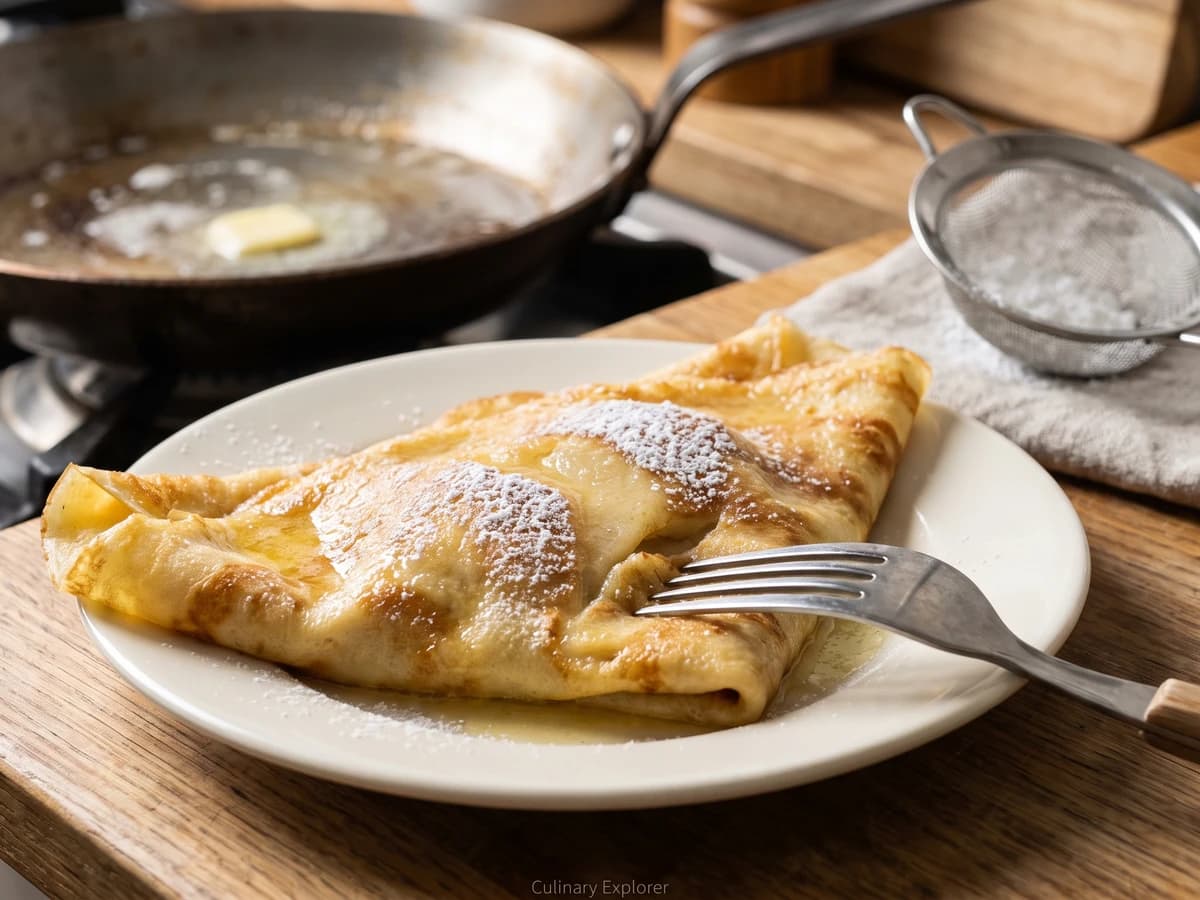
Crêpes au Couvent trap ripe Williams pear dice between two thin pours of sweet batter, then turn in one clean toss and reach the table butter-gold, powdered, and burning hot.