Chef Juliette
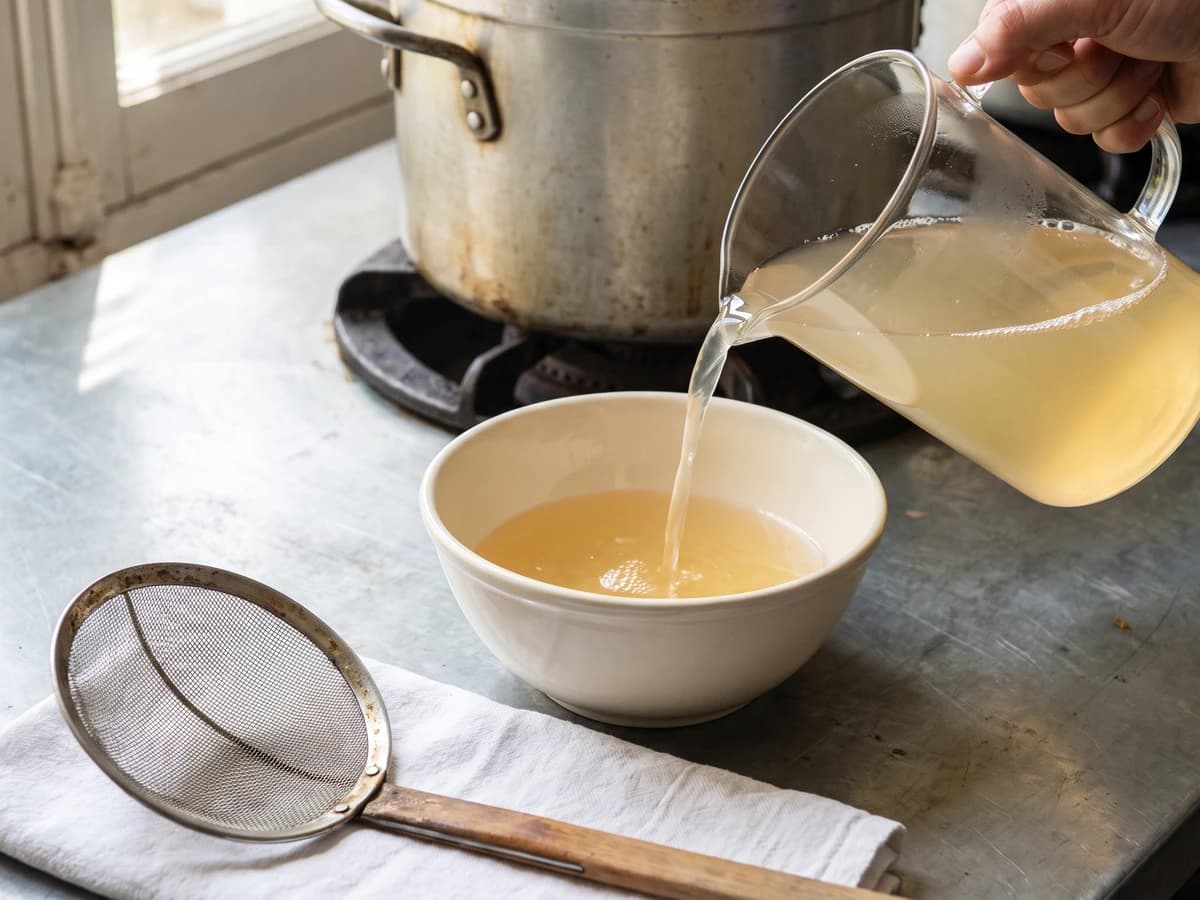
Ordinary or White Consommé
Beef shin, lean beef, and fowl begin in cold water and rise slowly toward a tremble. Skim before the boil, and you learn the quiet discipline that gives every clear French broth its backbone.
A cooking platform built around craft, culture, and the stories behind what we eat.
Created by Chef Juliette
Based on No. 43, Lyonnaise Sauce, from Le Guide Culinaire (1907) by Auguste Escoffier
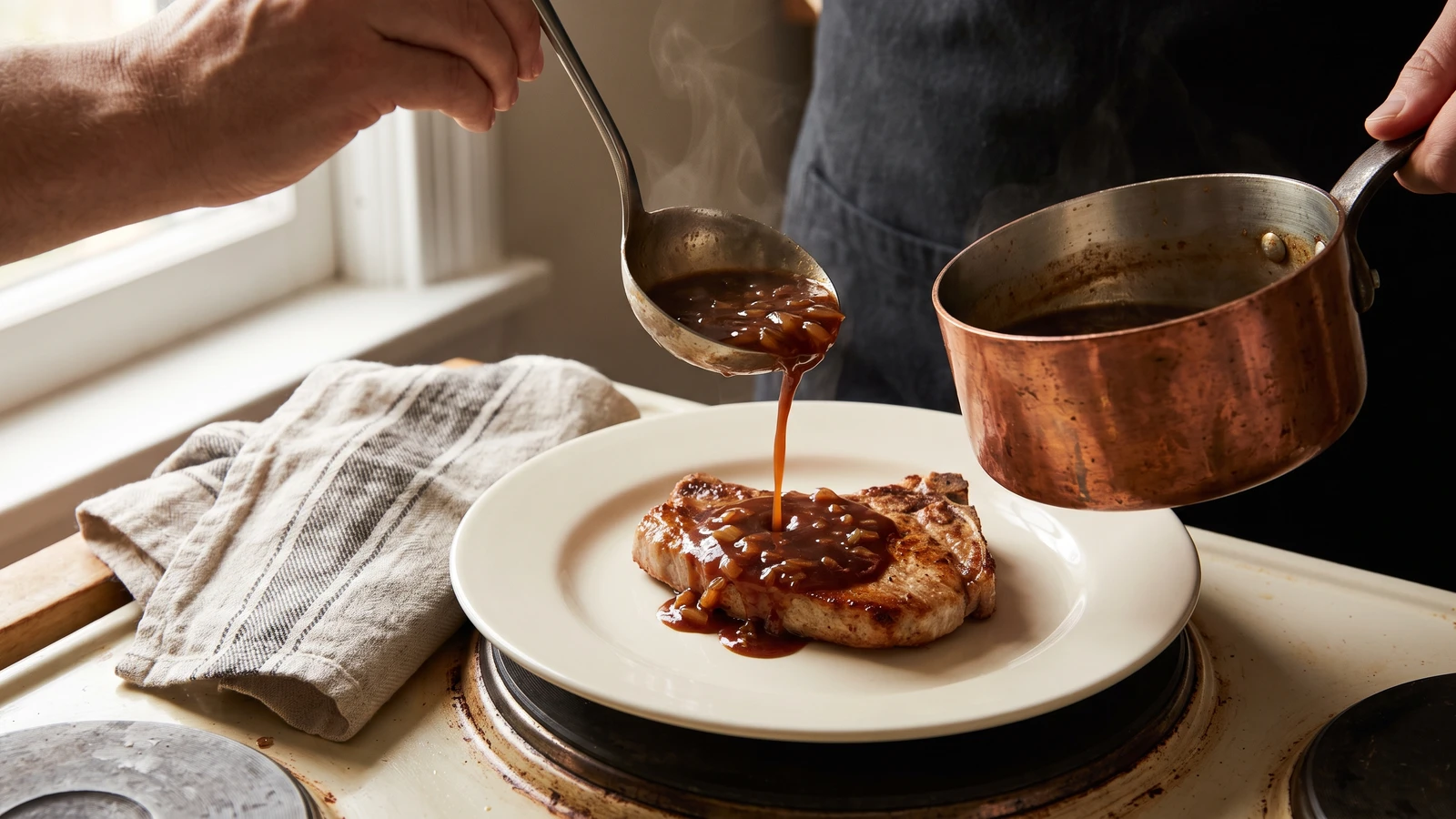
Sauce lyonnaise turns onion, butter, white wine, vinegar, and clear demi-glace into a glossy sauce whose discipline lies in one moment: reduce the acids almost dry before the stock enters.
Sauce lyonnaise (Lyon-style onion sauce) teaches the discipline of reduction. The one true thing to know is this: the white wine and vinegar must reduce almost entirely before the demi-glace enters. Leave too much liquid and the sauce tastes thin and sharply acidic; take it to a moist glaze and the onion becomes round, savory, and bright without losing its backbone.
The original kitchen assumed a saucier watching the pan, a stockpot never off the fire, and a tammy ready for passing the finished sauce. At home, the honest equivalents are finished clear demi-glace, one heavy saucepan, and a fine-mesh sieve. The perpetual stockpot and cloth tammy are brigade scaffolding; the slight browning of the onion and the near-dry acid reduction are the dish and must stay. The source proportions remain intact in a single pantry batch of about two quarts, manageable by one cook, one stove, one evening.
The finished sauce should be mahogany-brown and glossy, with enough acidity to cut through roasted meat and enough gelatinous body to cling rather than run. Leave the onions in for a generous, textured sauce or pass them smooth, exactly as the source allows. Watch the wine-and-vinegar reduction closely; when a spatula leaves a clean trail and only a moist glaze remains, you are ready for the demi-glace.
In classical French nomenclature, lyonnaise signals onion, reflecting Lyon's fondness for browned onions in both bourgeois cooking and the bouchon table; the name is a culinary association, not proof that every preparation began in a Lyon kitchen. Sauce lyonnaise carried that shorthand into the grand-kitchen family of demi-glace derivatives, where wine and vinegar gave the sweetness of onion a firm edge. The canonical choice was never simply chunky versus smooth by rank: the onions could remain or be rubbed through a tammy according to the preparation and the diner's taste.
Quantity
1 cup (240 ml / 150 g)
very finely minced
Quantity
⅔ cup (160 ml / 150 g)
Quantity
1⅓ cups (320 ml / 315 g)
Quantity
1⅓ cups (320 ml / 320 g)
Quantity
8 cups (1.9 L / approximately 2 kg)
| Ingredient | Quantity |
|---|---|
| yellow onionsvery finely minced | 1 cup (240 ml / 150 g) |
| unsalted butter | ⅔ cup (160 ml / 150 g) |
| dry white wine | 1⅓ cups (320 ml / 315 g) |
| white wine vinegar | 1⅓ cups (320 ml / 320 g) |
| finished clear demi-glace (half-glaze) | 8 cups (1.9 L / approximately 2 kg) |
Set a 5-quart heavy saucier or saucepan over medium-low heat and melt the butter until it foams. Add the minced onions and cook for 12 to 15 minutes, stirring often, until they are completely soft and lightly browned at the edges. You want pale hazelnut colour, not the deep sweetness of fully caramelized onions; too much colour would smother the wine and vinegar.
Pour in the white wine and vinegar, raise the heat to medium, and scrape the pan floor clean. Let the mixture reduce briskly for 12 to 18 minutes, stirring more frequently as the liquid disappears. It is ready when the sharp first smell has softened, a spatula leaves a clean trail across the pan, and the onions sit in a moist, syrupy glaze with no free liquid pooling around them. If the pan catches, pull it from the heat and stir in 1 tablespoon (15 ml) of hot water, scrape clean, then continue more gently. Ça se rattrape. If black flecks appear, transfer the unburnt onions to a clean pan and leave the scorched sediment behind.
Moisten the reduced onions with the finished clear demi-glace (half-glaze), stirring until the acid glaze dissolves completely into it. Bring the sauce just to a simmer, then lower the heat and cook uncovered at the barest tremble for 30 minutes, stirring occasionally around the pan floor. The sauce should become glossy and nappant, meaning it coats the back of a spoon in an even film. A hard boil can throw the butter out of the sauce; if beads of fat gather at the edge, lower the heat and whisk in a spoonful of hot water until the sauce comes together.
For the source's smooth finish, set a fine-mesh sieve over a clean saucepan and work the sauce through with a flexible spatula, pressing firmly on the onions and scraping the sauce from the underside of the sieve. This replaces the brigade tammy without changing the result. For a more generous texture, leave the onions in and skip the sieve entirely; the source permits both, and the choice changes texture rather than identity.
Return the sauce to a bare simmer and judge its consistency on a spoon. If it is too thick, loosen it a tablespoon at a time with hot water; if it runs without coating, simmer it a little longer. Taste before reaching for salt, since a properly seasoned demi-glace usually supplies enough. Spoon the chunky version over pork chops, sausages, calf's liver, or potatoes, and use the smooth version with roasted veal or beef. À table!
1 serving (about 60g)
Culinary guides, cultural storytelling, and the editorial depth that makes cooking meaningful.
Discover Culinary ExplorerChef Juliette
Beef shin, lean beef, and fowl begin in cold water and rise slowly toward a tremble. Skim before the boil, and you learn the quiet discipline that gives every clear French broth its backbone.
Chef Juliette
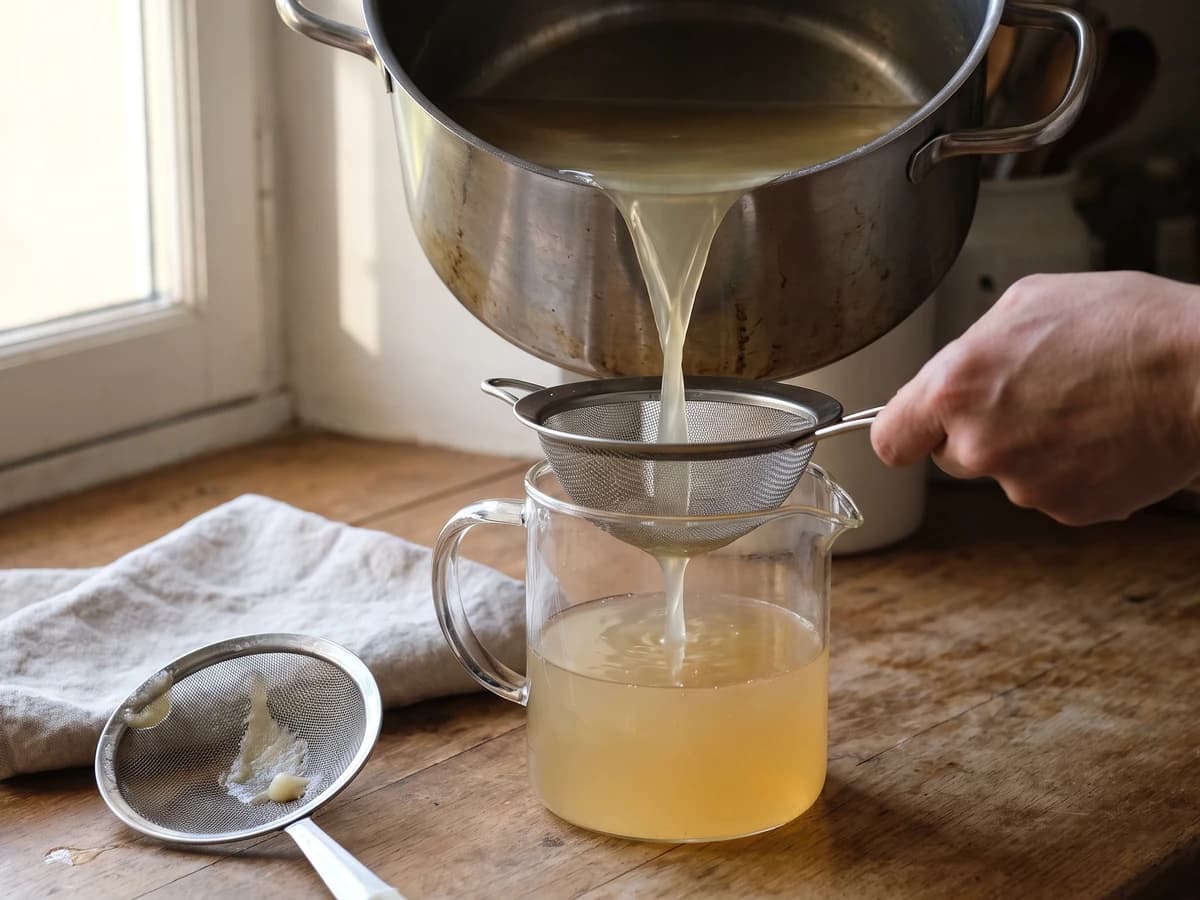
Break the veal bones small, then give them eight hours at a bare tremble. This pale, gelatinous fond becomes the quiet foundation beneath velouté, blanquette, and every sauce that must stay light.
Chef Juliette
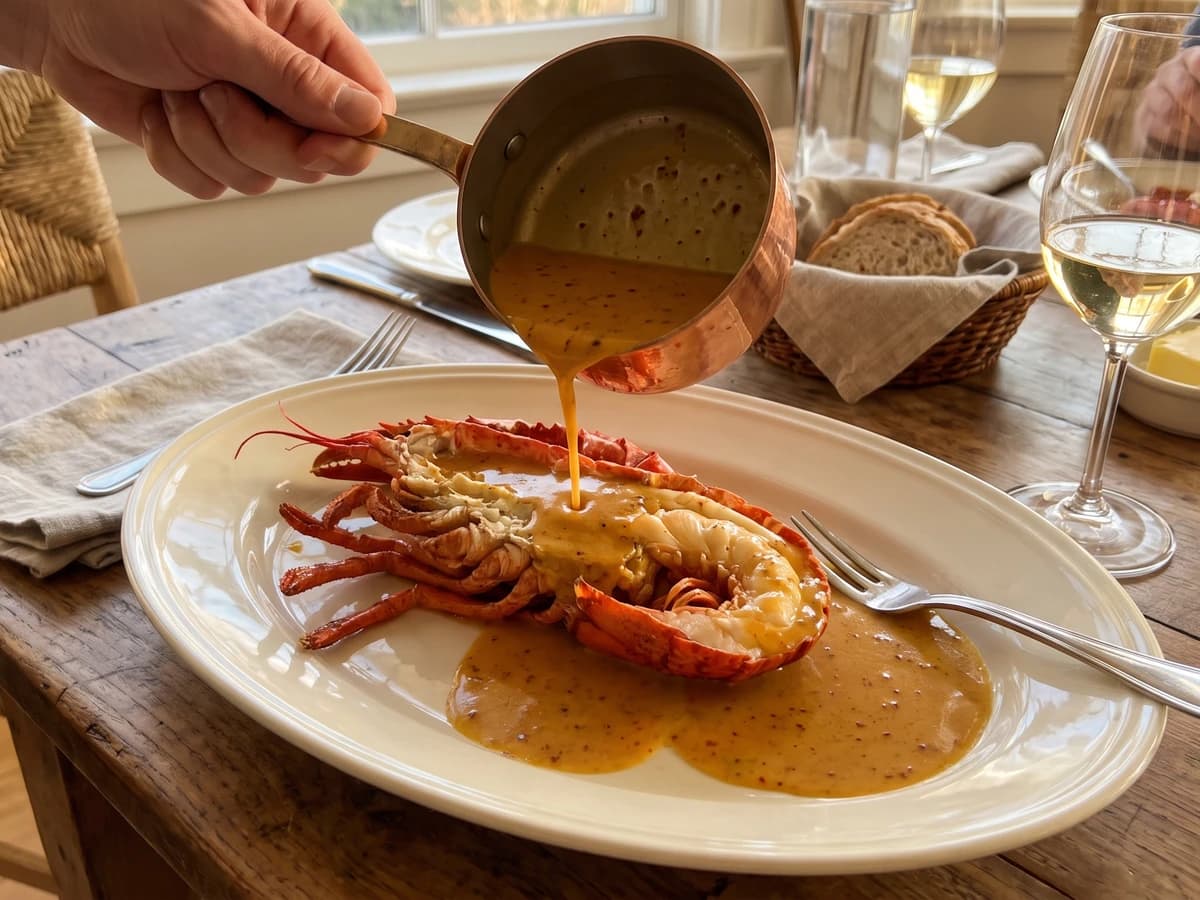
Sauce Orientale concentrates lobster-rich American Sauce with curry, then folds in cream away from the fire: a glossy, gently spiced derivative made for lobster, crayfish, and firm fish.
Chef Juliette
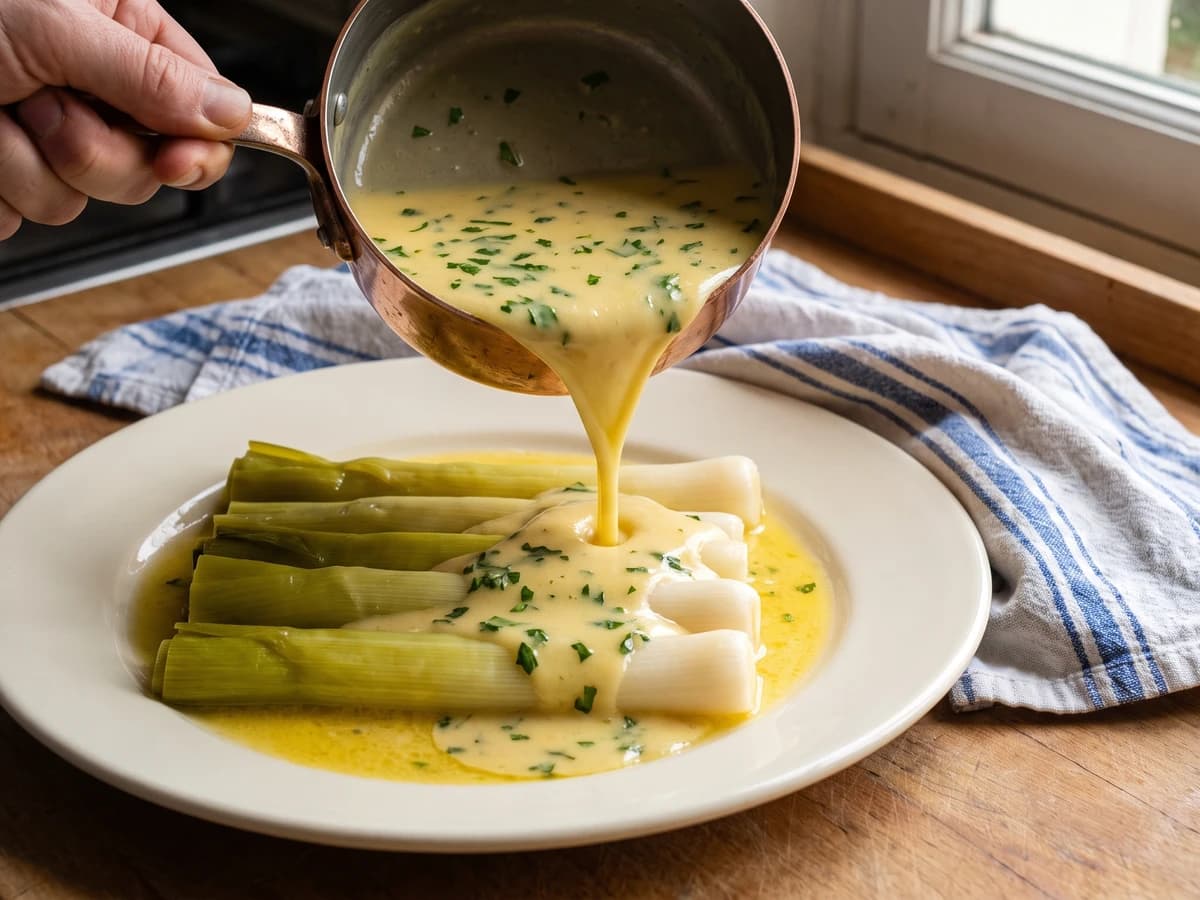
An old lesson in sauce families: Sauce Allemande takes mushroom liquor, then butter, lemon, and parsley, becoming a glossy Poulette for sheep's trotters, leeks, cauliflower, and anything needing gentle richness with a bright edge.