Chef Juliette
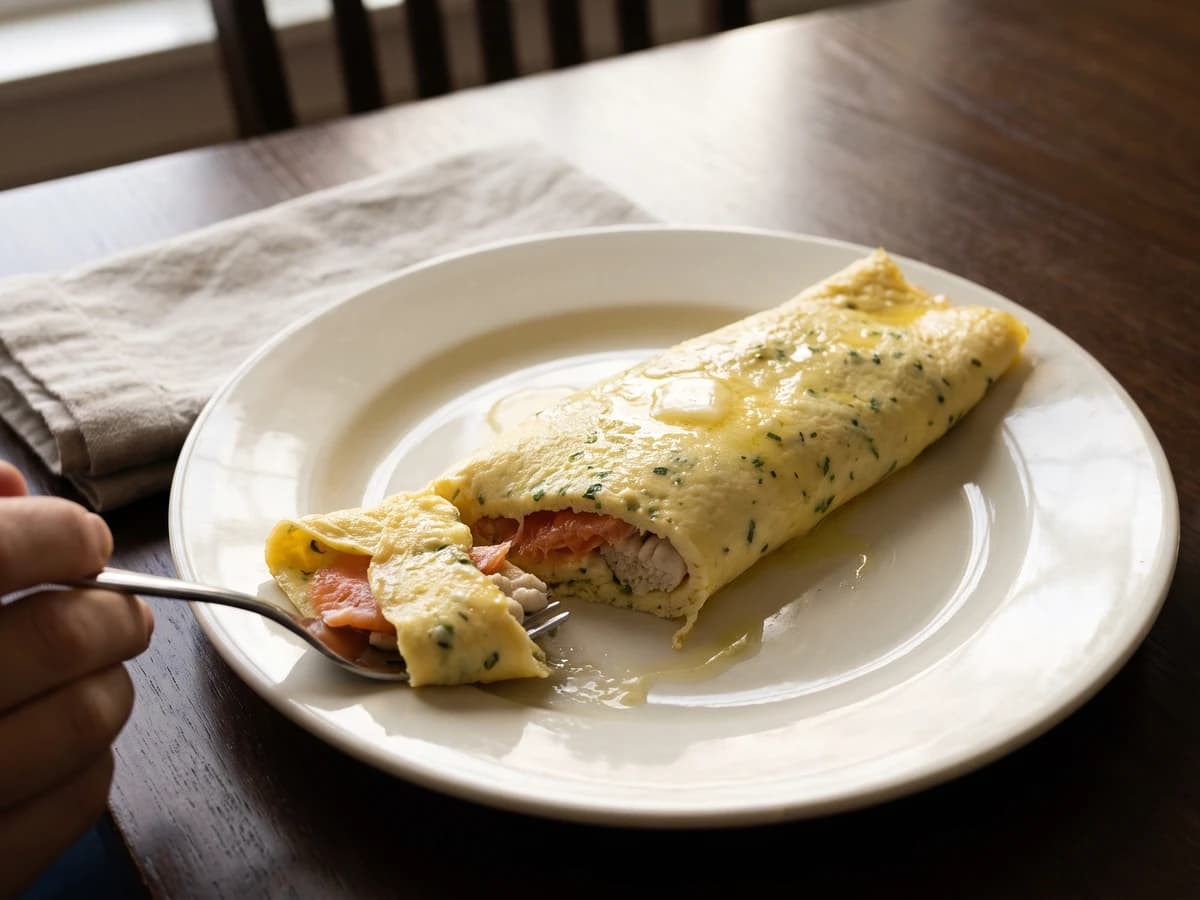
Omelette à l’Écossaise
A creamy omelette aux fines herbes closes around smoked-salmon-wrapped herring milts, gently poached in butter. Have the filling ready, then roll the eggs while they still shine.
A cooking platform built around craft, culture, and the stories behind what we eat.
Created by Chef Juliette
Based on No. 428, Poached Eggs D’Orsay, from Le Guide Culinaire (1907) by Auguste Escoffier
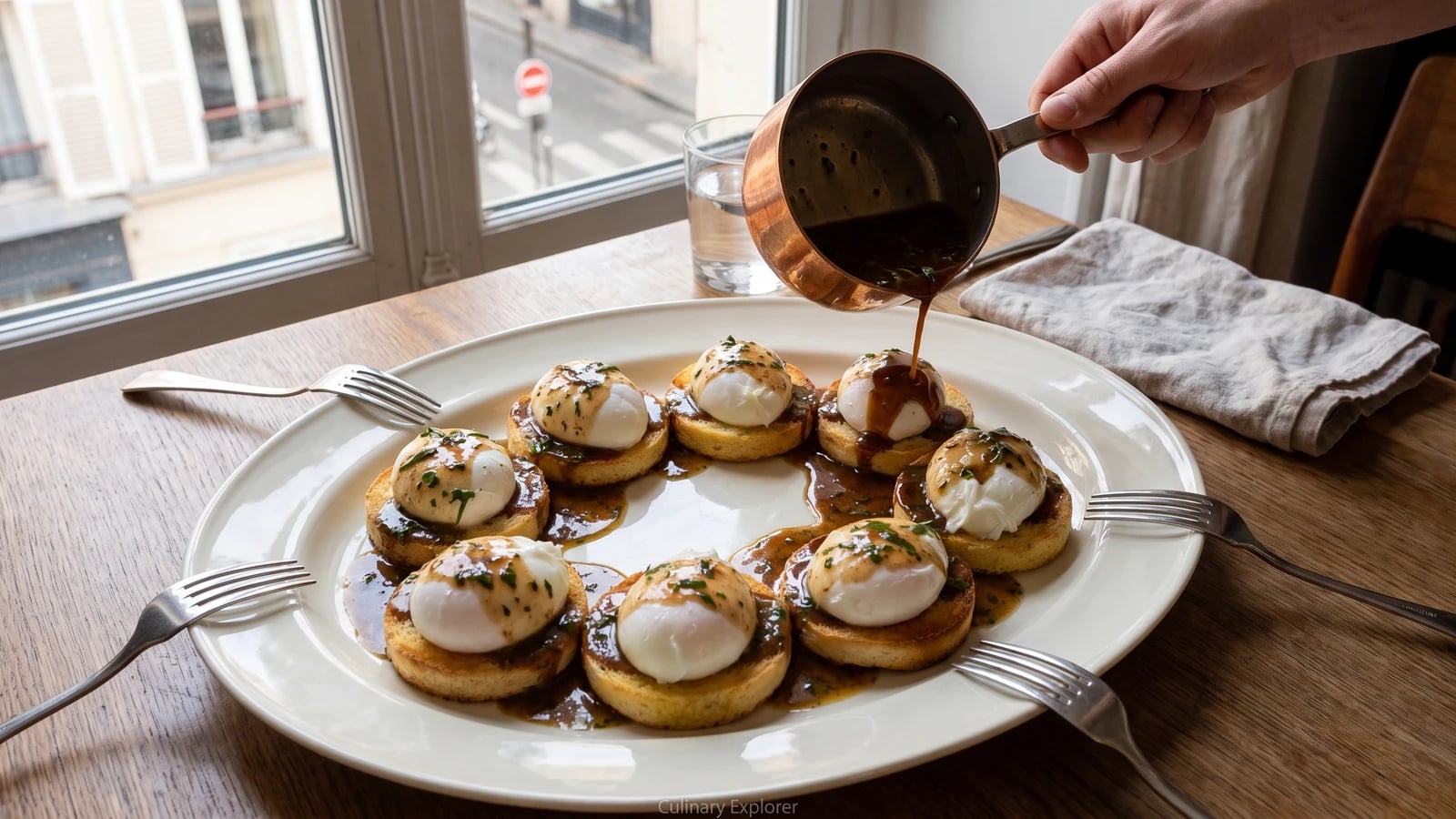
Tender poached eggs sit on butter-fried toast beneath glossy Châteaubriand sauce, a precise lesson in timing three simple elements so yolks, crisp bread, and warm sauce meet together.
Œufs pochés d’Orsay (poached eggs D’Orsay) teaches coordination. The sauce must be ready, the toast must stay crisp, and the eggs must reach the platter while their whites are tender and their yolks still flow. The one true thing is that this plate waits for nothing.
The original service assumed a saucier with Châteaubriand sauce on hand, a stockpot never cold behind it, and several cooks to fry toast and poach eggs at once. At home, prepare the finished sauce from its own recipe before beginning, hold it gently, fry eight modest toast rounds, and poach the eggs in two batches. The holding pots and extra hands are brigade scaffolding and can go. Butter-fried toast, properly poached eggs, and Châteaubriand sauce are the dish, so none of those changes. A salamander has no work here because d’Orsay is coated, not gratinéed. This version scales the brigade platter to eight eggs for four people, enough to preserve its handsome ring without feeding a dining room. One cook, one stove, one evening.
The reward is a circle of ivory eggs, butter-gold toast showing beneath them, and a deep, herb-flecked sauce gleaming over the top. Set the sequence before you cook: sauce warm, platter warm, toast fried, then eggs. Having the Châteaubriand sauce ready before the first egg meets the water is the step that decides everything.
Œufs pochés d’Orsay belongs to the Parisian classical table, where named egg dishes were distinguished by their foundation, arrangement, and sauce rather than by a wholly separate method of cooking. The d’Orsay formula is unusually spare: butter-fried toast, poached eggs arranged in a ring, and Châteaubriand sauce, whose meat reduction moves the plate from breakfast toward a savory entrée. It traveled readily from grand dining rooms to private tables because the sauce could be prepared before service and the final work was pure timing.
Quantity
8
as fresh as practical
Quantity
8 slices (about 240 g total)
each 1/2 inch (1.25 cm) thick and cut into a 3-inch (7.5 cm) round
Quantity
6 tablespoons (90 ml / 85 g)
divided
Quantity
1¼ cups (300 ml / about 300 g)
finished and warm
Quantity
2 tablespoons (30 ml / 30 g)
Quantity
About 3 quarts (2.8 L / 2.8 kg), plus more as needed
for poaching and holding the eggs
Quantity
¾ teaspoon (3.75 ml / 4.5 g)
divided
| Ingredient | Quantity |
|---|---|
| large eggsas fresh as practical | 8 |
| pain de mieeach 1/2 inch (1.25 cm) thick and cut into a 3-inch (7.5 cm) round | 8 slices (about 240 g total) |
| unsalted butterdivided | 6 tablespoons (90 ml / 85 g) |
| Châteaubriand saucefinished and warm | 1¼ cups (300 ml / about 300 g) |
| white wine vinegar | 2 tablespoons (30 ml / 30 g) |
| waterfor poaching and holding the eggs | About 3 quarts (2.8 L / 2.8 kg), plus more as needed |
| fine sea saltdivided | ¾ teaspoon (3.75 ml / 4.5 g) |
Heat the oven to 200°F (95°C), then place the serving platter and four plates inside to warm. Put the finished Châteaubriand sauce in a small saucepan over the lowest heat, or hold it in a bain-marie (warm-water bath), stirring occasionally until it falls from the spoon in a thick, glossy ribbon. Never let it simmer because the butter that gives the sauce its sheen can separate. If the surface turns oily, lift the pan from the heat and whisk in 1 teaspoon (5 ml / 5 g) cold water, adding a second teaspoon only if needed. Ça se rattrape. Cover and keep the sauce barely warm.
Melt 3 tablespoons (45 ml / about 42 g) butter in a wide skillet over medium heat. When the foam quiets, add four bread rounds and fry for 2 to 3 minutes per side, until deep butter-gold with crisp edges but a tender center. Season lightly, transfer them to a wire rack set over a sheet pan, and hold them in the low oven. Repeat with the remaining butter and bread. If the butter blackens before the bread browns, wipe the pan clean and begin that batch with fresh butter; burnt butter cannot be hidden beneath a good sauce.
Fill a wide sauté pan with about 3 inches (7.5 cm) of water and add the white wine vinegar. Bring it just below a simmer, with an occasional lazy bubble rather than a rolling boil. Fill a broad bowl with clean water at about 130°F (55°C) and set it beside the stove for holding the first batch. Crack four eggs separately into small cups, keeping each yolk whole. Do not salt the poaching water because salt encourages the whites to spread.
Slide the first four eggs into the water one at a time, placing them apart around the pan. Keep the water barely trembling and use a spoon to gather each white gently around its yolk during the first 20 seconds. Poach for 3 to 3½ minutes, until the whites are opaque and tender but the yolks still yield beneath the spoon. If a white trails into streamers, gather what you can while it sets and trim the fringe afterward; the egg beneath is still perfectly good. Lift each egg with a slotted spoon and lower it into the bowl of warm holding water.
Return the poaching water to its quiet tremble and cook the remaining four eggs in the same way. Lay a clean folded kitchen towel beside the stove. Lift all eight eggs from their water, drain each thoroughly on the towel, and trim only the loose, ragged threads of white with a small knife. Do not press or blot the yolk. Water left beneath an egg soaks the toast and thins the sauce, so give this small step its full attention.
Take the warm platter and toast from the oven. Arrange the eight toast rounds in a neat circle, leaving the center open, then settle one drained egg upon each round. Season the eggs lightly with the remaining salt. Work steadily rather than fussing over symmetry; the toast is crisp now, and every extra minute invites it to soften.
Stir the Châteaubriand sauce once and check that it still flows in a glossy ribbon. Spoon it generously over each egg, coating the white while leaving a narrow edge of butter-fried toast visible beneath. Bring the platter straight to the table while the yolks remain fluid and the toast still answers the knife with a crisp edge. À table!
1 serving (about 250g)
Culinary guides, cultural storytelling, and the editorial depth that makes cooking meaningful.
Discover Culinary ExplorerChef Juliette
A creamy omelette aux fines herbes closes around smoked-salmon-wrapped herring milts, gently poached in butter. Have the filling ready, then roll the eggs while they still shine.
Chef Juliette
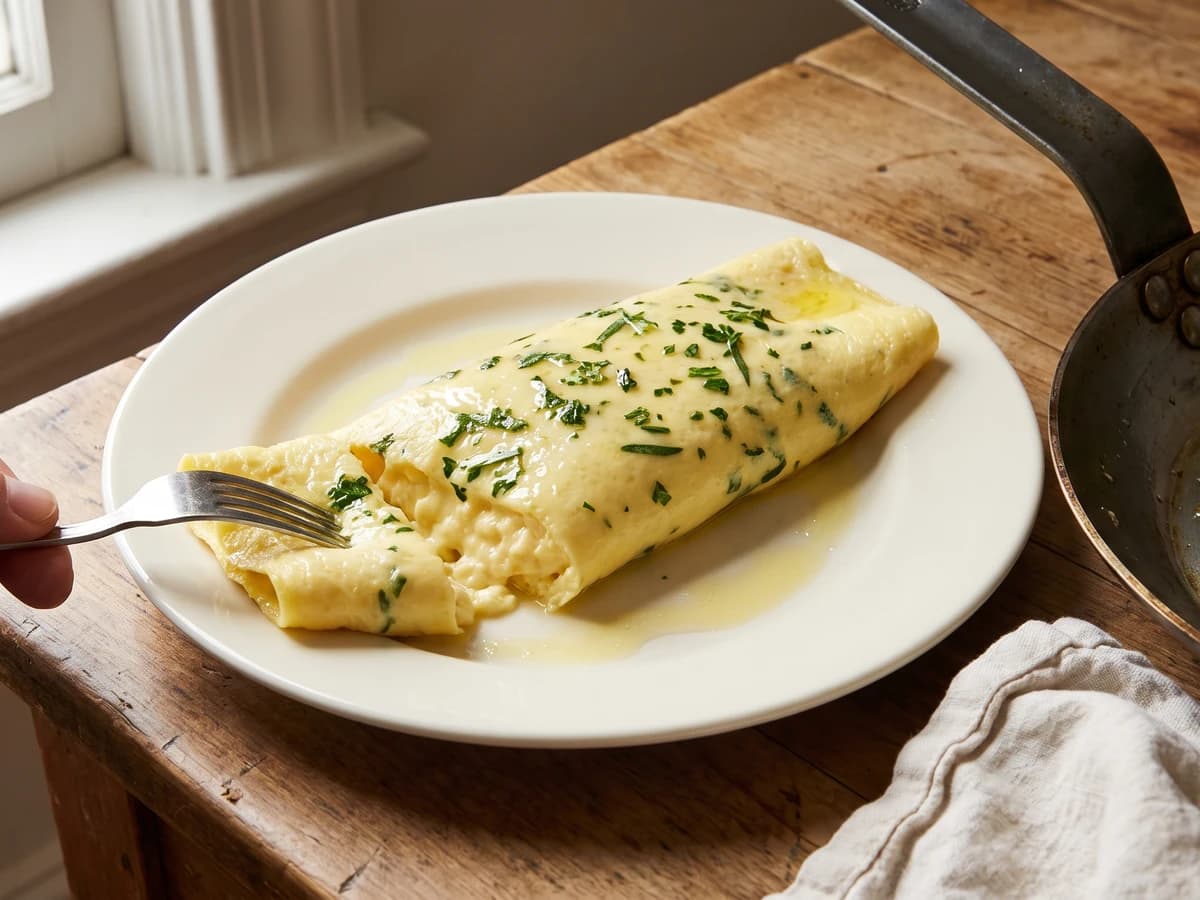
Four tender herbs, hot butter, and two eggs per pan: this rolled omelette teaches the quick hand and good judgment that keep the outside pale and the center creamy.
Chef Juliette
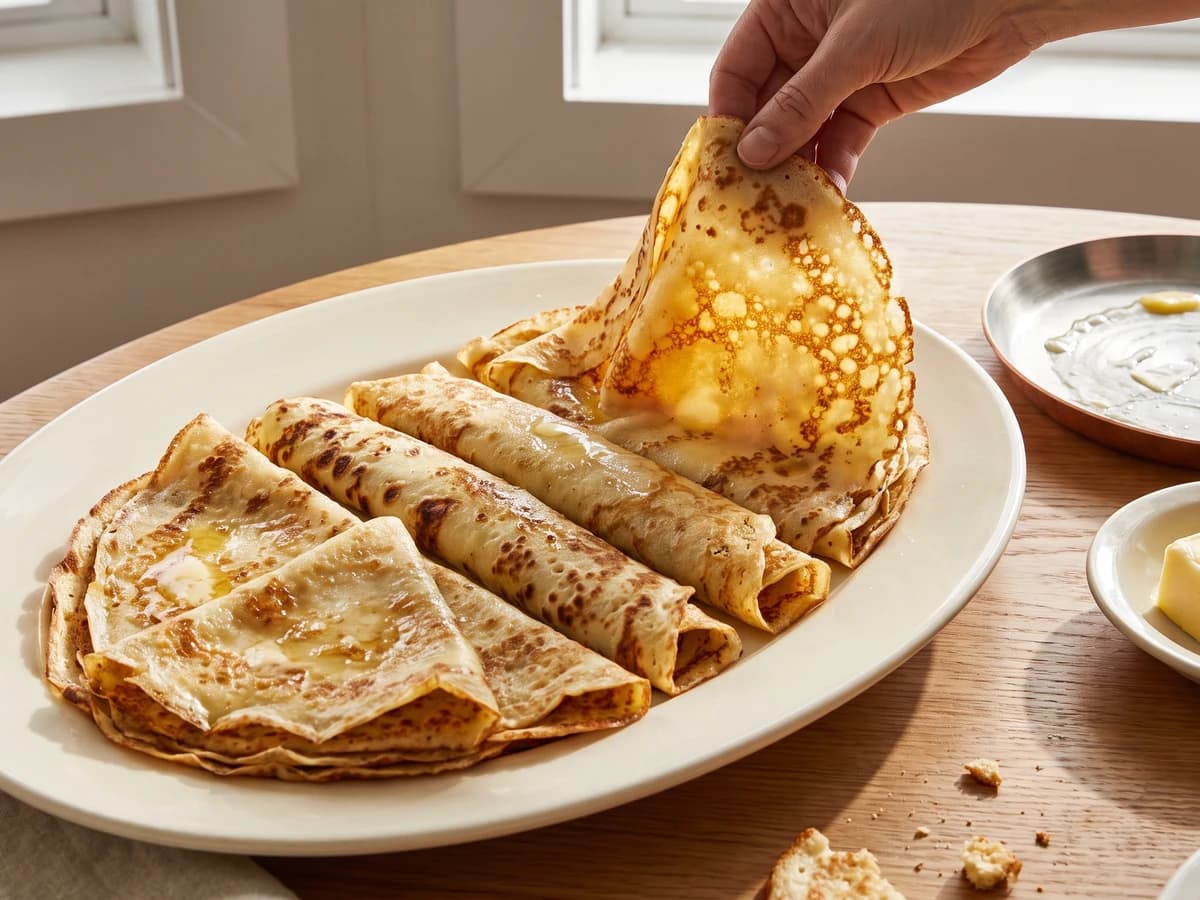
Four batters, one lesson: let the flour drink deeply before cooking, then spread the batter thinly in butter for crêpes and pannequets that bend without becoming tough.
Chef Juliette
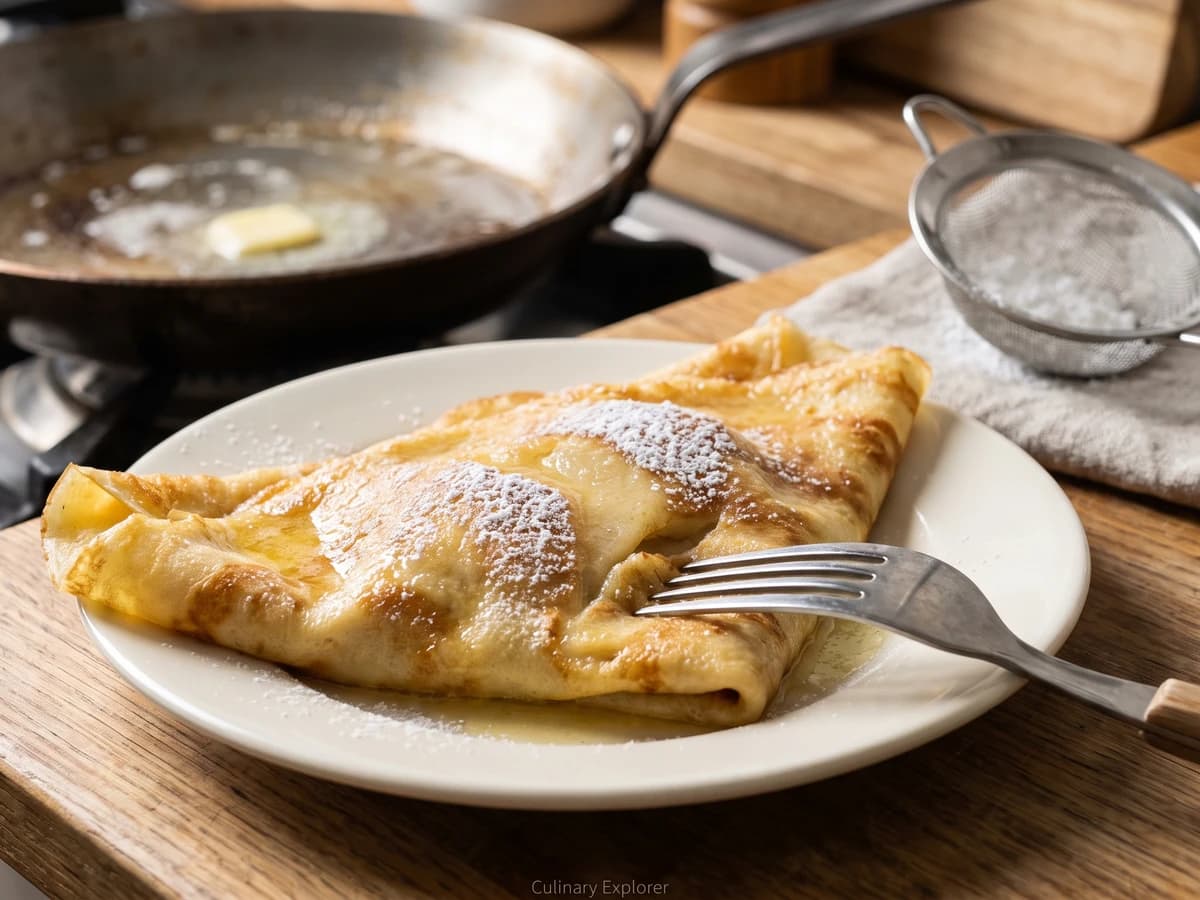
Crêpes au Couvent trap ripe Williams pear dice between two thin pours of sweet batter, then turn in one clean toss and reach the table butter-gold, powdered, and burning hot.