Chef Juliette
Omelette à l’Écossaise
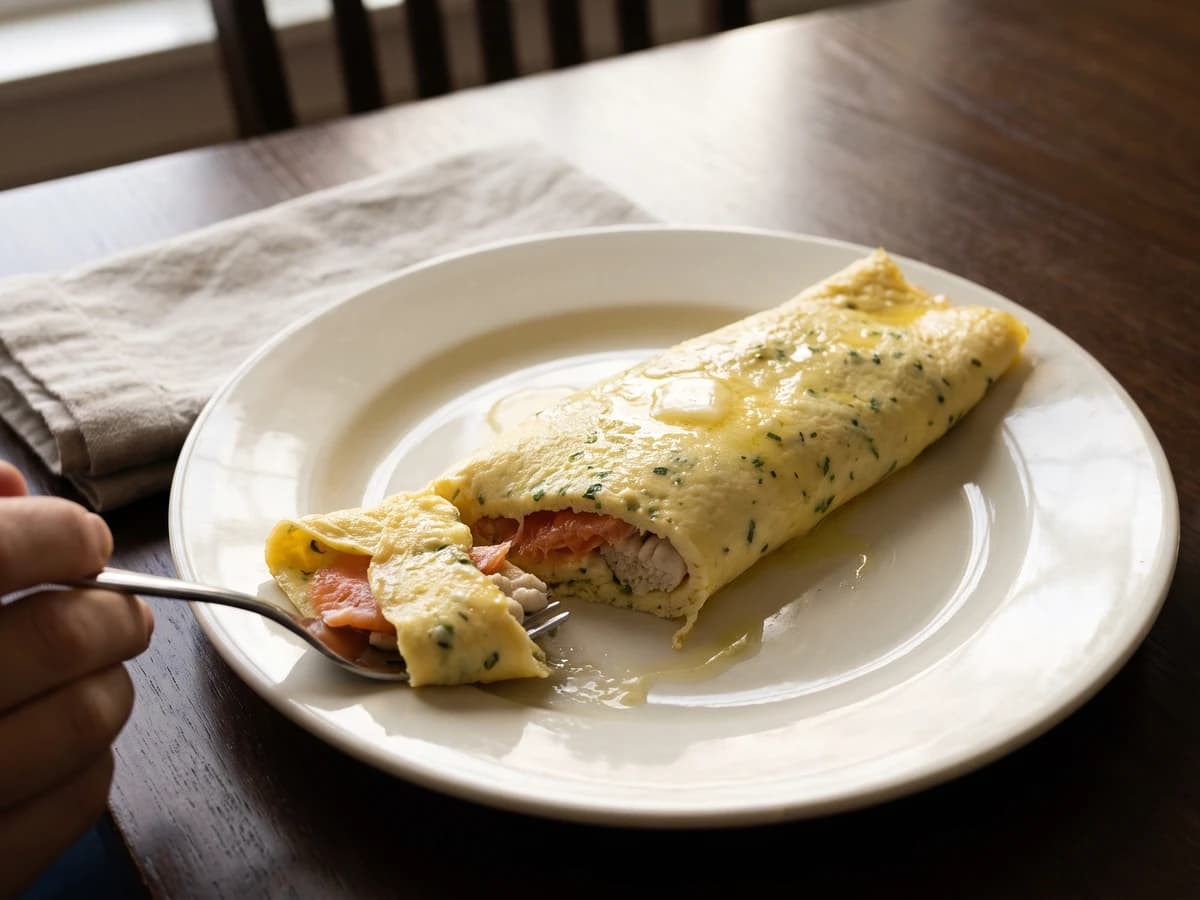
A creamy omelette aux fines herbes closes around smoked-salmon-wrapped herring milts, gently poached in butter. Have the filling ready, then roll the eggs while they still shine.
A cooking platform built around craft, culture, and the stories behind what we eat.
Created by Chef Juliette
Based on No. 427, Poached Eggs Mornay, from Le Guide Culinaire (1907) by Auguste Escoffier
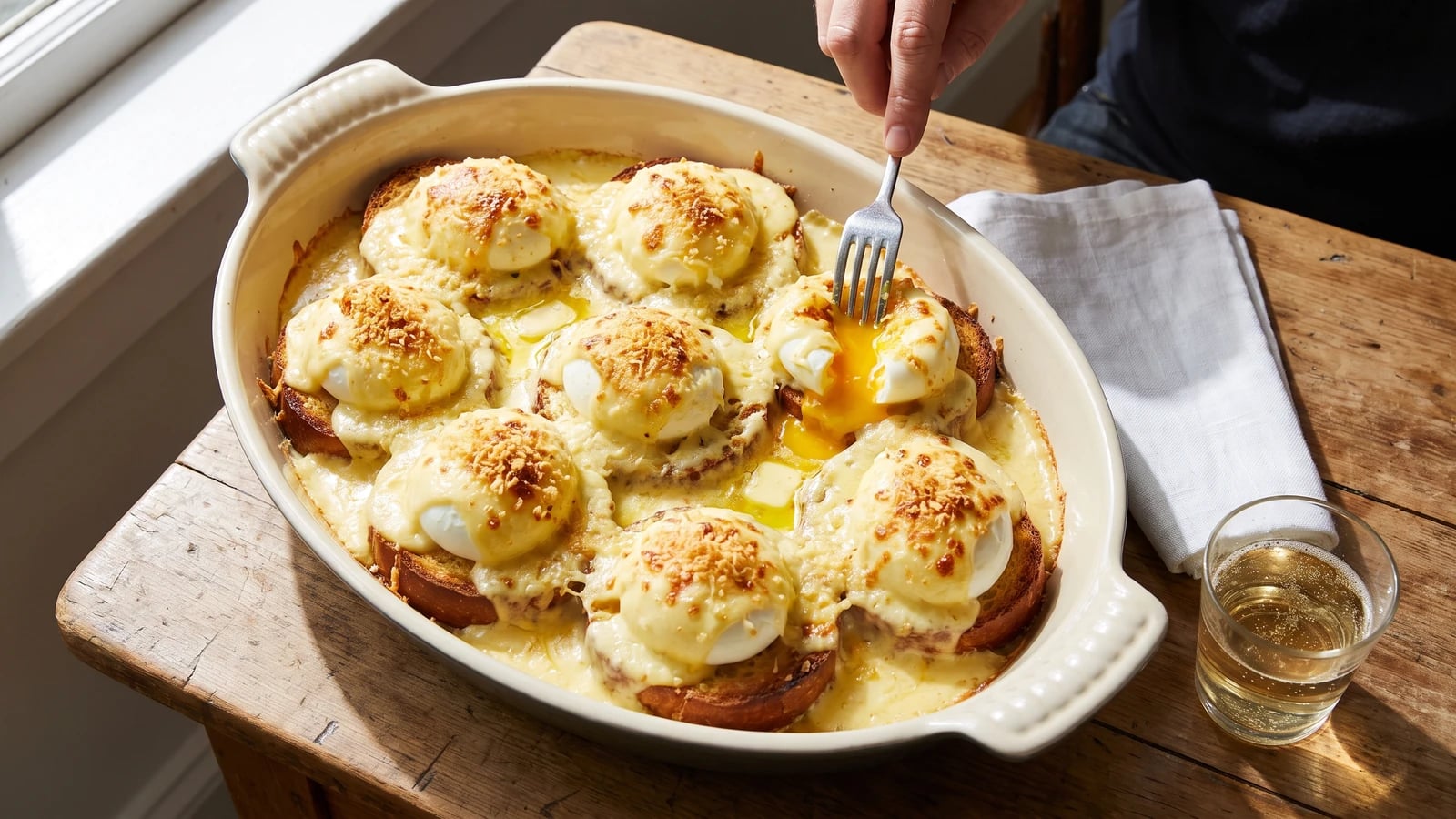
Œufs pochés Mornay teaches timing: tender eggs, crisp oil-fried toast, and silken cheese sauce must meet before a fierce final glaze bronzes the crown without hardening the yolks.
Œufs pochés Mornay (poached eggs with Mornay sauce) teaches coordination. The sauce must be smooth and hot, the oil-fried toast crisp, and the eggs deliberately underpoached before they meet the fierce final heat. Get that timing right and the fork passes through bronzed cheese, ivory sauce, tender white, and a yolk that still runs into the toast.
The original entry assumed a saucier with Mornay ready, an egg cook beside the poaching pan, a stock never off the fire elsewhere in the kitchen, and a salamander waiting to glaze the finished dish. At home, the stockpot can stay cold: one saucepan builds the roux-based Mornay, one wide pan poaches eight eggs for four people, and the broiler supplies the salamander's fierce top heat. Separate cooks, holding pans, and brigade portions were scaffolding, so they go. The Mornay, oil-fried toast, cheese mixed with fine bread raspings, melted butter, and fast glaze are the dish, so every one stays.
One cook, one stove, one evening. Have every component ready before you poach, then pull the eggs while their yolks are still very loose. The glaze can bronze cheese in seconds, but it cannot give an overcooked yolk back.
Œufs Mornay belongs to the Parisian classical repertoire and the bourgeois supper table, where eggs were served as a light entrée as readily as at breakfast. Mornay is a béchamel enriched with cheese, customarily Gruyère and Parmesan, though the identity of the person behind its name remains disputed. Pairing it with poached eggs, fried bread, and a fierce glaze carried a grand-kitchen sauce neatly onto the home table without diminishing it.
Quantity
3 tablespoons (45 ml / 42 g)
Quantity
3 tablespoons (45 ml / 24 g)
Quantity
1½ cups (360 ml / 370 g)
warmed
Quantity
½ cup (120 ml / 55 g)
finely grated
Quantity
2 tablespoons (30 ml / 12 g)
finely grated
Quantity
¼ teaspoon (1.25 ml / 1.5 g)
Quantity
⅛ teaspoon (0.6 ml / 0.3 g)
Quantity
½ cup (120 ml / 55 g)
finely grated
Quantity
¼ cup (60 ml / 22 g)
finely grated
Quantity
⅓ cup (80 ml / 30 g)
Quantity
8 slices
cut about ½ inch thick, crusts trimmed into ovals
Quantity
½ cup (120 ml / 110 g)
Quantity
8
Quantity
2 tablespoons (30 ml / 28 g)
melted
| Ingredient | Quantity |
|---|---|
| unsalted butter for the Mornay | 3 tablespoons (45 ml / 42 g) |
| plain flour | 3 tablespoons (45 ml / 24 g) |
| whole milkwarmed | 1½ cups (360 ml / 370 g) |
| Gruyère for the Mornayfinely grated | ½ cup (120 ml / 55 g) |
| Parmesan for the Mornayfinely grated | 2 tablespoons (30 ml / 12 g) |
| fine salt | ¼ teaspoon (1.25 ml / 1.5 g) |
| ground white pepper | ⅛ teaspoon (0.6 ml / 0.3 g) |
| Gruyère for the toppingfinely grated | ½ cup (120 ml / 55 g) |
| Parmesan for the toppingfinely grated | ¼ cup (60 ml / 22 g) |
| fine fresh bread raspings | ⅓ cup (80 ml / 30 g) |
| pain de miecut about ½ inch thick, crusts trimmed into ovals | 8 slices |
| neutral frying oil | ½ cup (120 ml / 110 g) |
| large eggs | 8 |
| unsalted butter for glazingmelted | 2 tablespoons (30 ml / 28 g) |
Set an oven rack about 6 inches below the broiler and place a large ovenproof platter nearby. Mix the topping Gruyère, Parmesan, and fine bread raspings with your fingers so the cheeses are evenly dispersed. These raspings are very fine fresh breadcrumbs, not coarse crumbs; they drink in the butter and give the glaze its delicate bronze crust. Begin heating the broiler on its highest setting when the Mornay is nearly finished.
Make a roux blanc, a white roux: melt the sauce butter in a heavy saucepan over medium-low heat, whisk in the flour, and cook for about 2 minutes. It should look sandy and smell faintly of warm biscuit without taking colour. Add the warm milk in three portions, whisking each one completely smooth before adding the next, then simmer gently for 5 to 7 minutes until the sauce nappes, coating the back of a spoon in an even veil. Remove the pan from the heat and add the Gruyère and Parmesan by handfuls, stirring until each melts before the next goes in. Season with salt and white pepper. Keep it warm without boiling. If the cheese turns grainy, remove the pan from all heat and whisk in a spoonful of cool milk; if lumps remain, pass the sauce through a fine sieve. Ça se rattrape.
Heat the oil in a wide skillet over medium-high heat until a loose breadcrumb sizzles immediately on contact. Fry the pain de mie in batches for 30 to 45 seconds per side, until crisp and evenly golden rather than dark brown. Drain the pieces on a wire rack so their undersides remain crisp. If the first toast drinks oil without colouring, the oil is too cool; lift it out, let the oil recover, and fry it again briefly.
Bring 2½ inches of water to a bare tremble in a wide sauté pan. Crack each egg into its own small cup, then slip four eggs into the water with space between them. Fold any loose white gently toward its yolk during the first few seconds and poach for 2½ to 3 minutes, until the whites hold together but remain tender and the yolks are still very loose. Lift them with a slotted spoon, blot the bottoms carefully on a folded towel, and repeat with the remaining eggs. Trim only the wildest wisps. If a white feathers, the sauce will cover an honest edge; don't keep cooking the yolk in pursuit of a perfect oval.
Brush a shallow metal tray with a few drops of the melted finishing butter and set the drained eggs on it. Spoon the hot Mornay generously over each egg, covering the white while leaving its rounded shape visible, then besprinkle each with the Gruyère, Parmesan, and bread-rasping mixture. Slide a broad, thin spatula completely beneath each coated egg and transfer it carefully onto a fried toast. Arrange the eight toasts in a ring on the ovenproof platter and dot the tops with the remaining melted butter. This order follows the dish: coat first, transfer with care, then glaze.
Place the platter beneath the fully heated broiler and watch without stepping away. Glaze for 45 to 90 seconds, turning the platter if necessary, until the cheese is mottled gold and the sauce shows small bubbling blisters at its edges. This is glazing, not a second cooking. If colour comes slowly, move the platter closer to the heat instead of leaving the eggs there longer, because prolonged heat hardens the yolks. Carry the platter straight to the table while the toast is crisp and the sauce gleams. À table!
1 serving (about 305g)
Culinary guides, cultural storytelling, and the editorial depth that makes cooking meaningful.
Discover Culinary ExplorerChef Juliette
A creamy omelette aux fines herbes closes around smoked-salmon-wrapped herring milts, gently poached in butter. Have the filling ready, then roll the eggs while they still shine.
Chef Juliette
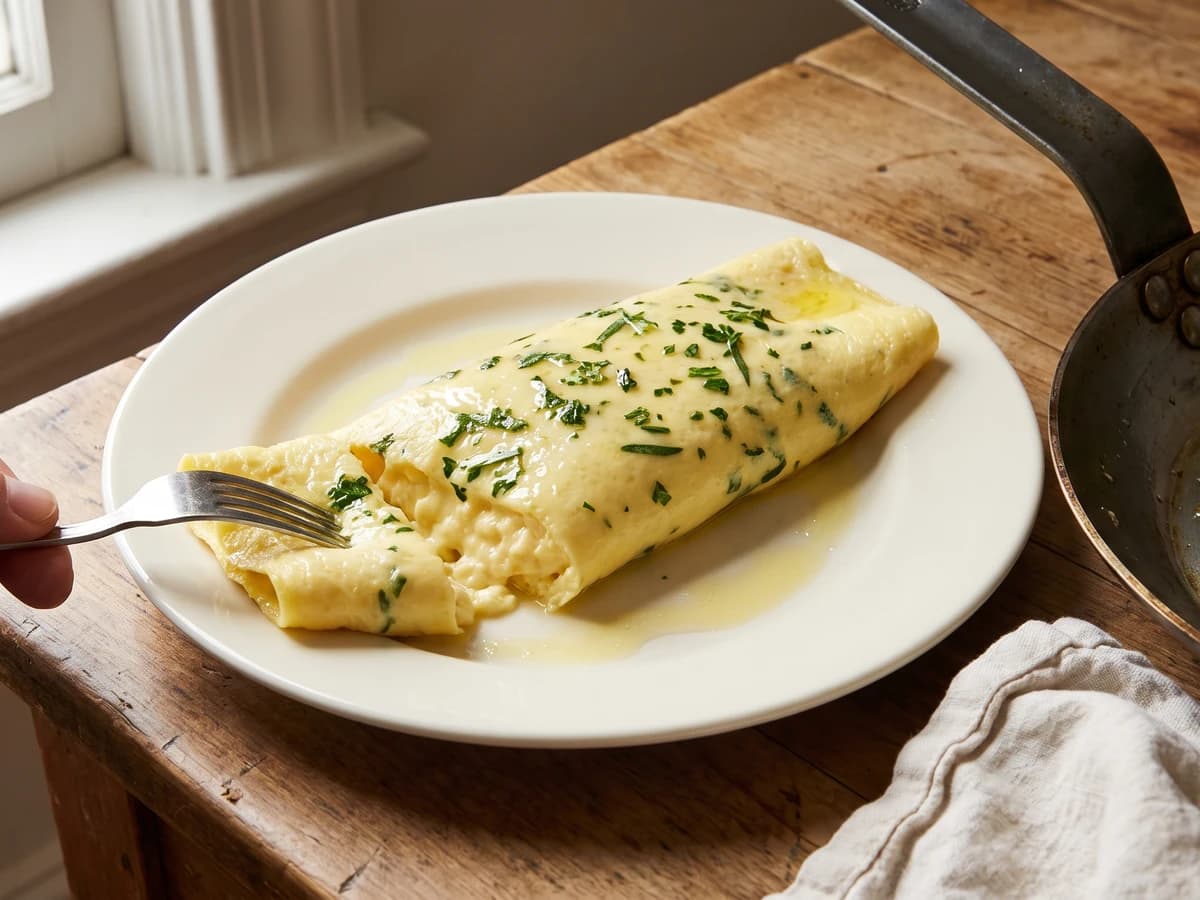
Four tender herbs, hot butter, and two eggs per pan: this rolled omelette teaches the quick hand and good judgment that keep the outside pale and the center creamy.
Chef Juliette
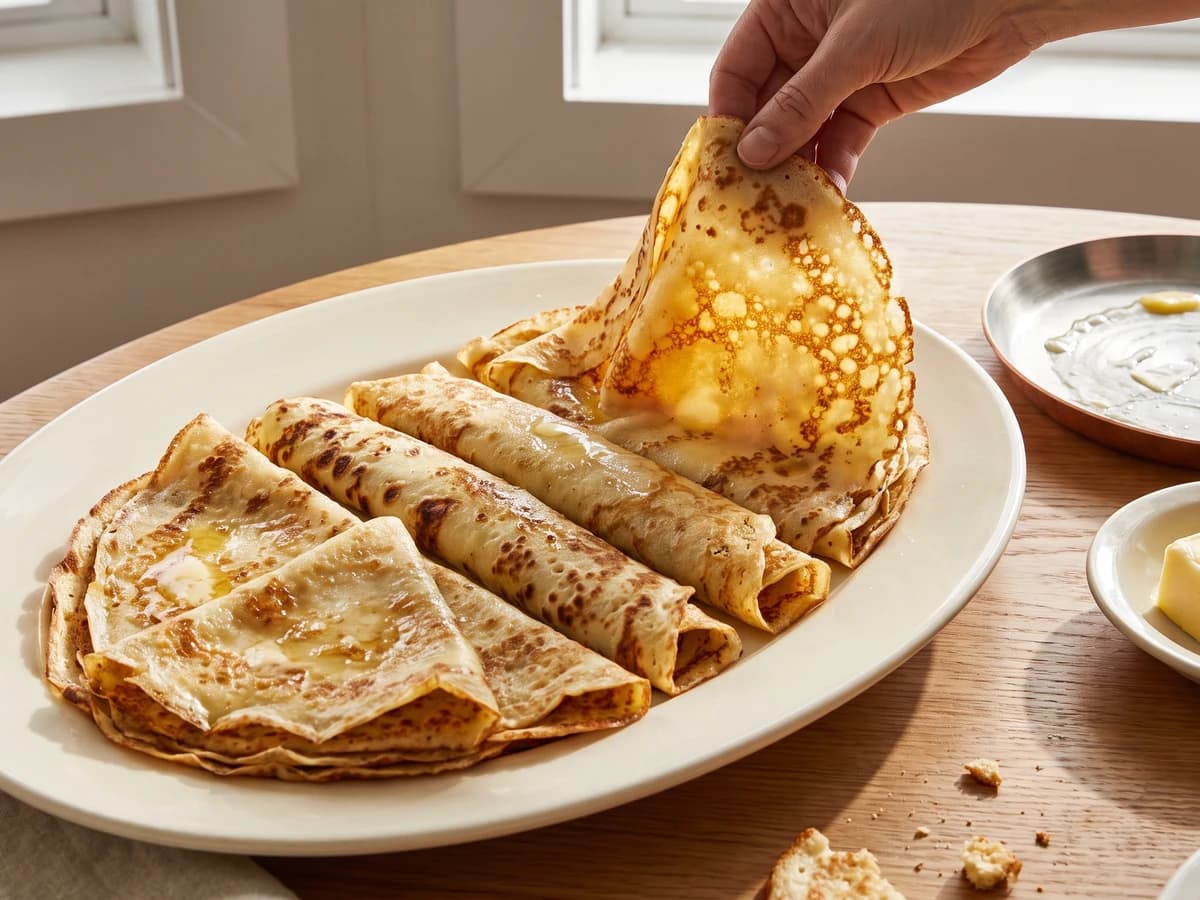
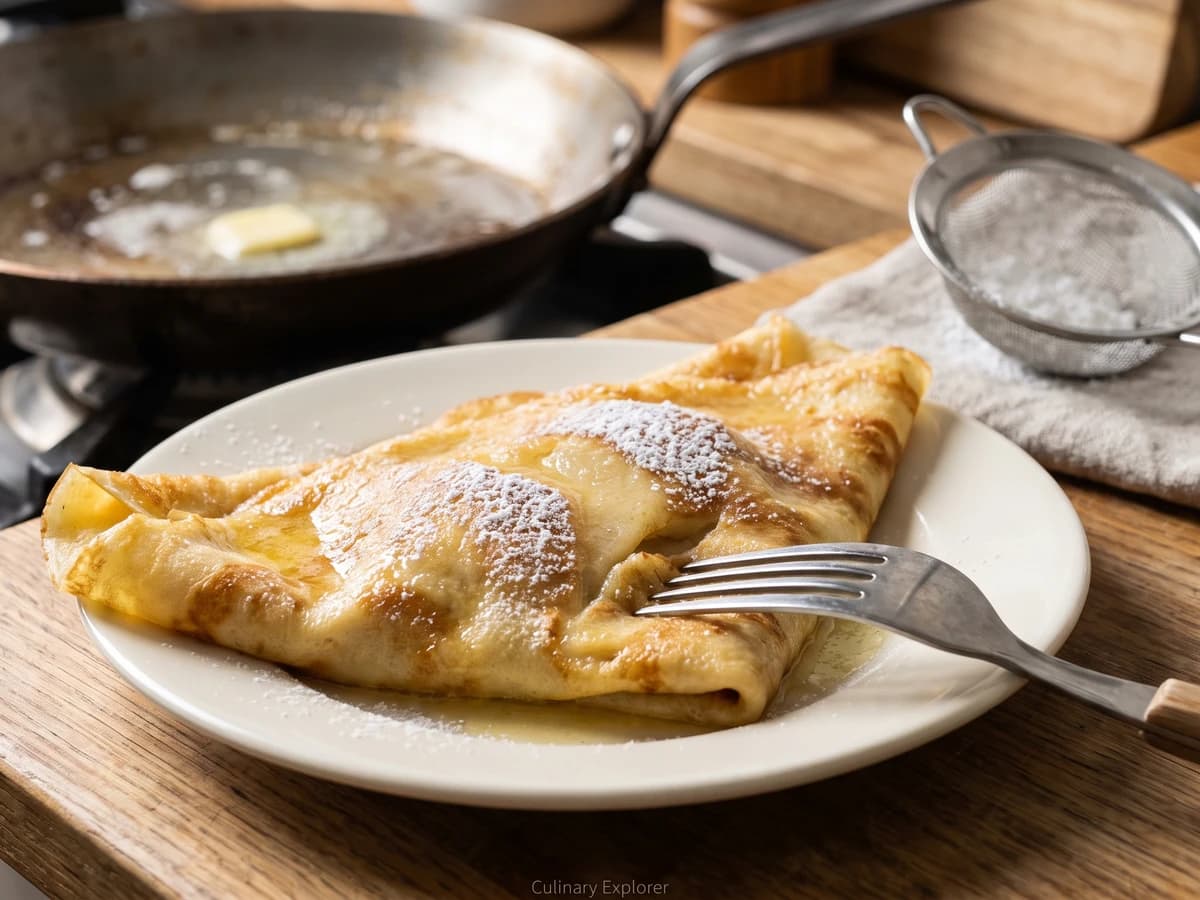
Four batters, one lesson: let the flour drink deeply before cooking, then spread the batter thinly in butter for crêpes and pannequets that bend without becoming tough.
Chef Juliette
Crêpes au Couvent trap ripe Williams pear dice between two thin pours of sweet batter, then turn in one clean toss and reach the table butter-gold, powdered, and burning hot.