Chef Juliette
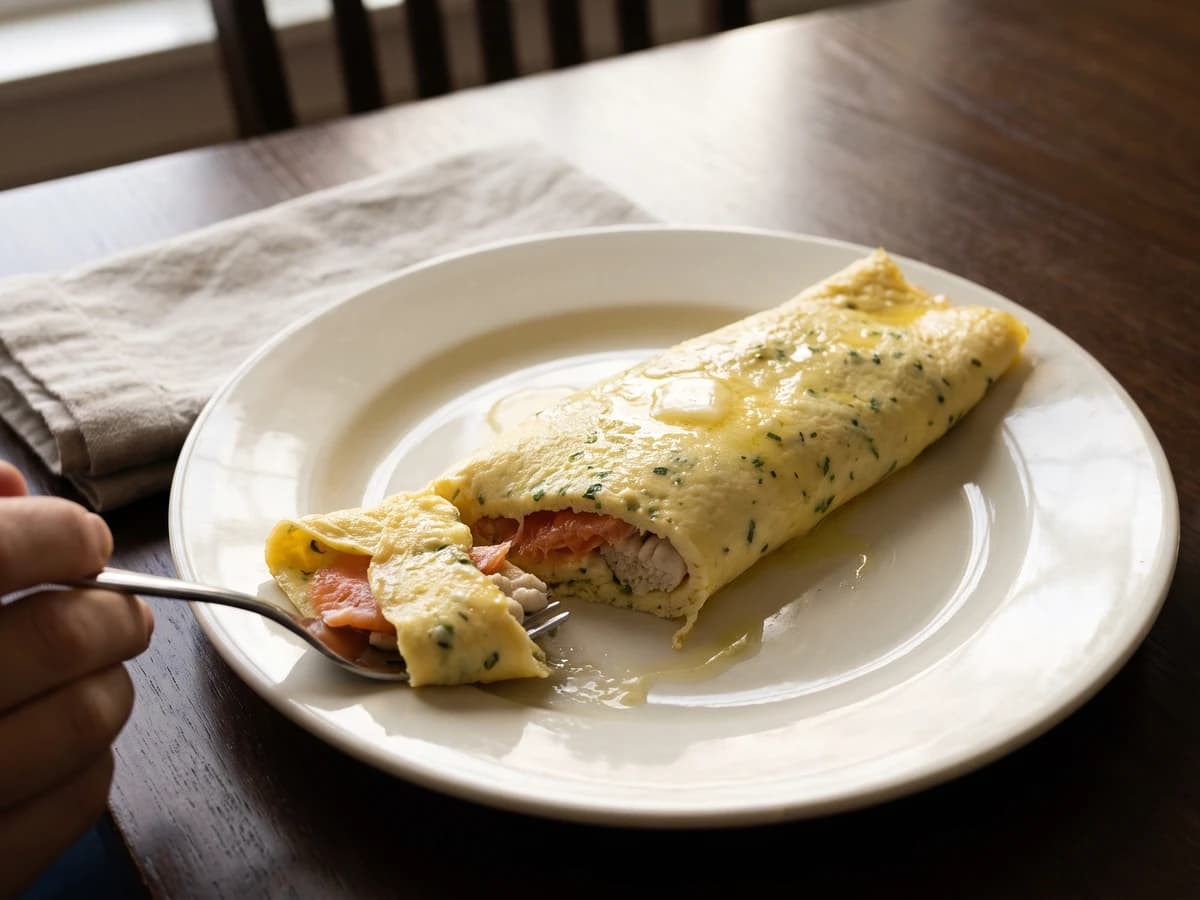
Omelette à l’Écossaise
A creamy omelette aux fines herbes closes around smoked-salmon-wrapped herring milts, gently poached in butter. Have the filling ready, then roll the eggs while they still shine.
A cooking platform built around craft, culture, and the stories behind what we eat.
Created by Chef Juliette
Based on No. 426, Poached Eggs Mireille, from Le Guide Culinaire (1907) by Auguste Escoffier
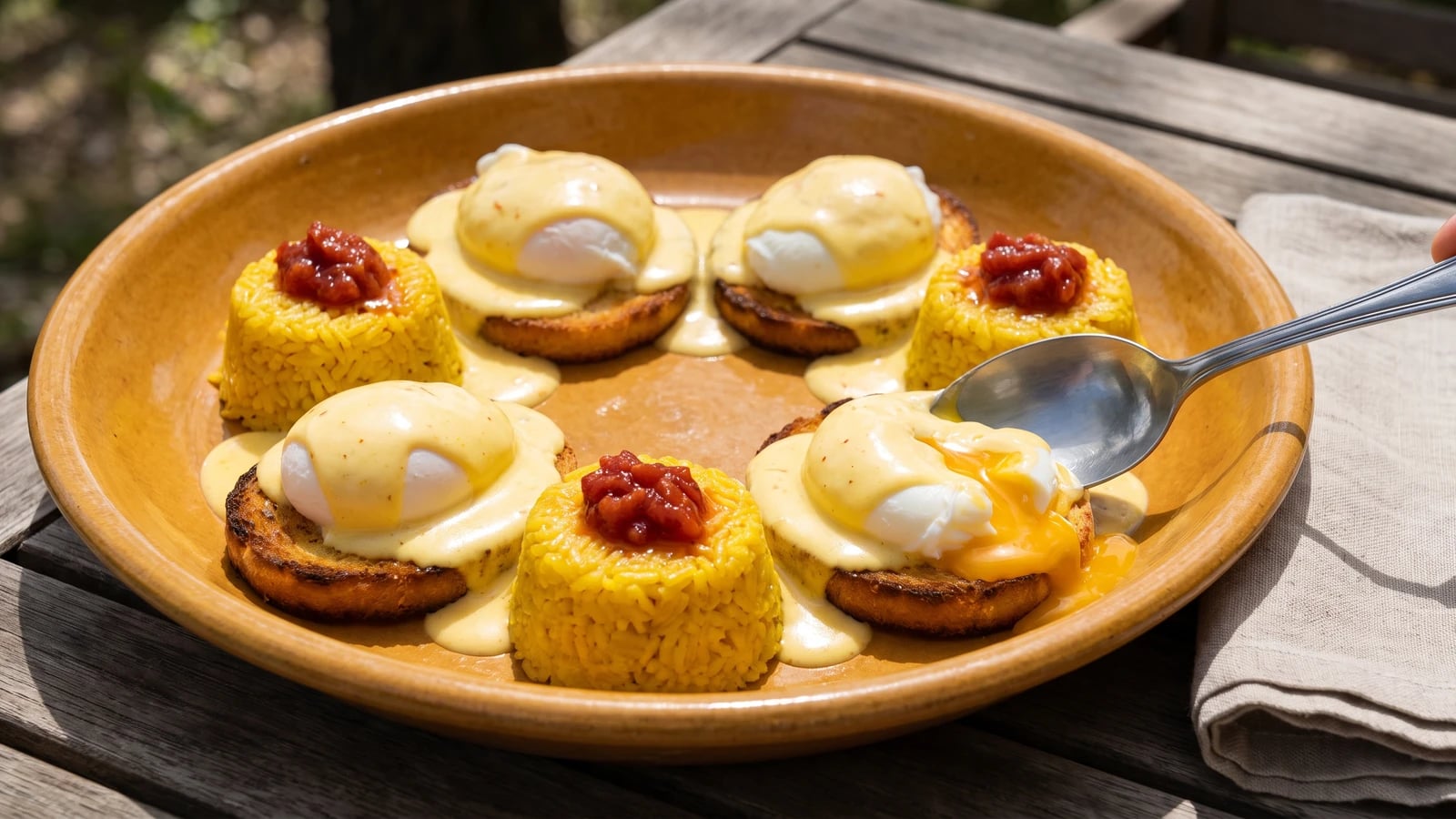
Poached eggs cloaked in saffron cream sit on crisp oil-fried toast, alternating with golden pilaff moulds and buttery tomato Concass in a generous Provençal ring built for the table.
Œufs Pochés Mireille (poached eggs with saffron cream, saffroned pilaff, and buttered tomato) teaches orchestration. The one true thing to know before touching a pan is this: make the pilaff, tomato Concass, cream sauce, and toast first, then poach the eggs last. Soft yolks wait for nobody.
The original entry assumed a brigade with pilaff and tomato garnish ready, a saucier holding cream sauce, and a stockpot never off the fire. Your kitchen needs four small moulds, two saucepans, and an honest sequence. Low-sodium stock stands in for the standing pot, while a quick roux blond builds enough cream sauce for four eggs. This home version sets the service at four eggs and four rice moulds because the entry gives a service pattern rather than a portion. The brigade's holding pans are scaffolding and can go; saffron in both rice and sauce, oil-fried toast, butter-stewed tomato, and the alternating ring are the dish and must stay. One cook, one stove, one evening.
The finished platter is a small Provençal sun: saffron gold, tomato red, ivory cream, crisp toast, and yolk waiting beneath the sauce. Cooking well is not cooking fancy. Keep the poaching water at a bare tremble, because that calm water is the step that decides the eggs.
Œufs Pochés Mireille belongs to the codified French dining-room repertoire, though its saffron, tomato, olive oil, and rice speak deliberately of Provence. The name invokes Mireille, the Provençal heroine celebrated in literature and song, one of the lyrical names classical kitchens used to announce a composed garnish. It is not a farmhouse breakfast: the cream-coated eggs and symmetrical ring show the grand kitchen translating southern colours and ingredients for a formal table, now scaled honestly for the home.
Quantity
1/2 cup (120 ml / 95 g)
Quantity
2 tablespoons (30 ml / 25 g)
finely minced
Quantity
1 tablespoon (15 ml / 14 g)
Quantity
3/4 cup (180 ml / 180 g)
Quantity
1/4 teaspoon (1 ml / 0.15 g)
divided
Quantity
1 1/4 teaspoons (6 ml / 7.5 g)
divided
Quantity
2 teaspoons (10 ml / 9 g)
Quantity
1/2 cup (120 ml / 125 g)
peeled, seeded, and roughly chopped, or good canned tomato, drained and roughly chopped
Quantity
1 tablespoon (15 ml / 14 g)
Quantity
1 tablespoon (15 ml / 14 g)
Quantity
1 tablespoon (15 ml / 8 g)
Quantity
1/2 cup plus 2 tablespoons (150 ml / 154 g)
divided
Quantity
1/2 cup (120 ml / 120 g)
Quantity
1/8 teaspoon (0.6 ml / 0.3 g)
Quantity
4 slices
cut into 3-inch (7.5 cm) rounds
Quantity
1/3 cup (80 ml / 73 g)
for frying
Quantity
8 cups (1.9 liters / 1.9 kg)
for poaching
Quantity
2 tablespoons (30 ml / 30 g)
Quantity
4
| Ingredient | Quantity |
|---|---|
| long-grain white rice | 1/2 cup (120 ml / 95 g) |
| shallotfinely minced | 2 tablespoons (30 ml / 25 g) |
| unsalted butter for the pilaff | 1 tablespoon (15 ml / 14 g) |
| low-sodium chicken stock | 3/4 cup (180 ml / 180 g) |
| saffron threadsdivided | 1/4 teaspoon (1 ml / 0.15 g) |
| fine sea saltdivided | 1 1/4 teaspoons (6 ml / 7.5 g) |
| softened unsalted butter for the moulds | 2 teaspoons (10 ml / 9 g) |
| tomato for the Concasspeeled, seeded, and roughly chopped, or good canned tomato, drained and roughly chopped | 1/2 cup (120 ml / 125 g) |
| unsalted butter for the tomato Concass | 1 tablespoon (15 ml / 14 g) |
| unsalted butter for the cream sauce | 1 tablespoon (15 ml / 14 g) |
| plain flour | 1 tablespoon (15 ml / 8 g) |
| whole milkdivided | 1/2 cup plus 2 tablespoons (150 ml / 154 g) |
| heavy cream | 1/2 cup (120 ml / 120 g) |
| ground white pepper | 1/8 teaspoon (0.6 ml / 0.3 g) |
| firm white sandwich breadcut into 3-inch (7.5 cm) rounds | 4 slices |
| olive oilfor frying | 1/3 cup (80 ml / 73 g) |
| waterfor poaching | 8 cups (1.9 liters / 1.9 kg) |
| white wine vinegar | 2 tablespoons (30 ml / 30 g) |
| large eggs | 4 |
Divide the saffron between two small cups, crushing the threads lightly between your fingers. Warm the chicken stock and milk separately until hot but not boiling, then pour the stock over one portion of saffron and the milk over the other. Leave both for 10 minutes, until they turn deep gold and smell warm and floral. Reserve 2 tablespoons of the saffron milk for adjusting the sauce later.
Melt the pilaff butter in a small heavy saucepan over medium-low heat. Add the shallot and cook without browning for 2 minutes, then add the rice and nacrer (coat it in butter until the grains look pearly at their edges). Pour in the saffron stock, season with 1/4 teaspoon of the salt, and bring it to a gentle simmer. Cover tightly, lower the heat, and cook for 14 minutes. Take the pan off the heat and leave it covered for 10 minutes, then fluff gently. If the rice is still chalky and the pan is dry, sprinkle in a spoonful of hot water, cover, and return it to low heat for 3 minutes.
Melt the tomato butter in a small skillet over medium heat. Add the Concass, tomato chopped roughly, with 1/4 teaspoon of the salt. Cook for 10 to 15 minutes, stirring more often as it thickens, until the liquid has disappeared and the tomato holds a neat mound on a spoon. This must be thick, not saucy, or it will slide from the rice. If the butter begins to catch before the tomato is ready, add a teaspoon of water and lower the heat.
Melt the sauce butter in a small saucepan over medium-low heat. Stir in the flour and cook this roux blond (pale roux) for 90 seconds without letting it colour. Add the saffron milk gradually, whisking after every addition, then whisk in the cream. Simmer gently for 5 to 7 minutes, until the sauce is nappé, thick enough to coat the back of a spoon while still flowing freely. Season with 1/2 teaspoon of the salt and the white pepper. If lumps appear, take the pan off the heat and whisk firmly, then pass the sauce through a fine sieve if needed. Ça se rattrape. If it becomes too thick, whisk in the reserved saffron milk a spoonful at a time.
Heat the olive oil in an 8-inch (20 cm) skillet over medium heat until it glimmers. Fry the bread rounds in batches for 60 to 90 seconds per side, until crisp and evenly golden. Drain them on a rack or absorbent paper and keep them warm. If the first round darkens before its centre crisps, lower the heat; the toast must support the egg without becoming hard enough to fight the fork.
Butter four 3-inch (7.5 cm) tartlet moulds or 1/3-cup (80 ml) ramekins. Spoon in the warm saffroned pilaff and press it only enough to hold together; pack it hard and the grains lose the lightness that makes pilaff itself. Warm and dry a large serving platter, then turn out the rice moulds in a circle, alternating them with the four fried toast rounds. If a mould clings, loosen its edge with a thin knife and rest its base on a hot damp towel for 10 seconds before trying again. Crown each rice mould with one coffeespoonful, about 1 teaspoon, of the thick tomato Concass.
Combine the water and vinegar in a wide sauté pan and bring it just below a simmer. The surface should tremble gently at 180 to 185°F (82 to 85°C), with no rolling bubbles. Crack each egg into its own small cup so it can enter the water cleanly. Fresh eggs matter here because their firm whites gather around the yolks instead of feathering across the pan.
Slide the eggs into the water one at a time, working clockwise so you remember their order. Poach for 3 to 3 1/2 minutes, until the whites are set and the yolks remain soft, then lift them out in the same order with a slotted spoon. If the water breaks into a boil and the whites begin to scatter, pull the pan off the heat at once and add a splash of cool water around the edge; let the eggs finish in the calmer water. Drain each egg briefly on a clean towel and trim only the loosest threads of white.
Set one drained poached egg on each fried toast round. Rewarm the saffron cream sauce over the gentlest heat, whisking until glossy, then spoon it generously over the eggs so their whites are fully coated while the crisp toast edges remain visible. Sprinkle the eggs with the remaining salt only if the sauce needs it. Bring the platter immediately to the table, with egg-topped toast and saffron pilaff alternating around the circle. À table!
1 serving (about 245g)
Culinary guides, cultural storytelling, and the editorial depth that makes cooking meaningful.
Discover Culinary ExplorerChef Juliette
A creamy omelette aux fines herbes closes around smoked-salmon-wrapped herring milts, gently poached in butter. Have the filling ready, then roll the eggs while they still shine.
Chef Juliette
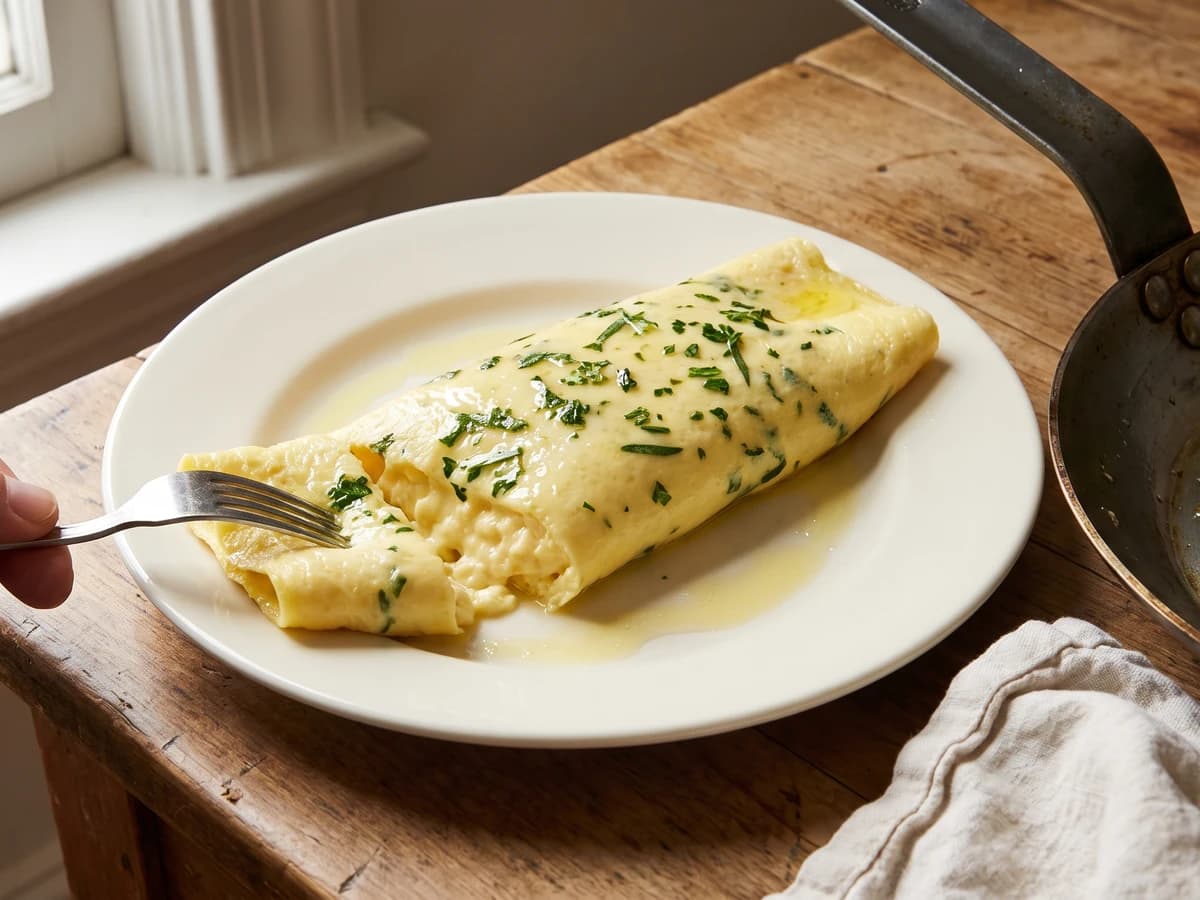
Four tender herbs, hot butter, and two eggs per pan: this rolled omelette teaches the quick hand and good judgment that keep the outside pale and the center creamy.
Chef Juliette
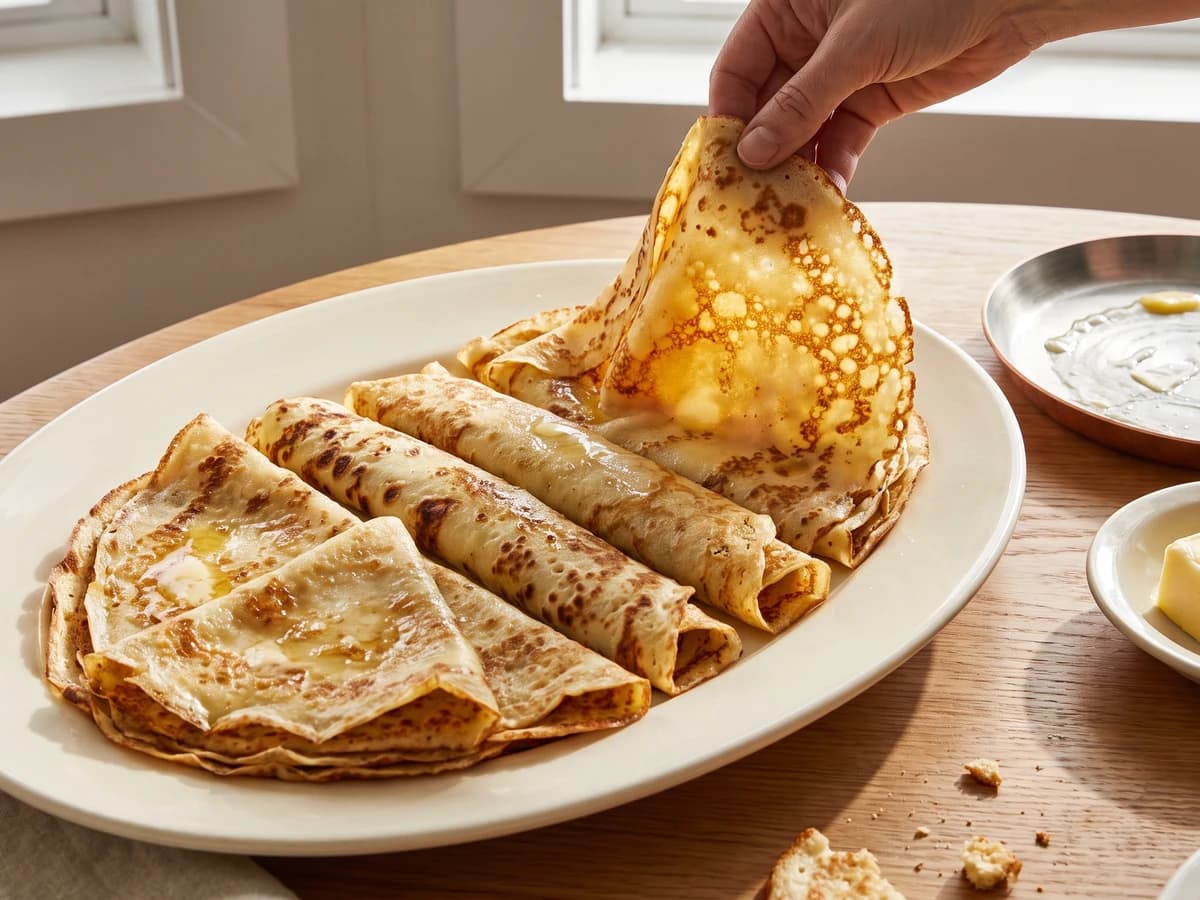
Four batters, one lesson: let the flour drink deeply before cooking, then spread the batter thinly in butter for crêpes and pannequets that bend without becoming tough.
Chef Juliette
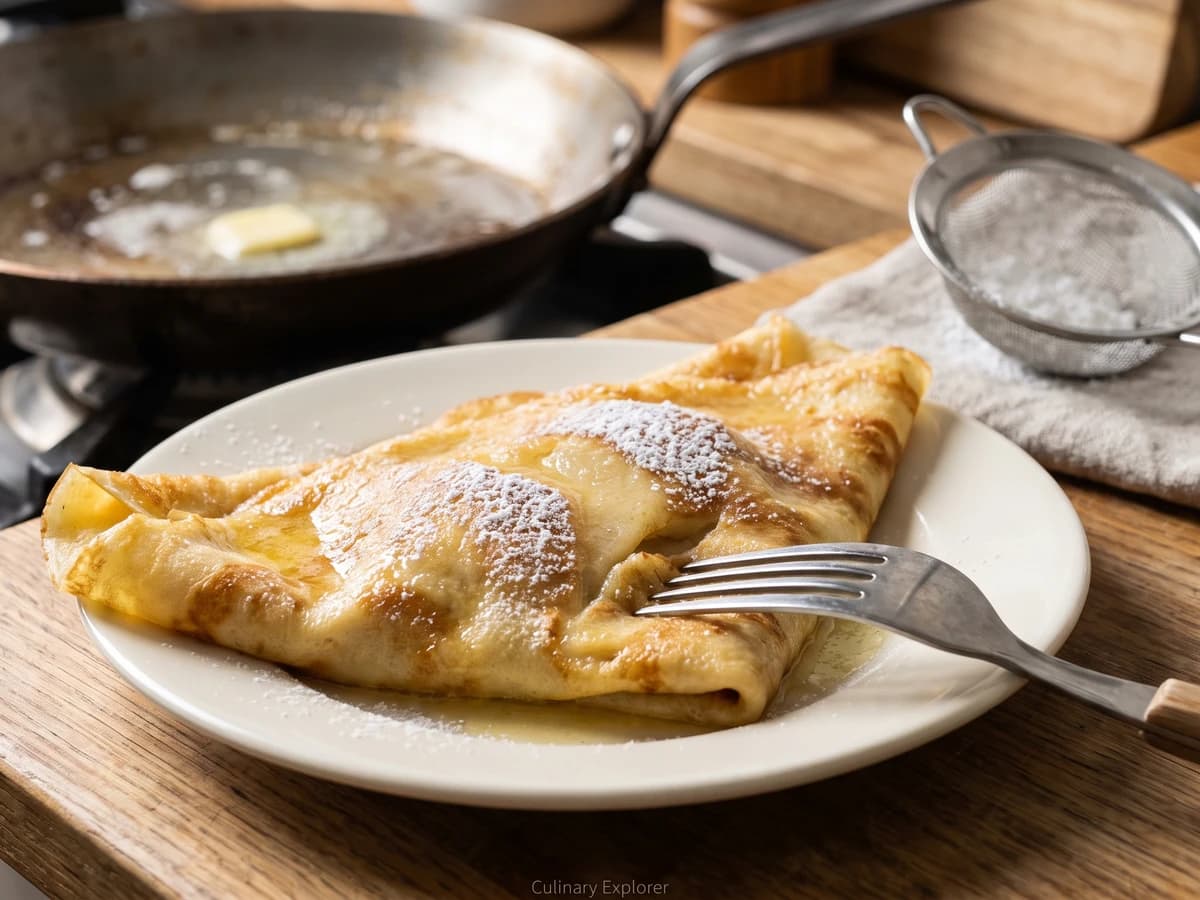
Crêpes au Couvent trap ripe Williams pear dice between two thin pours of sweet batter, then turn in one clean toss and reach the table butter-gold, powdered, and burning hot.