Chef Juliette
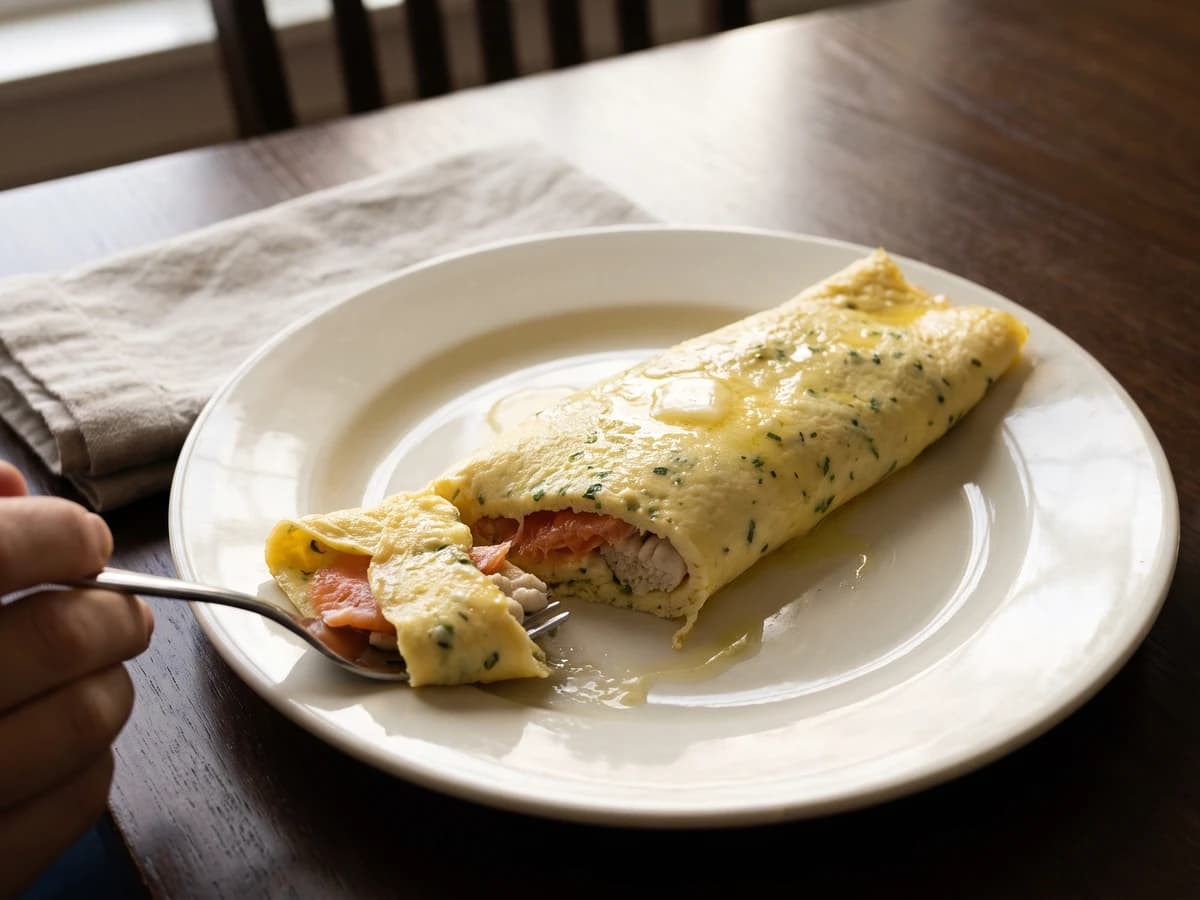
Omelette à l’Écossaise
A creamy omelette aux fines herbes closes around smoked-salmon-wrapped herring milts, gently poached in butter. Have the filling ready, then roll the eggs while they still shine.
A cooking platform built around craft, culture, and the stories behind what we eat.
Created by Chef Juliette
Based on No. 424, Poached Eggs Maintenon, from Le Guide Culinaire (1907) by Auguste Escoffier
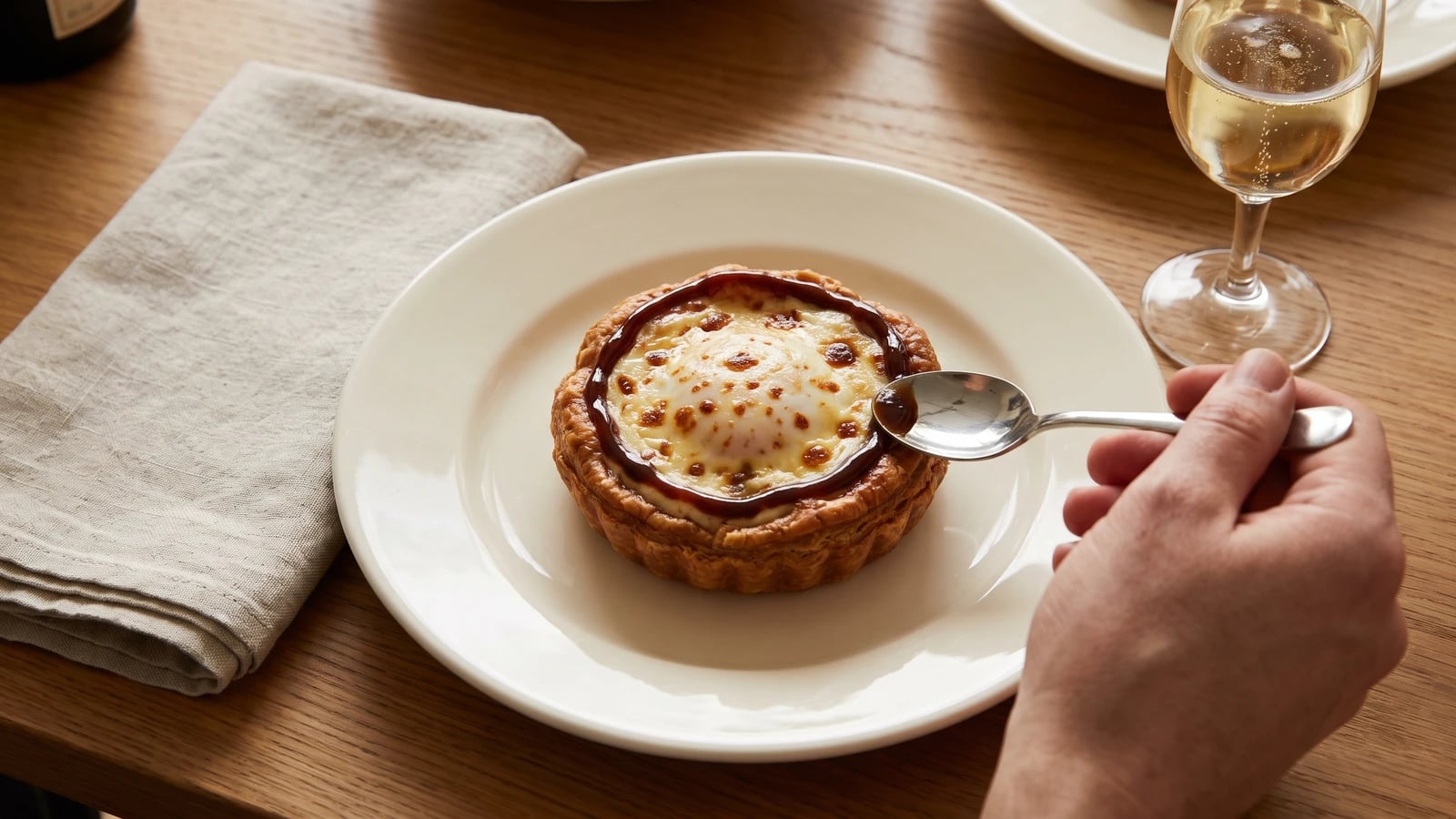
A crisp tartlet, sweet onion Soubise, a softly poached egg, and Mornay bronzed under fierce heat: Œufs pochés Maintenon teaches that composed cooking succeeds when every layer reaches the plate at once.
Œufs pochés Maintenon (poached eggs in Soubise tartlets under Mornay) teaches the discipline of a composed dish: every element must be ready before the egg enters the water. The tartlet must stay crisp, the Soubise à la Béchamel must be reduced enough to sit rather than run, and the egg must be poached a shade under because the fierce final heat will finish it. One true thing before touching a pan: this dish is won by thickness and timing, not speed.
The original kitchen assumed a pâtissier with tartlet crusts ready, a saucier holding Soubise and Mornay, a stock never off the fire for meat-glaze, and a salamander fierce enough to color the cheese in moments. At home, four fully baked all-butter shells, finished components warmed in small pans, and a thoroughly preheated broiler do the same work. The brigade's holding pans are scaffolding and can go; the shell, Soubise, Mornay, cheese, and thread of meat-glaze must stay because those layers are the dish. One cook, one stove, one evening.
Done properly, the fork breaks through a bronzed veil of cheese, a tender egg, sweet ivory onion, then crisp pastry, with the dark glaze drawing a savory line around the whole. The step that matters most is reducing the Soubise until a spoon dragged through it leaves a clean path. If it runs, stop and reduce it before filling. Ça se rattrape. Once the egg is seated, everything moves quickly, and dinner should be waiting for it.
Œufs pochés Maintenon belongs to the Parisian grand-kitchen repertory of named egg dishes, not to a regional breakfast table; tartlet, Soubise, Mornay, and meat-glaze mark it as a formal composed entrée. The Maintenon title follows the classical habit of naming dishes for courtly figures, but it is not proof that Madame de Maintenon devised or ate this exact preparation. Its journey to the home table depends on preserving that layered service logic while replacing the saucier and salamander with advance preparation and a hot broiler.
Quantity
4, each 4 inches (10 cm) across
Quantity
1 cup (240 ml / 250 g), for reducing to ¾ cup (180 ml / about 190 g)
prepared
Quantity
4
Quantity
2 quarts (1.9 L / 1.9 kg)
for poaching
Quantity
2 tablespoons (30 ml / 30 g)
Quantity
1 cup (240 ml / 250 g)
prepared and warm
Quantity
½ cup, lightly packed (120 ml / 45 g)
finely grated
Quantity
2 tablespoons (30 ml / 35 g)
prepared and melted
| Ingredient | Quantity |
|---|---|
| fully baked unsweetened all-butter tartlet crusts | 4, each 4 inches (10 cm) across |
| Soubise à la Béchamelprepared | 1 cup (240 ml / 250 g), for reducing to ¾ cup (180 ml / about 190 g) |
| very fresh large eggs | 4 |
| waterfor poaching | 2 quarts (1.9 L / 1.9 kg) |
| white wine vinegar | 2 tablespoons (30 ml / 30 g) |
| Mornay sauceprepared and warm | 1 cup (240 ml / 250 g) |
| Gruyère cheesefinely grated | ½ cup, lightly packed (120 ml / 45 g) |
| meat-glazeprepared and melted | 2 tablespoons (30 ml / 35 g) |
Set an oven rack about 6 inches (15 cm) below the broiler and heat the broiler on high for a full ten minutes. Arrange the tartlet crusts on a small bare metal baking sheet and warm four serving plates. A thoroughly heated broiler is the home salamander: it must color the Mornay in moments, before the heat has time to harden the yolks.
Put the Soubise à la Béchamel in a small saucepan and reduce it over medium-low heat, stirring often, until ¾ cup (180 ml / about 190 g) remains and a spoon drawn across the pan leaves a clean path. Warm the Mornay sauce separately over the gentlest heat, never letting it boil, and melt the meat-glaze in another small pan. If the Mornay becomes grainy, take it off the heat, whisk in a teaspoon of hot water, and strain it. Ça se rattrape. If the meat-glaze will not flow from a spoon in a fine thread, loosen it with hot water a few drops at a time; if it runs like stock, simmer it briefly until glossy and lightly syrupy.
Bring the water and vinegar to the barest tremble in a wide saucepan, about 185 to 190°F (85 to 88°C), with small movements beneath the surface but no rolling boil. Crack each egg into its own cup. Lower two eggs into the water and poach for 2½ to 3 minutes, gently folding any loose white toward its yolk with a spoon, until the white is set and the yolk remains supple. Repeat with the remaining eggs. Lift each egg with a slotted spoon, blot the underside on a folded clean towel, and trim away only the untidy wisps. If the whites feather badly, lower the heat before the next pair; the water is too active.
Divide the reduced Soubise among the tartlet crusts, about 3 tablespoons (45 ml / 48 g) in each, and smooth it level just below the rim. It should hold its shape rather than creep into the pastry. If it slumps, return it to the pan for another minute of reduction. Don't ask crisp pastry to contain a running sauce.
Working with one egg at a time, slide it from the slotted spoon onto a broad metal spatula and hold it level above the baking sheet. Coat the egg completely with one quarter of the warm Mornay sauce, then sprinkle it with one quarter of the grated Gruyère. Lower the coated egg into its Soubise-filled crust by means of the spatula, preserving the source's sequence. Repeat with the other eggs. If a little Mornay slides away during the transfer, spoon it back over the exposed white before glazing.
Slide the tray beneath the fully heated broiler and watch without leaving it. Glaze for 60 to 90 seconds, rotating the tray once if needed, until the Mornay bubbles at the edges and the cheese turns mottled butter-gold. The pastry should remain deep gold, not black. If the color is slow after two minutes, move the tray closer for short bursts rather than leave the eggs baking until their yolks set.
Transfer each tartlet to a warm plate with the broad spatula. Using the tip of a teaspoon, surround each crust with a fine, unbroken thread of melted meat-glaze, keeping it around the tartlet rather than pouring it over the Mornay. Serve at once, while the pastry is crisp, the sauce gleams, and the yolk still yields beneath the knife. À table!
1 serving (about 225g)
Culinary guides, cultural storytelling, and the editorial depth that makes cooking meaningful.
Discover Culinary ExplorerChef Juliette
A creamy omelette aux fines herbes closes around smoked-salmon-wrapped herring milts, gently poached in butter. Have the filling ready, then roll the eggs while they still shine.
Chef Juliette
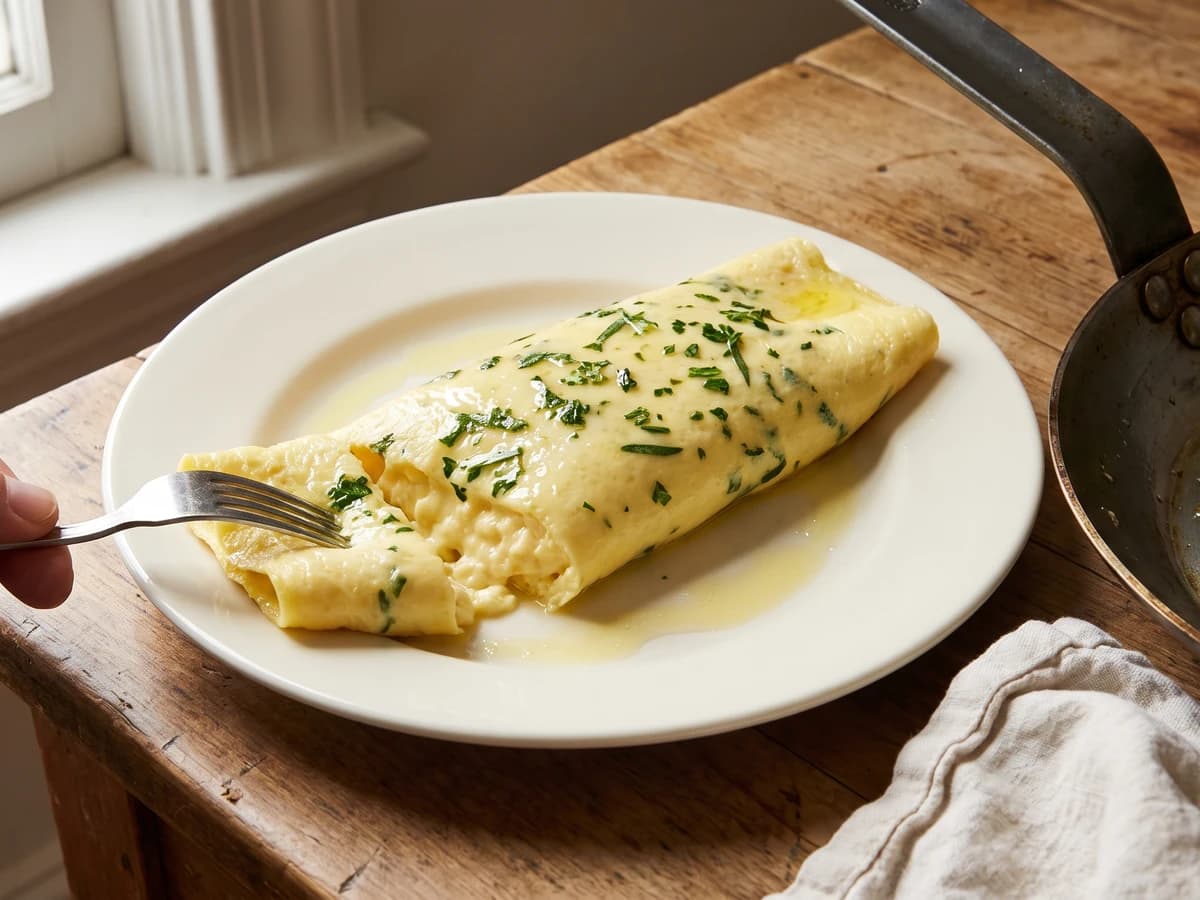
Four tender herbs, hot butter, and two eggs per pan: this rolled omelette teaches the quick hand and good judgment that keep the outside pale and the center creamy.
Chef Juliette
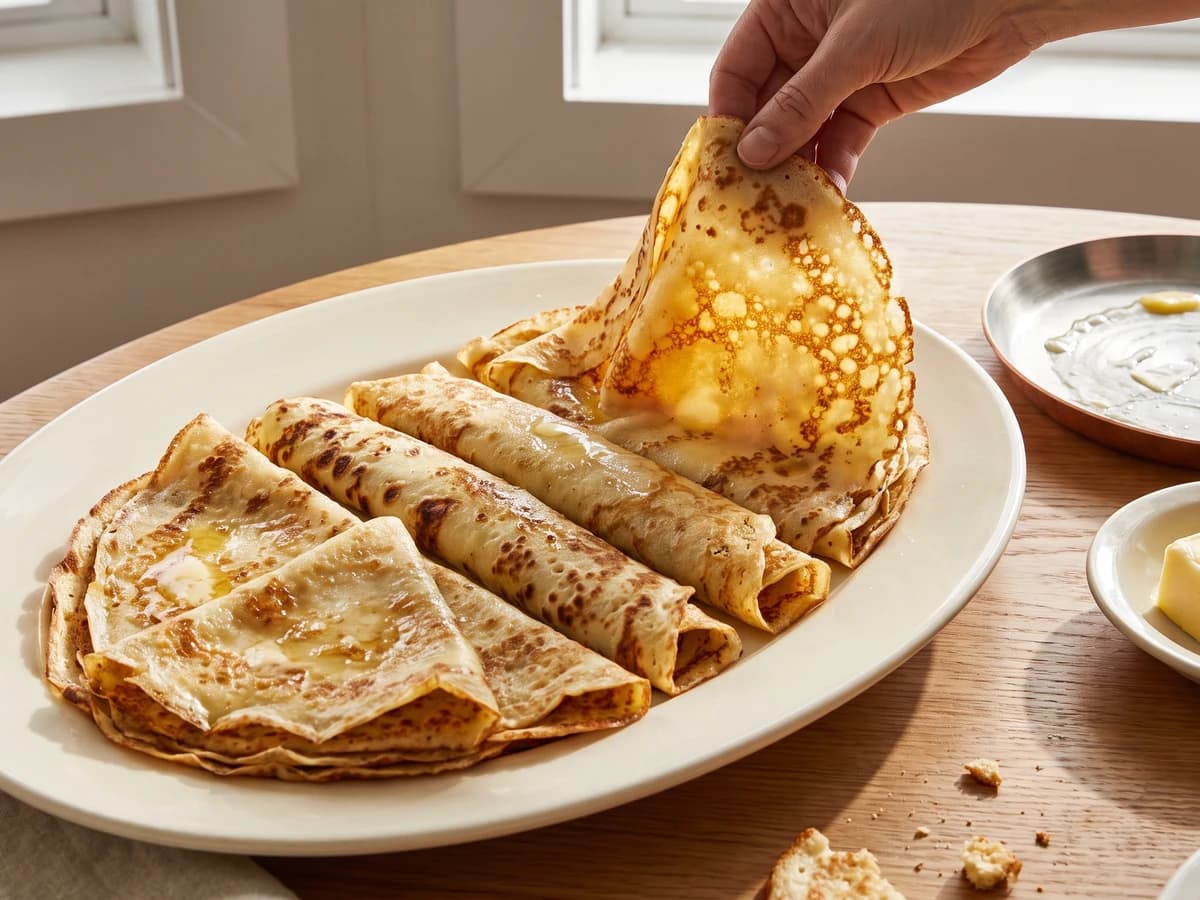
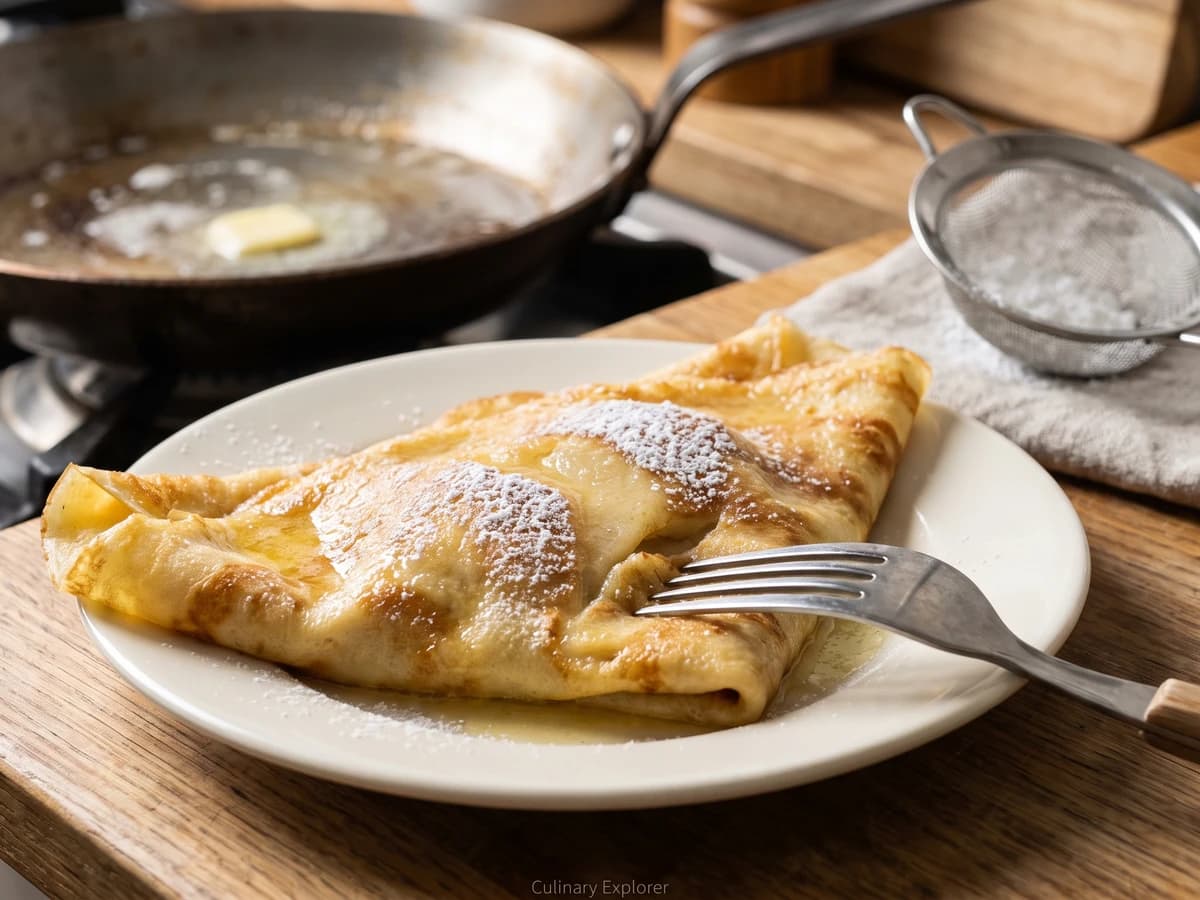
Four batters, one lesson: let the flour drink deeply before cooking, then spread the batter thinly in butter for crêpes and pannequets that bend without becoming tough.
Chef Juliette
Crêpes au Couvent trap ripe Williams pear dice between two thin pours of sweet batter, then turn in one clean toss and reach the table butter-gold, powdered, and burning hot.