Chef Juliette
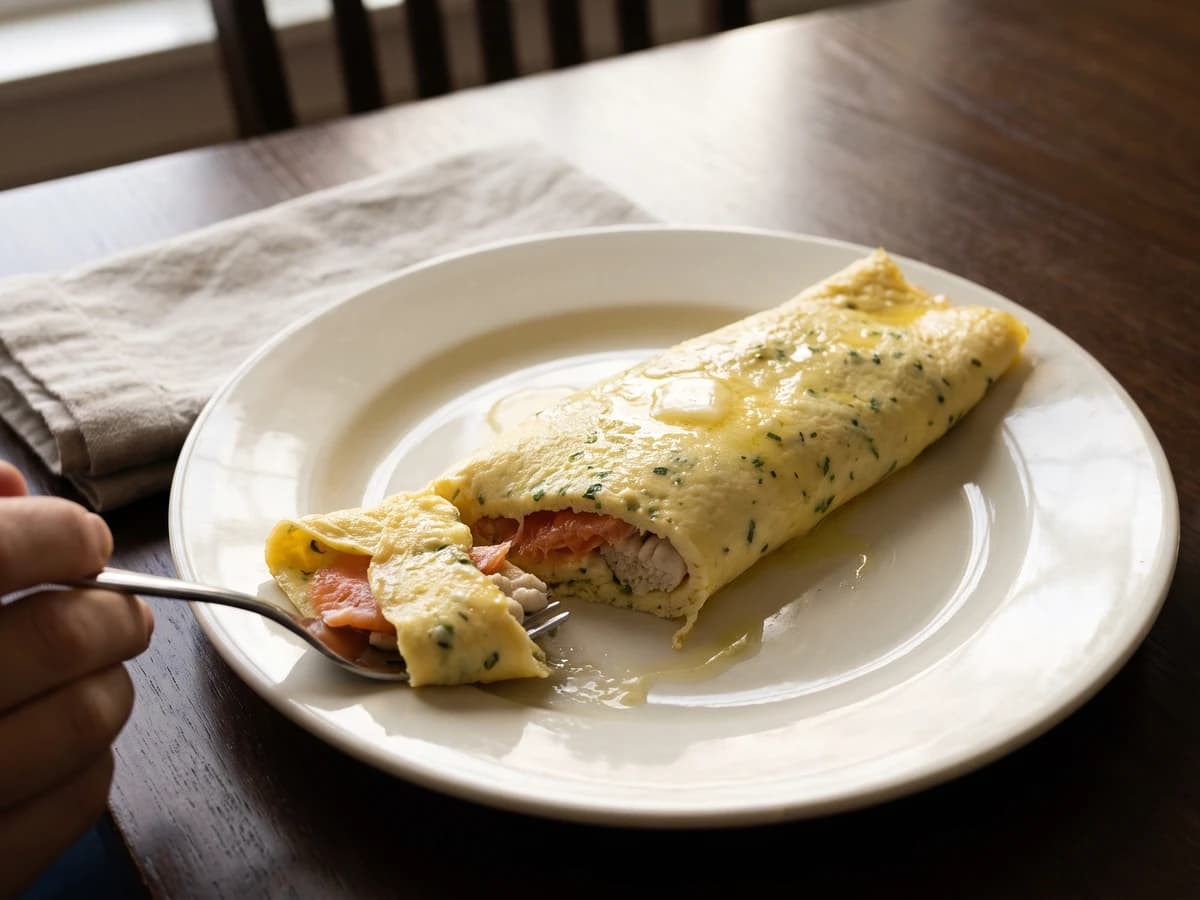
Omelette à l’Écossaise
A creamy omelette aux fines herbes closes around smoked-salmon-wrapped herring milts, gently poached in butter. Have the filling ready, then roll the eggs while they still shine.
A cooking platform built around craft, culture, and the stories behind what we eat.
Created by Chef Juliette
Based on No. 422, Poached Eggs à la Comtesse, from Le Guide Culinaire (1907) by Auguste Escoffier
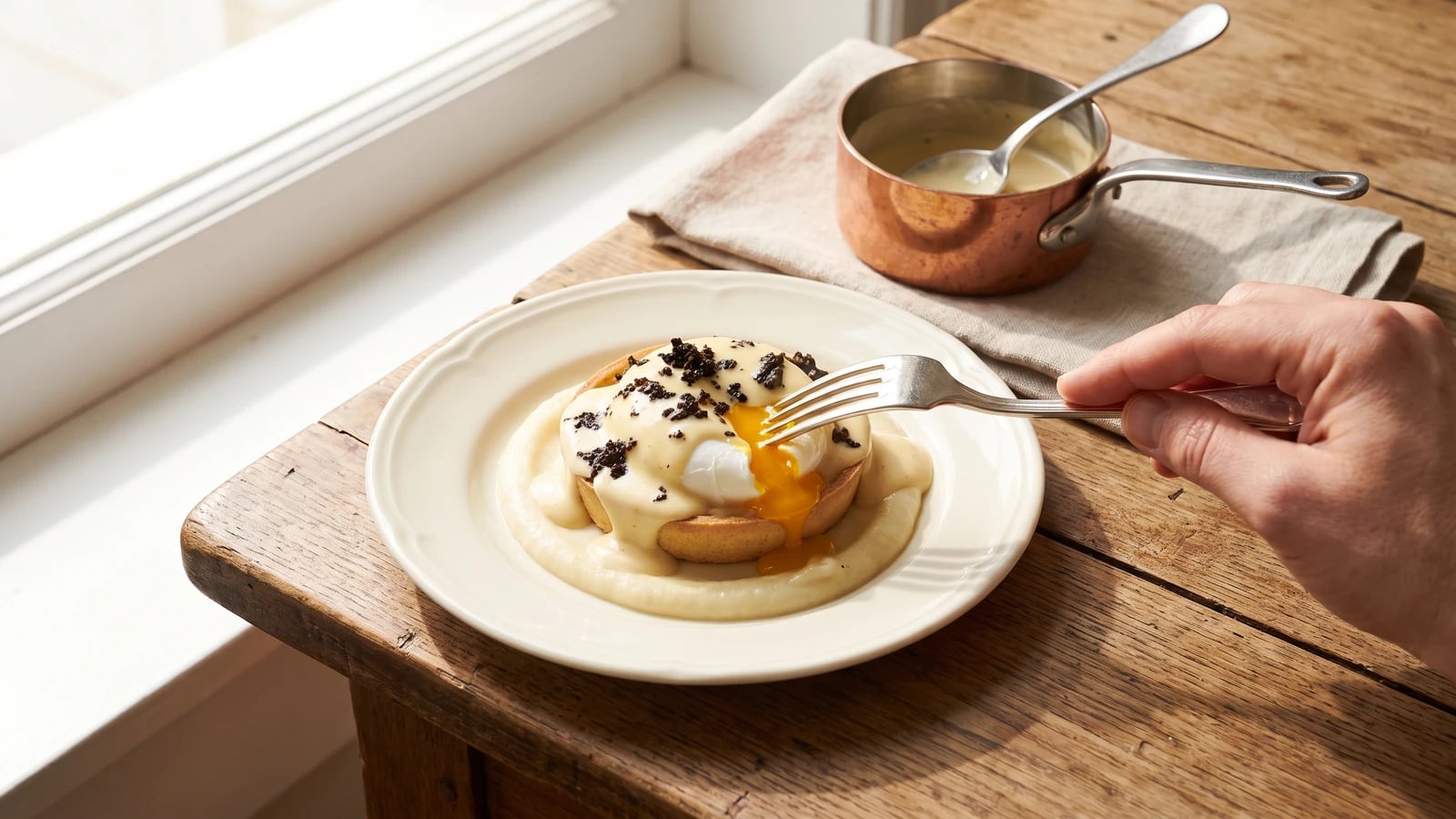
A crisp tartlet holds white asparagus purée, a softly poached egg, glossy Sauce Allemande, and black truffle: a lesson in keeping four rich elements delicate, warm, and unmistakably themselves.
Œufs pochés à la Comtesse (poached eggs on white asparagus tartlets with Sauce Allemande and black truffle) teaches one true thing: luxury is softness held under discipline. The tartlet supplies the single crisp edge. Inside it, the asparagus must be smooth and concentrated, the white just set around a flowing yolk, and the Sauce Allemande pale, glossy, and gentle.
The original entry is a service note because it assumed baked tartlet crusts waiting at one station, asparagus purée at another, a saucier on staff, light veal stock never off the fire, and eggs poached to order. At home, four small tartlet tins replace the pastry station, and good unsalted light chicken stock may stand in for white veal stock because it preserves the sauce's delicate colour and flavour. No salamander is needed, nor should one be: the separate stations were brigade scaffolding and can go, while the crisp shell, concentrated purée, liquid yolk, and properly bound Allemande are the dish and must stay. One cook, one stove, one evening.
The finished plate is butter gold, cream ivory, and black with chopped truffle, then the fork enters and the yolk runs into the sauce. Hold both the poaching water and the Allemande below a boil. That quiet heat is the step that matters most.
Œufs pochés à la Comtesse belongs to the Parisian grand-kitchen repertoire, where à la Comtesse names a prescribed garnish rather than a regional egg dish. Its identity is exact: a pastry tartlet filled with white asparagus purée, topped with a poached egg, masked in Sauce Allemande, and finished with very black chopped truffle. The title is better read as the coded language of formal service than as proof that one countess invented it, and no salamander finish belongs here because every element except the shell must remain soft.
Quantity
1 cup (240 ml / 125 g)
Quantity
¼ teaspoon (1.25 ml / 1.5 g)
Quantity
5 tablespoons (75 ml / 70 g)
diced
Quantity
2 to 3 tablespoons (30 to 45 ml / 30 to 45 g)
Quantity
1 pound (454 g) fresh, or 14 ounces (400 g) drained preserved
fresh asparagus trimmed and peeled; preserved asparagus well drained
Quantity
2 tablespoons (30 ml / 30 g)
Quantity
1 tablespoon (15 ml / 14 g)
Quantity
2 tablespoons (30 ml / 28 g)
Quantity
2 tablespoons (30 ml / 16 g)
Quantity
1 cup (240 ml / 240 g)
Quantity
¼ cup (60 ml / 60 g)
divided
Quantity
1
Quantity
1 teaspoon (5 ml / 5 g)
Quantity
1 tablespoon (15 ml / 14 g)
Quantity
to taste
Quantity
4
Quantity
2 quarts (1.9 L / 1.9 kg)
Quantity
2 tablespoons (30 ml / 30 g)
Quantity
2 tablespoons (30 ml / 20 g)
finely chopped
| Ingredient | Quantity |
|---|---|
| all-purpose flour, for the pâte brisée | 1 cup (240 ml / 125 g) |
| fine sea salt, for the pâte brisée | ¼ teaspoon (1.25 ml / 1.5 g) |
| cold unsalted butter, for the pâte briséediced | 5 tablespoons (75 ml / 70 g) |
| ice water | 2 to 3 tablespoons (30 to 45 ml / 30 to 45 g) |
| white asparagusfresh asparagus trimmed and peeled; preserved asparagus well drained | 1 pound (454 g) fresh, or 14 ounces (400 g) drained preserved |
| heavy cream, for the asparagus purée | 2 tablespoons (30 ml / 30 g) |
| unsalted butter, for the asparagus purée | 1 tablespoon (15 ml / 14 g) |
| unsalted butter, for the Sauce Allemande | 2 tablespoons (30 ml / 28 g) |
| all-purpose flour, for the Sauce Allemande | 2 tablespoons (30 ml / 16 g) |
| light veal stock or unsalted light chicken stock | 1 cup (240 ml / 240 g) |
| heavy cream, for the Sauce Allemandedivided | ¼ cup (60 ml / 60 g) |
| large egg yolk | 1 |
| fresh lemon juice | 1 teaspoon (5 ml / 5 g) |
| cold unsalted butter, for finishing the Sauce Allemande | 1 tablespoon (15 ml / 14 g) |
| fine sea salt and freshly ground white pepper | to taste |
| large, very fresh eggs | 4 |
| water, for poaching | 2 quarts (1.9 L / 1.9 kg) |
| white wine vinegar | 2 tablespoons (30 ml / 30 g) |
| very black Périgord truffle, fresh or preservedfinely chopped | 2 tablespoons (30 ml / 20 g) |
Mix the flour and salt, then rub in the cold butter with your fingertips until the mixture resembles coarse crumbs with a few small flakes of butter remaining. Drizzle in 2 tablespoons of ice water and toss gently; add the final tablespoon only if dry flour remains. Press the dough together without kneading, flatten it into a disc, wrap, and chill for 30 minutes. Resting relaxes the dough so the shells stay tender instead of shrinking.
Heat the oven to 375°F (190°C). Divide the dough into four pieces and roll each between sheets of parchment to about ⅛ inch (3 mm) thick. Line four 4-inch (10 cm) tartlet tins, pressing the dough into the corners without stretching it; save the scraps and chill the lined tins for 15 minutes. Line with parchment, fill with baking weights, and bake for 12 to 14 minutes, until the rims are pale gold. Remove the weights and parchment, then bake for another 5 to 7 minutes, until the bases are dry and butter gold. If a shell cracks, press a thin scrap of raw dough over the gap while it is still hot and return it to the oven for 3 minutes. A neat repair is better than a leaking tartlet.
If using fresh asparagus, peel each stalk carefully from just below the tip to the base, then simmer it in lightly salted water for 10 to 15 minutes, until a knife passes through without resistance. Preserved asparagus needs no cooking; rinse it briefly to remove the packing liquid. Drain either kind thoroughly, press gently between clean towels, and chop. Purée with the cream and butter until smooth, then stir in a wide pan over low heat for 3 to 5 minutes, until the purée holds a soft mound on the spoon. Season with salt and white pepper. If it remains loose, keep stirring over gentle heat. Ça se rattrape, and starch does not belong in it.
Melt the butter for the Sauce Allemande in a small heavy saucepan. Whisk in the flour and cook this blond roux for 2 minutes without letting it colour. Add the stock a little at a time, whisking each addition smooth before the next, then bring it to the barest simmer. Cook for 8 to 10 minutes, stirring often, until the velouté coats the back of a spoon. If lumps form, remove the pan from the heat and whisk in a spoonful of cold stock; pass the sauce through a fine sieve if any persist.
Whisk the egg yolk with 3 tablespoons of the cream, reserving 1 tablespoon cold. Slowly whisk about one-third of the hot velouté into this liaison, the egg yolk and cream thickener, then return everything to the saucepan. Stir over low heat until the Sauce Allemande is nappant (thick enough to coat the back of a spoon), about 3 minutes, or until it reaches 170°F (77°C). Never let it boil. Remove it from the heat and whisk in the lemon juice and cold butter, then season with salt and white pepper. If the sauce turns grainy, stop the heat immediately, whisk in the reserved cold cream, and strain without scraping the pan bottom. Ça se rattrape. Hold it over a pan of warm water for no longer than 30 minutes.
Lower the oven to 300°F (150°C) and warm the tartlet shells for 4 minutes. Keep the asparagus purée covered over the lowest heat, stirring occasionally, and set four plates somewhere warm. Keep the shells, purée, and sauce separate until the eggs are ready; filling the tartlets early softens the pastry.
Bring the water and vinegar to 180 to 190°F (82 to 88°C), with only an occasional lazy bubble. Crack each egg into a small cup, then tip it into a fine-mesh sieve for about 10 seconds to shed the watery outer white. Slide in two eggs at a time and poach for 3 to 3½ minutes, gently folding any wandering white toward the yolk with a spoon. The white should be set and the yolk supple. Lift each egg with a slotted spoon, trim any ragged fringe, and drain it on a clean towel for 10 seconds. Water left underneath will dilute the purée and spoil the crisp shell.
Set each warm tartlet shell on a plate and fill it with one-quarter of the white asparagus purée, smoothing the top without packing it down. Place a drained poached egg in the centre. Spoon over enough Sauce Allemande to mask the egg while leaving the golden rim of pastry visible, then shower it with the very black chopped truffle. Serve immediately, while the shell is crisp, the sauce glossy, and the yolk ready to run. À table!
1 serving (about 300g)
Culinary guides, cultural storytelling, and the editorial depth that makes cooking meaningful.
Discover Culinary ExplorerChef Juliette
A creamy omelette aux fines herbes closes around smoked-salmon-wrapped herring milts, gently poached in butter. Have the filling ready, then roll the eggs while they still shine.
Chef Juliette
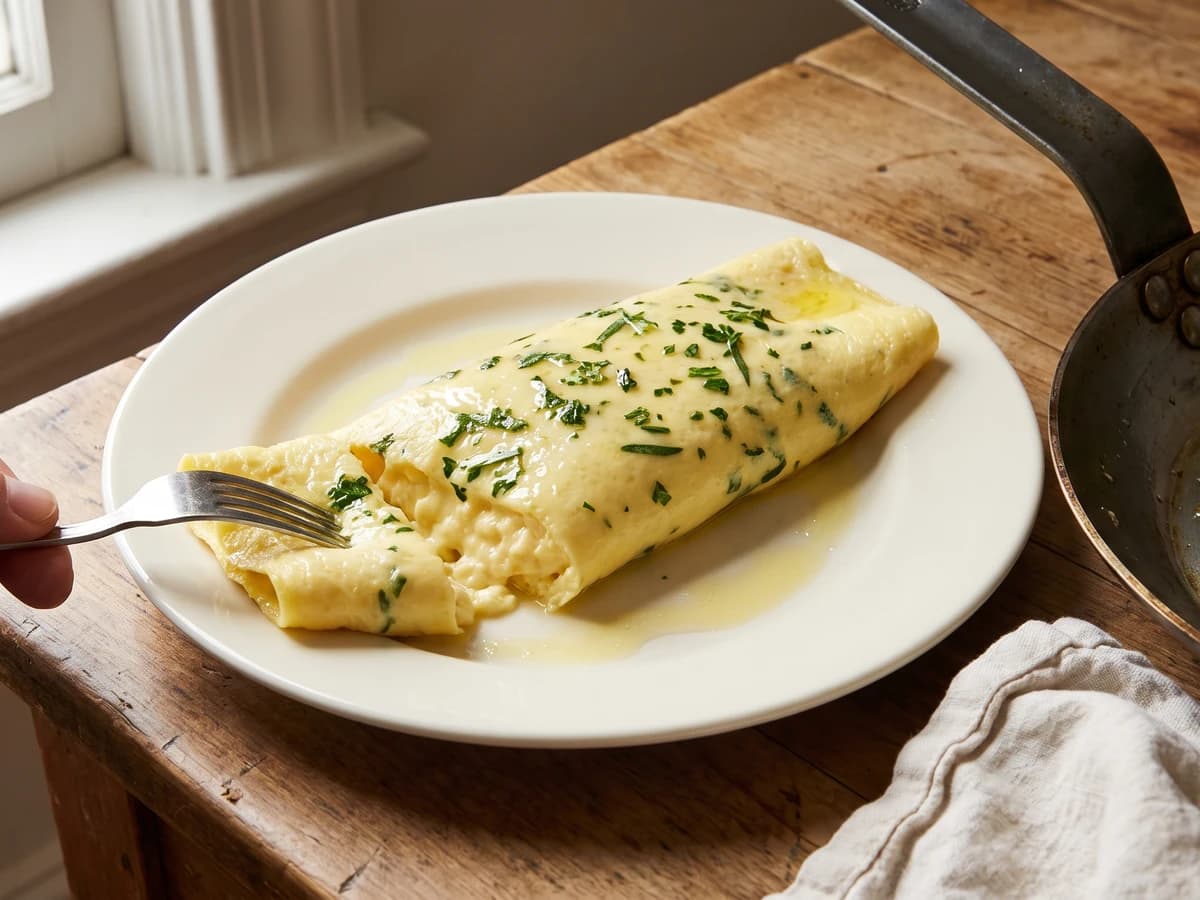
Four tender herbs, hot butter, and two eggs per pan: this rolled omelette teaches the quick hand and good judgment that keep the outside pale and the center creamy.
Chef Juliette
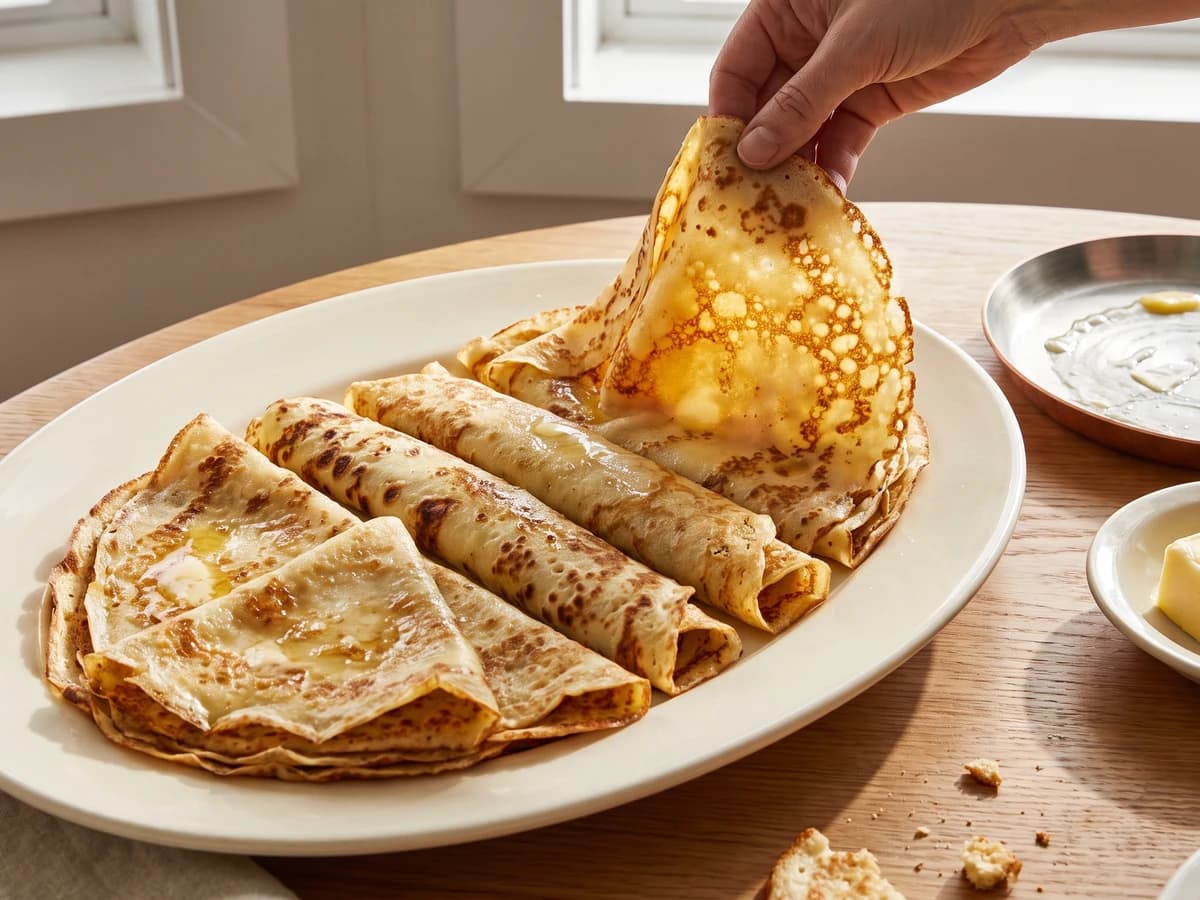
Four batters, one lesson: let the flour drink deeply before cooking, then spread the batter thinly in butter for crêpes and pannequets that bend without becoming tough.
Chef Juliette
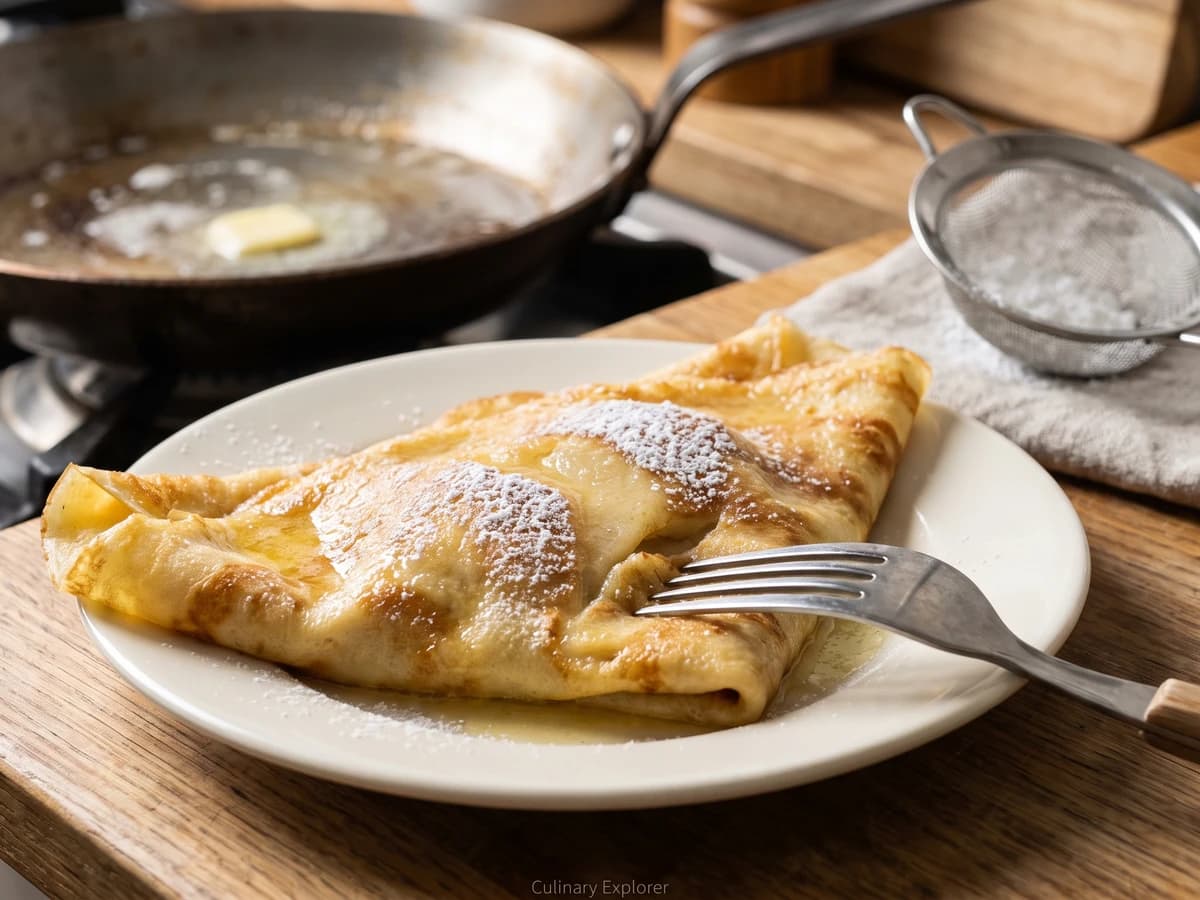
Crêpes au Couvent trap ripe Williams pear dice between two thin pours of sweet batter, then turn in one clean toss and reach the table butter-gold, powdered, and burning hot.