Chef Juliette
Omelette à l’Écossaise
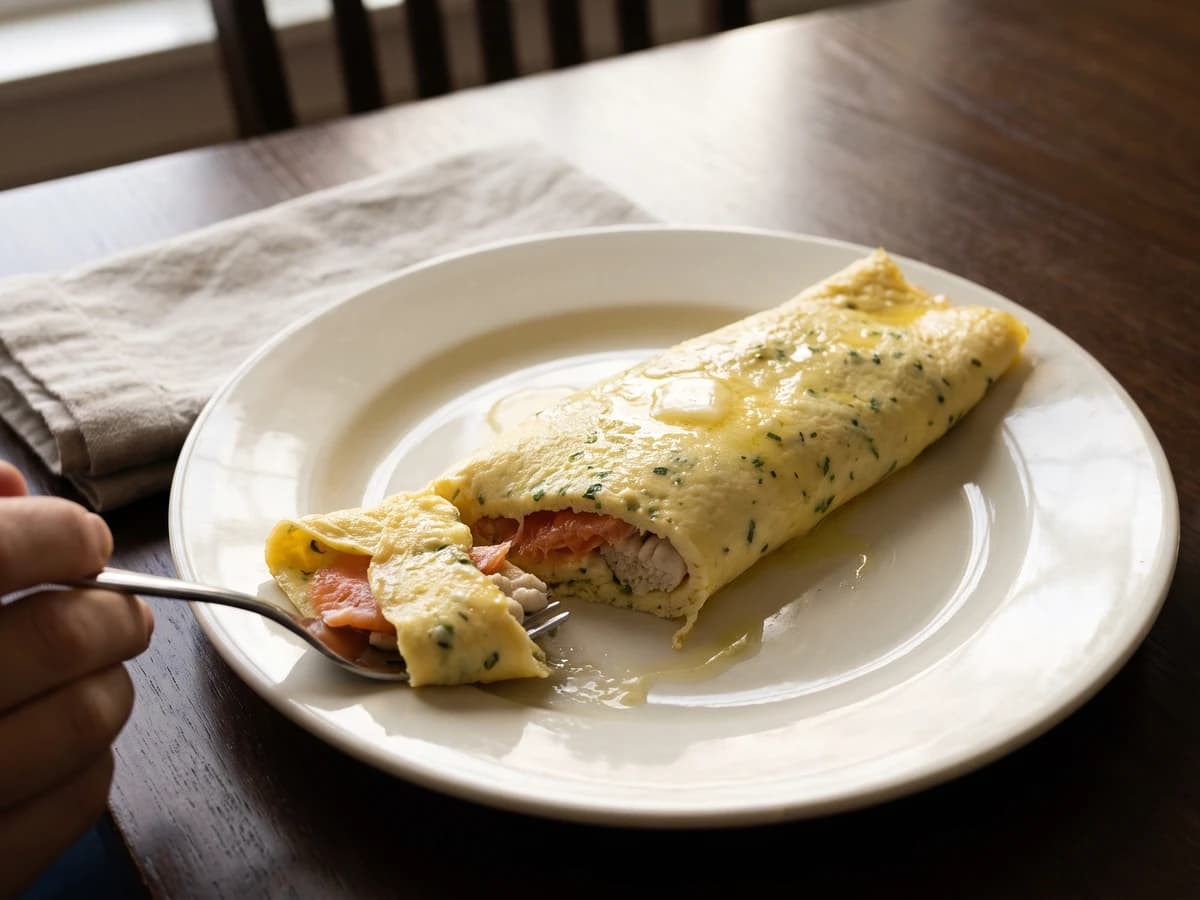
A creamy omelette aux fines herbes closes around smoked-salmon-wrapped herring milts, gently poached in butter. Have the filling ready, then roll the eggs while they still shine.
A cooking platform built around craft, culture, and the stories behind what we eat.
Created by Chef Juliette
Based on No. 421, Poached Eggs Colbert, from Le Guide Culinaire (1907) by Auguste Escoffier
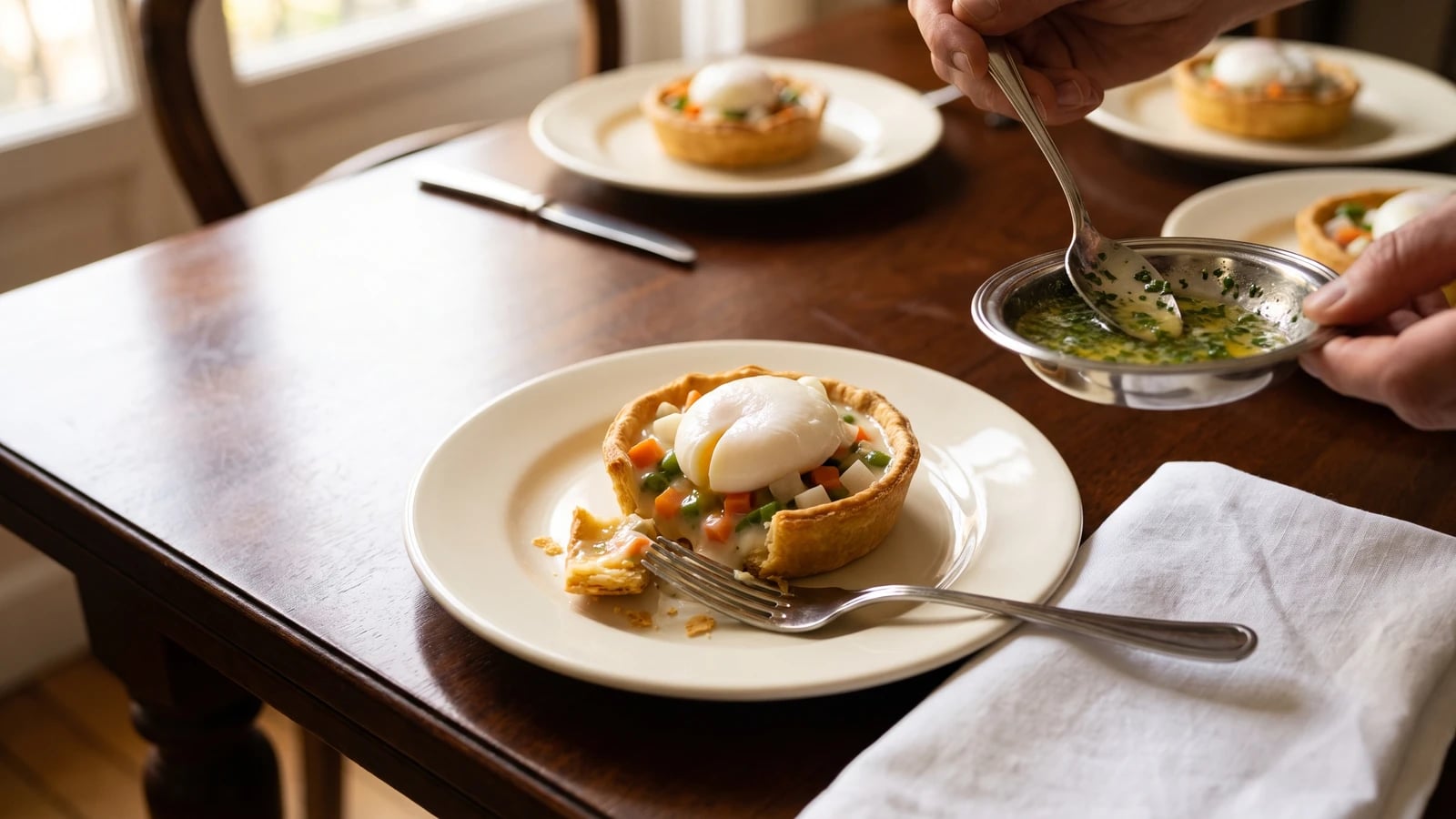
Crisp tartlets hold a tender macédoine in Béchamel, each crowned with a plainly poached egg, while herb-bright beurre Colbert waits alongside for the table to finish the dish.
Œufs pochés Colbert (poached eggs Colbert) teaches timing before it teaches poaching. Before you touch a pan, know the one true thing: the tartlets, macédoine, Béchamel, and beurre Colbert must be ready before the eggs enter the water. A poached egg waits for nothing.
The original formula assumed tartlet crusts waiting at the pastry station, a saucier on staff, and glace de viande from a stock never off the fire. At home, four shells bake together, one small saucepan makes the Béchamel, and a teaspoon of good prepared meat glaze replaces the stockpot honestly. A salamander would only toughen the plain egg, and the source calls for none. Separate stations and brigade quantities are scaffolding and can go. The crisp tartlet, macédoine held by Béchamel, plain egg, and separately served beurre Colbert are the dish and must stay. One cook, one stove, one evening.
When it lands correctly, the pastry breaks cleanly under the fork, the vegetables remain bright little pieces inside their ivory binding, and the warm yolk meets the parsley, tarragon, lemon, and meat glaze of the butter at the table. Keep the macédoine coherent rather than drowned, then do not poach until everything else is hot and waiting.
Œufs pochés Colbert belongs to the Parisian classical table, where named egg garnishes served as compact formulas for composing pastry, vegetables, sauce, and egg. Macédoine moved from a market mixture of tender early vegetables into the classical kitchen as a precise small dice, and here Béchamel binds it inside the tartlet rather than blanketing the egg. The revealing point is its service: the egg remains plainly poached and the beurre Colbert travels separately, leaving the diner to finish the dish.
Quantity
1 cup (240 ml / 125 g)
Quantity
¼ teaspoon (1.25 ml / 1.5 g)
for the pastry
Quantity
6 tablespoons (90 ml / 85 g)
diced
Quantity
2 tablespoons (30 ml / 30 g)
Quantity
1 teaspoon (5 ml / 5 g)
for the tartlet pans
Quantity
½ cup (120 ml / 75 g)
cut in 5 mm dice
Quantity
½ cup (120 ml / 70 g)
cut in 5 mm dice
Quantity
½ cup (120 ml / 60 g)
cut in 5 mm pieces
Quantity
½ cup (120 ml / 70 g)
Quantity
2 teaspoons (10 ml / 12 g)
divided
Quantity
1 tablespoon (15 ml / 14 g)
Quantity
2 tablespoons (30 ml / 16 g)
Quantity
¾ cup (180 ml / 185 g)
Quantity
¼ teaspoon (1.25 ml / 0.6 g)
divided
Quantity
1 pinch
Quantity
4 tablespoons (60 ml / 56 g)
softened
Quantity
1 teaspoon (5 ml / 7 g)
Quantity
1 teaspoon (5 ml / 5 g)
Quantity
1 tablespoon (15 ml / 4 g)
finely chopped
Quantity
1 teaspoon (5 ml / 1 g)
finely chopped
Quantity
4, plus 1 optional spare
Quantity
1 tablespoon (15 ml / 15 g)
| Ingredient | Quantity |
|---|---|
| all-purpose flour | 1 cup (240 ml / 125 g) |
| fine sea saltfor the pastry | ¼ teaspoon (1.25 ml / 1.5 g) |
| cold unsalted butterdiced | 6 tablespoons (90 ml / 85 g) |
| ice water | 2 tablespoons (30 ml / 30 g) |
| softened unsalted butterfor the tartlet pans | 1 teaspoon (5 ml / 5 g) |
| carrotcut in 5 mm dice | ½ cup (120 ml / 75 g) |
| turnipcut in 5 mm dice | ½ cup (120 ml / 70 g) |
| fine green beanscut in 5 mm pieces | ½ cup (120 ml / 60 g) |
| frozen petite peas | ½ cup (120 ml / 70 g) |
| fine sea saltdivided | 2 teaspoons (10 ml / 12 g) |
| unsalted butter | 1 tablespoon (15 ml / 14 g) |
| all-purpose flour | 2 tablespoons (30 ml / 16 g) |
| whole milk | ¾ cup (180 ml / 185 g) |
| ground white pepperdivided | ¼ teaspoon (1.25 ml / 0.6 g) |
| freshly grated nutmeg | 1 pinch |
| unsalted buttersoftened | 4 tablespoons (60 ml / 56 g) |
| prepared meat glaze or unsalted demi-glace concentrate | 1 teaspoon (5 ml / 7 g) |
| fresh lemon juice | 1 teaspoon (5 ml / 5 g) |
| flat-leaf parsleyfinely chopped | 1 tablespoon (15 ml / 4 g) |
| fresh tarragonfinely chopped | 1 teaspoon (5 ml / 1 g) |
| large eggs | 4, plus 1 optional spare |
| white wine vinegar | 1 tablespoon (15 ml / 15 g) |
Mix the 1 cup flour with the pastry salt. Rub in the 6 tablespoons cold butter until the mixture resembles coarse crumbs with a few small flakes of butter remaining. Add the ice water gradually, stopping as soon as a squeezed handful holds together. Press the dough into a disc without kneading, wrap it, and chill for 30 minutes. Those visible butter flakes make the shells crisp; overworking them into the flour makes the pastry hard.
Heat the oven to 375°F (190°C). Butter four 3½-inch (9 cm) tartlet pans. Roll the pastry about ⅛ inch (3 mm) thick, line the pans, and press it neatly into the corners without stretching. Trim the rims and chill for 15 minutes. Line with parchment, add baking weights, and bake for 13 to 15 minutes. Remove the parchment and weights, then bake for another 7 to 9 minutes, until the bases are dry and butter-gold. If a base balloons, prick it once and press it down gently while warm. Ça se rattrape. Cool the shells in their pans.
Warm the meat glaze only until it becomes fluid, then let it cool until barely warm. Beat it into the 4 tablespoons softened butter with the lemon juice, parsley, tarragon, a pinch of salt, and a little white pepper. The beurre Colbert should be smooth and soft enough to take with a spoon. If the glaze was too hot and the butter melts, chill the bowl for 5 minutes, then beat again until creamy. Transfer it to a small serving dish and keep it at cool room temperature.
Bring a saucepan of water to a boil and season it with most of the divided salt. Add the carrot and turnip. After 2 minutes, add the green beans; after another minute, add the peas. Cook for 1 minute more, then drain immediately. The vegetables should be tender but still distinct, each tiny dice holding its shape. Spread them over a clean towel and blot them dry. Wet vegetables thin the Béchamel and soften the tartlets.
Reserve 2 tablespoons of the milk. Melt the 1 tablespoon butter over gentle heat, whisk in the 2 tablespoons flour, and cook for 90 seconds without letting the roux color. Take the pan off the heat and add the remaining milk in three additions, whisking each one smooth before adding the next. Return to a bare simmer and whisk for 4 to 5 minutes, until the Béchamel is glossy and a spoon drawn through it leaves a clean path. Season with salt, white pepper, and nutmeg. If lumps appear, take the pan off the heat and whisk firmly; if a few remain, strain the sauce and carry on. Ça se rattrape.
Fold the dry vegetables into the Béchamel over low heat. The source says the macédoine must be cohered, which is exact: each dice should be coated and the mixture should hold together on a spoon without swimming in sauce. If it is loose, simmer gently for another minute. If it becomes stiff, add the reserved milk a teaspoon at a time. Cover and keep warm over the lowest heat, stirring occasionally so the bottom does not catch.
Reduce the oven to 325°F (165°C) and rewarm the empty tartlet shells for 5 minutes. Warm four plates, set the beurre Colbert on the table, and have the hot macédoine beside the stove before the eggs meet the water. This order is the dish's governing principle. The eggs come last because a tender poached egg waits for neither pastry nor sauce.
Fill a wide shallow pan with about 2 inches (5 cm) of water, add the vinegar, and bring it to a bare tremble. Crack each egg into its own small cup, then slide the eggs into the water one at a time, leaving room between them. Cook for about 3 minutes, spooning a little water over any exposed white, until the whites are set and the yolks remain soft. If a white feathers outward, use the slotted spoon to fold the loose wisps gently toward the egg during the first 20 seconds. Lift each egg onto a folded clean towel and trim only the longest ragged edges. Drying the underside keeps the pastry crisp.
Unmold the warm tartlet shells and place one on each heated plate. Spoon in the hot macédoine, filling each shell to the rim, then settle a plainly poached egg on top. Season the egg lightly with salt and white pepper. Send the beurre Colbert separately, exactly as the formula requires, so each diner can spoon the herb-flecked butter over the warm egg at the table. À table!
1 serving (about 235g)
Culinary guides, cultural storytelling, and the editorial depth that makes cooking meaningful.
Discover Culinary ExplorerChef Juliette
A creamy omelette aux fines herbes closes around smoked-salmon-wrapped herring milts, gently poached in butter. Have the filling ready, then roll the eggs while they still shine.
Chef Juliette
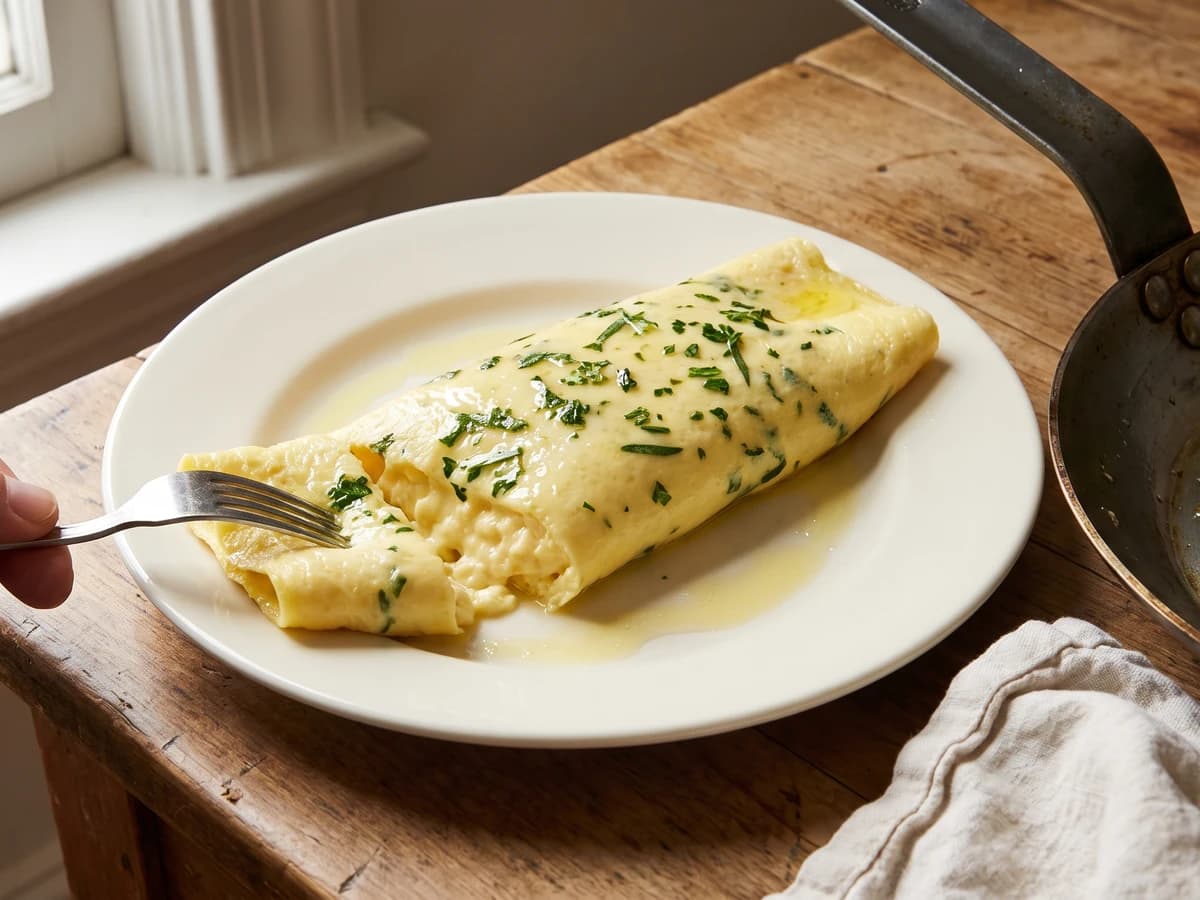
Four tender herbs, hot butter, and two eggs per pan: this rolled omelette teaches the quick hand and good judgment that keep the outside pale and the center creamy.
Chef Juliette
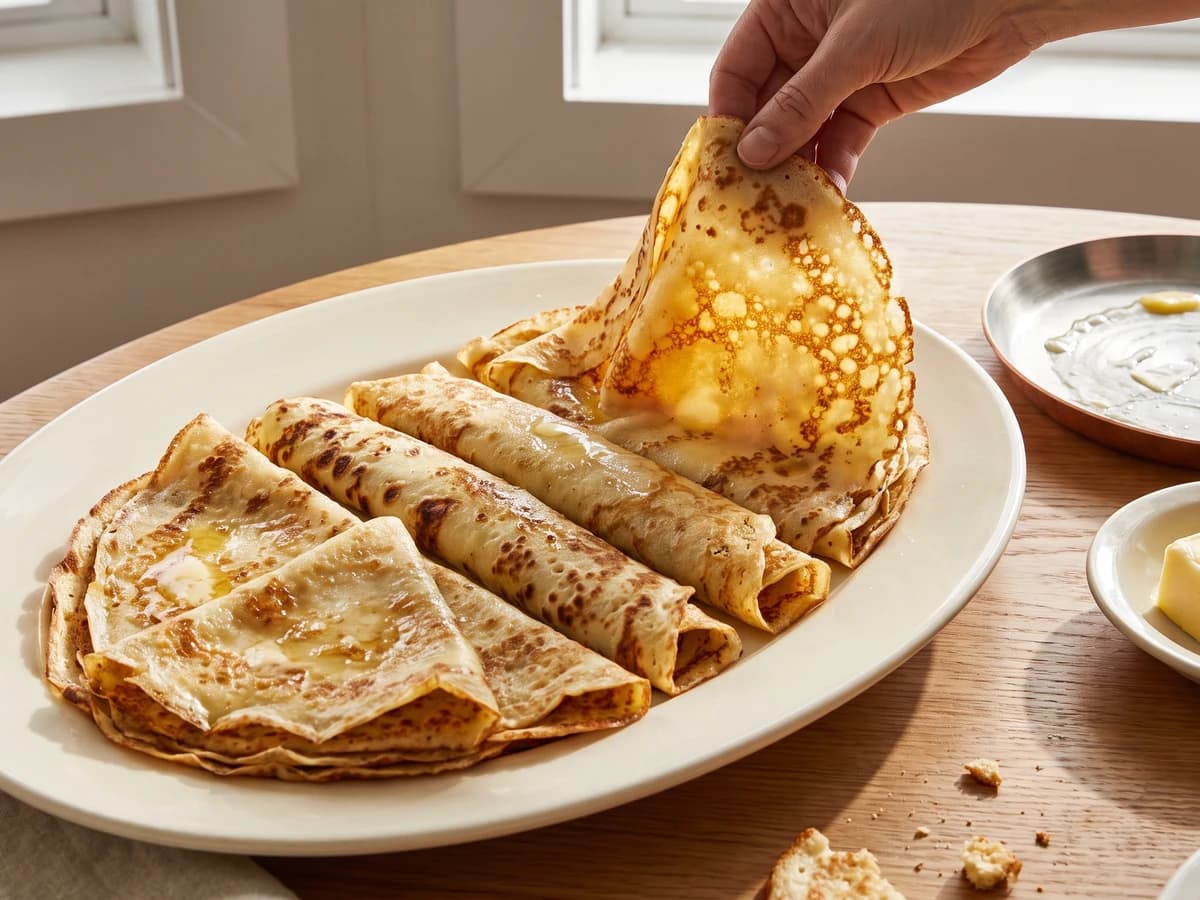
Four batters, one lesson: let the flour drink deeply before cooking, then spread the batter thinly in butter for crêpes and pannequets that bend without becoming tough.
Chef Juliette
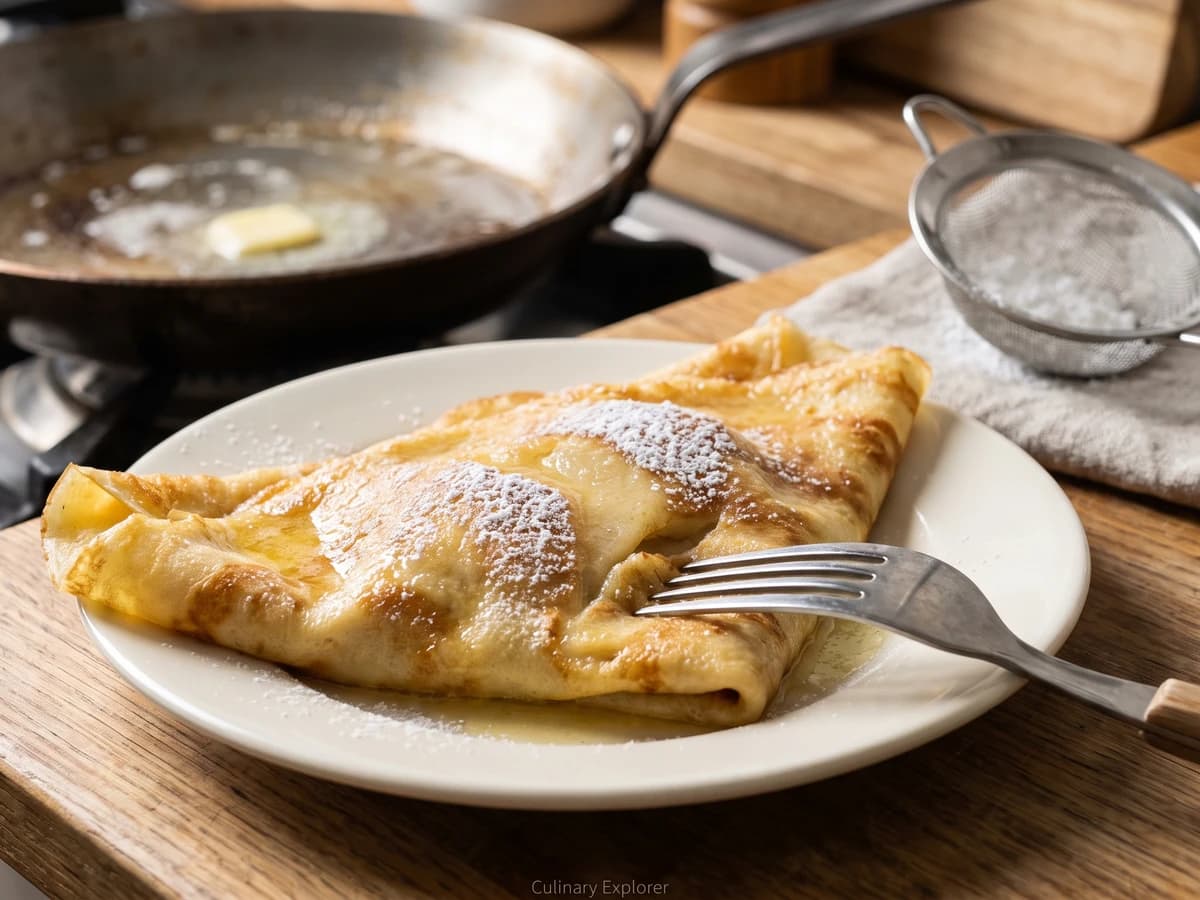
Crêpes au Couvent trap ripe Williams pear dice between two thin pours of sweet batter, then turn in one clean toss and reach the table butter-gold, powdered, and burning hot.